
Feature image of China’s Soft Power MVP? Its Women’s National Sports

China’s Soft Power MVP? Its Women’s National Sports

4 mins read

4 mins read

Feature image of China’s Soft Power MVP? Its Women’s National Sports
Splash, Spike, Spin: across volleyball, table tennis, and diving, China’s women athletes are transforming skills and medals into distinctly feminine faces of Chinese soft power.

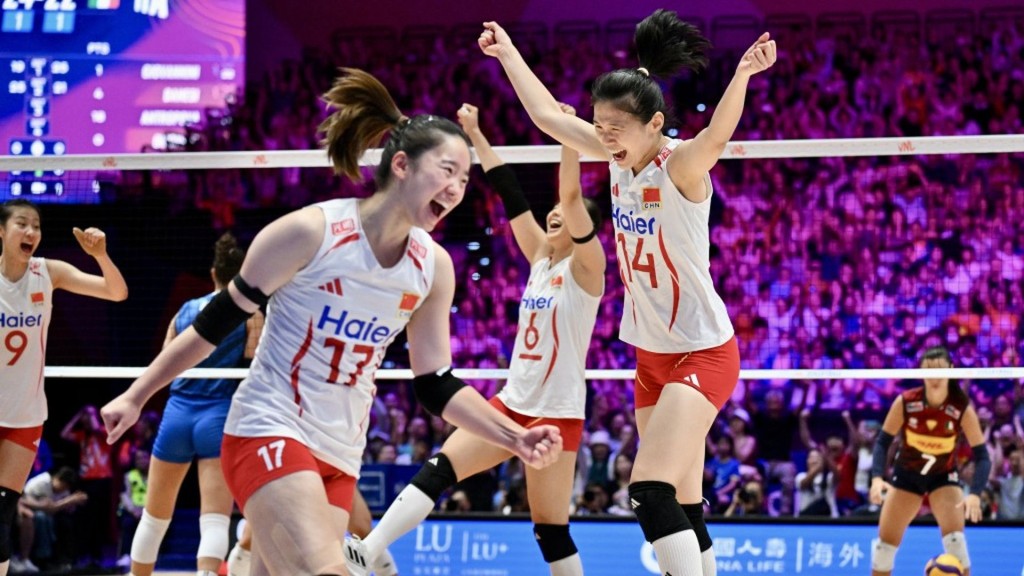
The Hong Kong leg of the Volleyball Nations League, held from July 8–12, 2026, brought six international women’s teams—China, Italy, the Dominican Republic, Canada, Belgium, and Ukraine—to the Kai Tak Arena for 12 high-intensity matches. Italy came in as defending champions of both the 2025 VNL and the 2025 FIVB Women’s World Championship, underscoring the level of competition faced by China’s relatively young squad. China closed the Hong Kong pool with a spirited performance against the world’s top-ranked team, pushing Italy to five sets before falling 3–2 in their final regular-season match. Yet the significance of that night lies less in the result than in the optics: for China, women’s sport has become one of its most potent and relatable forms of soft power.

RADII highlights China's women's national sports teams in Volleyball, Table Tennis, and Diving, and the country's MVP of soft power.
Image via Kai Tak Arena.

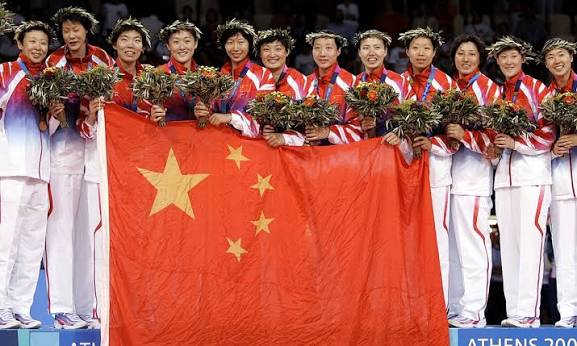
The women’s national volleyball team has long held a reputation that fans and officials have understood for decades. Founded in 1953, it became a symbol of national resilience in the 1980s after winning five consecutive major titles: World Cup triumphs in 1981 and 1985, World Championship victories in 1982 and 1986, and Olympic gold at Los Angeles 1984. Later generations added five more major crowns, including World Cup wins in 2003, 2015, and 2019, plus Olympic gold in 2004 and 2016, bringing the team’s tally to ten world titles across the sport’s three biggest competitions.
RADII highlights China's women's national sports teams in Volleyball, Table Tennis, and Diving, and the country's MVP of soft power.
China’s women’s volleyball team stands on the podium with their gold medals at the 2004 Olympic Games. Image via Global Times.

Today, a squad in the midst of generational transition carries the burden of remaking that legend. Recent results have been mixed, but the sport’s historic success and deep cultural resonance ensure that women’s volleyball remains central to China’s contemporary soft-power narrative.
RADII highlights China's women's national sports teams in Volleyball, Table Tennis, and Diving, and the country's MVP of soft power.
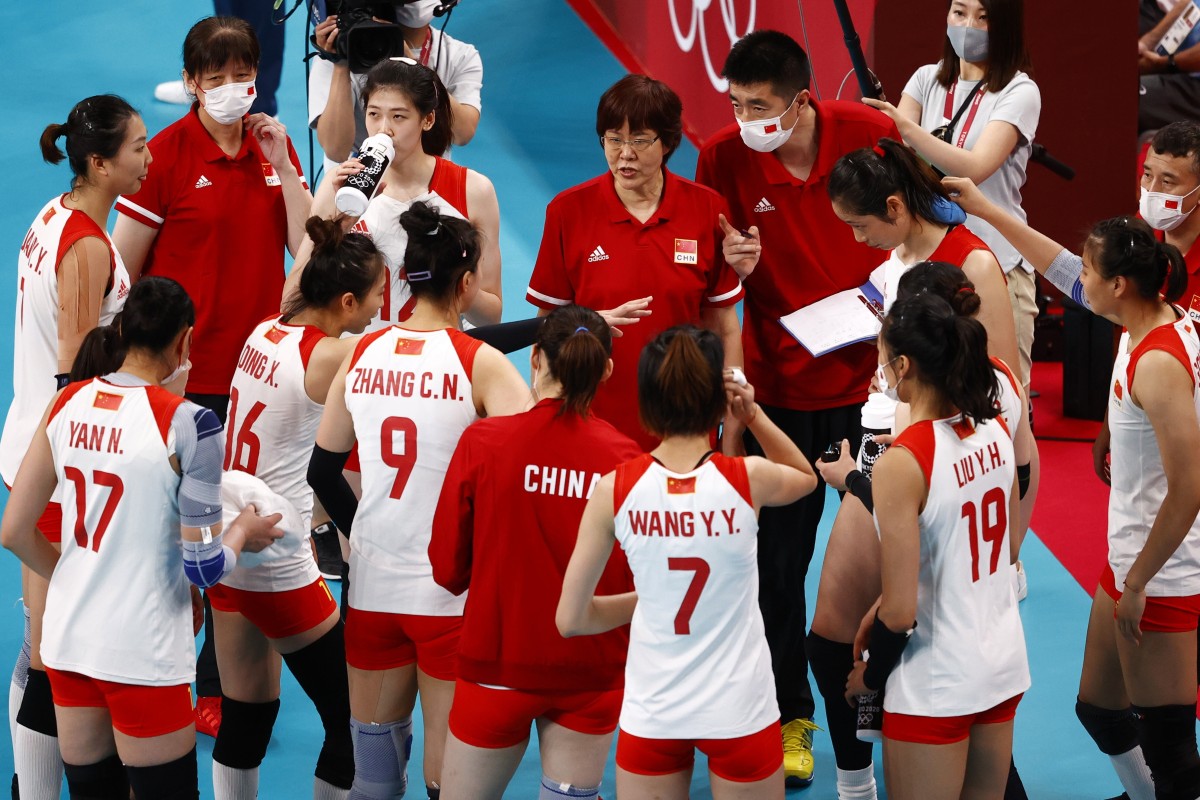
The Tokyo 2020 Olympic Games during a timeout huddle with the China team and their coach, Lang Ping. Image via SCMP.

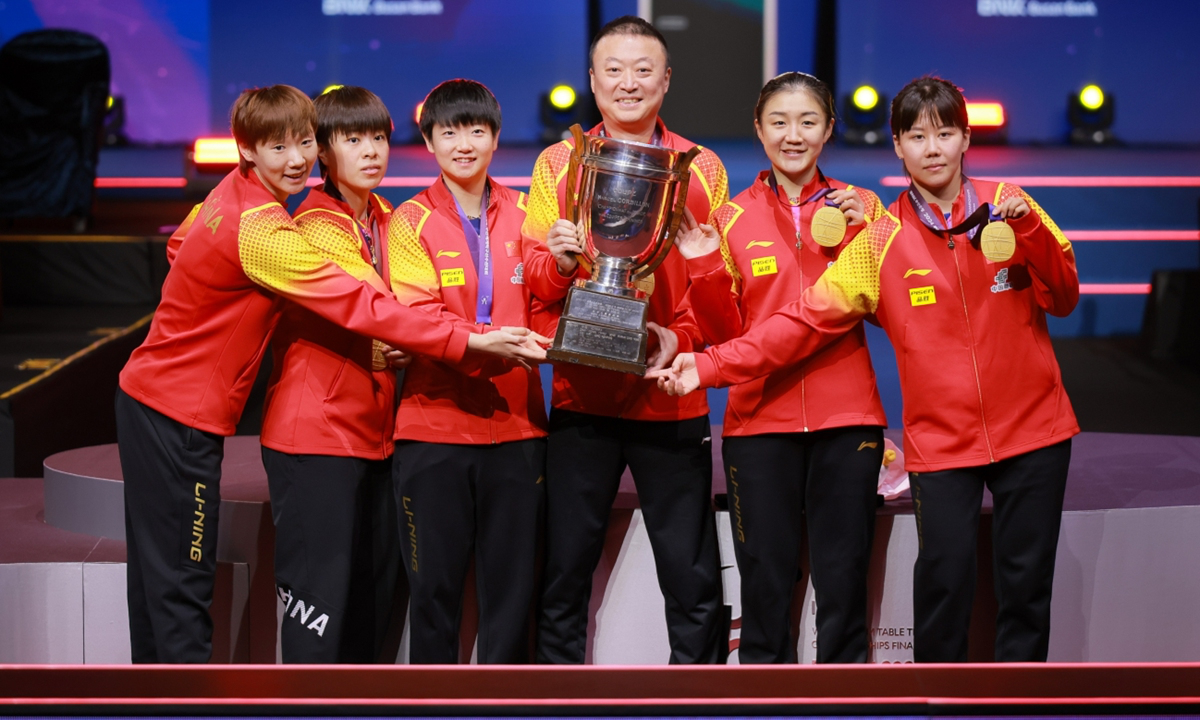
If volleyball is China’s emotional flagship, women’s table tennis is its technocratic backbone. The national women’s team was established in 1952, entering the world stage at a time when table tennis was still taking shape in its global structure. In April 1965, the women’s team lifted the M. Corbillon Cup for the first time, beating Japan 3–0 in the final and claiming a historic world team crown.

That breakthrough began an era of sustained domination. By 2026, China had won the Corbillon Cup 24 times, including seven consecutive world team titles from 2012 to 2026. Since table tennis entered the Olympics in 1988, Chinese women’s teams and pairs have won every women’s team gold since Beijing 2008.
RADII highlights China's women's national sports teams in Volleyball, Table Tennis, and Diving, and the country's MVP of soft power.
The China women’s table tennis team celebrating the 2024 World Team Championships victory with the Corbillon Cup. Image via Global Times.

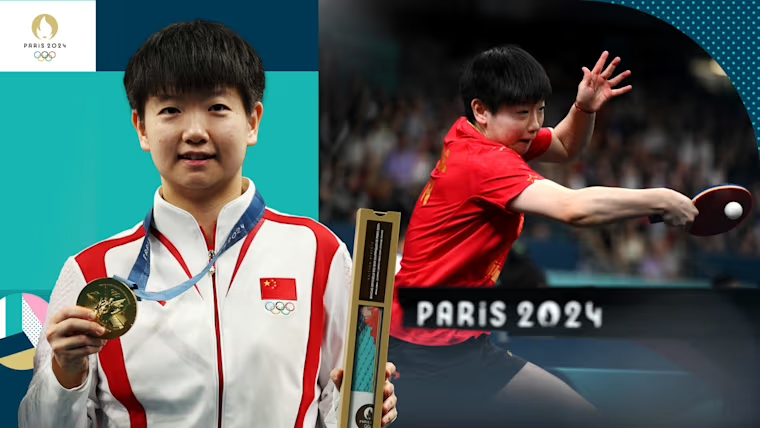
Sun Yingsha, as one of the most spotlighted players on the team, has earned more than 100 titles in total. From joining China’s national B team in 2015 to becoming the first “post-2000” world No. 1 in 2022, she has stacked up Olympic gold and silver medals, World Championships and World Cup singles crowns, WTT Grand Slam “triple crown” runs, and a historic table tennis World Cup three-peat.
RADII highlights China's women's national sports teams in Volleyball, Table Tennis, and Diving, and the country's MVP of soft power.
Image via The Olympic Games.

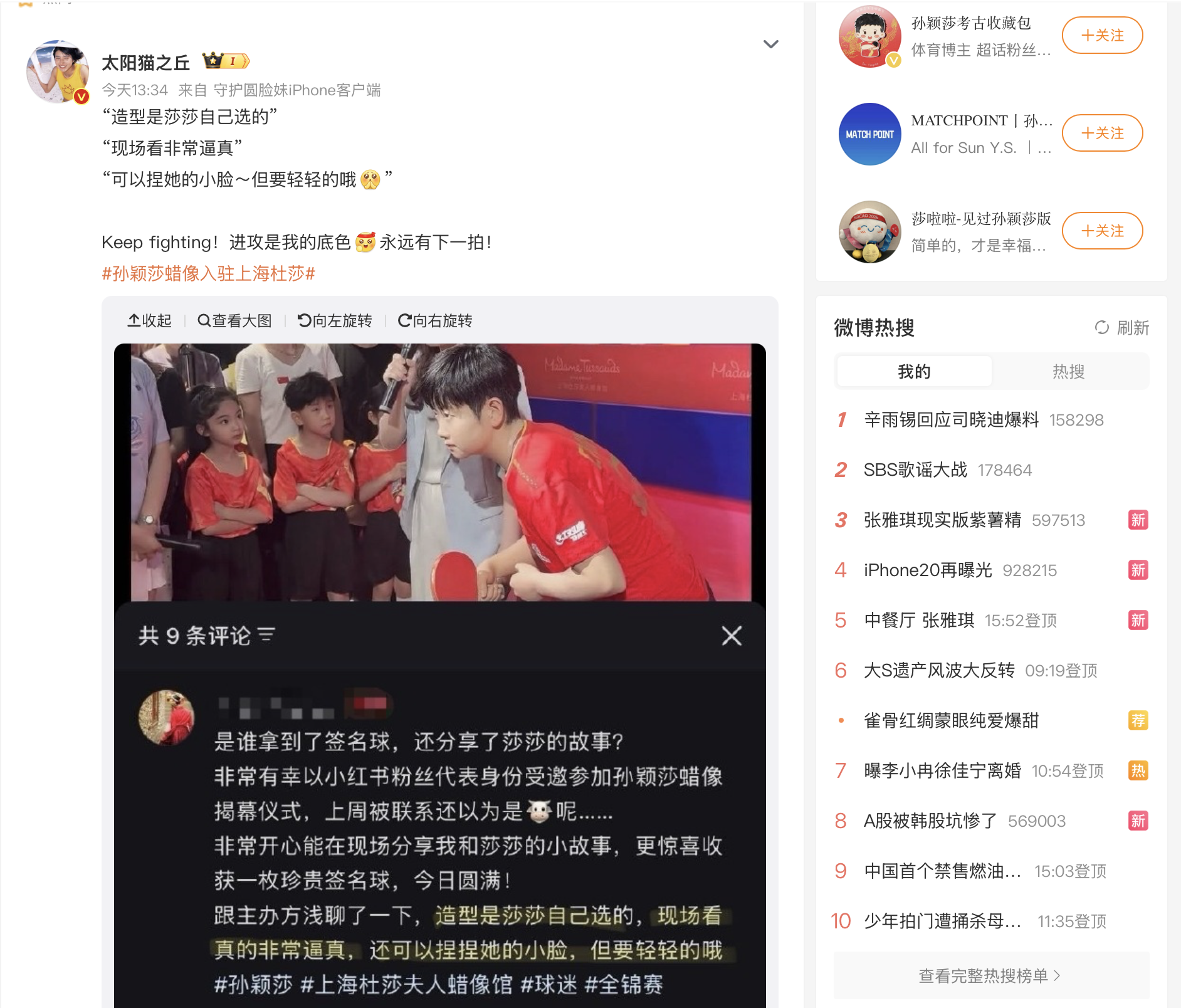
On July 13, 2026, Sun Yingsha received a permanent wax figure at Shanghai’s Madame Tussauds. Everyone says Sun Yingsha looks incredibly cute, and the new Madame Tussauds figure prompted fans to say, “You can ‘pinch’ her little cheeks, but be gentle about it.”
RADII highlights China's women's national sports teams in Volleyball, Table Tennis, and Diving, and the country's MVP of soft power.
Image via Weibo.

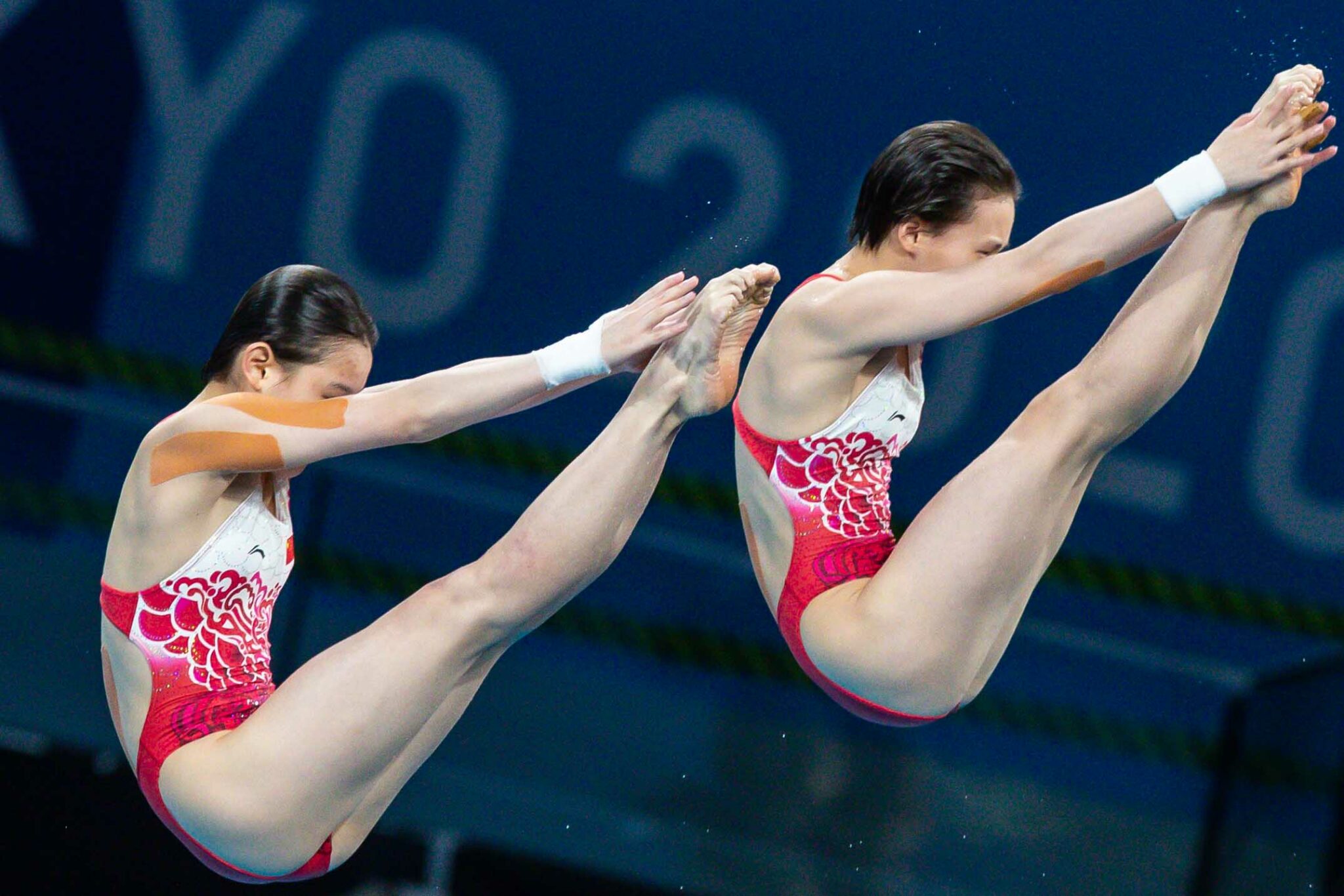
China’s national women’s diving team is no exception. It was formed in the early 1950s and, like women’s volleyball, went on to achieve a rare “five consecutive titles” run across major international competitions, earning the collective nickname the “Dream Team” in domestic and international media.
RADII highlights China's women's national sports teams in Volleyball, Table Tennis, and Diving, and the country's MVP of soft power.
Diving (photo: Jack Spitser)

For a long time, the face of that Dream Team was Guo Jingjing. After winning double gold on the 3m springboard in both the individual and synchronized events at the Athens 2004 Olympics, Guo was widely hailed as China’s “Diving Queen,” a moniker that stuck as she successfully defended both events at Beijing 2008 to reach four Olympic gold medals.
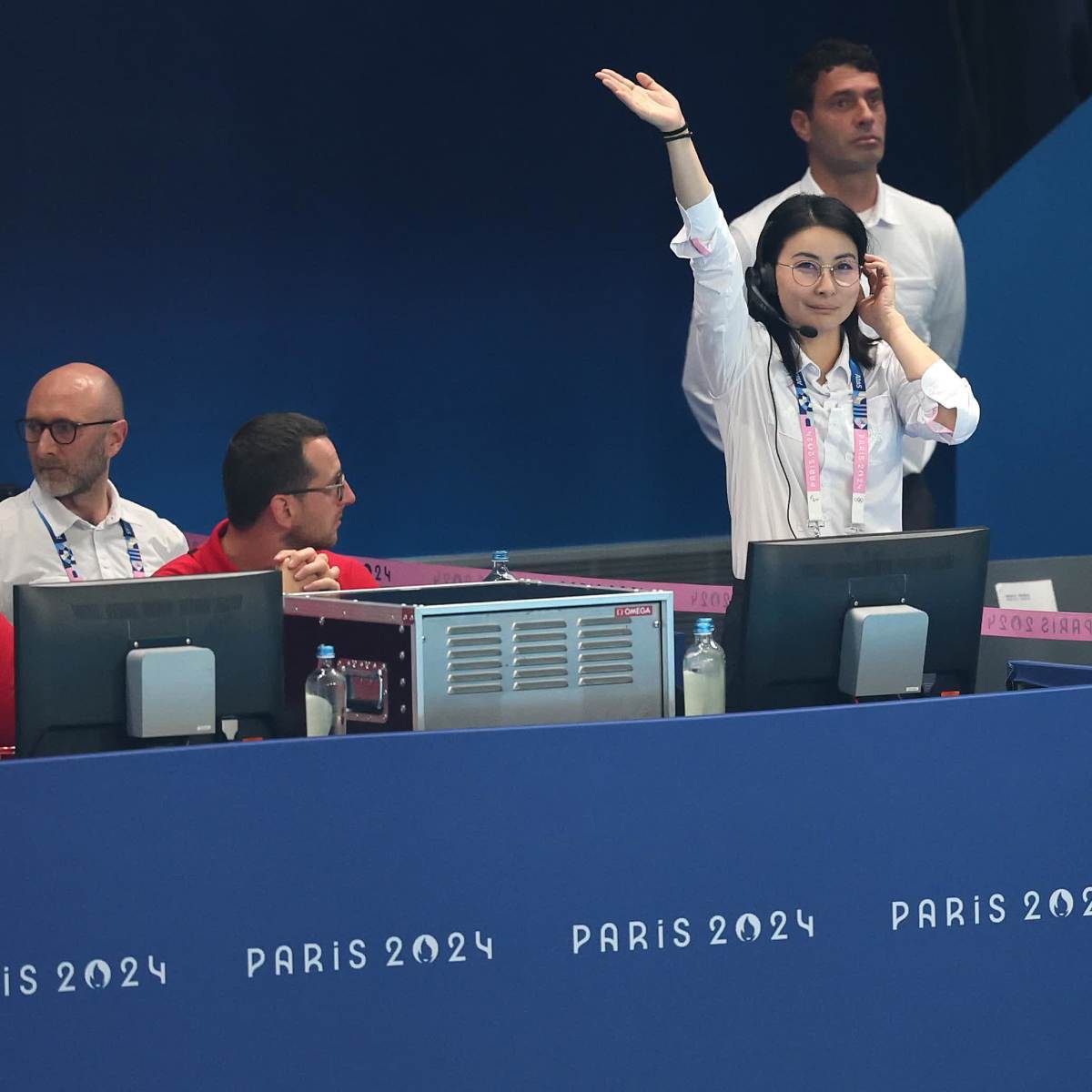
RADII highlights China's women's national sports teams in Volleyball, Table Tennis, and Diving, and the country's MVP of soft power.
Guojingjing as a Diving Judge at the 2024 Paris Olympic Games. Image via Xinhua.

Her career, and her later emergence as a high-profile Olympic diving official, turned her into a model of athletic achievement and post-retirement influence; today, she serves as a World Aquatics diving official and a vice chair of a major cultural association in Guangzhou, China.

The current era belongs to Quan Hongchan and a cohort of multi-gold medalists, including Chen Yuxi, Chen Yiwen, and Chang Yani. Quan was 14 at the time of the Tokyo 2020 Olympics and stunned the world by winning the women’s 10m platform with a record score of 466.2 points. Her “splash-vanishing technique,” meaning she barely disturbs the water on entry, has since become her trademark.

Chinese women’s sport has a remarkable history and an ongoing strength across decades. Here, soft power operates as national confidence without military hardware: China’s women athletes embody beauty, control, and risk in a way that feels apolitical, while every perfect movement extends the brand of Chinese sporting mastery to new audiences around the world.

Cover image via The Standard.

NEWSLETTER

Get weekly top picks and exclusive, newsletter only content delivered straight to you inbox.

NEWSLETTER

Get weekly top picks and exclusive, newsletter only content delivered straight to you inbox.

RADII NEWSLETTER

Get weekly top picks and exclusive, newsletter only content delivered straight to you inbox

Feature image of China’s Soft Power MVP? Its Women’s National Sports

China’s Soft Power MVP? Its Women’s National Sports

4 mins read

Splash, Spike, Spin: across volleyball, table tennis, and diving, China’s women athletes are transforming skills and medals into distinctly feminine faces of Chinese soft power.

The Hong Kong leg of the Volleyball Nations League, held from July 8–12, 2026, brought six international women’s teams—China, Italy, the Dominican Republic, Canada, Belgium, and Ukraine—to the Kai Tak Arena for 12 high-intensity matches. Italy came in as defending champions of both the 2025 VNL and the 2025 FIVB Women’s World Championship, underscoring the level of competition faced by China’s relatively young squad. China closed the Hong Kong pool with a spirited performance against the world’s top-ranked team, pushing Italy to five sets before falling 3–2 in their final regular-season match. Yet the significance of that night lies less in the result than in the optics: for China, women’s sport has become one of its most potent and relatable forms of soft power.

RADII highlights China's women's national sports teams in Volleyball, Table Tennis, and Diving, and the country's MVP of soft power.
Image via Kai Tak Arena.

The women’s national volleyball team has long held a reputation that fans and officials have understood for decades. Founded in 1953, it became a symbol of national resilience in the 1980s after winning five consecutive major titles: World Cup triumphs in 1981 and 1985, World Championship victories in 1982 and 1986, and Olympic gold at Los Angeles 1984. Later generations added five more major crowns, including World Cup wins in 2003, 2015, and 2019, plus Olympic gold in 2004 and 2016, bringing the team’s tally to ten world titles across the sport’s three biggest competitions.

RADII highlights China's women's national sports teams in Volleyball, Table Tennis, and Diving, and the country's MVP of soft power.
China’s women’s volleyball team stands on the podium with their gold medals at the 2004 Olympic Games. Image via Global Times.

Today, a squad in the midst of generational transition carries the burden of remaking that legend. Recent results have been mixed, but the sport’s historic success and deep cultural resonance ensure that women’s volleyball remains central to China’s contemporary soft-power narrative.

RADII highlights China's women's national sports teams in Volleyball, Table Tennis, and Diving, and the country's MVP of soft power.
The Tokyo 2020 Olympic Games during a timeout huddle with the China team and their coach, Lang Ping. Image via SCMP.

If volleyball is China’s emotional flagship, women’s table tennis is its technocratic backbone. The national women’s team was established in 1952, entering the world stage at a time when table tennis was still taking shape in its global structure. In April 1965, the women’s team lifted the M. Corbillon Cup for the first time, beating Japan 3–0 in the final and claiming a historic world team crown.

That breakthrough began an era of sustained domination. By 2026, China had won the Corbillon Cup 24 times, including seven consecutive world team titles from 2012 to 2026. Since table tennis entered the Olympics in 1988, Chinese women’s teams and pairs have won every women’s team gold since Beijing 2008.

RADII highlights China's women's national sports teams in Volleyball, Table Tennis, and Diving, and the country's MVP of soft power.
The China women’s table tennis team celebrating the 2024 World Team Championships victory with the Corbillon Cup. Image via Global Times.

Sun Yingsha, as one of the most spotlighted players on the team, has earned more than 100 titles in total. From joining China’s national B team in 2015 to becoming the first “post-2000” world No. 1 in 2022, she has stacked up Olympic gold and silver medals, World Championships and World Cup singles crowns, WTT Grand Slam “triple crown” runs, and a historic table tennis World Cup three-peat.

RADII highlights China's women's national sports teams in Volleyball, Table Tennis, and Diving, and the country's MVP of soft power.
Image via The Olympic Games.

On July 13, 2026, Sun Yingsha received a permanent wax figure at Shanghai’s Madame Tussauds. Everyone says Sun Yingsha looks incredibly cute, and the new Madame Tussauds figure prompted fans to say, “You can ‘pinch’ her little cheeks, but be gentle about it.”

RADII highlights China's women's national sports teams in Volleyball, Table Tennis, and Diving, and the country's MVP of soft power.
Image via Weibo.

China’s national women’s diving team is no exception. It was formed in the early 1950s and, like women’s volleyball, went on to achieve a rare “five consecutive titles” run across major international competitions, earning the collective nickname the “Dream Team” in domestic and international media.

RADII highlights China's women's national sports teams in Volleyball, Table Tennis, and Diving, and the country's MVP of soft power.
Diving (photo: Jack Spitser)

For a long time, the face of that Dream Team was Guo Jingjing. After winning double gold on the 3m springboard in both the individual and synchronized events at the Athens 2004 Olympics, Guo was widely hailed as China’s “Diving Queen,” a moniker that stuck as she successfully defended both events at Beijing 2008 to reach four Olympic gold medals.

RADII highlights China's women's national sports teams in Volleyball, Table Tennis, and Diving, and the country's MVP of soft power.
Guojingjing as a Diving Judge at the 2024 Paris Olympic Games. Image via Xinhua.

Her career, and her later emergence as a high-profile Olympic diving official, turned her into a model of athletic achievement and post-retirement influence; today, she serves as a World Aquatics diving official and a vice chair of a major cultural association in Guangzhou, China.

The current era belongs to Quan Hongchan and a cohort of multi-gold medalists, including Chen Yuxi, Chen Yiwen, and Chang Yani. Quan was 14 at the time of the Tokyo 2020 Olympics and stunned the world by winning the women’s 10m platform with a record score of 466.2 points. Her “splash-vanishing technique,” meaning she barely disturbs the water on entry, has since become her trademark.

Chinese women’s sport has a remarkable history and an ongoing strength across decades. Here, soft power operates as national confidence without military hardware: China’s women athletes embody beauty, control, and risk in a way that feels apolitical, while every perfect movement extends the brand of Chinese sporting mastery to new audiences around the world.

Cover image via The Standard.

NEWSLETTER

Get weekly top picks and exclusive, newsletter only content delivered straight to you inbox.

RADII NEWSLETTER

Get weekly top picks and exclusive, newsletter only content delivered straight to you inbox

RELATED POSTS

Feature image of China’s Soft Power MVP? Its Women’s National Sports

China’s Soft Power MVP? Its Women’s National Sports

4 mins read

4 mins read

Feature image of China’s Soft Power MVP? Its Women’s National Sports
Splash, Spike, Spin: across volleyball, table tennis, and diving, China’s women athletes are transforming skills and medals into distinctly feminine faces of Chinese soft power.

The Hong Kong leg of the Volleyball Nations League, held from July 8–12, 2026, brought six international women’s teams—China, Italy, the Dominican Republic, Canada, Belgium, and Ukraine—to the Kai Tak Arena for 12 high-intensity matches. Italy came in as defending champions of both the 2025 VNL and the 2025 FIVB Women’s World Championship, underscoring the level of competition faced by China’s relatively young squad. China closed the Hong Kong pool with a spirited performance against the world’s top-ranked team, pushing Italy to five sets before falling 3–2 in their final regular-season match. Yet the significance of that night lies less in the result than in the optics: for China, women’s sport has become one of its most potent and relatable forms of soft power.

RADII highlights China's women's national sports teams in Volleyball, Table Tennis, and Diving, and the country's MVP of soft power.
Image via Kai Tak Arena.

The women’s national volleyball team has long held a reputation that fans and officials have understood for decades. Founded in 1953, it became a symbol of national resilience in the 1980s after winning five consecutive major titles: World Cup triumphs in 1981 and 1985, World Championship victories in 1982 and 1986, and Olympic gold at Los Angeles 1984. Later generations added five more major crowns, including World Cup wins in 2003, 2015, and 2019, plus Olympic gold in 2004 and 2016, bringing the team’s tally to ten world titles across the sport’s three biggest competitions.

RADII highlights China's women's national sports teams in Volleyball, Table Tennis, and Diving, and the country's MVP of soft power.
China’s women’s volleyball team stands on the podium with their gold medals at the 2004 Olympic Games. Image via Global Times.

Today, a squad in the midst of generational transition carries the burden of remaking that legend. Recent results have been mixed, but the sport’s historic success and deep cultural resonance ensure that women’s volleyball remains central to China’s contemporary soft-power narrative.

RADII highlights China's women's national sports teams in Volleyball, Table Tennis, and Diving, and the country's MVP of soft power.
The Tokyo 2020 Olympic Games during a timeout huddle with the China team and their coach, Lang Ping. Image via SCMP.

If volleyball is China’s emotional flagship, women’s table tennis is its technocratic backbone. The national women’s team was established in 1952, entering the world stage at a time when table tennis was still taking shape in its global structure. In April 1965, the women’s team lifted the M. Corbillon Cup for the first time, beating Japan 3–0 in the final and claiming a historic world team crown.

That breakthrough began an era of sustained domination. By 2026, China had won the Corbillon Cup 24 times, including seven consecutive world team titles from 2012 to 2026. Since table tennis entered the Olympics in 1988, Chinese women’s teams and pairs have won every women’s team gold since Beijing 2008.

RADII highlights China's women's national sports teams in Volleyball, Table Tennis, and Diving, and the country's MVP of soft power.
The China women’s table tennis team celebrating the 2024 World Team Championships victory with the Corbillon Cup. Image via Global Times.

Sun Yingsha, as one of the most spotlighted players on the team, has earned more than 100 titles in total. From joining China’s national B team in 2015 to becoming the first “post-2000” world No. 1 in 2022, she has stacked up Olympic gold and silver medals, World Championships and World Cup singles crowns, WTT Grand Slam “triple crown” runs, and a historic table tennis World Cup three-peat.

RADII highlights China's women's national sports teams in Volleyball, Table Tennis, and Diving, and the country's MVP of soft power.
Image via The Olympic Games.

On July 13, 2026, Sun Yingsha received a permanent wax figure at Shanghai’s Madame Tussauds. Everyone says Sun Yingsha looks incredibly cute, and the new Madame Tussauds figure prompted fans to say, “You can ‘pinch’ her little cheeks, but be gentle about it.”

RADII highlights China's women's national sports teams in Volleyball, Table Tennis, and Diving, and the country's MVP of soft power.
Image via Weibo.

China’s national women’s diving team is no exception. It was formed in the early 1950s and, like women’s volleyball, went on to achieve a rare “five consecutive titles” run across major international competitions, earning the collective nickname the “Dream Team” in domestic and international media.

RADII highlights China's women's national sports teams in Volleyball, Table Tennis, and Diving, and the country's MVP of soft power.
Diving (photo: Jack Spitser)

For a long time, the face of that Dream Team was Guo Jingjing. After winning double gold on the 3m springboard in both the individual and synchronized events at the Athens 2004 Olympics, Guo was widely hailed as China’s “Diving Queen,” a moniker that stuck as she successfully defended both events at Beijing 2008 to reach four Olympic gold medals.

RADII highlights China's women's national sports teams in Volleyball, Table Tennis, and Diving, and the country's MVP of soft power.
Guojingjing as a Diving Judge at the 2024 Paris Olympic Games. Image via Xinhua.

Her career, and her later emergence as a high-profile Olympic diving official, turned her into a model of athletic achievement and post-retirement influence; today, she serves as a World Aquatics diving official and a vice chair of a major cultural association in Guangzhou, China.

The current era belongs to Quan Hongchan and a cohort of multi-gold medalists, including Chen Yuxi, Chen Yiwen, and Chang Yani. Quan was 14 at the time of the Tokyo 2020 Olympics and stunned the world by winning the women’s 10m platform with a record score of 466.2 points. Her “splash-vanishing technique,” meaning she barely disturbs the water on entry, has since become her trademark.

Chinese women’s sport has a remarkable history and an ongoing strength across decades. Here, soft power operates as national confidence without military hardware: China’s women athletes embody beauty, control, and risk in a way that feels apolitical, while every perfect movement extends the brand of Chinese sporting mastery to new audiences around the world.

Cover image via The Standard.

NEWSLETTER

Get weekly top picks and exclusive, newsletter only content delivered straight to you inbox.

NEWSLETTER

Get weekly top picks and exclusive, newsletter only content delivered straight to you inbox.

RADII NEWSLETTER

Get weekly top picks and exclusive, newsletter only content delivered straight to you inbox

Feature image of China’s Soft Power MVP? Its Women’s National Sports

China’s Soft Power MVP? Its Women’s National Sports

4 mins read

Splash, Spike, Spin: across volleyball, table tennis, and diving, China’s women athletes are transforming skills and medals into distinctly feminine faces of Chinese soft power.

The Hong Kong leg of the Volleyball Nations League, held from July 8–12, 2026, brought six international women’s teams—China, Italy, the Dominican Republic, Canada, Belgium, and Ukraine—to the Kai Tak Arena for 12 high-intensity matches. Italy came in as defending champions of both the 2025 VNL and the 2025 FIVB Women’s World Championship, underscoring the level of competition faced by China’s relatively young squad. China closed the Hong Kong pool with a spirited performance against the world’s top-ranked team, pushing Italy to five sets before falling 3–2 in their final regular-season match. Yet the significance of that night lies less in the result than in the optics: for China, women’s sport has become one of its most potent and relatable forms of soft power.

RADII highlights China's women's national sports teams in Volleyball, Table Tennis, and Diving, and the country's MVP of soft power.
Image via Kai Tak Arena.

The women’s national volleyball team has long held a reputation that fans and officials have understood for decades. Founded in 1953, it became a symbol of national resilience in the 1980s after winning five consecutive major titles: World Cup triumphs in 1981 and 1985, World Championship victories in 1982 and 1986, and Olympic gold at Los Angeles 1984. Later generations added five more major crowns, including World Cup wins in 2003, 2015, and 2019, plus Olympic gold in 2004 and 2016, bringing the team’s tally to ten world titles across the sport’s three biggest competitions.

RADII highlights China's women's national sports teams in Volleyball, Table Tennis, and Diving, and the country's MVP of soft power.
China’s women’s volleyball team stands on the podium with their gold medals at the 2004 Olympic Games. Image via Global Times.

Today, a squad in the midst of generational transition carries the burden of remaking that legend. Recent results have been mixed, but the sport’s historic success and deep cultural resonance ensure that women’s volleyball remains central to China’s contemporary soft-power narrative.

RADII highlights China's women's national sports teams in Volleyball, Table Tennis, and Diving, and the country's MVP of soft power.
The Tokyo 2020 Olympic Games during a timeout huddle with the China team and their coach, Lang Ping. Image via SCMP.

If volleyball is China’s emotional flagship, women’s table tennis is its technocratic backbone. The national women’s team was established in 1952, entering the world stage at a time when table tennis was still taking shape in its global structure. In April 1965, the women’s team lifted the M. Corbillon Cup for the first time, beating Japan 3–0 in the final and claiming a historic world team crown.

That breakthrough began an era of sustained domination. By 2026, China had won the Corbillon Cup 24 times, including seven consecutive world team titles from 2012 to 2026. Since table tennis entered the Olympics in 1988, Chinese women’s teams and pairs have won every women’s team gold since Beijing 2008.

RADII highlights China's women's national sports teams in Volleyball, Table Tennis, and Diving, and the country's MVP of soft power.
The China women’s table tennis team celebrating the 2024 World Team Championships victory with the Corbillon Cup. Image via Global Times.

Sun Yingsha, as one of the most spotlighted players on the team, has earned more than 100 titles in total. From joining China’s national B team in 2015 to becoming the first “post-2000” world No. 1 in 2022, she has stacked up Olympic gold and silver medals, World Championships and World Cup singles crowns, WTT Grand Slam “triple crown” runs, and a historic table tennis World Cup three-peat.

RADII highlights China's women's national sports teams in Volleyball, Table Tennis, and Diving, and the country's MVP of soft power.
Image via The Olympic Games.

On July 13, 2026, Sun Yingsha received a permanent wax figure at Shanghai’s Madame Tussauds. Everyone says Sun Yingsha looks incredibly cute, and the new Madame Tussauds figure prompted fans to say, “You can ‘pinch’ her little cheeks, but be gentle about it.”

RADII highlights China's women's national sports teams in Volleyball, Table Tennis, and Diving, and the country's MVP of soft power.
Image via Weibo.

China’s national women’s diving team is no exception. It was formed in the early 1950s and, like women’s volleyball, went on to achieve a rare “five consecutive titles” run across major international competitions, earning the collective nickname the “Dream Team” in domestic and international media.

RADII highlights China's women's national sports teams in Volleyball, Table Tennis, and Diving, and the country's MVP of soft power.
Diving (photo: Jack Spitser)

For a long time, the face of that Dream Team was Guo Jingjing. After winning double gold on the 3m springboard in both the individual and synchronized events at the Athens 2004 Olympics, Guo was widely hailed as China’s “Diving Queen,” a moniker that stuck as she successfully defended both events at Beijing 2008 to reach four Olympic gold medals.

RADII highlights China's women's national sports teams in Volleyball, Table Tennis, and Diving, and the country's MVP of soft power.
Guojingjing as a Diving Judge at the 2024 Paris Olympic Games. Image via Xinhua.

Her career, and her later emergence as a high-profile Olympic diving official, turned her into a model of athletic achievement and post-retirement influence; today, she serves as a World Aquatics diving official and a vice chair of a major cultural association in Guangzhou, China.

The current era belongs to Quan Hongchan and a cohort of multi-gold medalists, including Chen Yuxi, Chen Yiwen, and Chang Yani. Quan was 14 at the time of the Tokyo 2020 Olympics and stunned the world by winning the women’s 10m platform with a record score of 466.2 points. Her “splash-vanishing technique,” meaning she barely disturbs the water on entry, has since become her trademark.

Chinese women’s sport has a remarkable history and an ongoing strength across decades. Here, soft power operates as national confidence without military hardware: China’s women athletes embody beauty, control, and risk in a way that feels apolitical, while every perfect movement extends the brand of Chinese sporting mastery to new audiences around the world.

Cover image via The Standard.

NEWSLETTER

Get weekly top picks and exclusive, newsletter only content delivered straight to you inbox.

RADII NEWSLETTER

Get weekly top picks and exclusive, newsletter only content delivered straight to you inbox

RADII newsletter pop up visual

NEWSLETTER​

Get weekly top picks and exclusive, newsletter only content delivered straight to you inbox

RADII Newsletter Pop Up small banner

NEWSLETTER

Get weekly top picks and exclusive, newsletter only content delivered straight to you inbox.

Link Copied!

Share

Feature image of China’s Soft Power MVP? Its Women’s National Sports

China’s Soft Power MVP? Its Women’s National Sports

Splash, Spike, Spin: across volleyball, table tennis, and diving, China’s women athletes are transforming skills and medals into distinctly feminine faces of Chinese soft power.

PULSE

Tap into the latest in music, fashion, art, design, entertainment, pop culture, celebrity news, and contemporary culture

DISCOVER

Embark on a journey through food, travel, wellness, heritage, traditional culture, and lifestyle

STYLE

An insider’s look at the intersection of fashion, art, and design

FEAST

Titillate your taste buds with coverage of the best food and drink trends from China and beyond.

FUTURE

Explore the cutting edge in tech, AI, gadgets, gaming, and innovative tech-related products

FEAST

Titillate your taste buds with coverage of the best food and drink trends from China and beyond

STYLE

An insider’s look at the intersection of fashion, art, and design

PULSE

Unpacking Chinese youth culture through coverage of nightlife, film, sports, celebrities, and the hottest new music