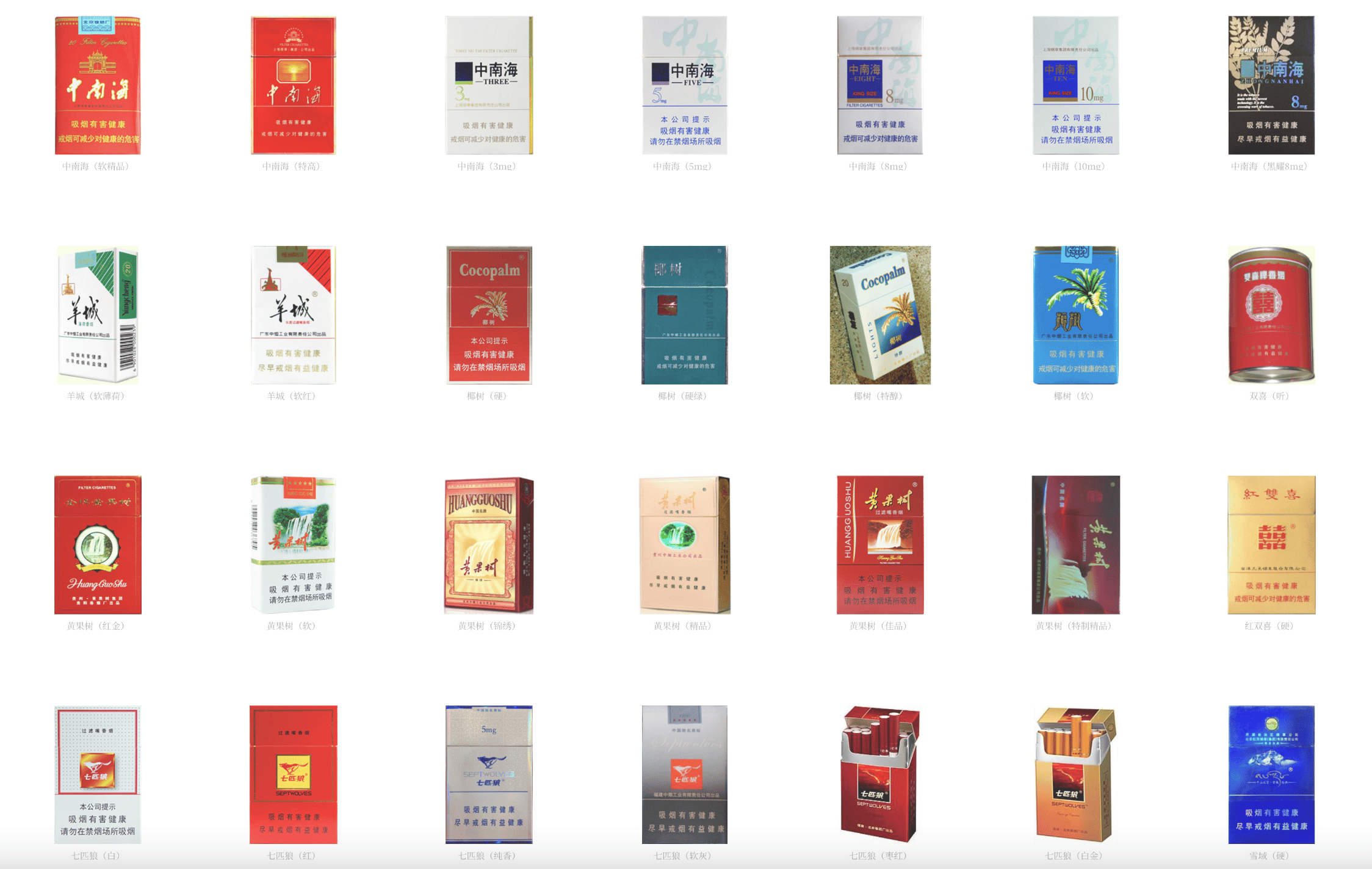

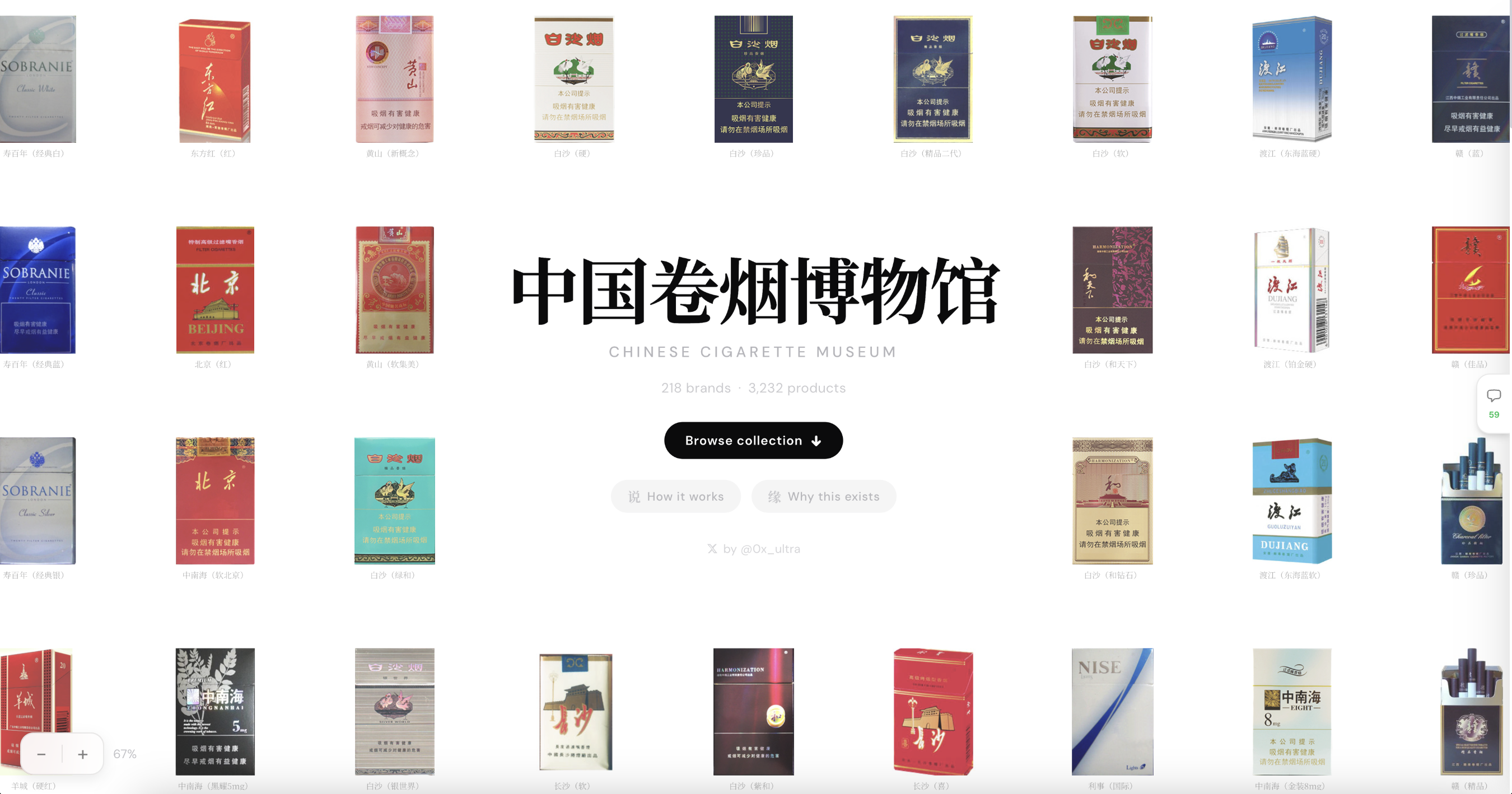
Forget dusty museum vitrines—China’s creative youth has built archives that live, breathe, and scroll. Case in point: ciggies.app, a sleek, oddly hypnotic “Chinese Cigarette Museum” that transforms everyday tobacco packaging into a living, gamified database. At first glance, it feels niche to the point of absurdity. But spend a few minutes on the site and it clicks: this isn’t really about cigarettes. It’s about documentation, aesthetics, and the growing instinct among young Chinese creators to catalog the overlooked.

Built by the elusive developer collective 0x_ultra, ciggies.app currently indexes more than 210 brands and over 3,000 individual products. Each entry reads like a cross between a design archive and a product deep dive, complete with high-resolution pack imagery, bilingual descriptions, regional origins, pricing, and even chemical breakdowns—tar, nicotine, CO levels, the works. But what elevates the platform beyond a static database is its subtle social layer. Users can mark packs as “tried” or “favorited,” contribute ratings, and climb a public leaderboard based on their personal collection footprint. The result feels less like browsing and more like participating—a quiet nod to the completionist logic that defines everything from trading cards to modern gaming culture.
That gamification taps directly into a broader shift in how China’s Gen Z engages with material culture. In an era where physical objects are increasingly ephemeral—replaced by e-commerce thumbnails and algorithm-driven feeds—projects like ciggies.app act as counter-archives. They slow things down. They obsess over packaging, typography, regional quirks—the tactile details that usually disappear in the scroll.

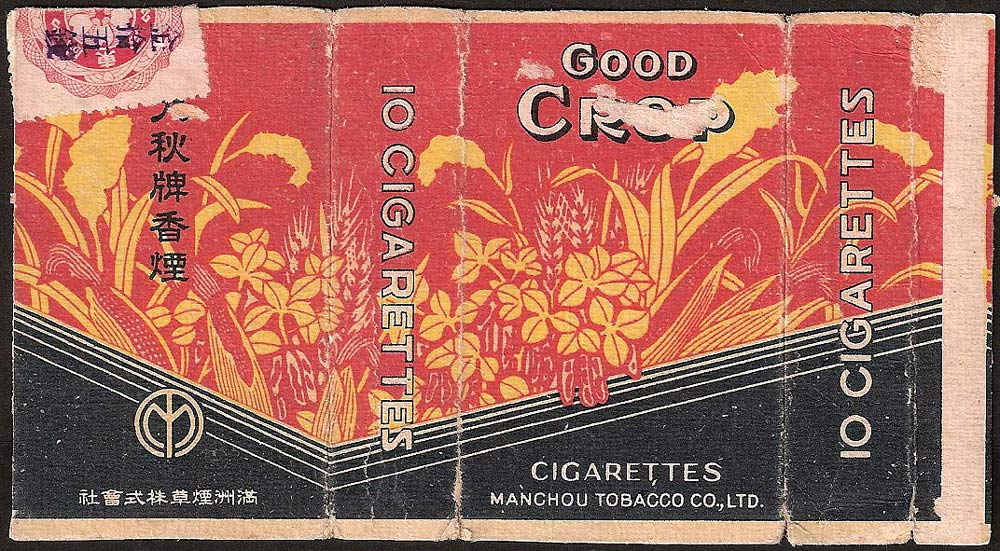
Cigarette packs, in particular, offer a surprisingly rich lens. In China, they’ve long functioned as social currency, status symbols, and design canvases all at once. From ultra-minimal luxury branding to gaudy gold embossing, they reflect shifting tastes, as well as regional identities and even political undertones. By digitizing them, the app preserves a slice of everyday visual culture that rarely makes it into official narratives. 0x_ultra’s broader ethos of “no VC, no fluff” of also mirrors a growing wave of independent, internet-native builders in China who are less interested in scale and more focused on specificity. These are passion projects with sharp edges: tools made for communities that may be small, but deeply engaged.
In that sense, ciggies.app sits comfortably alongside other grassroots digital archives emerging across the Chinese internet—from street sign typography databases to hyper-local food mapping projects. They’re perhaps about nostalgia as much as they are about control: reclaiming how culture is documented, categorized, and shared. For outsiders, the appeal might be curiosity—a peek into an unexpected corner of Chinese consumer culture. But for those inside the ecosystem, it’s something more intimate, creative, and “why the hell not?”
Cover image via screenshot from ciggie.app.