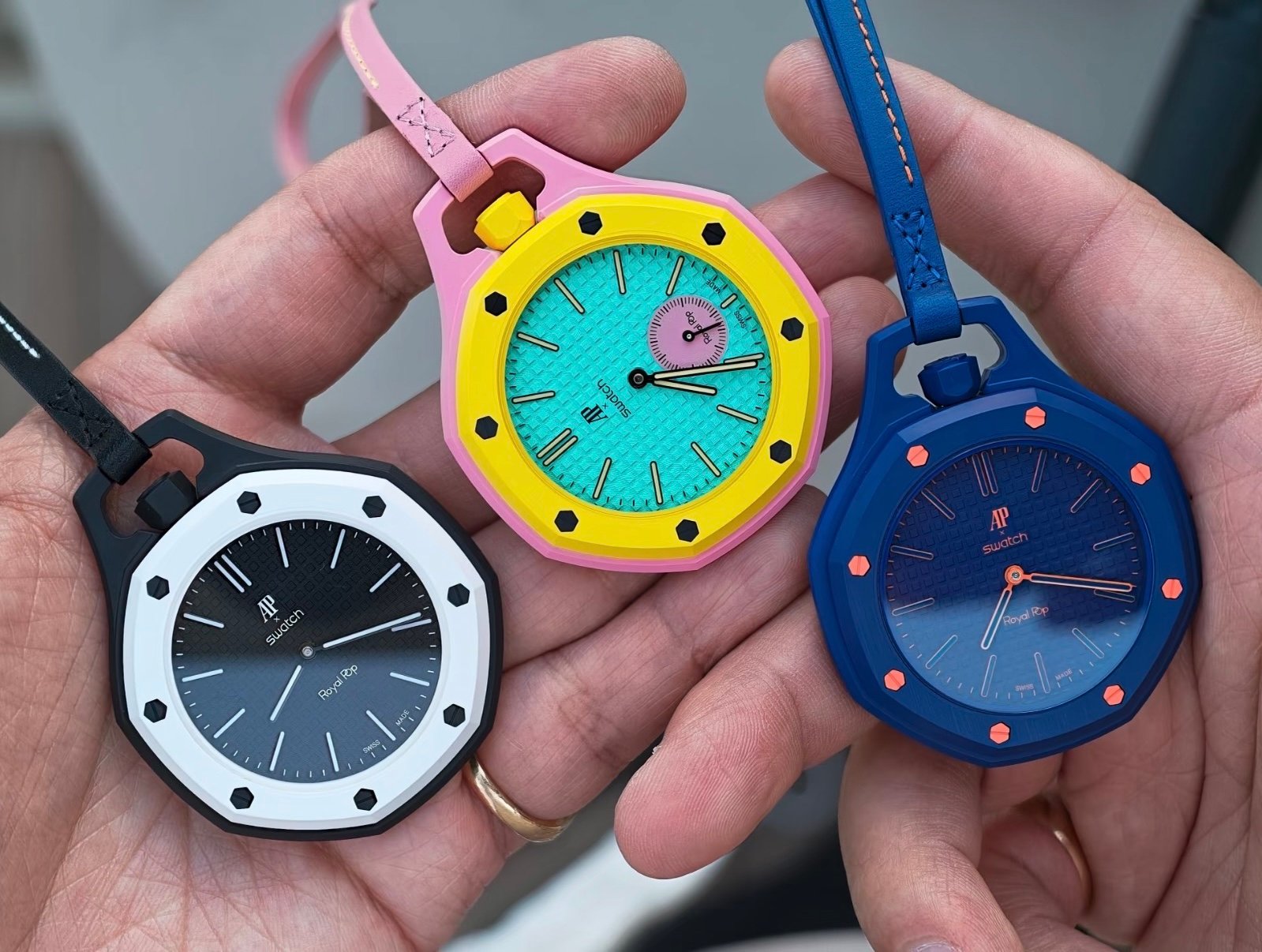

On May 16, chaos between police and shoppers erupted outside Swatch stores in major cities across the globe. Hong Kongers laid out folding stools on the pavement, waiting for nearly four days before doors opened. Whereas, on the Chinese mainland—where Swatch has stores in Beijing, Guangzhou, and Nanjing—things were, by all accounts, pretty calm.
The “Royal Pop” collection, a collaboration between Swiss watchmakers Swatch and Audemars Piguet, composed of eight bioceramic pocket watches priced between $400 and $420, became the most anticipated watch drop of the year and perhaps even the decade. Long lines snaked around stores from New York to Paris to Kuala Lumpur ahead of the launch. In Paris, police fired tear gas to restore order outside one location, where a 300-strong crowd damaged a metal shutter and assaulted two security guards. In London, crowds forced past security at the Battersea Power Station store. In Times Square, queues reportedly began forming nearly a week before launch. In Singapore, the watches sold out in under two hours at ION Orchard Mall.
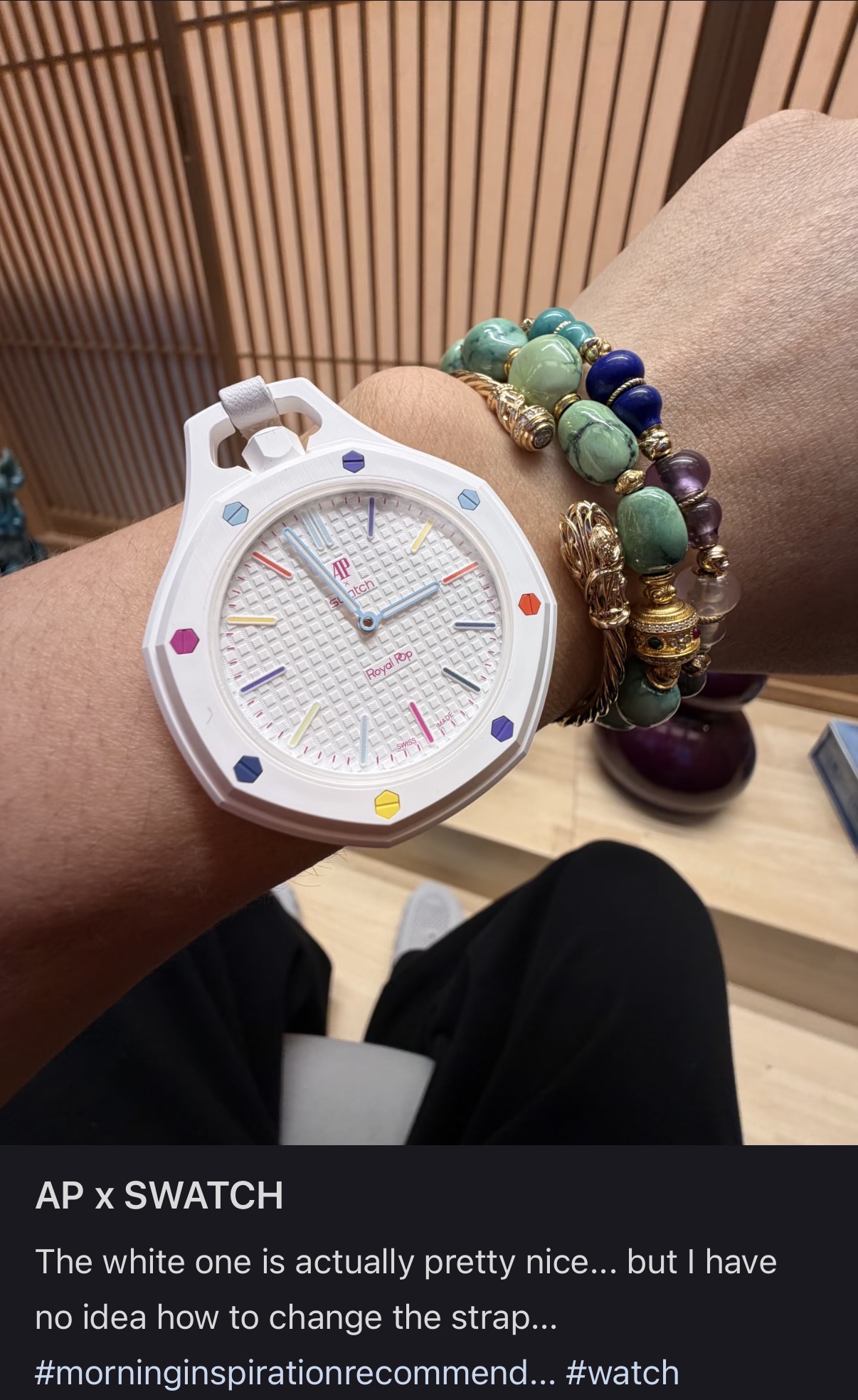
The drop was a global spectacle—except in one of the largest markets in the world: China.
The contrast was stark compared with Hong Kong, where a South China Morning Post reporter observed around 50 people queuing in Causeway Bay as early as Thursday evening, days before Saturday’s launch. One hopeful buyer put it plainly: “If you don’t try, you don’t win. How many opportunities do you have in your lifetime to get an AP?” In theory, aspirational luxury at an accessible entry point should intrigue many in China as well. However, as the numbers show, that was not the case—but why?
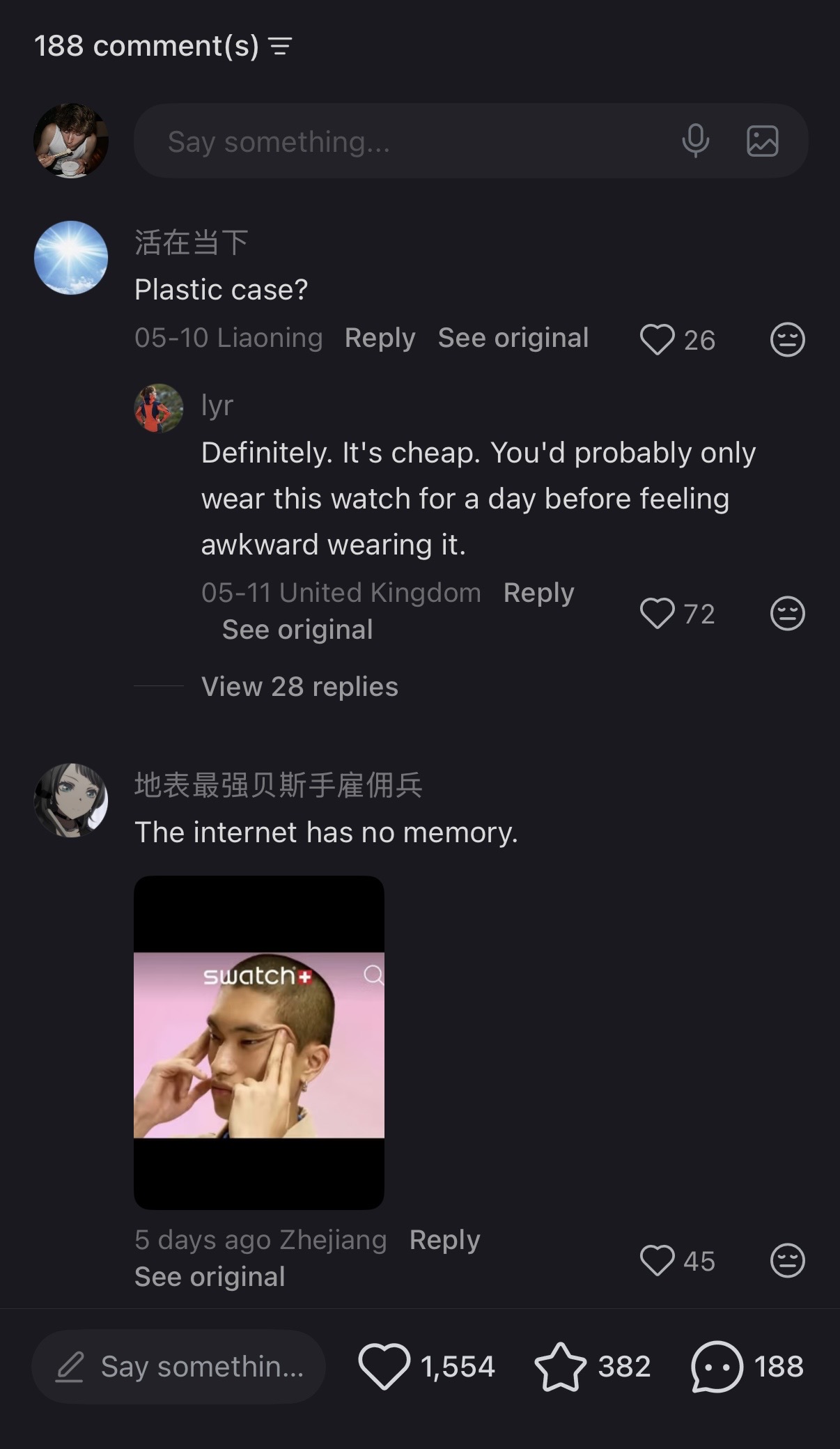
It primarily comes down to controversy. Swatch went into this launch with significant reputational damage in the Chinese market, damage it had done to itself, no less. In August 2025, the brand was forced to pull an ad campaign after an Asian male model was photographed pulling the corners of his eyelids back—a gesture widely condemned on Weibo as racist. A user with over one million followers accused Swatch of “racism against Chinese people,” and calls for a boycott of Swatch Group brands, including Blancpain, Longines, and Tissot, spread across the platform. The company posted an apology, but the outrage did not just fade away.
On Xiaohongshu, netizens made it crystal clear that they did not forget what happened. Others criticized the cheap quality of the product, with the casing being made of plastic. On the sharper side, “The brand’s image has collapsed,” one Weibo user wrote. “[Swatch] thinks they can just apologize and salvage everything? It’s not that simple.” Harsh words, but true nonetheless.
This sentiment is dangerous for companies in a market already cooling on Western luxury. Swatch‘s CEO acknowledged in 2024 that Chinese consumers had become more price-sensitive and were “waiting a long time before making purchases,” with the group’s slump that year described as “exclusively attributable” to sluggish demand in China.
Meanwhile, the broader luxury market in China dropped 18–20% in 2024. The Royal Pop’s modest $400 price tag is attractive in places where owning an AP is an aspirational goal, but other factors clearly hold weight, too. Globally, the watch world’s verdict was mixed, but sentiment around the Royal Pop skewed more negative, with 53% neutral, 31% negative, and 16% positive. The market’s behavior, though—and the frenzy—was real, and it was almost entirely centered in the West, diaspora Chinese markets, and major cities—Hong Kong, Singapore, Tokyo—that still place a high value on Western luxury.
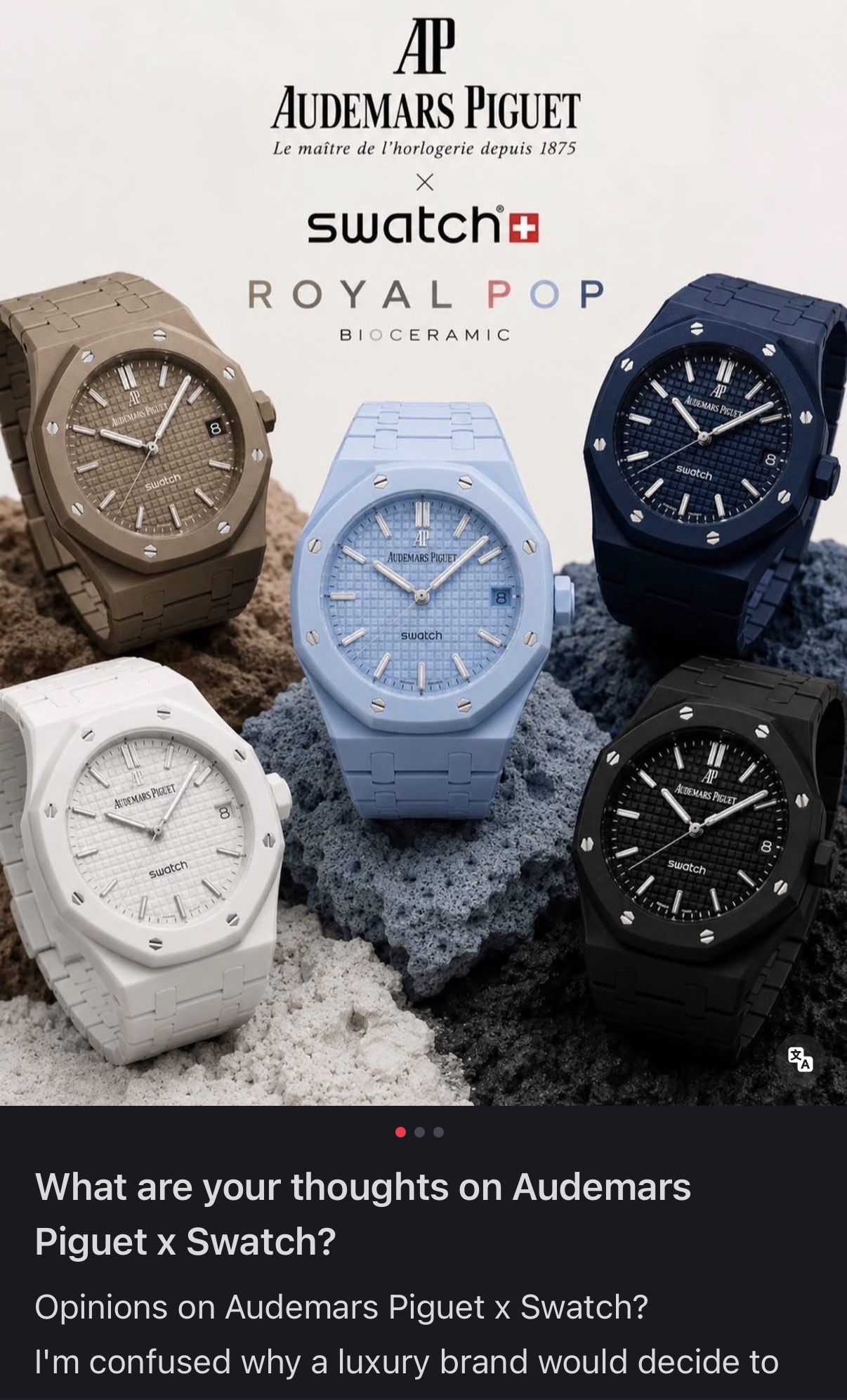
Over in China, the international pandemonium barely registered. Whether that’s a statement about brand trust, changing consumer tastes, or the particular damage Swatch did to itself in the summer of 2025 is hard to say with certainty. However, it’s probably a mix of all three to different degrees. What is clear is that the launch produced two very different stories depending on where you were—and for brands, it’s worth noting.
Cover image via Xiaohongshu.