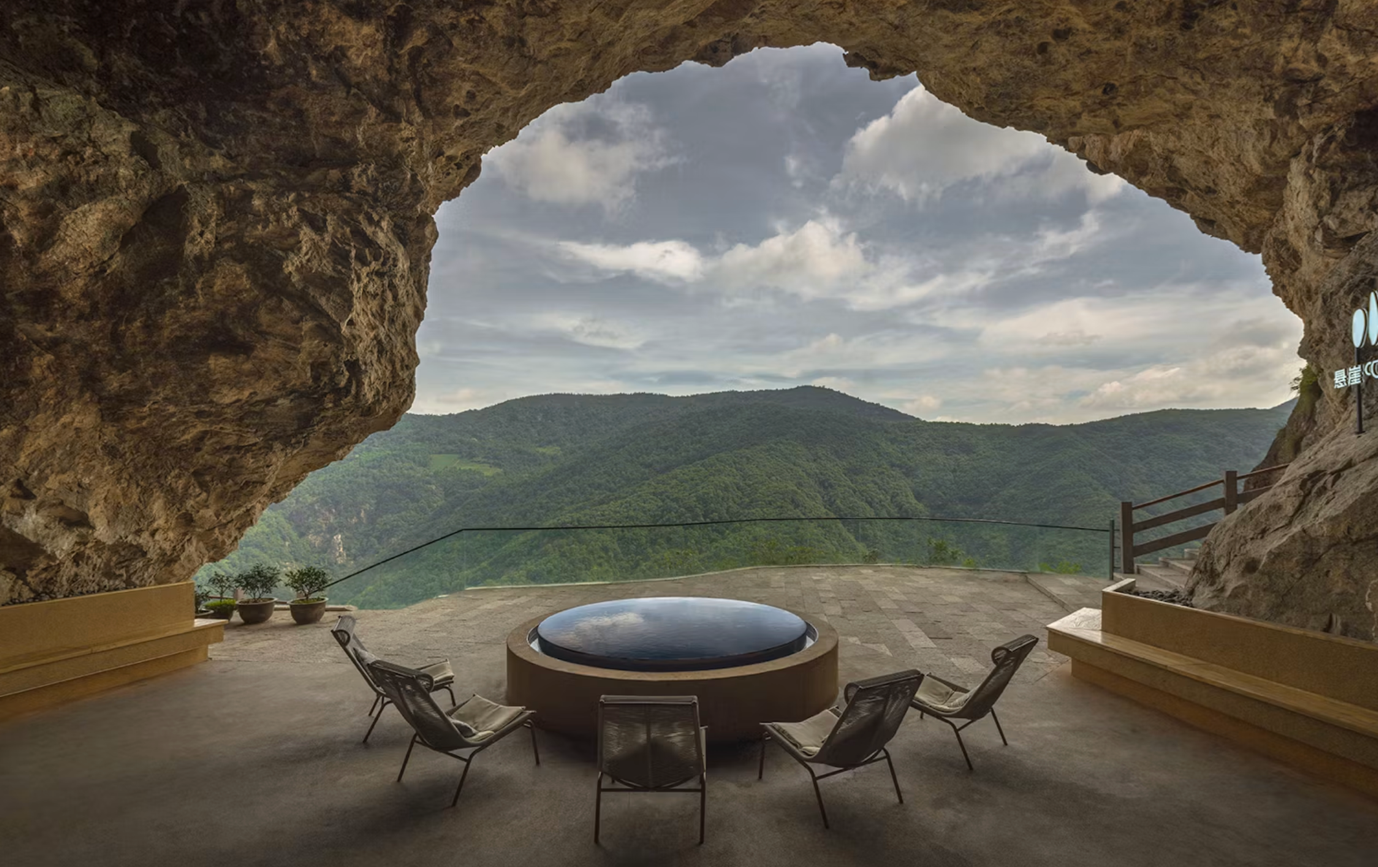

Amid China’s latest café craze, caffeine isn’t the only thing that’ll give you jitters. Located in mountain caves and along cliff faces across regions like Zhejiang, Guangxi, Guizhou, and Fujian, “cliffside cafés” are quite literally elevating the coffee-drinking experience to new heights.
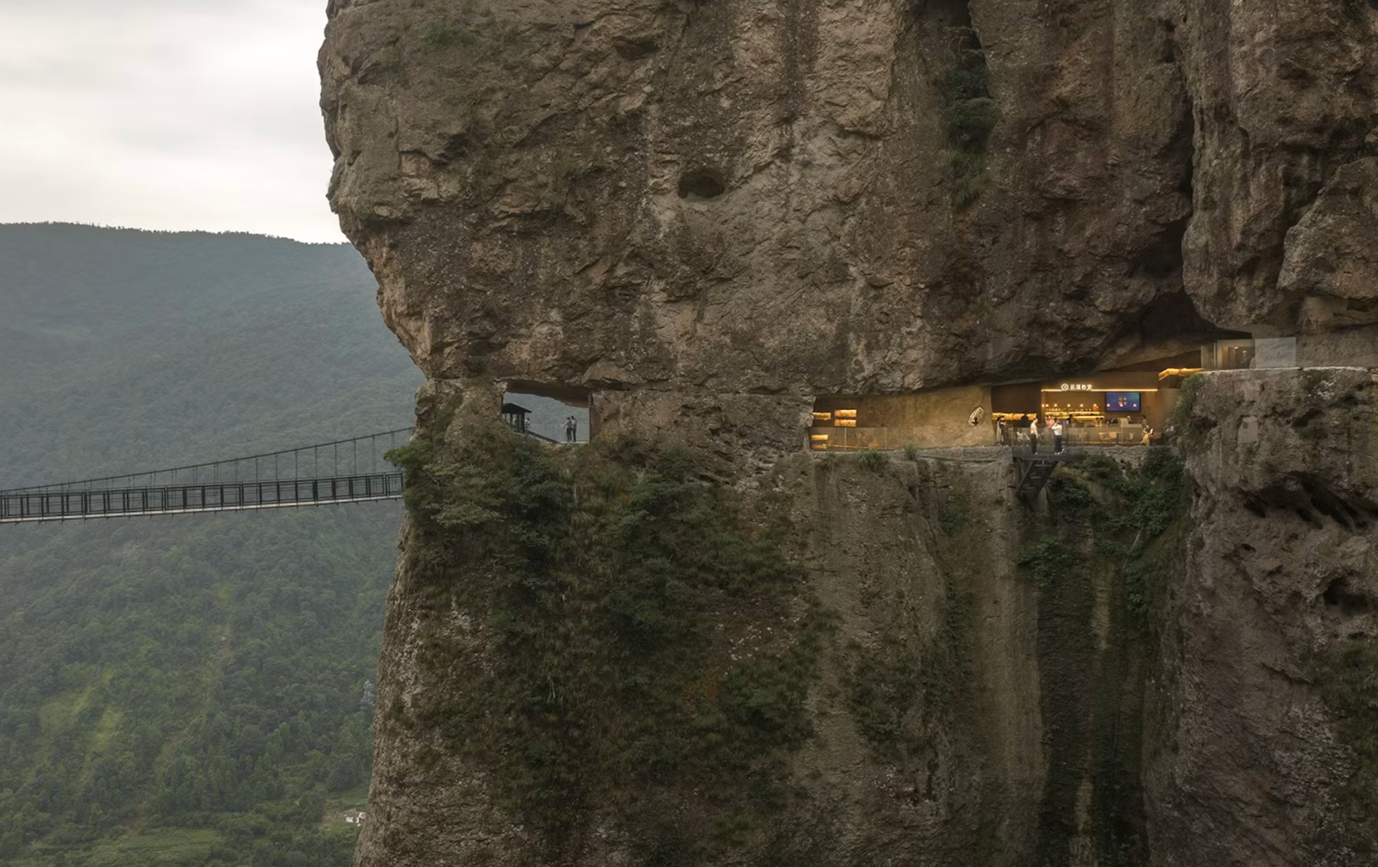
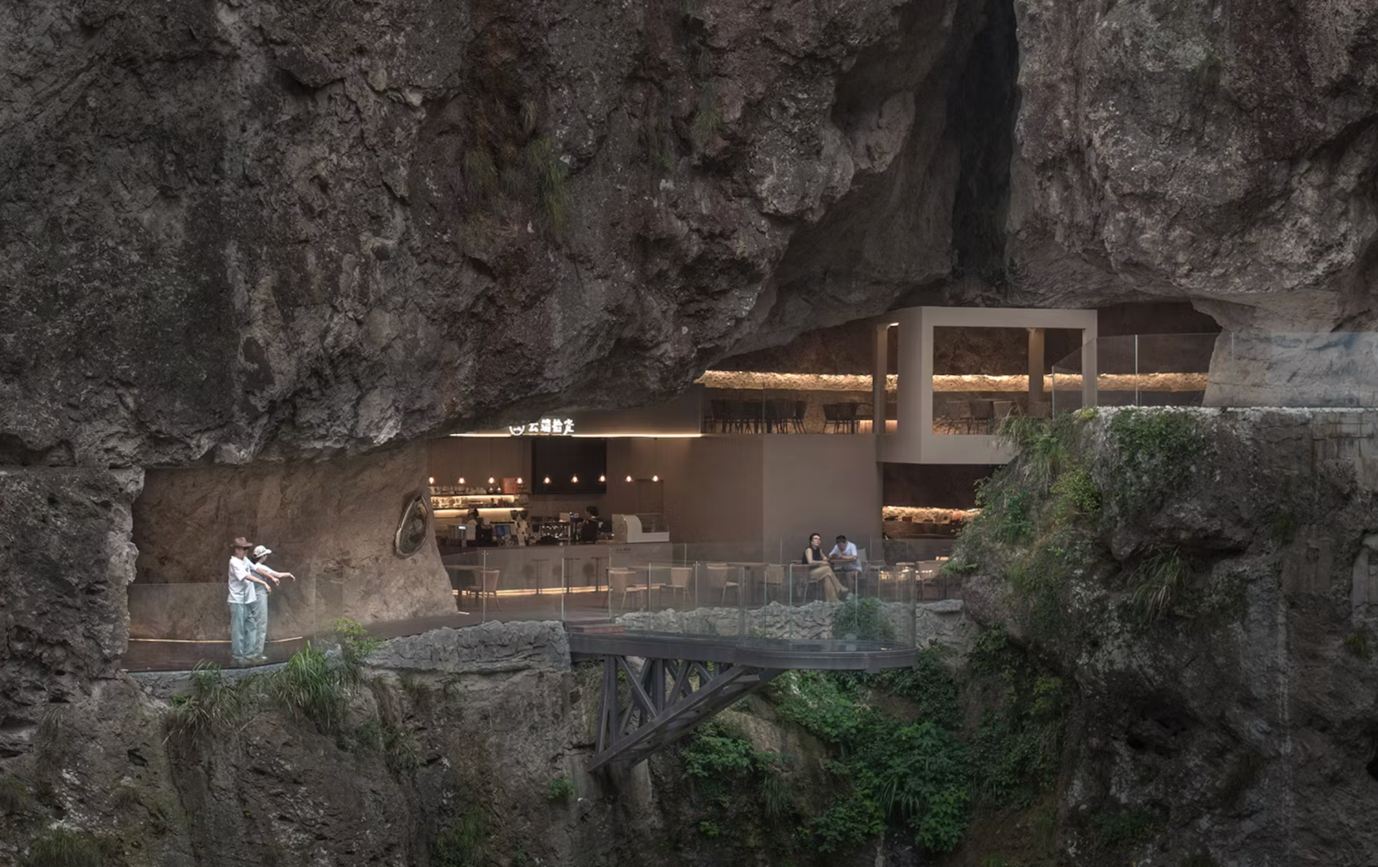
Within Zhejiang’s Yandang Mountain range lies an award-winning café designed by Slow Coral Design. The café sits tucked within the mountain face, with a dramatic glass viewing platform that extends out the front.
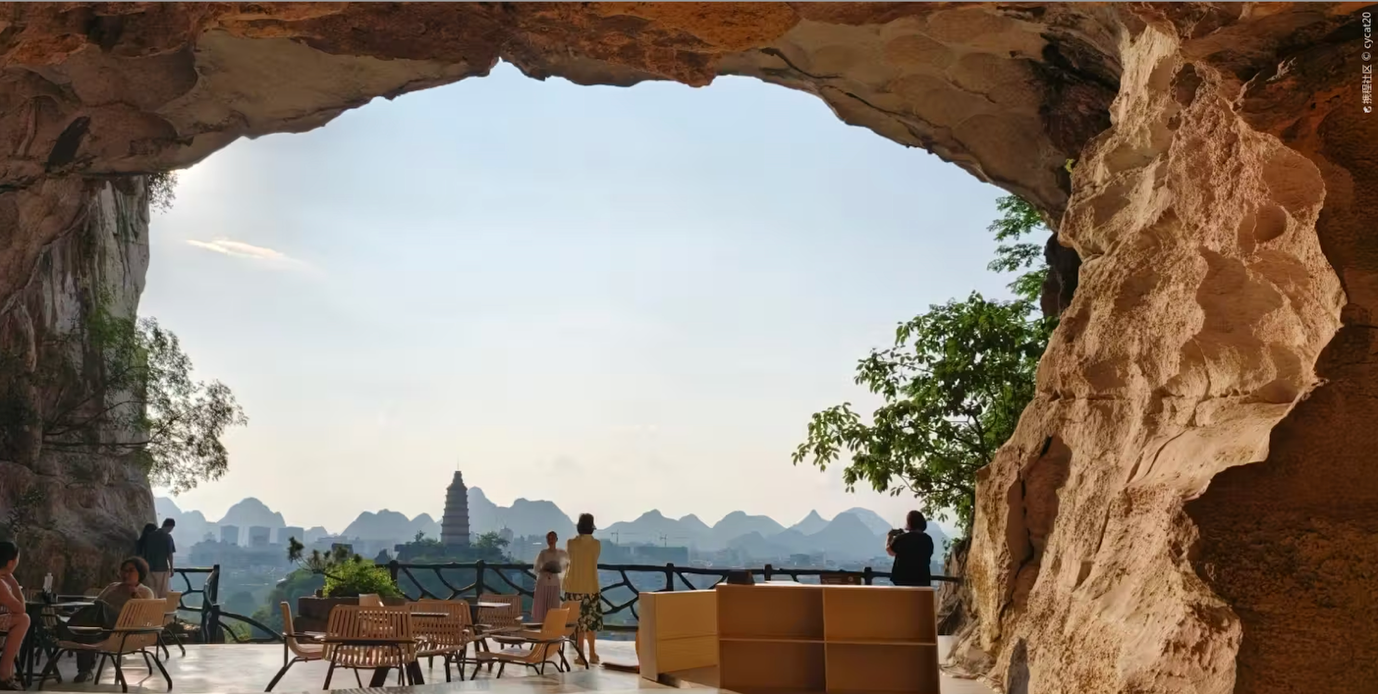
Moon Rock Café sits among the breathtaking karst landscapes of Guilin, Guangxi Zhuang Autonomous Region. The café is nestled within the eponymous Moon Cave system in Chuanshan Park, one of several naturally formed caves located in the scenic area. Chuanshan or 穿山 literally means “pierced mountain,” referencing the main passage of Moon Cave which penetrates the mountain from north to south.
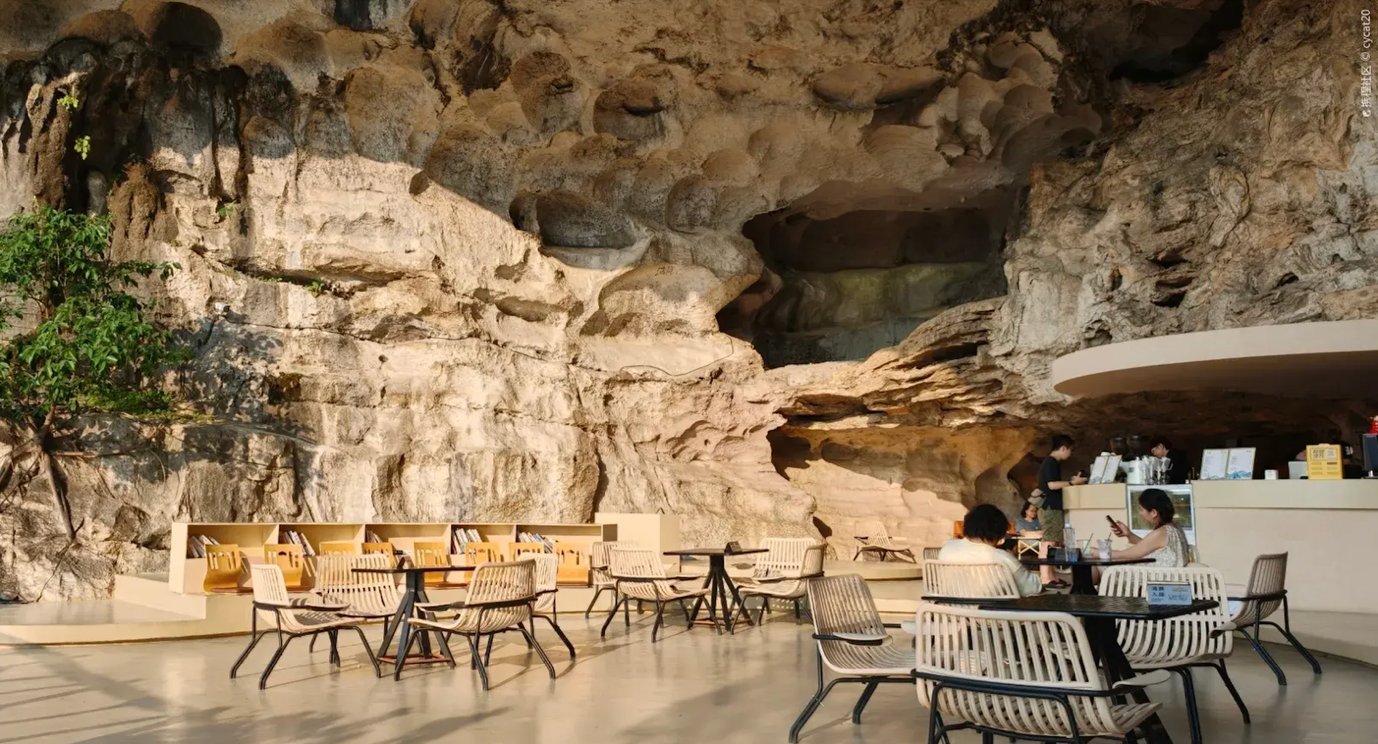
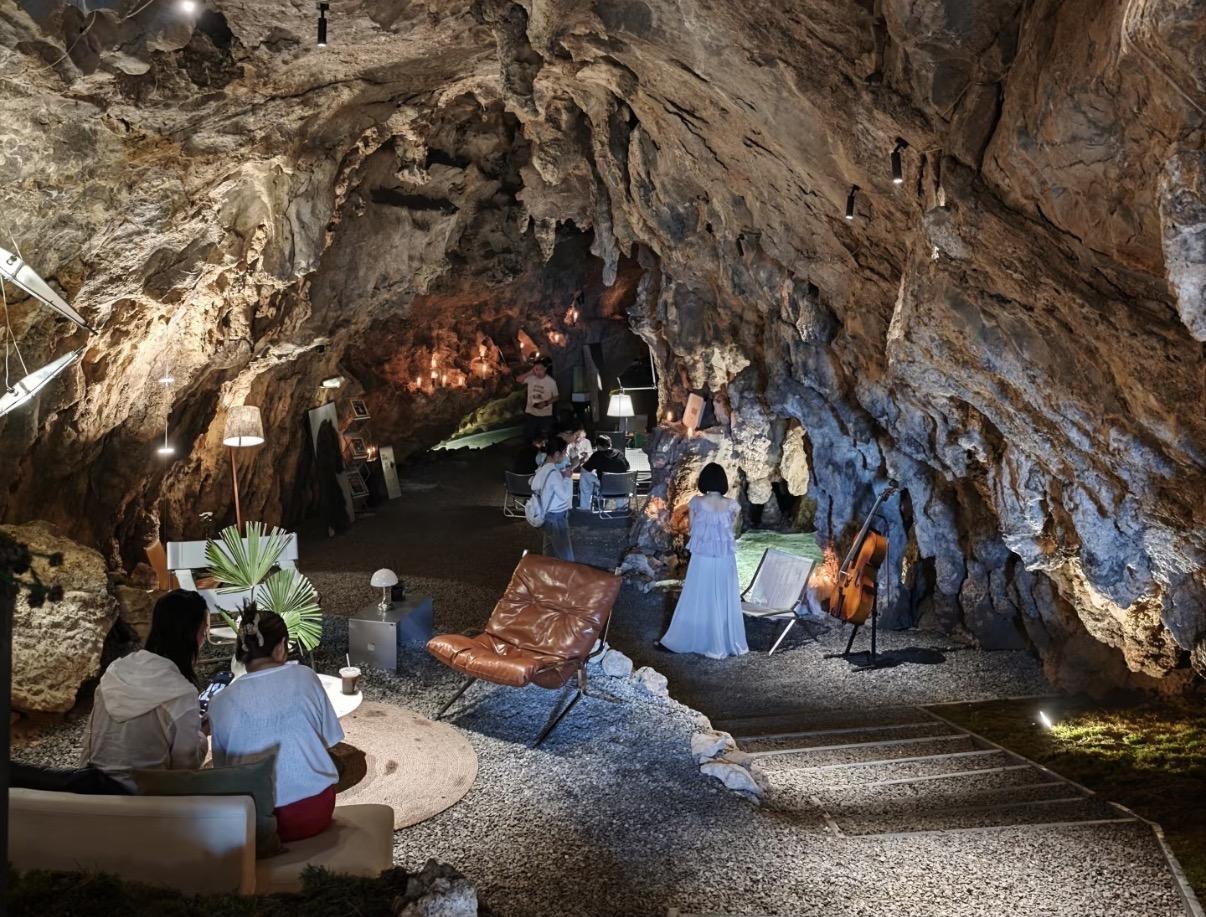
Guizhou, reportedly home to around 42,800 cave entrances, has seen an explosion of cafés opening up inside its karst landforms in recent years. XIU Coffee, located in Xiuwen County’s Xiangbahu Village, saw 40,000 visits between its opening in August 2025 and December of that year.
For those seeking even greater thrills, Gushi Cliff Coffee in Fuzhou, Fujian Province, offers cliffside coffee with ocean views — accessible only via a via ferrata (a protected mountain face climbing route). Though 398 RMB (just under 60 USD) may seem steep for a coffee fix, the fee also includes insurance, photography, equipment, and even a professional coach.
As China’s coffee culture continues to develop at seemingly breakneck speed, innovative flavors alone may not be enough to impress Xiaohongshu audiences anymore. This reflects the increased emphasis on experiential consumption among Chinese urban youth, particularly the rising demand for unique outdoor experiences that offer a break from city life. The spread of cliffside cafés additionally highlights China’s growing cultural tourism industry, with these cafés helping to boost local (often rural) economies as well as encouraging greater engagement with the country’s vast natural and cultural heritage.
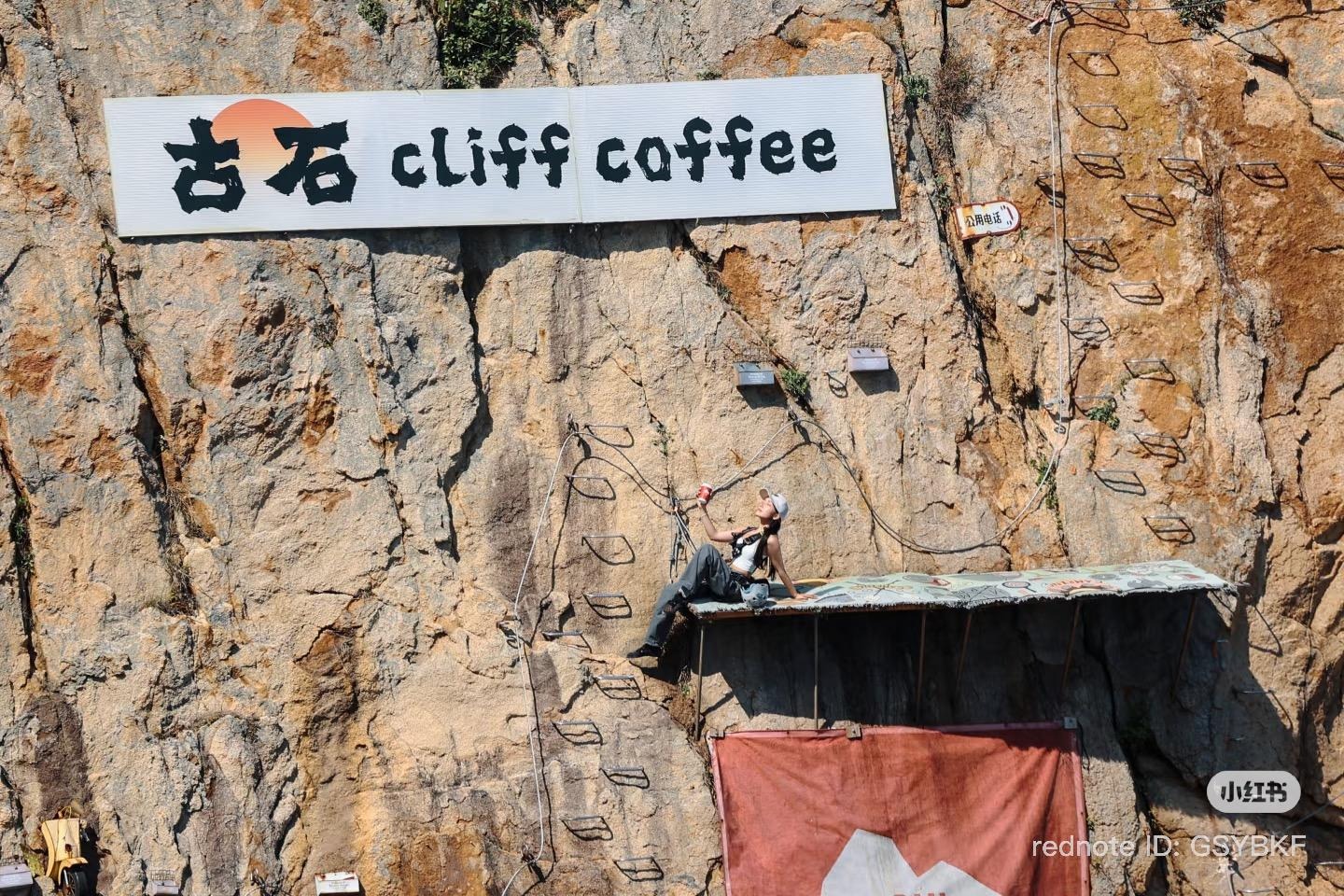
Of course, it is undeniable that the almost otherworldly spectacle of these cafés has clear daka or 打卡 (literally meaning “punch card”) appeal, referring to the phenomenon of “checking in” at trendy sites on social media. But XIU Coffee’s 27% repeat customer rate in the months after its opening suggests that the appeal of these cafés extends beyond just social media shots.
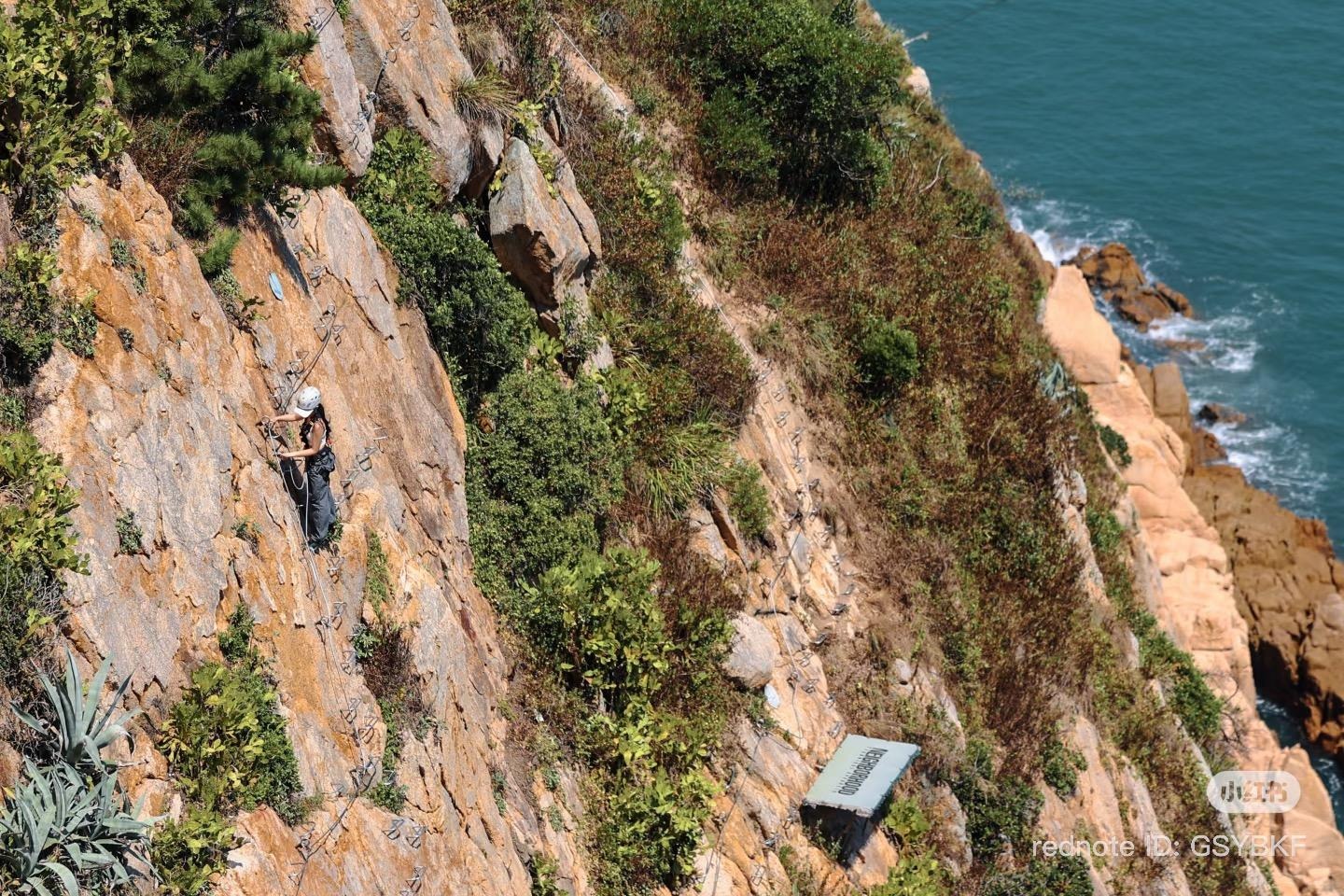
As Chinese Gen Z increasingly embraces slower, more immersive forms of travel over daka tourism, these cafés’ combination of physical activity, natural scenery, and leisure may offer just the kind of simultaneously shareable and meaningful experiences many young urbanites are seeking.
Cover image via Architizer/Slow Coral Design.