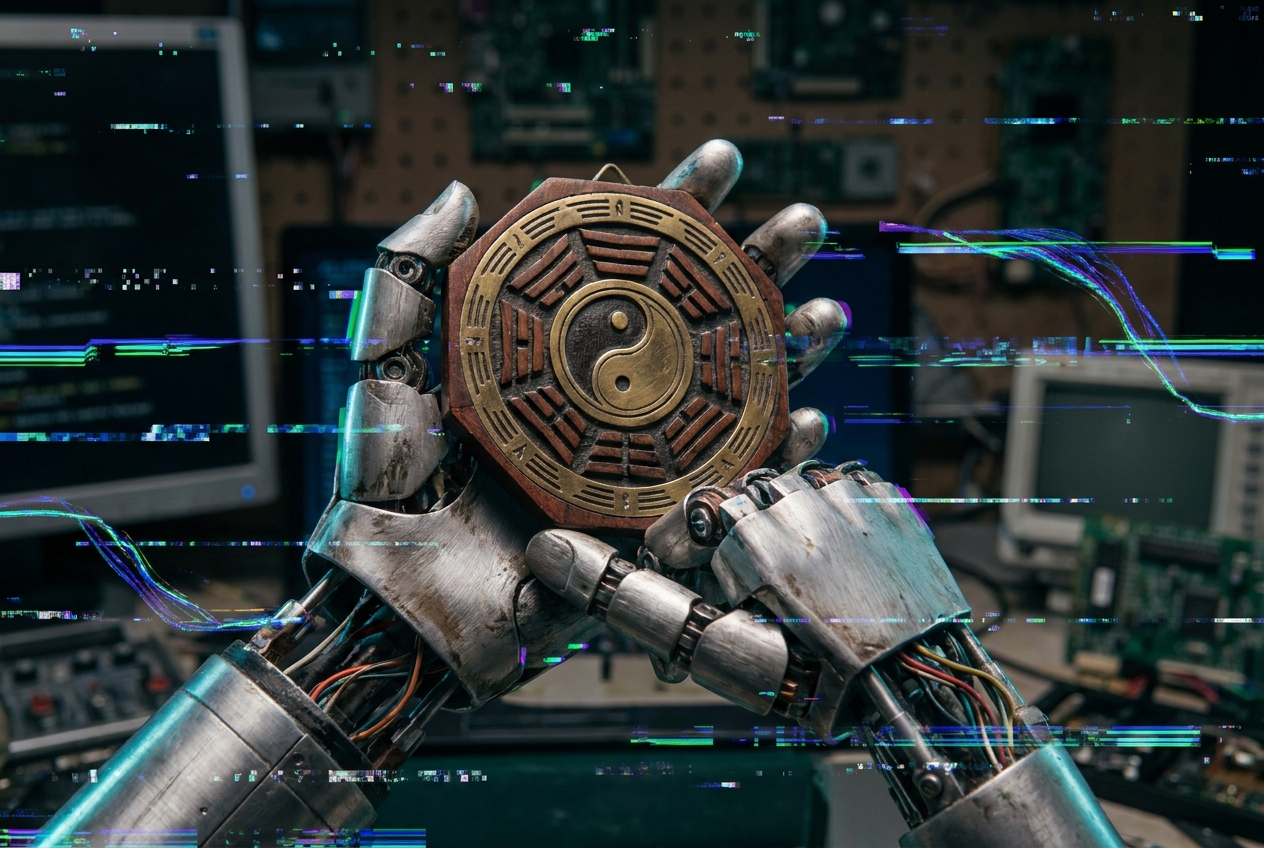

Ask an AI chatbot about your career, relationship, or future, and it will probably give you an answer. Ask it to read your ba zi, however, and you enter a very different kind of conversation.
Across Chinese social media, users have been feeding detailed birth information into AI models such as DeepSeek and asking them to interpret their ba zi, or Four Pillars of Destiny. On Xiaohongshu, the practice became a viral trend, with users sharing prompts for everything from relationship compatibility to career and fortune readings. Some users ask whether they should change jobs; others ask about romantic compatibility or when a particular period of good fortune might arrive. In 2025, the trend became prominent enough in China that the hashtag #DeepSeekFortune racked up tens of millions of views on Xiaohongshu.
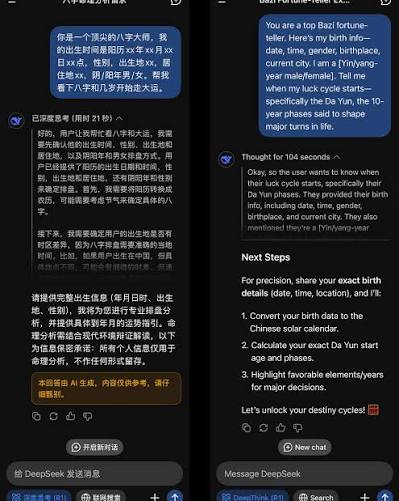
The appeal is obvious. A traditional fortune-teller might require an appointment, a fee, and some idea of what you want to ask. There’s also the potential awkwardness of telling someone your deepest thoughts, most worrying concerns, and other forms of deep desires. An AI oracle is available whenever you are, whether that means after a bad day at work or while wondering if you should text an ex at 1 AM. It can also happily explain the same chart over and over again, without charging by the hour. And, of course, no awkward silence to weather through.
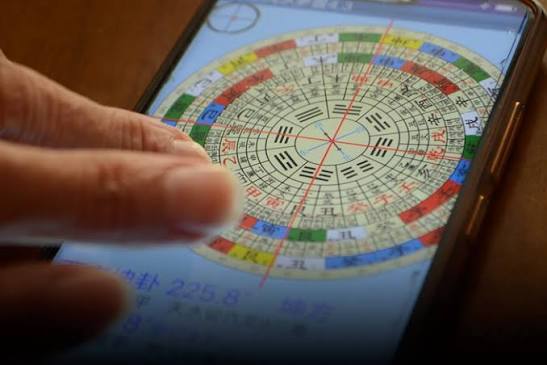
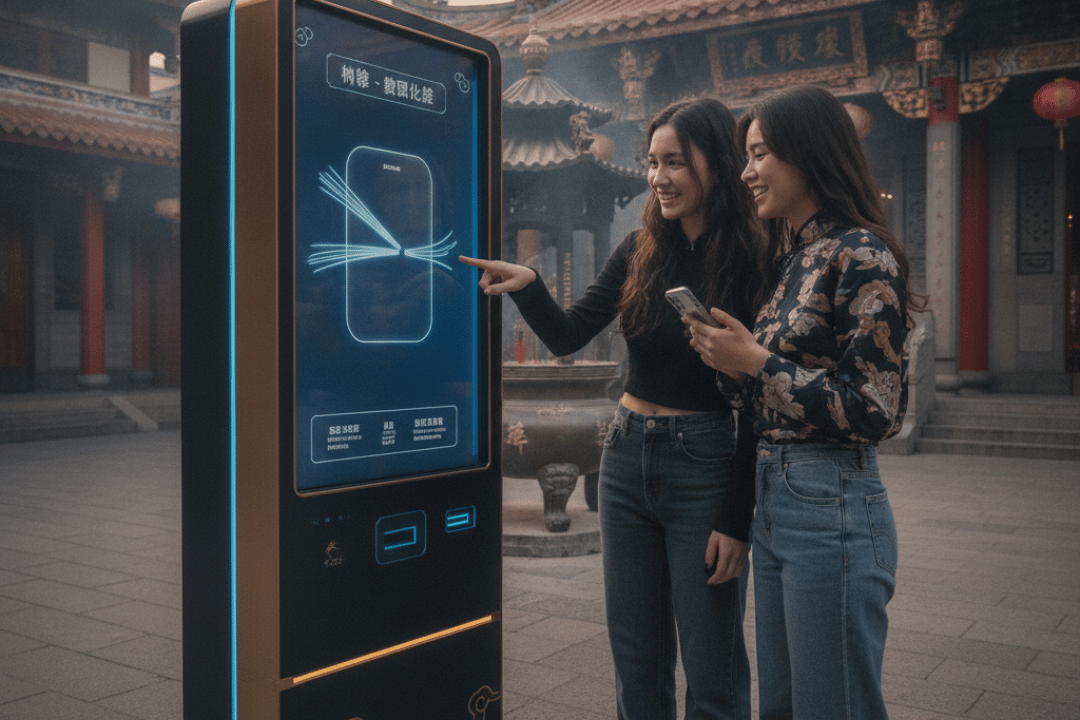
And increasingly, you don’t even need to know what you’re doing. A growing crop of apps now combine AI with ba zi, feng shui, I Ching, Zi Wei Dou Shu and other forms of Chinese metaphysics, turning practices that can take years to learn into something resembling a chatbot conversation.
From Reading the Stars to Reading a Chatbot
Chinese divination encompasses a sprawling collection of traditions rather than one single system. Ba zi, or the Four Pillars of Destiny, uses a person’s year, month, day, and hour of birth to construct a chart based around the traditional Heavenly Stems and Earthly Branches. Other systems, such as I Ching divination and Zi Wei Dou Shu, use different methods to interpret a person’s circumstances and possible future.
For generations, accessing these systems often meant finding someone who had spent years learning how to interpret them. That expertise was not simply a matter of plugging information into a formula. A practitioner would interpret a chart, ask questions about a client’s circumstances, and use their experience to decide which details mattered.
AI changes that relationship by putting the interpretation layer into the interface.
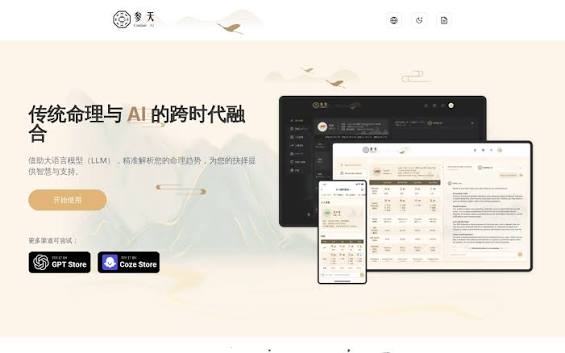
A user can generate a ba zi chart through an app, paste it into ChatGPT, Claude, or DeepSeek, and ask the model to explain it. Some dedicated services now go much further. Cantian AI, for instance, offers ba zi, Liu Yao divination, feng shui and I Ching readings alongside an AI interpretation layer, while YiMatrix combines ba zi with Zi Wei Dou Shu, multiple forms of divination and an AI chat assistant that can explain a user’s chart.
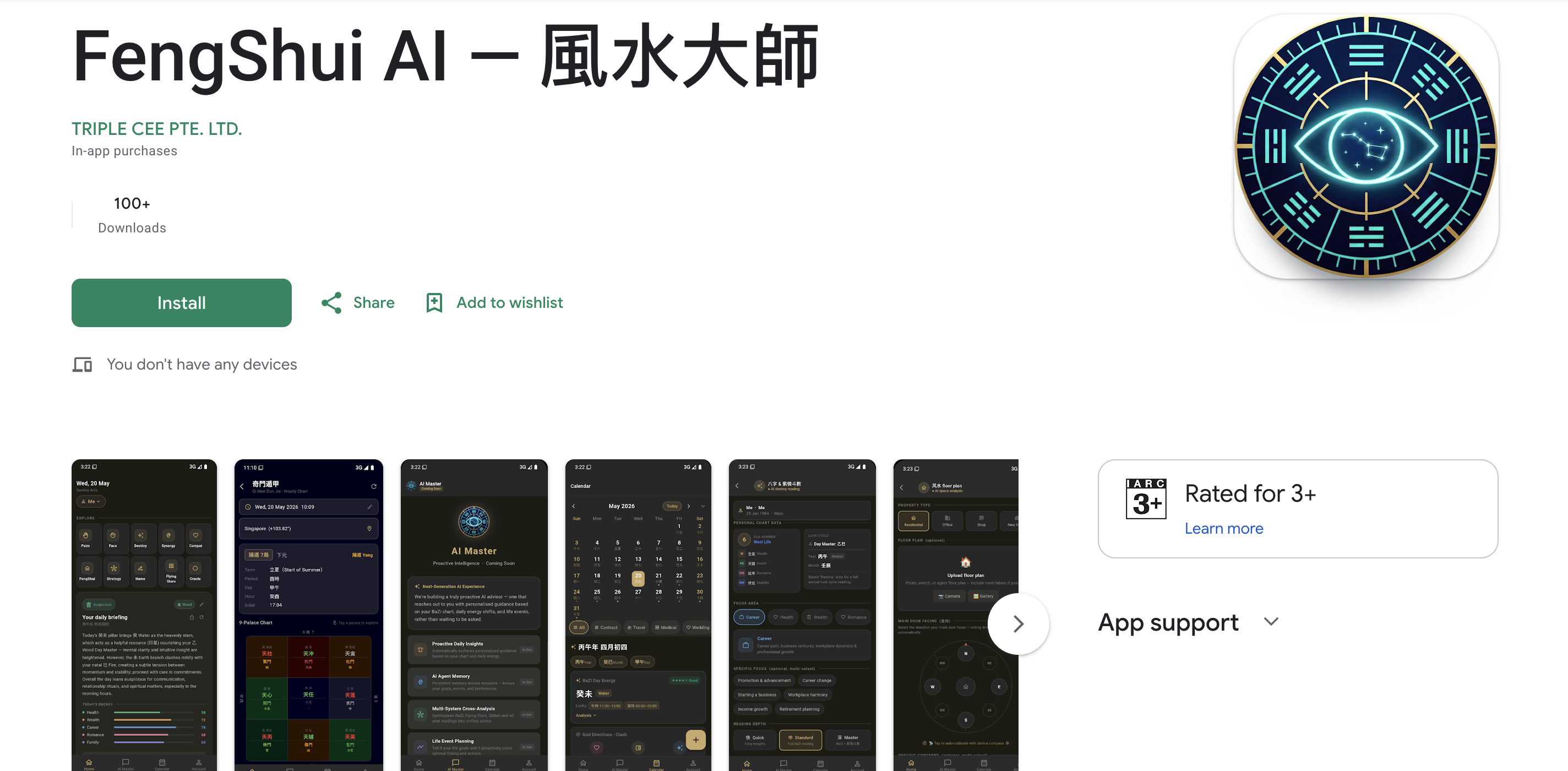
Other apps are making the process even more familiar. FengShui AI offers personalized daily readings, compatibility analysis, I Ching readings, and even the ability to upload photographs of a space for an AI feng shui assessment. Another app, 8Luck.AI, combines ba zi with AI face and palm analysis.
Your Digital Fortune Teller Is Always On
That accessibility may be the most significant change.
A 2025 South China Morning Post report spoke to young Chinese users who were combining traditional astrology apps with generative AI. One 21-year-old user described generating her ba zi chart and then feeding it into ChatGPT to assess her compatibility with her boyfriend.
The questions being asked are remarkably ordinary: Will my career improve? Is this relationship right for me? Should I make this decision? When will things get better?
That may help explain why AI fortune-telling has found an audience among young people who might not necessarily describe themselves as deeply religious or superstitious. A 2026 study of young Chinese users found that people engaged with AI fortune-telling in several ways, including playfully, emotionally, and through combinations of digital tools and existing spiritual practices. Another study of more than 1,000 social-media posts and user interviews found that people often treated LLM fortune-telling less as a precise predictive system and more as a source of emotional support.
In other words, you don’t necessarily have to believe that the chatbot can see your future to find the exercise useful. It can just be curiosity, interest, or even mere amusement.
There is something oddly familiar about this, too. People have long turned to fortune-telling during uncertain periods, whether because they genuinely believe in it or simply want another perspective on a difficult decision, or to find some levity. AI removes much of the friction involved. You don’t have to explain why you’re asking, worry about being judged, or wait for an appointment. You can simply ask again, and again.
What Happens When You Can Ask Fate Until You Like the Answer?
Unlike a human fortune-teller, an AI can produce another reading almost instantly. If the answer doesn’t sound right, you can change the wording of the prompt, provide more information, or ask the question from another angle (for better or worse).
Research into Chinese users of generative-AI fortune-telling has found this behavior precisely. In one 2026 study involving interviews with 22 regular users and an analysis of 1,842 online community posts, researchers found that some users repeated queries until they received interpretations that aligned more closely with what they expected. Users appreciated AI’s convenience and efficiency, but also felt that it lacked some of the spiritual mystique associated with human divination.
That creates an interesting paradox.
Traditional divination is often presented as a way of confronting uncertainty: you ask a question, receive an interpretation, and decide what to do with it. AI can instead turn divination into an iterative conversation. The “oracle” doesn’t necessarily deliver one answer. It gives you an answer, waits for your response, and then gives you another.

The distinction matters because today’s AI fortune tellers aren’t supernatural machines. Large language models generate responses from patterns in their training data, and specialized applications combine those models with systems for calculating and interpreting traditional charts. Their predictions are not scientifically validated, and even the apps themselves generally frame their readings as guidance, entertainment, or reference rather than certainty.
The New Fortune Teller Doesn’t Need a Crystal Ball
For thousands of years, divination has adapted to whatever tools people had available: calendars, almanacs, coins, charts, stars, and specialized texts. The smartphone may simply be its latest interface.
But as with everything else AI-related, the use cases here are accessibility and immediacy. Someone’s desire to know the future is not dependent on an appointment anymore; they can simply do so through a screen.
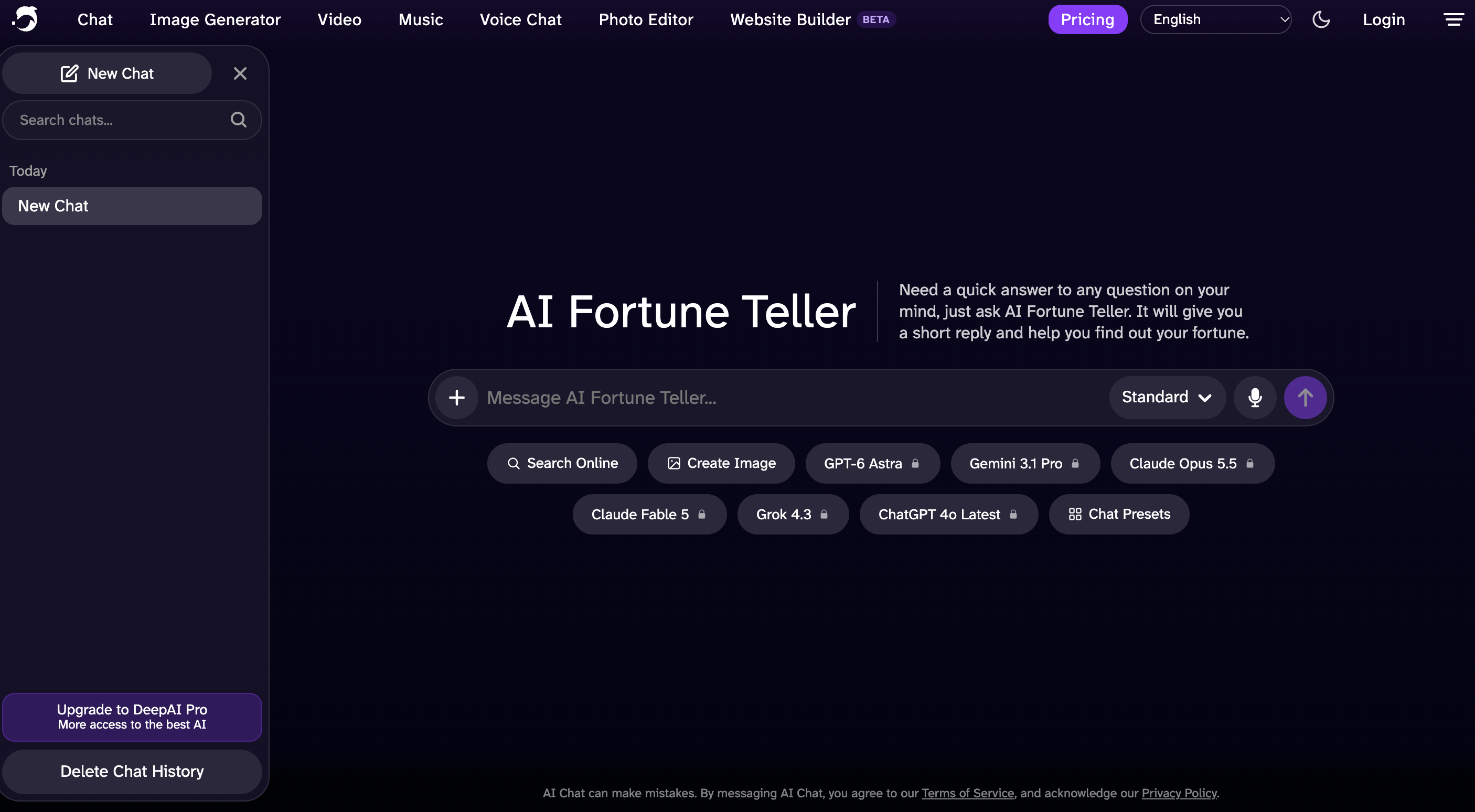
Plus, a person who knows nothing about the Four Pillars can now generate a chart in seconds. Someone curious about feng shui can photograph a room and ask for suggestions. Someone worried about a relationship can ask an AI to compare two birth charts. And someone who has never sat across from a fortune-teller can have an extended conversation with one without ever leaving the sofa.
That doesn’t mean the human fortune-teller is about to disappear. Far from it. Traditional practitioners still argue that genuine interpretation requires experience, intuition, and an understanding of the person sitting in front of them. There’s no replacing that.
Instead, divination is becoming less of a specialized service and more of a digital habit. Like trying to figure out how to interview for a job without needing to ask a career coach, or understanding stock exchanges without having to consult a stockbroker.
Cover image via RADII/Nano Banana Pro.