
Feature image of How Foochow Transformed a Malaysian Town Through Food

How Foochow Transformed a Malaysian Town Through Food

4 mins read

4 mins read

Feature image of How Foochow Transformed a Malaysian Town Through Food
More than a century after settlers from Fujian arrived in a town in East Malaysia, it’s now the beating heart of Malaysia’s Foochow community and its distinctive cuisine.

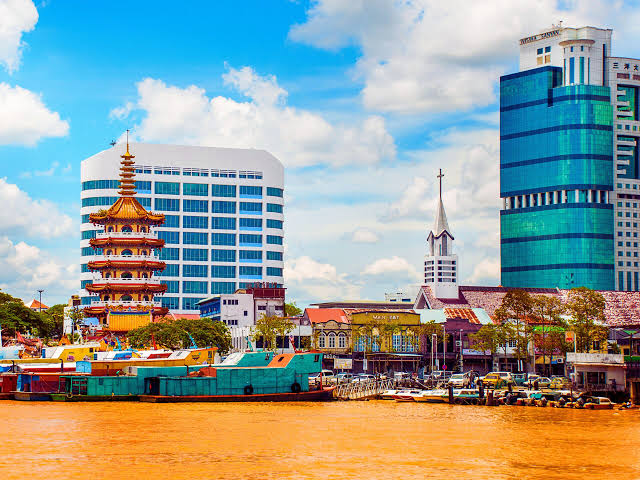
Few cities outside China are as closely associated with a single Chinese dialect group as Sibu, a riverside city in the Malaysian state of Sarawak.

Also at times known as “New Fuzhou” or “Little Fuzhou,” Sibu has been the cultural heart of Malaysia’s Foochow community since the first settlers from China’s Fujian province arrived around 1901. More than a century later, the dialect is still widely spoken thanks to generation after generation of tenacious teaching, while Foochow-run businesses continue to shape the local economy and the community’s culinary traditions.
RADII delves in Foochow migration heritage that shaped the food landscape in Malaysia and other parts of Southeast Asia.
Sibu, Sarawak. Image via Borneo Insider’s Guide.

But what makes Sibu remarkable is not just that it preserved the cuisine its settlers brought from China. Over generations, those recipes evolved alongside life in Borneo, giving rise to a distinctly Sarawakian Foochow cuisine.

Today, the city’s signature dishes tell a story that stretches far beyond the kitchen. They are a testament to migration, adaptation, and how food can preserve a community’s identity while evolving in a new home.

From Fujian to the Rajang River

As the history books have revealed, the story started more than 125 years ago.

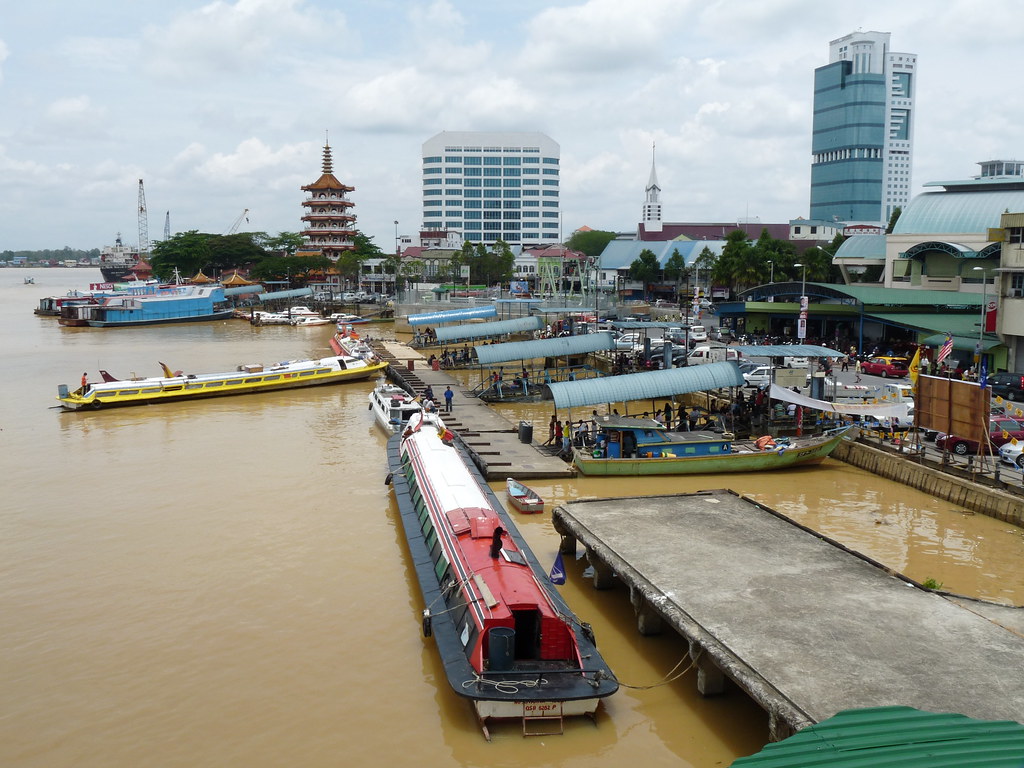
In 1901, Rajah Charles Brooke invited Foochow settlers from Fuzhou, the capital of Fujian province, to establish agricultural colonies along the Rajang River, a fertile, winding waterway that leads all the way to the South China Sea. Spearheaded by Methodist pastor Wong Nai Siong, more than 1,000 migrants made the journey to what was then the Kingdom of Sarawak, hoping to escape political instability and economic hardship in southern China.
RADII delves in Foochow migration heritage that shaped the food landscape in Malaysia and other parts of Southeast Asia.
The Rajang River. Image via Flickr.

Life was far from easy. The settlers faced floods, disease, and unforgiving rainforest conditions. Many struggled during their first years in Borneo, but they gradually transformed the region into a thriving agricultural settlement built on pepper, rubber, and rice cultivation.

As the community prospered, Sibu grew alongside it. Coffee shops, bakeries, and family-run restaurants became gathering places where Foochow traditions were passed from one generation to the next. Food, in particular, became one of the strongest links between the migrants and the homeland they had left behind.

Noodles Reign, But There’s More

Outside Sarawak, Foochow cuisine is often reduced to a single dish: kampua mee.
RADII delves in Foochow migration heritage that shaped the food landscape in Malaysia and other parts of Southeast Asia.
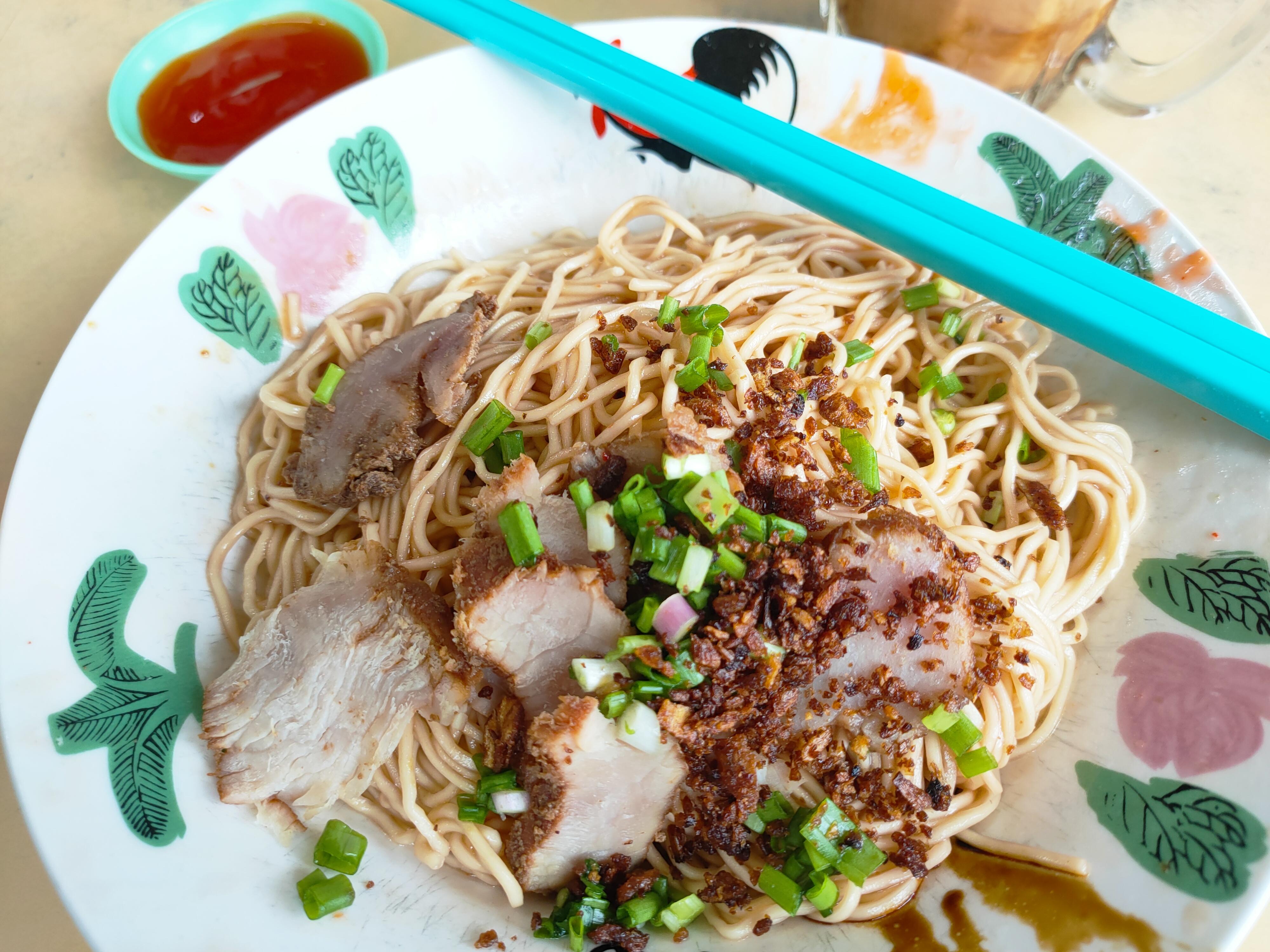
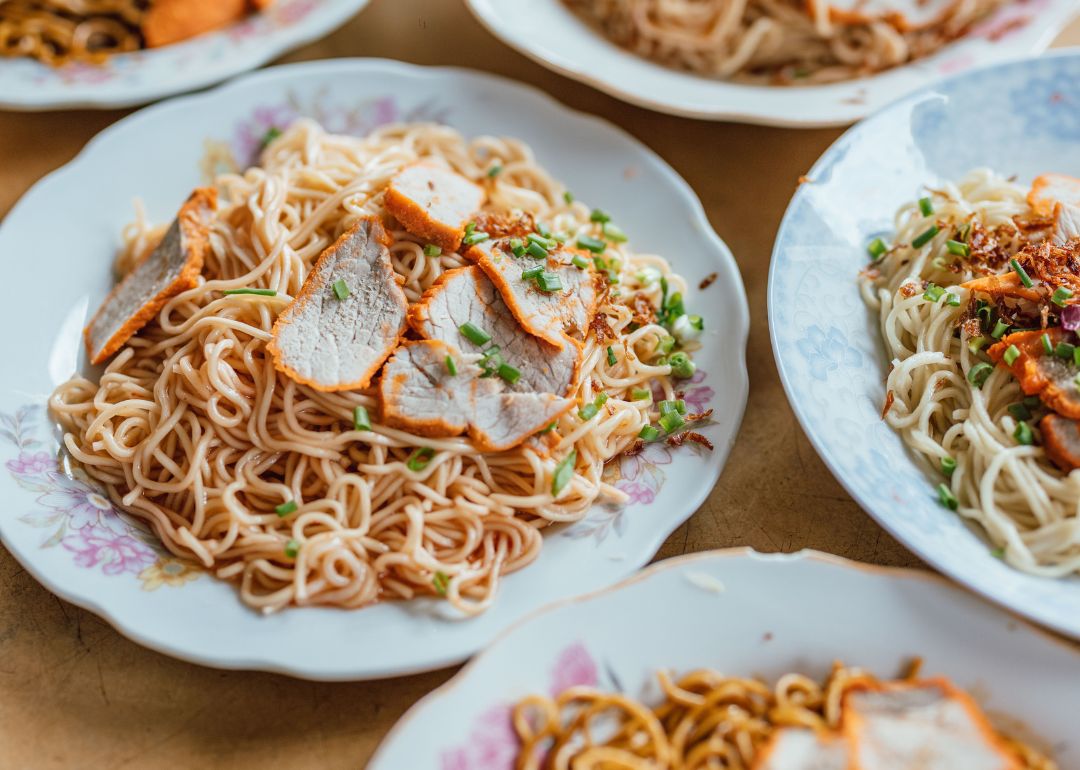
Kampua mee. Image via r/malaysianfood.

The deceptively simple bowl of springy egg noodles tossed with shallot oil, soy sauce, minced pork, and slices of char siu has become synonymous with Sibu. Yet it represents just one part of a much broader culinary tradition.
RADII delves in Foochow migration heritage that shaped the food landscape in Malaysia and other parts of Southeast Asia.
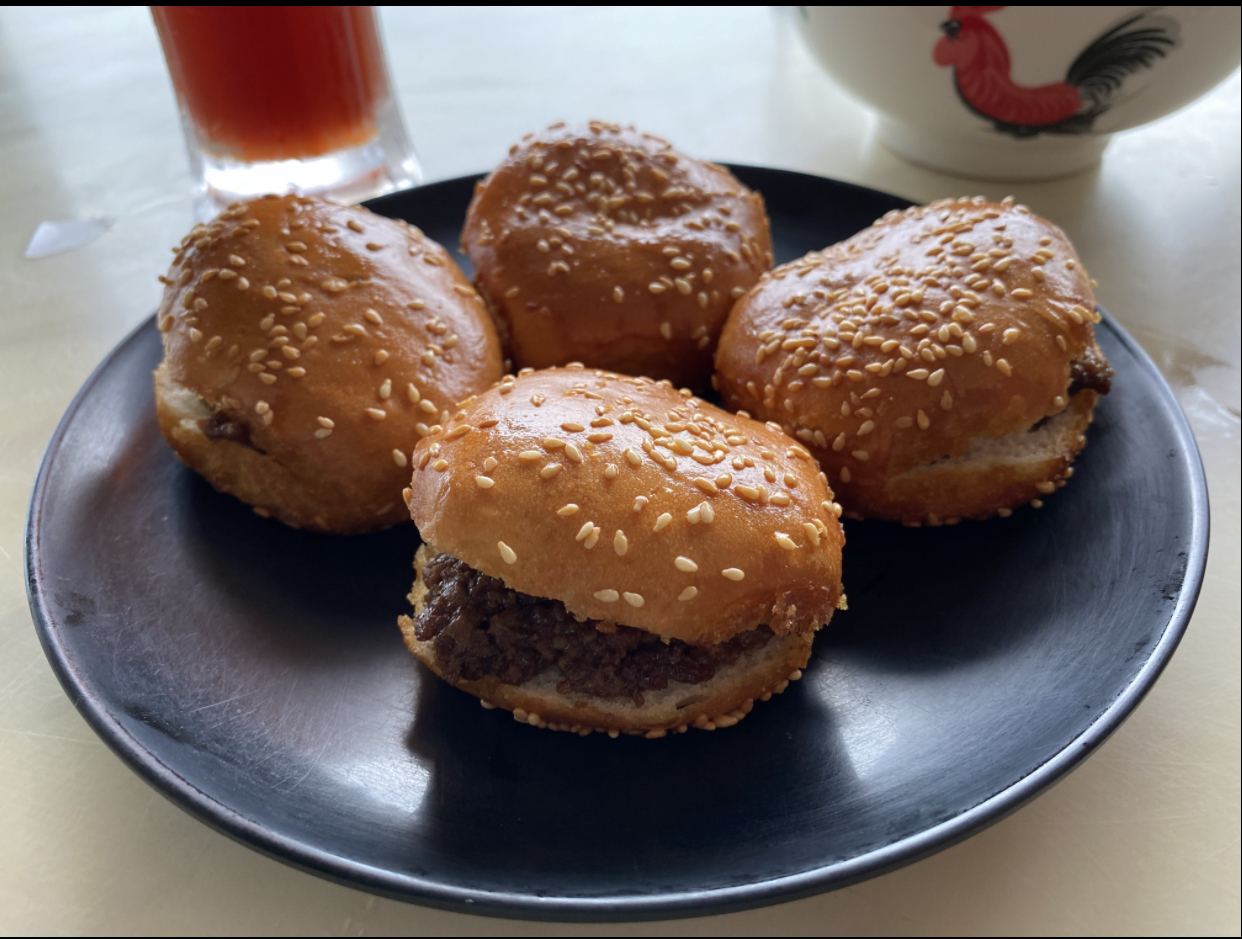
Kompia. Image via Wikipedia Commons.

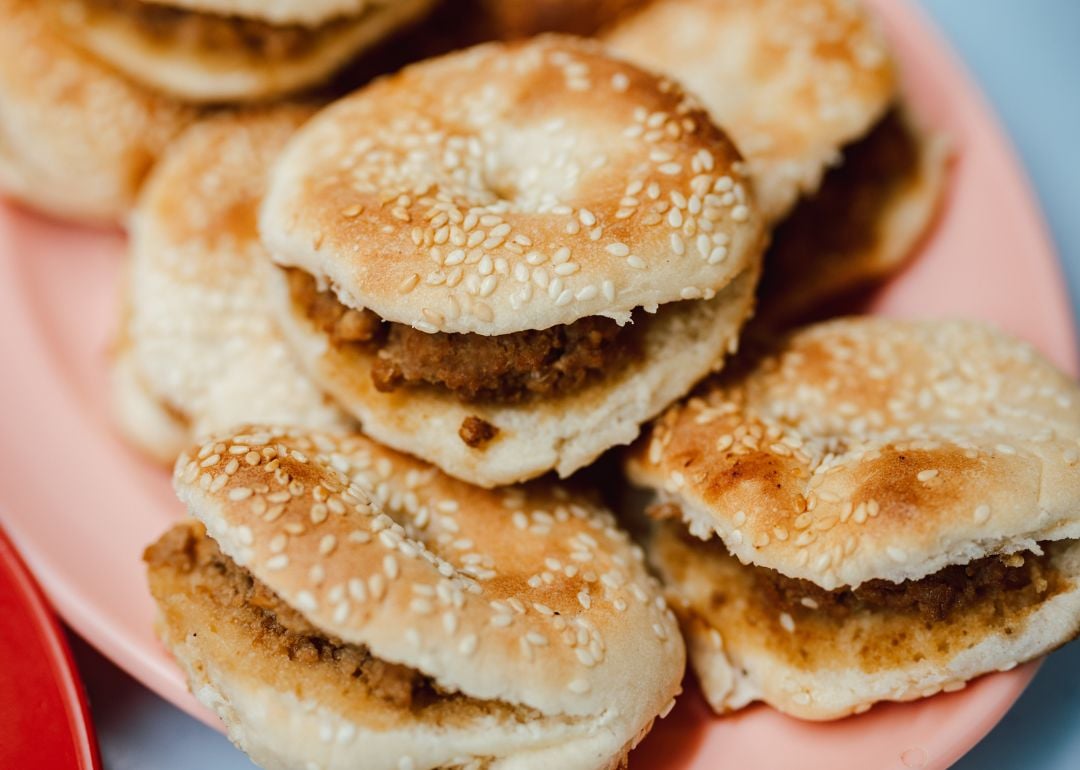
Equally iconic is kompia, the chewy, sesame-topped bread descended from Fuzhou’s guang bing. In Sibu, it has evolved into a local staple. The soft buns are baked in traditional charcoal ovens and often stuffed with minced pork, but they’re also just as tasty as is.

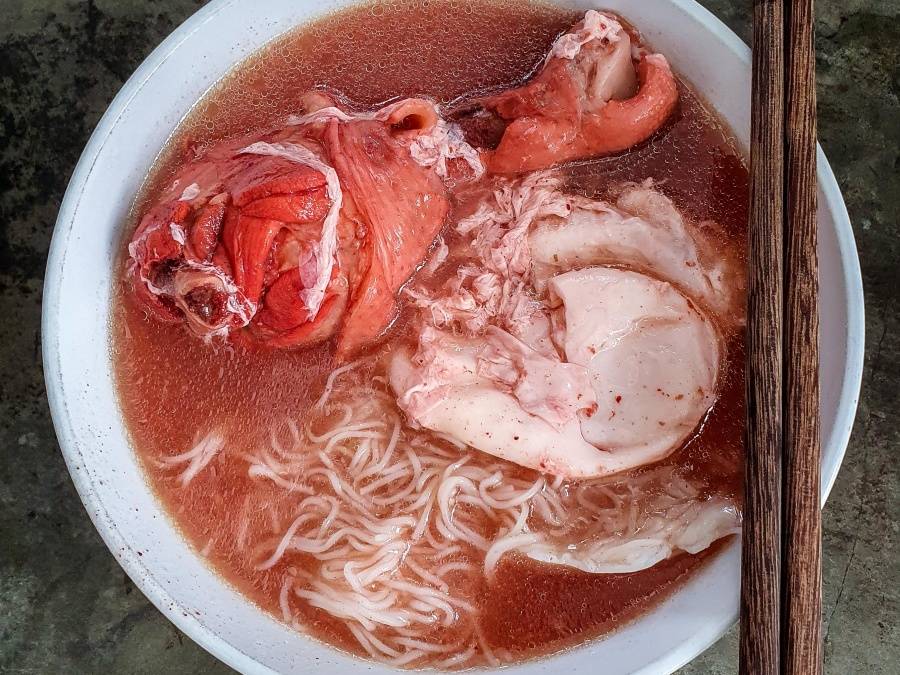
Then there is red wine chicken mee sua, perhaps the dish that best reflects Foochow home cooking. Made with fermented red rice wine, ginger, sesame oil, and silky wheat vermicelli, the slightly boozy dish has also become an everyday meal enjoyed by locals across generations.
RADII delves in Foochow migration heritage that shaped the food landscape in Malaysia and other parts of Southeast Asia.
Red wine chicken mee sua. Image via Periuk.my.

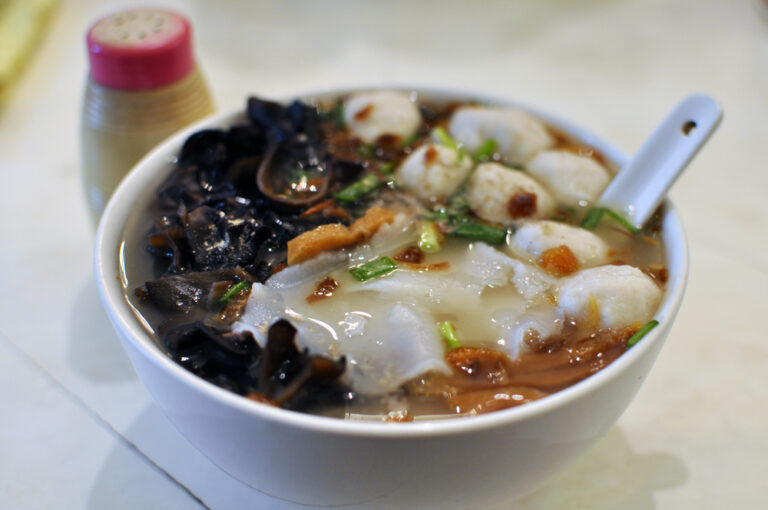
Less well known outside the city is ding bian hu, a comforting soup featuring hand-torn rice batter cooked directly in broth alongside seafood, mushrooms, and vegetables. Although rarely seen elsewhere in Malaysia, it remains a beloved reminder of the community’s Fujian roots.

Shaped by Borneo, Rooted in Tradition

It has to be said that Sibu’s Foochow food is not simply Fujian cuisine transplanted overseas.

Like Chinese communities across Southeast Asia, the Foochow adapted to their new surroundings. Local ingredients replaced harder-to-find imports, tropical produce and local aromatics such as ginger and chillies found their way into traditional recipes, and generations of cooks adjusted dishes to local tastes while preserving the techniques and values they inherited.
RADII delves in Foochow migration heritage that shaped the food landscape in Malaysia and other parts of Southeast Asia.
A hearty bowl of ding bian hu. Image via The Ambitious Salted Fish.

This process mirrors the evolution of many Chinese diaspora cuisines. Hainanese chicken rice became a national icon in Singapore and Malaysia. Penang’s Hokkien mee bears little resemblance to the noodle dishes of Fujian. In the same way, Foochow food in Sibu has developed into something that belongs as much to Sarawak as it does to China.

That evolution is precisely what makes the city’s food culture so compelling. Rather than existing as a frozen snapshot of the past, it continues to reflect the lived experiences of generations who built new lives in Borneo.

A Living Culinary Heritage

To this day, Foochow food remains part of Sibu’s daily rhythm.

Family-run bakeries continue baking kompia using traditional methods if at all possible. Coffee shops still fill with diners ordering kampua and red wine mee sua before work. Younger entrepreneurs are introducing contemporary interpretations of Foochow classics while respecting the traditions that define them.
RADII delves in Foochow migration heritage that shaped the food landscape in Malaysia and other parts of Southeast Asia.
Image via Changi Airport.

For visitors, this means Sibu offers something increasingly rare: the chance to experience a Chinese regional cuisine that’s increasingly hard to find in other parts of the country.

As regional Chinese cuisines continue gaining international attention, from Yunnan and Guizhou to Chaoshan and Hunan, Sibu’s Foochow food deserves a place in the conversation.

Its dishes may have originated in Fujian, but after more than a century in Sarawak, they tell a distinctly Malaysian story. Like the many Chinese diasporas around the world, they are shaped by migration and adaptation, but their many different identities only prove that some of the most compelling chapters of Chinese culinary history are written far beyond China’s borders.

Cover image via Changi Airport.

NEWSLETTER

Get weekly top picks and exclusive, newsletter only content delivered straight to you inbox.

NEWSLETTER

Get weekly top picks and exclusive, newsletter only content delivered straight to you inbox.

RADII NEWSLETTER

Get weekly top picks and exclusive, newsletter only content delivered straight to you inbox

Feature image of How Foochow Transformed a Malaysian Town Through Food

How Foochow Transformed a Malaysian Town Through Food

4 mins read

More than a century after settlers from Fujian arrived in a town in East Malaysia, it’s now the beating heart of Malaysia’s Foochow community and its distinctive cuisine.

Few cities outside China are as closely associated with a single Chinese dialect group as Sibu, a riverside city in the Malaysian state of Sarawak.

Also at times known as “New Fuzhou” or “Little Fuzhou,” Sibu has been the cultural heart of Malaysia’s Foochow community since the first settlers from China’s Fujian province arrived around 1901. More than a century later, the dialect is still widely spoken thanks to generation after generation of tenacious teaching, while Foochow-run businesses continue to shape the local economy and the community’s culinary traditions.

RADII delves in Foochow migration heritage that shaped the food landscape in Malaysia and other parts of Southeast Asia.
Sibu, Sarawak. Image via Borneo Insider’s Guide.

But what makes Sibu remarkable is not just that it preserved the cuisine its settlers brought from China. Over generations, those recipes evolved alongside life in Borneo, giving rise to a distinctly Sarawakian Foochow cuisine.

Today, the city’s signature dishes tell a story that stretches far beyond the kitchen. They are a testament to migration, adaptation, and how food can preserve a community’s identity while evolving in a new home.

From Fujian to the Rajang River

As the history books have revealed, the story started more than 125 years ago.

In 1901, Rajah Charles Brooke invited Foochow settlers from Fuzhou, the capital of Fujian province, to establish agricultural colonies along the Rajang River, a fertile, winding waterway that leads all the way to the South China Sea. Spearheaded by Methodist pastor Wong Nai Siong, more than 1,000 migrants made the journey to what was then the Kingdom of Sarawak, hoping to escape political instability and economic hardship in southern China.

RADII delves in Foochow migration heritage that shaped the food landscape in Malaysia and other parts of Southeast Asia.
The Rajang River. Image via Flickr.

Life was far from easy. The settlers faced floods, disease, and unforgiving rainforest conditions. Many struggled during their first years in Borneo, but they gradually transformed the region into a thriving agricultural settlement built on pepper, rubber, and rice cultivation.

As the community prospered, Sibu grew alongside it. Coffee shops, bakeries, and family-run restaurants became gathering places where Foochow traditions were passed from one generation to the next. Food, in particular, became one of the strongest links between the migrants and the homeland they had left behind.

Noodles Reign, But There’s More

Outside Sarawak, Foochow cuisine is often reduced to a single dish: kampua mee.

RADII delves in Foochow migration heritage that shaped the food landscape in Malaysia and other parts of Southeast Asia.
Kampua mee. Image via r/malaysianfood.

The deceptively simple bowl of springy egg noodles tossed with shallot oil, soy sauce, minced pork, and slices of char siu has become synonymous with Sibu. Yet it represents just one part of a much broader culinary tradition.

RADII delves in Foochow migration heritage that shaped the food landscape in Malaysia and other parts of Southeast Asia.
Kompia. Image via Wikipedia Commons.

Equally iconic is kompia, the chewy, sesame-topped bread descended from Fuzhou’s guang bing. In Sibu, it has evolved into a local staple. The soft buns are baked in traditional charcoal ovens and often stuffed with minced pork, but they’re also just as tasty as is.

Then there is red wine chicken mee sua, perhaps the dish that best reflects Foochow home cooking. Made with fermented red rice wine, ginger, sesame oil, and silky wheat vermicelli, the slightly boozy dish has also become an everyday meal enjoyed by locals across generations.

RADII delves in Foochow migration heritage that shaped the food landscape in Malaysia and other parts of Southeast Asia.
Red wine chicken mee sua. Image via Periuk.my.

Less well known outside the city is ding bian hu, a comforting soup featuring hand-torn rice batter cooked directly in broth alongside seafood, mushrooms, and vegetables. Although rarely seen elsewhere in Malaysia, it remains a beloved reminder of the community’s Fujian roots.

Shaped by Borneo, Rooted in Tradition

It has to be said that Sibu’s Foochow food is not simply Fujian cuisine transplanted overseas.

Like Chinese communities across Southeast Asia, the Foochow adapted to their new surroundings. Local ingredients replaced harder-to-find imports, tropical produce and local aromatics such as ginger and chillies found their way into traditional recipes, and generations of cooks adjusted dishes to local tastes while preserving the techniques and values they inherited.

RADII delves in Foochow migration heritage that shaped the food landscape in Malaysia and other parts of Southeast Asia.
A hearty bowl of ding bian hu. Image via The Ambitious Salted Fish.

This process mirrors the evolution of many Chinese diaspora cuisines. Hainanese chicken rice became a national icon in Singapore and Malaysia. Penang’s Hokkien mee bears little resemblance to the noodle dishes of Fujian. In the same way, Foochow food in Sibu has developed into something that belongs as much to Sarawak as it does to China.

That evolution is precisely what makes the city’s food culture so compelling. Rather than existing as a frozen snapshot of the past, it continues to reflect the lived experiences of generations who built new lives in Borneo.

A Living Culinary Heritage

To this day, Foochow food remains part of Sibu’s daily rhythm.

Family-run bakeries continue baking kompia using traditional methods if at all possible. Coffee shops still fill with diners ordering kampua and red wine mee sua before work. Younger entrepreneurs are introducing contemporary interpretations of Foochow classics while respecting the traditions that define them.

RADII delves in Foochow migration heritage that shaped the food landscape in Malaysia and other parts of Southeast Asia.
Image via Changi Airport.

For visitors, this means Sibu offers something increasingly rare: the chance to experience a Chinese regional cuisine that’s increasingly hard to find in other parts of the country.

As regional Chinese cuisines continue gaining international attention, from Yunnan and Guizhou to Chaoshan and Hunan, Sibu’s Foochow food deserves a place in the conversation.

Its dishes may have originated in Fujian, but after more than a century in Sarawak, they tell a distinctly Malaysian story. Like the many Chinese diasporas around the world, they are shaped by migration and adaptation, but their many different identities only prove that some of the most compelling chapters of Chinese culinary history are written far beyond China’s borders.

Cover image via Changi Airport.

NEWSLETTER

Get weekly top picks and exclusive, newsletter only content delivered straight to you inbox.

RADII NEWSLETTER

Get weekly top picks and exclusive, newsletter only content delivered straight to you inbox

RELATED POSTS

Feature image of How Foochow Transformed a Malaysian Town Through Food

How Foochow Transformed a Malaysian Town Through Food

4 mins read

4 mins read

Feature image of How Foochow Transformed a Malaysian Town Through Food
More than a century after settlers from Fujian arrived in a town in East Malaysia, it’s now the beating heart of Malaysia’s Foochow community and its distinctive cuisine.

Few cities outside China are as closely associated with a single Chinese dialect group as Sibu, a riverside city in the Malaysian state of Sarawak.

Also at times known as “New Fuzhou” or “Little Fuzhou,” Sibu has been the cultural heart of Malaysia’s Foochow community since the first settlers from China’s Fujian province arrived around 1901. More than a century later, the dialect is still widely spoken thanks to generation after generation of tenacious teaching, while Foochow-run businesses continue to shape the local economy and the community’s culinary traditions.

RADII delves in Foochow migration heritage that shaped the food landscape in Malaysia and other parts of Southeast Asia.
Sibu, Sarawak. Image via Borneo Insider’s Guide.

But what makes Sibu remarkable is not just that it preserved the cuisine its settlers brought from China. Over generations, those recipes evolved alongside life in Borneo, giving rise to a distinctly Sarawakian Foochow cuisine.

Today, the city’s signature dishes tell a story that stretches far beyond the kitchen. They are a testament to migration, adaptation, and how food can preserve a community’s identity while evolving in a new home.

From Fujian to the Rajang River

As the history books have revealed, the story started more than 125 years ago.

In 1901, Rajah Charles Brooke invited Foochow settlers from Fuzhou, the capital of Fujian province, to establish agricultural colonies along the Rajang River, a fertile, winding waterway that leads all the way to the South China Sea. Spearheaded by Methodist pastor Wong Nai Siong, more than 1,000 migrants made the journey to what was then the Kingdom of Sarawak, hoping to escape political instability and economic hardship in southern China.

RADII delves in Foochow migration heritage that shaped the food landscape in Malaysia and other parts of Southeast Asia.
The Rajang River. Image via Flickr.

Life was far from easy. The settlers faced floods, disease, and unforgiving rainforest conditions. Many struggled during their first years in Borneo, but they gradually transformed the region into a thriving agricultural settlement built on pepper, rubber, and rice cultivation.

As the community prospered, Sibu grew alongside it. Coffee shops, bakeries, and family-run restaurants became gathering places where Foochow traditions were passed from one generation to the next. Food, in particular, became one of the strongest links between the migrants and the homeland they had left behind.

Noodles Reign, But There’s More

Outside Sarawak, Foochow cuisine is often reduced to a single dish: kampua mee.

RADII delves in Foochow migration heritage that shaped the food landscape in Malaysia and other parts of Southeast Asia.
Kampua mee. Image via r/malaysianfood.

The deceptively simple bowl of springy egg noodles tossed with shallot oil, soy sauce, minced pork, and slices of char siu has become synonymous with Sibu. Yet it represents just one part of a much broader culinary tradition.

RADII delves in Foochow migration heritage that shaped the food landscape in Malaysia and other parts of Southeast Asia.
Kompia. Image via Wikipedia Commons.

Equally iconic is kompia, the chewy, sesame-topped bread descended from Fuzhou’s guang bing. In Sibu, it has evolved into a local staple. The soft buns are baked in traditional charcoal ovens and often stuffed with minced pork, but they’re also just as tasty as is.

Then there is red wine chicken mee sua, perhaps the dish that best reflects Foochow home cooking. Made with fermented red rice wine, ginger, sesame oil, and silky wheat vermicelli, the slightly boozy dish has also become an everyday meal enjoyed by locals across generations.

RADII delves in Foochow migration heritage that shaped the food landscape in Malaysia and other parts of Southeast Asia.
Red wine chicken mee sua. Image via Periuk.my.

Less well known outside the city is ding bian hu, a comforting soup featuring hand-torn rice batter cooked directly in broth alongside seafood, mushrooms, and vegetables. Although rarely seen elsewhere in Malaysia, it remains a beloved reminder of the community’s Fujian roots.

Shaped by Borneo, Rooted in Tradition

It has to be said that Sibu’s Foochow food is not simply Fujian cuisine transplanted overseas.

Like Chinese communities across Southeast Asia, the Foochow adapted to their new surroundings. Local ingredients replaced harder-to-find imports, tropical produce and local aromatics such as ginger and chillies found their way into traditional recipes, and generations of cooks adjusted dishes to local tastes while preserving the techniques and values they inherited.

RADII delves in Foochow migration heritage that shaped the food landscape in Malaysia and other parts of Southeast Asia.
A hearty bowl of ding bian hu. Image via The Ambitious Salted Fish.

This process mirrors the evolution of many Chinese diaspora cuisines. Hainanese chicken rice became a national icon in Singapore and Malaysia. Penang’s Hokkien mee bears little resemblance to the noodle dishes of Fujian. In the same way, Foochow food in Sibu has developed into something that belongs as much to Sarawak as it does to China.

That evolution is precisely what makes the city’s food culture so compelling. Rather than existing as a frozen snapshot of the past, it continues to reflect the lived experiences of generations who built new lives in Borneo.

A Living Culinary Heritage

To this day, Foochow food remains part of Sibu’s daily rhythm.

Family-run bakeries continue baking kompia using traditional methods if at all possible. Coffee shops still fill with diners ordering kampua and red wine mee sua before work. Younger entrepreneurs are introducing contemporary interpretations of Foochow classics while respecting the traditions that define them.

RADII delves in Foochow migration heritage that shaped the food landscape in Malaysia and other parts of Southeast Asia.
Image via Changi Airport.

For visitors, this means Sibu offers something increasingly rare: the chance to experience a Chinese regional cuisine that’s increasingly hard to find in other parts of the country.

As regional Chinese cuisines continue gaining international attention, from Yunnan and Guizhou to Chaoshan and Hunan, Sibu’s Foochow food deserves a place in the conversation.

Its dishes may have originated in Fujian, but after more than a century in Sarawak, they tell a distinctly Malaysian story. Like the many Chinese diasporas around the world, they are shaped by migration and adaptation, but their many different identities only prove that some of the most compelling chapters of Chinese culinary history are written far beyond China’s borders.

Cover image via Changi Airport.
NEWSLETTER

Get weekly top picks and exclusive, newsletter only content delivered straight to you inbox.

NEWSLETTER

Get weekly top picks and exclusive, newsletter only content delivered straight to you inbox.

RADII NEWSLETTER

Get weekly top picks and exclusive, newsletter only content delivered straight to you inbox

Feature image of How Foochow Transformed a Malaysian Town Through Food

How Foochow Transformed a Malaysian Town Through Food

4 mins read

More than a century after settlers from Fujian arrived in a town in East Malaysia, it’s now the beating heart of Malaysia’s Foochow community and its distinctive cuisine.

Few cities outside China are as closely associated with a single Chinese dialect group as Sibu, a riverside city in the Malaysian state of Sarawak.

Also at times known as “New Fuzhou” or “Little Fuzhou,” Sibu has been the cultural heart of Malaysia’s Foochow community since the first settlers from China’s Fujian province arrived around 1901. More than a century later, the dialect is still widely spoken thanks to generation after generation of tenacious teaching, while Foochow-run businesses continue to shape the local economy and the community’s culinary traditions.

RADII delves in Foochow migration heritage that shaped the food landscape in Malaysia and other parts of Southeast Asia.
Sibu, Sarawak. Image via Borneo Insider’s Guide.

But what makes Sibu remarkable is not just that it preserved the cuisine its settlers brought from China. Over generations, those recipes evolved alongside life in Borneo, giving rise to a distinctly Sarawakian Foochow cuisine.

Today, the city’s signature dishes tell a story that stretches far beyond the kitchen. They are a testament to migration, adaptation, and how food can preserve a community’s identity while evolving in a new home.

From Fujian to the Rajang River

As the history books have revealed, the story started more than 125 years ago.

In 1901, Rajah Charles Brooke invited Foochow settlers from Fuzhou, the capital of Fujian province, to establish agricultural colonies along the Rajang River, a fertile, winding waterway that leads all the way to the South China Sea. Spearheaded by Methodist pastor Wong Nai Siong, more than 1,000 migrants made the journey to what was then the Kingdom of Sarawak, hoping to escape political instability and economic hardship in southern China.

RADII delves in Foochow migration heritage that shaped the food landscape in Malaysia and other parts of Southeast Asia.
The Rajang River. Image via Flickr.

Life was far from easy. The settlers faced floods, disease, and unforgiving rainforest conditions. Many struggled during their first years in Borneo, but they gradually transformed the region into a thriving agricultural settlement built on pepper, rubber, and rice cultivation.

As the community prospered, Sibu grew alongside it. Coffee shops, bakeries, and family-run restaurants became gathering places where Foochow traditions were passed from one generation to the next. Food, in particular, became one of the strongest links between the migrants and the homeland they had left behind.

Noodles Reign, But There’s More

Outside Sarawak, Foochow cuisine is often reduced to a single dish: kampua mee.

RADII delves in Foochow migration heritage that shaped the food landscape in Malaysia and other parts of Southeast Asia.
Kampua mee. Image via r/malaysianfood.

The deceptively simple bowl of springy egg noodles tossed with shallot oil, soy sauce, minced pork, and slices of char siu has become synonymous with Sibu. Yet it represents just one part of a much broader culinary tradition.

RADII delves in Foochow migration heritage that shaped the food landscape in Malaysia and other parts of Southeast Asia.
Kompia. Image via Wikipedia Commons.

Equally iconic is kompia, the chewy, sesame-topped bread descended from Fuzhou’s guang bing. In Sibu, it has evolved into a local staple. The soft buns are baked in traditional charcoal ovens and often stuffed with minced pork, but they’re also just as tasty as is.

Then there is red wine chicken mee sua, perhaps the dish that best reflects Foochow home cooking. Made with fermented red rice wine, ginger, sesame oil, and silky wheat vermicelli, the slightly boozy dish has also become an everyday meal enjoyed by locals across generations.

RADII delves in Foochow migration heritage that shaped the food landscape in Malaysia and other parts of Southeast Asia.
Red wine chicken mee sua. Image via Periuk.my.

Less well known outside the city is ding bian hu, a comforting soup featuring hand-torn rice batter cooked directly in broth alongside seafood, mushrooms, and vegetables. Although rarely seen elsewhere in Malaysia, it remains a beloved reminder of the community’s Fujian roots.

Shaped by Borneo, Rooted in Tradition

It has to be said that Sibu’s Foochow food is not simply Fujian cuisine transplanted overseas.

Like Chinese communities across Southeast Asia, the Foochow adapted to their new surroundings. Local ingredients replaced harder-to-find imports, tropical produce and local aromatics such as ginger and chillies found their way into traditional recipes, and generations of cooks adjusted dishes to local tastes while preserving the techniques and values they inherited.

RADII delves in Foochow migration heritage that shaped the food landscape in Malaysia and other parts of Southeast Asia.
A hearty bowl of ding bian hu. Image via The Ambitious Salted Fish.

This process mirrors the evolution of many Chinese diaspora cuisines. Hainanese chicken rice became a national icon in Singapore and Malaysia. Penang’s Hokkien mee bears little resemblance to the noodle dishes of Fujian. In the same way, Foochow food in Sibu has developed into something that belongs as much to Sarawak as it does to China.

That evolution is precisely what makes the city’s food culture so compelling. Rather than existing as a frozen snapshot of the past, it continues to reflect the lived experiences of generations who built new lives in Borneo.

A Living Culinary Heritage

To this day, Foochow food remains part of Sibu’s daily rhythm.

Family-run bakeries continue baking kompia using traditional methods if at all possible. Coffee shops still fill with diners ordering kampua and red wine mee sua before work. Younger entrepreneurs are introducing contemporary interpretations of Foochow classics while respecting the traditions that define them.

RADII delves in Foochow migration heritage that shaped the food landscape in Malaysia and other parts of Southeast Asia.
Image via Changi Airport.

For visitors, this means Sibu offers something increasingly rare: the chance to experience a Chinese regional cuisine that’s increasingly hard to find in other parts of the country.

As regional Chinese cuisines continue gaining international attention, from Yunnan and Guizhou to Chaoshan and Hunan, Sibu’s Foochow food deserves a place in the conversation.

Its dishes may have originated in Fujian, but after more than a century in Sarawak, they tell a distinctly Malaysian story. Like the many Chinese diasporas around the world, they are shaped by migration and adaptation, but their many different identities only prove that some of the most compelling chapters of Chinese culinary history are written far beyond China’s borders.

Cover image via Changi Airport.

NEWSLETTER

Get weekly top picks and exclusive, newsletter only content delivered straight to you inbox.

RADII NEWSLETTER

Get weekly top picks and exclusive, newsletter only content delivered straight to you inbox

RADII newsletter pop up visual

NEWSLETTER​

Get weekly top picks and exclusive, newsletter only content delivered straight to you inbox

RADII Newsletter Pop Up small banner

NEWSLETTER

Get weekly top picks and exclusive, newsletter only content delivered straight to you inbox.

Link Copied!

Share

Feature image of How Foochow Transformed a Malaysian Town Through Food

How Foochow Transformed a Malaysian Town Through Food

More than a century after settlers from Fujian arrived in a town in East Malaysia, it’s now the beating heart of Malaysia’s Foochow community and its distinctive cuisine.

PULSE

Tap into the latest in music, fashion, art, design, entertainment, pop culture, celebrity news, and contemporary culture

DISCOVER

Embark on a journey through food, travel, wellness, heritage, traditional culture, and lifestyle

STYLE

An insider’s look at the intersection of fashion, art, and design

FEAST

Titillate your taste buds with coverage of the best food and drink trends from China and beyond.

FUTURE

Explore the cutting edge in tech, AI, gadgets, gaming, and innovative tech-related products

FEAST

Titillate your taste buds with coverage of the best food and drink trends from China and beyond

STYLE

An insider’s look at the intersection of fashion, art, and design

PULSE

Unpacking Chinese youth culture through coverage of nightlife, film, sports, celebrities, and the hottest new music