Feature image of Chinese Dishes That Don’t Really Look Like Chinese Dishes Anymore

Chinese Dishes That Don’t Really Look Like Chinese Dishes Anymore

3 mins read

3 mins read

Feature image of Chinese Dishes That Don’t Really Look Like Chinese Dishes Anymore
RADII rounds up five dishes that began in the Chinese mainland before being reshaped by migration, local palates, and the realities of new kitchens.

As part of this month’s theme, The Diaspora Now, we turn to food as one of the clearest ways culture adapts once it begins to move—and how people understand a cuisine depends heavily on where they encounter it. Two diners may both claim love and familiarity with “Chinese” cuisine, for example, yet the picture one has in mind can differ completely from the next. Whether it’s chop suey and oily, crispy chow mein noodles packed into red takeaway boxes, or steamed patties dished onto classic, no-frills stainless steel plates at home, both are valid—because both are, after all, “Chinese” foods, right?

Beyond the familiar touchstones of chow mein and chop suey sit quieter (or at least less mainstream) examples that showcase lesser-known renditions of Chinese dishes evolved through migration. Chinese mass migration is nothing new—from farther-flung lands such as Canada and Jamaica to neighboring countries like the Philippines and Indonesia, Chinese communities can be found across most continents, with bustling Chinatowns as just one visible indicator. Like all diasporic cuisines, when Chinese food travels, it responds to its environment: shaped by place, refined by available ingredients, and packaged around the rhythms of how people eat locally.

Below, we round up five dishes that showcase the wild and wonderful ways diasporic Chinese food has developed from their Chinese mainland origins.


1. St. Paul Sandwich
RADII highlights five Chinese diaspora dishes that have migrated overseas and evolved into new versions.
Image via Sandwich Tribunal.

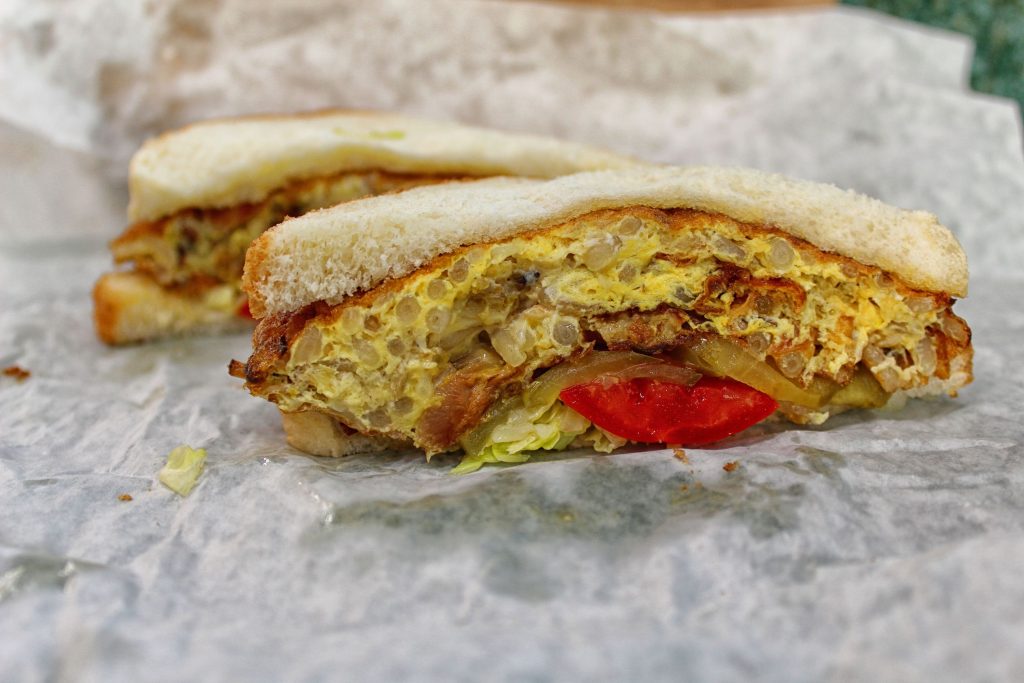
The St. Paul sandwich—reportedly found almost exclusively in and around St. Louis—reflects adaptation in action, a real east-meets-west moment. Built from an egg foo young patty tucked between slices of white bread with lettuce, mayonnaise, and pickles, it mirrors the look of a typical Midwestern lunch. Local accounts point to Chinese restaurant owners in the 1940s serving largely non-Chinese customers who were more comfortable ordering sandwiches than plated entrées. Bread was inexpensive, assembly was quick, and the sandwich fit naturally into local eating habits while drawing on ingredients already familiar in Chinese-American kitchens.


2. Egg Foo Young
RADII highlights five Chinese diaspora dishes that have migrated overseas and evolved into new versions.
Image via smalltownwoman.

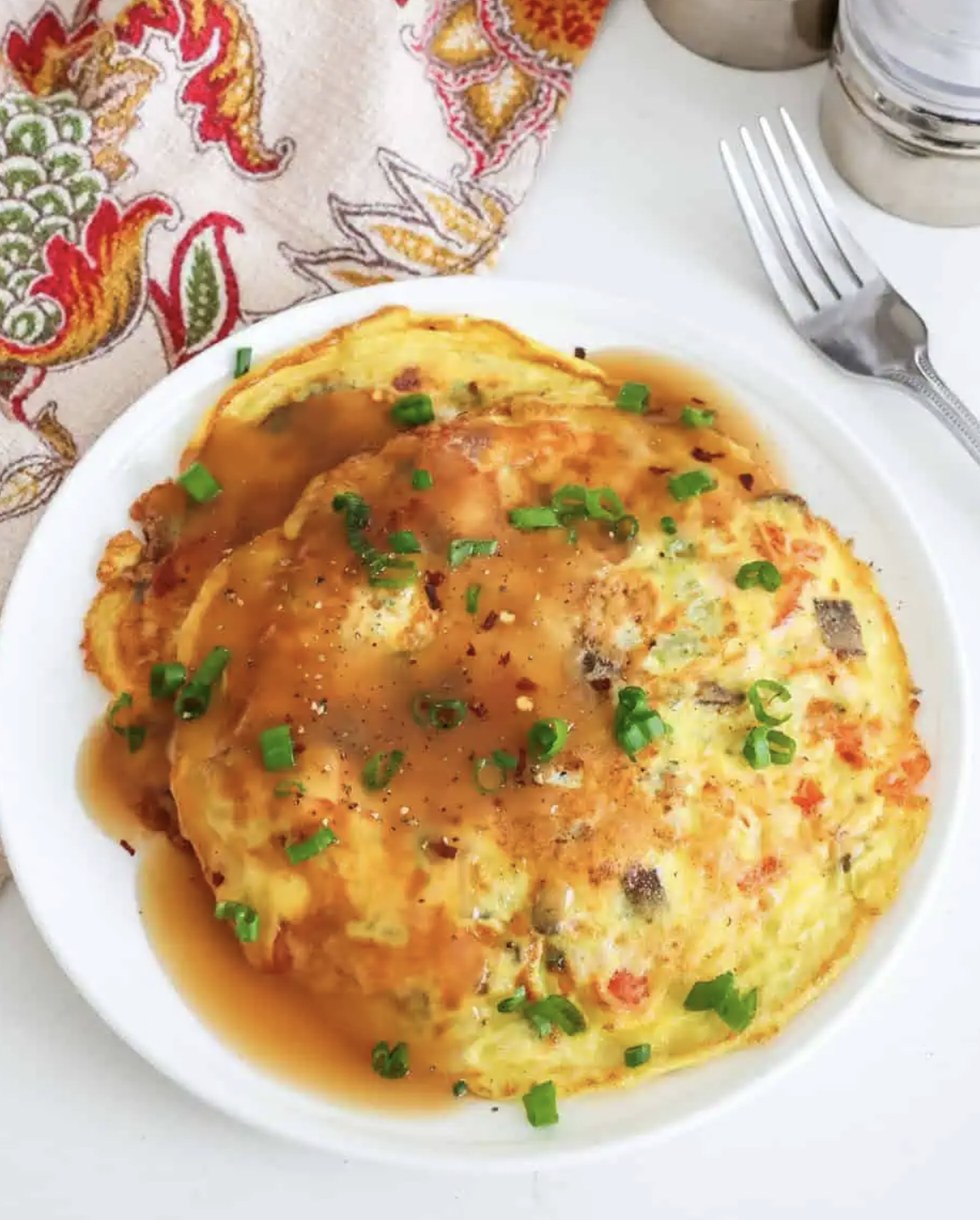
An honorable mention belongs to egg foo young itself, which had already undergone significant change by the time it reached Missouri and went on to become a sandwich filler for the St. Paul. In southern China, fúróngdàn is a relatively light egg dish and is certainly not commonly accompanied by gravy. American diners, however, leaned toward heavier plates associated with comfort and value, and the addition of thick brown gravy increased richness and portion size, while eggs made the dish a practical, affordable option for restaurant service.


3. Bakmi Ayam (Chicken Noodles)
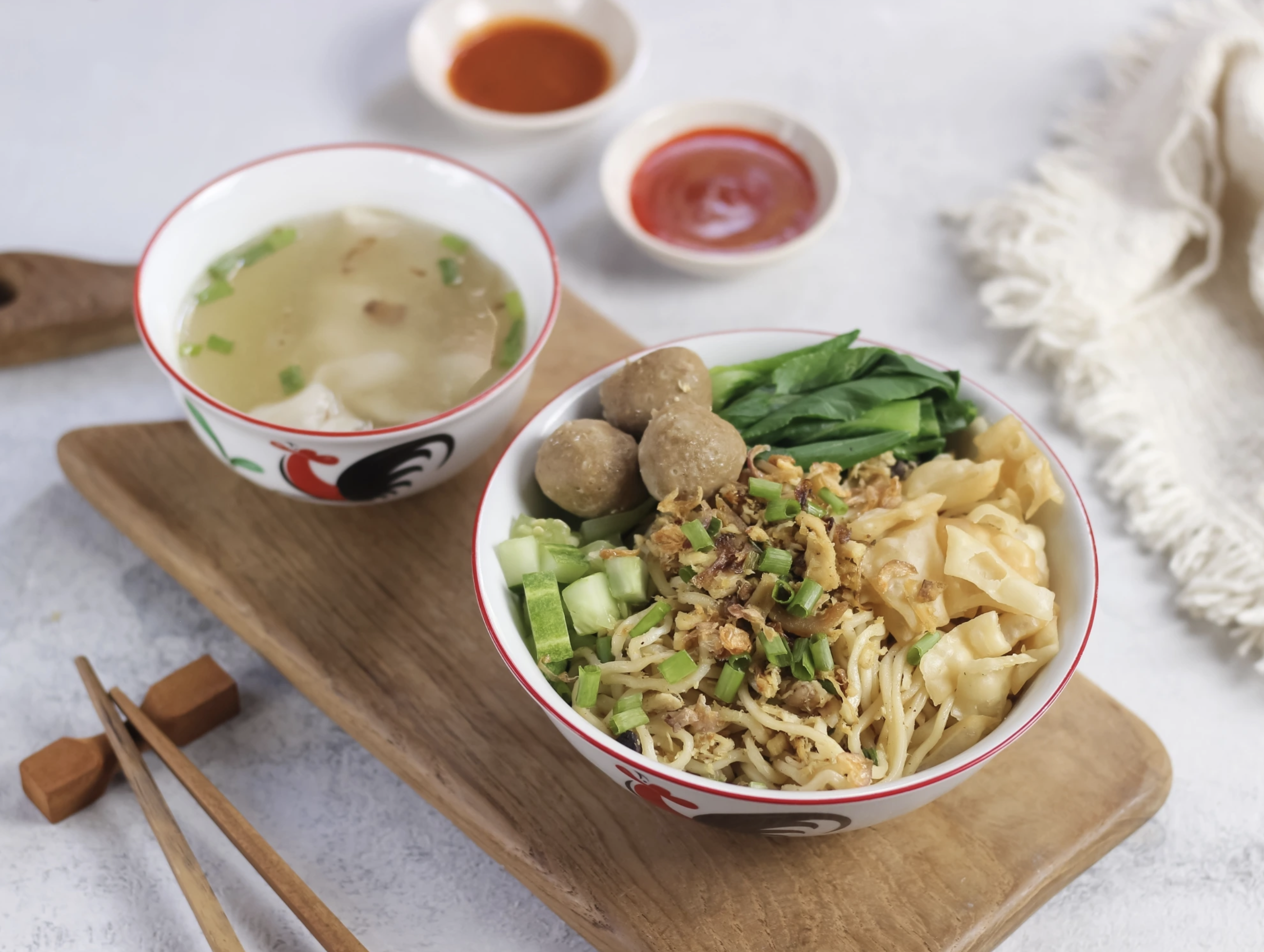
RADII highlights five Chinese diaspora dishes that have migrated overseas and evolved into new versions.
Image via Fiber Creme.

In Indonesia, bakmi ayam evolved from southern Chinese noodle soups into a kind of deconstructed noodle dish, where the broth is served separately. Pork was substituted with chicken, while other popular toppings included meatballs, mushrooms, beef, and onions. Depending on the region, both toppings and cooking styles vary, but the dish’s development from its Fujian and Guangdong roots reflects both availability and local taste—resulting in something that retains Chinese noodle techniques while fitting comfortably into Indonesian food culture.


4. Pancit Canton (Filipino Stir-Fried Noodles)
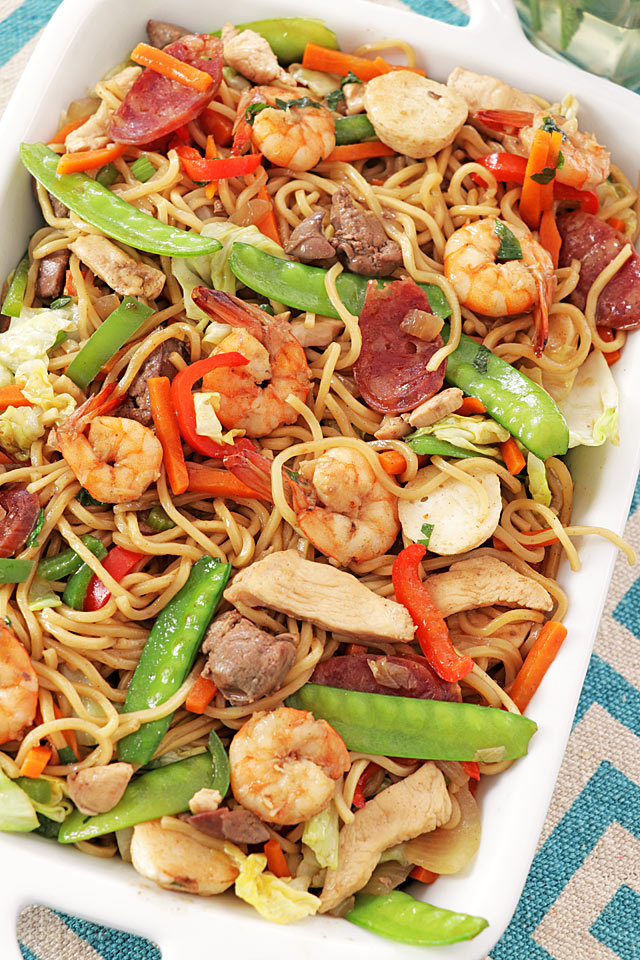
RADII highlights five Chinese diaspora dishes that have migrated overseas and evolved into new versions.
Image via Foxy Folksy.

The Philippines offers a parallel story through pancit canton, a type of tossed noodle dish similar to lo mein and rooted in Cantonese stir-fried noodles. Over time, the dish incorporated local sausages, vegetables, and citrus such as calamansi—ingredients uncommon in Cantonese renditions. Easier to source and better suited to Filipino preferences for brightness and acidity, these additions helped pancit become closely tied to everyday meals and celebrations.


5. Hủ Tiếu (Vietnamese Pork and Seafood Noodle Soup)
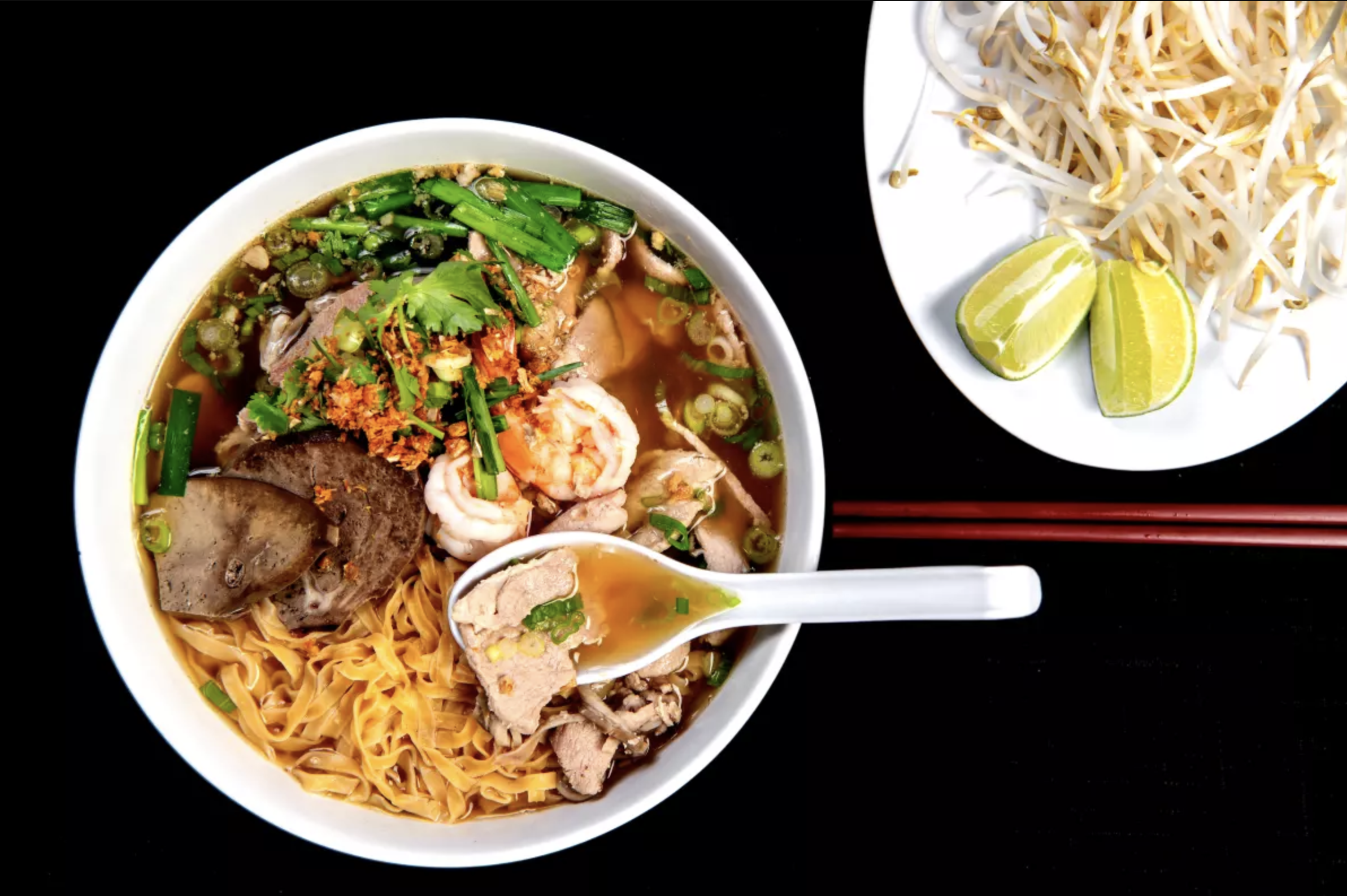
RADII highlights five Chinese diaspora dishes that have migrated overseas and evolved into new versions.
Image via Mariah Tauger/Los Angeles Times.

In Vietnam, hủ tiếu traces back to Teochew and Fujian rice noodle soups introduced by Chinese migrants. In southern Vietnam, the broth became clearer and slightly sweeter, topped with options such as pork, shrimp, or quail eggs, and accompanied by herbs and lime. These adjustments aligned with the local climate and dining habits, where lighter soups and fresh garnishes were already common, and have since become an iconic part of Vietnamese cuisine.


From sandwiches built around omelets to noodles sweetened with local soy sauce, these dishes show how diasporic Chinese cooking changes through everyday decisions—when migrant restaurateurs adjust recipes based on who they’re feeding, what ingredients they can reliably source, and how food fits into local routines. The result is a body of dishes that remain recognizably Chinese in technique or origin, yet distinctly rooted in the places their chefs came to call home.

Cover image via Julia Calleo/Sauce Magazine via St. Louis Public Radio.

NEWSLETTER

Get weekly top picks and exclusive, newsletter only content delivered straight to you inbox.

NEWSLETTER

Get weekly top picks and exclusive, newsletter only content delivered straight to you inbox.

RADII NEWSLETTER

Get weekly top picks and exclusive, newsletter only content delivered straight to you inbox

Feature image of Chinese Dishes That Don’t Really Look Like Chinese Dishes Anymore

Chinese Dishes That Don’t Really Look Like Chinese Dishes Anymore

3 mins read

RADII rounds up five dishes that began in the Chinese mainland before being reshaped by migration, local palates, and the realities of new kitchens.

As part of this month’s theme, The Diaspora Now, we turn to food as one of the clearest ways culture adapts once it begins to move—and how people understand a cuisine depends heavily on where they encounter it. Two diners may both claim love and familiarity with “Chinese” cuisine, for example, yet the picture one has in mind can differ completely from the next. Whether it’s chop suey and oily, crispy chow mein noodles packed into red takeaway boxes, or steamed patties dished onto classic, no-frills stainless steel plates at home, both are valid—because both are, after all, “Chinese” foods, right?

Beyond the familiar touchstones of chow mein and chop suey sit quieter (or at least less mainstream) examples that showcase lesser-known renditions of Chinese dishes evolved through migration. Chinese mass migration is nothing new—from farther-flung lands such as Canada and Jamaica to neighboring countries like the Philippines and Indonesia, Chinese communities can be found across most continents, with bustling Chinatowns as just one visible indicator. Like all diasporic cuisines, when Chinese food travels, it responds to its environment: shaped by place, refined by available ingredients, and packaged around the rhythms of how people eat locally.

Below, we round up five dishes that showcase the wild and wonderful ways diasporic Chinese food has developed from their Chinese mainland origins.


1. St. Paul Sandwich

RADII highlights five Chinese diaspora dishes that have migrated overseas and evolved into new versions.
Image via Sandwich Tribunal.

The St. Paul sandwich—reportedly found almost exclusively in and around St. Louis—reflects adaptation in action, a real east-meets-west moment. Built from an egg foo young patty tucked between slices of white bread with lettuce, mayonnaise, and pickles, it mirrors the look of a typical Midwestern lunch. Local accounts point to Chinese restaurant owners in the 1940s serving largely non-Chinese customers who were more comfortable ordering sandwiches than plated entrées. Bread was inexpensive, assembly was quick, and the sandwich fit naturally into local eating habits while drawing on ingredients already familiar in Chinese-American kitchens.


2. Egg Foo Young

RADII highlights five Chinese diaspora dishes that have migrated overseas and evolved into new versions.
Image via smalltownwoman.

An honorable mention belongs to egg foo young itself, which had already undergone significant change by the time it reached Missouri and went on to become a sandwich filler for the St. Paul. In southern China, fúróngdàn is a relatively light egg dish and is certainly not commonly accompanied by gravy. American diners, however, leaned toward heavier plates associated with comfort and value, and the addition of thick brown gravy increased richness and portion size, while eggs made the dish a practical, affordable option for restaurant service.


3. Bakmi Ayam (Chicken Noodles)

RADII highlights five Chinese diaspora dishes that have migrated overseas and evolved into new versions.
Image via Fiber Creme.

In Indonesia, bakmi ayam evolved from southern Chinese noodle soups into a kind of deconstructed noodle dish, where the broth is served separately. Pork was substituted with chicken, while other popular toppings included meatballs, mushrooms, beef, and onions. Depending on the region, both toppings and cooking styles vary, but the dish’s development from its Fujian and Guangdong roots reflects both availability and local taste—resulting in something that retains Chinese noodle techniques while fitting comfortably into Indonesian food culture.


4. Pancit Canton (Filipino Stir-Fried Noodles)

RADII highlights five Chinese diaspora dishes that have migrated overseas and evolved into new versions.
Image via Foxy Folksy.

The Philippines offers a parallel story through pancit canton, a type of tossed noodle dish similar to lo mein and rooted in Cantonese stir-fried noodles. Over time, the dish incorporated local sausages, vegetables, and citrus such as calamansi—ingredients uncommon in Cantonese renditions. Easier to source and better suited to Filipino preferences for brightness and acidity, these additions helped pancit become closely tied to everyday meals and celebrations.


5. Hủ Tiếu (Vietnamese Pork and Seafood Noodle Soup)

RADII highlights five Chinese diaspora dishes that have migrated overseas and evolved into new versions.
Image via Mariah Tauger/Los Angeles Times.

In Vietnam, hủ tiếu traces back to Teochew and Fujian rice noodle soups introduced by Chinese migrants. In southern Vietnam, the broth became clearer and slightly sweeter, topped with options such as pork, shrimp, or quail eggs, and accompanied by herbs and lime. These adjustments aligned with the local climate and dining habits, where lighter soups and fresh garnishes were already common, and have since become an iconic part of Vietnamese cuisine.


From sandwiches built around omelets to noodles sweetened with local soy sauce, these dishes show how diasporic Chinese cooking changes through everyday decisions—when migrant restaurateurs adjust recipes based on who they’re feeding, what ingredients they can reliably source, and how food fits into local routines. The result is a body of dishes that remain recognizably Chinese in technique or origin, yet distinctly rooted in the places their chefs came to call home.

Cover image via Julia Calleo/Sauce Magazine via St. Louis Public Radio.
NEWSLETTER

Get weekly top picks and exclusive, newsletter only content delivered straight to you inbox.

RADII NEWSLETTER

Get weekly top picks and exclusive, newsletter only content delivered straight to you inbox

RELATED POSTS

Feature image of Chinese Dishes That Don’t Really Look Like Chinese Dishes Anymore

Chinese Dishes That Don’t Really Look Like Chinese Dishes Anymore

3 mins read

3 mins read

Feature image of Chinese Dishes That Don’t Really Look Like Chinese Dishes Anymore
RADII rounds up five dishes that began in the Chinese mainland before being reshaped by migration, local palates, and the realities of new kitchens.

As part of this month’s theme, The Diaspora Now, we turn to food as one of the clearest ways culture adapts once it begins to move—and how people understand a cuisine depends heavily on where they encounter it. Two diners may both claim love and familiarity with “Chinese” cuisine, for example, yet the picture one has in mind can differ completely from the next. Whether it’s chop suey and oily, crispy chow mein noodles packed into red takeaway boxes, or steamed patties dished onto classic, no-frills stainless steel plates at home, both are valid—because both are, after all, “Chinese” foods, right?

Beyond the familiar touchstones of chow mein and chop suey sit quieter (or at least less mainstream) examples that showcase lesser-known renditions of Chinese dishes evolved through migration. Chinese mass migration is nothing new—from farther-flung lands such as Canada and Jamaica to neighboring countries like the Philippines and Indonesia, Chinese communities can be found across most continents, with bustling Chinatowns as just one visible indicator. Like all diasporic cuisines, when Chinese food travels, it responds to its environment: shaped by place, refined by available ingredients, and packaged around the rhythms of how people eat locally.

Below, we round up five dishes that showcase the wild and wonderful ways diasporic Chinese food has developed from their Chinese mainland origins.


1. St. Paul Sandwich

RADII highlights five Chinese diaspora dishes that have migrated overseas and evolved into new versions.
Image via Sandwich Tribunal.

The St. Paul sandwich—reportedly found almost exclusively in and around St. Louis—reflects adaptation in action, a real east-meets-west moment. Built from an egg foo young patty tucked between slices of white bread with lettuce, mayonnaise, and pickles, it mirrors the look of a typical Midwestern lunch. Local accounts point to Chinese restaurant owners in the 1940s serving largely non-Chinese customers who were more comfortable ordering sandwiches than plated entrées. Bread was inexpensive, assembly was quick, and the sandwich fit naturally into local eating habits while drawing on ingredients already familiar in Chinese-American kitchens.


2. Egg Foo Young

RADII highlights five Chinese diaspora dishes that have migrated overseas and evolved into new versions.
Image via smalltownwoman.

An honorable mention belongs to egg foo young itself, which had already undergone significant change by the time it reached Missouri and went on to become a sandwich filler for the St. Paul. In southern China, fúróngdàn is a relatively light egg dish and is certainly not commonly accompanied by gravy. American diners, however, leaned toward heavier plates associated with comfort and value, and the addition of thick brown gravy increased richness and portion size, while eggs made the dish a practical, affordable option for restaurant service.


3. Bakmi Ayam (Chicken Noodles)

RADII highlights five Chinese diaspora dishes that have migrated overseas and evolved into new versions.
Image via Fiber Creme.

In Indonesia, bakmi ayam evolved from southern Chinese noodle soups into a kind of deconstructed noodle dish, where the broth is served separately. Pork was substituted with chicken, while other popular toppings included meatballs, mushrooms, beef, and onions. Depending on the region, both toppings and cooking styles vary, but the dish’s development from its Fujian and Guangdong roots reflects both availability and local taste—resulting in something that retains Chinese noodle techniques while fitting comfortably into Indonesian food culture.


4. Pancit Canton (Filipino Stir-Fried Noodles)

RADII highlights five Chinese diaspora dishes that have migrated overseas and evolved into new versions.
Image via Foxy Folksy.

The Philippines offers a parallel story through pancit canton, a type of tossed noodle dish similar to lo mein and rooted in Cantonese stir-fried noodles. Over time, the dish incorporated local sausages, vegetables, and citrus such as calamansi—ingredients uncommon in Cantonese renditions. Easier to source and better suited to Filipino preferences for brightness and acidity, these additions helped pancit become closely tied to everyday meals and celebrations.


5. Hủ Tiếu (Vietnamese Pork and Seafood Noodle Soup)

RADII highlights five Chinese diaspora dishes that have migrated overseas and evolved into new versions.
Image via Mariah Tauger/Los Angeles Times.

In Vietnam, hủ tiếu traces back to Teochew and Fujian rice noodle soups introduced by Chinese migrants. In southern Vietnam, the broth became clearer and slightly sweeter, topped with options such as pork, shrimp, or quail eggs, and accompanied by herbs and lime. These adjustments aligned with the local climate and dining habits, where lighter soups and fresh garnishes were already common, and have since become an iconic part of Vietnamese cuisine.


From sandwiches built around omelets to noodles sweetened with local soy sauce, these dishes show how diasporic Chinese cooking changes through everyday decisions—when migrant restaurateurs adjust recipes based on who they’re feeding, what ingredients they can reliably source, and how food fits into local routines. The result is a body of dishes that remain recognizably Chinese in technique or origin, yet distinctly rooted in the places their chefs came to call home.

Cover image via Julia Calleo/Sauce Magazine via St. Louis Public Radio.

NEWSLETTER

Get weekly top picks and exclusive, newsletter only content delivered straight to you inbox.

NEWSLETTER

Get weekly top picks and exclusive, newsletter only content delivered straight to you inbox.

RADII NEWSLETTER

Get weekly top picks and exclusive, newsletter only content delivered straight to you inbox

Feature image of Chinese Dishes That Don’t Really Look Like Chinese Dishes Anymore

Chinese Dishes That Don’t Really Look Like Chinese Dishes Anymore

3 mins read

RADII rounds up five dishes that began in the Chinese mainland before being reshaped by migration, local palates, and the realities of new kitchens.

As part of this month’s theme, The Diaspora Now, we turn to food as one of the clearest ways culture adapts once it begins to move—and how people understand a cuisine depends heavily on where they encounter it. Two diners may both claim love and familiarity with “Chinese” cuisine, for example, yet the picture one has in mind can differ completely from the next. Whether it’s chop suey and oily, crispy chow mein noodles packed into red takeaway boxes, or steamed patties dished onto classic, no-frills stainless steel plates at home, both are valid—because both are, after all, “Chinese” foods, right?

Beyond the familiar touchstones of chow mein and chop suey sit quieter (or at least less mainstream) examples that showcase lesser-known renditions of Chinese dishes evolved through migration. Chinese mass migration is nothing new—from farther-flung lands such as Canada and Jamaica to neighboring countries like the Philippines and Indonesia, Chinese communities can be found across most continents, with bustling Chinatowns as just one visible indicator. Like all diasporic cuisines, when Chinese food travels, it responds to its environment: shaped by place, refined by available ingredients, and packaged around the rhythms of how people eat locally.

Below, we round up five dishes that showcase the wild and wonderful ways diasporic Chinese food has developed from their Chinese mainland origins.


1. St. Paul Sandwich

RADII highlights five Chinese diaspora dishes that have migrated overseas and evolved into new versions.
Image via Sandwich Tribunal.

The St. Paul sandwich—reportedly found almost exclusively in and around St. Louis—reflects adaptation in action, a real east-meets-west moment. Built from an egg foo young patty tucked between slices of white bread with lettuce, mayonnaise, and pickles, it mirrors the look of a typical Midwestern lunch. Local accounts point to Chinese restaurant owners in the 1940s serving largely non-Chinese customers who were more comfortable ordering sandwiches than plated entrées. Bread was inexpensive, assembly was quick, and the sandwich fit naturally into local eating habits while drawing on ingredients already familiar in Chinese-American kitchens.


2. Egg Foo Young

RADII highlights five Chinese diaspora dishes that have migrated overseas and evolved into new versions.
Image via smalltownwoman.

An honorable mention belongs to egg foo young itself, which had already undergone significant change by the time it reached Missouri and went on to become a sandwich filler for the St. Paul. In southern China, fúróngdàn is a relatively light egg dish and is certainly not commonly accompanied by gravy. American diners, however, leaned toward heavier plates associated with comfort and value, and the addition of thick brown gravy increased richness and portion size, while eggs made the dish a practical, affordable option for restaurant service.


3. Bakmi Ayam (Chicken Noodles)

RADII highlights five Chinese diaspora dishes that have migrated overseas and evolved into new versions.
Image via Fiber Creme.

In Indonesia, bakmi ayam evolved from southern Chinese noodle soups into a kind of deconstructed noodle dish, where the broth is served separately. Pork was substituted with chicken, while other popular toppings included meatballs, mushrooms, beef, and onions. Depending on the region, both toppings and cooking styles vary, but the dish’s development from its Fujian and Guangdong roots reflects both availability and local taste—resulting in something that retains Chinese noodle techniques while fitting comfortably into Indonesian food culture.


4. Pancit Canton (Filipino Stir-Fried Noodles)

RADII highlights five Chinese diaspora dishes that have migrated overseas and evolved into new versions.
Image via Foxy Folksy.

The Philippines offers a parallel story through pancit canton, a type of tossed noodle dish similar to lo mein and rooted in Cantonese stir-fried noodles. Over time, the dish incorporated local sausages, vegetables, and citrus such as calamansi—ingredients uncommon in Cantonese renditions. Easier to source and better suited to Filipino preferences for brightness and acidity, these additions helped pancit become closely tied to everyday meals and celebrations.


5. Hủ Tiếu (Vietnamese Pork and Seafood Noodle Soup)

RADII highlights five Chinese diaspora dishes that have migrated overseas and evolved into new versions.
Image via Mariah Tauger/Los Angeles Times.

In Vietnam, hủ tiếu traces back to Teochew and Fujian rice noodle soups introduced by Chinese migrants. In southern Vietnam, the broth became clearer and slightly sweeter, topped with options such as pork, shrimp, or quail eggs, and accompanied by herbs and lime. These adjustments aligned with the local climate and dining habits, where lighter soups and fresh garnishes were already common, and have since become an iconic part of Vietnamese cuisine.


From sandwiches built around omelets to noodles sweetened with local soy sauce, these dishes show how diasporic Chinese cooking changes through everyday decisions—when migrant restaurateurs adjust recipes based on who they’re feeding, what ingredients they can reliably source, and how food fits into local routines. The result is a body of dishes that remain recognizably Chinese in technique or origin, yet distinctly rooted in the places their chefs came to call home.

Cover image via Julia Calleo/Sauce Magazine via St. Louis Public Radio.
NEWSLETTER

Get weekly top picks and exclusive, newsletter only content delivered straight to you inbox.

RADII NEWSLETTER

Get weekly top picks and exclusive, newsletter only content delivered straight to you inbox

NEWSLETTER​

Get weekly top picks and exclusive, newsletter only content delivered straight to you inbox

RADII Newsletter Pop Up small banner

NEWSLETTER

Get weekly top picks and exclusive, newsletter only content delivered straight to you inbox.

Link Copied!

Share

Feature image of Chinese Dishes That Don’t Really Look Like Chinese Dishes Anymore

Chinese Dishes That Don’t Really Look Like Chinese Dishes Anymore

RADII rounds up five dishes that began in the Chinese mainland before being reshaped by migration, local palates, and the realities of new kitchens.

PULSE

Tap into the latest in music, fashion, art, design, entertainment, pop culture, celebrity news, and contemporary culture

DISCOVER

Embark on a journey through food, travel, wellness, heritage, traditional culture, and lifestyle

STYLE

An insider’s look at the intersection of fashion, art, and design

FEAST

Titillate your taste buds with coverage of the best food and drink trends from China and beyond.

FUTURE

Explore the cutting edge in tech, AI, gadgets, gaming, and innovative tech-related products

FEAST

Titillate your taste buds with coverage of the best food and drink trends from China and beyond

STYLE

An insider’s look at the intersection of fashion, art, and design

PULSE

Unpacking Chinese youth culture through coverage of nightlife, film, sports, celebrities, and the hottest new music