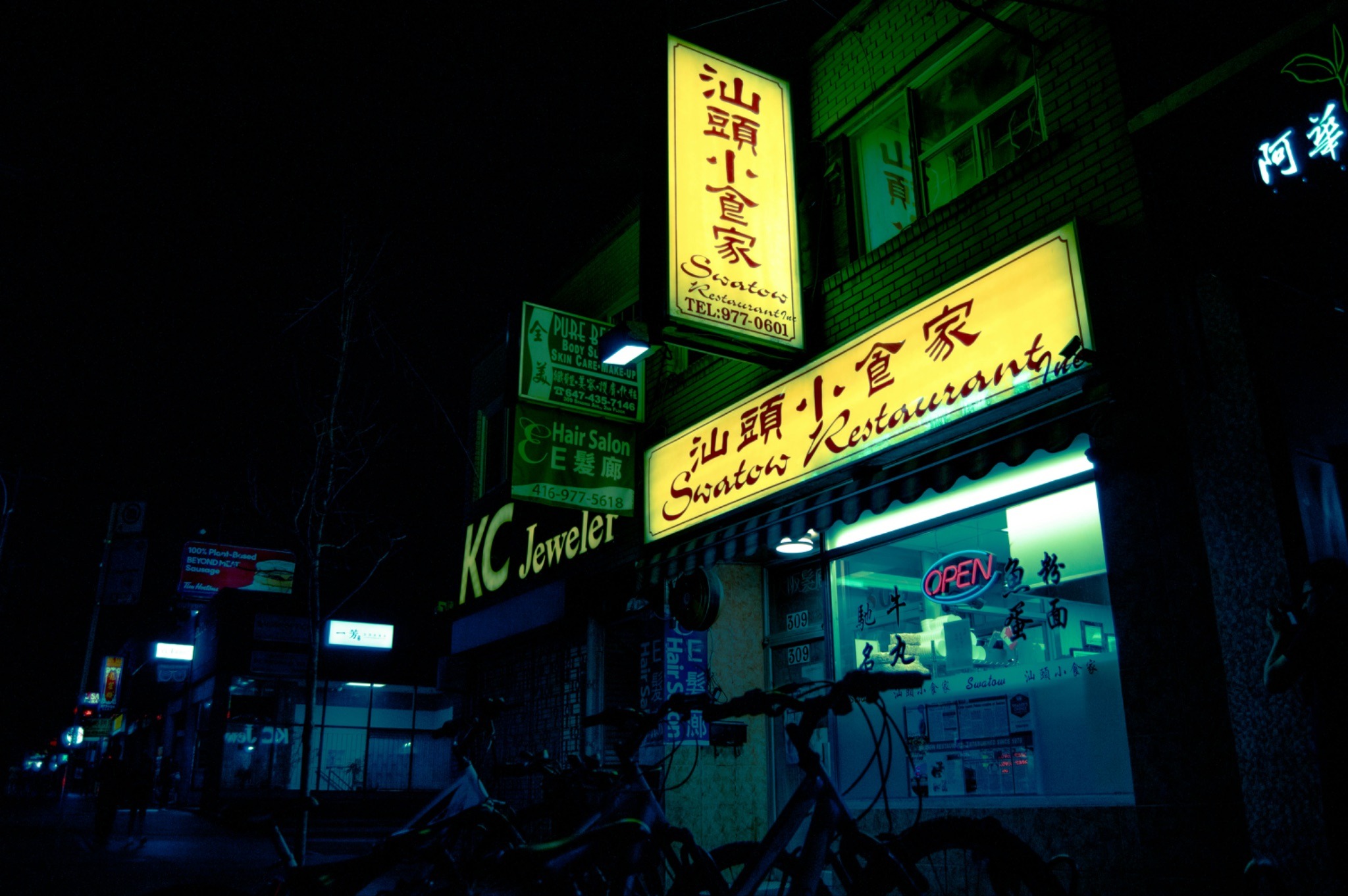
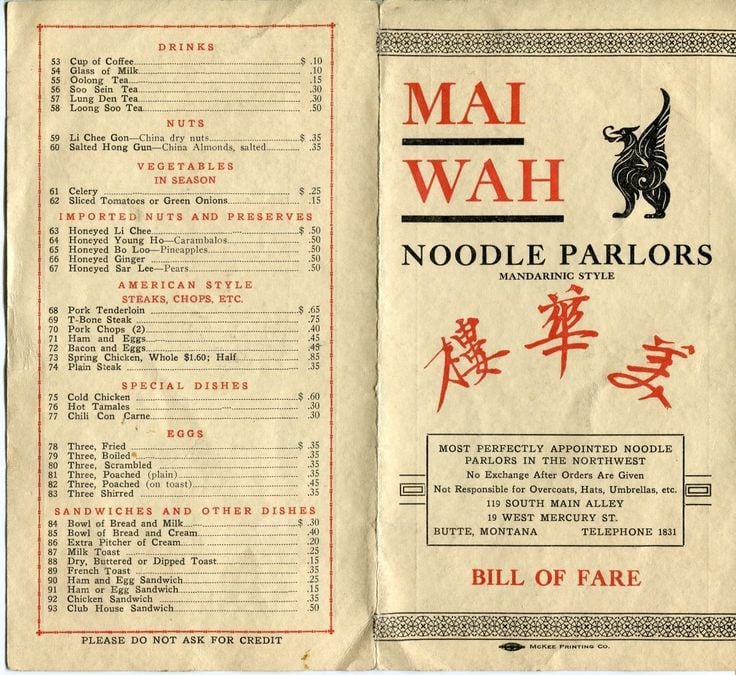

“I want number 23!” An often overheard statement when ordering at a Chinese restaurant abroad. For decades, overseas Chinese restaurants have relied on numbered menus, which act as a quiet shorthand between kitchens and customers. Diners simply choose a number from the dozens of dishes on the menu, often starting with 8, which sounds similar to the word 發 (making fortune).

But how—and why—did this all start? Numbered menus didn’t appear out of nowhere. In the early 20th century, when Chinese immigrants opened restaurants in major cities like San Francisco, New York, London, Rotterdam, and Amsterdam, most customers had never encountered Chinese food before, let alone its naming conventions. Chinese dish names tend to be poetic (Ants Climbing a Tree, 蚂蚁上树), or symbolic (Buddha Jumps Over the Wall, 佛跳墙), or even regional (Hunan-style stir-fried pork, 湖南小炒肉). None of that translates neatly for someone just looking for a quick dinner after work. So restaurants adapted: simple English descriptions, quick-fire takeout service, and numbers—a convenient workaround for mutual mispronunciation.

The system traveled fast. Languages from “the East” confused eaters abroad, so Indonesian, Vietnamese, Japanese, and almost every Asian restaurant you can imagine started borrowing the number system, too.

Today, that number has taken on a life of its own, becoming both a cultural symbol and, as artist Benjamin Li once joked in his work Forty Nr. 39 in the migrant museum Fenix, a tiny stage for daily micro-interactions between cultures. Ordering by code turned dishes into anonymous units—easier to remember but also easier to stereotype. Sometimes the confusion becomes comic. Other times, it slips toward microaggression. Benjamin created Forty Nr. 39 after a racist comment by Gordon, a judge on Holland’s Got Talent, who asked a Chinese contestant, “Which number are you singing? Number 39, with rice?” When everything from dim sum to phở to nasi goreng gets folded into “Asian takeout,” the menu becomes a surface where misrecognition happens.

Still, the numbered menu is a relic worth reading. Within China, there are also inventive ways of ordering food and saving time in the already very busy culinary battlefield. The menus of Chinese restaurants abroad tell a story of migration, adaptation, survival, and the ways immigrant businesses learned to make themselves legible in unfamiliar worlds. But they also pose the question: “Now that diners know more, and Chinese cuisine is no longer ‘mysterious,’ do we still need the numbers?”
Cover image via Pinterest.