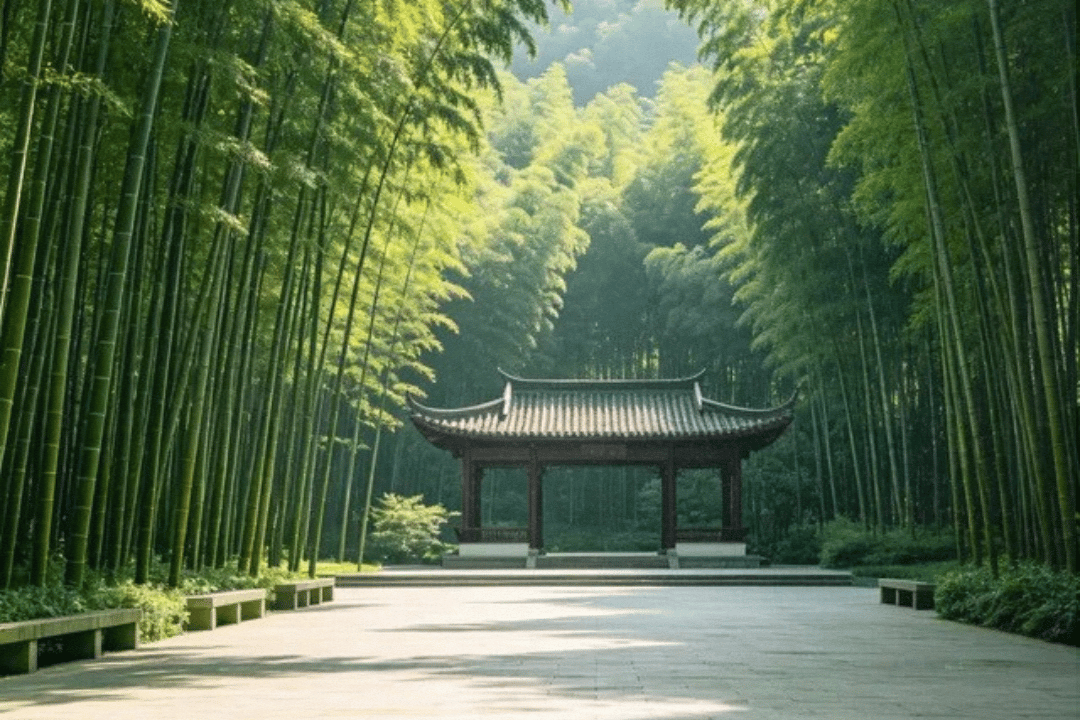
Feature image of China’s Staycation Trend: Taking Time Off From Efficiency Culture

China’s Staycation Trend: Taking Time Off From Efficiency Culture

4 mins read

4 mins read

Feature image of China’s Staycation Trend: Taking Time Off From Efficiency Culture
Swapping high-intensity sightseeing for low-key local escapes and comfort-driven fashion, China’s urban youth are redefining what rest looks like.

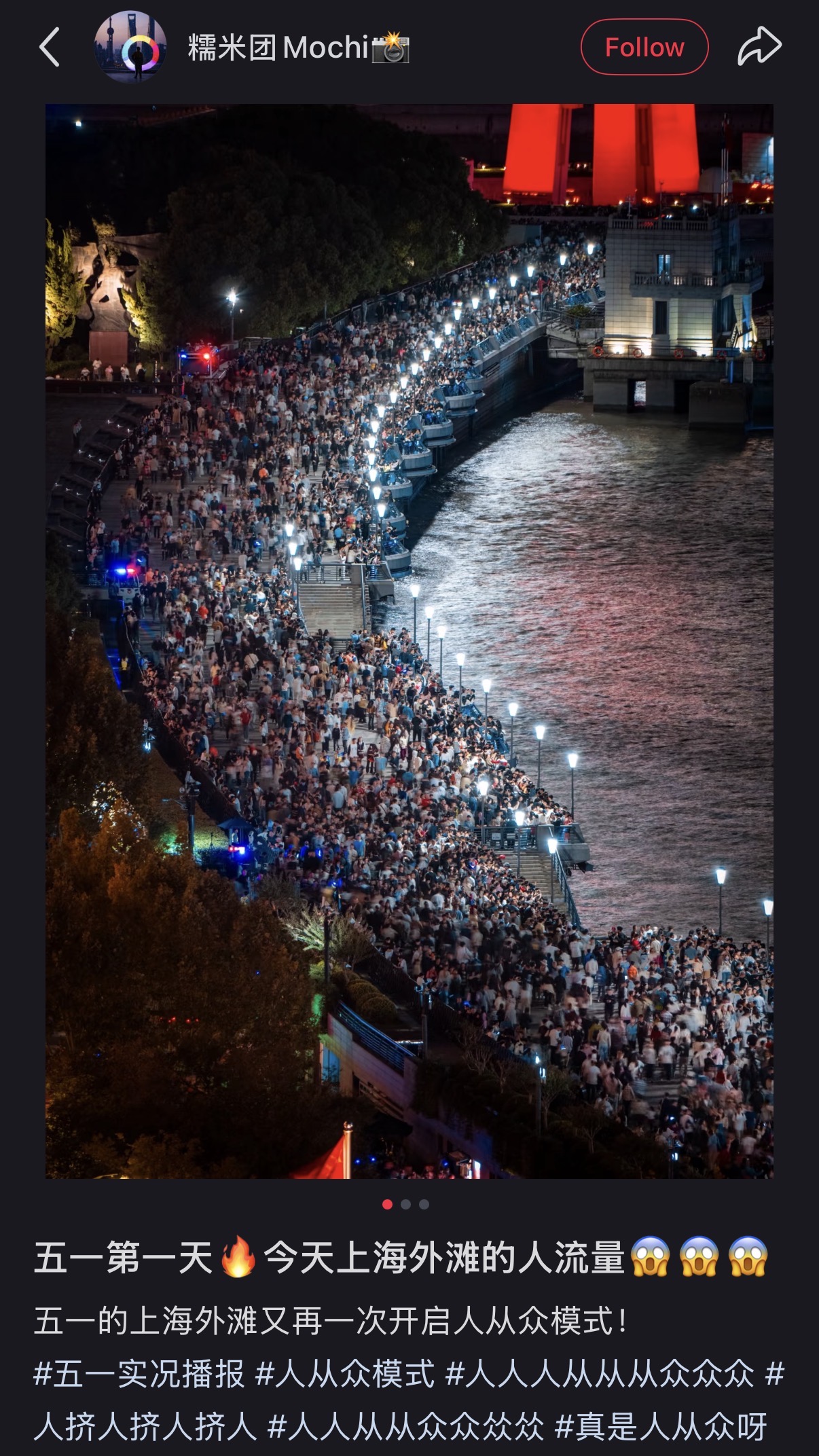
Travel anywhere during one of China’s week-long national holidays (known as “Golden Week”), and you’ll likely find yourself involuntarily swept along by the tide of fellow travelers. The literal meaning of the classic four-character idiom 人山人海, “people mountain, people sea,” becomes immediately clear at any major tourist destination, whether it’s Hongya Cave in Chongqing, the Bund in Shanghai, or the Great Wall.
RADII talks about China's latest travel trend: staycation and how it's avoiding efficiency culture.
Shanghai Bund packed on May Day holiday. Image via Xiaohongshu.

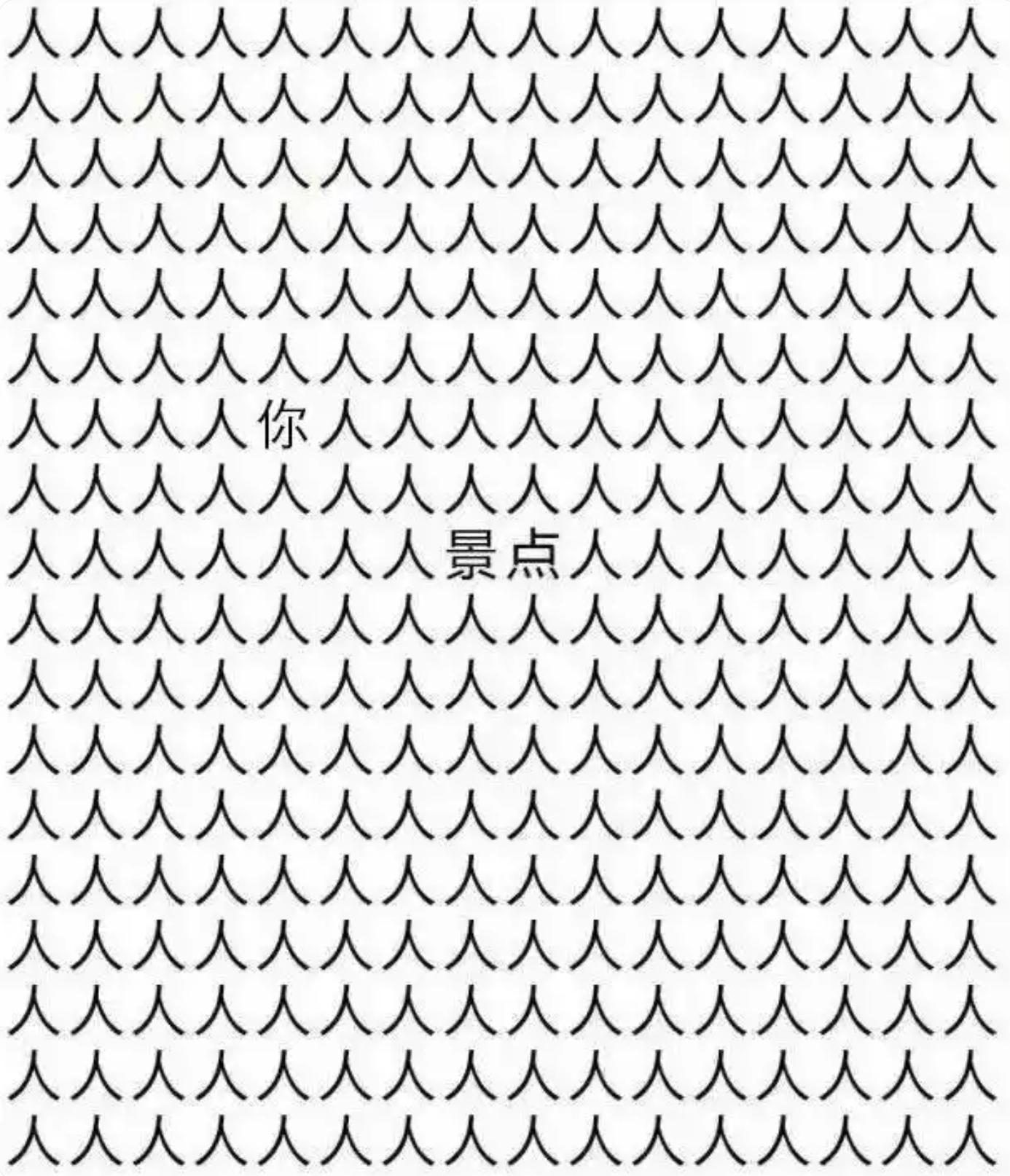
Even more illustratively, the wordplay 人从众𠈌 has become a common holiday-time caption on Chinese social media, likening the gradual stacking of the character 人 (person) to an ever-growing crowd.
RADII talks about China's latest travel trend: staycation and how it's avoiding efficiency culture.
Chinese meme showing “you” (你) lost in a sea of people (人), obscuring the view of a tourist attraction (景点). Image via Jinrong Shibao (Financial Times).

Tackling these crowds is, unsurprisingly, no easy feat, with over 325 million domestic trips recorded during the five-day May Day holiday just this month. Some netizens have suggested that going on a Golden Week trip may be almost as exhausting as 996 work culture itself—especially when most workers must also work makeup days (调休) on the adjacent weekends.

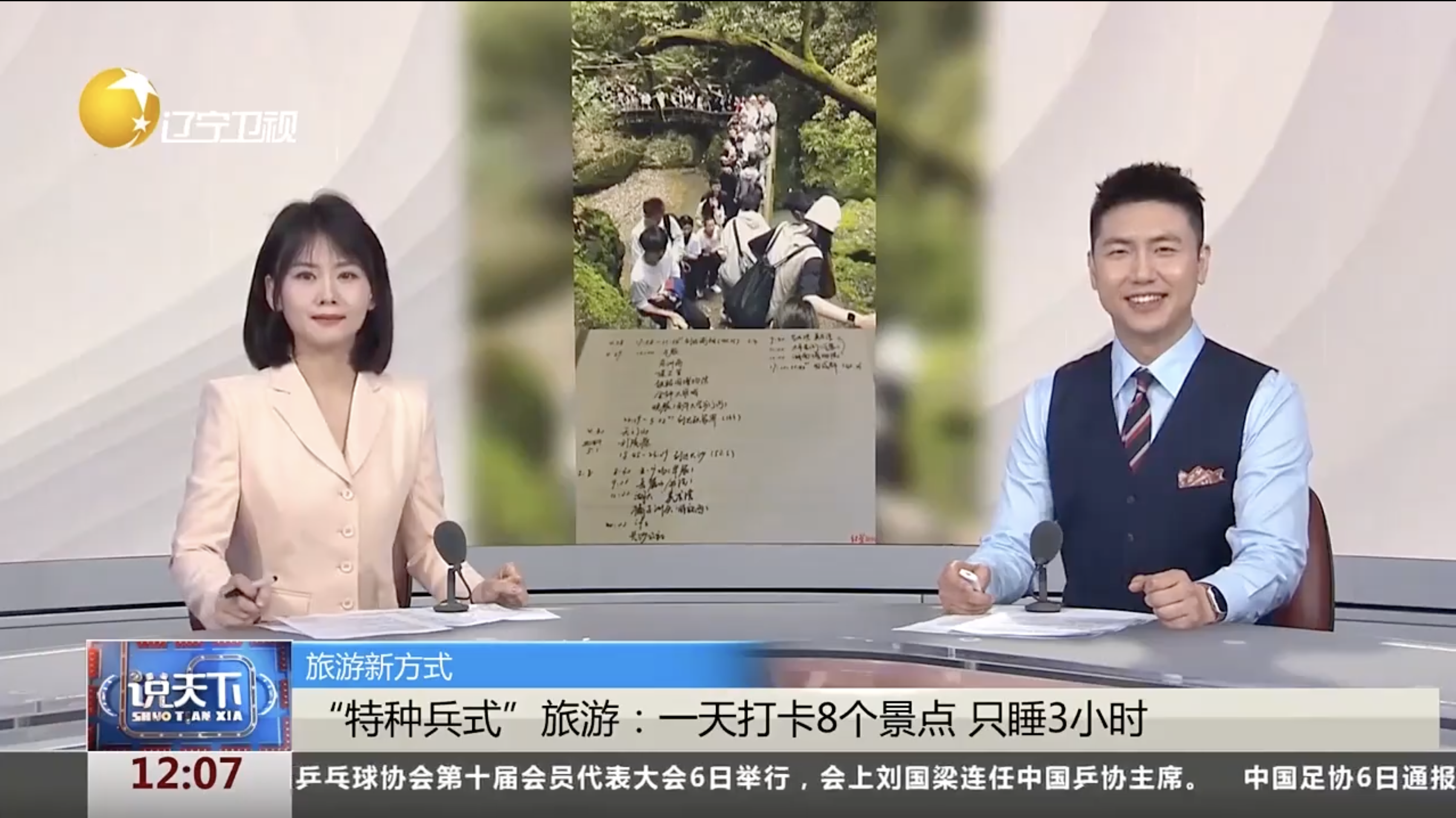
For this reason, the once-popular travel style known as “special forces-style tourism” (特种兵旅游) has started falling out of favor in recent years. This phenomenon saw young college students accumulate tens of thousands of steps a day, checking off dozens of attractions with little to no sleep. Ahead of this year’s May Day holiday, Chinese media warned of the potential health dangers of such high-intensity tourism, including joint damage and cardiovascular risks. The growing backlash toward special forces tourism mirrors a broader cultural shift among young Chinese travelers, whose focus has shifted from sheer efficiency to well-being.
RADII talks about China's latest travel trend: staycation and how it's avoiding efficiency culture.
Chinese news reports on “special forces-style” tourism: visiting 8 attractions in a day with only 3 hours of sleep. Image via Baidu Baike.

Now, enter the “staycation,” a growing travel and style trend among urban Chinese youth looking for a true “escape from the daily grind.” A portmanteau of “stay” and “vacation,” staycations initially became popular in the West as a form of low-stress holiday. Though there is some debate over the term’s strict definition, it generally refers to any holiday that prioritizes rest over distance—whether it’s taking a day trip, booking a hotel stay in your own city, or just staying at home.

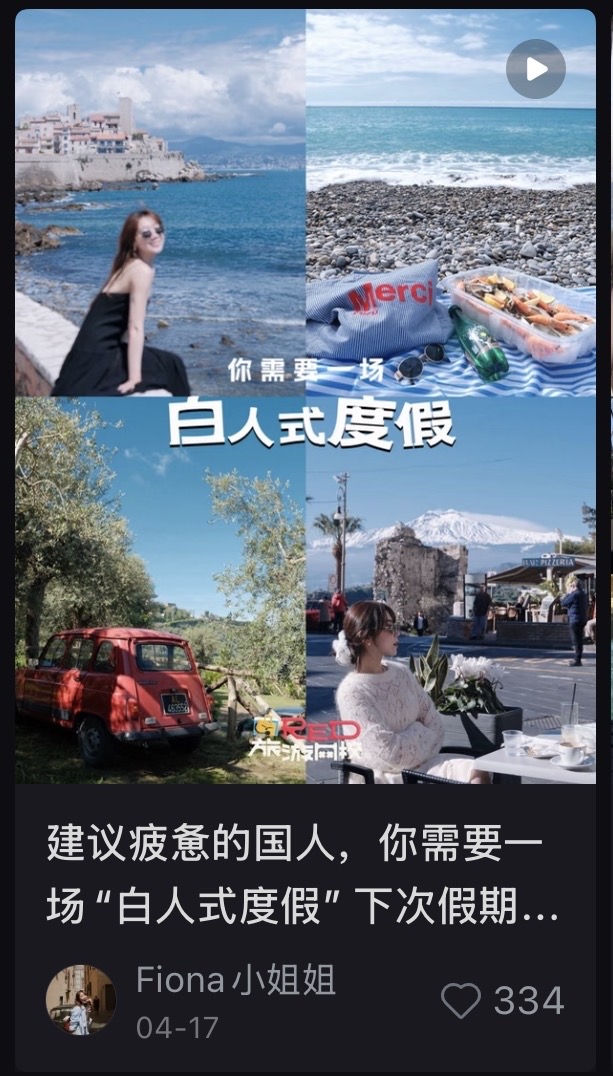
This trend has also been playfully dubbed “white person-style vacations” (白人式度假) by netizens, as a tongue-in-cheek reference to a stereotypically relaxed, low-intensity approach to travel, which is said to involve lounging by the pool and sipping cocktails at a resort.
RADII talks about China's latest travel trend: staycation and how it's avoiding efficiency culture.
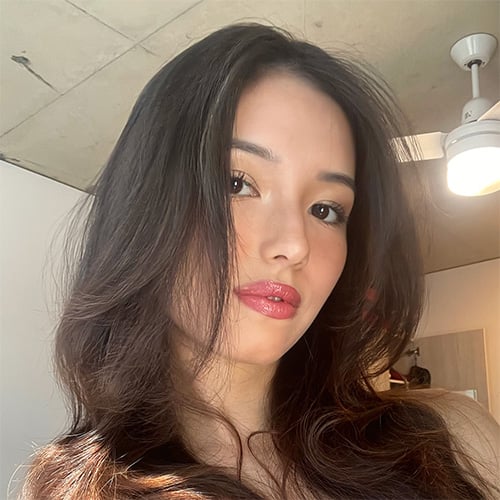
Xiaohongshu blogger showcasing a “white person-style” vacation. Image via Xiaohongshu.

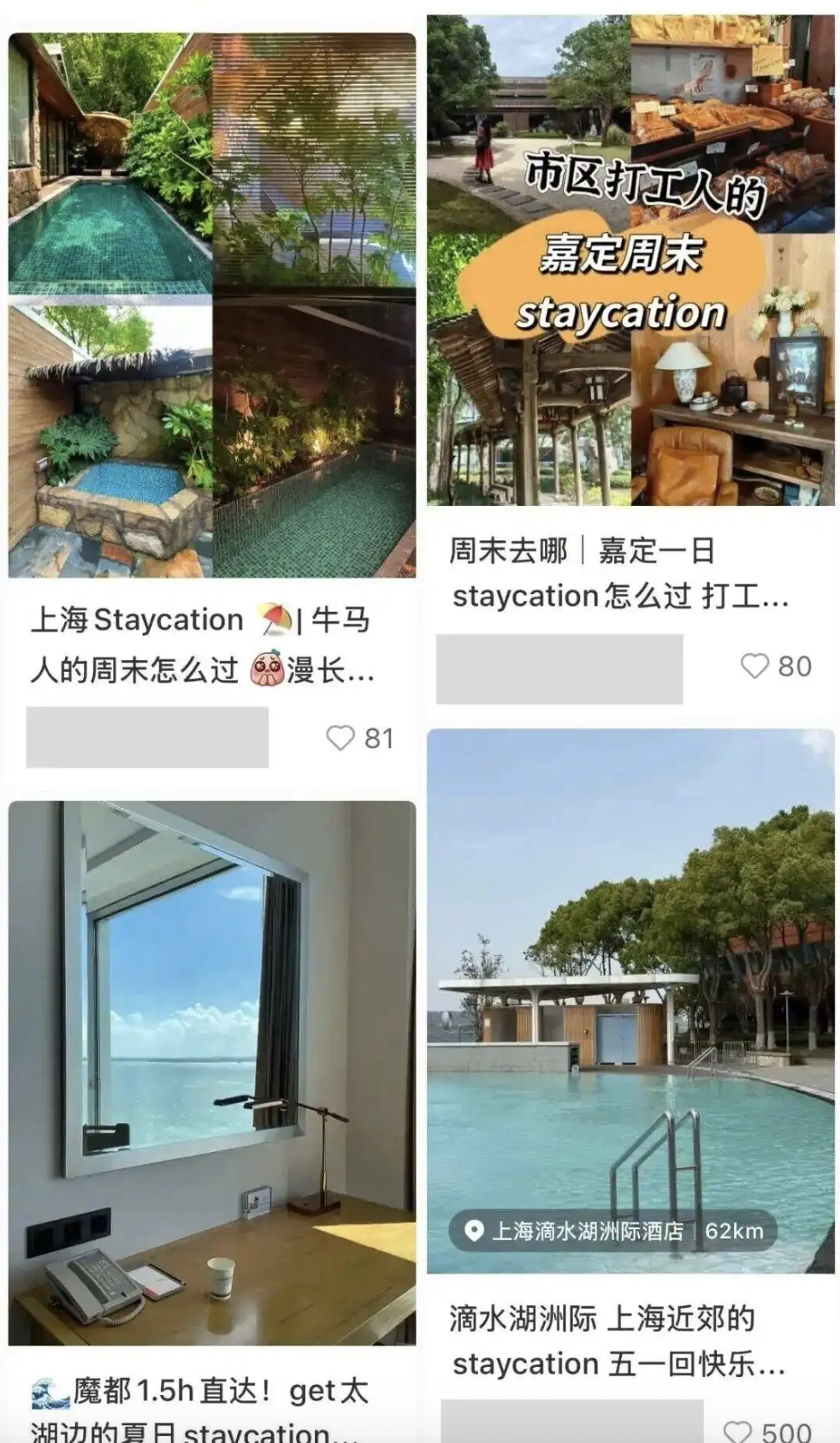
Domestic hotel and tourism groups have already sought to tap into this trend by offering more immersive, resort-style experiences. But when five-star hotel stays are likely to set you back thousands of yuan per night, it’s no surprise that some netizens have complained that such staycations are unaffordable for ordinary people. Others criticize the performative nature of some high-end staycation experiences, which feel more aspirational than genuinely relaxing. After all, is painstakingly staging the perfect staycation shot really any more relaxing than queuing for hours just to get a 30-second photo at a tourist attraction? Indeed, the over-curated staycation has been described as carrying an uncomfortable sense of tension beneath the appearance of effortlessness.
RADII talks about China's latest travel trend: staycation and how it's avoiding efficiency culture.
Xiaohongshu posts showcasing “staycations.” Image via Xin Zhoukan (New Weekly).

So, does taking a staycation have to involve meticulously styled meals, five-star hotels, and curated posts for Xiaohongshu or WeChat Moments? Not at all. The essence of the staycation is taking a break from life’s pressures rather than adding to them. From spa days at home to exploring your own city like a tourist, or even just “doing nothing,” staycations are intended to be leisurely and restorative in a way that suits your personal needs.

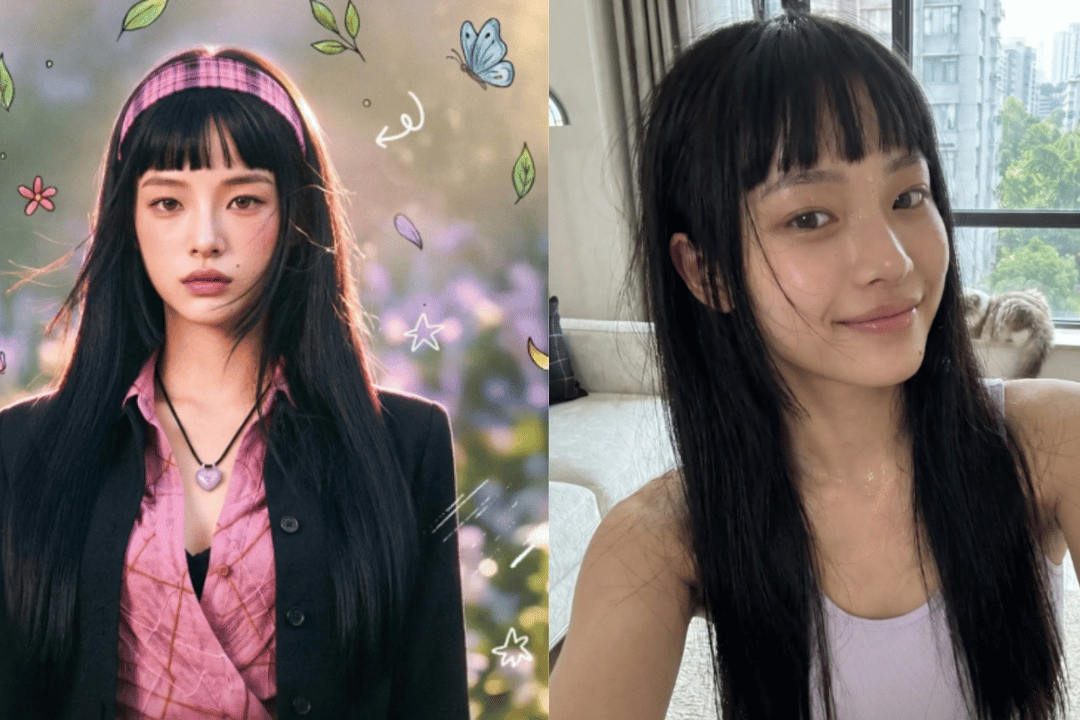
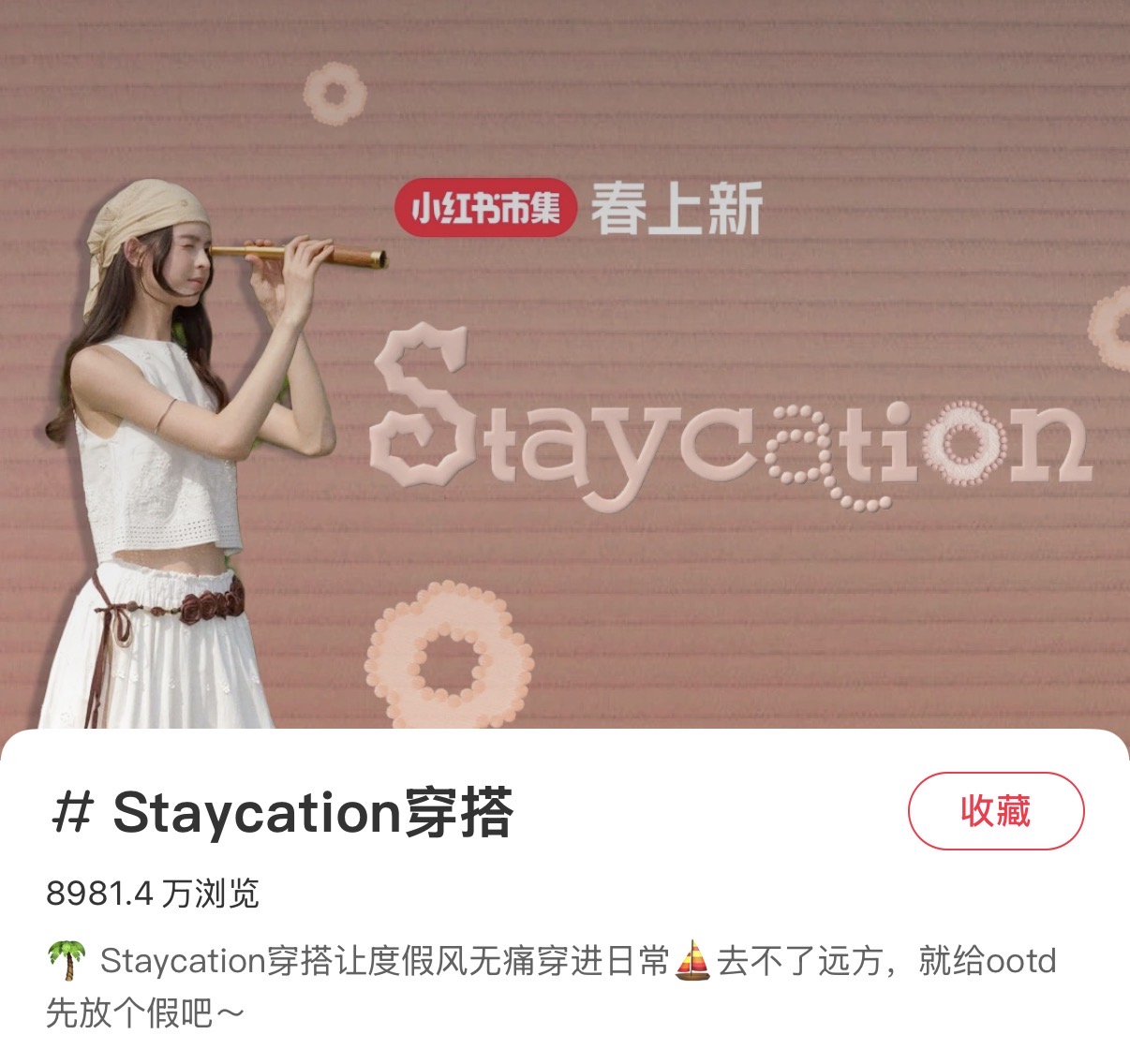
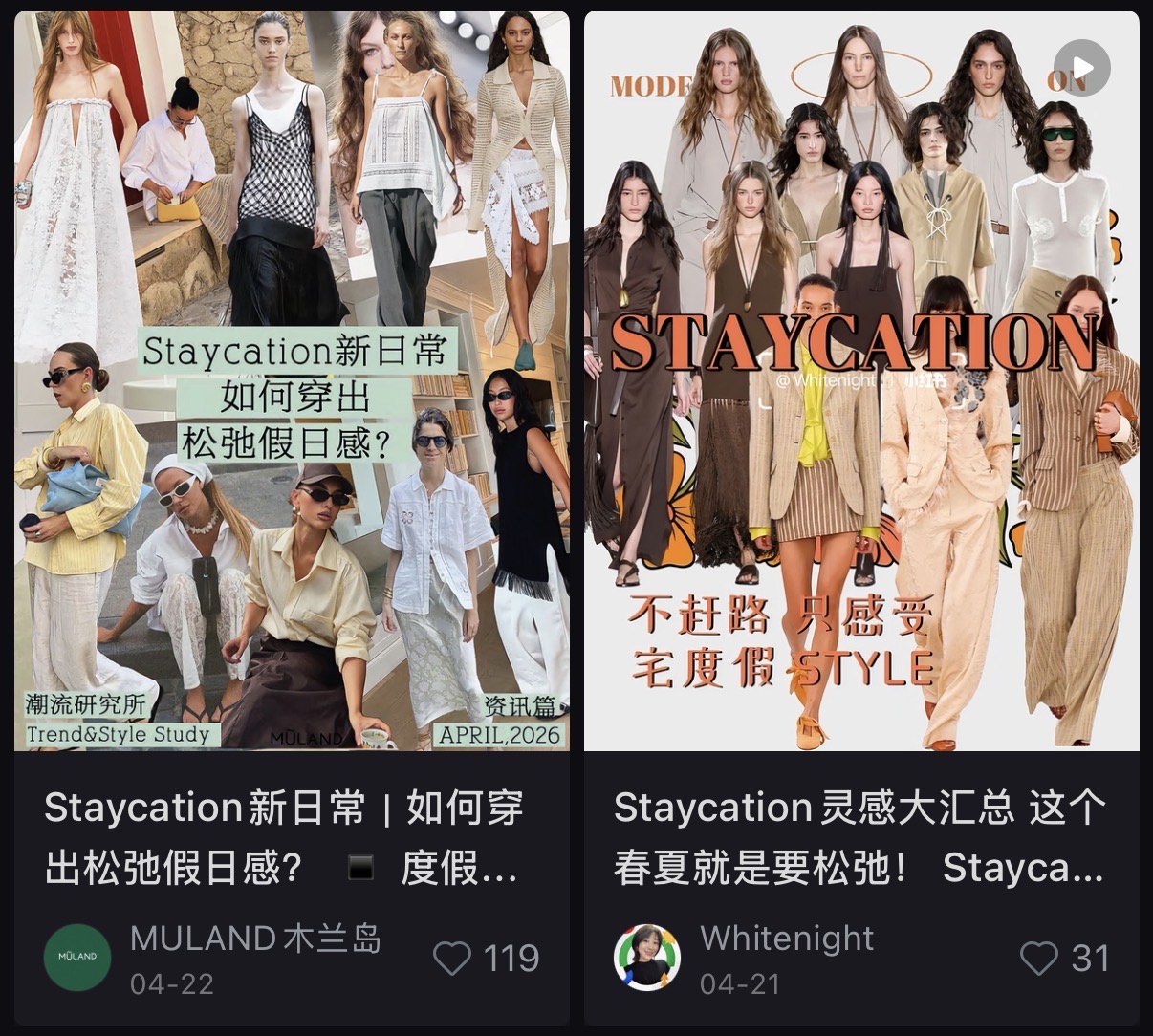
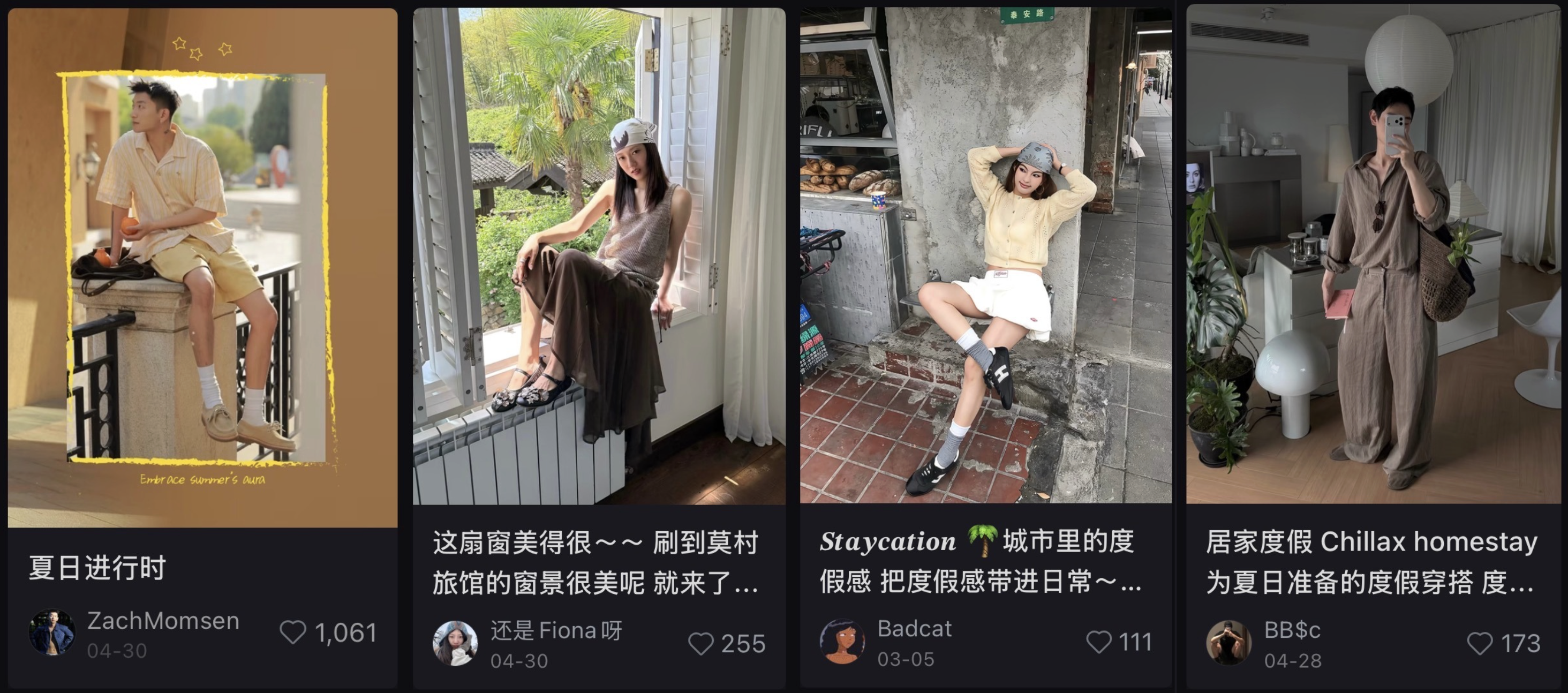
Embracing the staycation trend can even be as simple as putting on an outfit. #Staycation穿搭 (#StaycationOutfit) has attracted 90 million views on Xiaohongshu, inspiring users to dress like they’re on vacation—even when they’re not. The style seeks to evoke a “holiday mood” through natural fabrics (such as linen and cotton), loose silhouettes, light layering, and comfortable footwear. Neutral palettes, crochet accessories, lace, and sheer fabrics have also been noted as key details of the look.

The style was named by Xiaohongshu as one of China’s six major spring 2026 fashion trends and was featured in the social media platform’s “Everyone’s Fashion Week” show. Informed by user engagement data and featuring ordinary community residents as models, the Shanghai-hosted fashion show is said to “revolve around the real needs of users.”
RADII talks about China's latest travel trend: staycation and how it's avoiding efficiency culture.
What comes up on Xiaohongshu when one searches #Staycation穿搭. Image via Xiaohongshu.
RADII talks about China's latest travel trend: staycation and how it's avoiding efficiency culture.
Xiaohongshu posts showcasing staycation outfits. Images via Xiaohongshu.

For many urban Chinese youth facing unemployment stress and work burnout, wearing a staycation outfit is a relatively more accessible way to incorporate relaxation into one’s everyday routine and resist the seemingly ubiquitous pressure to optimize. 

But as China’s Gen Z continue to prioritize dressing for emotional resonance over mere trend-following, staycation outfits are most effective when they genuinely promote personal comfort and ease above any specific aesthetic formula. If not, the fashion version of the staycation trend may fall into the very same trap of performing, rather than experiencing, rest. 

While Xiaohongshu has certainly brought increased visibility to the broader staycation trend, the trend’s user-driven origins reflect a real, collective desire among young Chinese urbanites to take a much-needed break from efficiency culture. 

So, whether you’re thinking about taking a staycation soon or simply dressing like you are, just don’t forget to actually relax!

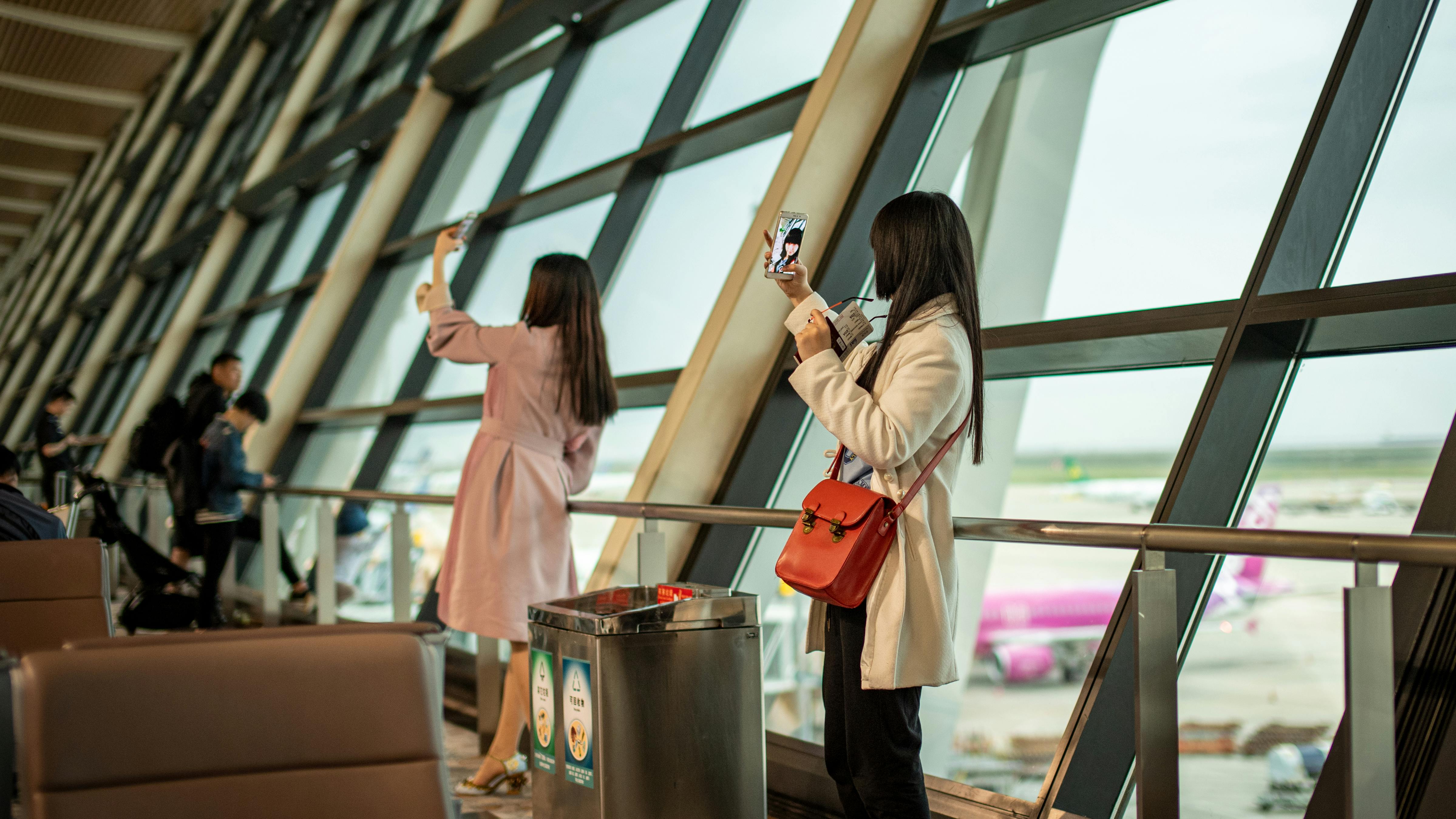
Cover image via Pexels/Margo Evardson.

NEWSLETTER

Get weekly top picks and exclusive, newsletter only content delivered straight to you inbox.

NEWSLETTER

Get weekly top picks and exclusive, newsletter only content delivered straight to you inbox.

RADII NEWSLETTER

Get weekly top picks and exclusive, newsletter only content delivered straight to you inbox

Feature image of China’s Staycation Trend: Taking Time Off From Efficiency Culture

China’s Staycation Trend: Taking Time Off From Efficiency Culture

4 mins read

Swapping high-intensity sightseeing for low-key local escapes and comfort-driven fashion, China’s urban youth are redefining what rest looks like.

Travel anywhere during one of China’s week-long national holidays (known as “Golden Week”), and you’ll likely find yourself involuntarily swept along by the tide of fellow travelers. The literal meaning of the classic four-character idiom 人山人海, “people mountain, people sea,” becomes immediately clear at any major tourist destination, whether it’s Hongya Cave in Chongqing, the Bund in Shanghai, or the Great Wall.

RADII talks about China's latest travel trend: staycation and how it's avoiding efficiency culture.
Shanghai Bund packed on May Day holiday. Image via Xiaohongshu.

Even more illustratively, the wordplay 人从众𠈌 has become a common holiday-time caption on Chinese social media, likening the gradual stacking of the character 人 (person) to an ever-growing crowd.

RADII talks about China's latest travel trend: staycation and how it's avoiding efficiency culture.
Chinese meme showing “you” (你) lost in a sea of people (人), obscuring the view of a tourist attraction (景点). Image via Jinrong Shibao (Financial Times).

Tackling these crowds is, unsurprisingly, no easy feat, with over 325 million domestic trips recorded during the five-day May Day holiday just this month. Some netizens have suggested that going on a Golden Week trip may be almost as exhausting as 996 work culture itself—especially when most workers must also work makeup days (调休) on the adjacent weekends.

For this reason, the once-popular travel style known as “special forces-style tourism” (特种兵旅游) has started falling out of favor in recent years. This phenomenon saw young college students accumulate tens of thousands of steps a day, checking off dozens of attractions with little to no sleep. Ahead of this year’s May Day holiday, Chinese media warned of the potential health dangers of such high-intensity tourism, including joint damage and cardiovascular risks. The growing backlash toward special forces tourism mirrors a broader cultural shift among young Chinese travelers, whose focus has shifted from sheer efficiency to well-being.

RADII talks about China's latest travel trend: staycation and how it's avoiding efficiency culture.
Chinese news reports on “special forces-style” tourism: visiting 8 attractions in a day with only 3 hours of sleep. Image via Baidu Baike.

Now, enter the “staycation,” a growing travel and style trend among urban Chinese youth looking for a true “escape from the daily grind.” A portmanteau of “stay” and “vacation,” staycations initially became popular in the West as a form of low-stress holiday. Though there is some debate over the term’s strict definition, it generally refers to any holiday that prioritizes rest over distance—whether it’s taking a day trip, booking a hotel stay in your own city, or just staying at home.

This trend has also been playfully dubbed “white person-style vacations” (白人式度假) by netizens, as a tongue-in-cheek reference to a stereotypically relaxed, low-intensity approach to travel, which is said to involve lounging by the pool and sipping cocktails at a resort.

RADII talks about China's latest travel trend: staycation and how it's avoiding efficiency culture.
Xiaohongshu blogger showcasing a “white person-style” vacation. Image via Xiaohongshu.

Domestic hotel and tourism groups have already sought to tap into this trend by offering more immersive, resort-style experiences. But when five-star hotel stays are likely to set you back thousands of yuan per night, it’s no surprise that some netizens have complained that such staycations are unaffordable for ordinary people. Others criticize the performative nature of some high-end staycation experiences, which feel more aspirational than genuinely relaxing. After all, is painstakingly staging the perfect staycation shot really any more relaxing than queuing for hours just to get a 30-second photo at a tourist attraction? Indeed, the over-curated staycation has been described as carrying an uncomfortable sense of tension beneath the appearance of effortlessness.

RADII talks about China's latest travel trend: staycation and how it's avoiding efficiency culture.
Xiaohongshu posts showcasing “staycations.” Image via Xin Zhoukan (New Weekly).

So, does taking a staycation have to involve meticulously styled meals, five-star hotels, and curated posts for Xiaohongshu or WeChat Moments? Not at all. The essence of the staycation is taking a break from life’s pressures rather than adding to them. From spa days at home to exploring your own city like a tourist, or even just “doing nothing,” staycations are intended to be leisurely and restorative in a way that suits your personal needs.

Embracing the staycation trend can even be as simple as putting on an outfit. #Staycation穿搭 (#StaycationOutfit) has attracted 90 million views on Xiaohongshu, inspiring users to dress like they’re on vacation—even when they’re not. The style seeks to evoke a “holiday mood” through natural fabrics (such as linen and cotton), loose silhouettes, light layering, and comfortable footwear. Neutral palettes, crochet accessories, lace, and sheer fabrics have also been noted as key details of the look.

The style was named by Xiaohongshu as one of China’s six major spring 2026 fashion trends and was featured in the social media platform’s “Everyone’s Fashion Week” show. Informed by user engagement data and featuring ordinary community residents as models, the Shanghai-hosted fashion show is said to “revolve around the real needs of users.”
RADII talks about China's latest travel trend: staycation and how it's avoiding efficiency culture.
What comes up on Xiaohongshu when one searches #Staycation穿搭. Image via Xiaohongshu.
RADII talks about China's latest travel trend: staycation and how it's avoiding efficiency culture.
Xiaohongshu posts showcasing staycation outfits. Images via Xiaohongshu.

For many urban Chinese youth facing unemployment stress and work burnout, wearing a staycation outfit is a relatively more accessible way to incorporate relaxation into one’s everyday routine and resist the seemingly ubiquitous pressure to optimize. 

But as China’s Gen Z continue to prioritize dressing for emotional resonance over mere trend-following, staycation outfits are most effective when they genuinely promote personal comfort and ease above any specific aesthetic formula. If not, the fashion version of the staycation trend may fall into the very same trap of performing, rather than experiencing, rest. 

While Xiaohongshu has certainly brought increased visibility to the broader staycation trend, the trend’s user-driven origins reflect a real, collective desire among young Chinese urbanites to take a much-needed break from efficiency culture. 

So, whether you’re thinking about taking a staycation soon or simply dressing like you are, just don’t forget to actually relax!

Cover image via Pexels/Margo Evardson.

NEWSLETTER

Get weekly top picks and exclusive, newsletter only content delivered straight to you inbox.

RADII NEWSLETTER

Get weekly top picks and exclusive, newsletter only content delivered straight to you inbox

RELATED POSTS

Feature image of China’s Staycation Trend: Taking Time Off From Efficiency Culture

China’s Staycation Trend: Taking Time Off From Efficiency Culture

4 mins read

4 mins read

Feature image of China’s Staycation Trend: Taking Time Off From Efficiency Culture
Swapping high-intensity sightseeing for low-key local escapes and comfort-driven fashion, China’s urban youth are redefining what rest looks like.

Travel anywhere during one of China’s week-long national holidays (known as “Golden Week”), and you’ll likely find yourself involuntarily swept along by the tide of fellow travelers. The literal meaning of the classic four-character idiom 人山人海, “people mountain, people sea,” becomes immediately clear at any major tourist destination, whether it’s Hongya Cave in Chongqing, the Bund in Shanghai, or the Great Wall.

RADII talks about China's latest travel trend: staycation and how it's avoiding efficiency culture.
Shanghai Bund packed on May Day holiday. Image via Xiaohongshu.

Even more illustratively, the wordplay 人从众𠈌 has become a common holiday-time caption on Chinese social media, likening the gradual stacking of the character 人 (person) to an ever-growing crowd.

RADII talks about China's latest travel trend: staycation and how it's avoiding efficiency culture.
Chinese meme showing “you” (你) lost in a sea of people (人), obscuring the view of a tourist attraction (景点). Image via Jinrong Shibao (Financial Times).

Tackling these crowds is, unsurprisingly, no easy feat, with over 325 million domestic trips recorded during the five-day May Day holiday just this month. Some netizens have suggested that going on a Golden Week trip may be almost as exhausting as 996 work culture itself—especially when most workers must also work makeup days (调休) on the adjacent weekends.

For this reason, the once-popular travel style known as “special forces-style tourism” (特种兵旅游) has started falling out of favor in recent years. This phenomenon saw young college students accumulate tens of thousands of steps a day, checking off dozens of attractions with little to no sleep. Ahead of this year’s May Day holiday, Chinese media warned of the potential health dangers of such high-intensity tourism, including joint damage and cardiovascular risks. The growing backlash toward special forces tourism mirrors a broader cultural shift among young Chinese travelers, whose focus has shifted from sheer efficiency to well-being.

RADII talks about China's latest travel trend: staycation and how it's avoiding efficiency culture.
Chinese news reports on “special forces-style” tourism: visiting 8 attractions in a day with only 3 hours of sleep. Image via Baidu Baike.

Now, enter the “staycation,” a growing travel and style trend among urban Chinese youth looking for a true “escape from the daily grind.” A portmanteau of “stay” and “vacation,” staycations initially became popular in the West as a form of low-stress holiday. Though there is some debate over the term’s strict definition, it generally refers to any holiday that prioritizes rest over distance—whether it’s taking a day trip, booking a hotel stay in your own city, or just staying at home.

This trend has also been playfully dubbed “white person-style vacations” (白人式度假) by netizens, as a tongue-in-cheek reference to a stereotypically relaxed, low-intensity approach to travel, which is said to involve lounging by the pool and sipping cocktails at a resort.

RADII talks about China's latest travel trend: staycation and how it's avoiding efficiency culture.
Xiaohongshu blogger showcasing a “white person-style” vacation. Image via Xiaohongshu.

Domestic hotel and tourism groups have already sought to tap into this trend by offering more immersive, resort-style experiences. But when five-star hotel stays are likely to set you back thousands of yuan per night, it’s no surprise that some netizens have complained that such staycations are unaffordable for ordinary people. Others criticize the performative nature of some high-end staycation experiences, which feel more aspirational than genuinely relaxing. After all, is painstakingly staging the perfect staycation shot really any more relaxing than queuing for hours just to get a 30-second photo at a tourist attraction? Indeed, the over-curated staycation has been described as carrying an uncomfortable sense of tension beneath the appearance of effortlessness.

RADII talks about China's latest travel trend: staycation and how it's avoiding efficiency culture.
Xiaohongshu posts showcasing “staycations.” Image via Xin Zhoukan (New Weekly).

So, does taking a staycation have to involve meticulously styled meals, five-star hotels, and curated posts for Xiaohongshu or WeChat Moments? Not at all. The essence of the staycation is taking a break from life’s pressures rather than adding to them. From spa days at home to exploring your own city like a tourist, or even just “doing nothing,” staycations are intended to be leisurely and restorative in a way that suits your personal needs.

Embracing the staycation trend can even be as simple as putting on an outfit. #Staycation穿搭 (#StaycationOutfit) has attracted 90 million views on Xiaohongshu, inspiring users to dress like they’re on vacation—even when they’re not. The style seeks to evoke a “holiday mood” through natural fabrics (such as linen and cotton), loose silhouettes, light layering, and comfortable footwear. Neutral palettes, crochet accessories, lace, and sheer fabrics have also been noted as key details of the look.

The style was named by Xiaohongshu as one of China’s six major spring 2026 fashion trends and was featured in the social media platform’s “Everyone’s Fashion Week” show. Informed by user engagement data and featuring ordinary community residents as models, the Shanghai-hosted fashion show is said to “revolve around the real needs of users.”

RADII talks about China's latest travel trend: staycation and how it's avoiding efficiency culture.
What comes up on Xiaohongshu when one searches #Staycation穿搭. Image via Xiaohongshu.
RADII talks about China's latest travel trend: staycation and how it's avoiding efficiency culture.
Xiaohongshu posts showcasing staycation outfits. Images via Xiaohongshu.

For many urban Chinese youth facing unemployment stress and work burnout, wearing a staycation outfit is a relatively more accessible way to incorporate relaxation into one’s everyday routine and resist the seemingly ubiquitous pressure to optimize. 

But as China’s Gen Z continue to prioritize dressing for emotional resonance over mere trend-following, staycation outfits are most effective when they genuinely promote personal comfort and ease above any specific aesthetic formula. If not, the fashion version of the staycation trend may fall into the very same trap of performing, rather than experiencing, rest. 

While Xiaohongshu has certainly brought increased visibility to the broader staycation trend, the trend’s user-driven origins reflect a real, collective desire among young Chinese urbanites to take a much-needed break from efficiency culture. 

So, whether you’re thinking about taking a staycation soon or simply dressing like you are, just don’t forget to actually relax!

Cover image via Pexels/Margo Evardson.
NEWSLETTER

Get weekly top picks and exclusive, newsletter only content delivered straight to you inbox.

NEWSLETTER

Get weekly top picks and exclusive, newsletter only content delivered straight to you inbox.

RADII NEWSLETTER

Get weekly top picks and exclusive, newsletter only content delivered straight to you inbox

Feature image of China’s Staycation Trend: Taking Time Off From Efficiency Culture

China’s Staycation Trend: Taking Time Off From Efficiency Culture

4 mins read

Swapping high-intensity sightseeing for low-key local escapes and comfort-driven fashion, China’s urban youth are redefining what rest looks like.

Travel anywhere during one of China’s week-long national holidays (known as “Golden Week”), and you’ll likely find yourself involuntarily swept along by the tide of fellow travelers. The literal meaning of the classic four-character idiom 人山人海, “people mountain, people sea,” becomes immediately clear at any major tourist destination, whether it’s Hongya Cave in Chongqing, the Bund in Shanghai, or the Great Wall.

RADII talks about China's latest travel trend: staycation and how it's avoiding efficiency culture.
Shanghai Bund packed on May Day holiday. Image via Xiaohongshu.

Even more illustratively, the wordplay 人从众𠈌 has become a common holiday-time caption on Chinese social media, likening the gradual stacking of the character 人 (person) to an ever-growing crowd.

RADII talks about China's latest travel trend: staycation and how it's avoiding efficiency culture.
Chinese meme showing “you” (你) lost in a sea of people (人), obscuring the view of a tourist attraction (景点). Image via Jinrong Shibao (Financial Times).

Tackling these crowds is, unsurprisingly, no easy feat, with over 325 million domestic trips recorded during the five-day May Day holiday just this month. Some netizens have suggested that going on a Golden Week trip may be almost as exhausting as 996 work culture itself—especially when most workers must also work makeup days (调休) on the adjacent weekends.

For this reason, the once-popular travel style known as “special forces-style tourism” (特种兵旅游) has started falling out of favor in recent years. This phenomenon saw young college students accumulate tens of thousands of steps a day, checking off dozens of attractions with little to no sleep. Ahead of this year’s May Day holiday, Chinese media warned of the potential health dangers of such high-intensity tourism, including joint damage and cardiovascular risks. The growing backlash toward special forces tourism mirrors a broader cultural shift among young Chinese travelers, whose focus has shifted from sheer efficiency to well-being.

RADII talks about China's latest travel trend: staycation and how it's avoiding efficiency culture.
Chinese news reports on “special forces-style” tourism: visiting 8 attractions in a day with only 3 hours of sleep. Image via Baidu Baike.

Now, enter the “staycation,” a growing travel and style trend among urban Chinese youth looking for a true “escape from the daily grind.” A portmanteau of “stay” and “vacation,” staycations initially became popular in the West as a form of low-stress holiday. Though there is some debate over the term’s strict definition, it generally refers to any holiday that prioritizes rest over distance—whether it’s taking a day trip, booking a hotel stay in your own city, or just staying at home.

This trend has also been playfully dubbed “white person-style vacations” (白人式度假) by netizens, as a tongue-in-cheek reference to a stereotypically relaxed, low-intensity approach to travel, which is said to involve lounging by the pool and sipping cocktails at a resort.

RADII talks about China's latest travel trend: staycation and how it's avoiding efficiency culture.
Xiaohongshu blogger showcasing a “white person-style” vacation. Image via Xiaohongshu.

Domestic hotel and tourism groups have already sought to tap into this trend by offering more immersive, resort-style experiences. But when five-star hotel stays are likely to set you back thousands of yuan per night, it’s no surprise that some netizens have complained that such staycations are unaffordable for ordinary people. Others criticize the performative nature of some high-end staycation experiences, which feel more aspirational than genuinely relaxing. After all, is painstakingly staging the perfect staycation shot really any more relaxing than queuing for hours just to get a 30-second photo at a tourist attraction? Indeed, the over-curated staycation has been described as carrying an uncomfortable sense of tension beneath the appearance of effortlessness.

RADII talks about China's latest travel trend: staycation and how it's avoiding efficiency culture.
Xiaohongshu posts showcasing “staycations.” Image via Xin Zhoukan (New Weekly).

So, does taking a staycation have to involve meticulously styled meals, five-star hotels, and curated posts for Xiaohongshu or WeChat Moments? Not at all. The essence of the staycation is taking a break from life’s pressures rather than adding to them. From spa days at home to exploring your own city like a tourist, or even just “doing nothing,” staycations are intended to be leisurely and restorative in a way that suits your personal needs.

Embracing the staycation trend can even be as simple as putting on an outfit. #Staycation穿搭 (#StaycationOutfit) has attracted 90 million views on Xiaohongshu, inspiring users to dress like they’re on vacation—even when they’re not. The style seeks to evoke a “holiday mood” through natural fabrics (such as linen and cotton), loose silhouettes, light layering, and comfortable footwear. Neutral palettes, crochet accessories, lace, and sheer fabrics have also been noted as key details of the look.

The style was named by Xiaohongshu as one of China’s six major spring 2026 fashion trends and was featured in the social media platform’s “Everyone’s Fashion Week” show. Informed by user engagement data and featuring ordinary community residents as models, the Shanghai-hosted fashion show is said to “revolve around the real needs of users.”

RADII talks about China's latest travel trend: staycation and how it's avoiding efficiency culture.
What comes up on Xiaohongshu when one searches #Staycation穿搭. Image via Xiaohongshu.
RADII talks about China's latest travel trend: staycation and how it's avoiding efficiency culture.
Xiaohongshu posts showcasing staycation outfits. Images via Xiaohongshu.

For many urban Chinese youth facing unemployment stress and work burnout, wearing a staycation outfit is a relatively more accessible way to incorporate relaxation into one’s everyday routine and resist the seemingly ubiquitous pressure to optimize. 

But as China’s Gen Z continue to prioritize dressing for emotional resonance over mere trend-following, staycation outfits are most effective when they genuinely promote personal comfort and ease above any specific aesthetic formula. If not, the fashion version of the staycation trend may fall into the very same trap of performing, rather than experiencing, rest. 

While Xiaohongshu has certainly brought increased visibility to the broader staycation trend, the trend’s user-driven origins reflect a real, collective desire among young Chinese urbanites to take a much-needed break from efficiency culture. 

So, whether you’re thinking about taking a staycation soon or simply dressing like you are, just don’t forget to actually relax!

Cover image via Pexels/Margo Evardson.
NEWSLETTER

Get weekly top picks and exclusive, newsletter only content delivered straight to you inbox.

RADII NEWSLETTER

Get weekly top picks and exclusive, newsletter only content delivered straight to you inbox

RADII newsletter pop up visual

NEWSLETTER​

Get weekly top picks and exclusive, newsletter only content delivered straight to you inbox

RADII Newsletter Pop Up small banner

NEWSLETTER

Get weekly top picks and exclusive, newsletter only content delivered straight to you inbox.

Link Copied!

Share

Feature image of China’s Staycation Trend: Taking Time Off From Efficiency Culture

China’s Staycation Trend: Taking Time Off From Efficiency Culture

Swapping high-intensity sightseeing for low-key local escapes and comfort-driven fashion, China’s urban youth are redefining what rest looks like.

PULSE

Tap into the latest in music, fashion, art, design, entertainment, pop culture, celebrity news, and contemporary culture

DISCOVER

Embark on a journey through food, travel, wellness, heritage, traditional culture, and lifestyle

STYLE

An insider’s look at the intersection of fashion, art, and design

FEAST

Titillate your taste buds with coverage of the best food and drink trends from China and beyond.

FUTURE

Explore the cutting edge in tech, AI, gadgets, gaming, and innovative tech-related products

FEAST

Titillate your taste buds with coverage of the best food and drink trends from China and beyond

STYLE

An insider’s look at the intersection of fashion, art, and design

PULSE

Unpacking Chinese youth culture through coverage of nightlife, film, sports, celebrities, and the hottest new music