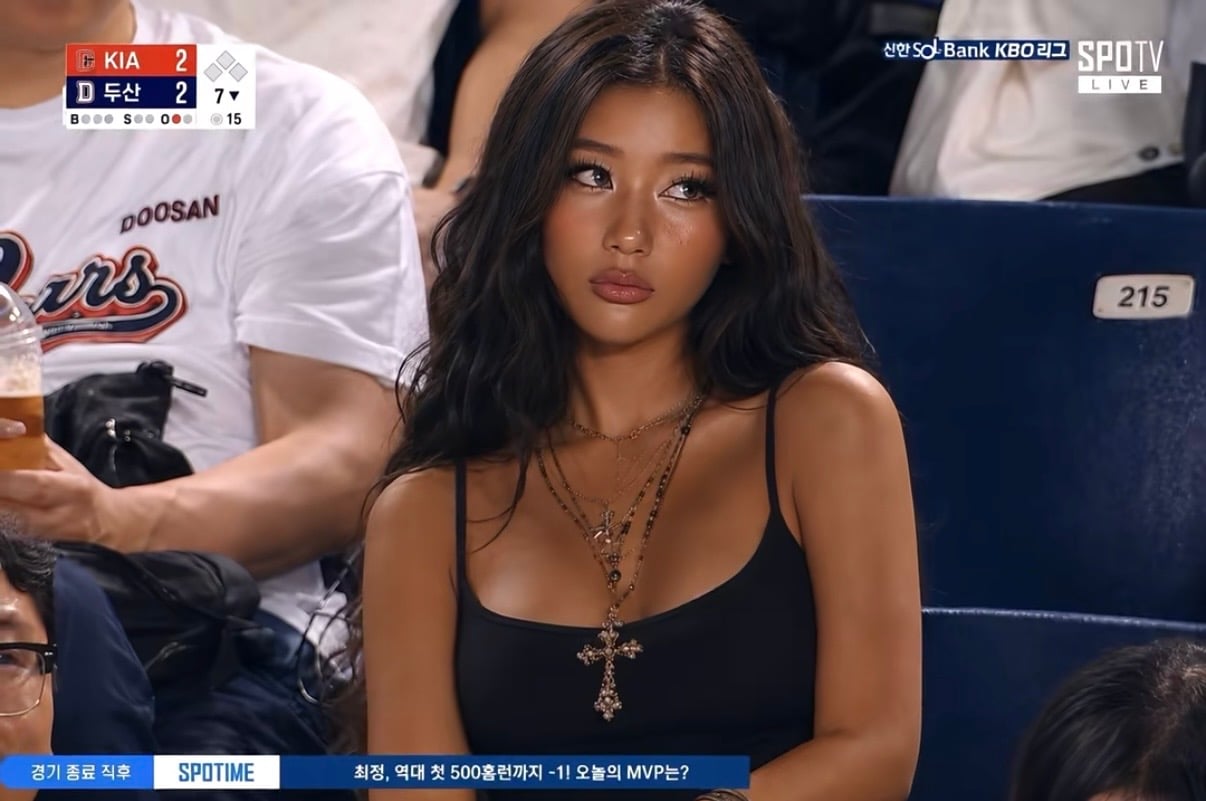

It all started with a clip that went viral in South Korea earlier this month. A woman sitting in a baseball stadium, white jersey on, absorbed in the game—biting her lip, smiling, completely in her own world. The clip racked up over 15 million views before anyone noticed the uncanny issue: she was AI-generated—completely fake. The post by an X user was captioned, “The average Korean woman,” and was initially not labeled as AI-generated content, drawing immediate backlash online, accusations of misogyny, and media coverage in Korean outlets.
Globally, though, the response wasn’t outrage—it was a tutorial request.
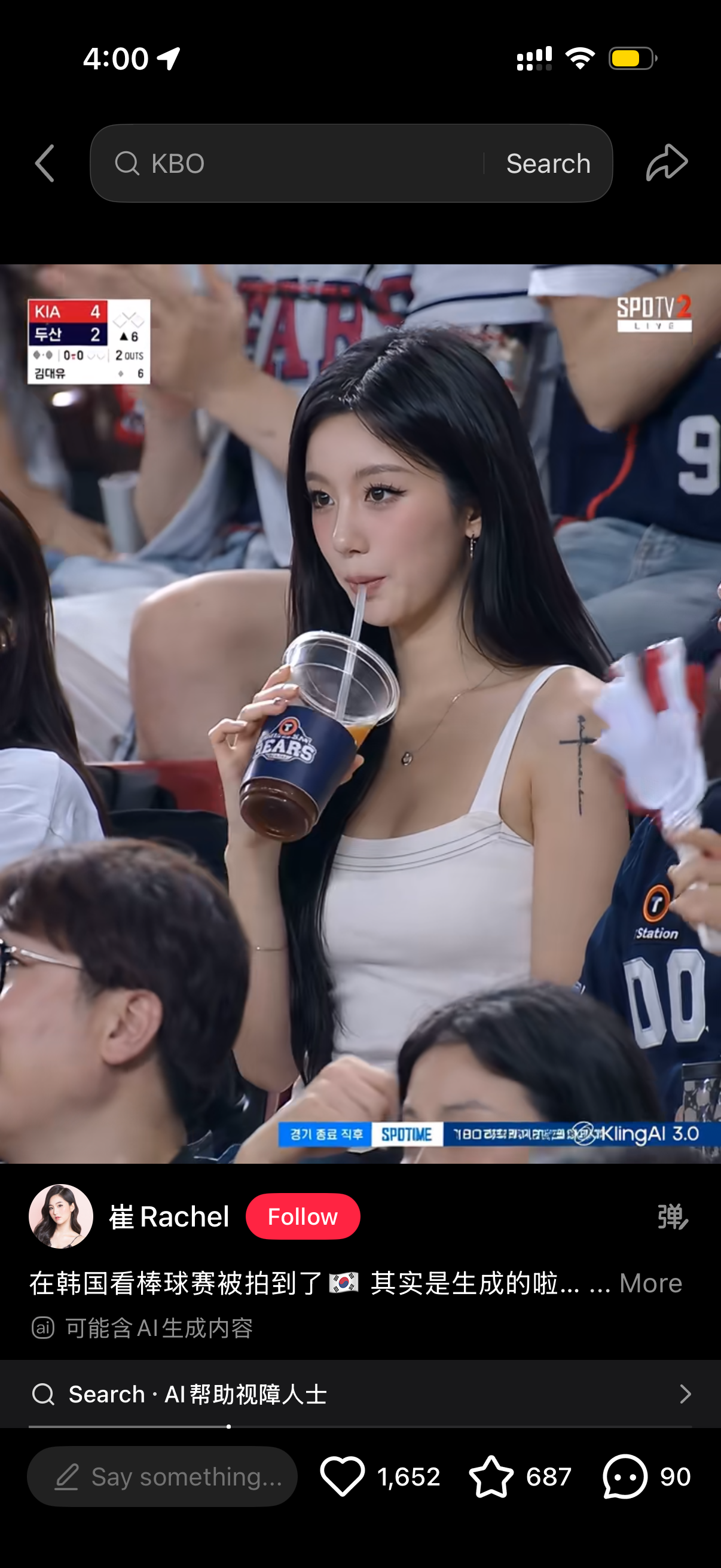
What started as a viral piece of misinformation quickly became something else entirely: a trend where ordinary users began inserting themselves into the exact same scene, generating AI clips of their own faces caught on stadium broadcast cameras. This version is less about deception and more about… digital aspiration?
The format is fairly straightforward: upload a selfie, run it through an AI app, receive a clip of yourself apparently caught mid-inning by a broadcast camera. Beer in hand, jersey on, conversation drowned out by the roaring crowd noise in the background.
The original clip went viral worldwide once it emerged that the fan wasn’t a real person, but it landed with particular force on Chinese platforms, with the trend exploding across Xiaohongshu as creators began generating versions of themselves at baseball games. It’s easy to see why the trend fits so naturally there. South Korea’s live broadcast culture has long used a technique called the “Beauty Cut”—deliberately focusing cameras on attractive, stylish female fans with expressive reactions—an archetype that translates easily onto Chinese social media. Xiaohongshu has long run on hyper-aestheticized self-presentation, including carefully constructed “candid” moments, aspirational lifestyle framing, and beauty standards that have only intensified as AI filters and tools have become mainstream. Against that backdrop, an AI fan cam is just the next tool in the kit.
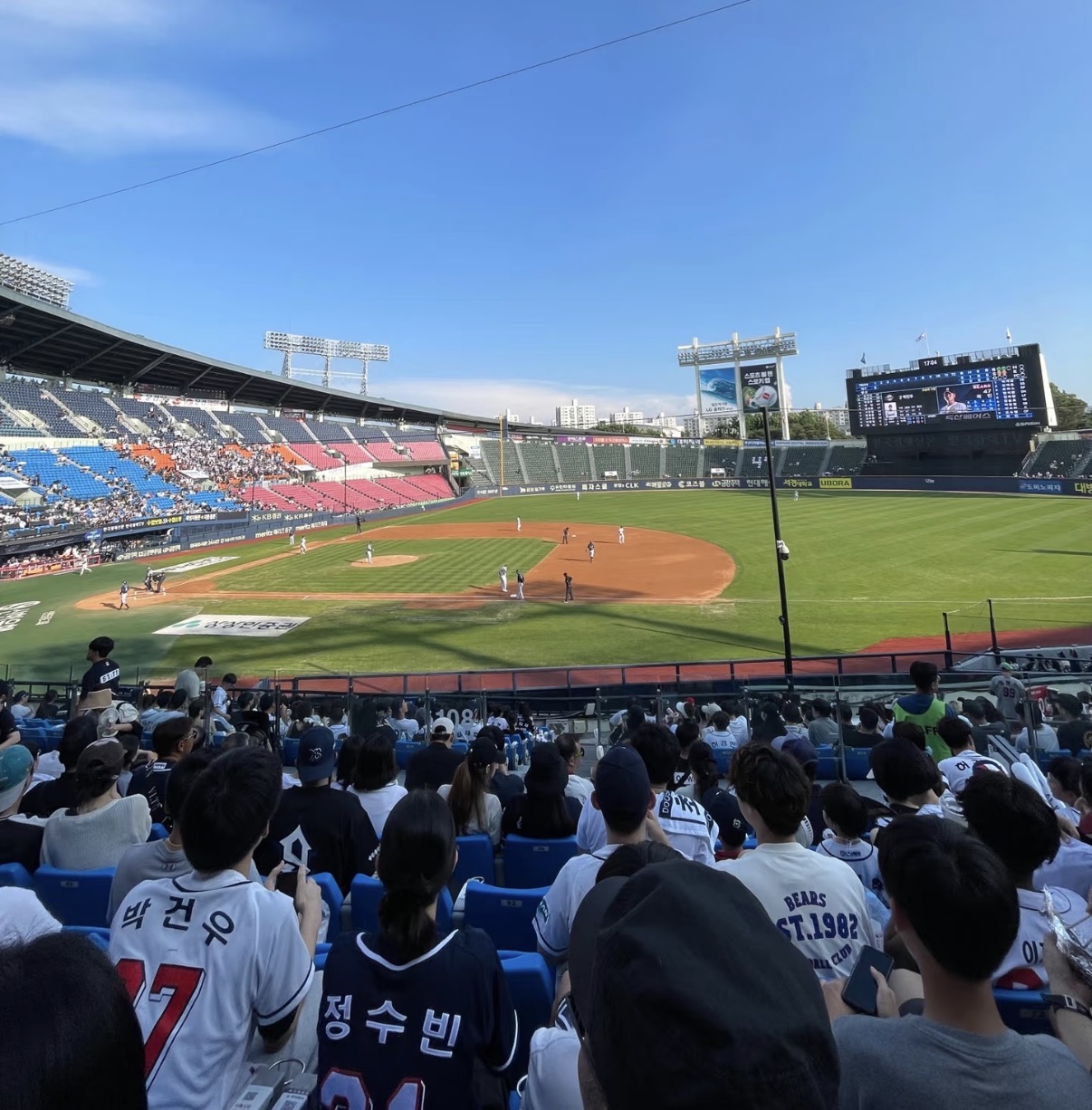
This trend also highlights a broader divide in how AI is received on social media globally. While North American audiences tend to treat AI-generated content as cheap or inauthentic—“AI slop,” as the term has been coined—Chinese Gen Z users have largely embraced generative AI as a legitimate creative medium. Which makes it all the more fitting that the tool doing the heavy lifting here is Beijing-made: Kling AI. The app surged to No. 1 on the App Store’s overall rankings in 42 countries across Europe, Latin America, Southeast Asia, and the Middle East, largely on the back of this “KBO stadium effect.” What started as a Korean social media moment was adopted by Chinese users en masse and subsequently globalized through the growing reach of Chinese soft power.
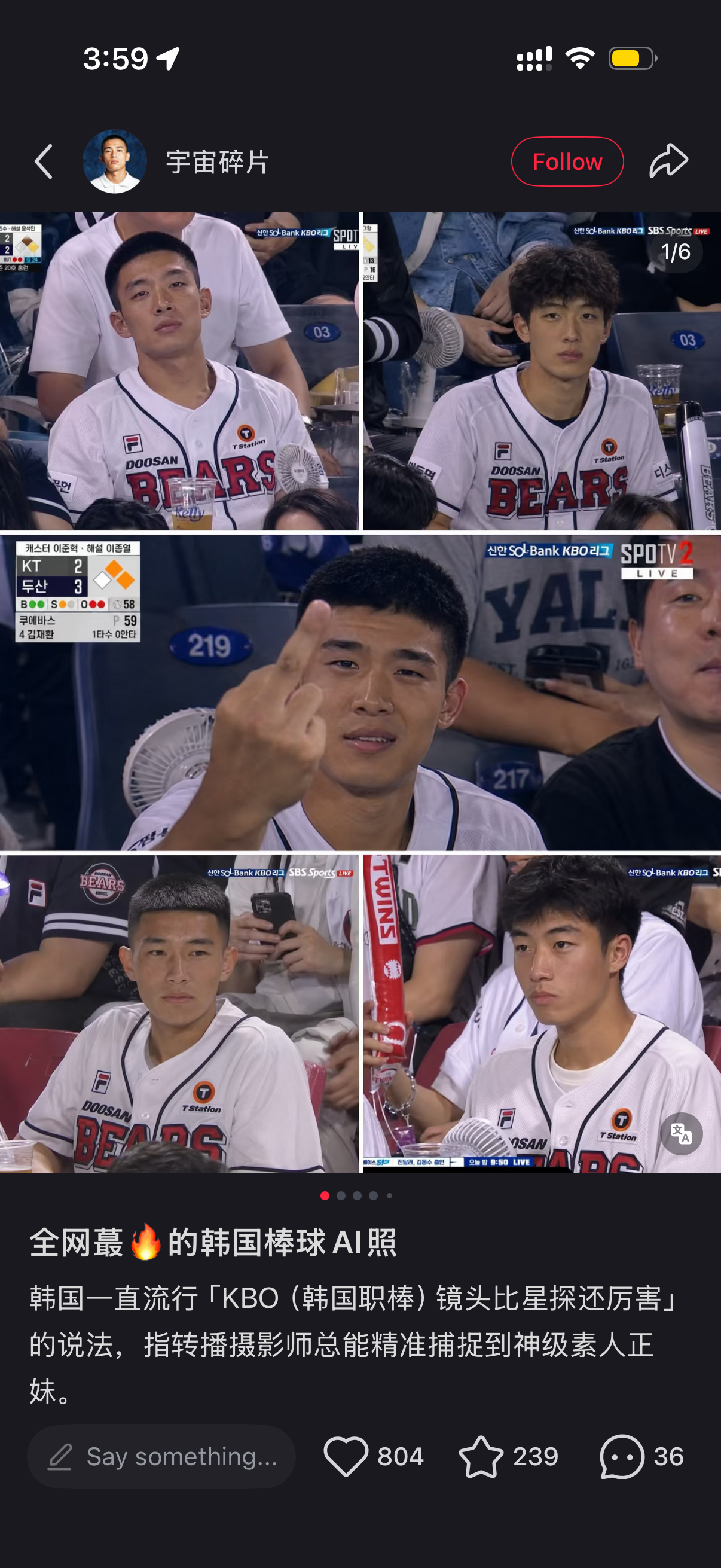
The fakeness of the moment is the point. On platforms built around the art and performance of effortlessness, the most “candid” moment you can post is one you engineered entirely. There’s also a practical dimension: in megacities like Shanghai, where sold-out shows have become the norm, an AI fan cam starts to look less like deception and more like a workaround. The facade of presence becomes the real social currency—the presence itself, increasingly, does not.
All images via Xiaohongshu.