

Remember the shockwaves DeepSeek sent through the tech world early last year? Well, buckle up, because Beijing-based startup Z.ai just dropped GLM-5.2, and it’s officially having a “mini DeepSeek moment.”
For a while, the global AI landscape felt like a strict binary: you either paid a premium for the powerhouse capabilities of OpenAI and Anthropic, or you settled for cheaper, less capable alternatives. GLM-5.2 continues to shatter that illusion. Excelling in coding and agent capabilities—meaning it executes complex tasks with minimal prompting—this new open-weight model is rivaling top-tier U.S. offerings at a mere fraction of the cost. In fact, it operates at roughly a sixth of the price of closed U.S. frontier models like Claude and the GPT series.
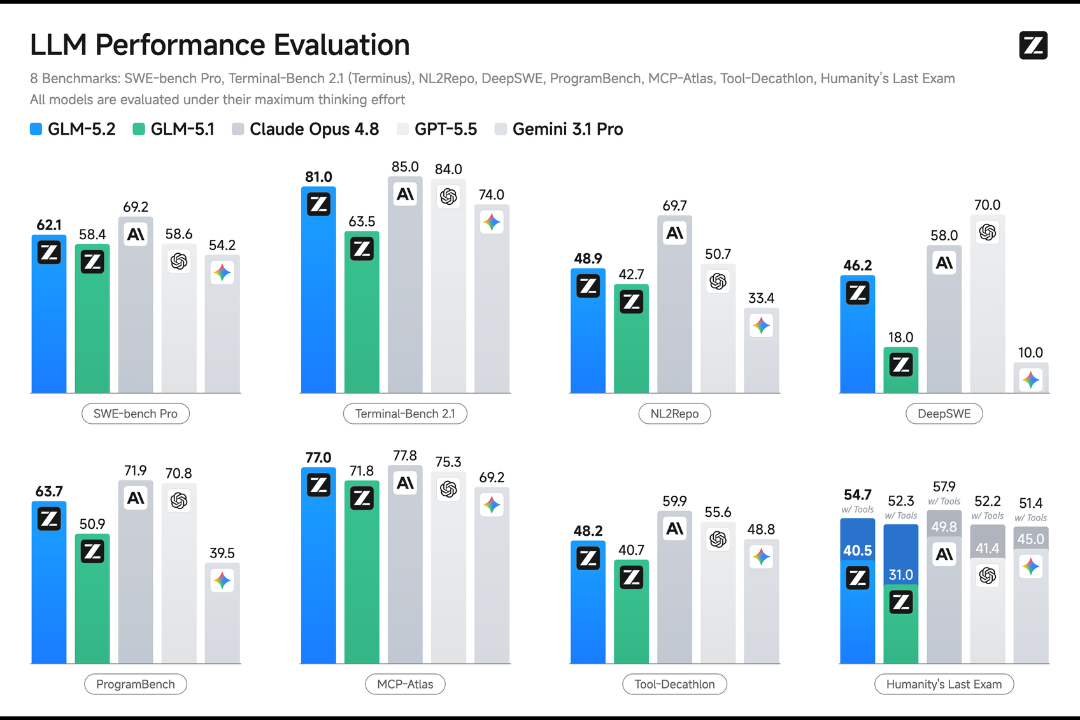
The disruptive release already has Silicon Valley buzzing. It quickly climbed above Anthropic on third-party developer platforms like OpenRouter, proving that an out-of-the-box model can compete with the tech giants. As David Sacks, former U.S. AI czar, put it: GLM-5.2 is “just a tick below Opus 4.8 and right up there with GPT 5.5.”
But GLM-5.2’s rapid rise points to a much larger narrative: the narrowing gap between Chinese AI developers and the West. With unpredictable U.S. regulations throttling models like Anthropic’s Fable, and highly anticipated delays in OpenAI’s GPT-5.6 rollout, the international developer community is turning its eyes eastward. Relying solely on proprietary U.S. models is starting to look like a risky—and wildly expensive—bet.
While Western enterprises in regulated sectors like banking still hesitate over data security concerns, developers on the ground are moving incredibly fast. At the end of the day, developers care less about where an AI comes from and more about whether it works. As Chinese LLMs continue to snatch up global market share, the question isn’t just whether China is catching up in the AI race—it’s whether they’re about to define its future.
Cover image via Memeburn.