
For many, the hottest birthday flex on the Chinese internet right now isn’t a designer bag or PS5 (well, maybe, given GTA 6…). It’s a year’s supply of laundry detergent and toilet paper. It’s a self-given gift of AI tokens. Or, according to what’s shared on the Chinese internet, if you’re one Xiaohongshu user celebrating her 27th, a 300 RMB (around 45 USD) phone bill top-up.
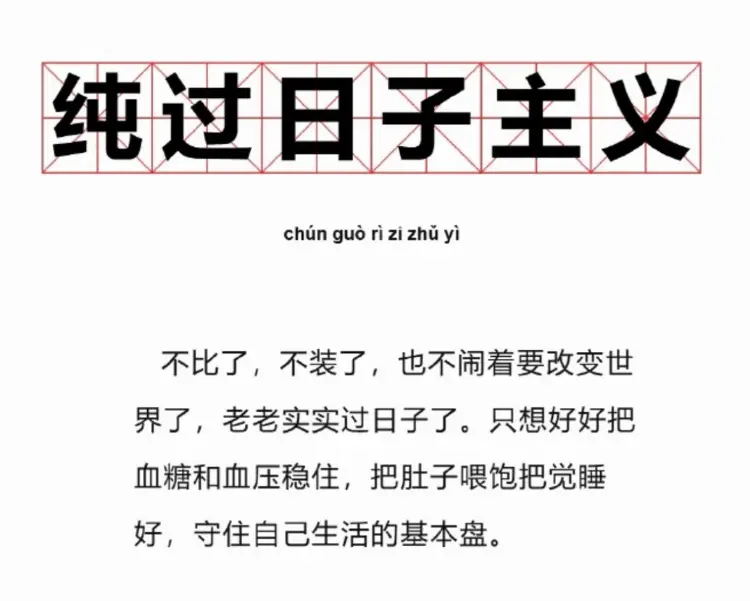
Welcome to the era of chun guo rizi (纯过日子), or “just living a simple life.” In August, the hashtag ‘Everyone has entered the just-living era’ (#全民进入纯过日子时代#) hit Weibo’s trending list, and young people started proudly calling themselves “just-living people.” Their manifesto is almost like a breakup letter to self-optimization: no more being artsy, no more crying at midnight, no more overanalyzing yourself, no more network-maxxing. In their place: wet markets, sitting at a park, prepping for a Sunday meal, going to bed early, and one viral motto—“a big appetite for food, a small appetite for stuff, a tight circle, an open heart.”

From Lying Flat to Just Living
This should already sound familiar. In 2021, an ex-factory worker named Luo Huazhong posted “Lying Flat Is Justice” on Baidu Tieba, and tangping (躺平, lying flat) became the battle cry of a generation burned out by neijuan (内卷, involution). Then came bailan (摆烂), or “let it rot”, for when trying stopped feeling worth it. Chun guo rizi is the softer sequel. Today’s youth aren’t grinding anymore, but they aren’t fully lying flat either. They’re simply just… living.
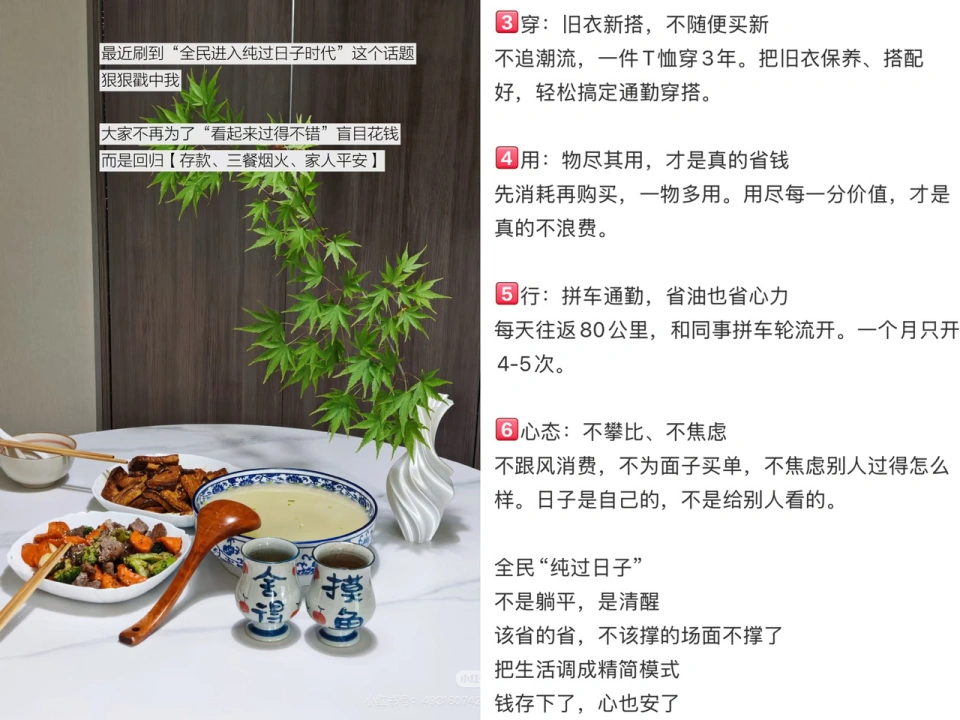
And who can blame them? Whether you’re in Chengdu or Chicago, the feed has turned life into a nonstop audition: café check-ins, outfit rotations, “pretty meal” content (which jumped 1,072% year on year on Chinese social media). The rat race used to end when you left the office. Now it follows you to bed, ready the second you wake up.
Logging Off, Living On
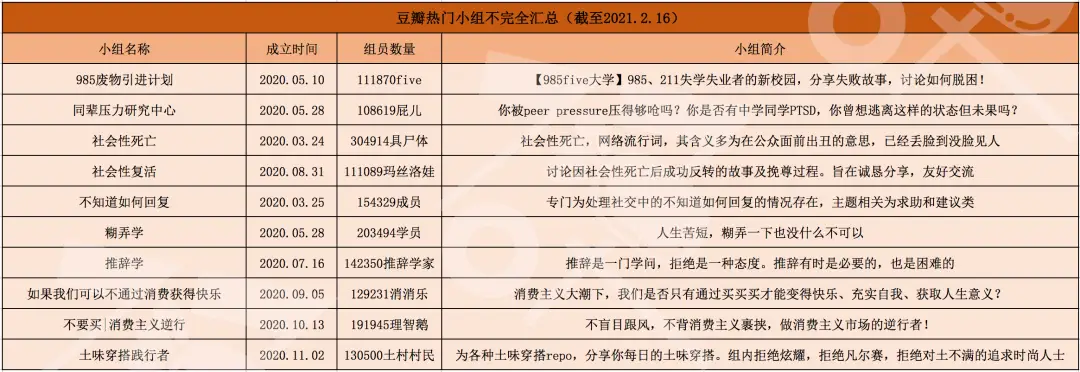
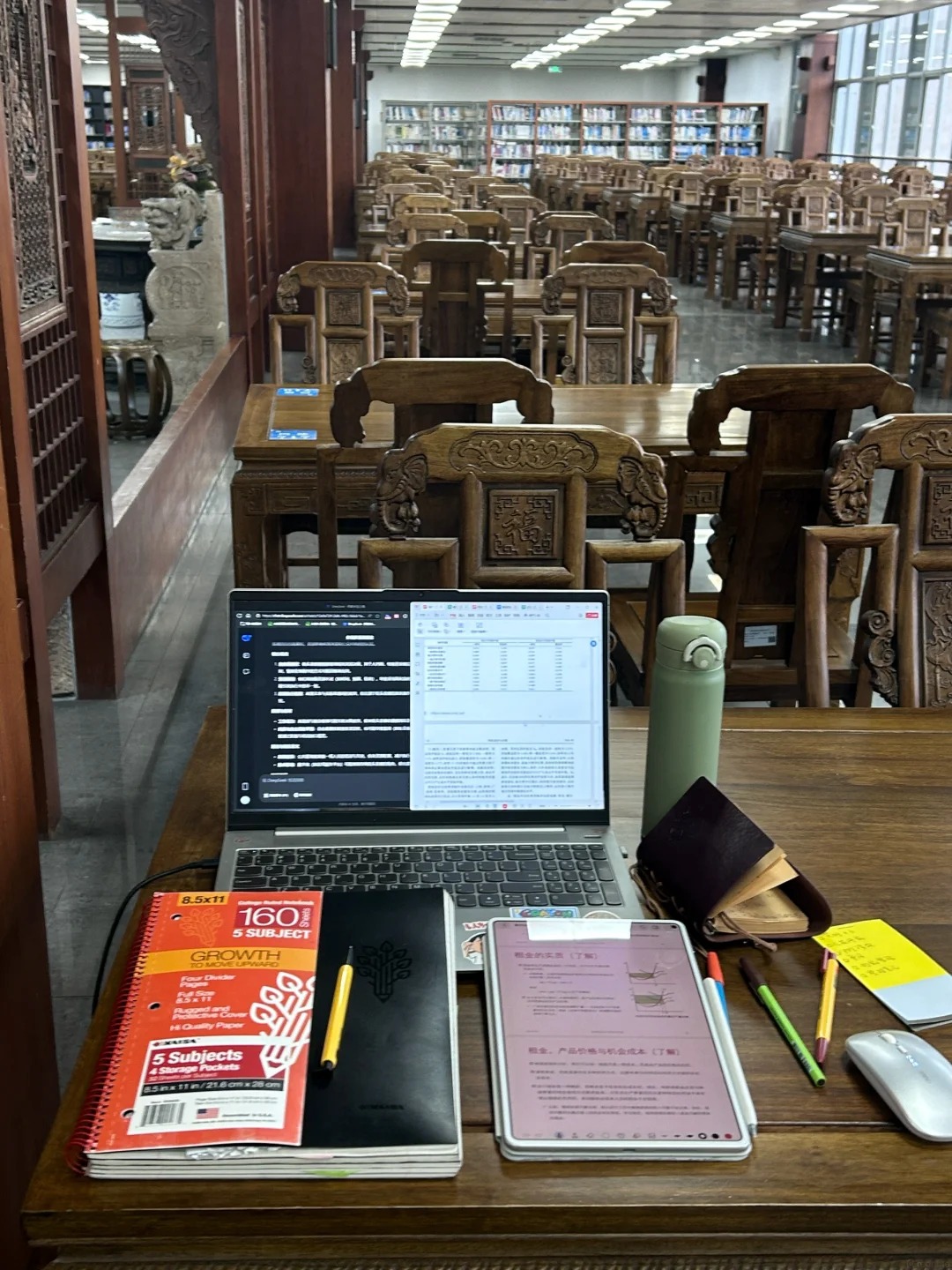
It’s no surprise then that China’s youth are tired and are now opting out. A Douban group called “What if we could find joy without consumption?” has more than 230,000 members. “No-spend weekend” challenges and “empty-bottle check-ins” (posting when you actually finish a product instead of buying another) are all over feeds. One Beijinger swapped trendy cafés for whole Saturdays at the library.
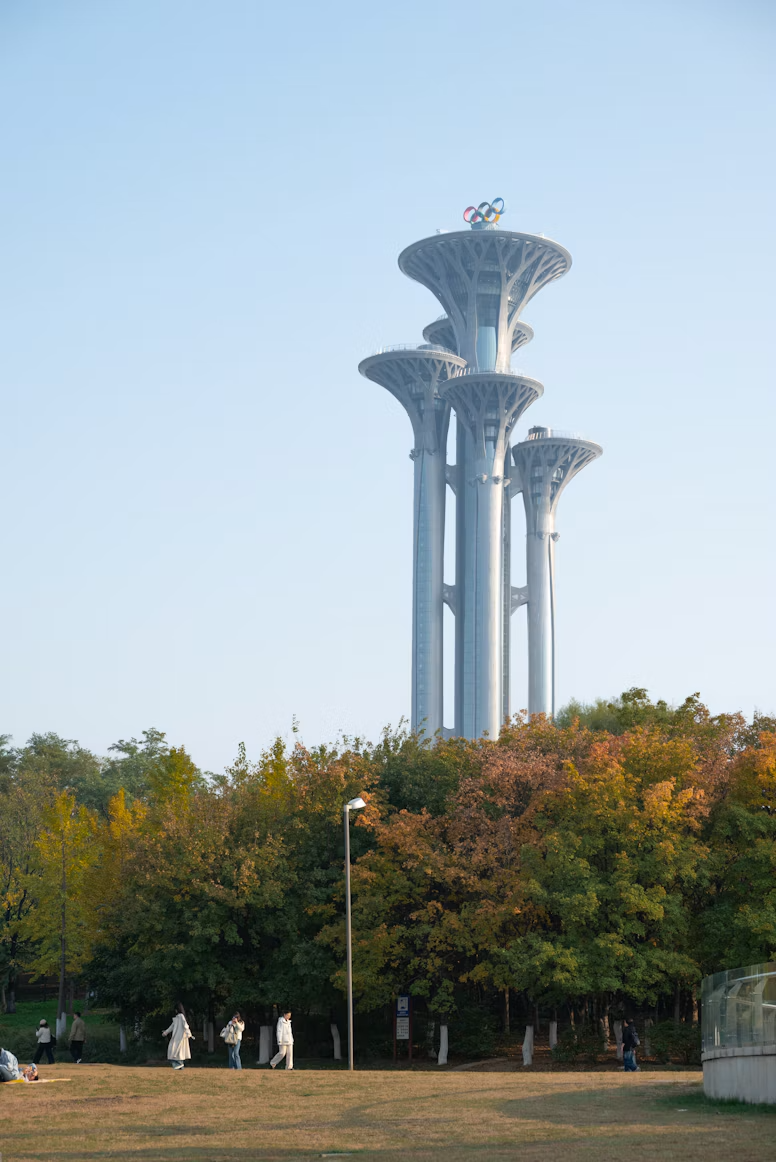
Critics argue the trend can shrink your world, and they’re not wrong to ask. But there’s something quietly radical about a generation this self-aware: one that clocks the algorithm, names the rat race, and refuses to burn out performing for it. Is it slightly ironic still, that social media is used to communicate the desire to be off social media? Yes, but that doesn’t discount that China’s Gen Z is finally stopping to smell the roses, even if some are still posting about it.
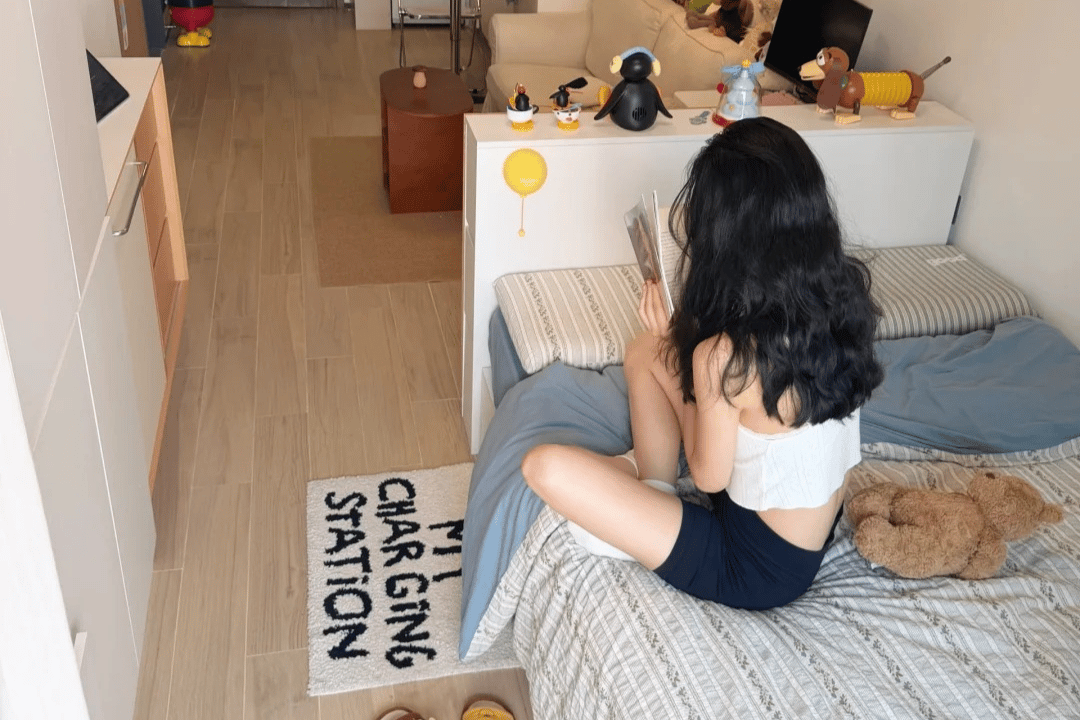
Cover image via Xiaohongshu/李叉叉koioo.