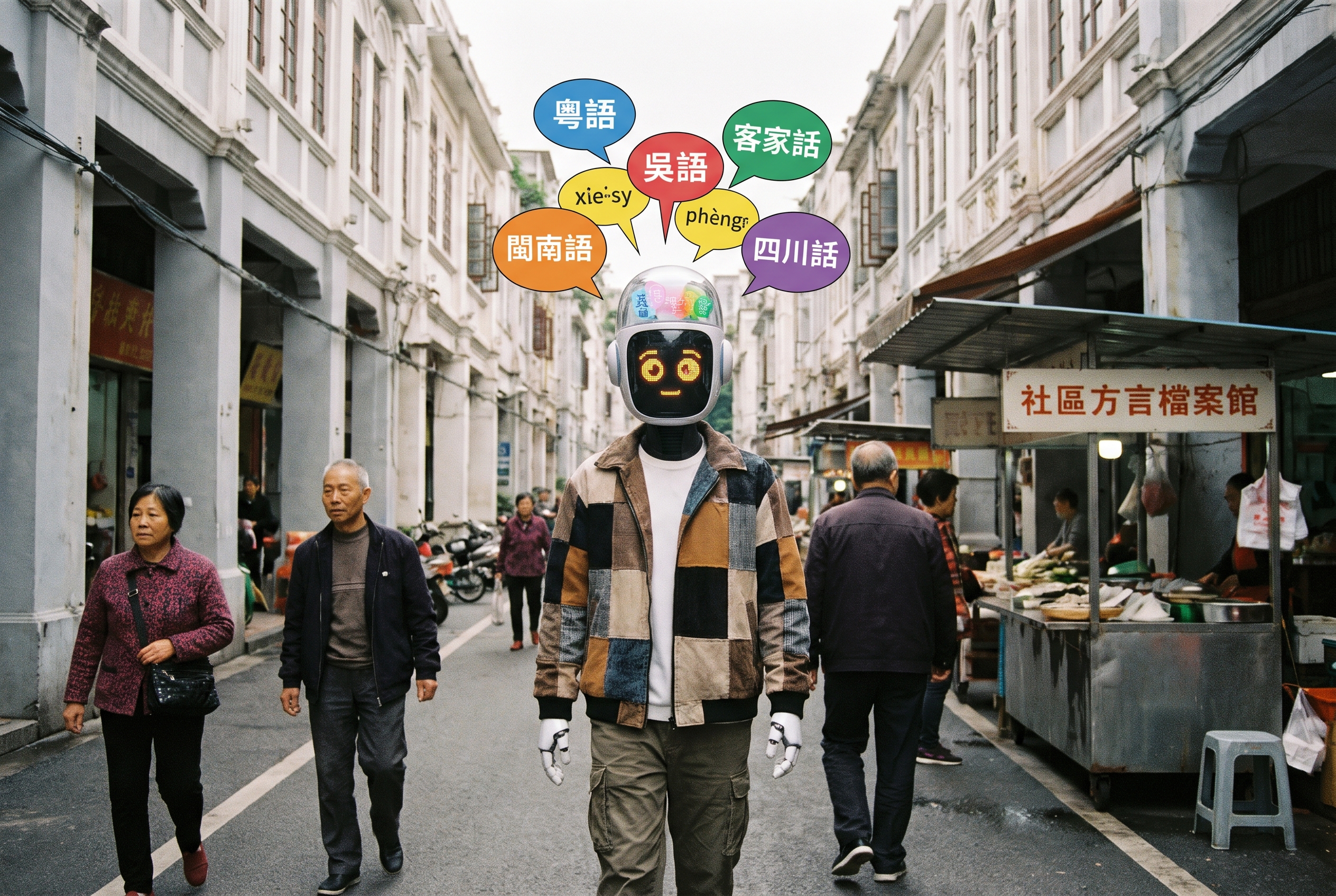

For many Chinese families in Southeast Asia, some of the languages most commonly heard at home are barely visible in the digital world. A grandparent, for example, might be fluent in Hokkien and Cantonese but only conversational in Mandarin. Yet today’s AI tools, despite their proficiency in many languages, often fail to capture the intricacies of these dialects. As AI becomes more embedded in daily life, this gap could help determine which languages are passed down to future generations.
The problem is not that mainstream AI systems cannot understand any Chinese dialects. Their performance varies considerably, and some can handle everyday conversations reasonably well. But familiarity with a language is not the same as understanding its local vocabulary, cultural references, or colloquial grammar. This means a model that performs well in Mandarin can still misunderstand a Cantonese expression or struggle with a Hokkien conversation.
Developers are beginning to address these gaps, from Hong Kong startups training models specifically for Cantonese to researchers building speech technologies for Hokkien.
Teaching AI to Speak Locally
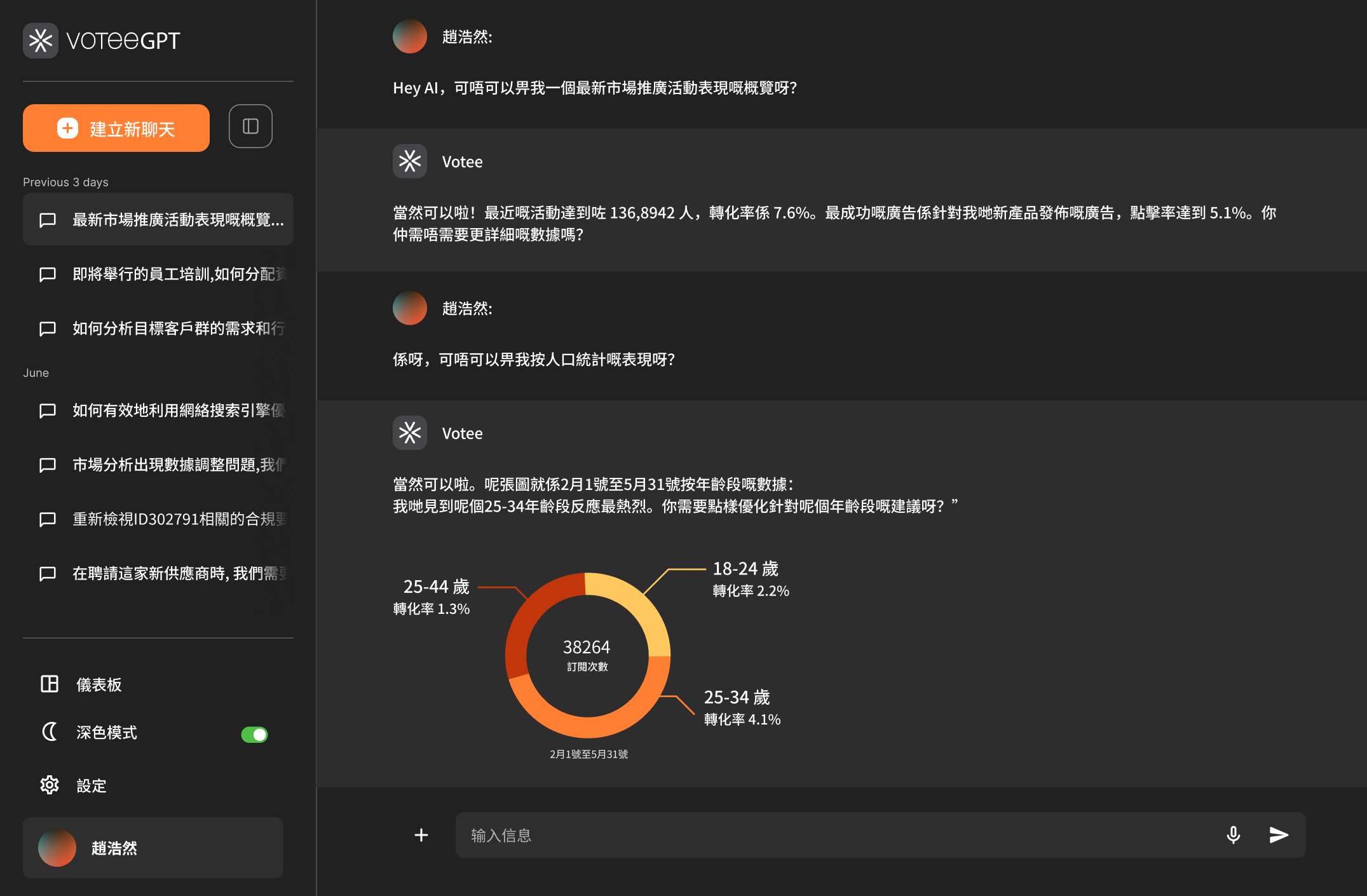
One example is Votee AI, a Hong Kong-based company developing language models focused on Cantonese and other languages underserved by mainstream AI. In August 2026, it was reported that the company was retraining existing open-weight models on Cantonese data, with the aim of improving their understanding of the language and its local context. The company draws on online material and community contributions to expand the pool of Cantonese text available for training.
The distinction matters because Cantonese is not simply Mandarin spoken with a different pronunciation. Its grammar and vocabulary differ, and the written Cantonese used in everyday Hong Kong communication often looks quite different from formal written Chinese. Local expressions and code-switching between Cantonese and English add further complexity. A model trained predominantly on standard written Chinese may produce grammatically plausible answers but still miss the way people actually communicate.
To address this, Votee’s approach is to adapt existing models rather than build an entirely new foundation model from scratch. So far, the company has expanded its Cantonese training data from around 100 million tokens to more than 500 million. Its chief executive, Pak-Sun Ting, said that mainstream AI’s concentration on English and Mandarin leaves other languages poorly represented.
The potential applications extend beyond chatting with a bot in one’s preferred language. Votee has targeted institutional customers, including banks, universities, and government departments, where understanding the local language and context can affect how people access services. Cantonese-speaking residents may be more comfortable communicating in their everyday language than switching to formal written Chinese or English, particularly when discussing complicated or sensitive matters.
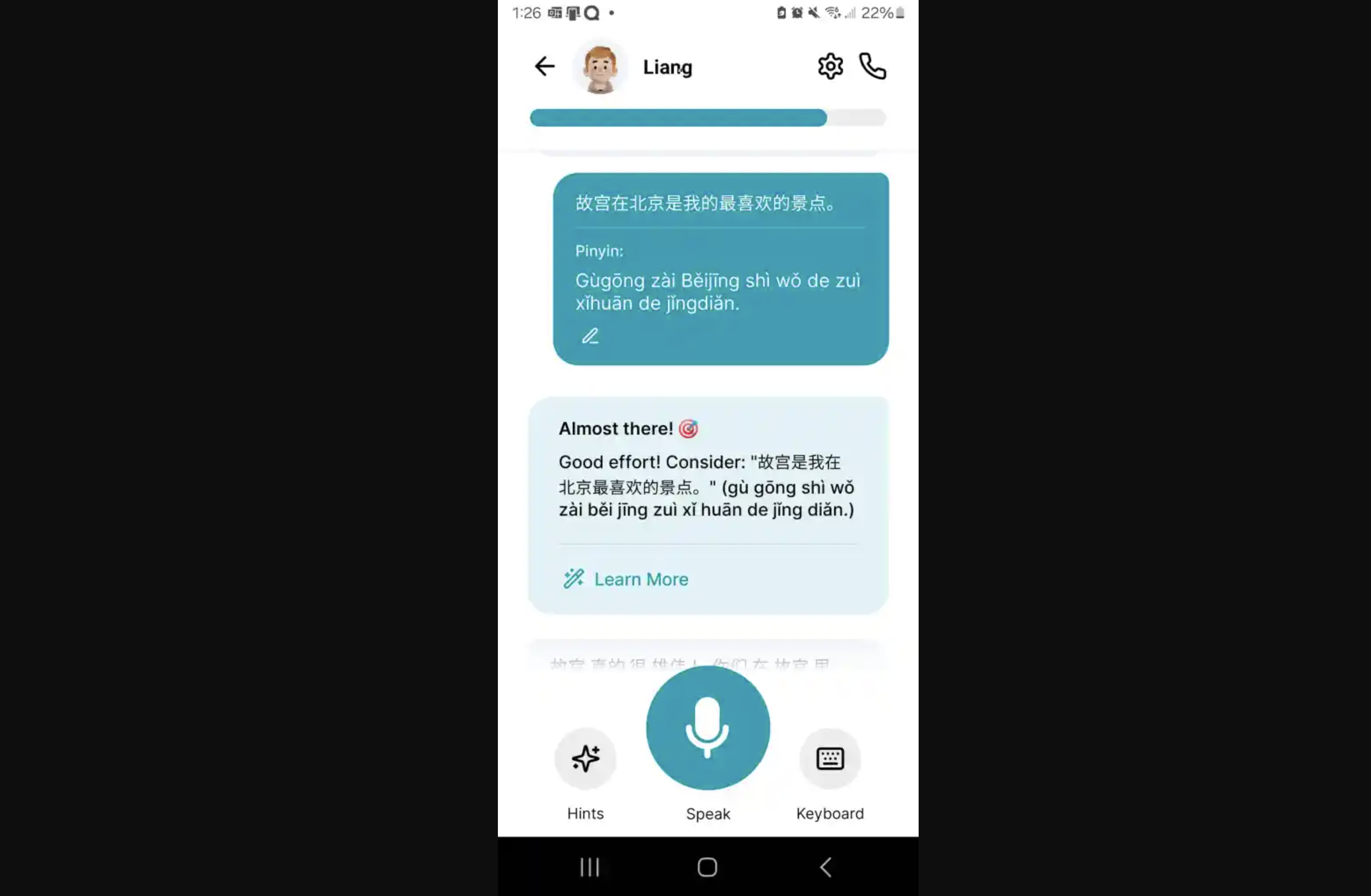
But a specialized model is not automatically a better one. As noted earlier, many mainstream models can already handle everyday Cantonese reasonably well; where they struggle more is with local and cultural knowledge. The challenge is to demonstrate that additional training produces reliable improvements in real-world situations, rather than simply making a model sound more fluent.
From Translation to Conversation
Similar efforts are taking shape around Hokkien, a language widely spoken across Chinese diasporas in Southeast Asia. In 2022, Meta announced an AI-powered speech-to-speech translation system for Hokkien, designed to let Hokkien speakers converse with English speakers. The project tackled a particular obstacle: Hokkien is primarily spoken and has no single, universally adopted writing system. That makes it difficult to apply translation techniques that depend on large collections of standardized written text.
Instead of requiring every spoken sentence to pass through a conventional text translation process, the system was designed to translate speech directly into speech. The project became part of Meta’s Universal Speech Translator research, which aimed to develop translation technology for languages that lack extensive written resources.
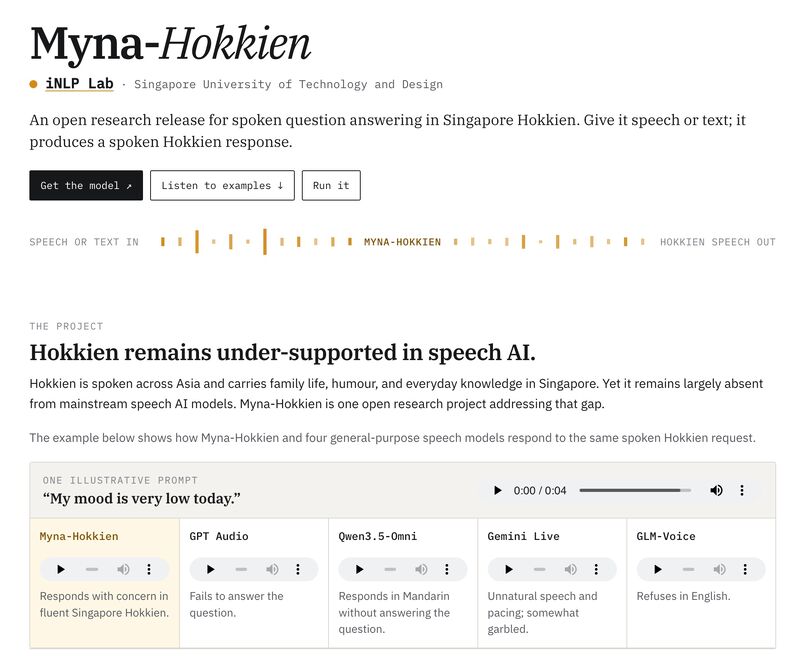
More recently, researchers at the Singapore University of Technology and Design’s iNLP Lab developed Myna-Hokkien, an open-source conversational speech model focused on Singapore-accented Hokkien. It accepts spoken Hokkien and responds in spoken Hokkien, and it also supports text input and output.
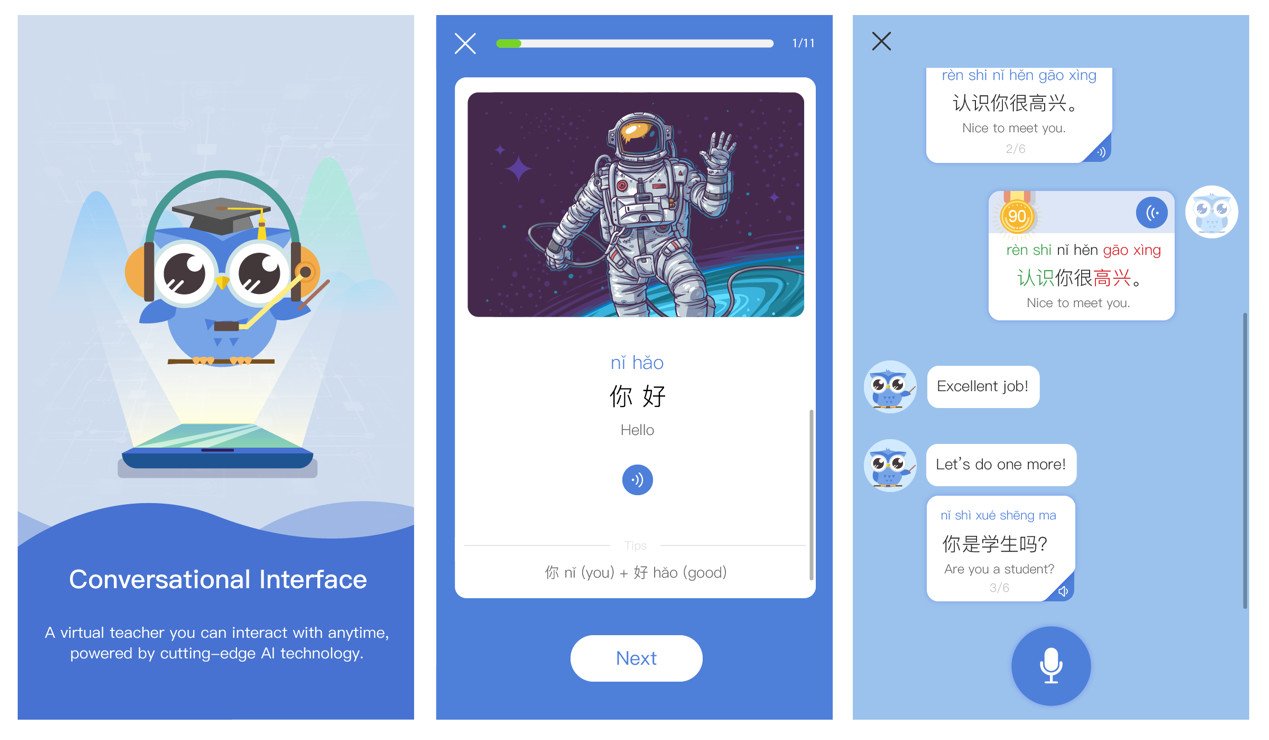
These projects are still early steps, but they point towards uses beyond translating a phrase for a visitor. Speech technology could help people transcribe family conversations, search recordings, and create learning materials. For younger members of the diaspora who understand a dialect but are less confident speaking it, conversational tools might also offer a low-pressure way to practise, or even to communicate with older relatives who are more fluent in these languages.
That possibility is particularly relevant in Southeast Asia, where Chinese communities have developed distinct linguistic traditions over generations of migration. Hokkien spoken in Penang or Singapore, for instance, is not necessarily identical to varieties spoken elsewhere.
Who Gets to Shape the Language?
There are practical limits to what AI can do. Languages with less digitized material are harder to model, and recordings of everyday conversation may be difficult to collect, transcribe, and label. Even when data exists, developers must decide which accents, vocabulary, and writing conventions to prioritize.
Nor is the issue purely technical. A language is shaped by the people who use it, and communities may disagree about spelling, pronunciation, or which expressions count as authentic. If a model is trained mainly on material available online, it may reflect the speech of a particular generation or region while overlooking others.
There are also questions about consent and ownership. Family recordings, community archives, broadcasts, and social media posts can all contain valuable language data, but their existence online does not automatically mean they should be used for AI training without permission. Developers will need to be transparent about where their data comes from and how communities can participate in decisions about its use.
Ultimately, AI’s contribution to Chinese dialects may be measured less by whether it can preserve a perfect record of the past than by whether it helps people keep using these languages in the present.
Technology cannot guarantee that younger generations will learn a language, nor can a chatbot replace the relationships through which language is passed down. But if AI tools are increasingly going to mediate how people communicate with the world, making them work across more of the languages people actually speak could help ensure that those languages are not pushed further into neglect. Essentially, the goal is not simply to teach machines to speak like our grandparents. It is to make sure their languages still have a place in the future.
Cover image via Nano Banana Pro/RADII.