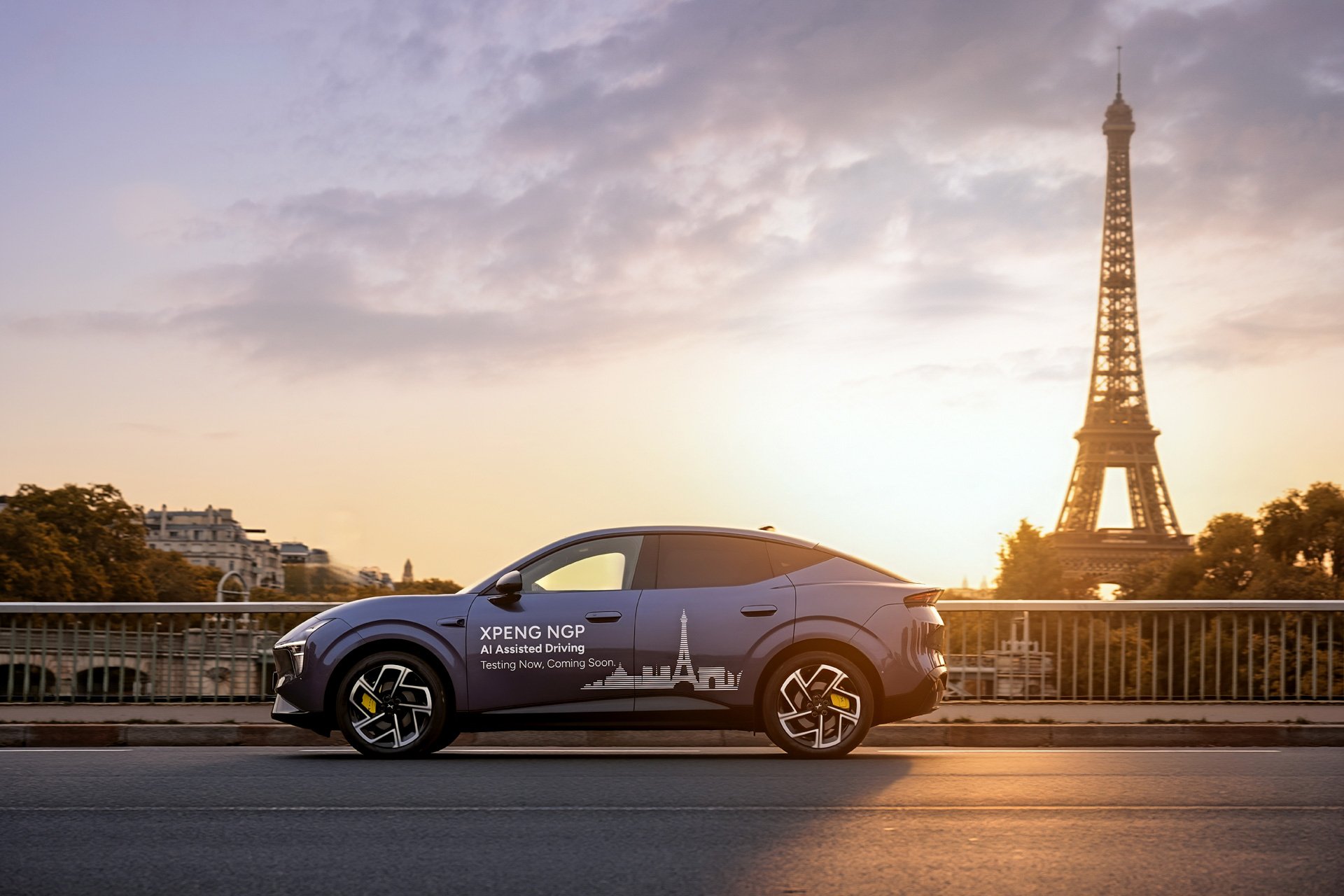

Ten years ago, a Chinese car at a European motor show was a curiosity. Five years ago, it was a threat defined by cost. In Paris this year, XPENG showed up with a locally built flagship, a self-driving system confident enough to be tested by the public on Parisian streets, and humanoid robots plus a flying car on the side.
There’s a moment on my test ride through Paris that I keep replaying. Our XPENG L03 compact coupe SUV is crawling toward a right turn when a woman steps off the curb. The car stops. Then another pedestrian crosses. And another. Instead of freezing like a nervous student driver, the car does something distinctly Parisian: it waits politely, then gently nudges forward to signal that it would like to make progress, please. No one touches the steering wheel.
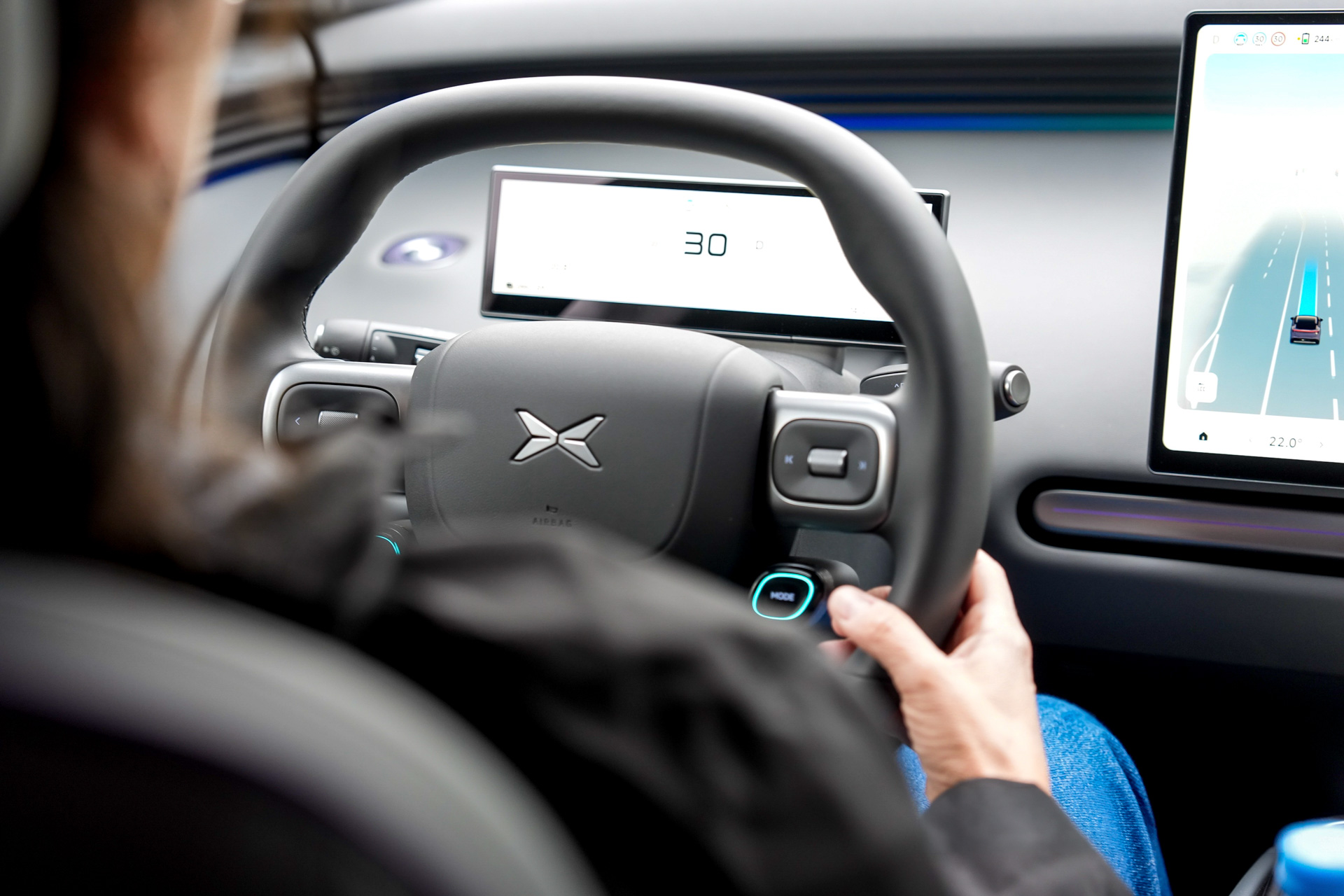
This was XPENG’s NGP (Next Generation Pilot) driver-assistance system making its first large-scale public test-ride appearance in Europe, and it was happening on real streets in a city that has humbled human drivers for centuries. That it was a Chinese company pulling this off, in front of the world’s auto press, says a lot about where the industry has landed in 2026.
The headline fact of this year’s Paris Motor Show is deliciously ironic. The organizers set up an official “Autonomous Lab” where the public could experience intelligent driving tech on open roads. Exactly two automakers participated: Tesla and XPENG. At the most prestigious motor show on European soil, no European brand put its driver-assistance system in front of the public.
For years, the story about Chinese EVs in Europe was about price. Cheaper batteries, aggressive undercutting, tariff anxiety. The Paris Motor Show told a different story: Chinese brands are now competing on the thing legacy automakers thought was their moat — technology that actually works on Europe’s messy, idiosyncratic roads.
Paris roads are a nightmare of disappearing lane markings, roundabouts that function on vibes, scooters that materialize from nowhere, and delivery vans parked wherever they please. NGP, powered by XPENG’s second-generation Vision-Language-Action model (VLA 2.0), handled all of it with a kind of unbothered calm.
Approaching a truck parked on the side of the road, the car eased off the accelerator, just as a cautious human would, anticipating that someone might step out from behind it. It threaded around a car that had stopped where it absolutely shouldn’t have. It dodged a cluster of small traffic cones. Two roundabouts, including one with a Mini Cooper squeezing in beside us, were dispatched without drama. A cyclist passed; the car gave space.
The technical reason this works, XPENG says, is memory. VLA 2.0 retains up to 30 seconds of contextual information and can predict how a scene may unfold up to six seconds ahead. In practice, that means when lane markings vanish in a roundabout, the car still “remembers” where the road was going. When a pedestrian is lingering at a crossing, it’s already modeling whether they’ll step out.
It also runs on XPENG’s own Turing AI chips, which matters for a company that calls itself a “Physical AI” business rather than a car company. The in-house stack — silicon, foundation model, software — is the same architecture XPENG is deploying across its YOYO robotaxis and its IRON humanoid robots, two of which were standing on the Paris stand.
The final stretch of our route pointed us straight down an avenue toward the Eiffel Tower. Self-driving in Paris, with the tower framed in the windshield. There was no better way to wrap up the scenic ride before the human driver took back control to park the car.
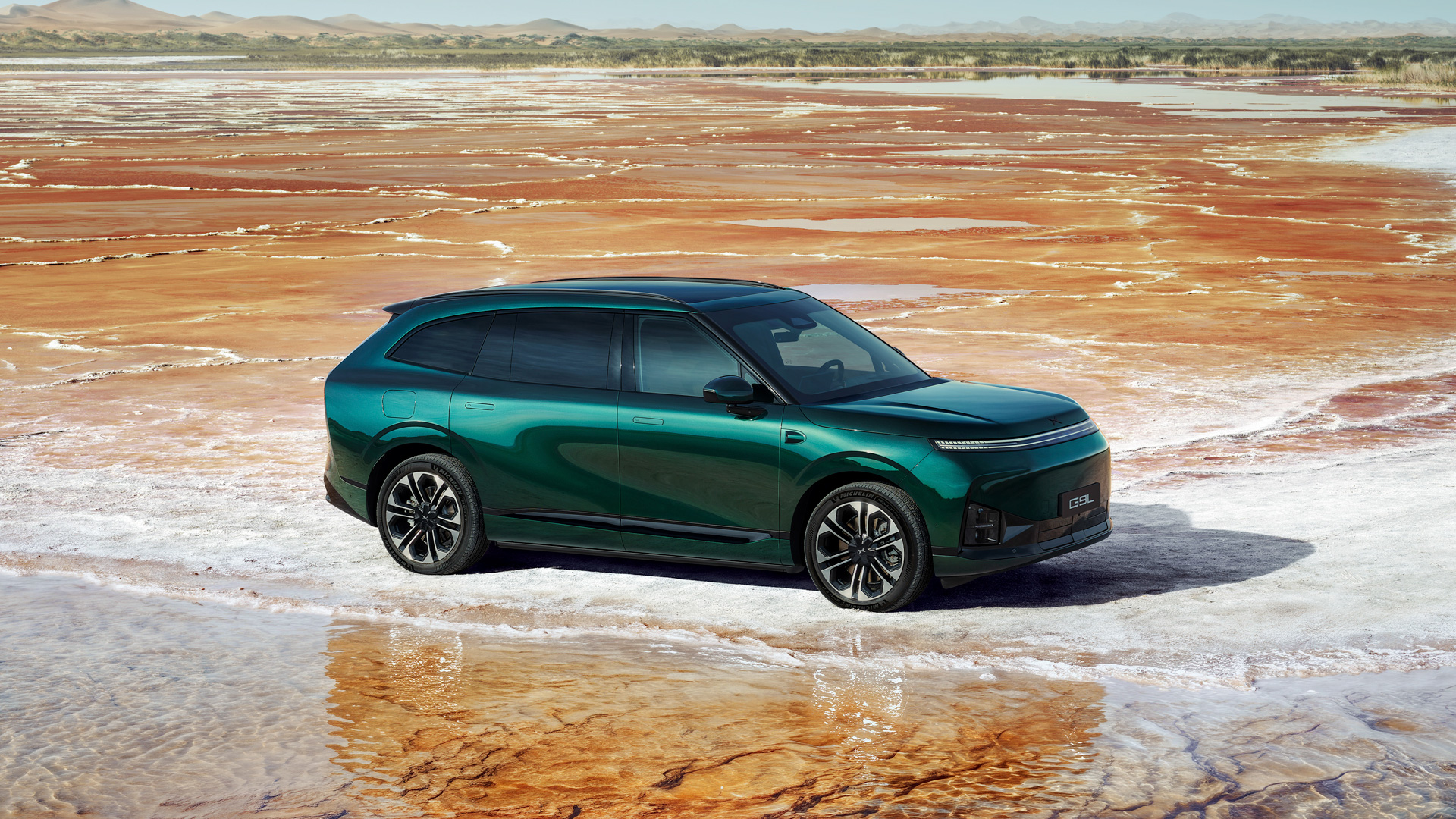
In addition to showing off its self-driving prowess, XPENG also made a global debut for its new G9L flagship SUV in Paris. The “L” stands for “luxury.” It’s enormous — 5,120 mm long, nearly two meters wide, with three rows and a 3,100 mm wheelbase.
With a simple tug on the handle, the door opened for me automatically. Inside, the front passenger seat offers a “zero-gravity” mode, which senses an occupant’s body shape and adjusts around it, thus replicating the neutral body posture astronauts naturally adopt in microgravity. There’s a 12.5-liter dual-zone refrigerator (which doubles as a warmer, if needed), a 21.4-inch 3K rear entertainment screen loaded with YouTube, Apple TV, Disney+, Prime Video and Instagram, a 23-speaker sound system, and soft Nappa leather with heating, ventilation, and massage across the first two rows.
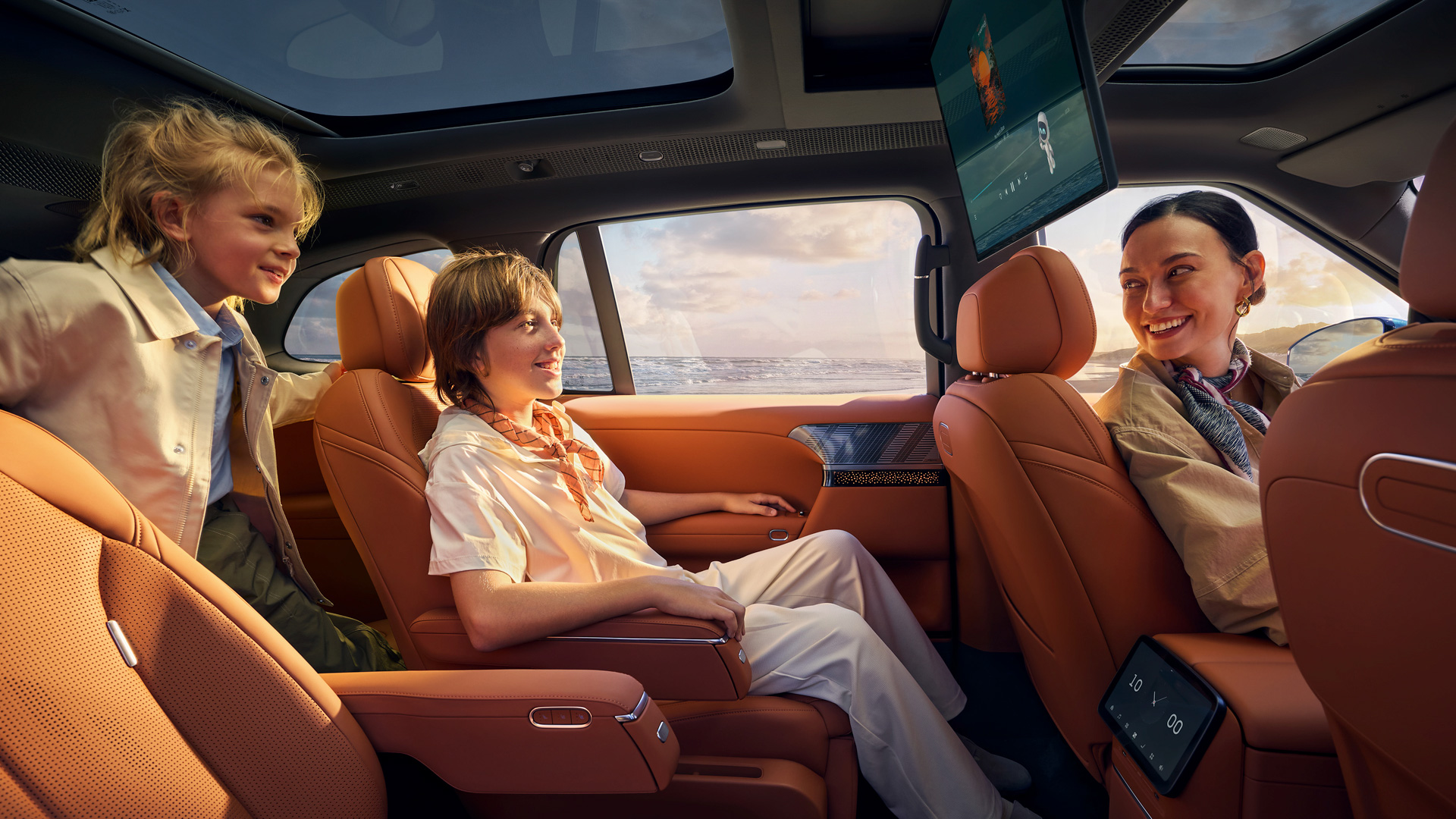
The hardware underneath is just as serious. The RWD Long Range Ultra manages 591 km of WLTP range, and the 800V silicon-carbide platform with 5C charging takes the battery from 10% to 80% in just 11.7 minutes. The dual-motor version puts out 430 kW and 695 Nm, enough for 0–100 km/h in 4.9 seconds in a car that seats seven. Rear-wheel steering brings the turning radius down to 5.5 meters, which is the difference between surviving and suffering on a Paris side street.
The XPENG G9L starts at €74,600 in Germany. That’s firmly in BMW X5 and Mercedes GLE territory — the midsize luxury SUV segment. What’s more, the G9L you’ll buy in Europe won’t be shipped from China. It will be built by Magna in Graz, Austria, at the same facility that has assembled vehicles for Mercedes, BMW, and Jaguar.
The G9L completed its first production trial there on October 7, becoming the fourth XPENG model to be built in Europe after the G6, G9 and P7+. The first preproduction car then drove 1,324 km from Graz to Paris as a real-world shakedown. Local production only began in Q3 2025. One year later, XPENG is expanding the partnership.
Zhang Li, XPENG’s VP of Global Manufacturing, framed it as a shift “from entering Europe to building for Europe.” The company’s slogan for the show was “In Europe, For Europe, With Europe,” and for once the corporate tagline matches the operational reality: a European R&D center handling homologation, chassis tuning, charging integration, European assembly, and, newly announced in Paris, XPENG opening its AI and engineering solutions to global automotive partners for the first time.
XPENG has delivered more than 100,000 vehicles overseas, over 60,000 of them in Europe, and more than 6,000 in France alone in two years. The benchmark for Chinese automakers abroad is no longer “can you sell cars in Europe?” It’s “can you build them there, drive them there autonomously, and sell your technology to the companies that used to own the market?”
XPENG’s answer in Paris was a polite but unmistakable nudge forward.
Images via XPENG.