
There’s a Shanxi pagoda standing in the middle of Paris, and it’s not quite what you’d expect.
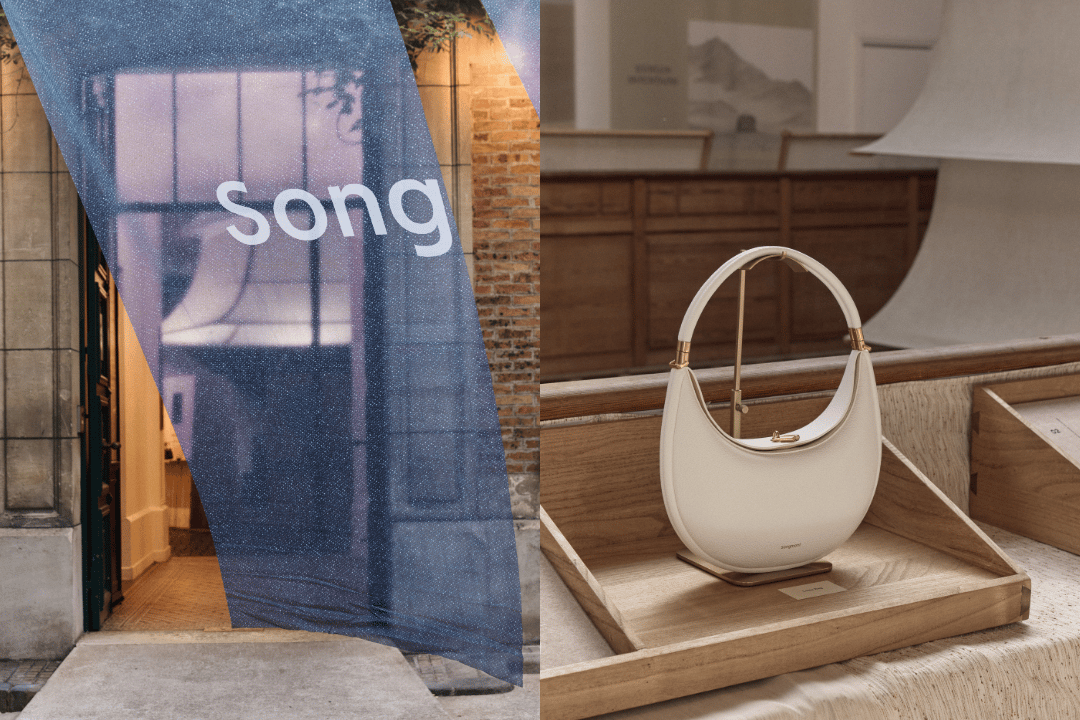
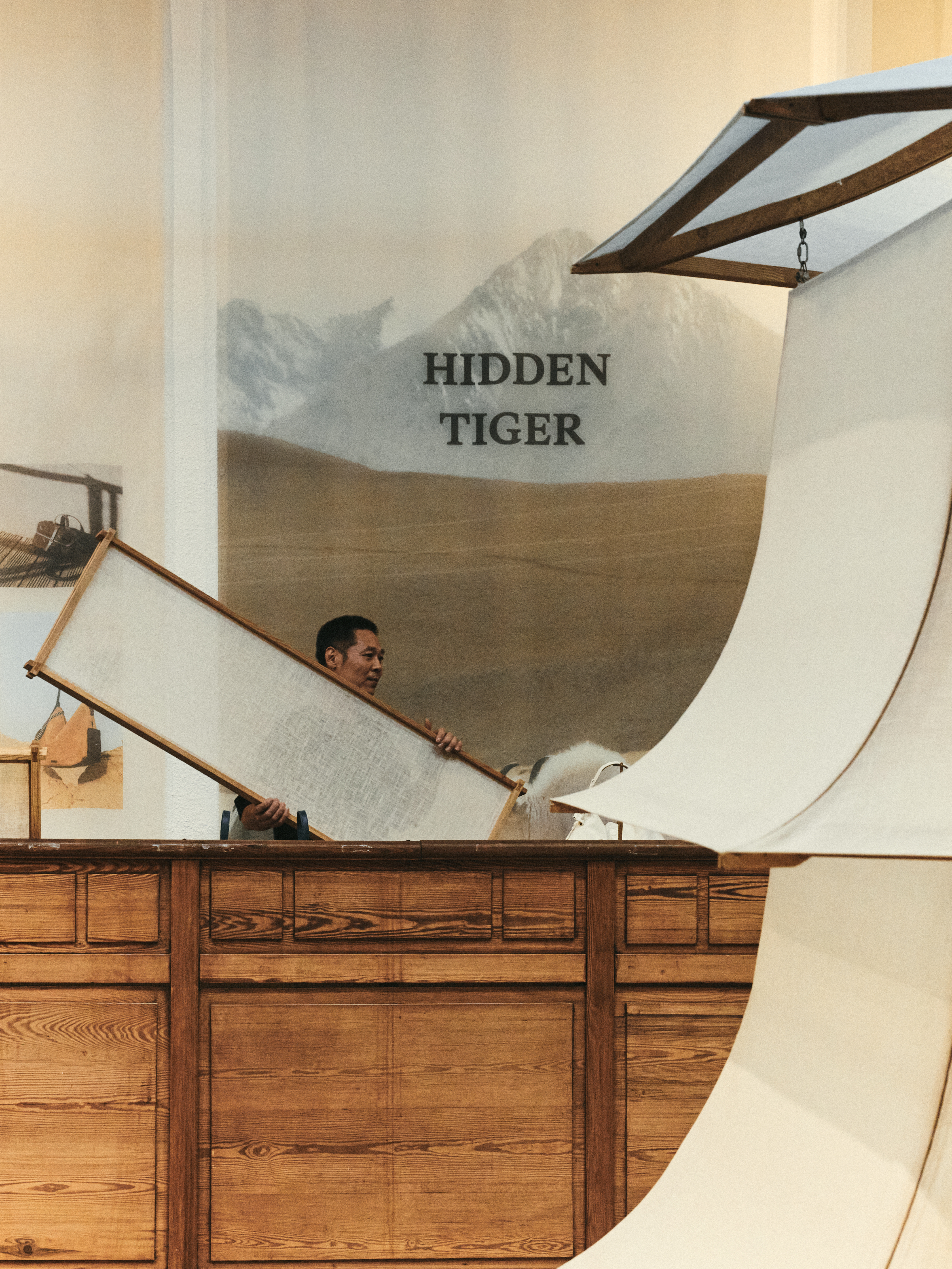
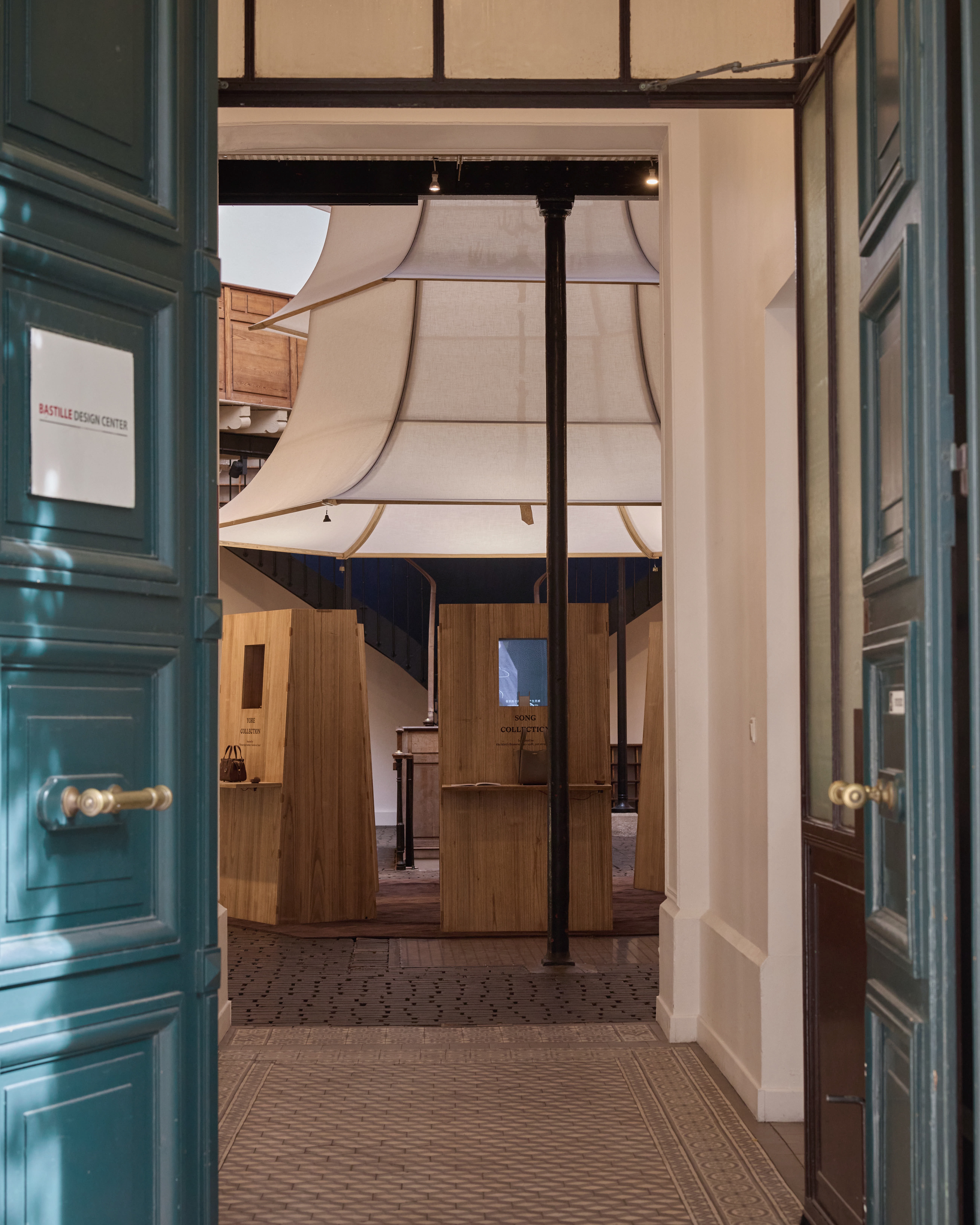
At Songmont’s Song of Mont exhibition, the traditional architectural form has been reimagined as the centerpiece of a space dedicated to the Chinese designer bag brand’s evolving vision of Eastern heritage. Beneath it sit six of Songmont’s signature collections, each drawing from a different thread of China’s cultural landscape—from Silk Road travel and ancient kite frameworks to Tibetan motifs and Tang Dynasty architecture.
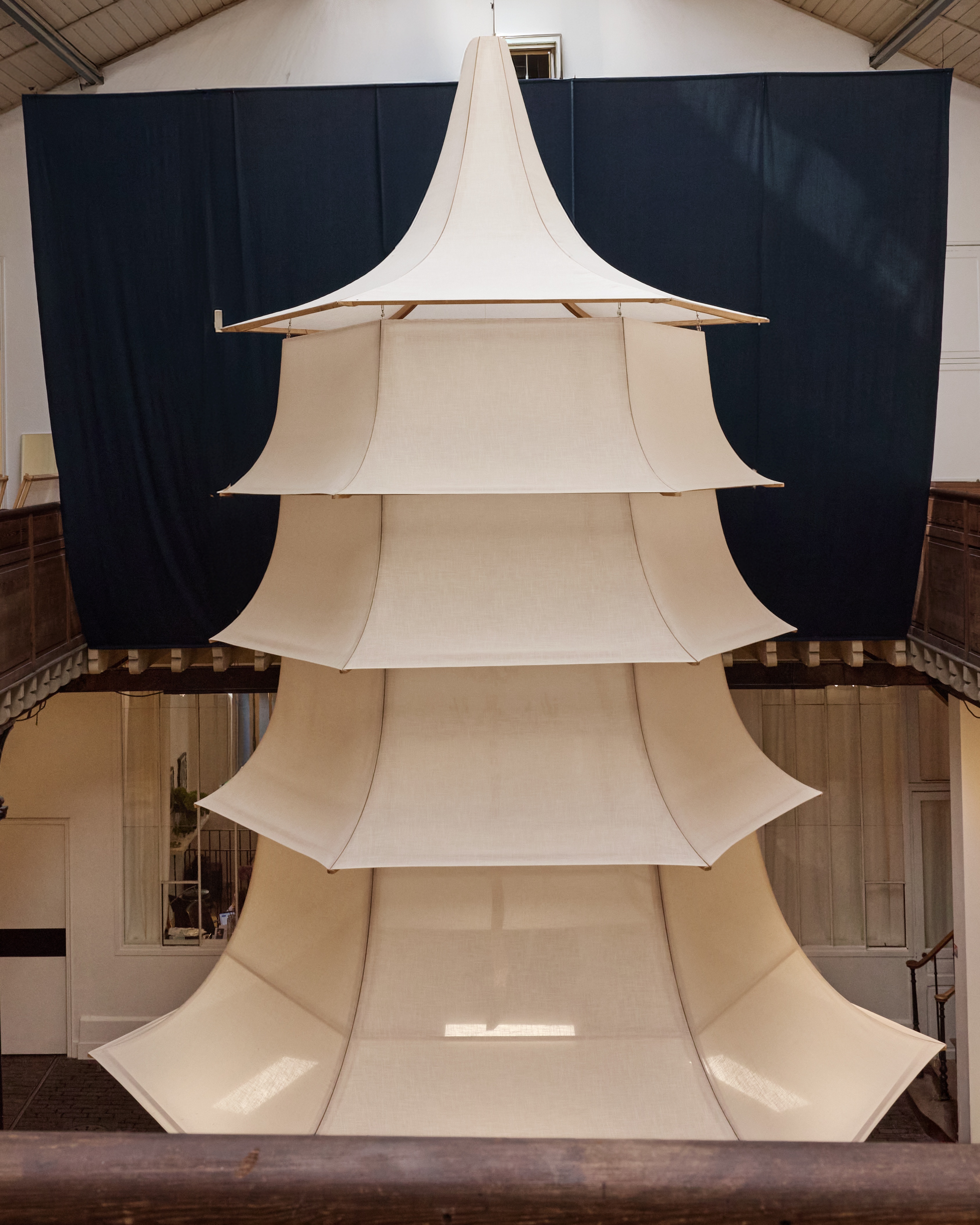
It’s a striking setup, but the pagoda isn’t simply there to look good in photographs. It’s the main story.
Songmont was born in China’s Central Plains, a region whose landscapes, architecture, craft traditions, and everyday practices have become an increasingly important part of the brand’s design vocabulary. Rather than treating that heritage as something to be preserved behind glass, Songmont approaches it as living source material—something that can be reshaped, carried, used, and folded into contemporary life.
That idea is what gives Song of Mont its particular character.
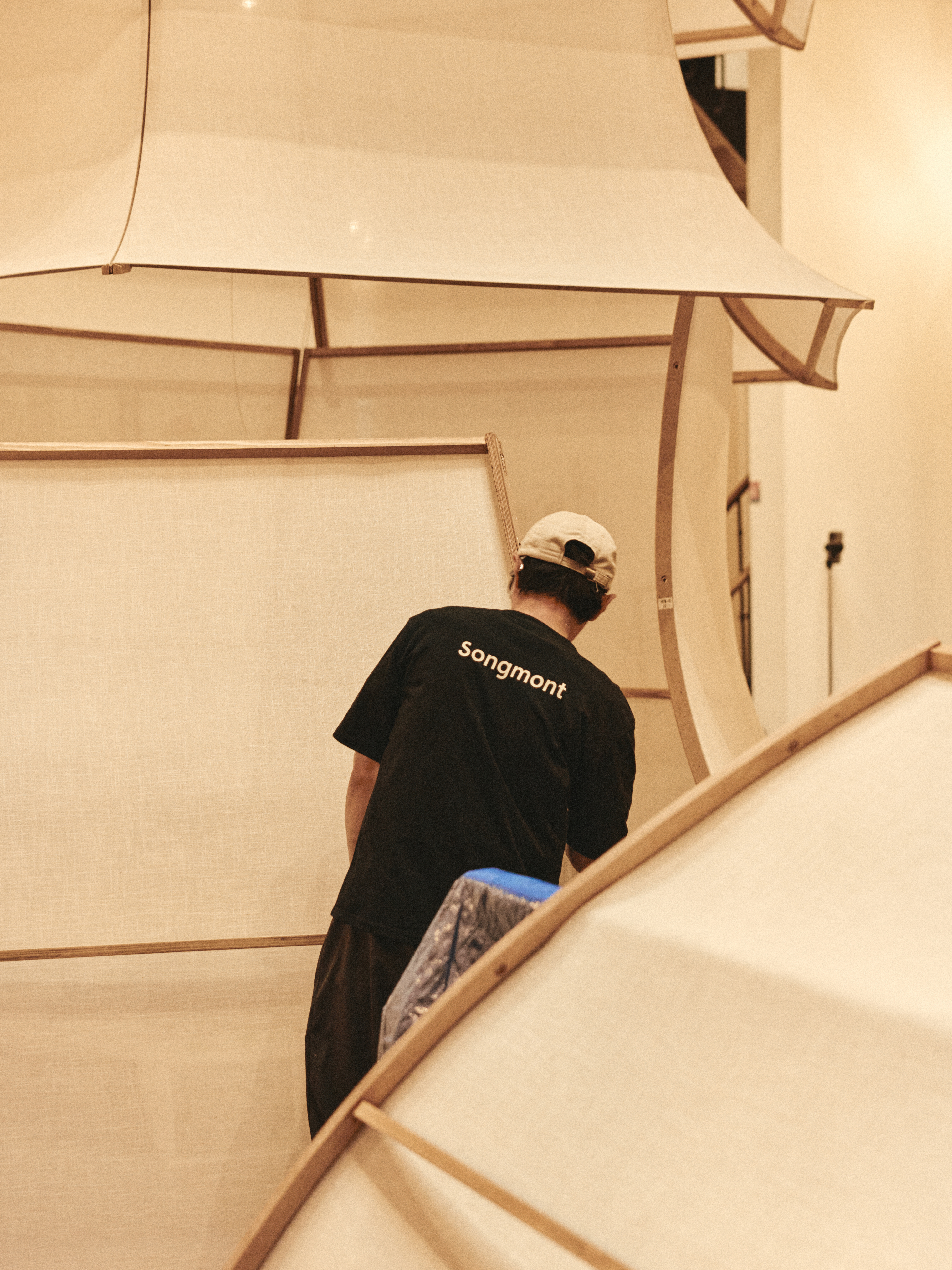
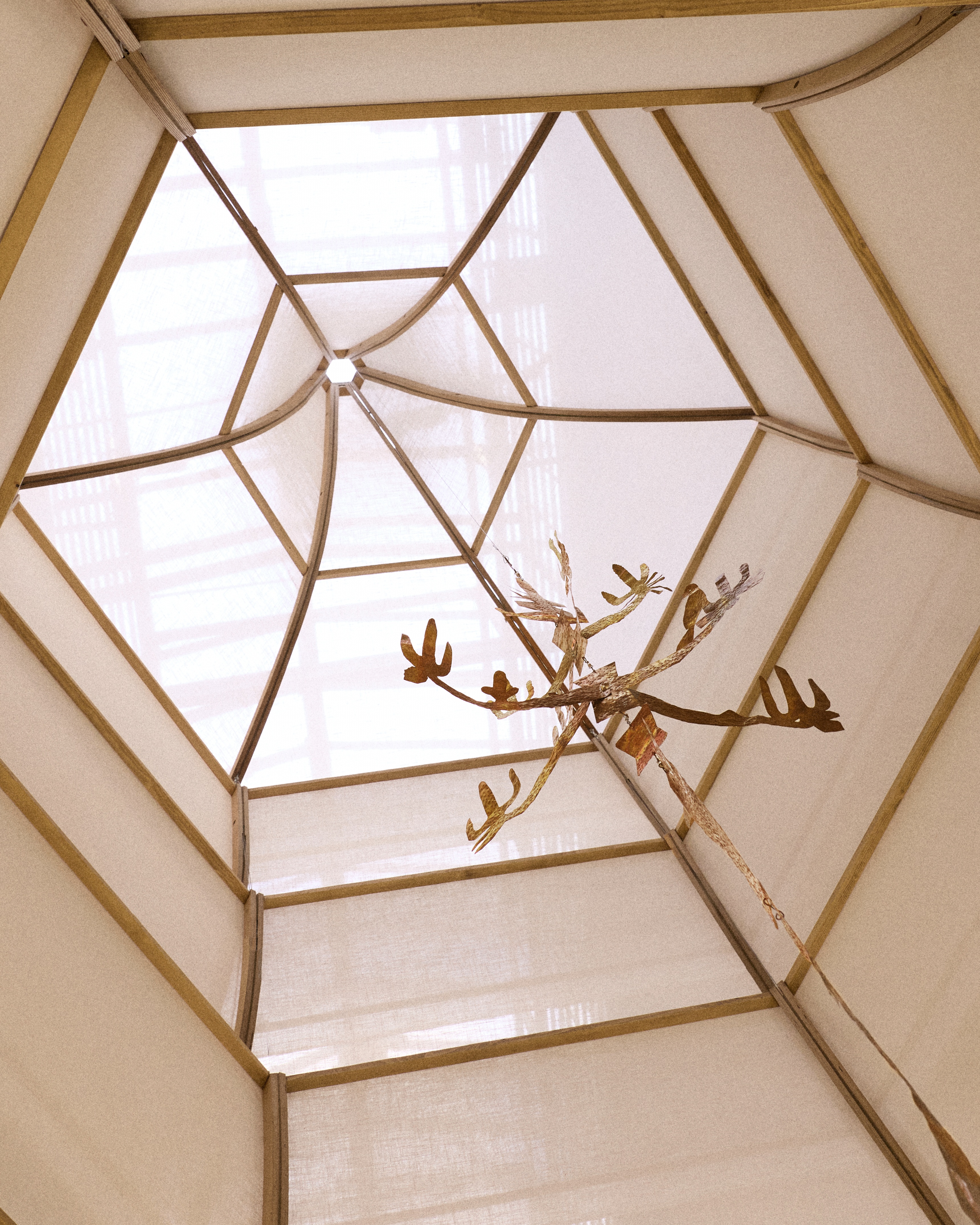
The exhibition’s central installation is inspired by a traditional Shanxi pagoda, placing architecture literally above the products below. It creates a visual hierarchy that says plenty about how Songmont sees its own designs: the bags aren’t the beginning of the story, but rather what happens after the story.
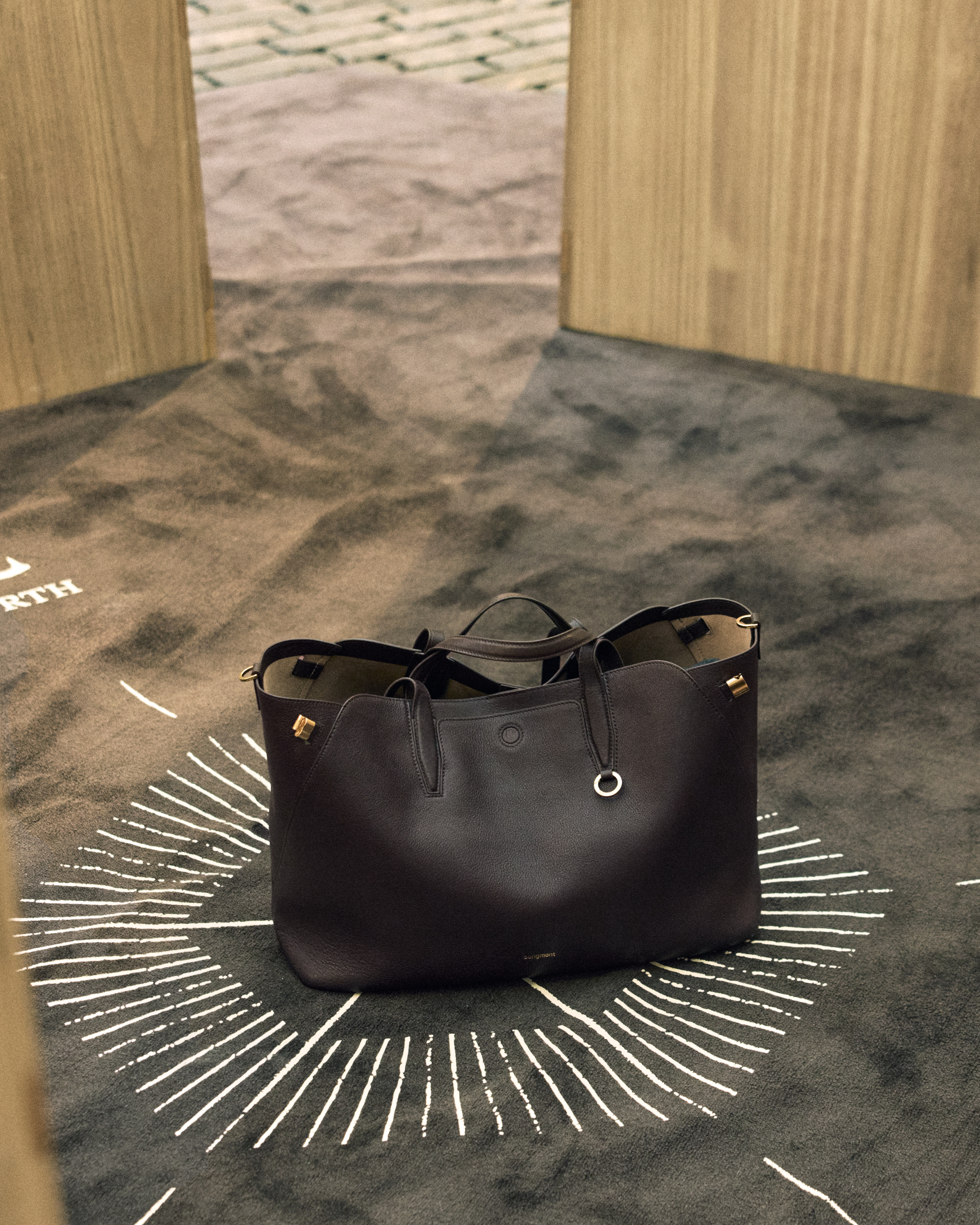
Look closely at the six collections underneath it, and you can see how that translation works.
The Gather Collection takes cues from the camel bags used along the ancient Silk Road’s Hexi Corridor, transforming a functional object associated with movement and trade into a modern drawstring bag. The Song Collection borrows the structural logic of traditional kite frameworks. The Shan Collection references the L-shaped form of wooden book satchels historically carried by wandering monks near the source of the Yellow River.
Then there’s Yore, whose tiger-tooth motifs draw from Tibetan heritage, while the Drippy Roof Collection takes its most direct architectural cue from the sweeping eaves of Nanchan Temple in Shanxi, translating those proportions into leather.
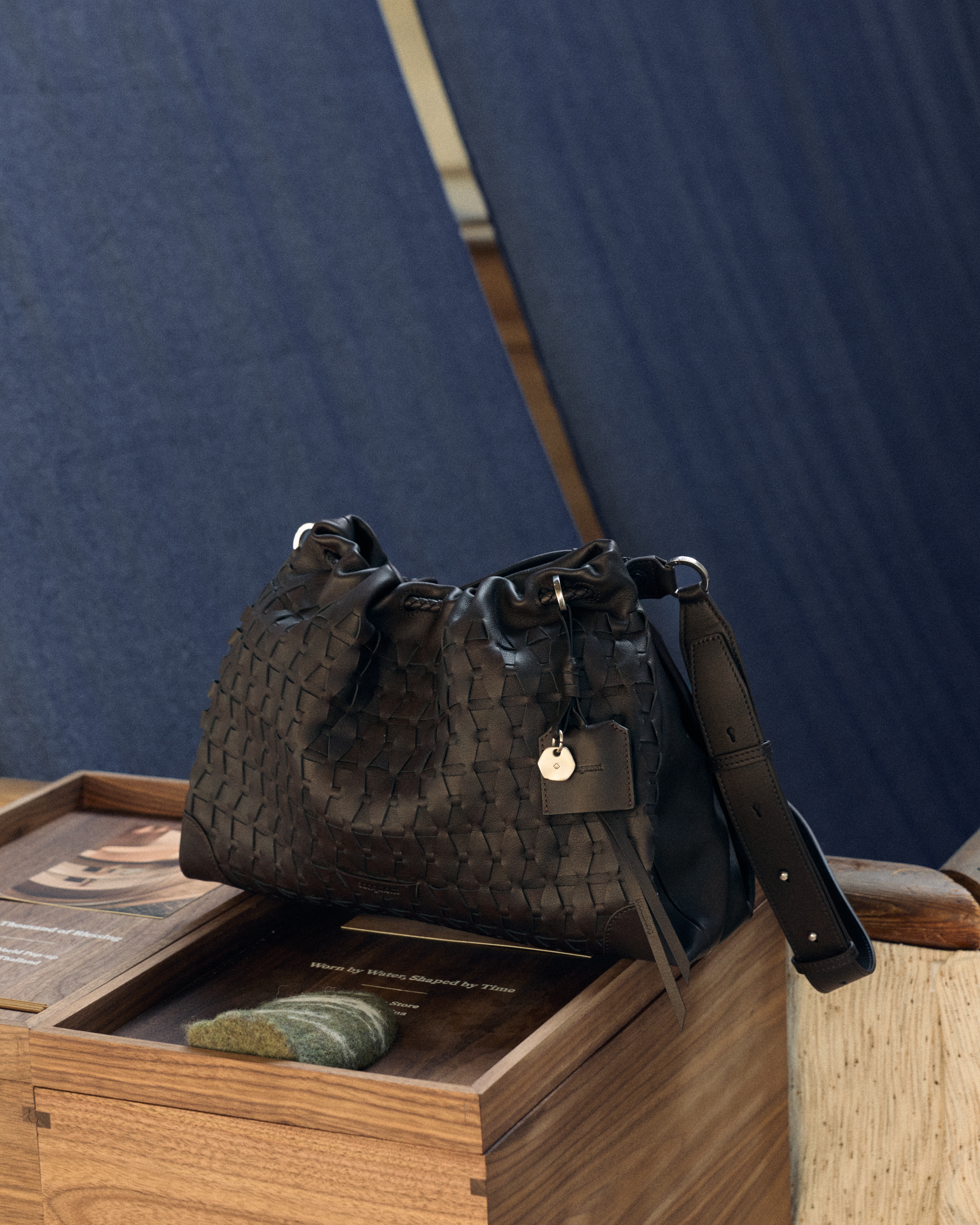
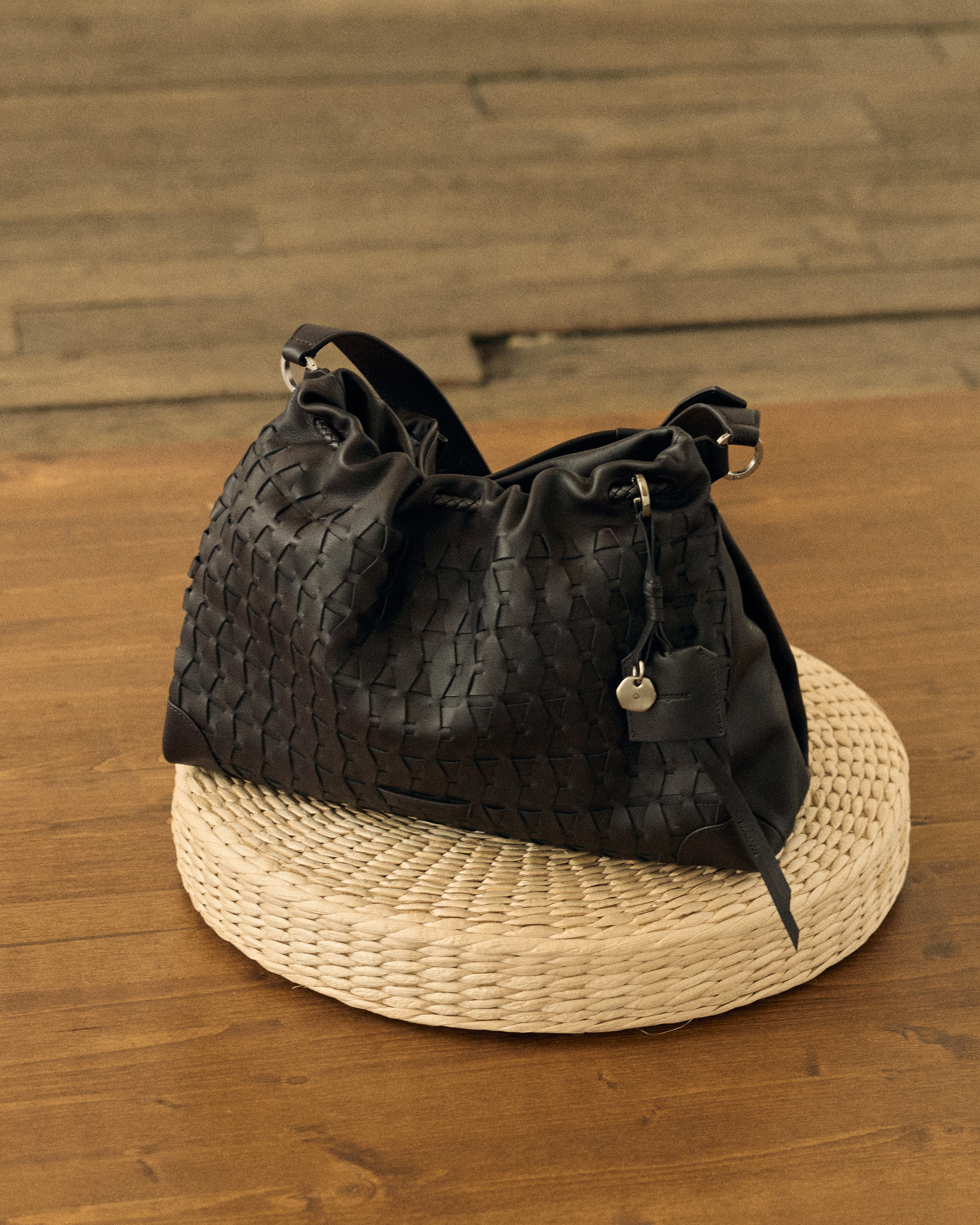
None of these references are particularly subtle—nor are they meant to be. But neither are they simply historical reproductions. The point is not to make a handbag that looks like an archaeological artifact. It’s to take an existing visual or functional idea and ask what it might become when removed from its original context and dropped into the routines of contemporary city life.
And that distinction matters.
For years, the international fashion industry’s relationship with Chinese heritage has often oscillated between two extremes: historical costume on one side, hyper-modern futurism on the other. Songmont is interested in the middle—the place where old things become useful again.
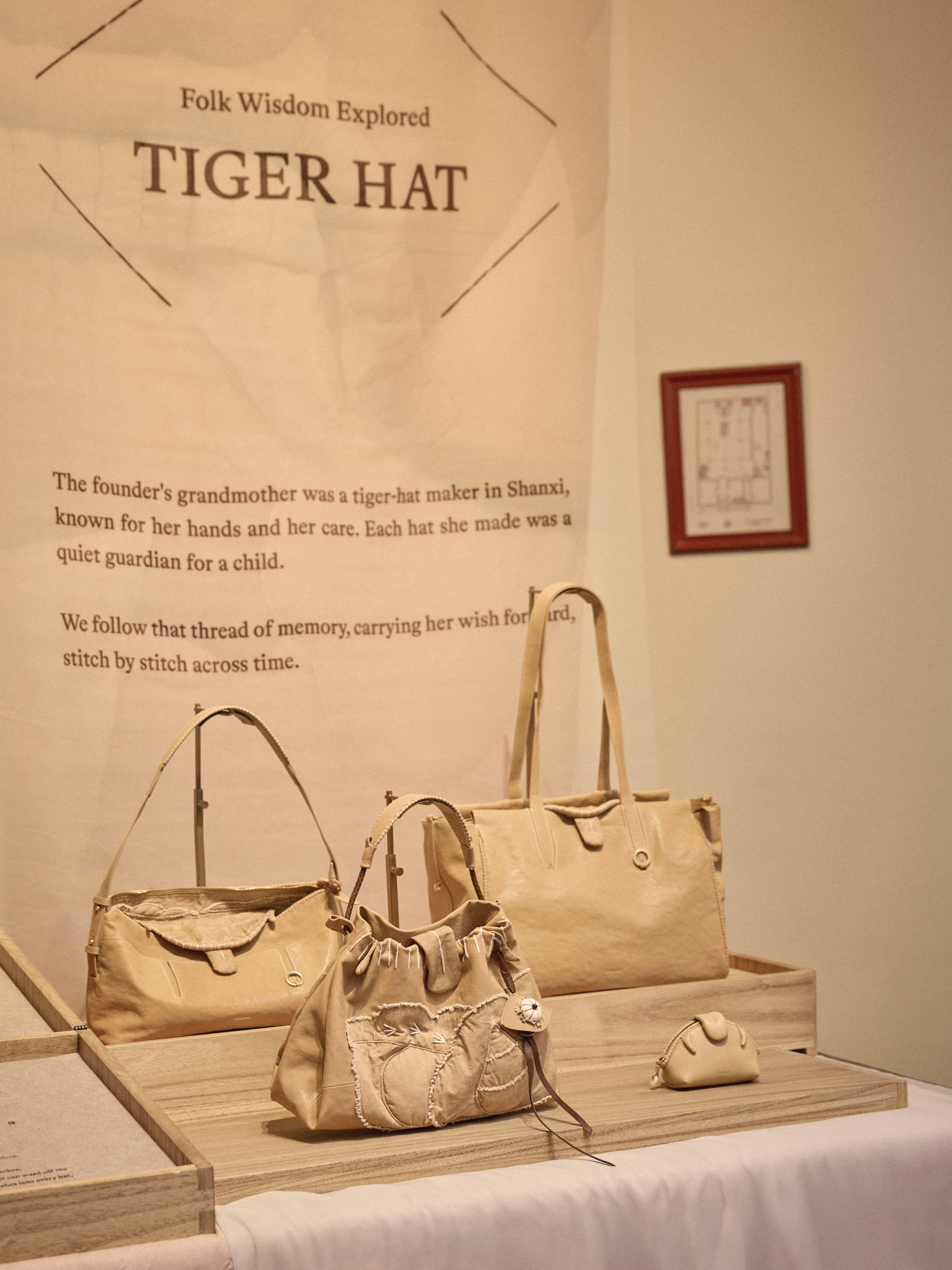
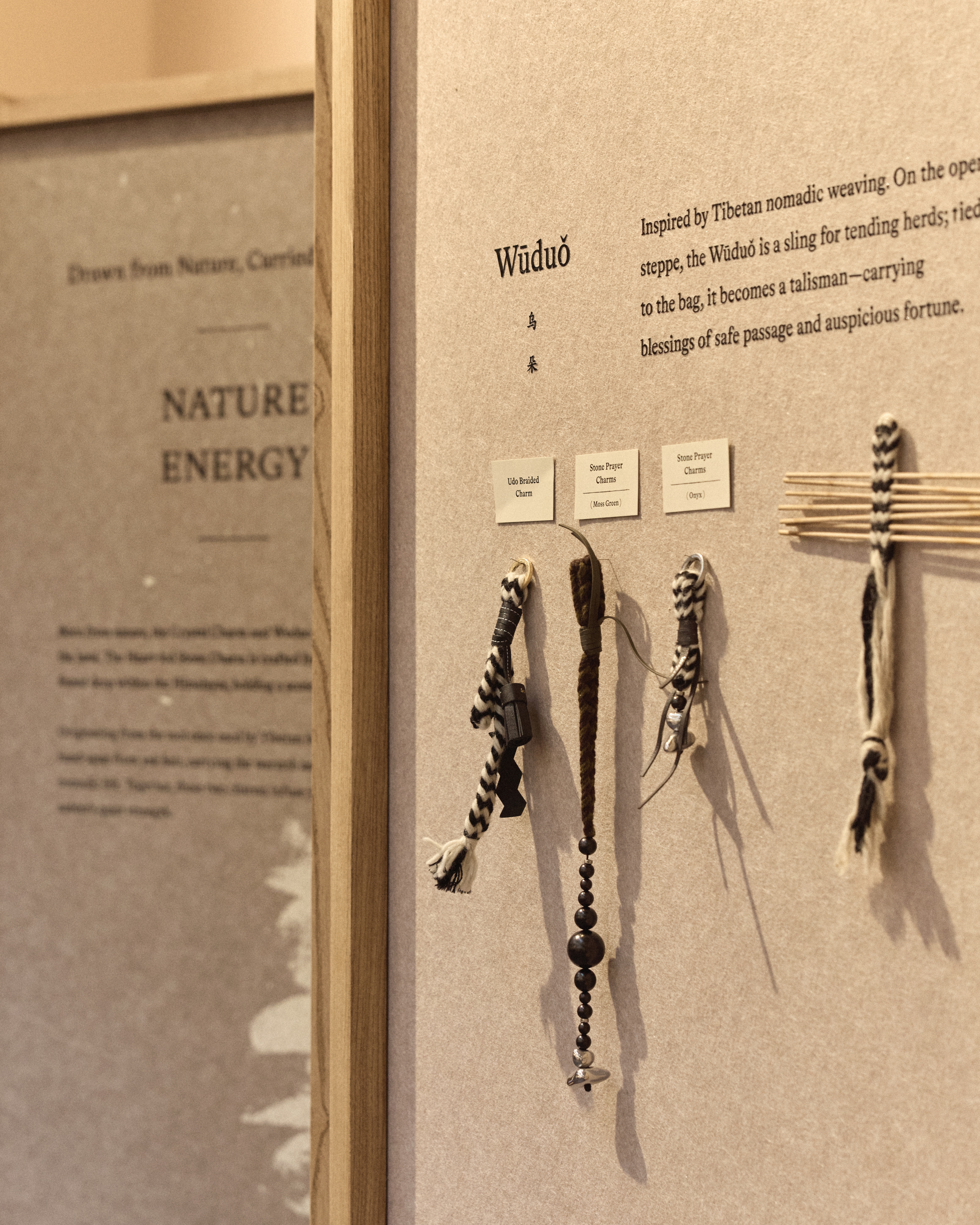
That philosophy extends beyond the bags themselves. Inside the Paris exhibition, visitors encounter traditional Tibetan textile-making, handwoven pieces, tiger-tooth patchwork, fabric scraps, and charms created through collaborations with artisans in Tibetan communities. Sound installations featuring pigeon whistles, cowbells, and temple wind chimes bring another layer of sensory memory into the space.
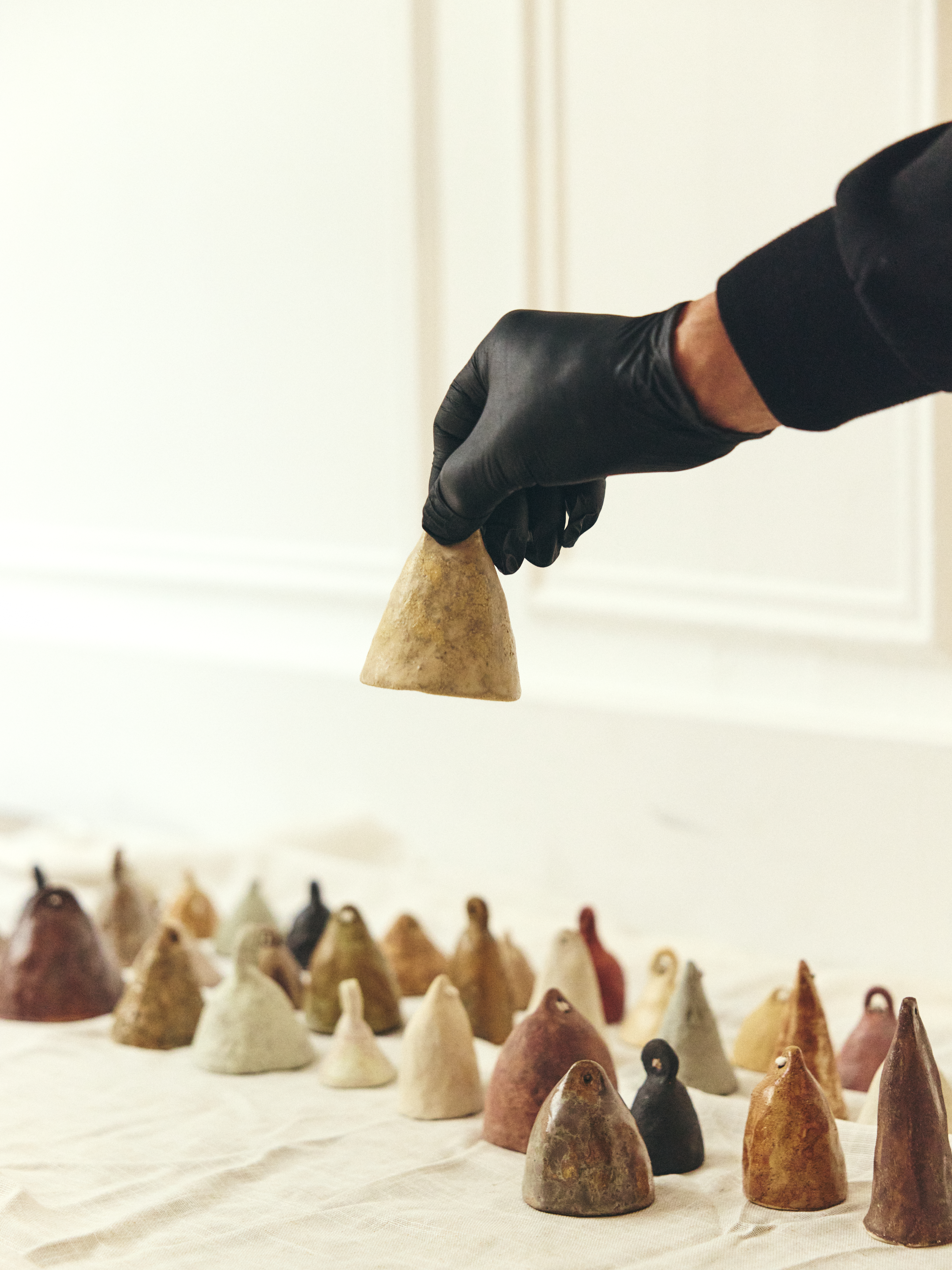
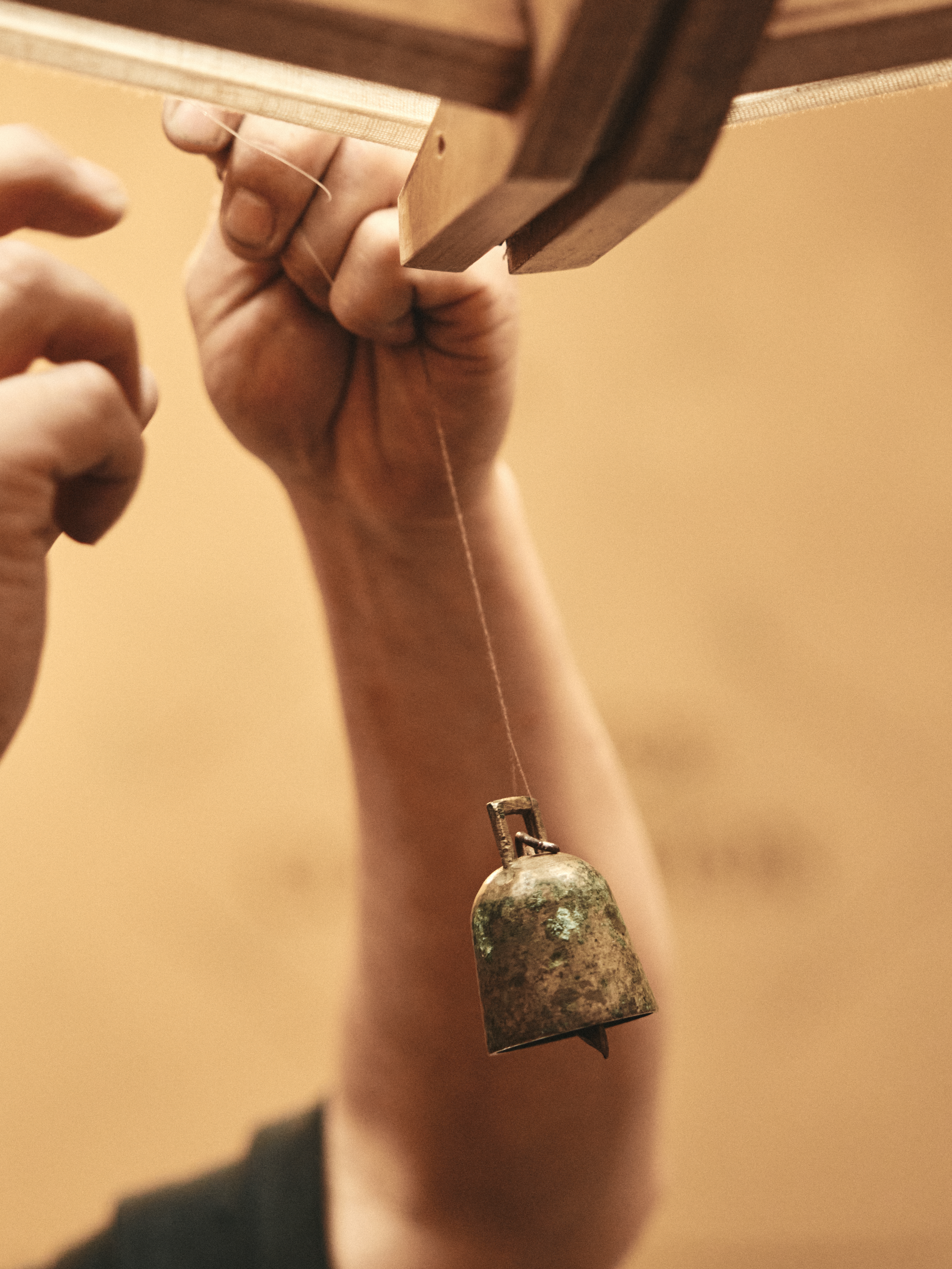
It’s a reminder that heritage isn’t just visual.
It can be tactile. It can be audible. It can smell like paper, wood, leather, or incense. It can exist in the hands of someone repairing an old bag just as easily as it can exist in the silhouette of a new one.
That last idea is particularly important to Songmont’s story. The brand’s roots are deeply tied to generations of women and to the practical knowledge passed between them. Founder Song’s grandmother was a traditional tiger-hat maker in Shanxi, while Song’s mother helped bring the brand’s first bag to life. Early in Songmont’s history, Song’s mother also returned to their hometown to assemble the “Granny Team,” a group of local artisans whose decades of sewing experience became part of the brand’s foundation.
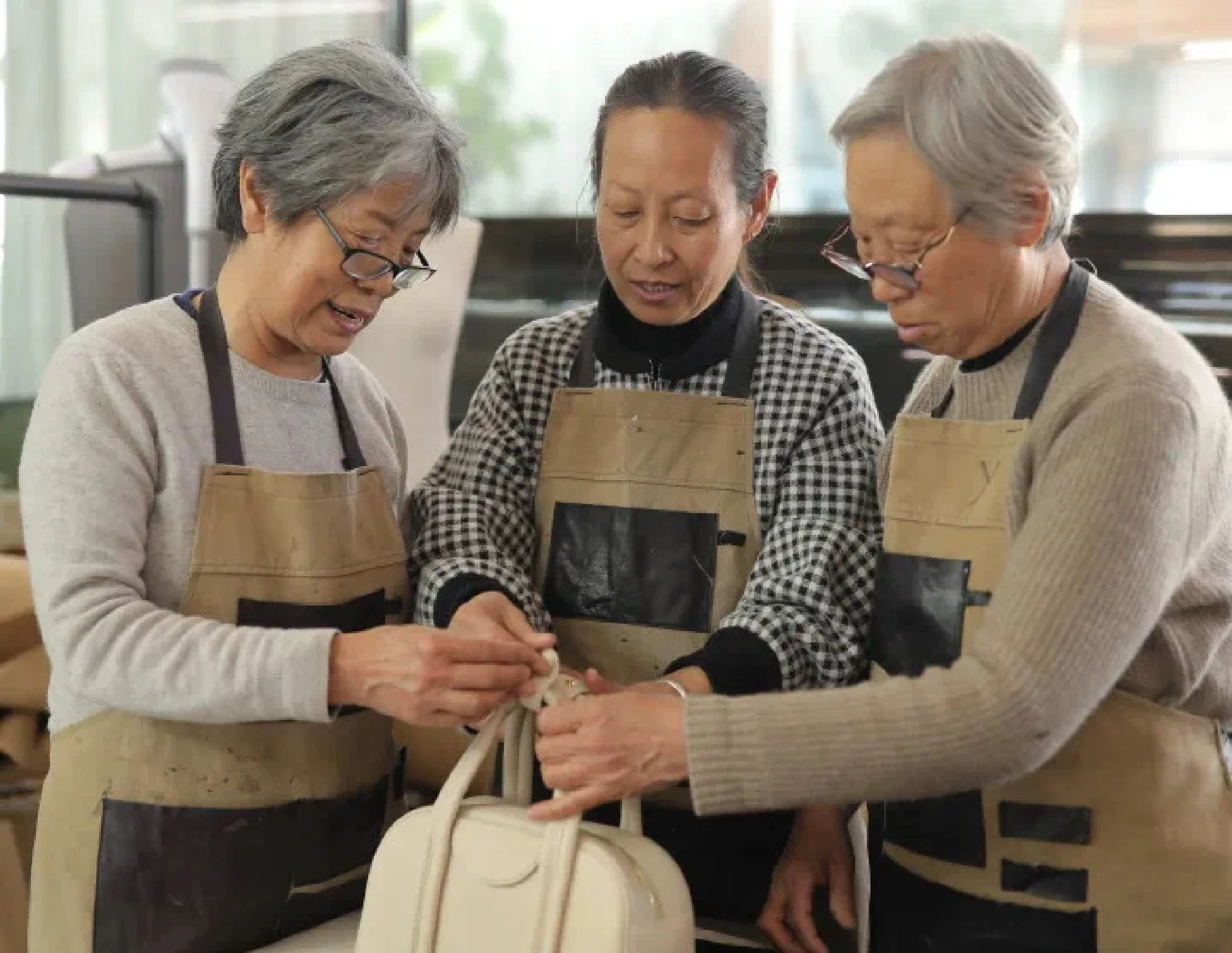
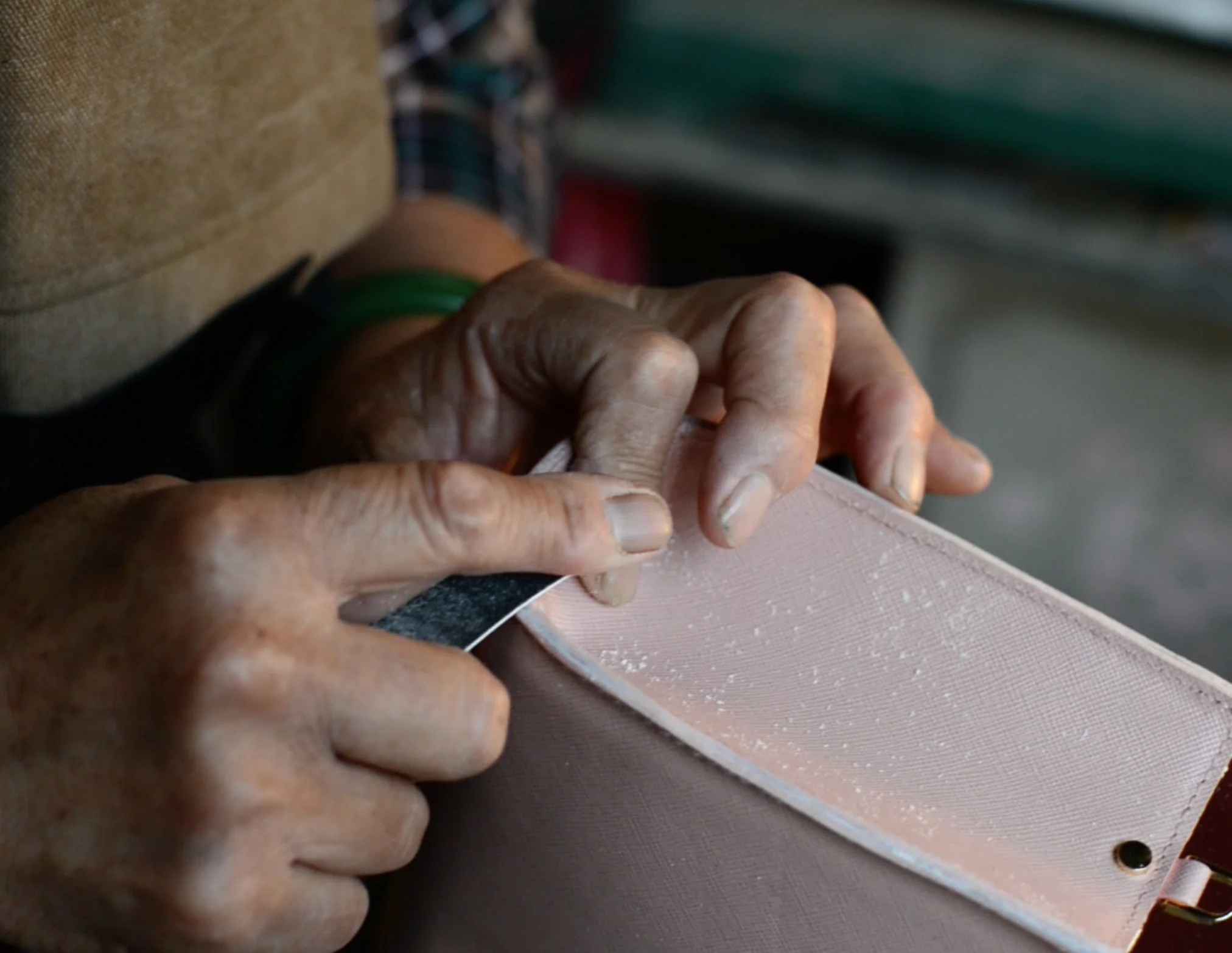
Now, that relationship with craft has evolved into restoration and maintenance, with the former team caring for the marks accumulated by Songmont bags over time.
In that sense, the pagoda makes even more sense.
It is a structure associated with endurance, place, and accumulated history—but in Paris, it becomes something else. It is no longer simply a building in Shanxi. It becomes a framework through which a global audience can encounter the ideas behind Songmont.
And that may be the more interesting story about Chinese design today.
The Central Plains aren’t being presented as some distant, frozen-in-time source of “Eastern inspiration.” They’re being treated as a starting point. From there, Songmont’s designers move outward—through architecture, craft, landscape, memory, and daily life—before arriving at objects that can cross borders and become part of someone else’s everyday routine.
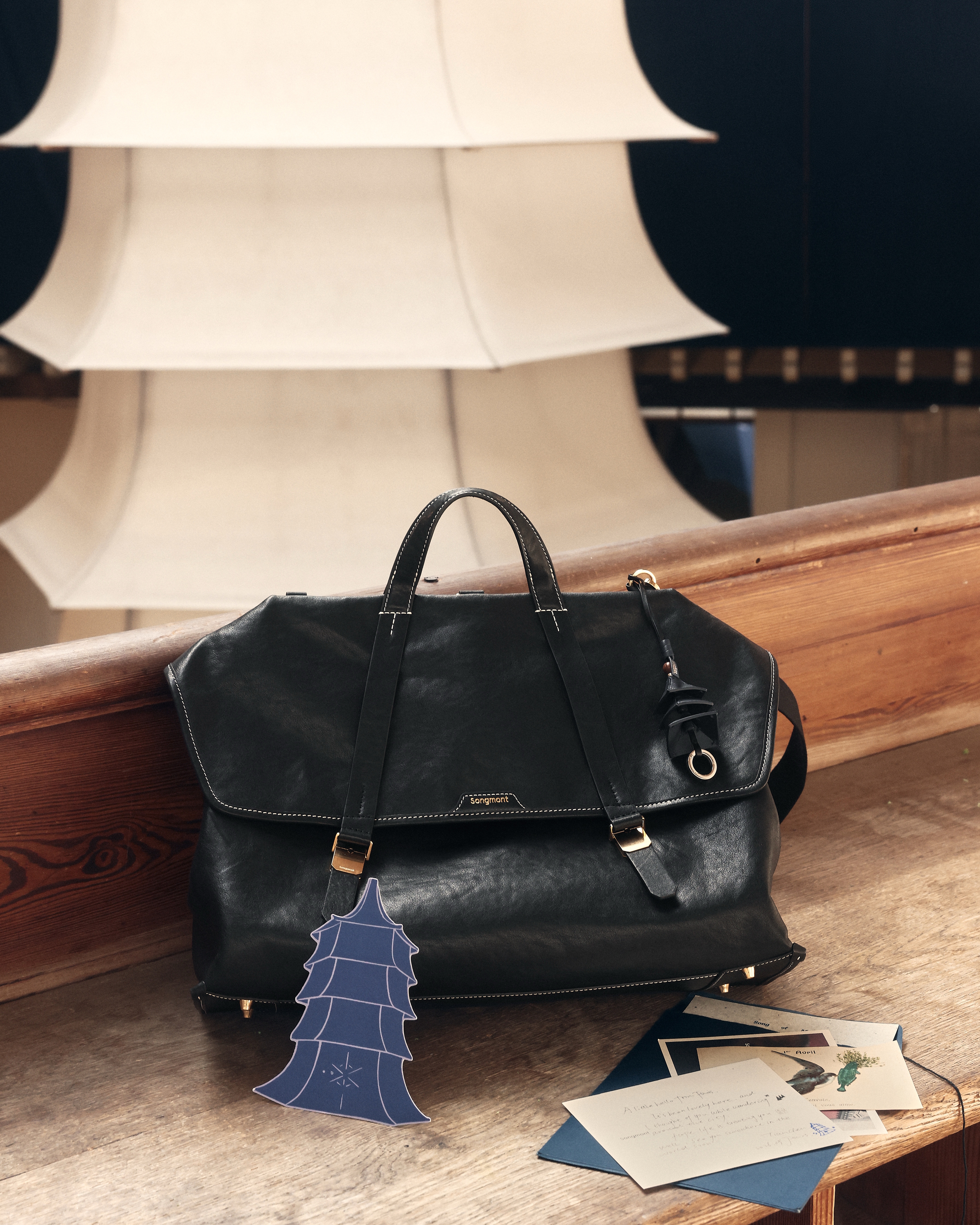
The bags, in other words, are not the destination.
They’re the things that carry the journey.
All Images via Songmont.