On Weibo, a simple question cuts through the noise: “Am I the only one who feels bored every day?” (“我是不是唯一一个每天都觉得无聊的人?” – “wǒ shì bú shì wéiyī yí gè měitiān dōu juéde wúliáo de rén?”)
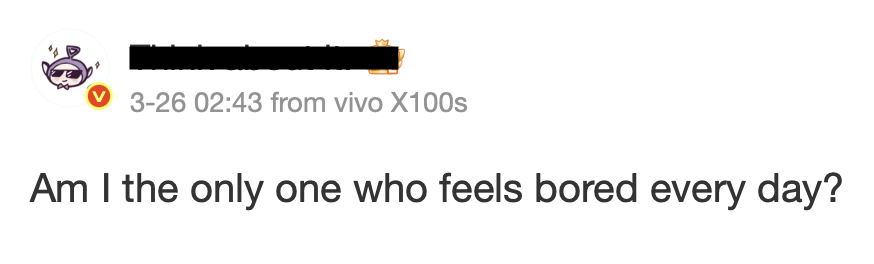
The replies came quickly, and they reflect a common theme among Gen Z in China—boredom (无聊 – wúliáo).



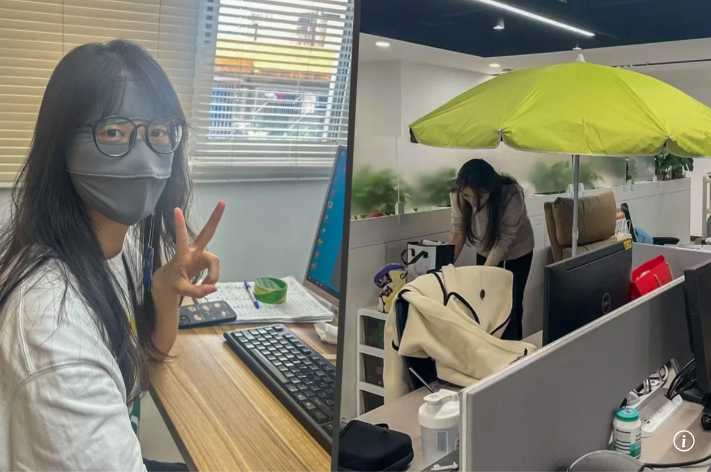
At first glance, it might read like burnout, but there’s no clear singular stressor or breaking point. Young people across China are expressing a common struggle: a lack of lust for life and days that feel packed yet empty at the same time, consisting of commute, work, eat, scroll, sleep, repeat.
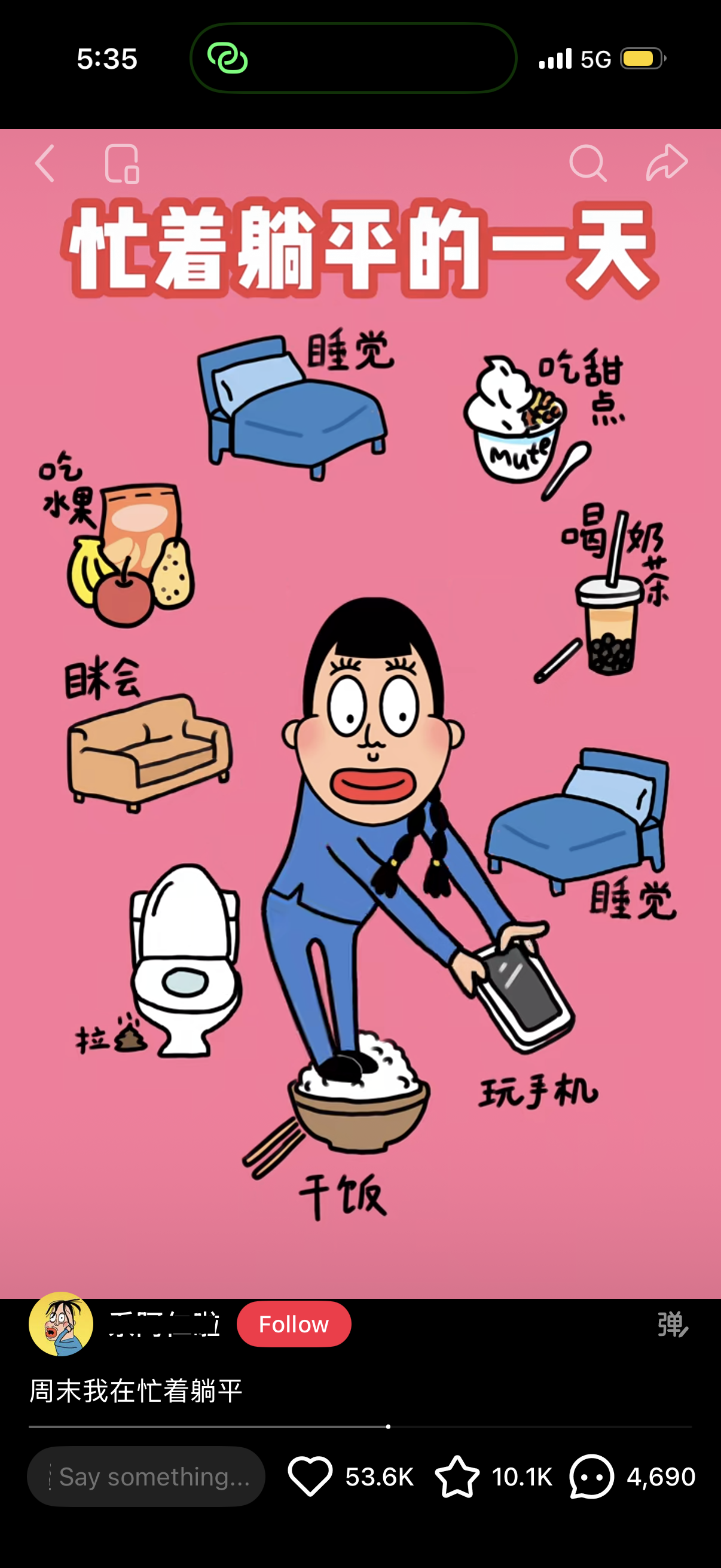
Some are leaning into it. Terms like “躺平” (tǎng píng – lying flat) and “摆烂” (bǎi làn – letting it rot) still circulate, but now with less rebellion and more resignation, or an embrace of “无所事事的治愈” (healing through doing nothing).
This phenomenon could be attributed to the long shadow cast by the typical “996” work schedule, but it seems to go further than just this. Even when young workers are not literally working 9 a.m. to 9 p.m., six days a week, this cultural norm of ‘always-on productivity’ still bleeds into daily life. Another factor is the country’s unemployment rate for 16–24-year-olds—excluding students—standing at 16.1% in February, reinforcing a broader feeling that greater effort doesn’t necessarily translate into greater opportunity.
When work eats up your evenings and weekends, friendships become harder to maintain, hobbies start to feel inefficient, and going out begins to require planning that exhausted people can’t be bothered with. Not to mention the effort required to build a community and feel embedded in a city and its scene.
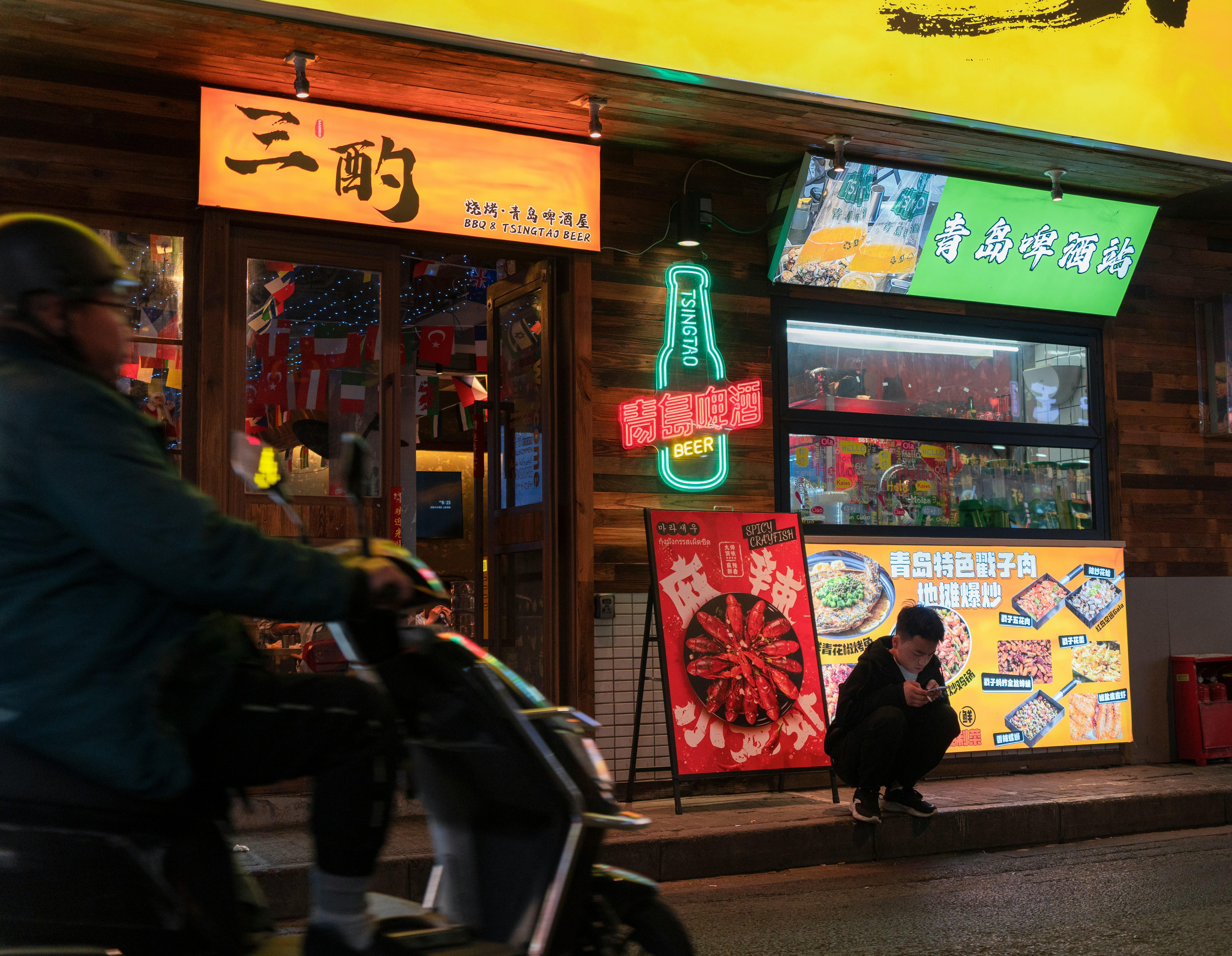
This leads to many young people being out of practice when it comes to the art of unwinding. Partying, dating, and even having a spontaneous night with friends can feel unjustifiably effortful after years of school pressure and post-pandemic habits. Boredom, in that sense, is not always about a lack of options. Sometimes it is about forgetting how to have fun in the first place.
So is this boredom, depression, or burnout? Not exactly. It is more or less a collective depletion: a mix of decreasing expectations, social comparison, and the sinking sense that grinding no longer guarantees a better life. In this context, boredom becomes a socially acceptable word for something heavier.
And that’s where we’re left: fully booked, endlessly entertained, and somehow still bored.
All images via Xiaohongshu.