
When we first followed Song Yadong in RADII’s Way of the Warrior documentary series, he was still more prospect than contender—a teenager leaving China for Team Alpha Male in Sacramento, carrying speed, power and promise into a gym built to test all three. Nobody doubted he was dangerous. The real question was whether that danger could turn into something deeper.
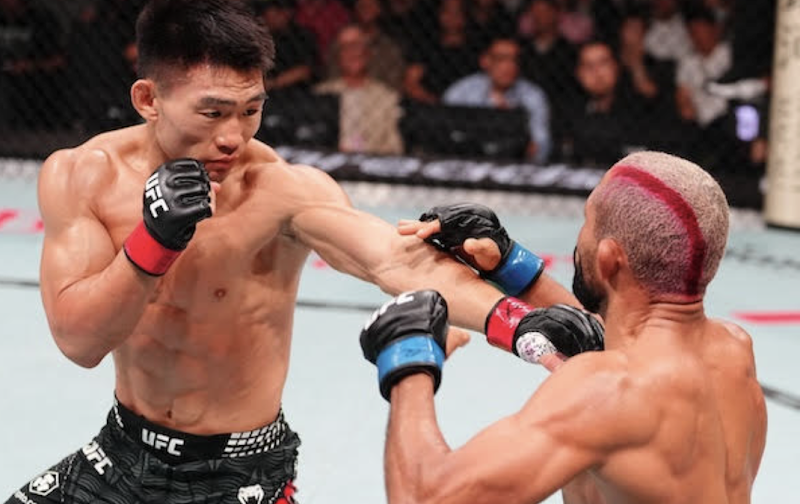
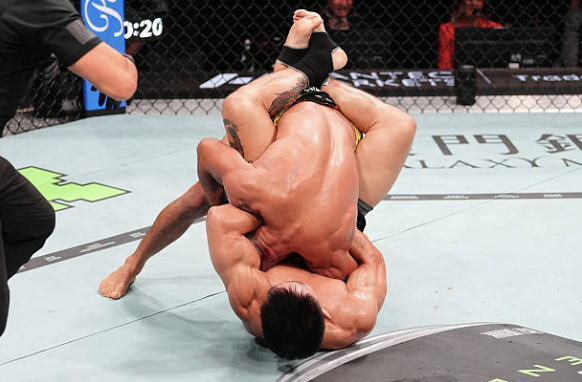
In Macau, against former UFC champion Deiveson Figueiredo, Song gave us his clearest answer yet. He didn’t just beat one of the toughest opponents of his career; he submitted him—a guillotine choke that turned years of slow, grinding development into a single, undeniable image.
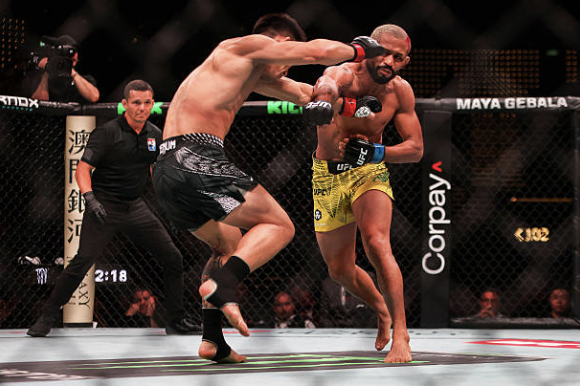
And Figueiredo is exactly the kind of name that makes a finish like that impossible to wave off, especially as a former UFC flyweight champion, a proven finisher, a Brazilian jiu-jitsu black belt. Beating him would have meant something on its own. Submitting him, however, was exceptional.
At this level, guillotines almost never finish unless the angle, grip and timing all show up at once. Veterans usually sense the danger early and easily wriggle out. But Figueiredo couldn’t. Against a fighter famous for staying calm in chaos, Song found the neck, locked it in, and made him tap.
More Than Just a Striker
Afterward, in his Octagon interview with Daniel Cormier, Song went straight to addressing the old knock on his game.
“Everyone always says I’m just a boxer and that I don’t have any jiu-jitsu,” Song said in Mandarin. “Well, did you see that? Not only do I have jiu-jitsu, but I just submitted a former UFC champion!”
The crowd roared. This win goes far beyond just another ranked name on Song’s CV. Rather, it was a correction.
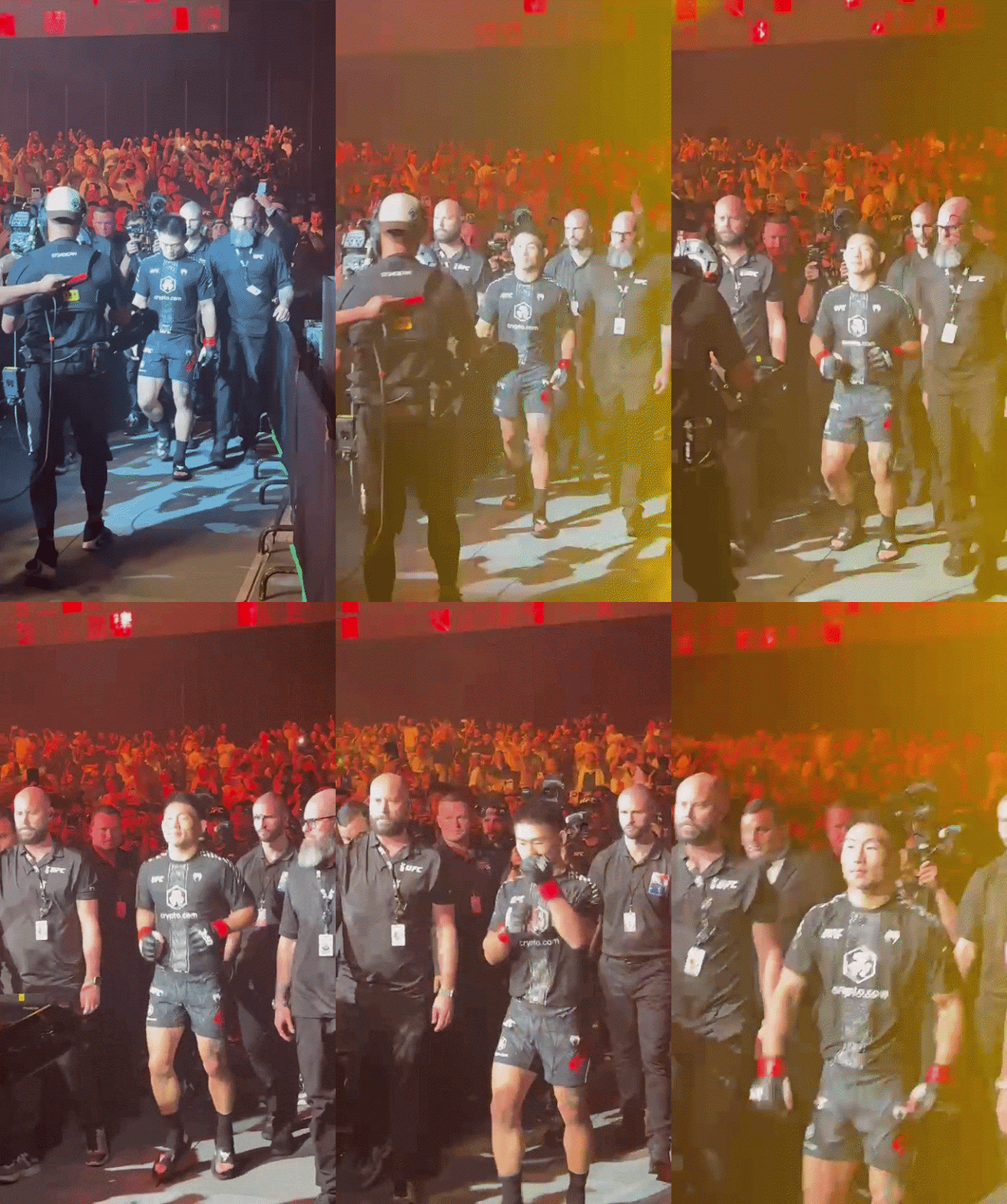

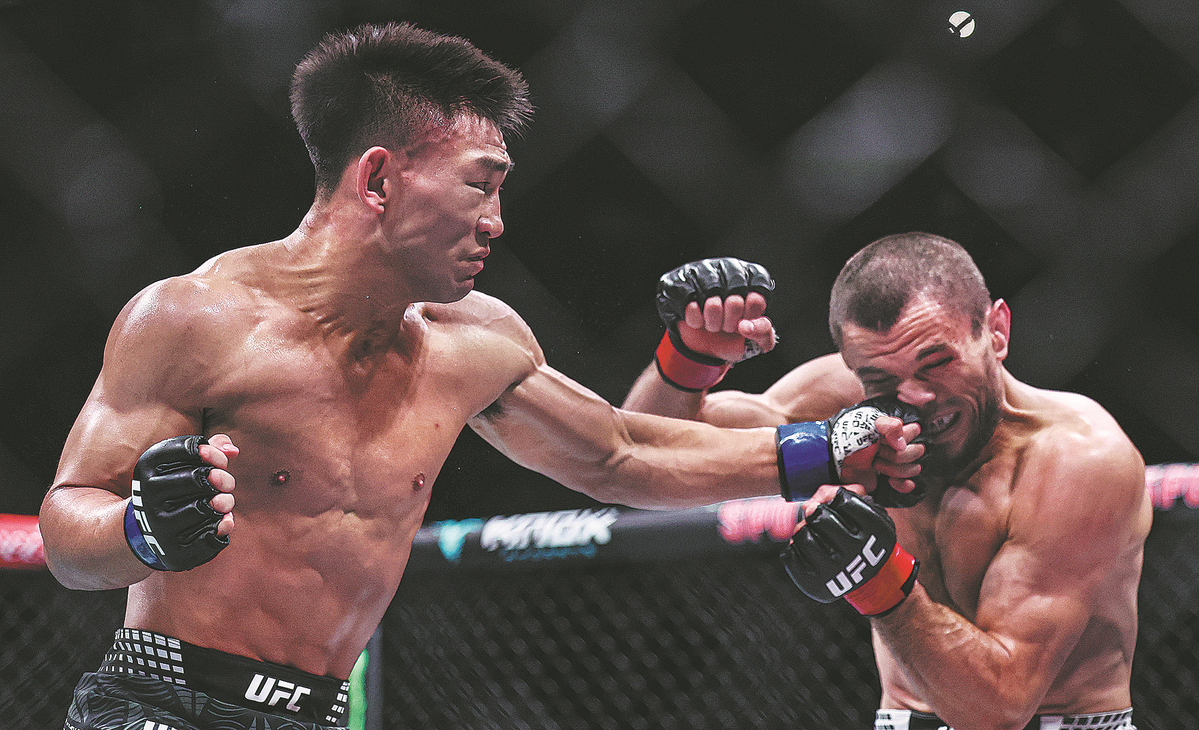
And that correction had been building for years. Back when RADII filmed Way of the Warrior, Song’s move to Sacramento looked like a leap into the unknown—a young fighter wrestling with a new country, a new language, and a room full of American wrestlers, strikers, and UFC vets. Song’s athletic gifts were obvious, but so were the doubts. Could “The Kung Fu Kid” be more than a fast, dangerous striker? Could he build the layers a fighter needs at the deep end of the bantamweight division? Those questions were finally answered in Macau.
Desperate for a Win, Macau Turns to Song
The night carried pressure well beyond the matchup itself. Song was the face of the UFC’s return to Macau, the most established Chinese male fighter on the card. By the time he walked out, several Chinese fighters had already lost. The crowd was hungry for something to hang onto.
At the post-fight presser, Song admitted the pressure was “immense” after watching his countrymen drop their bouts earlier in the night. He knew, he said, that he “absolutely had to win”—that he couldn’t let the Chinese fans down.
Pressure usually makes fighters rush. Song took the center, and with it, controlled the pace.
Set against the past Way of the Warrior footage we shot years ago, the recognition might be the most telling part. Plenty of fighters add techniques. Far fewer learn when to actually trust them. Song’s growth hasn’t just been about a bigger toolbox—it’s been about sharper judgment: when to strike, when to wrestle, when to wait, and when one mistake from an elite opponent is all you need.
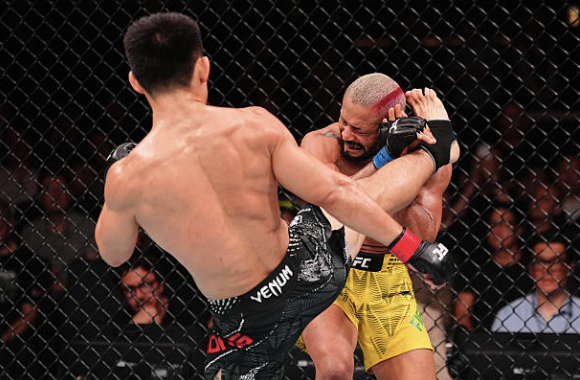
Song said afterward that the guillotine had been a “secret weapon” drilled all through camp—a ready-made answer for the moment Figueiredo’s neck came free. Against a grappler that good, the window was always going to be tiny. Song saw it and took it.
After the fight, we asked Song at the press conference about finally landing the guillotine in a fight. Song switched to English and said:
“Yeah, I finally did it in the fight,” he said. “I know I did a lot [of it] in sparring, but I finally did it in the fight… I’m so proud of myself.”
A follow-up about how tight the choke really was drew out the best deadpan of the night.
“I didn’t use my whole power,” Song said in English. “I just [gave it a] little twist. Oh, he tapped. That’s it, I win. So easy.”
It sounded like a joke, and partly it was. But there was real technical truth buried in it. At this level, submissions only look easy when the setup is perfect. Song made the finish sound casual because all the hard work had already happened. By refusing to chase the knockout, he let the opportunity unfold, showcasing a newfound maturity in his fighting style.
Homecoming: Way of the Warrior
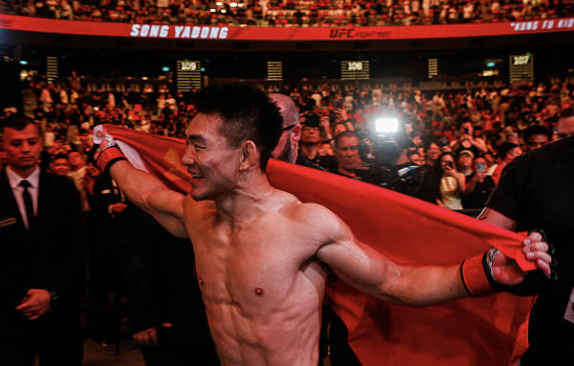
Still, the momentum of Chinese MMA is impossible to ignore, even if it shouldn’t be oversold. Zhang Weili remains the country’s defining global star, but Song Yadong‘s path is a different one—slower, less decorated, and unfolding in one of the UFC‘s most crowded divisions.
Years after leaving China as a raw, fast-handed prospect, he returned to the motherland, submitting a former champion with a perfect choke almost nobody expected him to land.
Now that is the Way of the Warrior.
All images via Getty.