
Feature image of Following Anthony Bourdain’s Footsteps Through Global Chinatowns

Following Anthony Bourdain’s Footsteps Through Global Chinatowns

7 mins read

7 mins read

Feature image of Following Anthony Bourdain’s Footsteps Through Global Chinatowns
From old-school comfort food in Manhattan to spicy Sichuan cuisine in Melbourne, Anthony Bourdain celebrated the evolving flavors of global Chinatowns and the stories they tell.

Chinatowns, easily recognizable by their beckoning archways flanked by guardian lions, vermillion pagodas, paper lanterns, and bilingual signage, have long been essential parts of major cities worldwide. Yet some might shudder at the notion of the exaggerated aesthetic of the quintessential Chinatown ever being described as “authentic.”

So-called authenticity has seemingly become a litmus test for foodies and travellers alike in their quest for meaningful experiences—whether it’s finding the best “hidden gems” or getting “off the beaten path.”

But as the late American chef, author, and travel host Anthony Bourdain—someone who seemed to understand authenticity more than most—once said in a Time interview:

The word authentic has become a completely ridiculous, snobbish term. There are so many first- and second-generation immigrants making wonderful mashups of food they grew up eating. On the other hand, I’m pretty sure that every time Guy Fieri puts barbecue pork inside a nori roll, an angel dies.”

This seemed true of Bourdain, who visited numerous Chinatowns across his food and travel shows, from some of the world’s most famous incarnations to some of its least well-known. While some may question the level of authenticity that lies beyond the bright red Chinatown gates (or paifang), walking even the more well-trodden tourist paths with an open mind and heart is what allowed Bourdain to bring awareness to the very real stories of the global Chinese diaspora.

Below is an overview of a few of the Chinatowns Bourdain explored on screen.

Chinatown, San Francisco
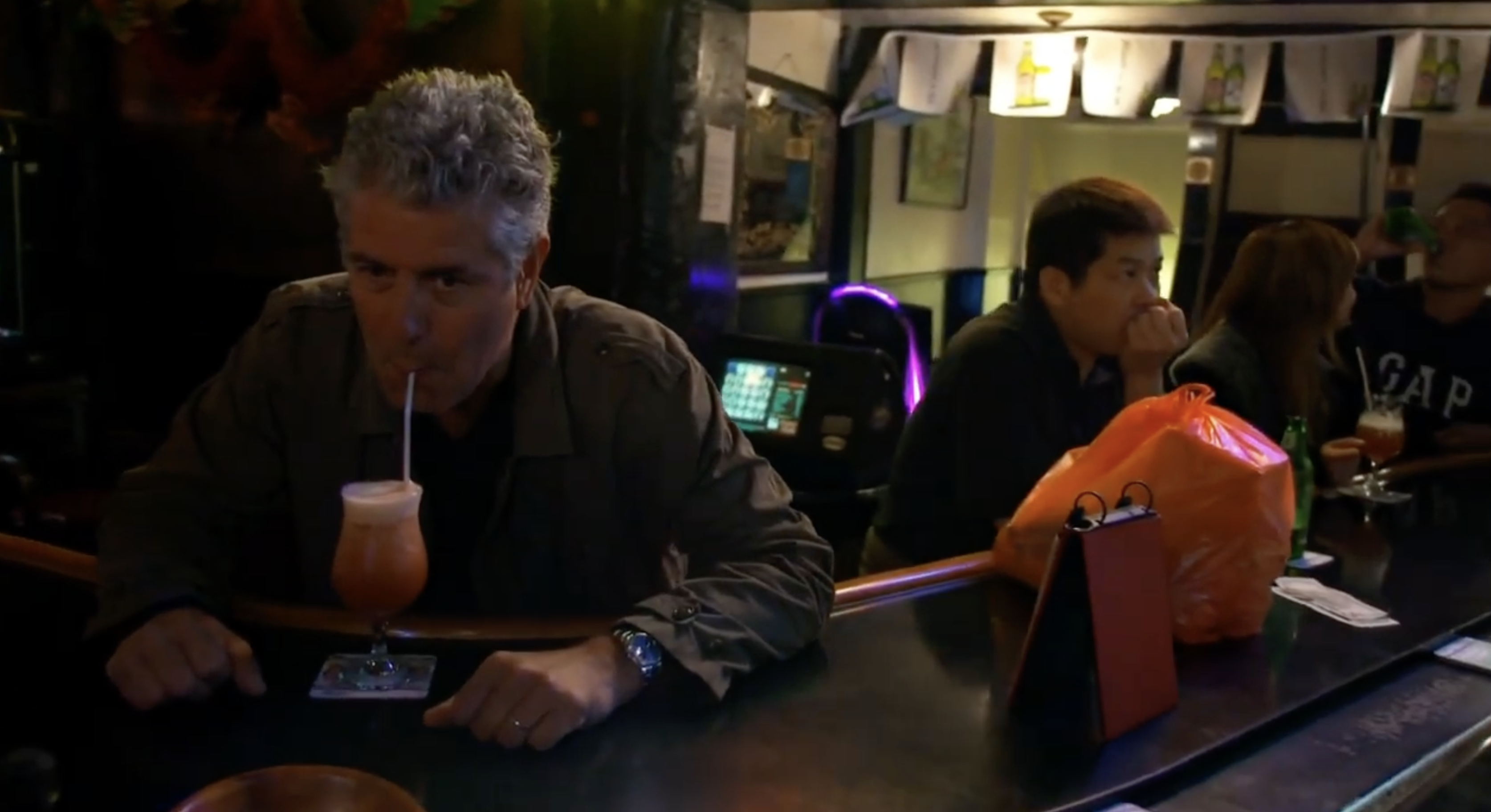
Image via The Travel Channel/Anthony Bourdain: The Layover

“San Francisco” – Season 5, Episode 15 (No Reservations) and “San Francisco” – Season 1, Episode 8 (The Layover)

The oldest in the United States and one of the world’s most historically significant, San Francisco’s Chinatown tells a story of both hardship and cultural resilience. Amid the California Gold Rush and construction of the first transcontinental railroad, the mid-1800s saw tens of thousands of Chinese immigrants (mostly from the counties of Guangdong’s Pearl River Delta region, such as Taishan) arrive in San Francisco in pursuit of economic opportunity. But driven to the margins of society by racial discrimination, the nascent Chinese communities had to form their own enclave—later named “Chinatown” by the press.

The following decades were no easier, with violent anti-Chinese riots in 1877 and the Chinese Exclusion Act passing just a few years later. But most devastating for the neighborhood was the catastrophic 1906 San Francisco earthquake and fire. Fighting fiercely against schemes to relocate the then-destroyed Chinatown, San Francisco’s Chinese community realized they had to rebuild strategically.

Most crucially, this meant turning around Chinatown’s stereotyped image as dirty and diseased, and creating something more commercially enticing to Western tourists. Community leaders, such as businessman Look Tin Eli, thus got to work on developing a romanticized, and indeed exoticized, microcosmic vision of Chinese culture. It was then non-Chinese architects who were ultimately commissioned to bring this vision to life, creating the classic Chinatown aesthetic that has become a familiar sight around the world.

Now an iconic destination for great eats and rich cultural history, San Francisco’s Chinatown featured in No Reservations and The Layover. Bourdain took viewers to R&G Lounge for Cantonese-style seafood, as well as Li Po Lounge and Mr. Bing’s for some late-night drinks.

Chinatown, Manhattan
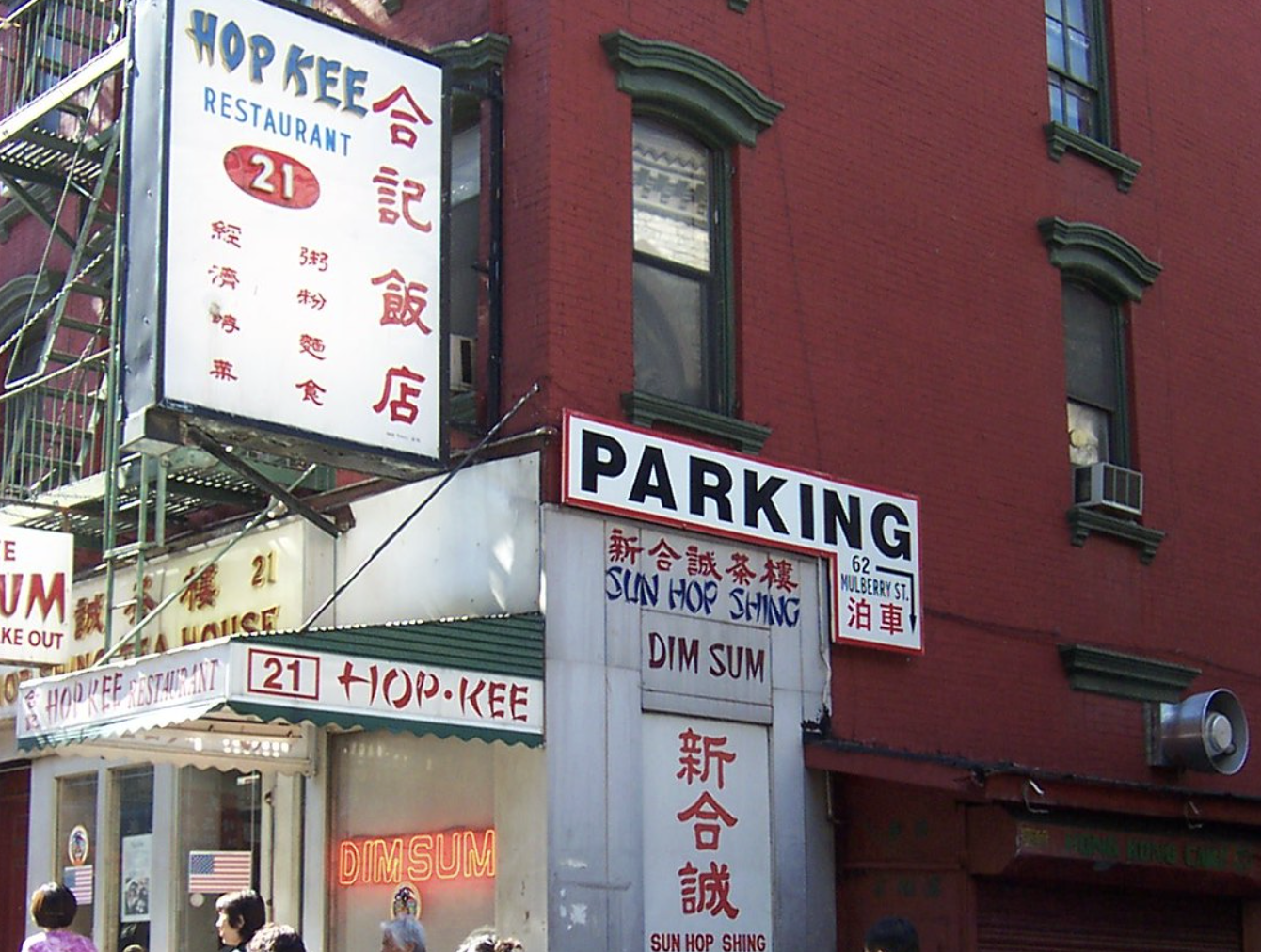
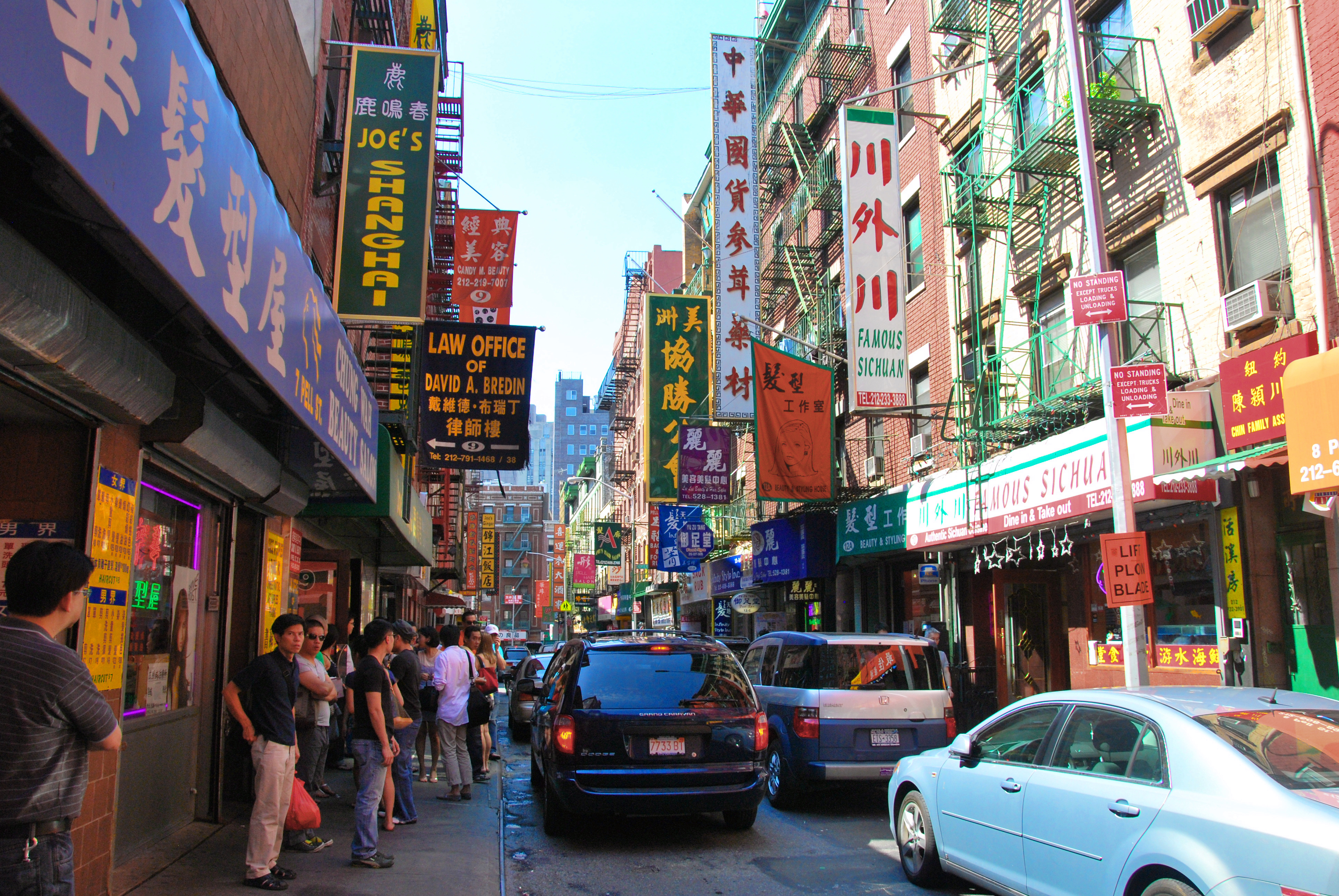
Image via Flickr/Julesp67

“Disappearing Manhattan” – Season 5, Episode 8 (No Reservations) and “New York” – Season 1, Episode 2 (The Layover)

Bourdain’s on-screen visits to Manhattan’s Chinatown are a nostalgic callback to the Chinese cuisine of his childhood. He notes that while many Americans have since discovered that “old-school” Chinese American food isn’t necessarily reflective of the region’s vast culinary diversity, it’s still something that he “can’t help but be sentimental about.”

Fittingly, he heads to Hop Kee, one of the area’s oldest restaurants, for some wonton soup, egg rolls, and fried rice, among other classics. He’s joined by local New Yorker and Chinese chef Chris Cheung who, by contrast, orders Cantonese-style crab, black bean snails, and pan-fried flounder.

Such is reflected in the pair’s discussion of Hop Kee’s rumored secret menu, said to cater only to those acquainted with traditional flavors. Though Bourdain cracks a few self-deprecating jokes about his Americanized palate, Cheung graciously remarks, “We also know that you guys are enjoying your meal just as much as we’re enjoying ours.” Indeed, Manhattan’s Chinatown embodies a history and gastronomic character that need not be understood as strictly American or Chinese.

The origins of the area’s Cantonese community began to really take shape in the 1870s, accelerated in part by Southern Chinese immigrants fleeing racial discrimination on the West Coast. Following the end of the Chinese Exclusion Act in 1943 and the introduction of the Immigration and Nationality Act of 1965, influxes of Fujianese immigrants also began arriving in the late 20th century, bringing with them new flavors and dishes. Like many others, Manhattan’s Chinatown represents an amalgamation of different tastes, and ultimately a testament to the adaptability and diversity of the diaspora.

Flushing, Queens
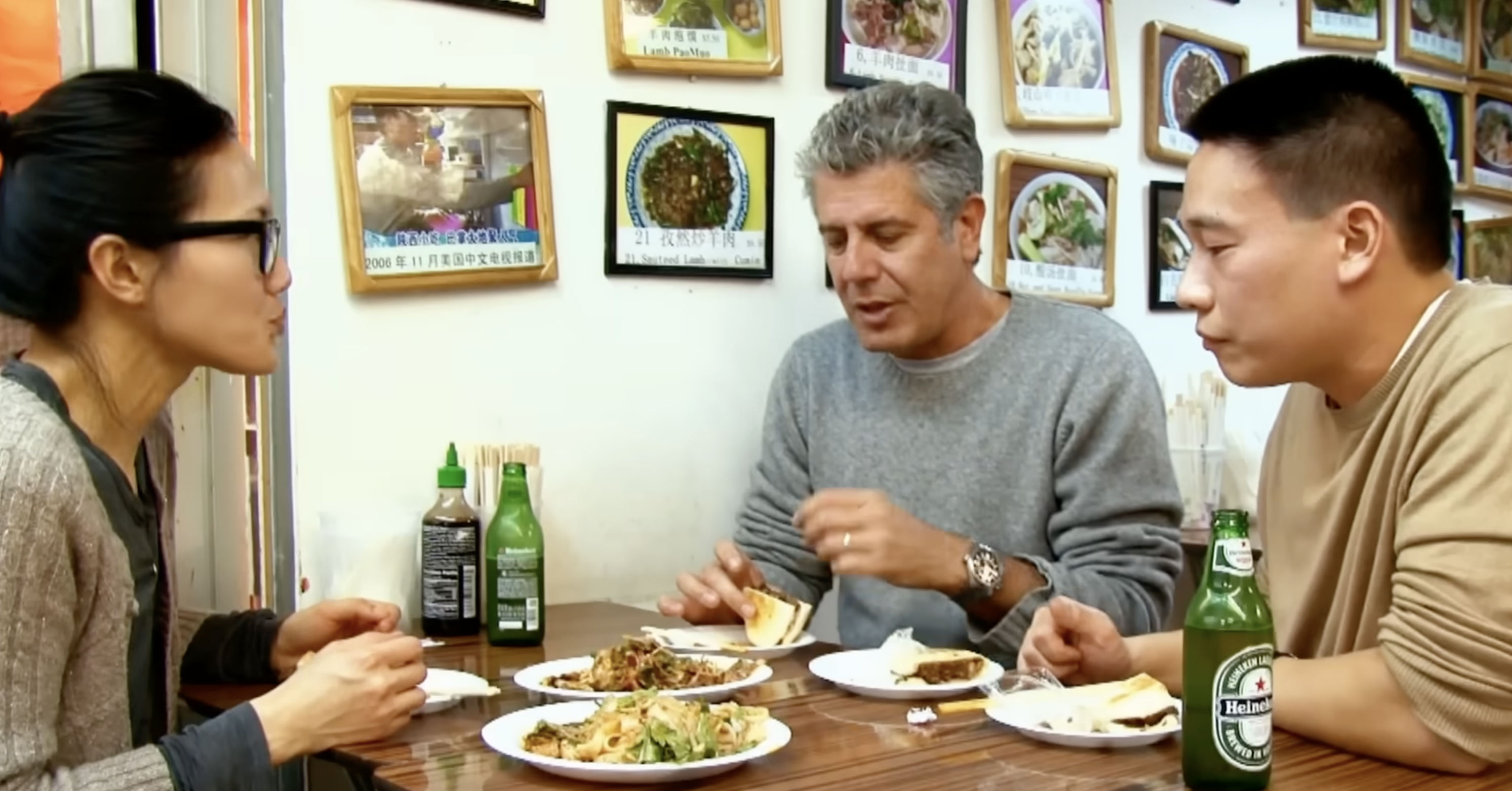
Image via The Travel Channel/Anthony Bourdain: No Reservations

“Outer Boroughs” – Season 5, Episode 19 (No Reservations) and “Queens” – Season 9, Episode 4 (Parts Unknown)

Flushing, Queens, emerged in the 1970s as a major ethnoburb when middle-class professionals arriving from Taiwan established a large Mandarin-speaking community in the area. Today, it’s home to a mix of Chinese communities with varying regional roots, as well as a significant Korean population.

In No Reservations, Bourdain takes viewers to Golden Shopping Mall, where he tastes roasted pig’s feet and head cheese from Tianjin, Xi’an-style lamb burgers (roujiamo), and hand-pulled noodles. Later, in Parts Unknown, Bourdain visits Yu Garden Dumpling House (reportedly now closed) for xiaolongbao, spicy beef and tripe with boiled pig tongue, and lion’s head meatballs.

Binondo, Manila
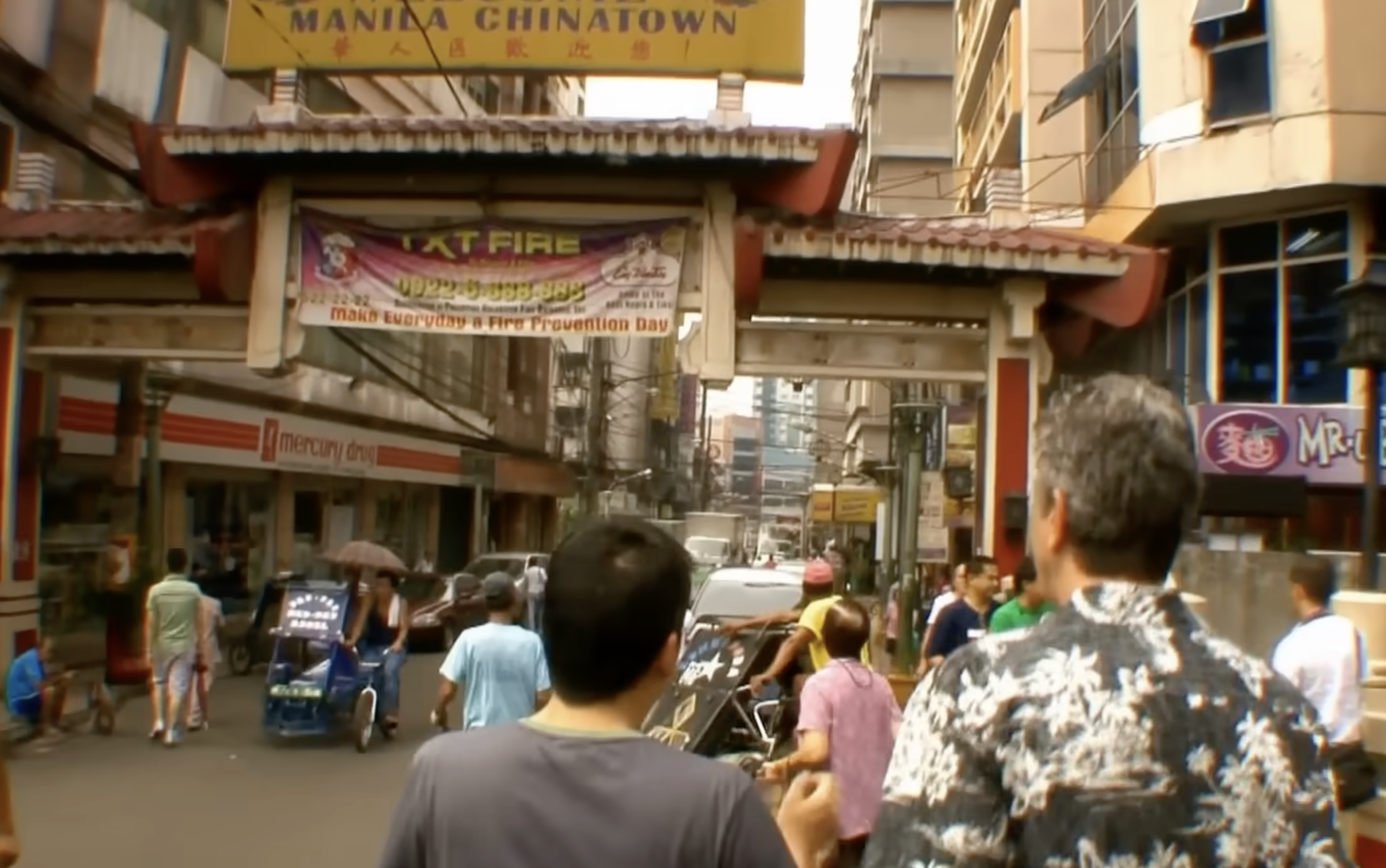
Image via The Travel Channel/Anthony Bourdain: No Reservations

“Philippines” – Season 5, Episode 7 (No Reservations)

Situated within Manila, the Binondo district was established by the Spanish as a Chinese settlement in 1594. Chinese traders in the Philippines, mostly hailing from Fujian province, were largely distrusted — yet also regarded as economically vital — by the colonial administration and had been initially confined to an area referred to as the Parian. Those who had converted to Christianity were permitted to move to Binondo (located across the river from the walled city of Intramuros), which would later become known as the world’s first Chinatown.

However, a turbulent history ensued, including massacres against the Chinese population, the British invasion of Manila, American colonization (during which the U.S. Chinese Exclusion Act was extended to the Philippines), and Japanese wartime occupation.

Today, Binondo remains an important cultural and heritage landmark. In Binondo, Bourdain tasted several dishes that aptly represent the area’s rich history as a place of Chinese and Filipino cultural exchange, including chicken balls, silken tofu with tapioca syrup (taho), and rice noodles (pancit palabok).

Yaowarat Road, Bangkok
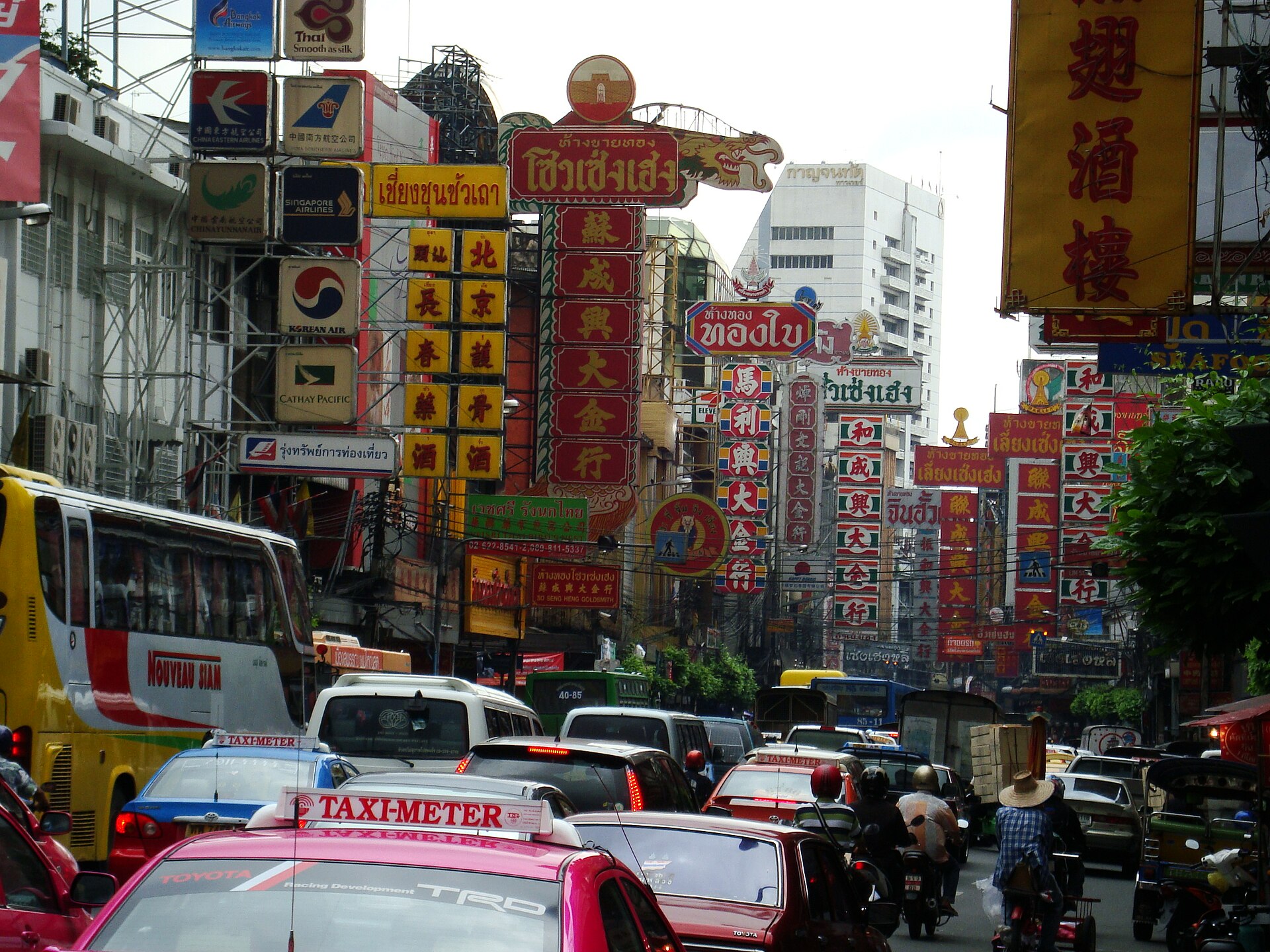
Image via Wikimedia Commons/Globe-trotter

“Thailand” – Season 5, Episode 16 (No Reservations)

Thailand is home to one of the world’s largest Chinese diaspora populations, with many Thai Chinese tracing their origins to Teochew immigrants from Chaoshan. Bangkok’s Chinatown dates back to 1782, when the city was declared the new capital of the Chakri Dynasty and construction on the Grand Palace meant the Chinese community living there had to relocate to Samphanthawong District.

Later, during King Rama V’s reign, Yaowarat Road (colloquially nicknamed “Dragon Road” due to its winding shape) was built to help facilitate trade through the district, becoming a major commercial area and the center of Bangkok’s vibrant Chinatown.

During his visit to Yaowarat Road, Bourdain was accompanied by Thai chef McDang, with the pair discussing the important role of Chinese heritage within Thai culture over a plate of Hong Kong-style roast suckling pig.

Barrio Chino, Havana
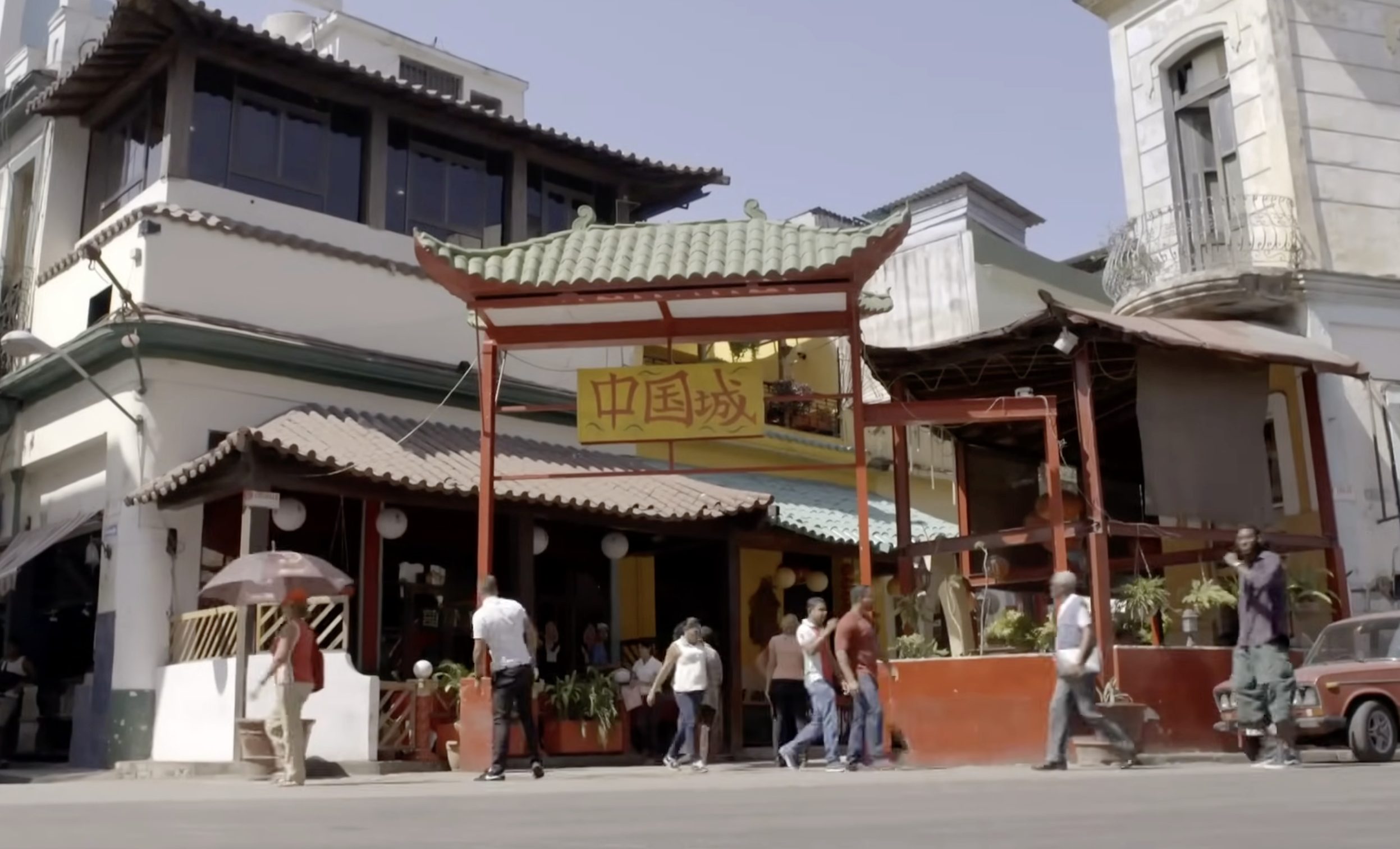
Image via CNN/Anthony Bourdain: Parts Unknown

“Cuba” – Season 6, Episode 1 (Parts Unknown)

Havana’s Barrio Chino (Chinatown) carries the legacy of over 100,000 indentured laborers — mostly from Southern China — who were brought to Cuba in the mid-1800s, at a time when Spanish colonial authorities were under increasing pressure to abolish slavery. The Chinatown in Havana later emerged as one of the largest of its kind in Latin America, as some workers settled there permanently and newer immigrants arrived both directly from China and from California, fleeing anti-Chinese discrimination.

But, as Bourdain discusses during his visit to Havana, the city’s Chinese population and businesses largely cleared out following the Cuban Revolution and nationalization process. While just a handful of ethnic Chinese Cubans remain there today, their traditions live on in the Chinatown area, which still exists as a tourist site. In the Parts Unknown episode, Bourdain stops at a restaurant called Tien Tan for some dumplings and Sichuan chicken that he jokes is “about as Sichuan as, well, I am.”

Chinatowns, Sydney and Melbourne
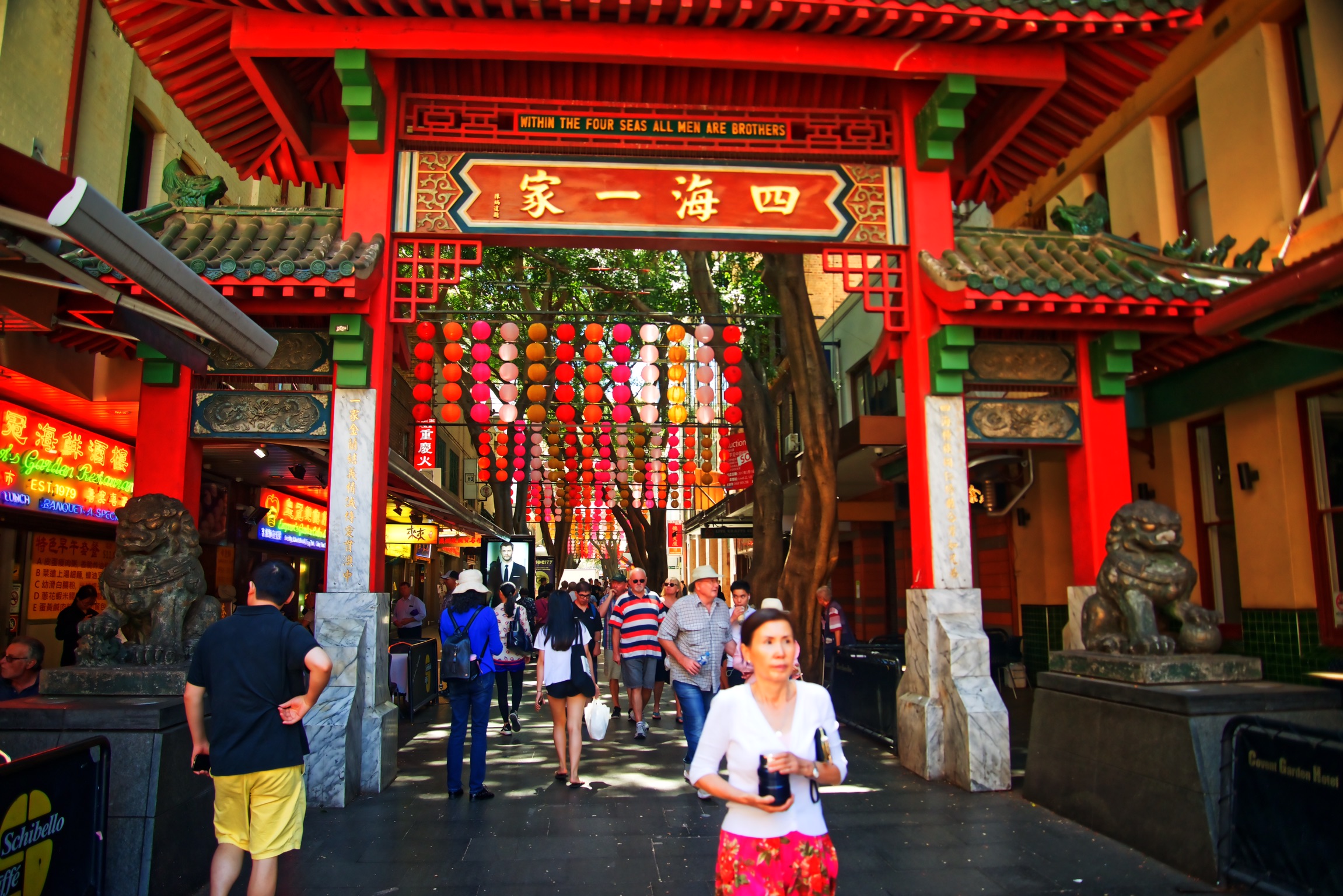
Image via Wikimedia Commons/Chen Hualin

“Australia” – Season 5, Episode 12 (No Reservations) and “Sydney” – Season 9, Episode 2 (No Reservations)

Some of the earliest waves of Chinese immigrants in Australia arrived from Southern China in the mid-1800s during the Australian gold rushes. But even before that, the labor shortage caused by the cessation of British convict transportation to New South Wales in 1840 brought in a number of indentured laborers from Fujian and Guangdong. These emerging Chinese communities went on to form their own enclaves across the country, later becoming known as Chinatowns.

On-screen, Bourdain visited the iconic Golden Century Seafood restaurant (unfortunately now closed) in Sydney’s Haymarket area, as well as Dainty Sichuan in Melbourne’s Chinatown for the “wonderfully sado-masochistic interplay between pleasure and pain” that spicy Sichuanese cuisine is best known for.

In Melbourne, Bourdain and local chef Tony Tan discussed the growth of Australia’s Chinese population following the definitive end of the White Australia policy in 1973, with Bourdain noting:

The fervor with which Melbournians, for instance, have embraced the brave new multicultural world, at least as far as food is concerned, is in direct contrast to an ugly past. But somebody’s clearly figured out that when people from elsewhere, Asia in particular, start settling in your neighborhood, the food can only get better.”


As Bourdain showed, food has always been an important medium for cultural storytelling, with the stories told by Americanized classics and other modern adaptations being no less valuable than those of supposedly more “authentic” alternatives. Chinatowns may now be familiar tourist hotspots, but as many around the world have started shrinking under the threat of gentrification, post-pandemic pressures, and shifting immigration patterns, their stories of resilience and survival are worth telling. Bourdain’s journey through Chinatowns is ultimately a reminder of his staunch advocacy for immigrant stories and of the idea that understanding the world through food begins with respect and curiosity toward our neighbors at home.

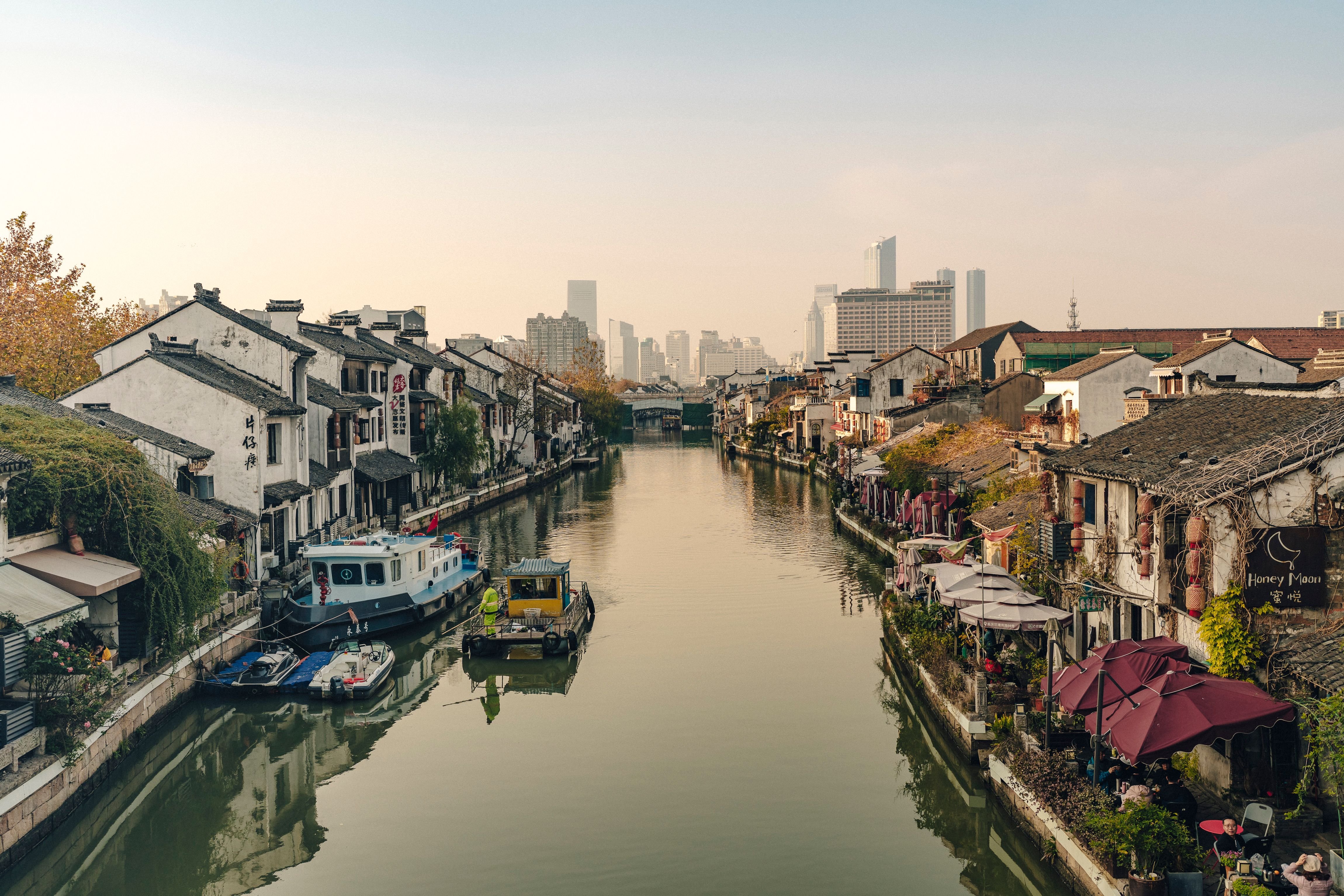
Cover image via Wikimedia Commons/chensiyuan.

NEWSLETTER

Get weekly top picks and exclusive, newsletter only content delivered straight to you inbox.

NEWSLETTER

Get weekly top picks and exclusive, newsletter only content delivered straight to you inbox.

RADII NEWSLETTER

Get weekly top picks and exclusive, newsletter only content delivered straight to you inbox

Feature image of Following Anthony Bourdain’s Footsteps Through Global Chinatowns

Following Anthony Bourdain’s Footsteps Through Global Chinatowns

7 mins read

From old-school comfort food in Manhattan to spicy Sichuan cuisine in Melbourne, Anthony Bourdain celebrated the evolving flavors of global Chinatowns and the stories they tell.

Chinatowns, easily recognizable by their beckoning archways flanked by guardian lions, vermillion pagodas, paper lanterns, and bilingual signage, have long been essential parts of major cities worldwide. Yet some might shudder at the notion of the exaggerated aesthetic of the quintessential Chinatown ever being described as “authentic.”

So-called authenticity has seemingly become a litmus test for foodies and travellers alike in their quest for meaningful experiences—whether it’s finding the best “hidden gems” or getting “off the beaten path.”

But as the late American chef, author, and travel host Anthony Bourdain—someone who seemed to understand authenticity more than most—once said in a Time interview:

The word authentic has become a completely ridiculous, snobbish term. There are so many first- and second-generation immigrants making wonderful mashups of food they grew up eating. On the other hand, I’m pretty sure that every time Guy Fieri puts barbecue pork inside a nori roll, an angel dies.”

This seemed true of Bourdain, who visited numerous Chinatowns across his food and travel shows, from some of the world’s most famous incarnations to some of its least well-known. While some may question the level of authenticity that lies beyond the bright red Chinatown gates (or paifang), walking even the more well-trodden tourist paths with an open mind and heart is what allowed Bourdain to bring awareness to the very real stories of the global Chinese diaspora.

Below is an overview of a few of the Chinatowns Bourdain explored on screen.

Chinatown, San Francisco

Image via The Travel Channel/Anthony Bourdain: The Layover

“San Francisco” – Season 5, Episode 15 (No Reservations) and “San Francisco” – Season 1, Episode 8 (The Layover)

The oldest in the United States and one of the world’s most historically significant, San Francisco’s Chinatown tells a story of both hardship and cultural resilience. Amid the California Gold Rush and construction of the first transcontinental railroad, the mid-1800s saw tens of thousands of Chinese immigrants (mostly from the counties of Guangdong’s Pearl River Delta region, such as Taishan) arrive in San Francisco in pursuit of economic opportunity. But driven to the margins of society by racial discrimination, the nascent Chinese communities had to form their own enclave—later named “Chinatown” by the press.

The following decades were no easier, with violent anti-Chinese riots in 1877 and the Chinese Exclusion Act passing just a few years later. But most devastating for the neighborhood was the catastrophic 1906 San Francisco earthquake and fire. Fighting fiercely against schemes to relocate the then-destroyed Chinatown, San Francisco’s Chinese community realized they had to rebuild strategically.

Most crucially, this meant turning around Chinatown’s stereotyped image as dirty and diseased, and creating something more commercially enticing to Western tourists. Community leaders, such as businessman Look Tin Eli, thus got to work on developing a romanticized, and indeed exoticized, microcosmic vision of Chinese culture. It was then non-Chinese architects who were ultimately commissioned to bring this vision to life, creating the classic Chinatown aesthetic that has become a familiar sight around the world.

Now an iconic destination for great eats and rich cultural history, San Francisco’s Chinatown featured in No Reservations and The Layover. Bourdain took viewers to R&G Lounge for Cantonese-style seafood, as well as Li Po Lounge and Mr. Bing’s for some late-night drinks.

Chinatown, Manhattan

Image via Flickr/Julesp67

“Disappearing Manhattan” – Season 5, Episode 8 (No Reservations) and “New York” – Season 1, Episode 2 (The Layover)

Bourdain’s on-screen visits to Manhattan’s Chinatown are a nostalgic callback to the Chinese cuisine of his childhood. He notes that while many Americans have since discovered that “old-school” Chinese American food isn’t necessarily reflective of the region’s vast culinary diversity, it’s still something that he “can’t help but be sentimental about.”

Fittingly, he heads to Hop Kee, one of the area’s oldest restaurants, for some wonton soup, egg rolls, and fried rice, among other classics. He’s joined by local New Yorker and Chinese chef Chris Cheung who, by contrast, orders Cantonese-style crab, black bean snails, and pan-fried flounder.

Such is reflected in the pair’s discussion of Hop Kee’s rumored secret menu, said to cater only to those acquainted with traditional flavors. Though Bourdain cracks a few self-deprecating jokes about his Americanized palate, Cheung graciously remarks, “We also know that you guys are enjoying your meal just as much as we’re enjoying ours.” Indeed, Manhattan’s Chinatown embodies a history and gastronomic character that need not be understood as strictly American or Chinese.

The origins of the area’s Cantonese community began to really take shape in the 1870s, accelerated in part by Southern Chinese immigrants fleeing racial discrimination on the West Coast. Following the end of the Chinese Exclusion Act in 1943 and the introduction of the Immigration and Nationality Act of 1965, influxes of Fujianese immigrants also began arriving in the late 20th century, bringing with them new flavors and dishes. Like many others, Manhattan’s Chinatown represents an amalgamation of different tastes, and ultimately a testament to the adaptability and diversity of the diaspora.

Flushing, Queens

Image via The Travel Channel/Anthony Bourdain: No Reservations

“Outer Boroughs” – Season 5, Episode 19 (No Reservations) and “Queens” – Season 9, Episode 4 (Parts Unknown)

Flushing, Queens, emerged in the 1970s as a major ethnoburb when middle-class professionals arriving from Taiwan established a large Mandarin-speaking community in the area. Today, it’s home to a mix of Chinese communities with varying regional roots, as well as a significant Korean population.

In No Reservations, Bourdain takes viewers to Golden Shopping Mall, where he tastes roasted pig’s feet and head cheese from Tianjin, Xi’an-style lamb burgers (roujiamo), and hand-pulled noodles. Later, in Parts Unknown, Bourdain visits Yu Garden Dumpling House (reportedly now closed) for xiaolongbao, spicy beef and tripe with boiled pig tongue, and lion’s head meatballs.

Binondo, Manila

Image via The Travel Channel/Anthony Bourdain: No Reservations

“Philippines” – Season 5, Episode 7 (No Reservations)

Situated within Manila, the Binondo district was established by the Spanish as a Chinese settlement in 1594. Chinese traders in the Philippines, mostly hailing from Fujian province, were largely distrusted — yet also regarded as economically vital — by the colonial administration and had been initially confined to an area referred to as the Parian. Those who had converted to Christianity were permitted to move to Binondo (located across the river from the walled city of Intramuros), which would later become known as the world’s first Chinatown.

However, a turbulent history ensued, including massacres against the Chinese population, the British invasion of Manila, American colonization (during which the U.S. Chinese Exclusion Act was extended to the Philippines), and Japanese wartime occupation.

Today, Binondo remains an important cultural and heritage landmark. In Binondo, Bourdain tasted several dishes that aptly represent the area’s rich history as a place of Chinese and Filipino cultural exchange, including chicken balls, silken tofu with tapioca syrup (taho), and rice noodles (pancit palabok).

Yaowarat Road, Bangkok

Image via Wikimedia Commons/Globe-trotter

“Thailand” – Season 5, Episode 16 (No Reservations)

Thailand is home to one of the world’s largest Chinese diaspora populations, with many Thai Chinese tracing their origins to Teochew immigrants from Chaoshan. Bangkok’s Chinatown dates back to 1782, when the city was declared the new capital of the Chakri Dynasty and construction on the Grand Palace meant the Chinese community living there had to relocate to Samphanthawong District.

Later, during King Rama V’s reign, Yaowarat Road (colloquially nicknamed “Dragon Road” due to its winding shape) was built to help facilitate trade through the district, becoming a major commercial area and the center of Bangkok’s vibrant Chinatown.

During his visit to Yaowarat Road, Bourdain was accompanied by Thai chef McDang, with the pair discussing the important role of Chinese heritage within Thai culture over a plate of Hong Kong-style roast suckling pig.

Barrio Chino, Havana

Image via CNN/Anthony Bourdain: Parts Unknown

“Cuba” – Season 6, Episode 1 (Parts Unknown)

Havana’s Barrio Chino (Chinatown) carries the legacy of over 100,000 indentured laborers — mostly from Southern China — who were brought to Cuba in the mid-1800s, at a time when Spanish colonial authorities were under increasing pressure to abolish slavery. The Chinatown in Havana later emerged as one of the largest of its kind in Latin America, as some workers settled there permanently and newer immigrants arrived both directly from China and from California, fleeing anti-Chinese discrimination.

But, as Bourdain discusses during his visit to Havana, the city’s Chinese population and businesses largely cleared out following the Cuban Revolution and nationalization process. While just a handful of ethnic Chinese Cubans remain there today, their traditions live on in the Chinatown area, which still exists as a tourist site. In the Parts Unknown episode, Bourdain stops at a restaurant called Tien Tan for some dumplings and Sichuan chicken that he jokes is “about as Sichuan as, well, I am.”

Chinatowns, Sydney and Melbourne

Image via Wikimedia Commons/Chen Hualin

“Australia” – Season 5, Episode 12 (No Reservations) and “Sydney” – Season 9, Episode 2 (No Reservations)

Some of the earliest waves of Chinese immigrants in Australia arrived from Southern China in the mid-1800s during the Australian gold rushes. But even before that, the labor shortage caused by the cessation of British convict transportation to New South Wales in 1840 brought in a number of indentured laborers from Fujian and Guangdong. These emerging Chinese communities went on to form their own enclaves across the country, later becoming known as Chinatowns.

On-screen, Bourdain visited the iconic Golden Century Seafood restaurant (unfortunately now closed) in Sydney’s Haymarket area, as well as Dainty Sichuan in Melbourne’s Chinatown for the “wonderfully sado-masochistic interplay between pleasure and pain” that spicy Sichuanese cuisine is best known for.

In Melbourne, Bourdain and local chef Tony Tan discussed the growth of Australia’s Chinese population following the definitive end of the White Australia policy in 1973, with Bourdain noting:

The fervor with which Melbournians, for instance, have embraced the brave new multicultural world, at least as far as food is concerned, is in direct contrast to an ugly past. But somebody’s clearly figured out that when people from elsewhere, Asia in particular, start settling in your neighborhood, the food can only get better.”


As Bourdain showed, food has always been an important medium for cultural storytelling, with the stories told by Americanized classics and other modern adaptations being no less valuable than those of supposedly more “authentic” alternatives. Chinatowns may now be familiar tourist hotspots, but as many around the world have started shrinking under the threat of gentrification, post-pandemic pressures, and shifting immigration patterns, their stories of resilience and survival are worth telling. Bourdain’s journey through Chinatowns is ultimately a reminder of his staunch advocacy for immigrant stories and of the idea that understanding the world through food begins with respect and curiosity toward our neighbors at home.

Cover image via Wikimedia Commons/chensiyuan.
NEWSLETTER

Get weekly top picks and exclusive, newsletter only content delivered straight to you inbox.

RADII NEWSLETTER

Get weekly top picks and exclusive, newsletter only content delivered straight to you inbox

RELATED POSTS

Feature image of Following Anthony Bourdain’s Footsteps Through Global Chinatowns

Following Anthony Bourdain’s Footsteps Through Global Chinatowns

7 mins read

7 mins read

Feature image of Following Anthony Bourdain’s Footsteps Through Global Chinatowns
From old-school comfort food in Manhattan to spicy Sichuan cuisine in Melbourne, Anthony Bourdain celebrated the evolving flavors of global Chinatowns and the stories they tell.

Chinatowns, easily recognizable by their beckoning archways flanked by guardian lions, vermillion pagodas, paper lanterns, and bilingual signage, have long been essential parts of major cities worldwide. Yet some might shudder at the notion of the exaggerated aesthetic of the quintessential Chinatown ever being described as “authentic.”

So-called authenticity has seemingly become a litmus test for foodies and travellers alike in their quest for meaningful experiences—whether it’s finding the best “hidden gems” or getting “off the beaten path.”

But as the late American chef, author, and travel host Anthony Bourdain—someone who seemed to understand authenticity more than most—once said in a Time interview:

The word authentic has become a completely ridiculous, snobbish term. There are so many first- and second-generation immigrants making wonderful mashups of food they grew up eating. On the other hand, I’m pretty sure that every time Guy Fieri puts barbecue pork inside a nori roll, an angel dies.”

This seemed true of Bourdain, who visited numerous Chinatowns across his food and travel shows, from some of the world’s most famous incarnations to some of its least well-known. While some may question the level of authenticity that lies beyond the bright red Chinatown gates (or paifang), walking even the more well-trodden tourist paths with an open mind and heart is what allowed Bourdain to bring awareness to the very real stories of the global Chinese diaspora.

Below is an overview of a few of the Chinatowns Bourdain explored on screen.

Chinatown, San Francisco

Image via The Travel Channel/Anthony Bourdain: The Layover

“San Francisco” – Season 5, Episode 15 (No Reservations) and “San Francisco” – Season 1, Episode 8 (The Layover)

The oldest in the United States and one of the world’s most historically significant, San Francisco’s Chinatown tells a story of both hardship and cultural resilience. Amid the California Gold Rush and construction of the first transcontinental railroad, the mid-1800s saw tens of thousands of Chinese immigrants (mostly from the counties of Guangdong’s Pearl River Delta region, such as Taishan) arrive in San Francisco in pursuit of economic opportunity. But driven to the margins of society by racial discrimination, the nascent Chinese communities had to form their own enclave—later named “Chinatown” by the press.

The following decades were no easier, with violent anti-Chinese riots in 1877 and the Chinese Exclusion Act passing just a few years later. But most devastating for the neighborhood was the catastrophic 1906 San Francisco earthquake and fire. Fighting fiercely against schemes to relocate the then-destroyed Chinatown, San Francisco’s Chinese community realized they had to rebuild strategically.

Most crucially, this meant turning around Chinatown’s stereotyped image as dirty and diseased, and creating something more commercially enticing to Western tourists. Community leaders, such as businessman Look Tin Eli, thus got to work on developing a romanticized, and indeed exoticized, microcosmic vision of Chinese culture. It was then non-Chinese architects who were ultimately commissioned to bring this vision to life, creating the classic Chinatown aesthetic that has become a familiar sight around the world.

Now an iconic destination for great eats and rich cultural history, San Francisco’s Chinatown featured in No Reservations and The Layover. Bourdain took viewers to R&G Lounge for Cantonese-style seafood, as well as Li Po Lounge and Mr. Bing’s for some late-night drinks.

Chinatown, Manhattan

Image via Flickr/Julesp67

“Disappearing Manhattan” – Season 5, Episode 8 (No Reservations) and “New York” – Season 1, Episode 2 (The Layover)

Bourdain’s on-screen visits to Manhattan’s Chinatown are a nostalgic callback to the Chinese cuisine of his childhood. He notes that while many Americans have since discovered that “old-school” Chinese American food isn’t necessarily reflective of the region’s vast culinary diversity, it’s still something that he “can’t help but be sentimental about.”

Fittingly, he heads to Hop Kee, one of the area’s oldest restaurants, for some wonton soup, egg rolls, and fried rice, among other classics. He’s joined by local New Yorker and Chinese chef Chris Cheung who, by contrast, orders Cantonese-style crab, black bean snails, and pan-fried flounder.

Such is reflected in the pair’s discussion of Hop Kee’s rumored secret menu, said to cater only to those acquainted with traditional flavors. Though Bourdain cracks a few self-deprecating jokes about his Americanized palate, Cheung graciously remarks, “We also know that you guys are enjoying your meal just as much as we’re enjoying ours.” Indeed, Manhattan’s Chinatown embodies a history and gastronomic character that need not be understood as strictly American or Chinese.

The origins of the area’s Cantonese community began to really take shape in the 1870s, accelerated in part by Southern Chinese immigrants fleeing racial discrimination on the West Coast. Following the end of the Chinese Exclusion Act in 1943 and the introduction of the Immigration and Nationality Act of 1965, influxes of Fujianese immigrants also began arriving in the late 20th century, bringing with them new flavors and dishes. Like many others, Manhattan’s Chinatown represents an amalgamation of different tastes, and ultimately a testament to the adaptability and diversity of the diaspora.

Flushing, Queens

Image via The Travel Channel/Anthony Bourdain: No Reservations

“Outer Boroughs” – Season 5, Episode 19 (No Reservations) and “Queens” – Season 9, Episode 4 (Parts Unknown)

Flushing, Queens, emerged in the 1970s as a major ethnoburb when middle-class professionals arriving from Taiwan established a large Mandarin-speaking community in the area. Today, it’s home to a mix of Chinese communities with varying regional roots, as well as a significant Korean population.

In No Reservations, Bourdain takes viewers to Golden Shopping Mall, where he tastes roasted pig’s feet and head cheese from Tianjin, Xi’an-style lamb burgers (roujiamo), and hand-pulled noodles. Later, in Parts Unknown, Bourdain visits Yu Garden Dumpling House (reportedly now closed) for xiaolongbao, spicy beef and tripe with boiled pig tongue, and lion’s head meatballs.

Binondo, Manila

Image via The Travel Channel/Anthony Bourdain: No Reservations

“Philippines” – Season 5, Episode 7 (No Reservations)

Situated within Manila, the Binondo district was established by the Spanish as a Chinese settlement in 1594. Chinese traders in the Philippines, mostly hailing from Fujian province, were largely distrusted — yet also regarded as economically vital — by the colonial administration and had been initially confined to an area referred to as the Parian. Those who had converted to Christianity were permitted to move to Binondo (located across the river from the walled city of Intramuros), which would later become known as the world’s first Chinatown.

However, a turbulent history ensued, including massacres against the Chinese population, the British invasion of Manila, American colonization (during which the U.S. Chinese Exclusion Act was extended to the Philippines), and Japanese wartime occupation.

Today, Binondo remains an important cultural and heritage landmark. In Binondo, Bourdain tasted several dishes that aptly represent the area’s rich history as a place of Chinese and Filipino cultural exchange, including chicken balls, silken tofu with tapioca syrup (taho), and rice noodles (pancit palabok).

Yaowarat Road, Bangkok

Image via Wikimedia Commons/Globe-trotter

“Thailand” – Season 5, Episode 16 (No Reservations)

Thailand is home to one of the world’s largest Chinese diaspora populations, with many Thai Chinese tracing their origins to Teochew immigrants from Chaoshan. Bangkok’s Chinatown dates back to 1782, when the city was declared the new capital of the Chakri Dynasty and construction on the Grand Palace meant the Chinese community living there had to relocate to Samphanthawong District.

Later, during King Rama V’s reign, Yaowarat Road (colloquially nicknamed “Dragon Road” due to its winding shape) was built to help facilitate trade through the district, becoming a major commercial area and the center of Bangkok’s vibrant Chinatown.

During his visit to Yaowarat Road, Bourdain was accompanied by Thai chef McDang, with the pair discussing the important role of Chinese heritage within Thai culture over a plate of Hong Kong-style roast suckling pig.

Barrio Chino, Havana

Image via CNN/Anthony Bourdain: Parts Unknown

“Cuba” – Season 6, Episode 1 (Parts Unknown)

Havana’s Barrio Chino (Chinatown) carries the legacy of over 100,000 indentured laborers — mostly from Southern China — who were brought to Cuba in the mid-1800s, at a time when Spanish colonial authorities were under increasing pressure to abolish slavery. The Chinatown in Havana later emerged as one of the largest of its kind in Latin America, as some workers settled there permanently and newer immigrants arrived both directly from China and from California, fleeing anti-Chinese discrimination.

But, as Bourdain discusses during his visit to Havana, the city’s Chinese population and businesses largely cleared out following the Cuban Revolution and nationalization process. While just a handful of ethnic Chinese Cubans remain there today, their traditions live on in the Chinatown area, which still exists as a tourist site. In the Parts Unknown episode, Bourdain stops at a restaurant called Tien Tan for some dumplings and Sichuan chicken that he jokes is “about as Sichuan as, well, I am.”

Chinatowns, Sydney and Melbourne

Image via Wikimedia Commons/Chen Hualin

“Australia” – Season 5, Episode 12 (No Reservations) and “Sydney” – Season 9, Episode 2 (No Reservations)

Some of the earliest waves of Chinese immigrants in Australia arrived from Southern China in the mid-1800s during the Australian gold rushes. But even before that, the labor shortage caused by the cessation of British convict transportation to New South Wales in 1840 brought in a number of indentured laborers from Fujian and Guangdong. These emerging Chinese communities went on to form their own enclaves across the country, later becoming known as Chinatowns.

On-screen, Bourdain visited the iconic Golden Century Seafood restaurant (unfortunately now closed) in Sydney’s Haymarket area, as well as Dainty Sichuan in Melbourne’s Chinatown for the “wonderfully sado-masochistic interplay between pleasure and pain” that spicy Sichuanese cuisine is best known for.

In Melbourne, Bourdain and local chef Tony Tan discussed the growth of Australia’s Chinese population following the definitive end of the White Australia policy in 1973, with Bourdain noting:

The fervor with which Melbournians, for instance, have embraced the brave new multicultural world, at least as far as food is concerned, is in direct contrast to an ugly past. But somebody’s clearly figured out that when people from elsewhere, Asia in particular, start settling in your neighborhood, the food can only get better.”


As Bourdain showed, food has always been an important medium for cultural storytelling, with the stories told by Americanized classics and other modern adaptations being no less valuable than those of supposedly more “authentic” alternatives. Chinatowns may now be familiar tourist hotspots, but as many around the world have started shrinking under the threat of gentrification, post-pandemic pressures, and shifting immigration patterns, their stories of resilience and survival are worth telling. Bourdain’s journey through Chinatowns is ultimately a reminder of his staunch advocacy for immigrant stories and of the idea that understanding the world through food begins with respect and curiosity toward our neighbors at home.

Cover image via Wikimedia Commons/chensiyuan.
NEWSLETTER

Get weekly top picks and exclusive, newsletter only content delivered straight to you inbox.

NEWSLETTER

Get weekly top picks and exclusive, newsletter only content delivered straight to you inbox.

RADII NEWSLETTER

Get weekly top picks and exclusive, newsletter only content delivered straight to you inbox

Feature image of Following Anthony Bourdain’s Footsteps Through Global Chinatowns

Following Anthony Bourdain’s Footsteps Through Global Chinatowns

7 mins read

From old-school comfort food in Manhattan to spicy Sichuan cuisine in Melbourne, Anthony Bourdain celebrated the evolving flavors of global Chinatowns and the stories they tell.

Chinatowns, easily recognizable by their beckoning archways flanked by guardian lions, vermillion pagodas, paper lanterns, and bilingual signage, have long been essential parts of major cities worldwide. Yet some might shudder at the notion of the exaggerated aesthetic of the quintessential Chinatown ever being described as “authentic.”

So-called authenticity has seemingly become a litmus test for foodies and travellers alike in their quest for meaningful experiences—whether it’s finding the best “hidden gems” or getting “off the beaten path.”

But as the late American chef, author, and travel host Anthony Bourdain—someone who seemed to understand authenticity more than most—once said in a Time interview:

The word authentic has become a completely ridiculous, snobbish term. There are so many first- and second-generation immigrants making wonderful mashups of food they grew up eating. On the other hand, I’m pretty sure that every time Guy Fieri puts barbecue pork inside a nori roll, an angel dies.”

This seemed true of Bourdain, who visited numerous Chinatowns across his food and travel shows, from some of the world’s most famous incarnations to some of its least well-known. While some may question the level of authenticity that lies beyond the bright red Chinatown gates (or paifang), walking even the more well-trodden tourist paths with an open mind and heart is what allowed Bourdain to bring awareness to the very real stories of the global Chinese diaspora.

Below is an overview of a few of the Chinatowns Bourdain explored on screen.

Chinatown, San Francisco

Image via The Travel Channel/Anthony Bourdain: The Layover

“San Francisco” – Season 5, Episode 15 (No Reservations) and “San Francisco” – Season 1, Episode 8 (The Layover)

The oldest in the United States and one of the world’s most historically significant, San Francisco’s Chinatown tells a story of both hardship and cultural resilience. Amid the California Gold Rush and construction of the first transcontinental railroad, the mid-1800s saw tens of thousands of Chinese immigrants (mostly from the counties of Guangdong’s Pearl River Delta region, such as Taishan) arrive in San Francisco in pursuit of economic opportunity. But driven to the margins of society by racial discrimination, the nascent Chinese communities had to form their own enclave—later named “Chinatown” by the press.

The following decades were no easier, with violent anti-Chinese riots in 1877 and the Chinese Exclusion Act passing just a few years later. But most devastating for the neighborhood was the catastrophic 1906 San Francisco earthquake and fire. Fighting fiercely against schemes to relocate the then-destroyed Chinatown, San Francisco’s Chinese community realized they had to rebuild strategically.

Most crucially, this meant turning around Chinatown’s stereotyped image as dirty and diseased, and creating something more commercially enticing to Western tourists. Community leaders, such as businessman Look Tin Eli, thus got to work on developing a romanticized, and indeed exoticized, microcosmic vision of Chinese culture. It was then non-Chinese architects who were ultimately commissioned to bring this vision to life, creating the classic Chinatown aesthetic that has become a familiar sight around the world.

Now an iconic destination for great eats and rich cultural history, San Francisco’s Chinatown featured in No Reservations and The Layover. Bourdain took viewers to R&G Lounge for Cantonese-style seafood, as well as Li Po Lounge and Mr. Bing’s for some late-night drinks.

Chinatown, Manhattan

Image via Flickr/Julesp67

“Disappearing Manhattan” – Season 5, Episode 8 (No Reservations) and “New York” – Season 1, Episode 2 (The Layover)

Bourdain’s on-screen visits to Manhattan’s Chinatown are a nostalgic callback to the Chinese cuisine of his childhood. He notes that while many Americans have since discovered that “old-school” Chinese American food isn’t necessarily reflective of the region’s vast culinary diversity, it’s still something that he “can’t help but be sentimental about.”

Fittingly, he heads to Hop Kee, one of the area’s oldest restaurants, for some wonton soup, egg rolls, and fried rice, among other classics. He’s joined by local New Yorker and Chinese chef Chris Cheung who, by contrast, orders Cantonese-style crab, black bean snails, and pan-fried flounder.

Such is reflected in the pair’s discussion of Hop Kee’s rumored secret menu, said to cater only to those acquainted with traditional flavors. Though Bourdain cracks a few self-deprecating jokes about his Americanized palate, Cheung graciously remarks, “We also know that you guys are enjoying your meal just as much as we’re enjoying ours.” Indeed, Manhattan’s Chinatown embodies a history and gastronomic character that need not be understood as strictly American or Chinese.

The origins of the area’s Cantonese community began to really take shape in the 1870s, accelerated in part by Southern Chinese immigrants fleeing racial discrimination on the West Coast. Following the end of the Chinese Exclusion Act in 1943 and the introduction of the Immigration and Nationality Act of 1965, influxes of Fujianese immigrants also began arriving in the late 20th century, bringing with them new flavors and dishes. Like many others, Manhattan’s Chinatown represents an amalgamation of different tastes, and ultimately a testament to the adaptability and diversity of the diaspora.

Flushing, Queens

Image via The Travel Channel/Anthony Bourdain: No Reservations

“Outer Boroughs” – Season 5, Episode 19 (No Reservations) and “Queens” – Season 9, Episode 4 (Parts Unknown)

Flushing, Queens, emerged in the 1970s as a major ethnoburb when middle-class professionals arriving from Taiwan established a large Mandarin-speaking community in the area. Today, it’s home to a mix of Chinese communities with varying regional roots, as well as a significant Korean population.

In No Reservations, Bourdain takes viewers to Golden Shopping Mall, where he tastes roasted pig’s feet and head cheese from Tianjin, Xi’an-style lamb burgers (roujiamo), and hand-pulled noodles. Later, in Parts Unknown, Bourdain visits Yu Garden Dumpling House (reportedly now closed) for xiaolongbao, spicy beef and tripe with boiled pig tongue, and lion’s head meatballs.

Binondo, Manila

Image via The Travel Channel/Anthony Bourdain: No Reservations

“Philippines” – Season 5, Episode 7 (No Reservations)

Situated within Manila, the Binondo district was established by the Spanish as a Chinese settlement in 1594. Chinese traders in the Philippines, mostly hailing from Fujian province, were largely distrusted — yet also regarded as economically vital — by the colonial administration and had been initially confined to an area referred to as the Parian. Those who had converted to Christianity were permitted to move to Binondo (located across the river from the walled city of Intramuros), which would later become known as the world’s first Chinatown.

However, a turbulent history ensued, including massacres against the Chinese population, the British invasion of Manila, American colonization (during which the U.S. Chinese Exclusion Act was extended to the Philippines), and Japanese wartime occupation.

Today, Binondo remains an important cultural and heritage landmark. In Binondo, Bourdain tasted several dishes that aptly represent the area’s rich history as a place of Chinese and Filipino cultural exchange, including chicken balls, silken tofu with tapioca syrup (taho), and rice noodles (pancit palabok).

Yaowarat Road, Bangkok

Image via Wikimedia Commons/Globe-trotter

“Thailand” – Season 5, Episode 16 (No Reservations)

Thailand is home to one of the world’s largest Chinese diaspora populations, with many Thai Chinese tracing their origins to Teochew immigrants from Chaoshan. Bangkok’s Chinatown dates back to 1782, when the city was declared the new capital of the Chakri Dynasty and construction on the Grand Palace meant the Chinese community living there had to relocate to Samphanthawong District.

Later, during King Rama V’s reign, Yaowarat Road (colloquially nicknamed “Dragon Road” due to its winding shape) was built to help facilitate trade through the district, becoming a major commercial area and the center of Bangkok’s vibrant Chinatown.

During his visit to Yaowarat Road, Bourdain was accompanied by Thai chef McDang, with the pair discussing the important role of Chinese heritage within Thai culture over a plate of Hong Kong-style roast suckling pig.

Barrio Chino, Havana

Image via CNN/Anthony Bourdain: Parts Unknown

“Cuba” – Season 6, Episode 1 (Parts Unknown)

Havana’s Barrio Chino (Chinatown) carries the legacy of over 100,000 indentured laborers — mostly from Southern China — who were brought to Cuba in the mid-1800s, at a time when Spanish colonial authorities were under increasing pressure to abolish slavery. The Chinatown in Havana later emerged as one of the largest of its kind in Latin America, as some workers settled there permanently and newer immigrants arrived both directly from China and from California, fleeing anti-Chinese discrimination.

But, as Bourdain discusses during his visit to Havana, the city’s Chinese population and businesses largely cleared out following the Cuban Revolution and nationalization process. While just a handful of ethnic Chinese Cubans remain there today, their traditions live on in the Chinatown area, which still exists as a tourist site. In the Parts Unknown episode, Bourdain stops at a restaurant called Tien Tan for some dumplings and Sichuan chicken that he jokes is “about as Sichuan as, well, I am.”

Chinatowns, Sydney and Melbourne

Image via Wikimedia Commons/Chen Hualin

“Australia” – Season 5, Episode 12 (No Reservations) and “Sydney” – Season 9, Episode 2 (No Reservations)

Some of the earliest waves of Chinese immigrants in Australia arrived from Southern China in the mid-1800s during the Australian gold rushes. But even before that, the labor shortage caused by the cessation of British convict transportation to New South Wales in 1840 brought in a number of indentured laborers from Fujian and Guangdong. These emerging Chinese communities went on to form their own enclaves across the country, later becoming known as Chinatowns.

On-screen, Bourdain visited the iconic Golden Century Seafood restaurant (unfortunately now closed) in Sydney’s Haymarket area, as well as Dainty Sichuan in Melbourne’s Chinatown for the “wonderfully sado-masochistic interplay between pleasure and pain” that spicy Sichuanese cuisine is best known for.

In Melbourne, Bourdain and local chef Tony Tan discussed the growth of Australia’s Chinese population following the definitive end of the White Australia policy in 1973, with Bourdain noting:

The fervor with which Melbournians, for instance, have embraced the brave new multicultural world, at least as far as food is concerned, is in direct contrast to an ugly past. But somebody’s clearly figured out that when people from elsewhere, Asia in particular, start settling in your neighborhood, the food can only get better.”


As Bourdain showed, food has always been an important medium for cultural storytelling, with the stories told by Americanized classics and other modern adaptations being no less valuable than those of supposedly more “authentic” alternatives. Chinatowns may now be familiar tourist hotspots, but as many around the world have started shrinking under the threat of gentrification, post-pandemic pressures, and shifting immigration patterns, their stories of resilience and survival are worth telling. Bourdain’s journey through Chinatowns is ultimately a reminder of his staunch advocacy for immigrant stories and of the idea that understanding the world through food begins with respect and curiosity toward our neighbors at home.

Cover image via Wikimedia Commons/chensiyuan.
NEWSLETTER

Get weekly top picks and exclusive, newsletter only content delivered straight to you inbox.

RADII NEWSLETTER

Get weekly top picks and exclusive, newsletter only content delivered straight to you inbox

RADII newsletter pop up visual

NEWSLETTER​

Get weekly top picks and exclusive, newsletter only content delivered straight to you inbox

RADII Newsletter Pop Up small banner

NEWSLETTER

Get weekly top picks and exclusive, newsletter only content delivered straight to you inbox.

Link Copied!

Share

Feature image of Following Anthony Bourdain’s Footsteps Through Global Chinatowns

Following Anthony Bourdain’s Footsteps Through Global Chinatowns

From old-school comfort food in Manhattan to spicy Sichuan cuisine in Melbourne, Anthony Bourdain celebrated the evolving flavors of global Chinatowns and the stories they tell.

PULSE

Tap into the latest in music, fashion, art, design, entertainment, pop culture, celebrity news, and contemporary culture

DISCOVER

Embark on a journey through food, travel, wellness, heritage, traditional culture, and lifestyle

STYLE

An insider’s look at the intersection of fashion, art, and design

FEAST

Titillate your taste buds with coverage of the best food and drink trends from China and beyond.

FUTURE

Explore the cutting edge in tech, AI, gadgets, gaming, and innovative tech-related products

FEAST

Titillate your taste buds with coverage of the best food and drink trends from China and beyond

STYLE

An insider’s look at the intersection of fashion, art, and design

PULSE

Unpacking Chinese youth culture through coverage of nightlife, film, sports, celebrities, and the hottest new music