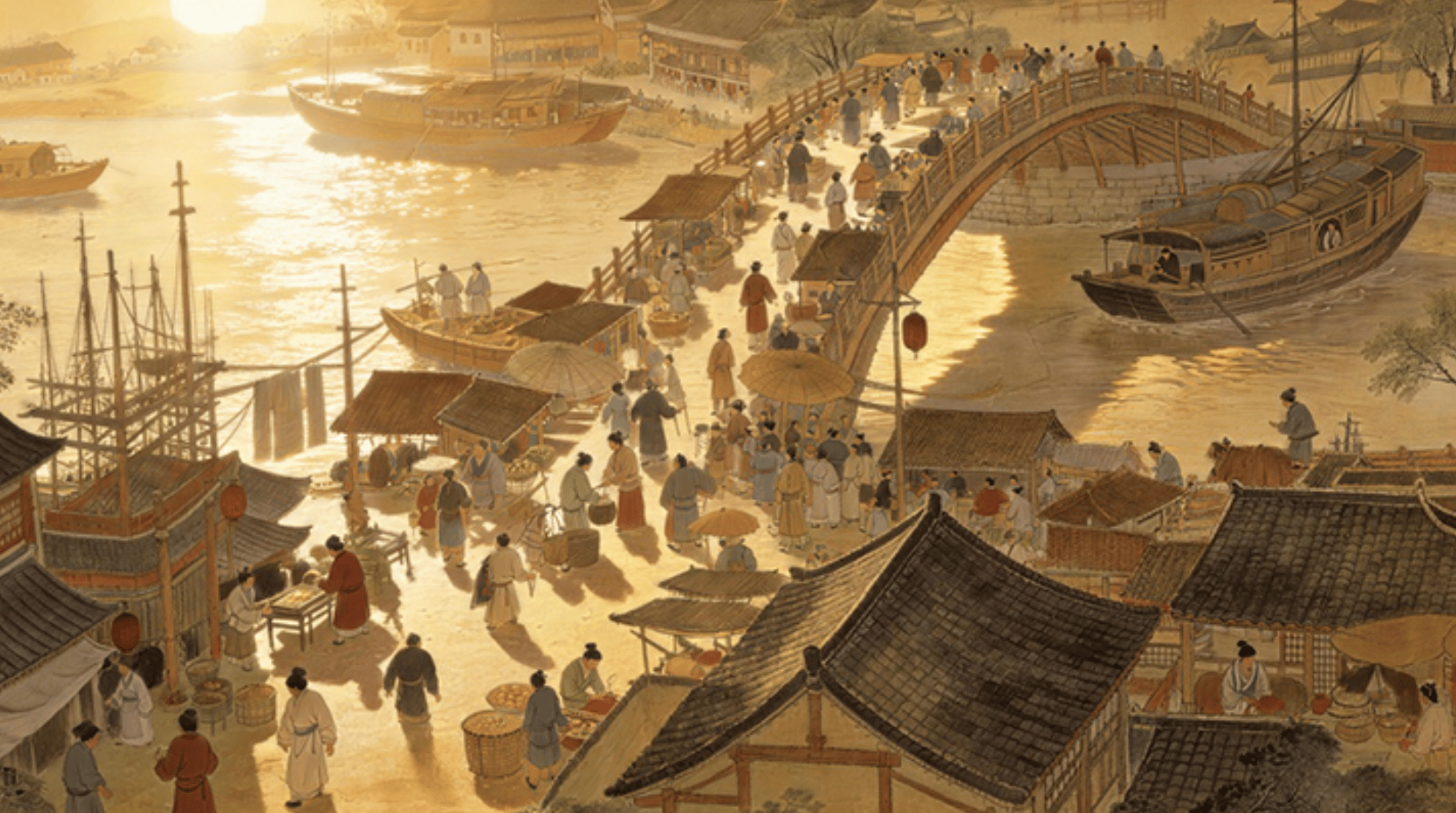
Have you ever wondered what it would be like to stroll through the streets of Song Dynasty China?
Lasting from 960 to 1279, the Song Dynasty is often regarded as one of the most prosperous and culturally vibrant periods in Chinese history. International trade flourished, along with economic and political stability; as a result, the arts and everyday life thrived. Three of the Four Great Inventions of ancient China—the magnetic compass, movable-type printing, and gunpowder—also emerged during this period. As a commoner, if you had to choose one historical period to time travel to in ancient China, the Song Dynasty is definitely a solid pick.
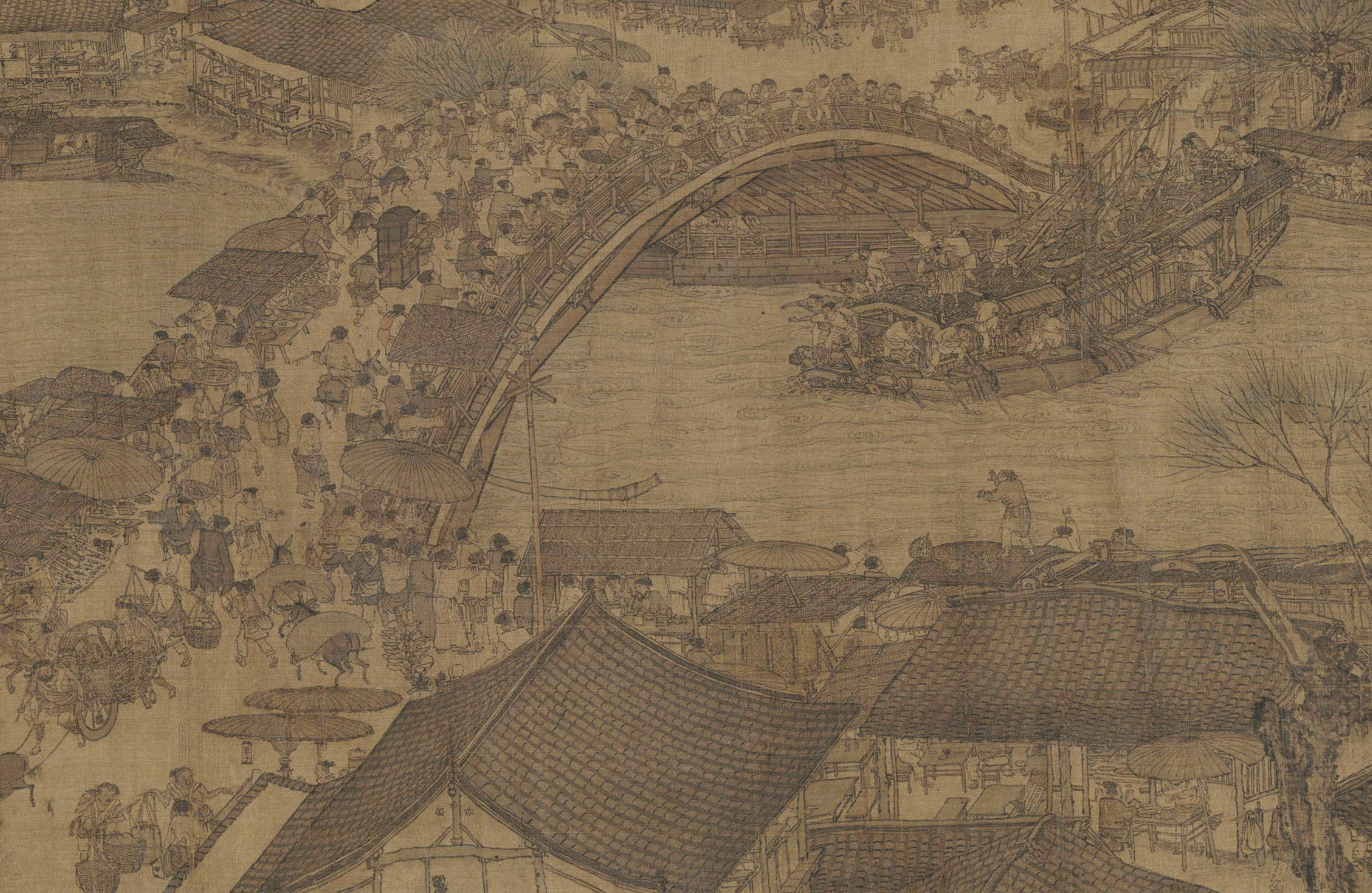
The best-known painting in China also came from this period. Painted by Zhang Zeduan, Along the River During the Qingming Festival (清明上河图) is—to put its significance in perhaps overly Western-centric terms—often described as China’s Mona Lisa. Almost everyone in China knows of the painting, and its influence has inspired countless artistic recreations and adaptations over the centuries.
But unlike the Mona Lisa, which many who see it in person note is unexpectedly small, Along the River During the Qingming Festival is a scroll that stretches for more than 5 meters (16 feet). But its length is only one reason why the painting is so impressive.
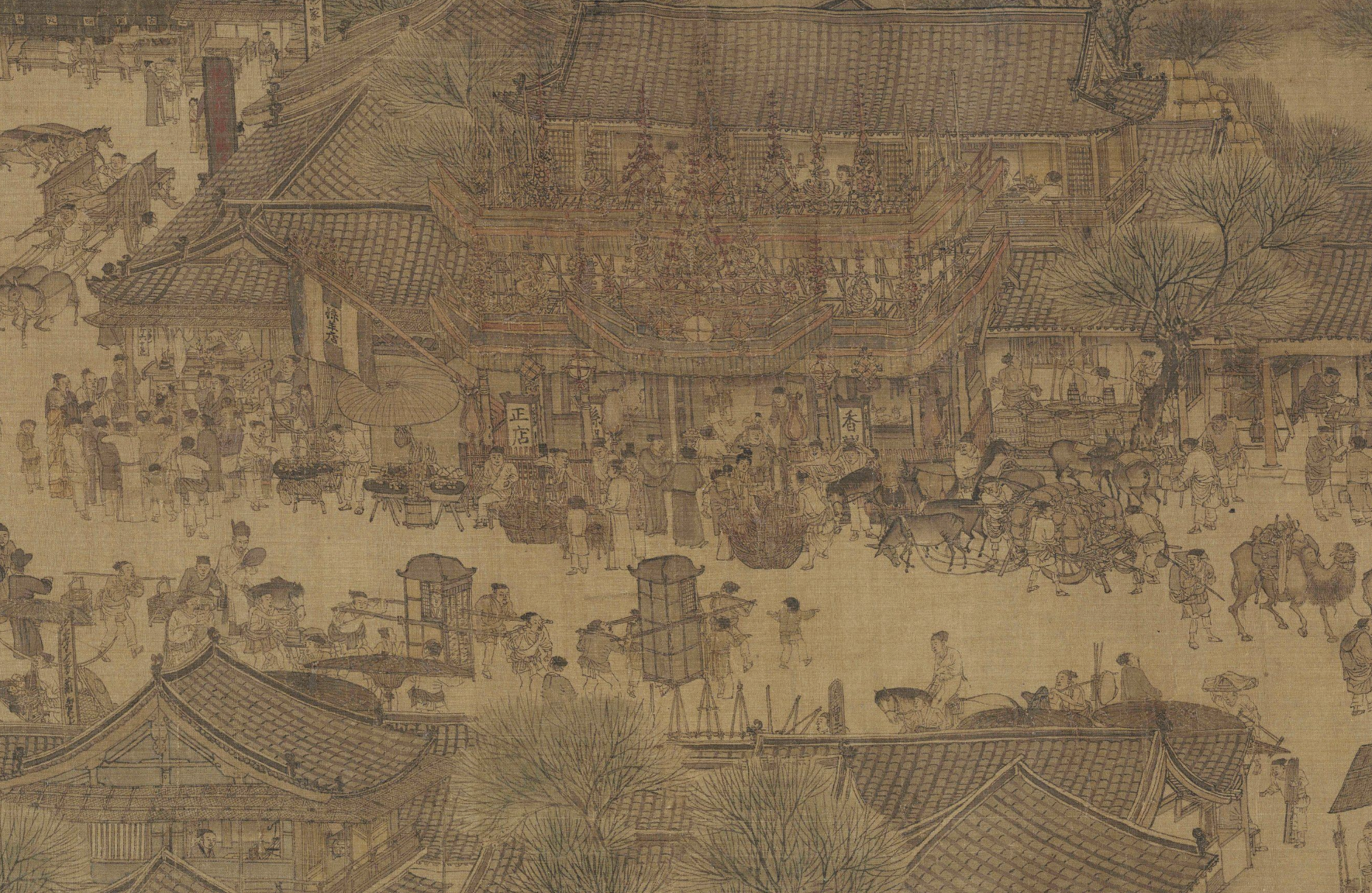
The painting depicts life in Bianjing, the capital of the Northern Song Dynasty. True to its name, the painting unfolds along a river, beginning with humble farmhouses and boats before gradually transitioning into all kinds of shops and markets inside the city walls. It offers an astonishingly detailed snapshot of life during the Qingming Festival, a time when people honored their ancestors and swept their tombs. The scenery is filled with people from all walks of life: merchants, farmers, scholars, government officials, and even petty criminals. The artist also provides an incredibly accurate look at the clothing, architecture, and social customs of Song Dynasty China.
Along the River During the Qingming Festival brings to life the Chinese idiom 车水马龙 (chē shuǐ mǎ lóng), which describes a busy street filled with constant movement. It translates to something like “carriages flowing like water and horses moving like dragons.” In Zhang’s depiction, the streets are crowded but not chaotic or messy; all 800-plus characters are living their own lives and have somewhere to be. This may be the key reason why the painting remains so endlessly fascinating, nearly a millennium after its creation.
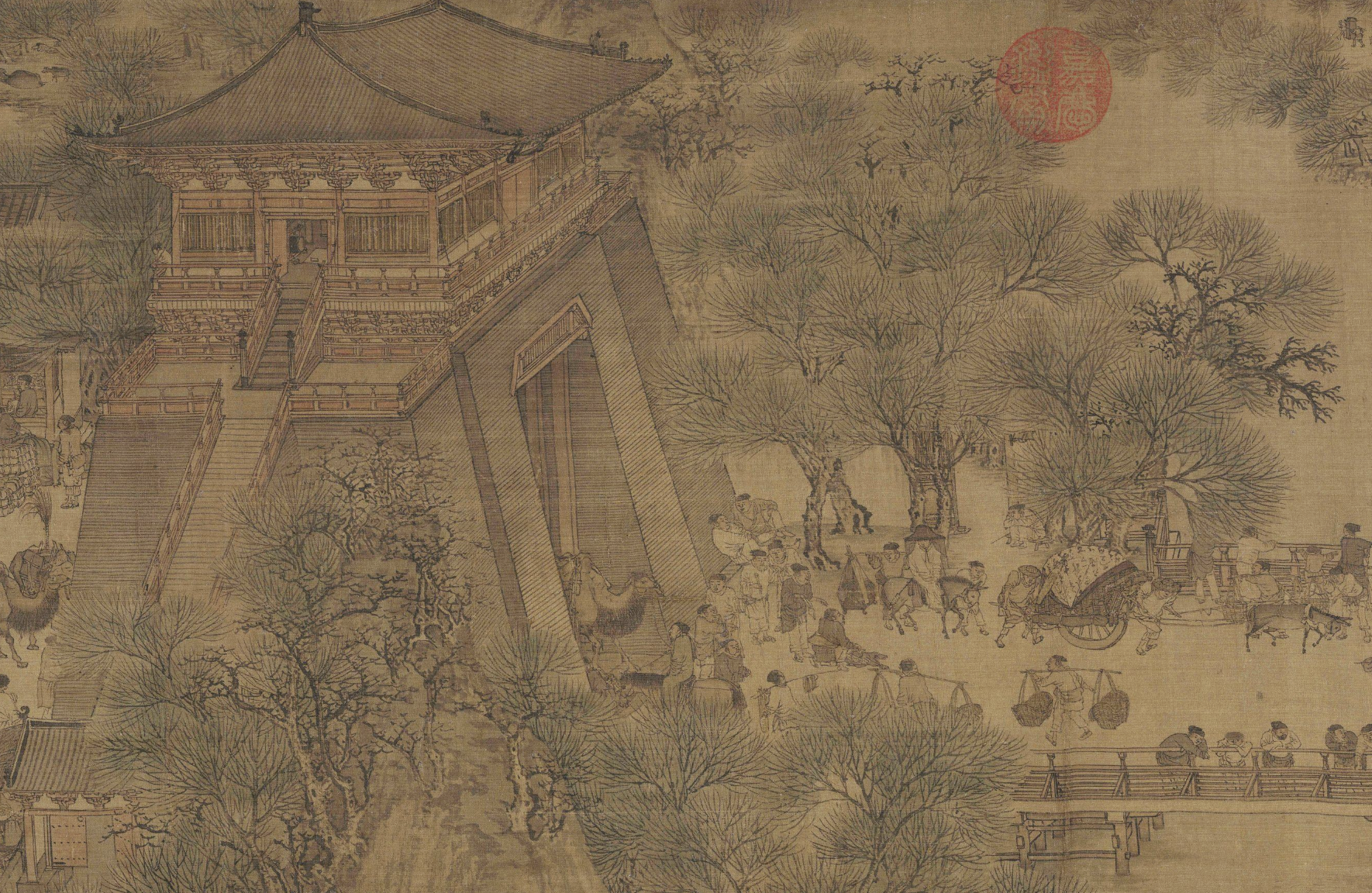
Over the centuries, Along the River During the Qingming Festival has been lost, stolen, and entered private collections before finally being transferred to the Palace Museum in Beijing in 1976. In 2005, the entire painting was displayed for the first time in an exhibition. It was displayed again in 2025 to commemorate the Palace Museum’s 100th anniversary, alongside numerous artifacts that had rarely been publicly exhibited. Reports said some visitors waited as long as six hours just to see the painting.
It’s unlikely that the masterpiece will be displayed again anytime soon. But if you want to experience the painting in its entirety, you fortunately have another option.
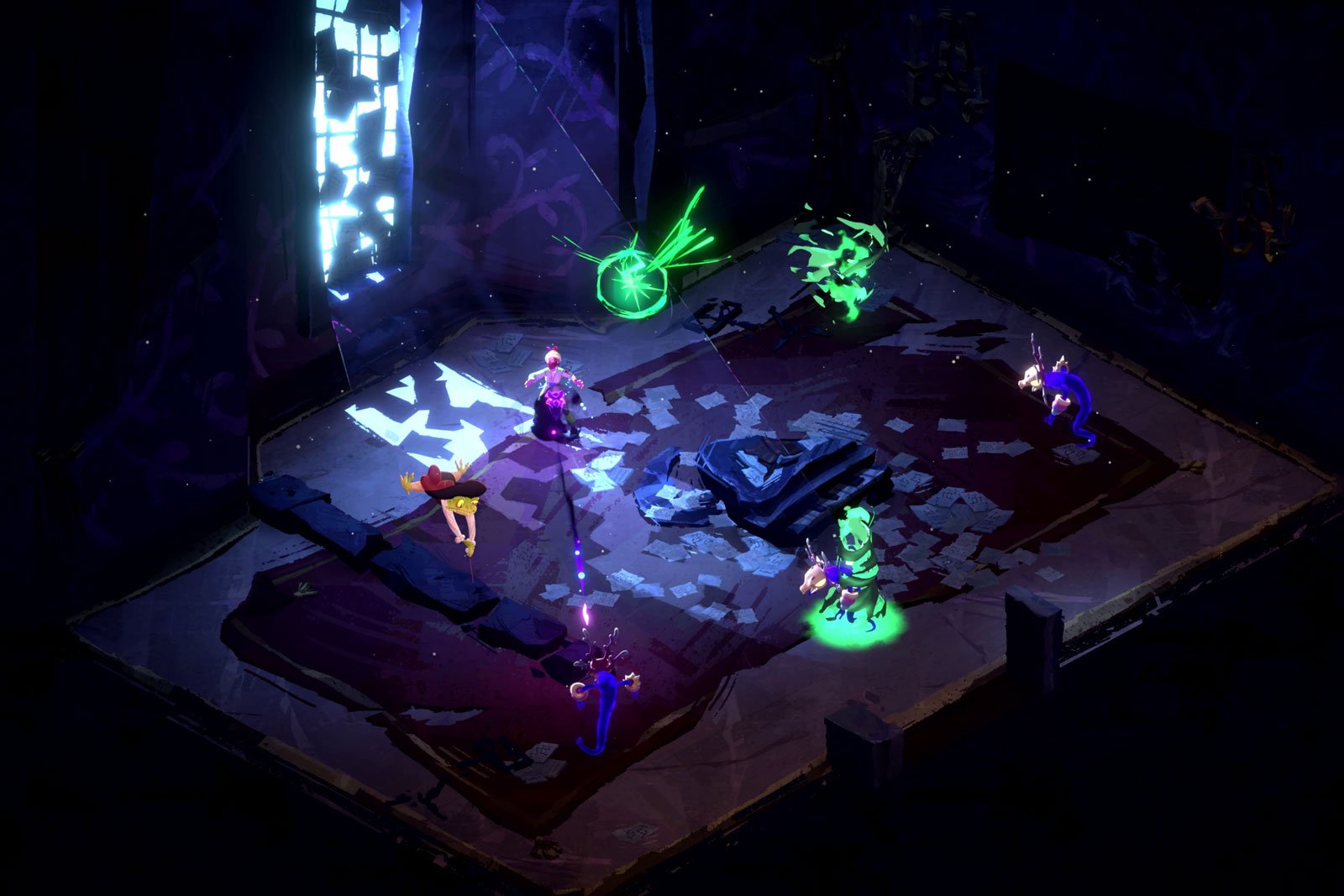
Chen Yuqi, a professor from the University of Hong Kong who specializes in the intersection of history, humanities, and artificial intelligence, has brought the world of Along the River During the Qingming Festival to life through an AI simulation game called Into the Painting. The game allows players to enter the Song Dynasty as one of the commoners depicted in the painting.
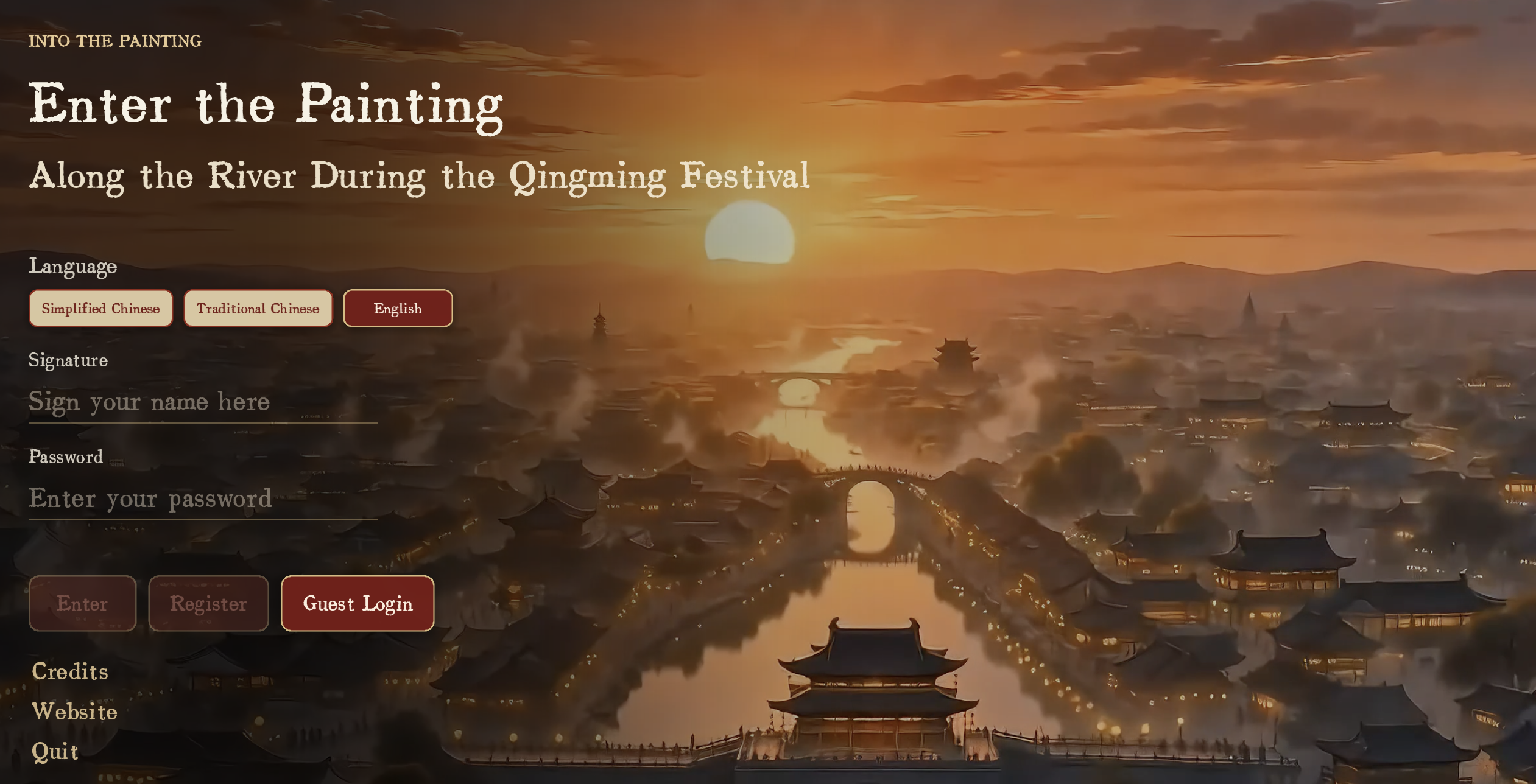
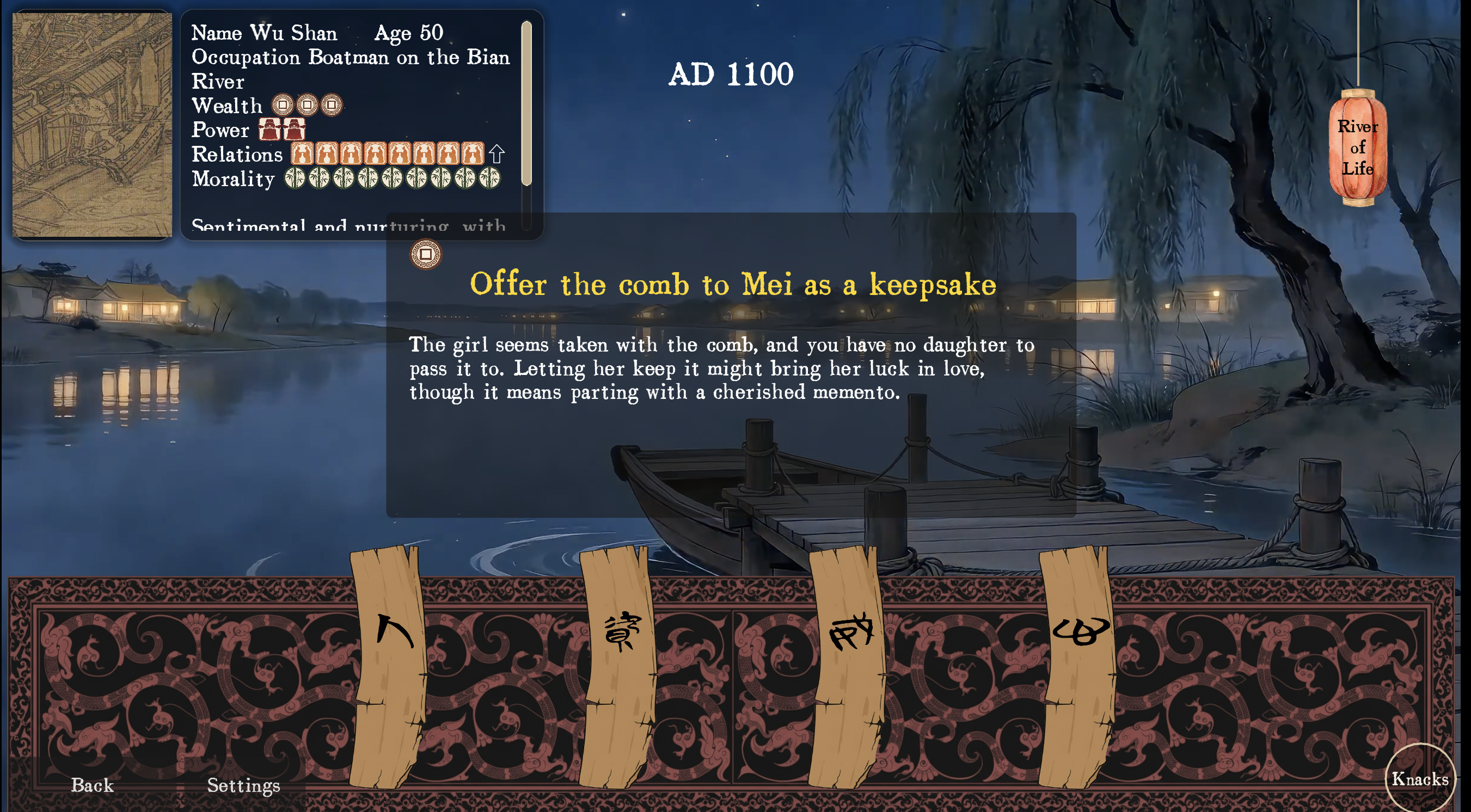
To do so, Chen developed a Framework for the Interactive Simulation of History (FISH), an AI model that helped her tag more than 200 characters in the painting. She named each character and gave them historically accurate backgrounds, while the AI gives the narrative simulation virtually endless possibilities. In my own playthrough, I took on the role of Wu Shan, a kind-hearted and mild-mannered boatman.
In classic role-playing game fashion, you get to choose the dialogue and actions in each scenario, leading to different outcomes. As Wu Shan, I interacted with my passengers and navigated the drama unfolding along the riverside. I met scholars, street urchins, and even a local gang extorting me for docking fees. Each decision you make impacts a health bar that tracks wealth, power, morality, and relationships.
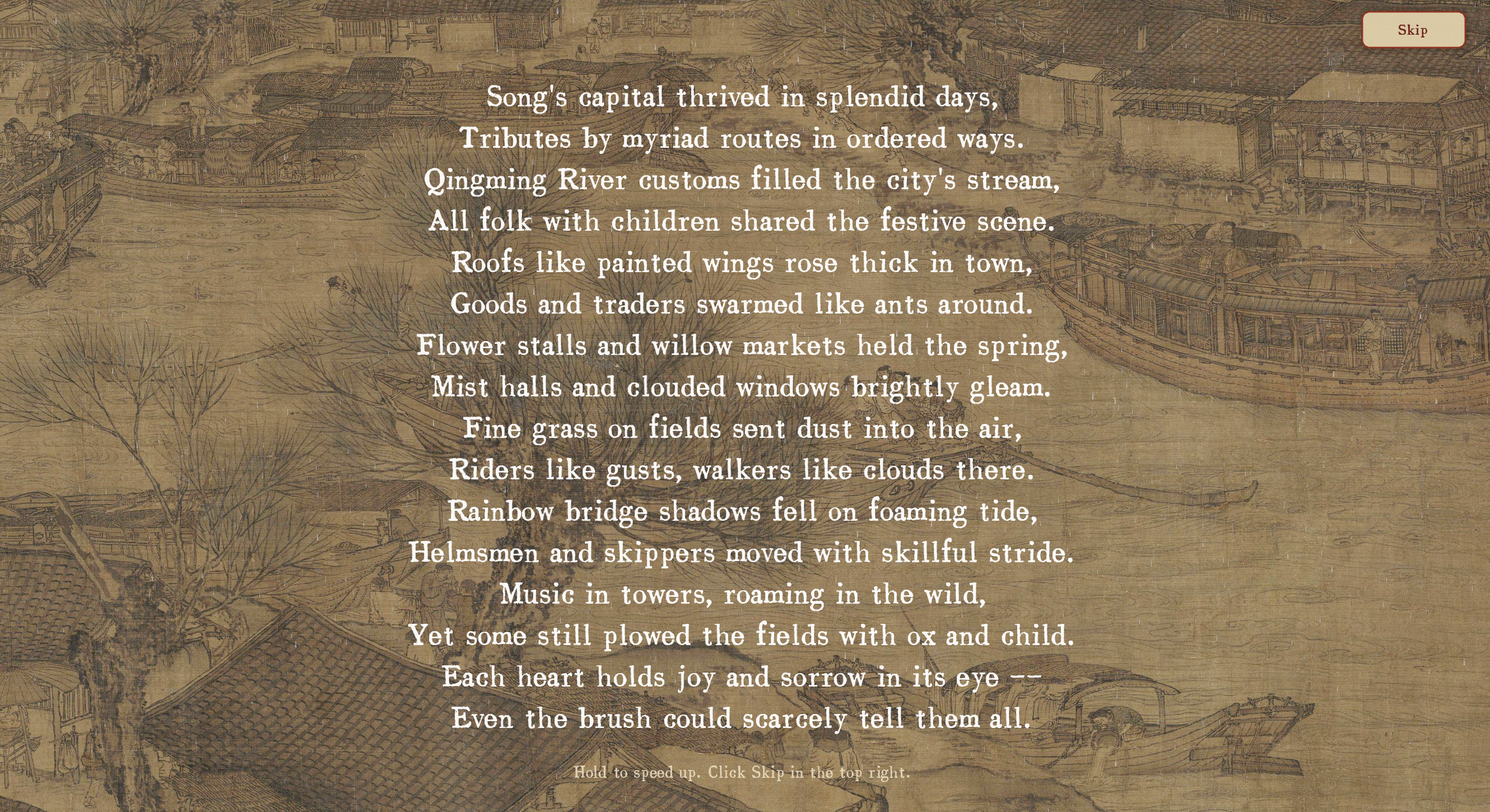
Chen’s game has captured the painter’s narrative way of depicting landscape, inviting Zhang’s figures into a playable world and letting them tell their own stories. Like a historical version of Where’s Waldo?, the painting is packed with personality. There are wedding processions, government tax collectors, and fortune tellers, alongside all kinds of activity you’d expect in a city. Chen says, “Too much of history is about elites; 99% of individuals are absent from history. They aren’t the main characters, but they are important.”
Professor Chen continues to expand Into the Painting, with more characters and storylines being added. Currently available in both English and Chinese, the simulation offers a new way to experience Zhang’s painting. You may have to wait a few more years to see the original masterpiece in person, but in the meantime, you can always step inside it digitally right here: fishframe.net/itp.html
Cover image via FISH.