
Feature image of Why Are SpongeBob’s Background Cast The Main Characters in China?

Why Are SpongeBob’s Background Cast The Main Characters in China?

2 mins read

2 mins read

Feature image of Why Are SpongeBob’s Background Cast The Main Characters in China?
As China’s youth embrace “ugly-cute” aesthetics, SpongeBob’s once-overlooked background fish are swimming into the spotlight as unlikely icons of everyday burnout

Known for their drooping eyelids, frowns, and general air of unamusement, the over 300 background characters (also known as “incidentals”) from the cartoon show SpongeBob SquarePants have suddenly risen to main character status in China this summer. Referred to on Chinese social media as “Bikini Bottom residents” (比奇堡居民), the ostensible unremarkability of these fish is exactly what has propelled them to viral fame.

While the trend gained major attention this summer, the IP was actually introduced in 2025 when Chinese toy retailer POP MART launched a collection of bag charms featuring various SpongeBob background characters. The same year, Luckin Coffee also came out with a SpongeBob-themed set of cups and collectible merch. The characters in both collaborations were depicted with their classic unenthused expressions and given names like “Working Fish” (打工鱼) and “Hardworking Fish” (努力鱼).
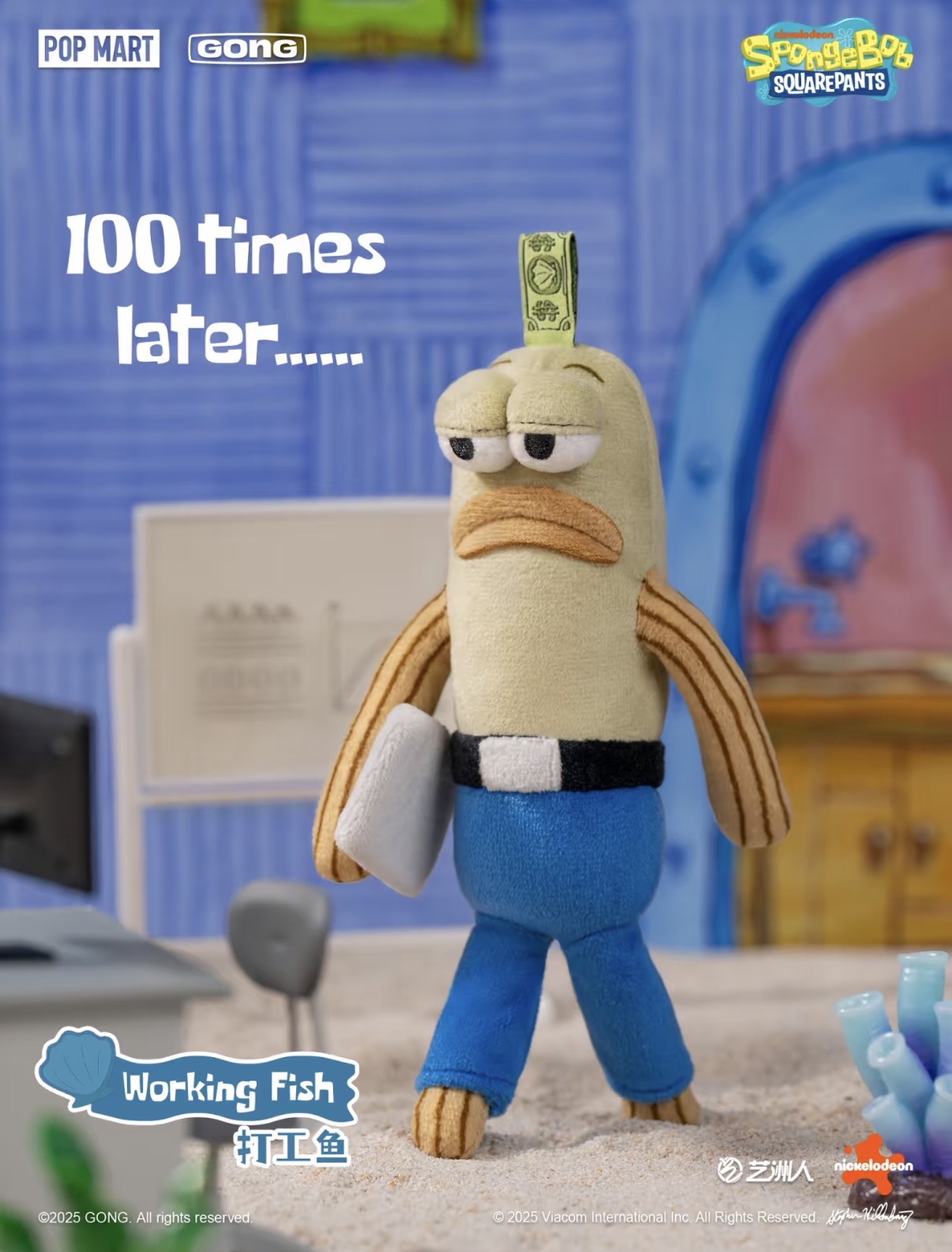
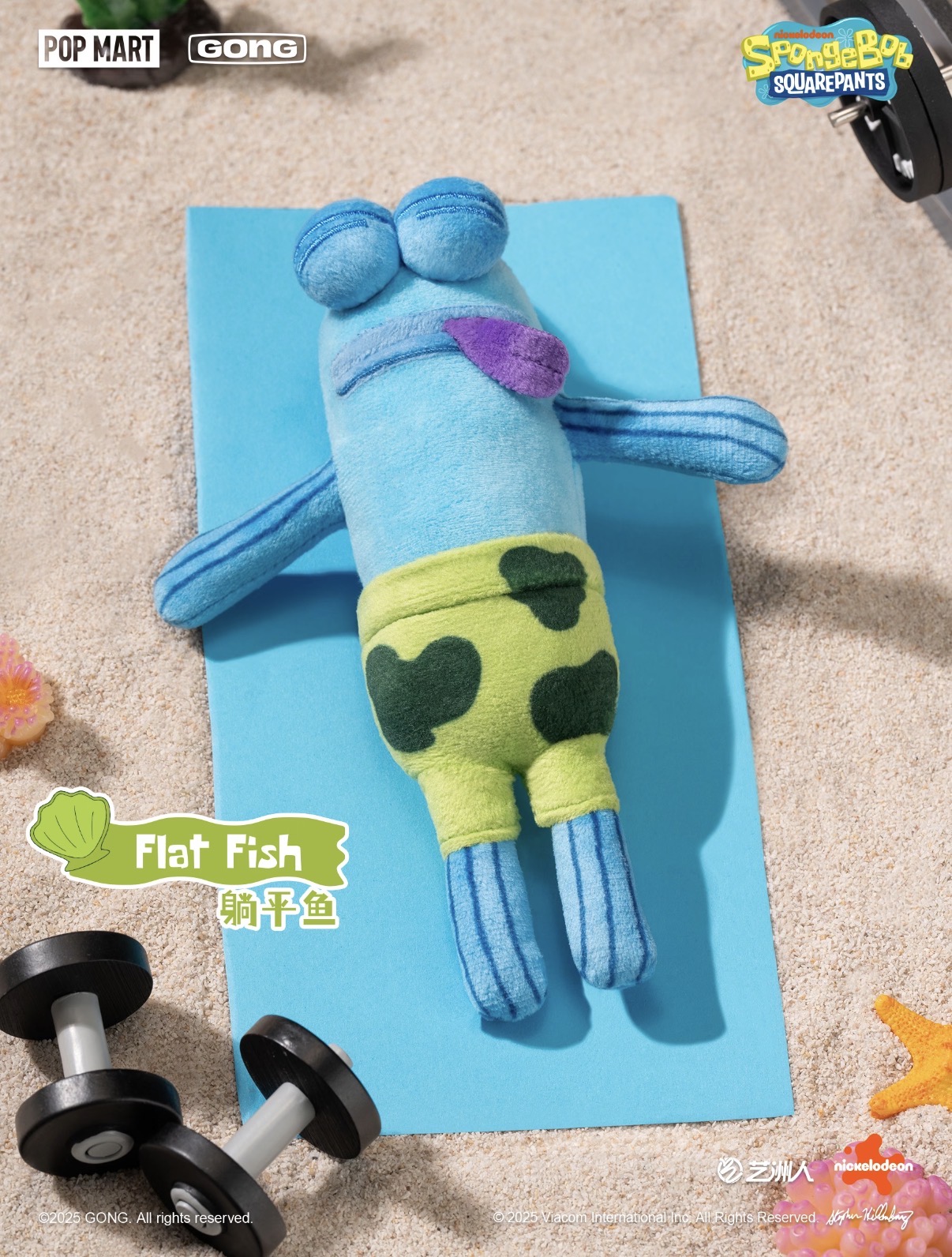
Amid the rising demand for products that provide “emotional value” (情绪价值), the “ugly-cute” aesthetic (丑萌) has garnered popularity among Chinese youth as a rejection of strict aesthetic standards and “appearance anxiety” (容貌焦虑). Thus, these blank-faced fish—who seem more focused on their mundane, everyday issues than perfecting their appearance or stealing the show—have been embraced by netizens for their hilarious working-class relatability.
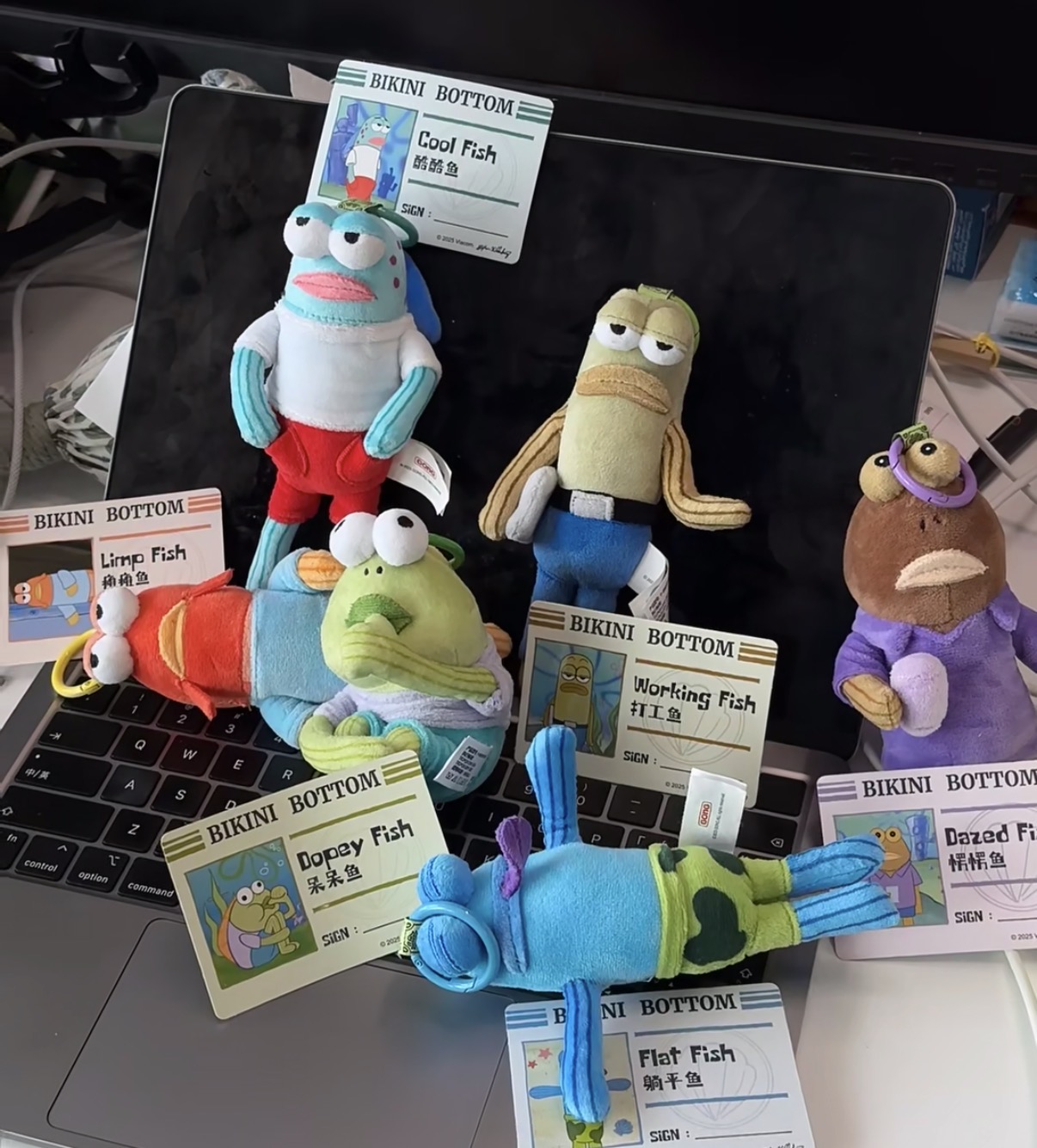
RADII highlights the Spongebob Squarepants "Bikini Bottom Residents" (比奇堡居民) exhibition in Shanghai this summer.
Image via Xiaohongshu.

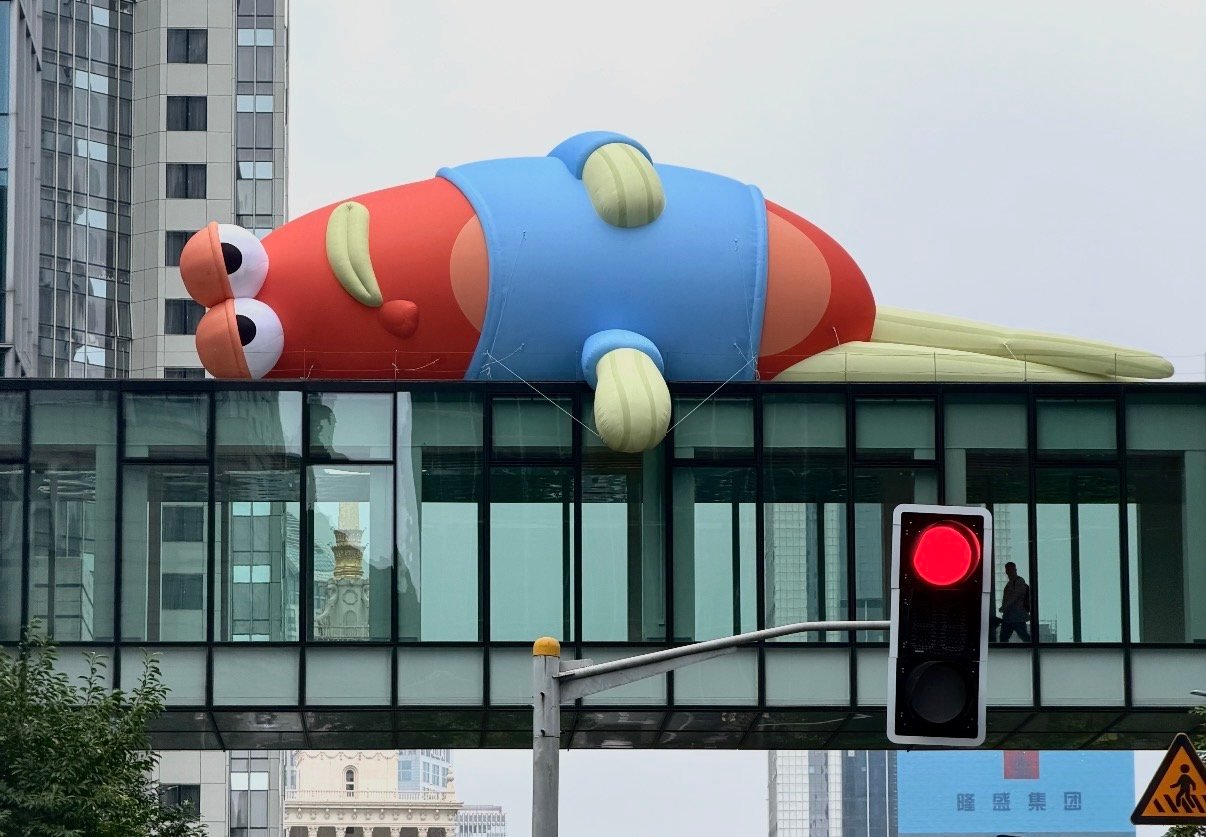
Fast forward to June 2026, and these background fish have ironically managed to swim into the spotlight on the streets of Shanghai as part of a large-scale exhibition at the Jing’an Kerry Centre and Pudong Kerry Parkside. The “Fish-tastic Summer” exhibition, held through to August 31, features 73 “Bikini Bottom residents” in various states and locations, from mopping the floor to begrudgingly commuting to work, and even lazily stretching 17 meters across the center’s skybridge out of sheer exhaustion.


The Jing’an Kerry Centre exhibition site, targeting office workers in the surrounding Nanjing West Road Commercial District, has also been titled “Summer Slacker Town” or 夏日摸鱼镇. Fittingly, the term 摸鱼 itself literally means to “touch fish,” but also refers to “slacking off” in modern slang (derived from the Chinese idiom “fishing in muddy waters”).
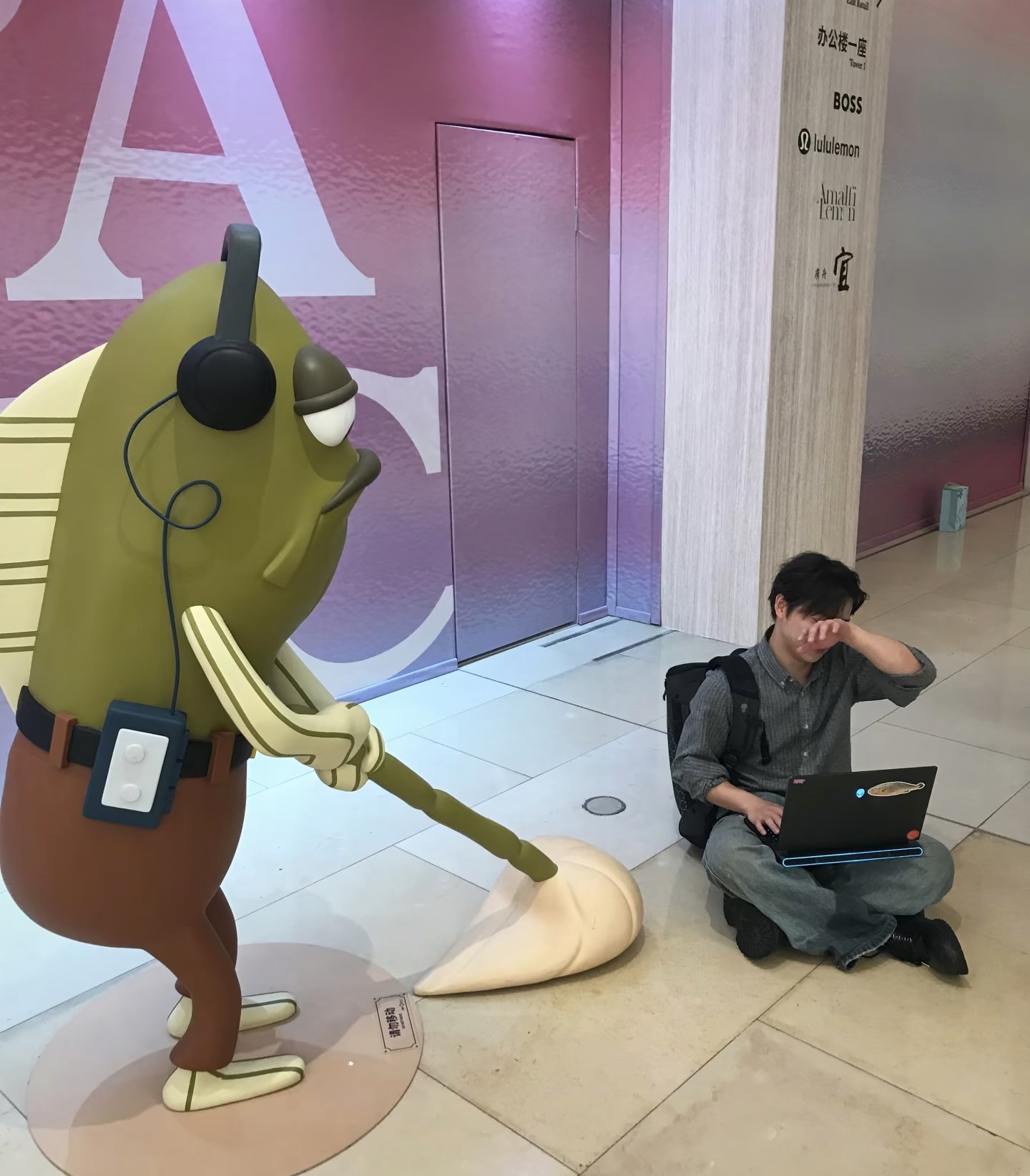
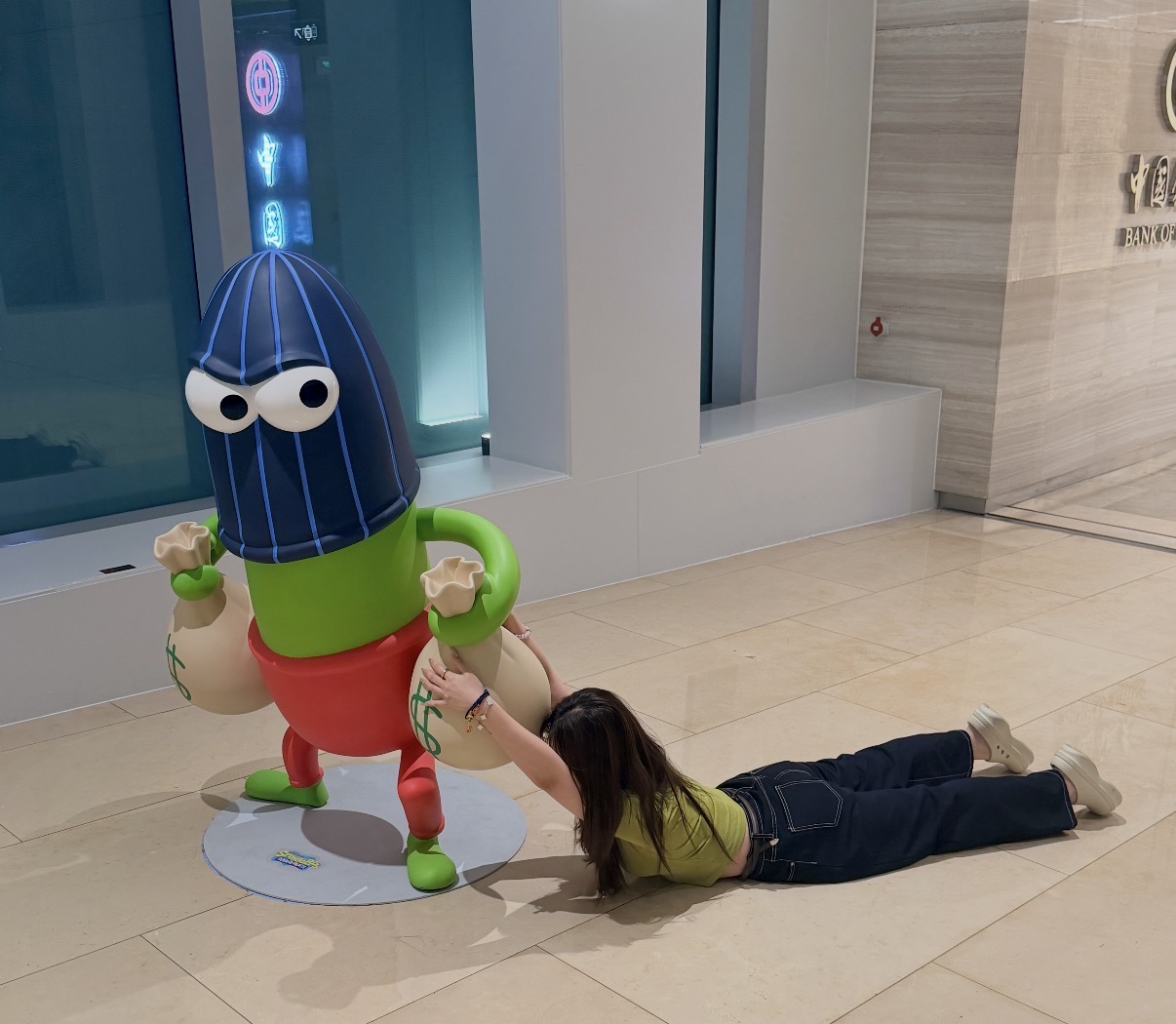
So, while these fish may have “NPC energy,” it certainly hasn’t stopped them from becoming the unlikely stars of Chinese social media this summer. In fact, it’s seeing these ugly-cute fish authentically represent the ordinary struggles of everyday life that has transformed them into the lovable, emotional support figures of young office workers across China.

Cover image via Xiaohongshu/上海静安嘉里中心JAKC.

NEWSLETTER

Get weekly top picks and exclusive, newsletter only content delivered straight to you inbox.

NEWSLETTER

Get weekly top picks and exclusive, newsletter only content delivered straight to you inbox.

RADII NEWSLETTER

Get weekly top picks and exclusive, newsletter only content delivered straight to you inbox

Feature image of Why Are SpongeBob’s Background Cast The Main Characters in China?

Why Are SpongeBob’s Background Cast The Main Characters in China?

2 mins read

As China’s youth embrace “ugly-cute” aesthetics, SpongeBob’s once-overlooked background fish are swimming into the spotlight as unlikely icons of everyday burnout

Known for their drooping eyelids, frowns, and general air of unamusement, the over 300 background characters (also known as “incidentals”) from the cartoon show SpongeBob SquarePants have suddenly risen to main character status in China this summer. Referred to on Chinese social media as “Bikini Bottom residents” (比奇堡居民), the ostensible unremarkability of these fish is exactly what has propelled them to viral fame.

While the trend gained major attention this summer, the IP was actually introduced in 2025 when Chinese toy retailer POP MART launched a collection of bag charms featuring various SpongeBob background characters. The same year, Luckin Coffee also came out with a SpongeBob-themed set of cups and collectible merch. The characters in both collaborations were depicted with their classic unenthused expressions and given names like “Working Fish” (打工鱼) and “Hardworking Fish” (努力鱼).

Amid the rising demand for products that provide “emotional value” (情绪价值), the “ugly-cute” aesthetic (丑萌) has garnered popularity among Chinese youth as a rejection of strict aesthetic standards and “appearance anxiety” (容貌焦虑). Thus, these blank-faced fish—who seem more focused on their mundane, everyday issues than perfecting their appearance or stealing the show—have been embraced by netizens for their hilarious working-class relatability.

RADII highlights the Spongebob Squarepants "Bikini Bottom Residents" (比奇堡居民) exhibition in Shanghai this summer.
Image via Xiaohongshu.

Fast forward to June 2026, and these background fish have ironically managed to swim into the spotlight on the streets of Shanghai as part of a large-scale exhibition at the Jing’an Kerry Centre and Pudong Kerry Parkside. The “Fish-tastic Summer” exhibition, held through to August 31, features 73 “Bikini Bottom residents” in various states and locations, from mopping the floor to begrudgingly commuting to work, and even lazily stretching 17 meters across the center’s skybridge out of sheer exhaustion.

The Jing’an Kerry Centre exhibition site, targeting office workers in the surrounding Nanjing West Road Commercial District, has also been titled “Summer Slacker Town” or 夏日摸鱼镇. Fittingly, the term 摸鱼 itself literally means to “touch fish,” but also refers to “slacking off” in modern slang (derived from the Chinese idiom “fishing in muddy waters”).

So, while these fish may have “NPC energy,” it certainly hasn’t stopped them from becoming the unlikely stars of Chinese social media this summer. In fact, it’s seeing these ugly-cute fish authentically represent the ordinary struggles of everyday life that has transformed them into the lovable, emotional support figures of young office workers across China.

Cover image via Xiaohongshu/上海静安嘉里中心JAKC.
NEWSLETTER

Get weekly top picks and exclusive, newsletter only content delivered straight to you inbox.

RADII NEWSLETTER

Get weekly top picks and exclusive, newsletter only content delivered straight to you inbox

RELATED POSTS

Feature image of Why Are SpongeBob’s Background Cast The Main Characters in China?

Why Are SpongeBob’s Background Cast The Main Characters in China?

2 mins read

2 mins read

Feature image of Why Are SpongeBob’s Background Cast The Main Characters in China?
As China’s youth embrace “ugly-cute” aesthetics, SpongeBob’s once-overlooked background fish are swimming into the spotlight as unlikely icons of everyday burnout

Known for their drooping eyelids, frowns, and general air of unamusement, the over 300 background characters (also known as “incidentals”) from the cartoon show SpongeBob SquarePants have suddenly risen to main character status in China this summer. Referred to on Chinese social media as “Bikini Bottom residents” (比奇堡居民), the ostensible unremarkability of these fish is exactly what has propelled them to viral fame.

While the trend gained major attention this summer, the IP was actually introduced in 2025 when Chinese toy retailer POP MART launched a collection of bag charms featuring various SpongeBob background characters. The same year, Luckin Coffee also came out with a SpongeBob-themed set of cups and collectible merch. The characters in both collaborations were depicted with their classic unenthused expressions and given names like “Working Fish” (打工鱼) and “Hardworking Fish” (努力鱼).

Amid the rising demand for products that provide “emotional value” (情绪价值), the “ugly-cute” aesthetic (丑萌) has garnered popularity among Chinese youth as a rejection of strict aesthetic standards and “appearance anxiety” (容貌焦虑). Thus, these blank-faced fish—who seem more focused on their mundane, everyday issues than perfecting their appearance or stealing the show—have been embraced by netizens for their hilarious working-class relatability.

RADII highlights the Spongebob Squarepants "Bikini Bottom Residents" (比奇堡居民) exhibition in Shanghai this summer.
Image via Xiaohongshu.

Fast forward to June 2026, and these background fish have ironically managed to swim into the spotlight on the streets of Shanghai as part of a large-scale exhibition at the Jing’an Kerry Centre and Pudong Kerry Parkside. The “Fish-tastic Summer” exhibition, held through to August 31, features 73 “Bikini Bottom residents” in various states and locations, from mopping the floor to begrudgingly commuting to work, and even lazily stretching 17 meters across the center’s skybridge out of sheer exhaustion.

The Jing’an Kerry Centre exhibition site, targeting office workers in the surrounding Nanjing West Road Commercial District, has also been titled “Summer Slacker Town” or 夏日摸鱼镇. Fittingly, the term 摸鱼 itself literally means to “touch fish,” but also refers to “slacking off” in modern slang (derived from the Chinese idiom “fishing in muddy waters”).

So, while these fish may have “NPC energy,” it certainly hasn’t stopped them from becoming the unlikely stars of Chinese social media this summer. In fact, it’s seeing these ugly-cute fish authentically represent the ordinary struggles of everyday life that has transformed them into the lovable, emotional support figures of young office workers across China.

Cover image via Xiaohongshu/上海静安嘉里中心JAKC.
NEWSLETTER

Get weekly top picks and exclusive, newsletter only content delivered straight to you inbox.

NEWSLETTER

Get weekly top picks and exclusive, newsletter only content delivered straight to you inbox.

RADII NEWSLETTER

Get weekly top picks and exclusive, newsletter only content delivered straight to you inbox

Feature image of Why Are SpongeBob’s Background Cast The Main Characters in China?

Why Are SpongeBob’s Background Cast The Main Characters in China?

2 mins read

As China’s youth embrace “ugly-cute” aesthetics, SpongeBob’s once-overlooked background fish are swimming into the spotlight as unlikely icons of everyday burnout

Known for their drooping eyelids, frowns, and general air of unamusement, the over 300 background characters (also known as “incidentals”) from the cartoon show SpongeBob SquarePants have suddenly risen to main character status in China this summer. Referred to on Chinese social media as “Bikini Bottom residents” (比奇堡居民), the ostensible unremarkability of these fish is exactly what has propelled them to viral fame.

While the trend gained major attention this summer, the IP was actually introduced in 2025 when Chinese toy retailer POP MART launched a collection of bag charms featuring various SpongeBob background characters. The same year, Luckin Coffee also came out with a SpongeBob-themed set of cups and collectible merch. The characters in both collaborations were depicted with their classic unenthused expressions and given names like “Working Fish” (打工鱼) and “Hardworking Fish” (努力鱼).

Amid the rising demand for products that provide “emotional value” (情绪价值), the “ugly-cute” aesthetic (丑萌) has garnered popularity among Chinese youth as a rejection of strict aesthetic standards and “appearance anxiety” (容貌焦虑). Thus, these blank-faced fish—who seem more focused on their mundane, everyday issues than perfecting their appearance or stealing the show—have been embraced by netizens for their hilarious working-class relatability.

RADII highlights the Spongebob Squarepants "Bikini Bottom Residents" (比奇堡居民) exhibition in Shanghai this summer.
Image via Xiaohongshu.

Fast forward to June 2026, and these background fish have ironically managed to swim into the spotlight on the streets of Shanghai as part of a large-scale exhibition at the Jing’an Kerry Centre and Pudong Kerry Parkside. The “Fish-tastic Summer” exhibition, held through to August 31, features 73 “Bikini Bottom residents” in various states and locations, from mopping the floor to begrudgingly commuting to work, and even lazily stretching 17 meters across the center’s skybridge out of sheer exhaustion.

The Jing’an Kerry Centre exhibition site, targeting office workers in the surrounding Nanjing West Road Commercial District, has also been titled “Summer Slacker Town” or 夏日摸鱼镇. Fittingly, the term 摸鱼 itself literally means to “touch fish,” but also refers to “slacking off” in modern slang (derived from the Chinese idiom “fishing in muddy waters”).

So, while these fish may have “NPC energy,” it certainly hasn’t stopped them from becoming the unlikely stars of Chinese social media this summer. In fact, it’s seeing these ugly-cute fish authentically represent the ordinary struggles of everyday life that has transformed them into the lovable, emotional support figures of young office workers across China.

Cover image via Xiaohongshu/上海静安嘉里中心JAKC.
NEWSLETTER

Get weekly top picks and exclusive, newsletter only content delivered straight to you inbox.

RADII NEWSLETTER

Get weekly top picks and exclusive, newsletter only content delivered straight to you inbox

RADII newsletter pop up visual

NEWSLETTER​

Get weekly top picks and exclusive, newsletter only content delivered straight to you inbox

RADII Newsletter Pop Up small banner

NEWSLETTER

Get weekly top picks and exclusive, newsletter only content delivered straight to you inbox.

Link Copied!

Share

Feature image of Why Are SpongeBob’s Background Cast The Main Characters in China?

Why Are SpongeBob’s Background Cast The Main Characters in China?

As China’s youth embrace “ugly-cute” aesthetics, SpongeBob’s once-overlooked background fish are swimming into the spotlight as unlikely icons of everyday burnout

PULSE

Tap into the latest in music, fashion, art, design, entertainment, pop culture, celebrity news, and contemporary culture

DISCOVER

Embark on a journey through food, travel, wellness, heritage, traditional culture, and lifestyle

STYLE

An insider’s look at the intersection of fashion, art, and design

FEAST

Titillate your taste buds with coverage of the best food and drink trends from China and beyond.

FUTURE

Explore the cutting edge in tech, AI, gadgets, gaming, and innovative tech-related products

FEAST

Titillate your taste buds with coverage of the best food and drink trends from China and beyond

STYLE

An insider’s look at the intersection of fashion, art, and design

PULSE

Unpacking Chinese youth culture through coverage of nightlife, film, sports, celebrities, and the hottest new music