Feature image of How a Shanghai Film Studio Defined the Chinese Animated Aesthetic

How a Shanghai Film Studio Defined the Chinese Animated Aesthetic

4 mins read

4 mins read

Feature image of How a Shanghai Film Studio Defined the Chinese Animated Aesthetic
From ink-wash tadpoles and a rebellious Monkey King to Yao-Chinese Folktales and the box-office success of Nobody, RADII explored the Shanghai studio that spent seven decades translating Chinese artistic traditions into animation.

If you grew up in China before the mid-2000s, chances are you’ve seen something produced by Shanghai Animation Film Studio. You may have wanted a magical brush like Ma Liang’s, capable of bringing anything you painted to life. Or perhaps you remember the unsettling world of The Rubik’s Cube Mansion (魔方大厦), where its young protagonist finds himself trapped inside a seemingly endless building.
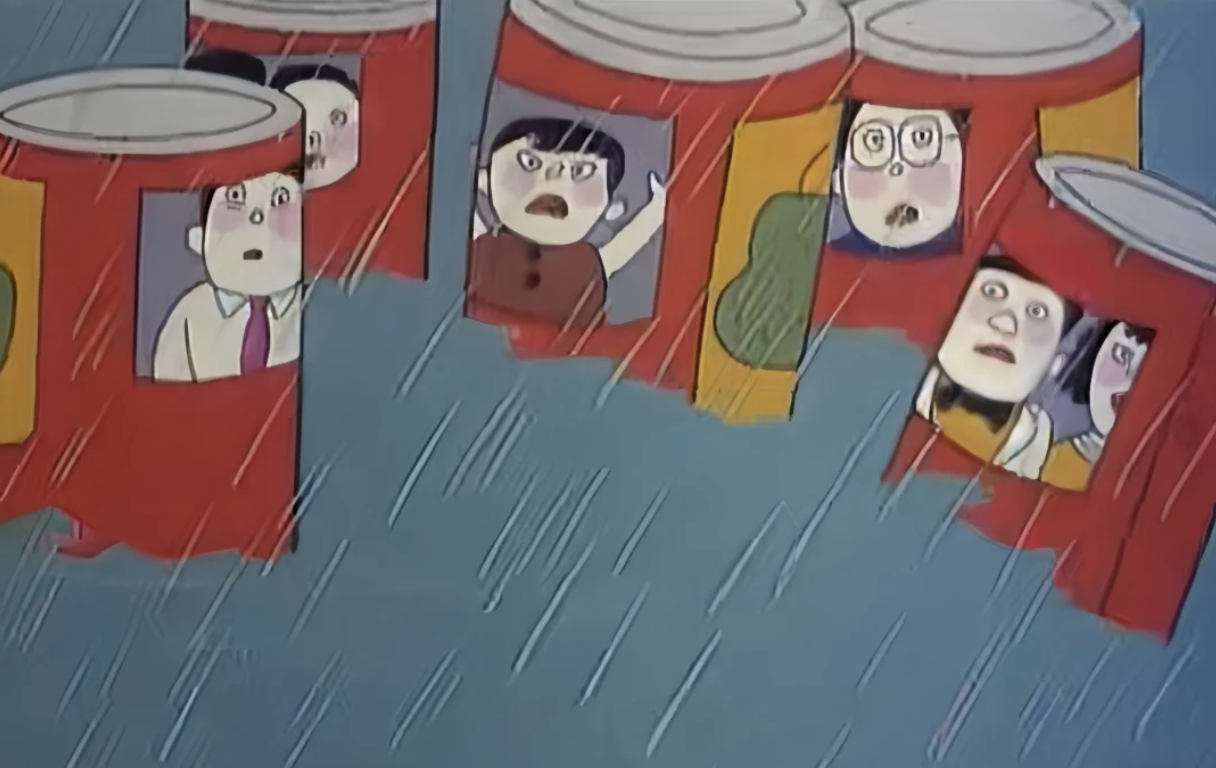
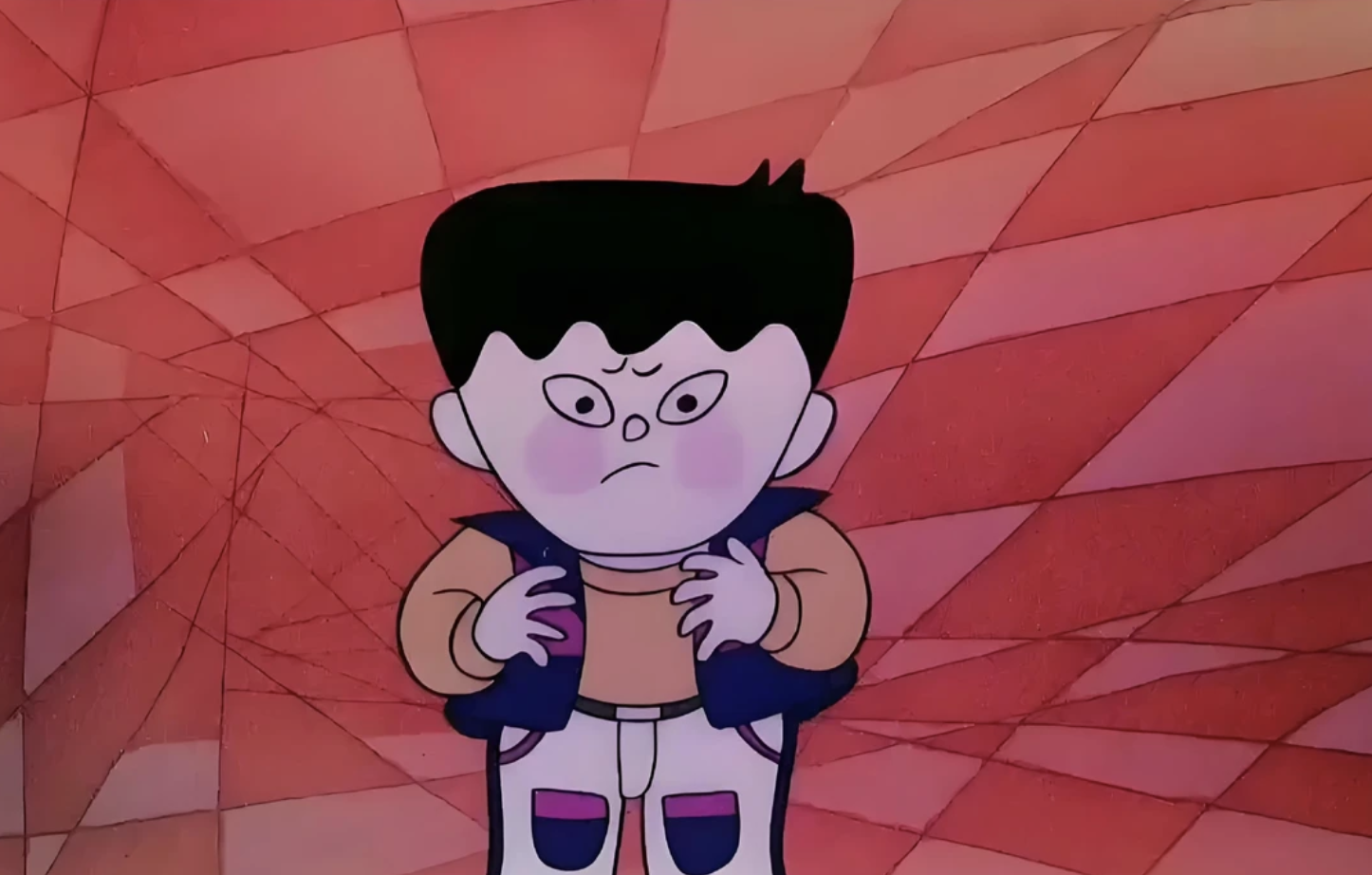
The Rubik’s Cube Mansion (魔方大厦, 1990–1994) became an unintentional childhood nightmare for a generation of Chinese viewers. Its surreal, imaginative settings evoke the impossible architecture of M. C. Escher’s Relativity (1953) and the fragmented geometry associated with Pablo Picasso’s Guernica (1937).

These were productions of Shanghai Animation Film Studio (SAFS), an institution often described today as China’s answer to Studio Ghibli. But long before such comparisons emerged, SAFS had already developed one of the most distinctive visual languages in Chinese animation.
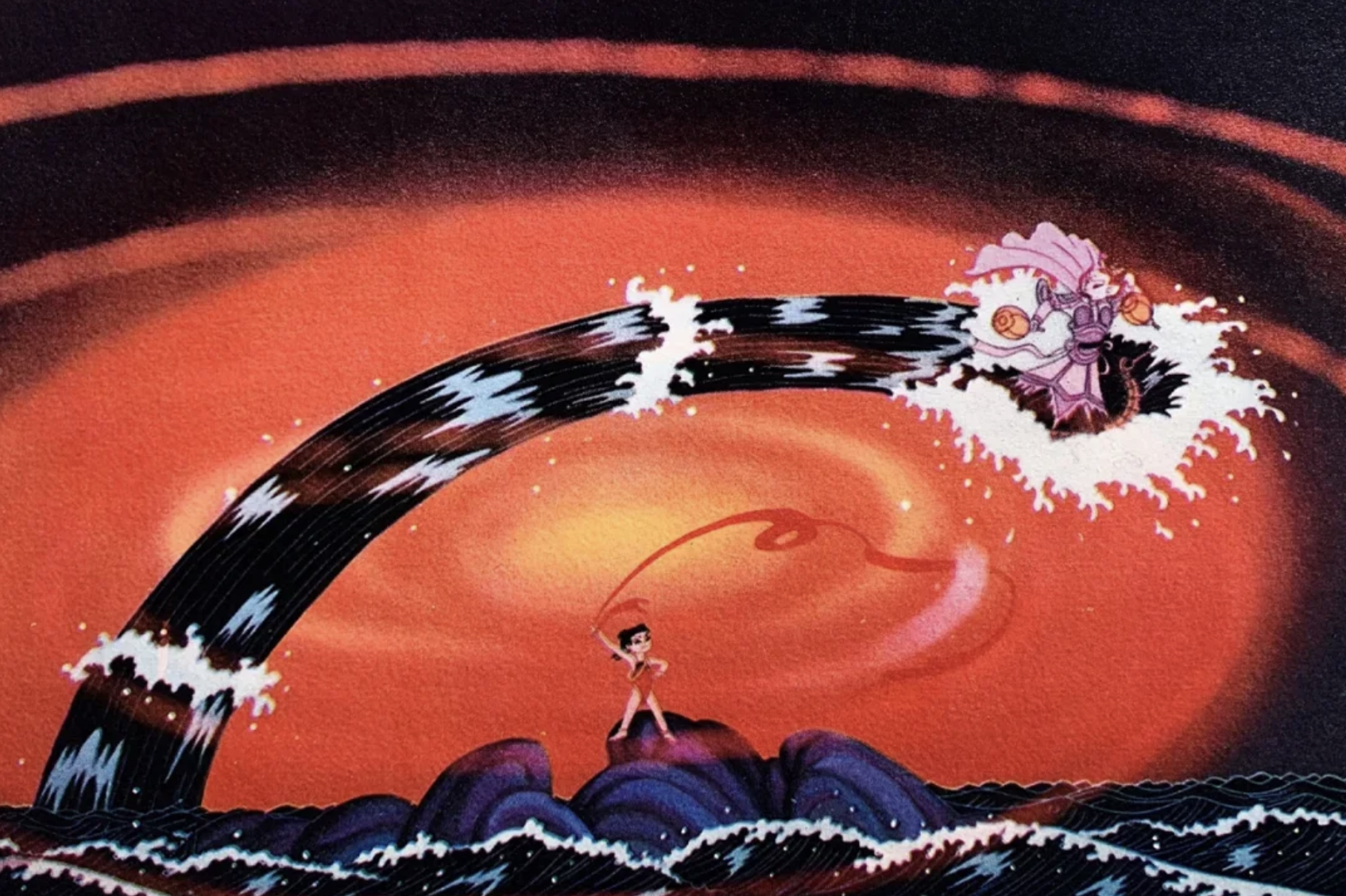
Nezha Conquers the Dragon King (哪吒闹海, 1979), with art direction by renowned Chinese painter Zhang Ding, who also contributed to the design of China’s national emblem in 1950. The film later became the first Chinese animated feature screened at the Cannes Film Festival.

Established as an independent studio in Shanghai in 1957, SAFS benefited from state support and was tasked with developing animation with a distinctly Chinese identity. But what exactly constitutes “Chinese aesthetics”? It is a very broad question, yet SAFS spent decades breaking it down into meticulously crafted moving images, broadcasting those aesthetics to generations of children.
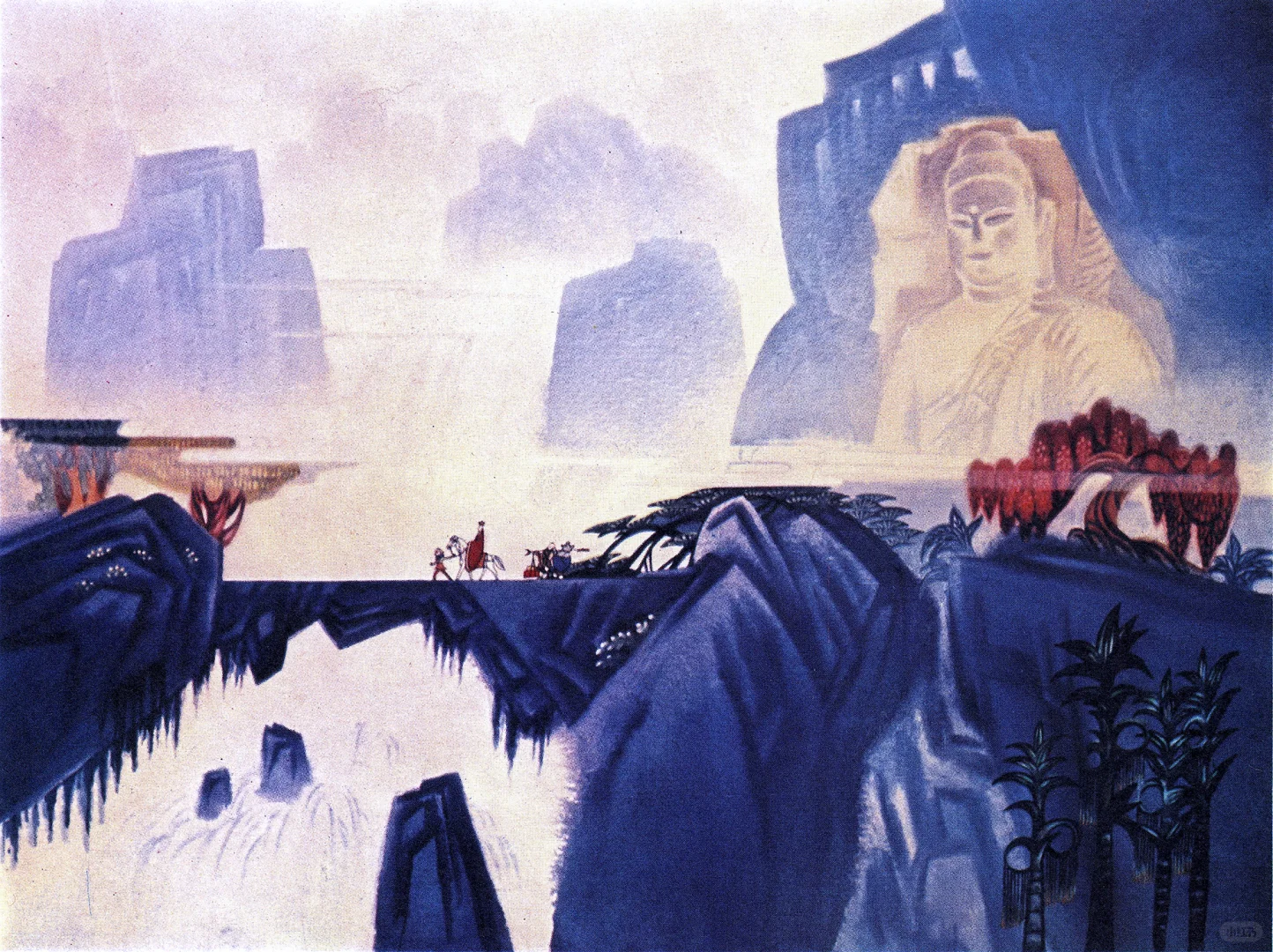
Many SAFS classics drew their stories from Chinese mythology, folklore, and classical literature, reimagining centuries-old narratives through animation. Still from The Ginseng Fruit (人参果, 1981), an adaptation from Journey to the West.

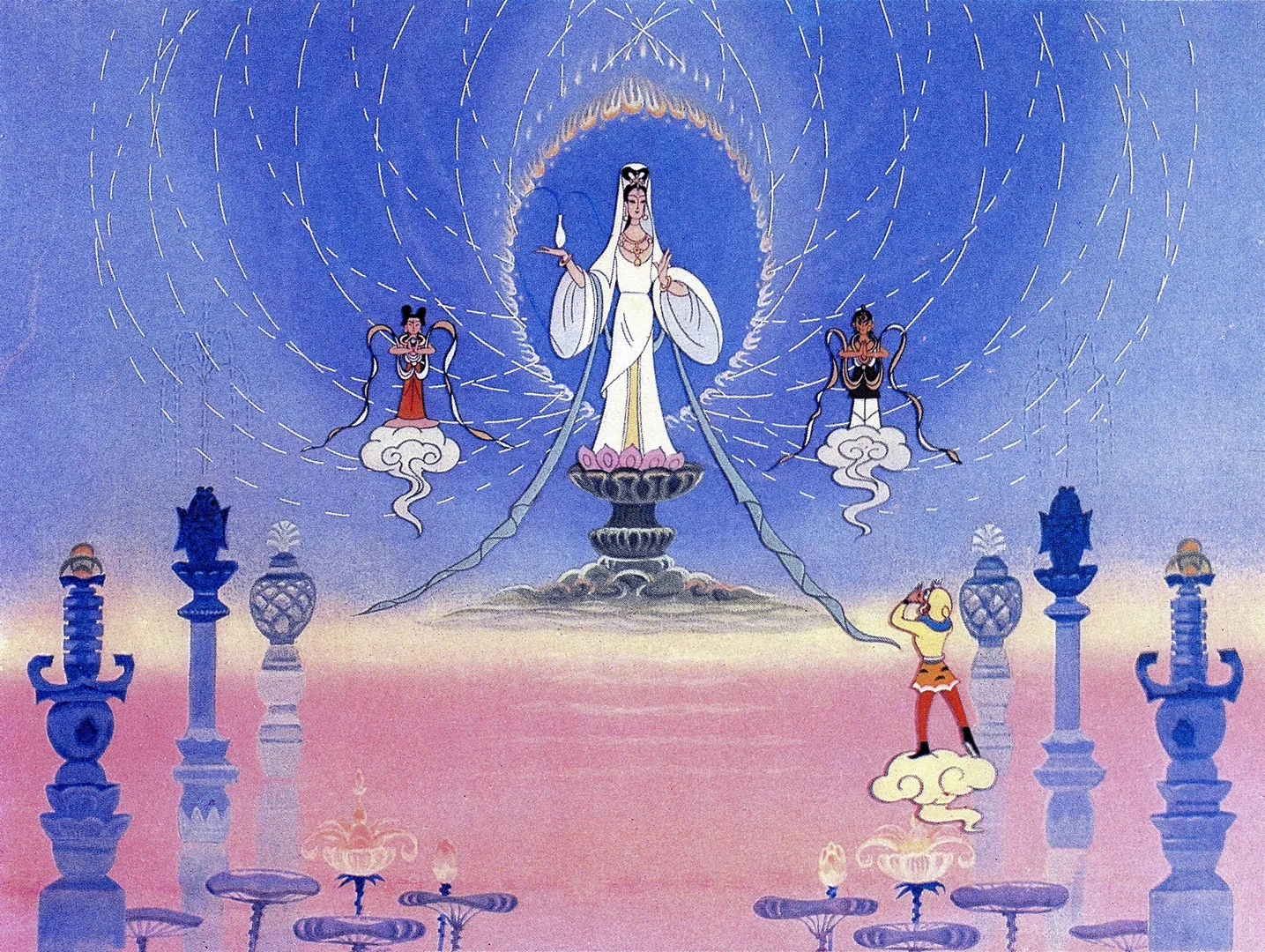
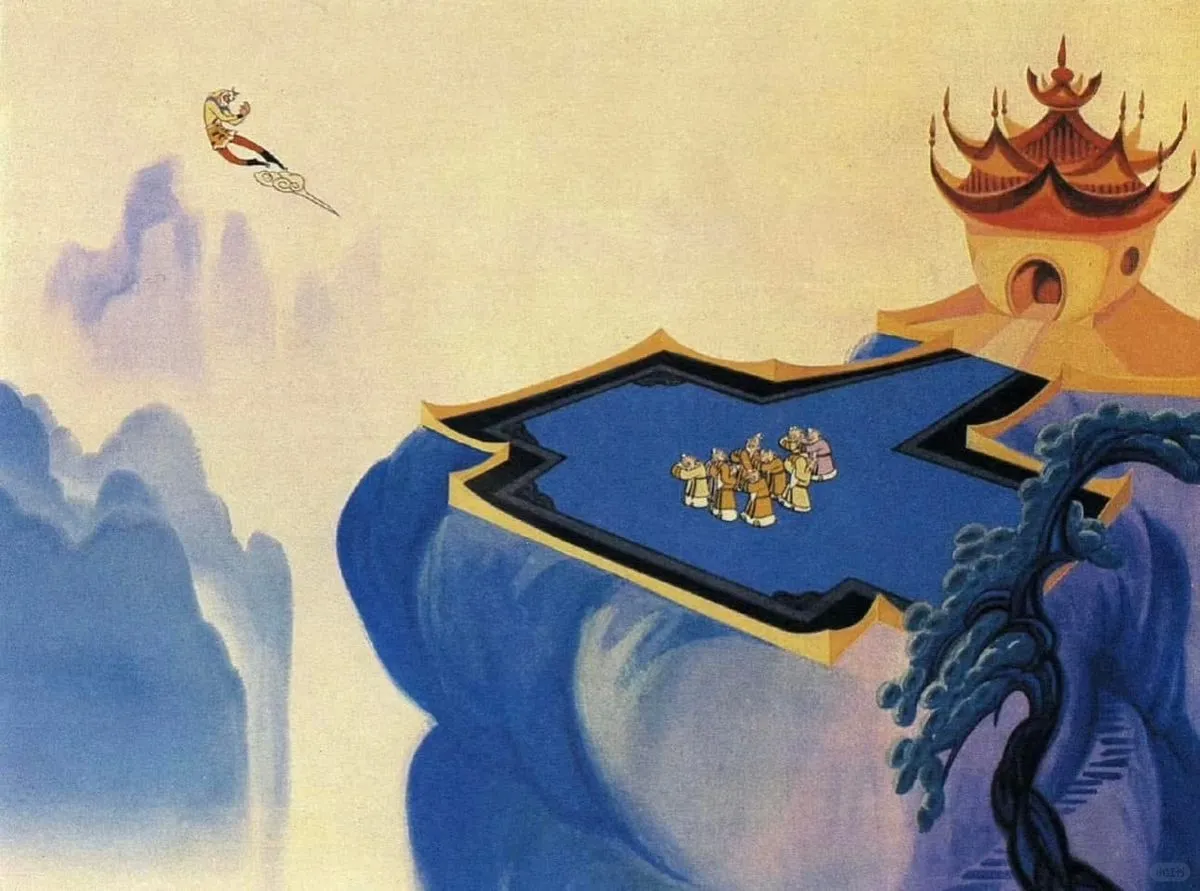
In an era when television itself was still a rarity for many Chinese families, SAFS created an entire open world for Sun Wukong in Uproar in Heaven (大闹天宫), the feature-length adaptation of Journey to the West produced between 1961 and 1964. Beyond its extraordinary scale and painstaking hand-drawn production, the film transformed Wukong’s rebellion against the celestial bureaucracy into a vivid story of resistance against authority.
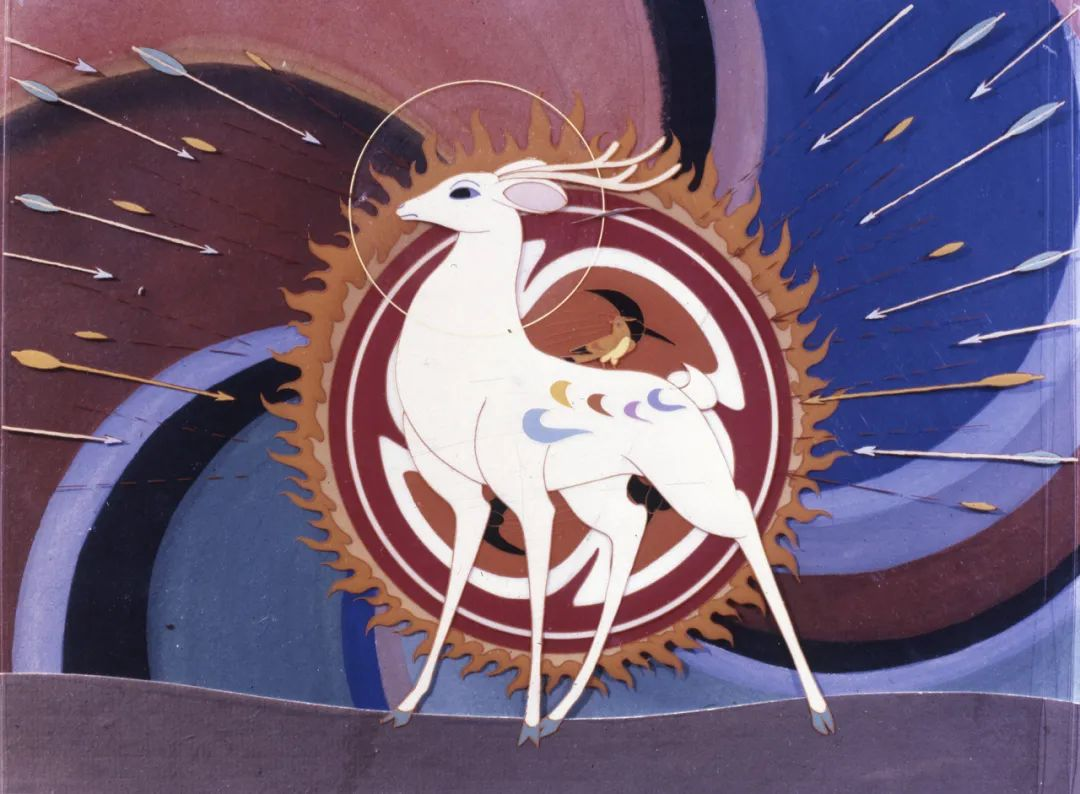
The aesthetics could be just as radical. Color, composition, and character design drew from artistic traditions stretching back centuries. The Nine-Colored Deer (九色鹿), released in 1981, was adapted from the Deer King Jataka mural in Cave 257 of the Mogao Caves at Dunhuang. Its brilliant greens, reds, and earth tones, flattened landscapes, and decorative figures deliberately echo the visual language of the original murals rather than Western naturalism.
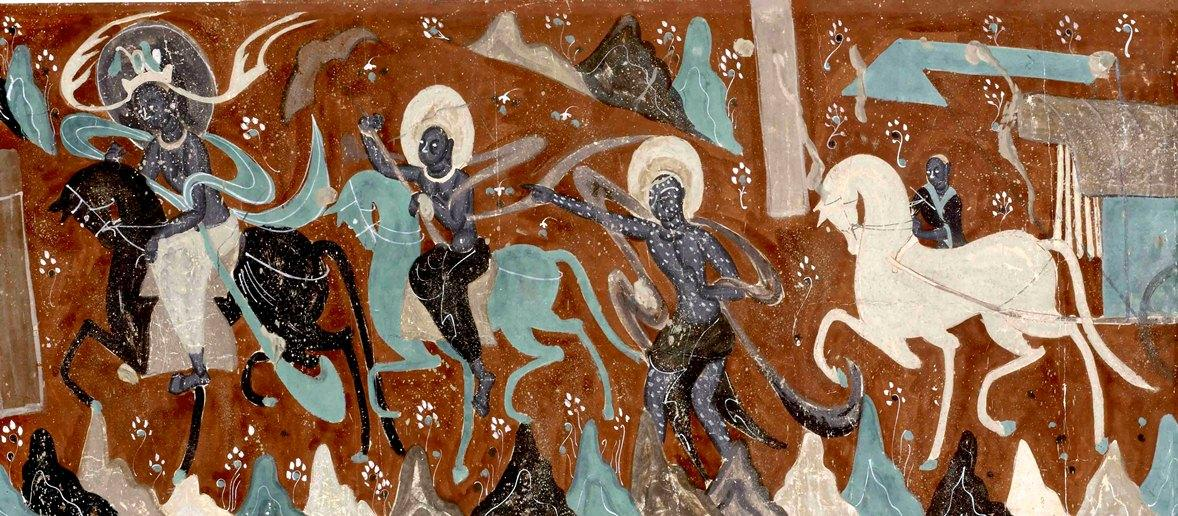
The Deer King Jataka (鹿王本生图), a mural in Dunhuang’s Cave 257 and often described as one of China’s earliest examples of sequential storytelling. Image via Zhihu.
Still from Nine-Colored Deer (1981).

What makes SAFS productions so distinctive is this unselfconscious relationship with their own cultural inheritance. In The Nine-Colored Deer, physical realism is hardly the point. Mountains and water dissolve into one another; conventional linear perspective gives way to flattened, shifting spaces. Form serves spirit, rhythm, and harmony rather than anatomical or spatial realism. Instead of forcing Chinese stories into an imported visual system, SAFS allowed those stories to inhabit an artistic language of their own.
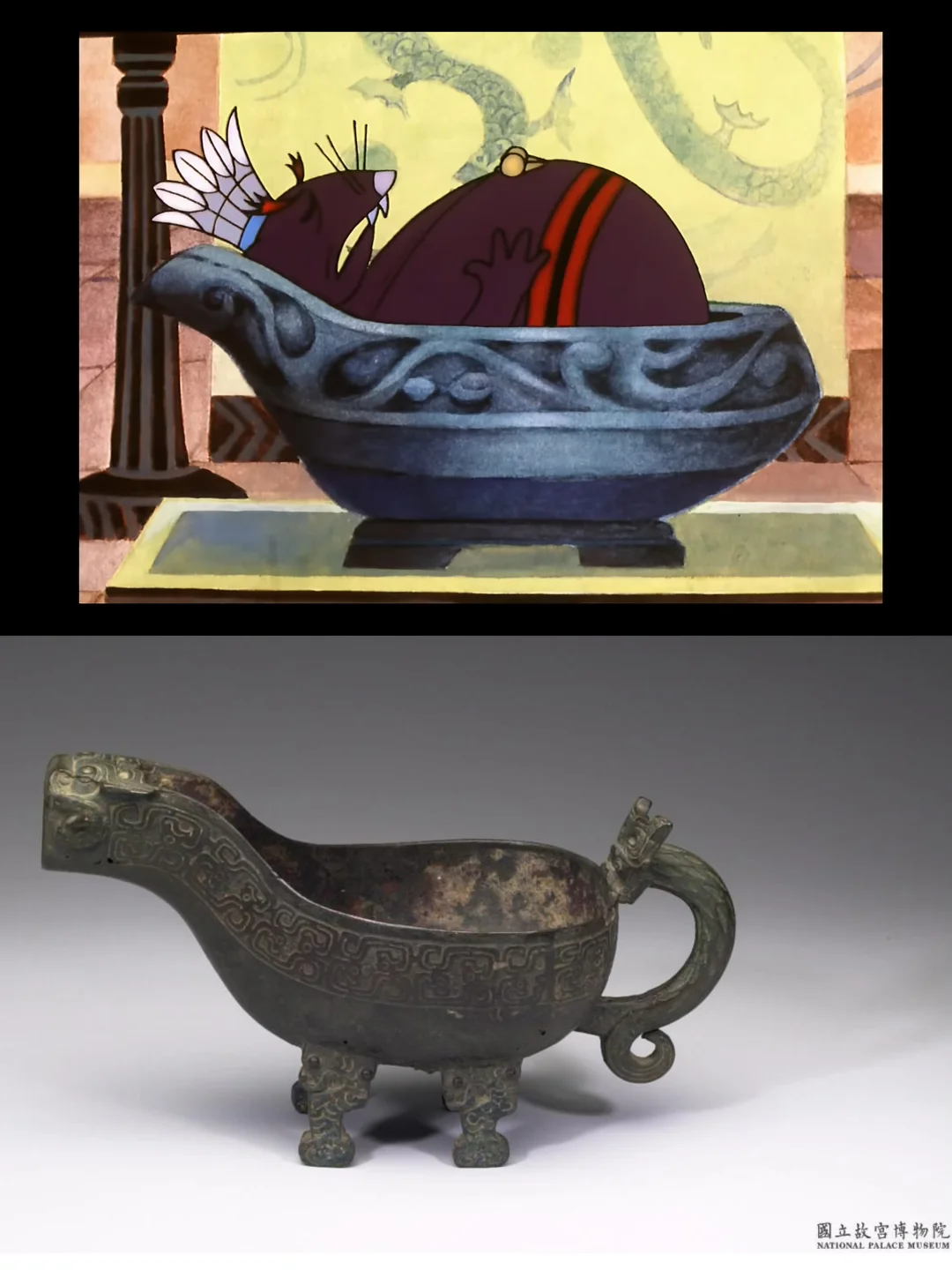
Sloppy King (邋遢大王奇遇记, 1987) drew on real archaeological artefacts and ancient tombs to construct its fantastical underground rat kingdom. Photo via Xiaohongshu.

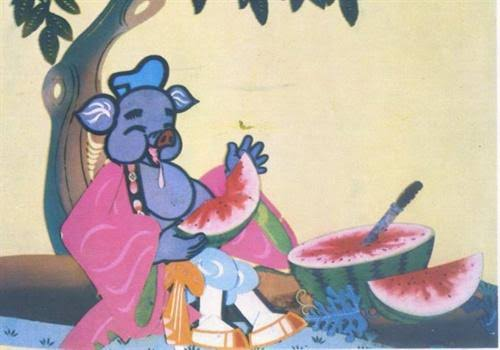
That confidence also produced remarkable experimentation. Across its early decades, the studio incorporated ink painting, paper cutting, folding, shadow-puppet traditions, opera, and folk art into animation. Pigsy Eats Watermelon (猪八戒吃西瓜) pioneered paper-cut animation in 1958, while Where Is Mama? helped establish ink-wash animation shortly afterward.
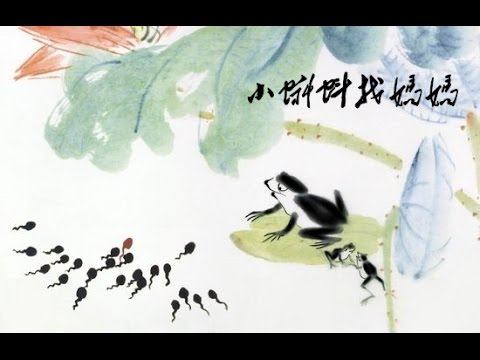
Still from Where Is Mama? (1960).
Still from Pigsy Eats Watermelon (1958).

But the industry surrounding SAFS changed dramatically with China’s market reforms. As the studio faced increasing commercial pressure and competition from imported animation, the production model that had supported its labor-intensive artistic experimentation became harder to sustain. By the 1990s, the Chinese animation industry was operating under fundamentally different market conditions.
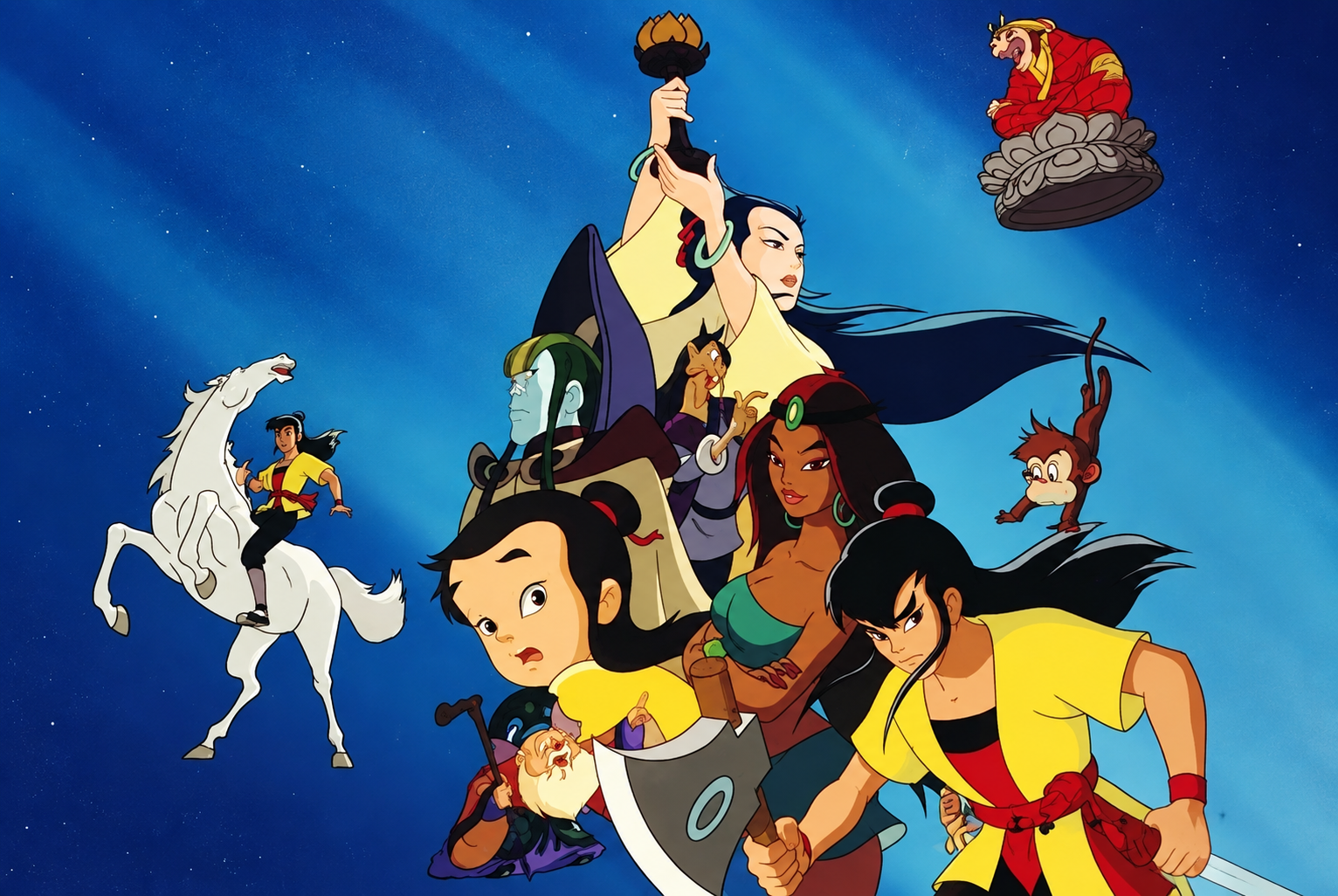
Lotus Lantern (宝莲灯, 1999) marked SAFS’s push towards a new commercial era, combining traditional 2D animation with digital colouring and computer-assisted effects. Image via 1905.

Lotus Lantern (宝莲灯) became an ambitious response. Released in 1999, the feature assembled an unusually star-studded cast and soundtrack and represented SAFS’s attempt to create a commercially viable animated blockbuster. Yet in the following years, the studio gradually receded from the center of Chinese popular animation as the industry moved toward new production models and even more so toward 3D animation.
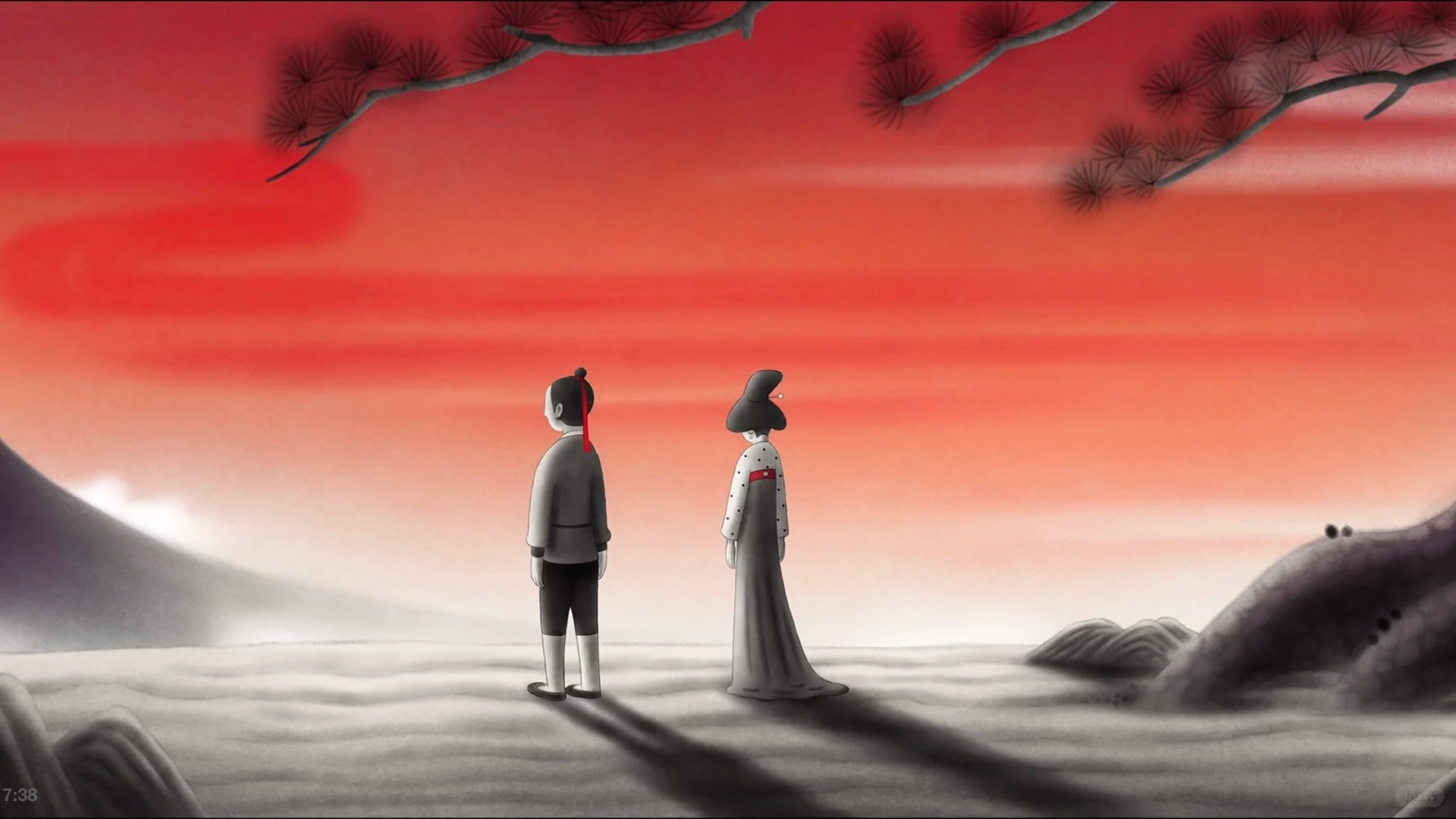
Goose Mountain (鹅鹅鹅), an episode of the 2023 anthology Yao-Chinese Folktales, reimagines the ancient supernatural tale, The Scholar of Yangxian, through an eerie monochrome visual language punctuated by flashes of red. Still from Bilibili.

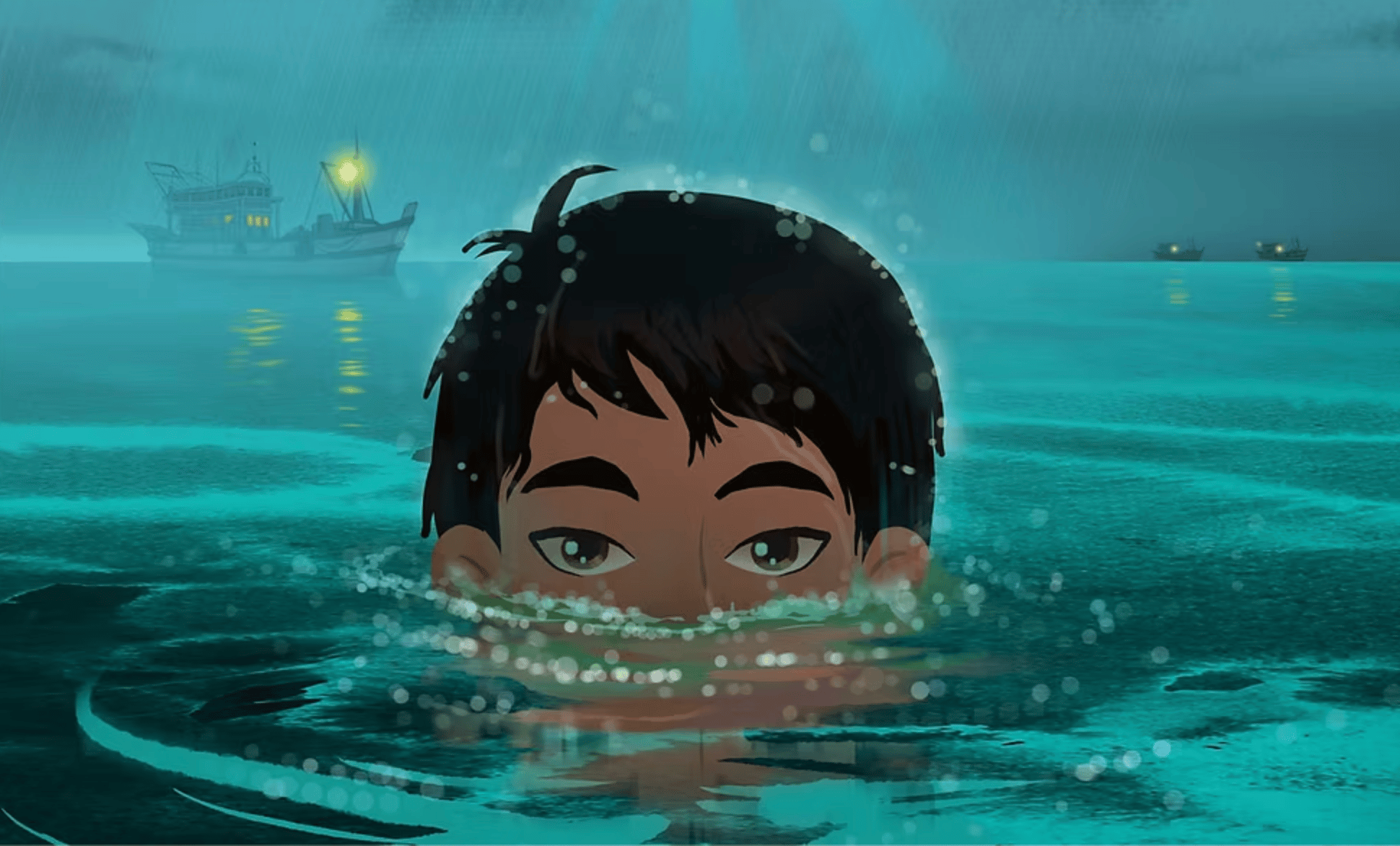
Then came Yao-Chinese Folktales (中国奇谭). Co-produced with Bilibili and released in 2023, its episodes moved between ink painting, folk aesthetics, contemporary life, and experimental visual languages rather than reproducing a single nostalgic “Chinese style.” One episode later became the basis for the feature film Nobody (浪浪山小妖怪). Released in 2025, the film became China’s highest-grossing domestic 2D animated feature at the time, earning more than 615 million RMB within weeks of release.
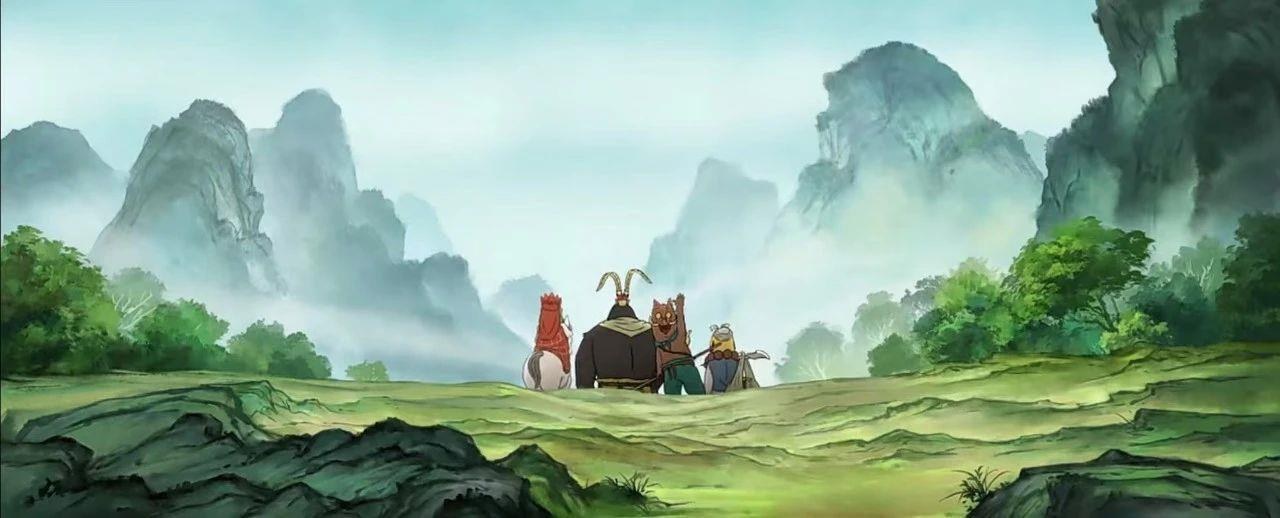
Still from Nobody (2025).

Whether this marks a brief revival or the beginning of another chapter for SAFS will depend not only on the studio and its animators, but also on the market and its audiences. Either way, its renewed visibility offers a reason to revisit the films of the last century—works that did more than entertain generations of Chinese children. They helped construct a visual vocabulary for what Chinese animation could be.

Cover Image via The Paper.
NEWSLETTER

Get weekly top picks and exclusive, newsletter only content delivered straight to you inbox.

NEWSLETTER

Get weekly top picks and exclusive, newsletter only content delivered straight to you inbox.

RADII NEWSLETTER

Get weekly top picks and exclusive, newsletter only content delivered straight to you inbox

Feature image of How a Shanghai Film Studio Defined the Chinese Animated Aesthetic

How a Shanghai Film Studio Defined the Chinese Animated Aesthetic

4 mins read

From ink-wash tadpoles and a rebellious Monkey King to Yao-Chinese Folktales and the box-office success of Nobody, RADII explored the Shanghai studio that spent seven decades translating Chinese artistic traditions into animation.

If you grew up in China before the mid-2000s, chances are you’ve seen something produced by Shanghai Animation Film Studio. You may have wanted a magical brush like Ma Liang’s, capable of bringing anything you painted to life. Or perhaps you remember the unsettling world of The Rubik’s Cube Mansion (魔方大厦), where its young protagonist finds himself trapped inside a seemingly endless building.

The Rubik’s Cube Mansion (魔方大厦, 1990–1994) became an unintentional childhood nightmare for a generation of Chinese viewers. Its surreal, imaginative settings evoke the impossible architecture of M. C. Escher’s Relativity (1953) and the fragmented geometry associated with Pablo Picasso’s Guernica (1937).

These were productions of Shanghai Animation Film Studio (SAFS), an institution often described today as China’s answer to Studio Ghibli. But long before such comparisons emerged, SAFS had already developed one of the most distinctive visual languages in Chinese animation.

Nezha Conquers the Dragon King (哪吒闹海, 1979), with art direction by renowned Chinese painter Zhang Ding, who also contributed to the design of China’s national emblem in 1950. The film later became the first Chinese animated feature screened at the Cannes Film Festival.

Established as an independent studio in Shanghai in 1957, SAFS benefited from state support and was tasked with developing animation with a distinctly Chinese identity. But what exactly constitutes “Chinese aesthetics”? It is a very broad question, yet SAFS spent decades breaking it down into meticulously crafted moving images, broadcasting those aesthetics to generations of children.

Many SAFS classics drew their stories from Chinese mythology, folklore, and classical literature, reimagining centuries-old narratives through animation. Still from The Ginseng Fruit (人参果, 1981), an adaptation from Journey to the West.

In an era when television itself was still a rarity for many Chinese families, SAFS created an entire open world for Sun Wukong in Uproar in Heaven (大闹天宫), the feature-length adaptation of Journey to the West produced between 1961 and 1964. Beyond its extraordinary scale and painstaking hand-drawn production, the film transformed Wukong’s rebellion against the celestial bureaucracy into a vivid story of resistance against authority.

The aesthetics could be just as radical. Color, composition, and character design drew from artistic traditions stretching back centuries. The Nine-Colored Deer (九色鹿), released in 1981, was adapted from the Deer King Jataka mural in Cave 257 of the Mogao Caves at Dunhuang. Its brilliant greens, reds, and earth tones, flattened landscapes, and decorative figures deliberately echo the visual language of the original murals rather than Western naturalism.

The Deer King Jataka (鹿王本生图), a mural in Dunhuang’s Cave 257 and often described as one of China’s earliest examples of sequential storytelling. Image via Zhihu.
Still from Nine-Colored Deer (1981).

What makes SAFS productions so distinctive is this unselfconscious relationship with their own cultural inheritance. In The Nine-Colored Deer, physical realism is hardly the point. Mountains and water dissolve into one another; conventional linear perspective gives way to flattened, shifting spaces. Form serves spirit, rhythm, and harmony rather than anatomical or spatial realism. Instead of forcing Chinese stories into an imported visual system, SAFS allowed those stories to inhabit an artistic language of their own.

Sloppy King (邋遢大王奇遇记, 1987) drew on real archaeological artefacts and ancient tombs to construct its fantastical underground rat kingdom. Photo via Xiaohongshu.

That confidence also produced remarkable experimentation. Across its early decades, the studio incorporated ink painting, paper cutting, folding, shadow-puppet traditions, opera, and folk art into animation. Pigsy Eats Watermelon (猪八戒吃西瓜) pioneered paper-cut animation in 1958, while Where Is Mama? helped establish ink-wash animation shortly afterward.

Still from Where Is Mama? (1960).
Still from Pigsy Eats Watermelon (1958).

But the industry surrounding SAFS changed dramatically with China’s market reforms. As the studio faced increasing commercial pressure and competition from imported animation, the production model that had supported its labor-intensive artistic experimentation became harder to sustain. By the 1990s, the Chinese animation industry was operating under fundamentally different market conditions.

Lotus Lantern (宝莲灯, 1999) marked SAFS’s push towards a new commercial era, combining traditional 2D animation with digital colouring and computer-assisted effects. Image via 1905.

Lotus Lantern (宝莲灯) became an ambitious response. Released in 1999, the feature assembled an unusually star-studded cast and soundtrack and represented SAFS’s attempt to create a commercially viable animated blockbuster. Yet in the following years, the studio gradually receded from the center of Chinese popular animation as the industry moved toward new production models and even more so toward 3D animation.

Goose Mountain (鹅鹅鹅), an episode of the 2023 anthology Yao-Chinese Folktales, reimagines the ancient supernatural tale, The Scholar of Yangxian, through an eerie monochrome visual language punctuated by flashes of red. Still from Bilibili.

Then came Yao-Chinese Folktales (中国奇谭). Co-produced with Bilibili and released in 2023, its episodes moved between ink painting, folk aesthetics, contemporary life, and experimental visual languages rather than reproducing a single nostalgic “Chinese style.” One episode later became the basis for the feature film Nobody (浪浪山小妖怪). Released in 2025, the film became China’s highest-grossing domestic 2D animated feature at the time, earning more than 615 million RMB within weeks of release.

Still from Nobody (2025).

Whether this marks a brief revival or the beginning of another chapter for SAFS will depend not only on the studio and its animators, but also on the market and its audiences. Either way, its renewed visibility offers a reason to revisit the films of the last century—works that did more than entertain generations of Chinese children. They helped construct a visual vocabulary for what Chinese animation could be.

Cover Image via The Paper.
NEWSLETTER

Get weekly top picks and exclusive, newsletter only content delivered straight to you inbox.

RADII NEWSLETTER

Get weekly top picks and exclusive, newsletter only content delivered straight to you inbox

RELATED POSTS

Feature image of How a Shanghai Film Studio Defined the Chinese Animated Aesthetic

How a Shanghai Film Studio Defined the Chinese Animated Aesthetic

4 mins read

4 mins read

Feature image of How a Shanghai Film Studio Defined the Chinese Animated Aesthetic
From ink-wash tadpoles and a rebellious Monkey King to Yao-Chinese Folktales and the box-office success of Nobody, RADII explored the Shanghai studio that spent seven decades translating Chinese artistic traditions into animation.

If you grew up in China before the mid-2000s, chances are you’ve seen something produced by Shanghai Animation Film Studio. You may have wanted a magical brush like Ma Liang’s, capable of bringing anything you painted to life. Or perhaps you remember the unsettling world of The Rubik’s Cube Mansion (魔方大厦), where its young protagonist finds himself trapped inside a seemingly endless building.

The Rubik’s Cube Mansion (魔方大厦, 1990–1994) became an unintentional childhood nightmare for a generation of Chinese viewers. Its surreal, imaginative settings evoke the impossible architecture of M. C. Escher’s Relativity (1953) and the fragmented geometry associated with Pablo Picasso’s Guernica (1937).

These were productions of Shanghai Animation Film Studio (SAFS), an institution often described today as China’s answer to Studio Ghibli. But long before such comparisons emerged, SAFS had already developed one of the most distinctive visual languages in Chinese animation.

Nezha Conquers the Dragon King (哪吒闹海, 1979), with art direction by renowned Chinese painter Zhang Ding, who also contributed to the design of China’s national emblem in 1950. The film later became the first Chinese animated feature screened at the Cannes Film Festival.

Established as an independent studio in Shanghai in 1957, SAFS benefited from state support and was tasked with developing animation with a distinctly Chinese identity. But what exactly constitutes “Chinese aesthetics”? It is a very broad question, yet SAFS spent decades breaking it down into meticulously crafted moving images, broadcasting those aesthetics to generations of children.

Many SAFS classics drew their stories from Chinese mythology, folklore, and classical literature, reimagining centuries-old narratives through animation. Still from The Ginseng Fruit (人参果, 1981), an adaptation from Journey to the West.

In an era when television itself was still a rarity for many Chinese families, SAFS created an entire open world for Sun Wukong in Uproar in Heaven (大闹天宫), the feature-length adaptation of Journey to the West produced between 1961 and 1964. Beyond its extraordinary scale and painstaking hand-drawn production, the film transformed Wukong’s rebellion against the celestial bureaucracy into a vivid story of resistance against authority.

The aesthetics could be just as radical. Color, composition, and character design drew from artistic traditions stretching back centuries. The Nine-Colored Deer (九色鹿), released in 1981, was adapted from the Deer King Jataka mural in Cave 257 of the Mogao Caves at Dunhuang. Its brilliant greens, reds, and earth tones, flattened landscapes, and decorative figures deliberately echo the visual language of the original murals rather than Western naturalism.

The Deer King Jataka (鹿王本生图), a mural in Dunhuang’s Cave 257 and often described as one of China’s earliest examples of sequential storytelling. Image via Zhihu.
Still from Nine-Colored Deer (1981).

What makes SAFS productions so distinctive is this unselfconscious relationship with their own cultural inheritance. In The Nine-Colored Deer, physical realism is hardly the point. Mountains and water dissolve into one another; conventional linear perspective gives way to flattened, shifting spaces. Form serves spirit, rhythm, and harmony rather than anatomical or spatial realism. Instead of forcing Chinese stories into an imported visual system, SAFS allowed those stories to inhabit an artistic language of their own.

Sloppy King (邋遢大王奇遇记, 1987) drew on real archaeological artefacts and ancient tombs to construct its fantastical underground rat kingdom. Photo via Xiaohongshu.

That confidence also produced remarkable experimentation. Across its early decades, the studio incorporated ink painting, paper cutting, folding, shadow-puppet traditions, opera, and folk art into animation. Pigsy Eats Watermelon (猪八戒吃西瓜) pioneered paper-cut animation in 1958, while Where Is Mama? helped establish ink-wash animation shortly afterward.

Still from Where Is Mama? (1960).
Still from Pigsy Eats Watermelon (1958).

But the industry surrounding SAFS changed dramatically with China’s market reforms. As the studio faced increasing commercial pressure and competition from imported animation, the production model that had supported its labor-intensive artistic experimentation became harder to sustain. By the 1990s, the Chinese animation industry was operating under fundamentally different market conditions.

Lotus Lantern (宝莲灯, 1999) marked SAFS’s push towards a new commercial era, combining traditional 2D animation with digital colouring and computer-assisted effects. Image via 1905.

Lotus Lantern (宝莲灯) became an ambitious response. Released in 1999, the feature assembled an unusually star-studded cast and soundtrack and represented SAFS’s attempt to create a commercially viable animated blockbuster. Yet in the following years, the studio gradually receded from the center of Chinese popular animation as the industry moved toward new production models and even more so toward 3D animation.

Goose Mountain (鹅鹅鹅), an episode of the 2023 anthology Yao-Chinese Folktales, reimagines the ancient supernatural tale, The Scholar of Yangxian, through an eerie monochrome visual language punctuated by flashes of red. Still from Bilibili.

Then came Yao-Chinese Folktales (中国奇谭). Co-produced with Bilibili and released in 2023, its episodes moved between ink painting, folk aesthetics, contemporary life, and experimental visual languages rather than reproducing a single nostalgic “Chinese style.” One episode later became the basis for the feature film Nobody (浪浪山小妖怪). Released in 2025, the film became China’s highest-grossing domestic 2D animated feature at the time, earning more than 615 million RMB within weeks of release.

Still from Nobody (2025).

Whether this marks a brief revival or the beginning of another chapter for SAFS will depend not only on the studio and its animators, but also on the market and its audiences. Either way, its renewed visibility offers a reason to revisit the films of the last century—works that did more than entertain generations of Chinese children. They helped construct a visual vocabulary for what Chinese animation could be.

Cover Image via The Paper.
NEWSLETTER

Get weekly top picks and exclusive, newsletter only content delivered straight to you inbox.

NEWSLETTER

Get weekly top picks and exclusive, newsletter only content delivered straight to you inbox.

RADII NEWSLETTER

Get weekly top picks and exclusive, newsletter only content delivered straight to you inbox

Feature image of How a Shanghai Film Studio Defined the Chinese Animated Aesthetic

How a Shanghai Film Studio Defined the Chinese Animated Aesthetic

4 mins read

From ink-wash tadpoles and a rebellious Monkey King to Yao-Chinese Folktales and the box-office success of Nobody, RADII explored the Shanghai studio that spent seven decades translating Chinese artistic traditions into animation.

If you grew up in China before the mid-2000s, chances are you’ve seen something produced by Shanghai Animation Film Studio. You may have wanted a magical brush like Ma Liang’s, capable of bringing anything you painted to life. Or perhaps you remember the unsettling world of The Rubik’s Cube Mansion (魔方大厦), where its young protagonist finds himself trapped inside a seemingly endless building.

The Rubik’s Cube Mansion (魔方大厦, 1990–1994) became an unintentional childhood nightmare for a generation of Chinese viewers. Its surreal, imaginative settings evoke the impossible architecture of M. C. Escher’s Relativity (1953) and the fragmented geometry associated with Pablo Picasso’s Guernica (1937).

These were productions of Shanghai Animation Film Studio (SAFS), an institution often described today as China’s answer to Studio Ghibli. But long before such comparisons emerged, SAFS had already developed one of the most distinctive visual languages in Chinese animation.

Nezha Conquers the Dragon King (哪吒闹海, 1979), with art direction by renowned Chinese painter Zhang Ding, who also contributed to the design of China’s national emblem in 1950. The film later became the first Chinese animated feature screened at the Cannes Film Festival.

Established as an independent studio in Shanghai in 1957, SAFS benefited from state support and was tasked with developing animation with a distinctly Chinese identity. But what exactly constitutes “Chinese aesthetics”? It is a very broad question, yet SAFS spent decades breaking it down into meticulously crafted moving images, broadcasting those aesthetics to generations of children.

Many SAFS classics drew their stories from Chinese mythology, folklore, and classical literature, reimagining centuries-old narratives through animation. Still from The Ginseng Fruit (人参果, 1981), an adaptation from Journey to the West.

In an era when television itself was still a rarity for many Chinese families, SAFS created an entire open world for Sun Wukong in Uproar in Heaven (大闹天宫), the feature-length adaptation of Journey to the West produced between 1961 and 1964. Beyond its extraordinary scale and painstaking hand-drawn production, the film transformed Wukong’s rebellion against the celestial bureaucracy into a vivid story of resistance against authority.

The aesthetics could be just as radical. Color, composition, and character design drew from artistic traditions stretching back centuries. The Nine-Colored Deer (九色鹿), released in 1981, was adapted from the Deer King Jataka mural in Cave 257 of the Mogao Caves at Dunhuang. Its brilliant greens, reds, and earth tones, flattened landscapes, and decorative figures deliberately echo the visual language of the original murals rather than Western naturalism.

The Deer King Jataka (鹿王本生图), a mural in Dunhuang’s Cave 257 and often described as one of China’s earliest examples of sequential storytelling. Image via Zhihu.
Still from Nine-Colored Deer (1981).

What makes SAFS productions so distinctive is this unselfconscious relationship with their own cultural inheritance. In The Nine-Colored Deer, physical realism is hardly the point. Mountains and water dissolve into one another; conventional linear perspective gives way to flattened, shifting spaces. Form serves spirit, rhythm, and harmony rather than anatomical or spatial realism. Instead of forcing Chinese stories into an imported visual system, SAFS allowed those stories to inhabit an artistic language of their own.

Sloppy King (邋遢大王奇遇记, 1987) drew on real archaeological artefacts and ancient tombs to construct its fantastical underground rat kingdom. Photo via Xiaohongshu.

That confidence also produced remarkable experimentation. Across its early decades, the studio incorporated ink painting, paper cutting, folding, shadow-puppet traditions, opera, and folk art into animation. Pigsy Eats Watermelon (猪八戒吃西瓜) pioneered paper-cut animation in 1958, while Where Is Mama? helped establish ink-wash animation shortly afterward.

Still from Where Is Mama? (1960).
Still from Pigsy Eats Watermelon (1958).

But the industry surrounding SAFS changed dramatically with China’s market reforms. As the studio faced increasing commercial pressure and competition from imported animation, the production model that had supported its labor-intensive artistic experimentation became harder to sustain. By the 1990s, the Chinese animation industry was operating under fundamentally different market conditions.

Lotus Lantern (宝莲灯, 1999) marked SAFS’s push towards a new commercial era, combining traditional 2D animation with digital colouring and computer-assisted effects. Image via 1905.

Lotus Lantern (宝莲灯) became an ambitious response. Released in 1999, the feature assembled an unusually star-studded cast and soundtrack and represented SAFS’s attempt to create a commercially viable animated blockbuster. Yet in the following years, the studio gradually receded from the center of Chinese popular animation as the industry moved toward new production models and even more so toward 3D animation.

Goose Mountain (鹅鹅鹅), an episode of the 2023 anthology Yao-Chinese Folktales, reimagines the ancient supernatural tale, The Scholar of Yangxian, through an eerie monochrome visual language punctuated by flashes of red. Still from Bilibili.

Then came Yao-Chinese Folktales (中国奇谭). Co-produced with Bilibili and released in 2023, its episodes moved between ink painting, folk aesthetics, contemporary life, and experimental visual languages rather than reproducing a single nostalgic “Chinese style.” One episode later became the basis for the feature film Nobody (浪浪山小妖怪). Released in 2025, the film became China’s highest-grossing domestic 2D animated feature at the time, earning more than 615 million RMB within weeks of release.

Still from Nobody (2025).

Whether this marks a brief revival or the beginning of another chapter for SAFS will depend not only on the studio and its animators, but also on the market and its audiences. Either way, its renewed visibility offers a reason to revisit the films of the last century—works that did more than entertain generations of Chinese children. They helped construct a visual vocabulary for what Chinese animation could be.

Cover Image via The Paper.
NEWSLETTER

Get weekly top picks and exclusive, newsletter only content delivered straight to you inbox.

RADII NEWSLETTER

Get weekly top picks and exclusive, newsletter only content delivered straight to you inbox

RADII newsletter pop up visual

NEWSLETTER​

Get weekly top picks and exclusive, newsletter only content delivered straight to you inbox

RADII Newsletter Pop Up small banner

NEWSLETTER

Get weekly top picks and exclusive, newsletter only content delivered straight to you inbox.

Link Copied!

Share

Feature image of How a Shanghai Film Studio Defined the Chinese Animated Aesthetic

How a Shanghai Film Studio Defined the Chinese Animated Aesthetic

From ink-wash tadpoles and a rebellious Monkey King to Yao-Chinese Folktales and the box-office success of Nobody, RADII explored the Shanghai studio that spent seven decades translating Chinese artistic traditions into animation.

PULSE

Tap into the latest in music, fashion, art, design, entertainment, pop culture, celebrity news, and contemporary culture

DISCOVER

Embark on a journey through food, travel, wellness, heritage, traditional culture, and lifestyle

STYLE

An insider’s look at the intersection of fashion, art, and design

FEAST

Titillate your taste buds with coverage of the best food and drink trends from China and beyond.

FUTURE

Explore the cutting edge in tech, AI, gadgets, gaming, and innovative tech-related products

FEAST

Titillate your taste buds with coverage of the best food and drink trends from China and beyond

STYLE

An insider’s look at the intersection of fashion, art, and design

PULSE

Unpacking Chinese youth culture through coverage of nightlife, film, sports, celebrities, and the hottest new music