
Chinese drinking games, or jiuling (酒令), have a history spanning centuries. Rooted in the richness of the Chinese language and literary tradition, they offer a fascinating glimpse into the country’s social customs and cultural heritage. Traditionally, they fall into two broad categories: yaling (雅令, literary drinking games) and tongling (通令, common drinking games).
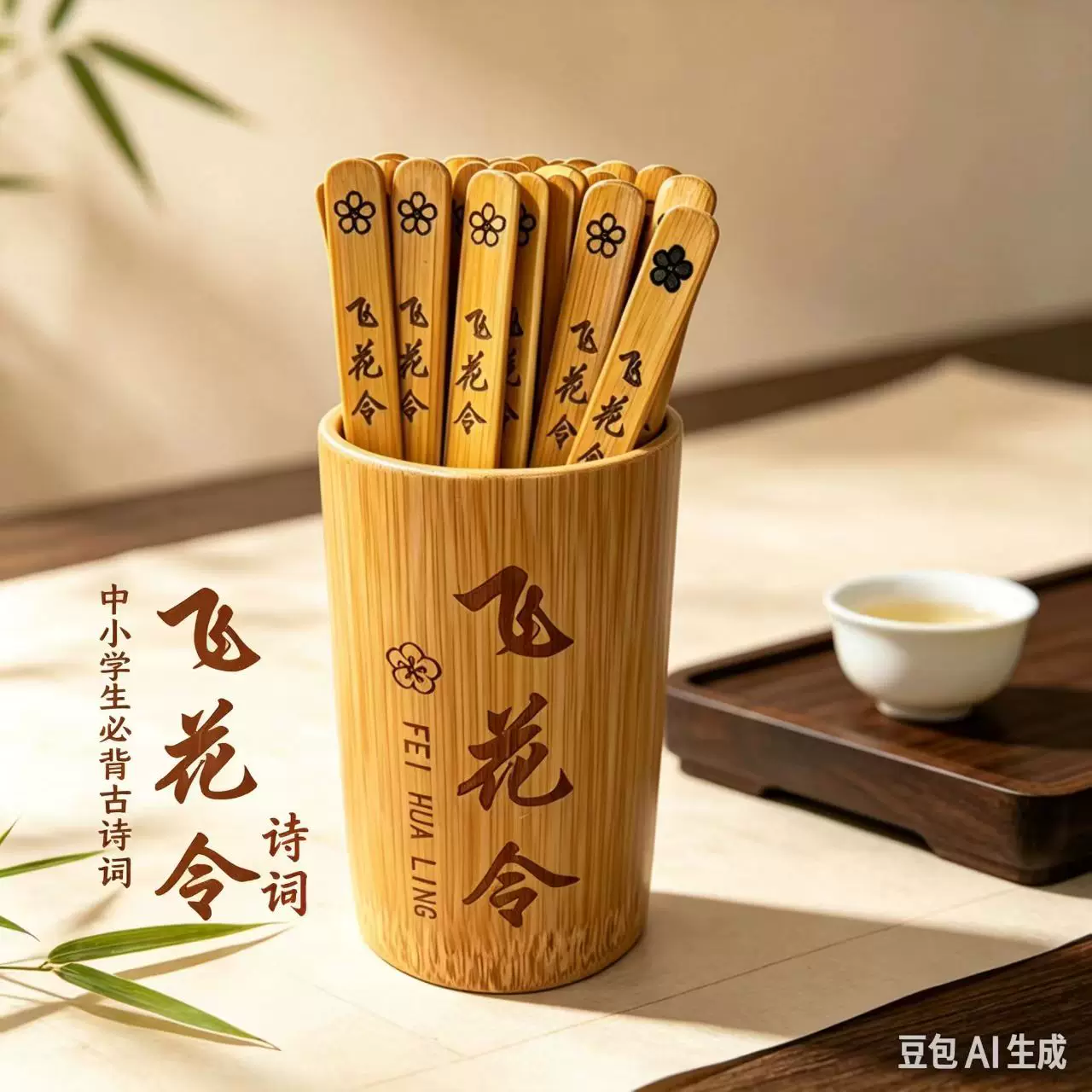
Yaling demanded considerable literary knowledge and quick thinking. One of the best-known examples is Feihua Ling (飞花令), in which players take turns reciting lines of classical Chinese poetry that contain a designated character, such as “flower” (花) or “moon” (月). In its more traditional form, the character must appear in a specific position in each successive line: the first player uses it as the first character, the second player as the second, and so on. Anyone unable to come up with a suitable line must drink as a penalty. Modern adaptations have relaxed these rules, allowing the character to appear anywhere in the line.
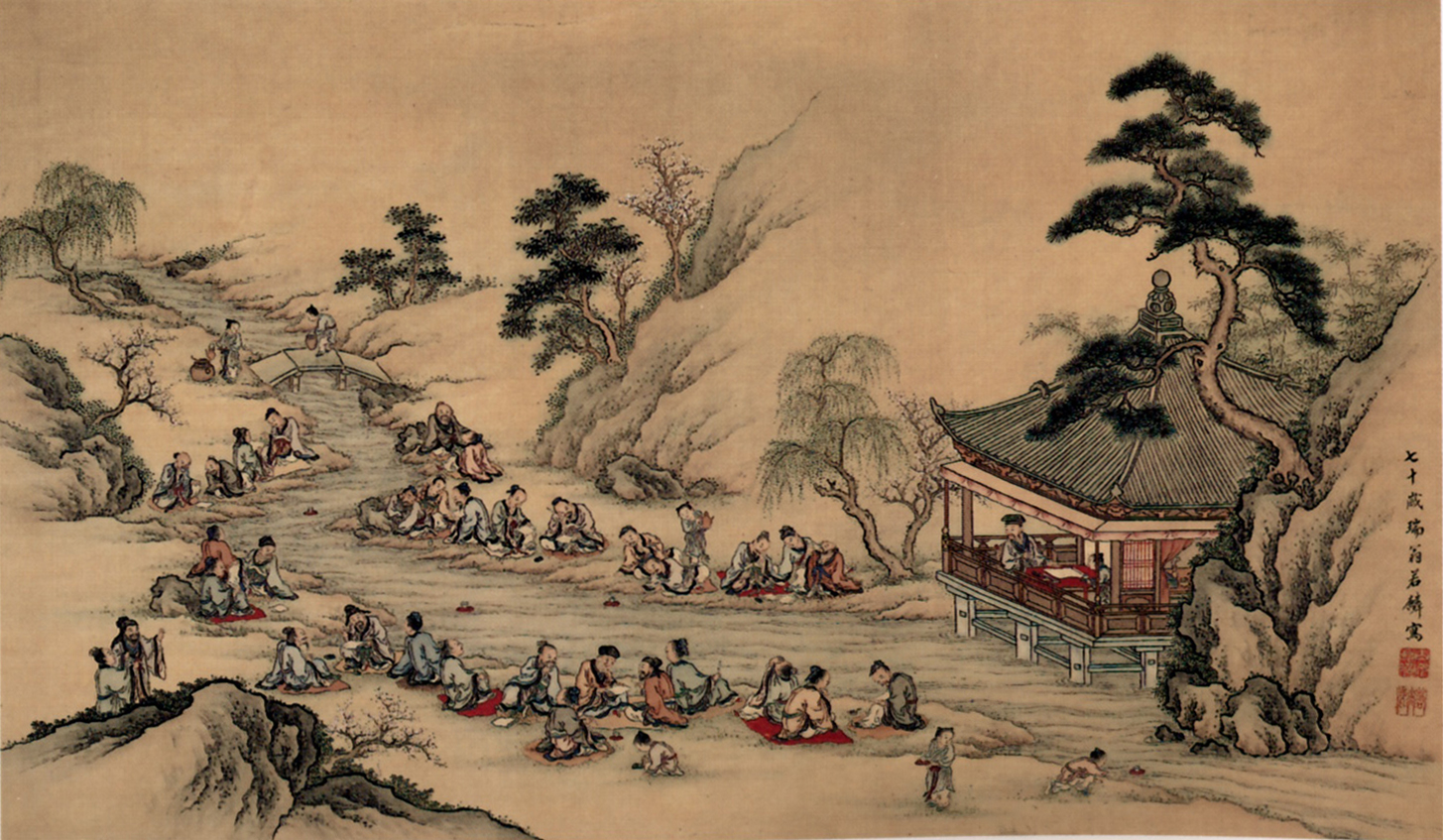
Some of these games even left their mark on classical Chinese literature. In Qushui Liushang (曲水流觞), participants sit along a winding stream as wine cups, traditionally made of wood, float downstream. Whenever a cup comes to rest in front of someone, that person must drink and, in the literary version of the game, compose a poem. Those who can’t manage a verse drink a penalty cup instead. Wang Xizhi’s Preface to the Poems Composed at the Orchid Pavilion (兰亭集序), one of the most celebrated works of Chinese calligraphy, was written at one such gathering in 353 CE.
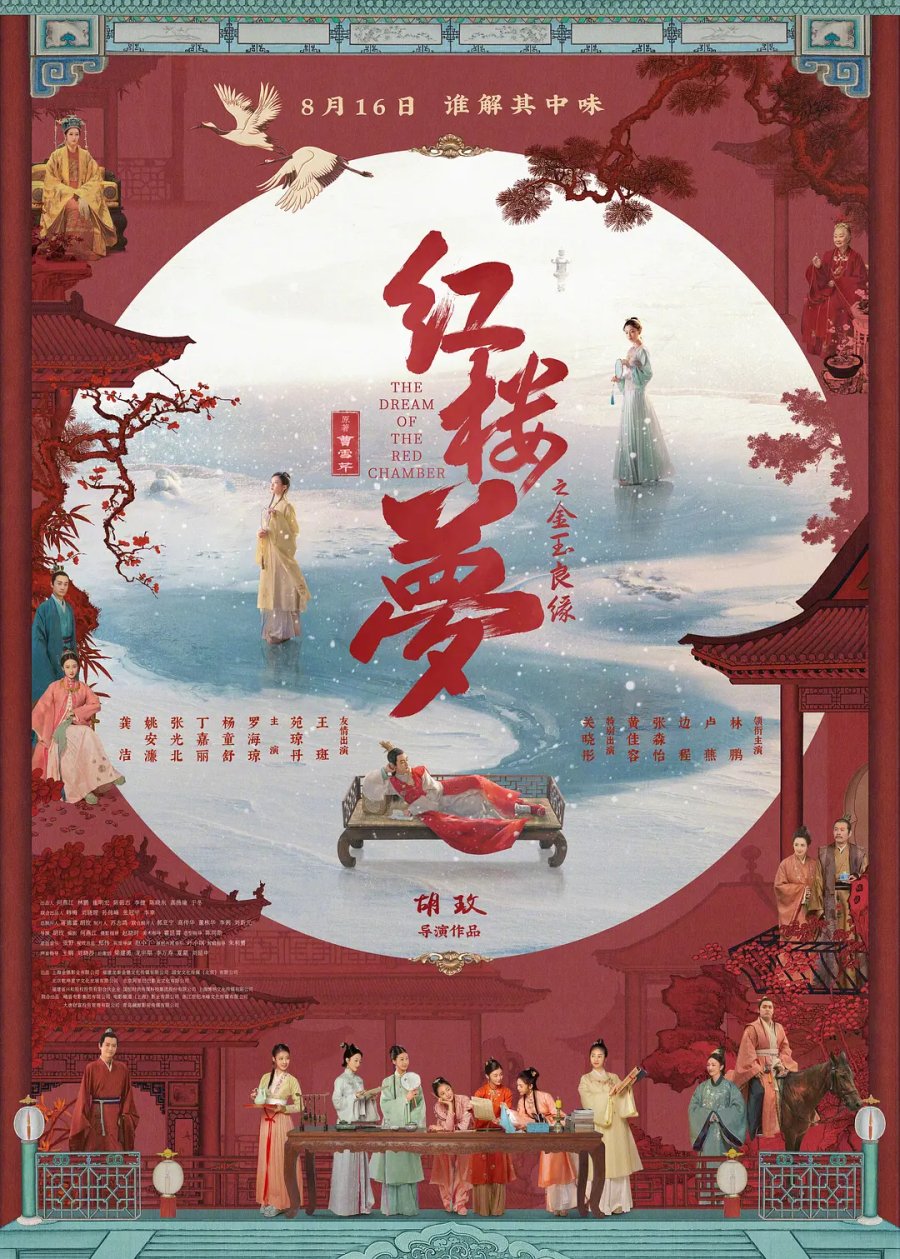
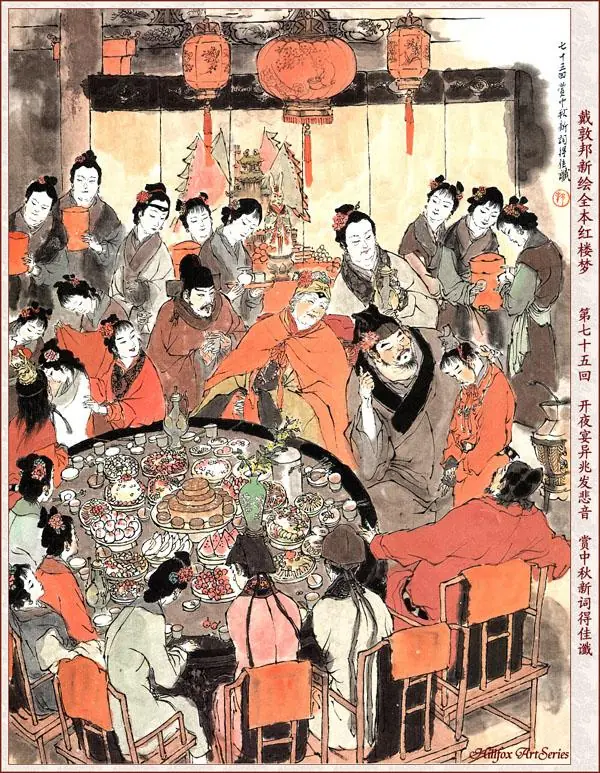
Another example is Shefu (射覆), a sophisticated guessing game that combines literary knowledge with wordplay. Originally, players had to guess an object concealed beneath a cover. Over time, it became a word game: one player hides a word behind a clue drawn from poetry or classical allusions, and their opponent must “shoot” it with an allusion of their own. The game also appears in Dream of the Red Chamber (红楼梦), where Baochai, Tanchun, and other characters play a particularly challenging version.
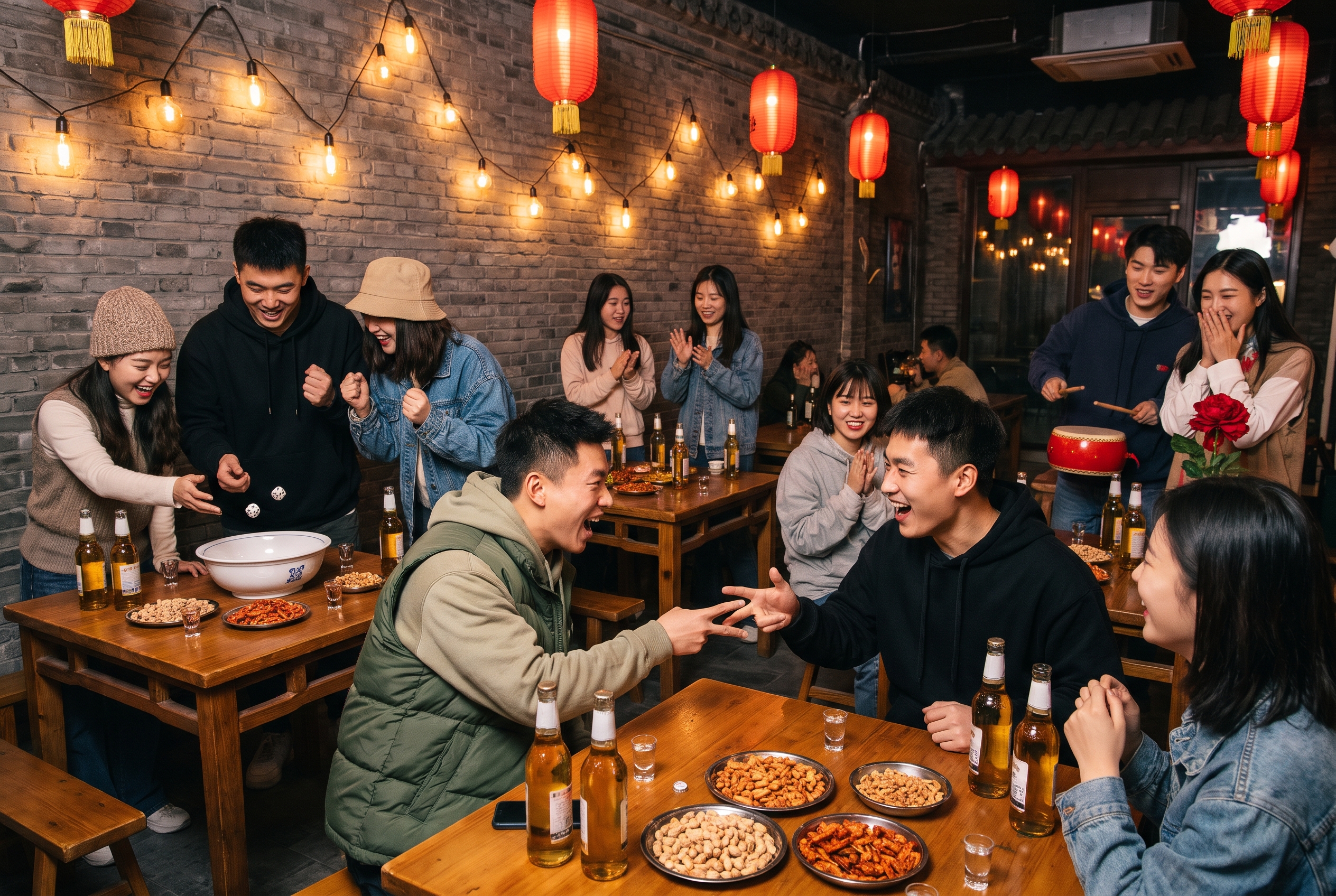
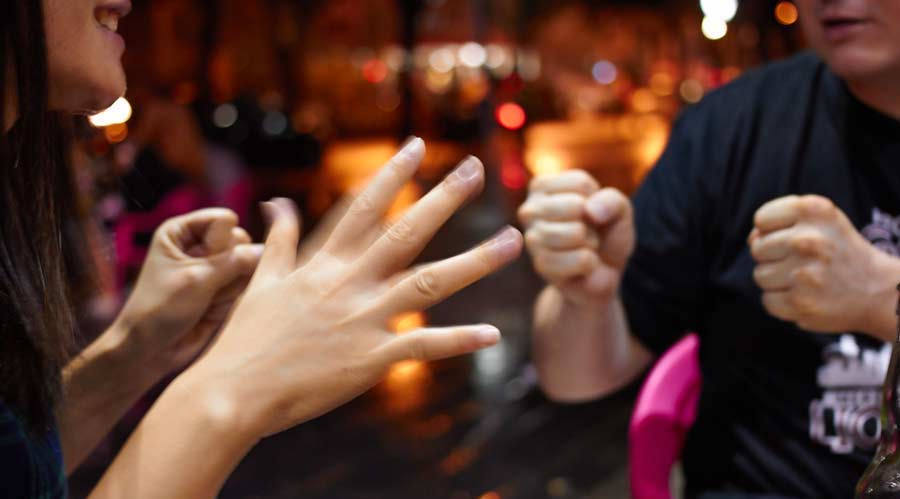
By contrast, tongling was a game anyone could play. Mu Zhan (拇战), also known as finger guessing, is a traditional two-player game in which both participants extend a few fingers at the same time while calling out a number. The player who correctly guesses the combined number of fingers wins. The rhymes and phrases vary by region, but the most recognizable calls include “五魁首” (Five Classics Champion), “六六顺” (Good Fortune), “七个巧” (associated with the Qixi Festival’s tradition of praying for skill), and “八匹马” (Eight Horses). Many of these calls can still be heard around drinking tables today, especially in Northeast China.
Some traditional drinking and party games draw on older social customs, while others use simple objects to create suspense and friendly competition. Passing the Flower (击鼓传花) is a classic example. One participant sits with their back to the group and beats a drum while everyone else passes a flower around. When the drumming stops, whoever is holding the flower must drink or perform a forfeit. Visiting Three Gardens (逛三园) is a popular word game that tests vocabulary and quick thinking. One player starts by announcing, “It’s Sunday, let’s visit three gardens,” and chooses a category, such as a fruit garden or an animal garden. Players then take turns naming items from that category. Anyone who hesitates, repeats an answer, or gives a wrong one has to drink.
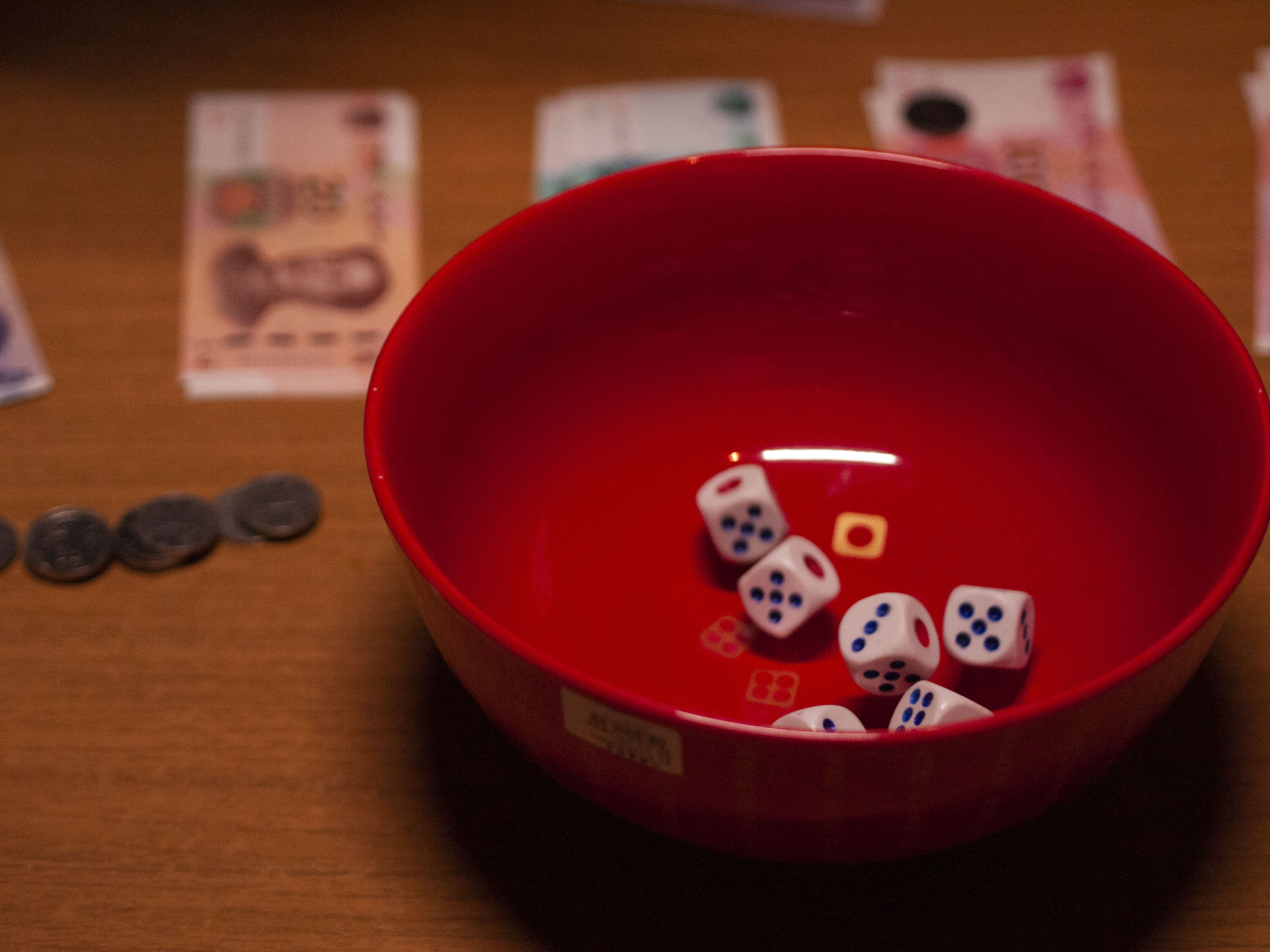
Drinking games also vary by region. While finger guessing is especially popular in Northeast China, the Mid-Autumn dice game known as bobing (中秋博饼) is a beloved tradition in Fujian, particularly Xiamen, in Southeast China. Players take turns throwing six dice into a bowl, and different combinations correspond to six prize categories: 一秀 (Xiucai), 二举 (Juren), 四进 (Jinshi), 三红 (Sanhong), 对堂 (Duitang), and 状元 (Zhuangyuan). The categories draw on the ranks of the imperial examination system, with Zhuangyuan representing the highest academic distinction.
From poetry and riddles to quick-fire word games and dice, Chinese drinking games have evolved while keeping their playful spirit and literary roots. So next time you find yourself at a drinking table in China, join in and experience centuries of history, one game at a time.
Cover image via The World of Chinese.