
This year’s Beyond Expo in Macau was, once again, a showcase of where technology is heading. And if the show floor was any indication, it’s heading straight into your daily routine. The annual event has cemented its identity as Asia’s answer to CES, drawing startups and established players from across the Greater Bay Area and beyond. AI and robotics dominated the conversation as expected, but tucked between the flashy booths and humanoid robots were some genuinely compelling wellness gadgets—most of them born in Shenzhen, naturally—ranging from smarter massagers to devices that reduce anxiety about one’s romantic relationship. Here are six that deserve your attention.
OmniDay Cuddle
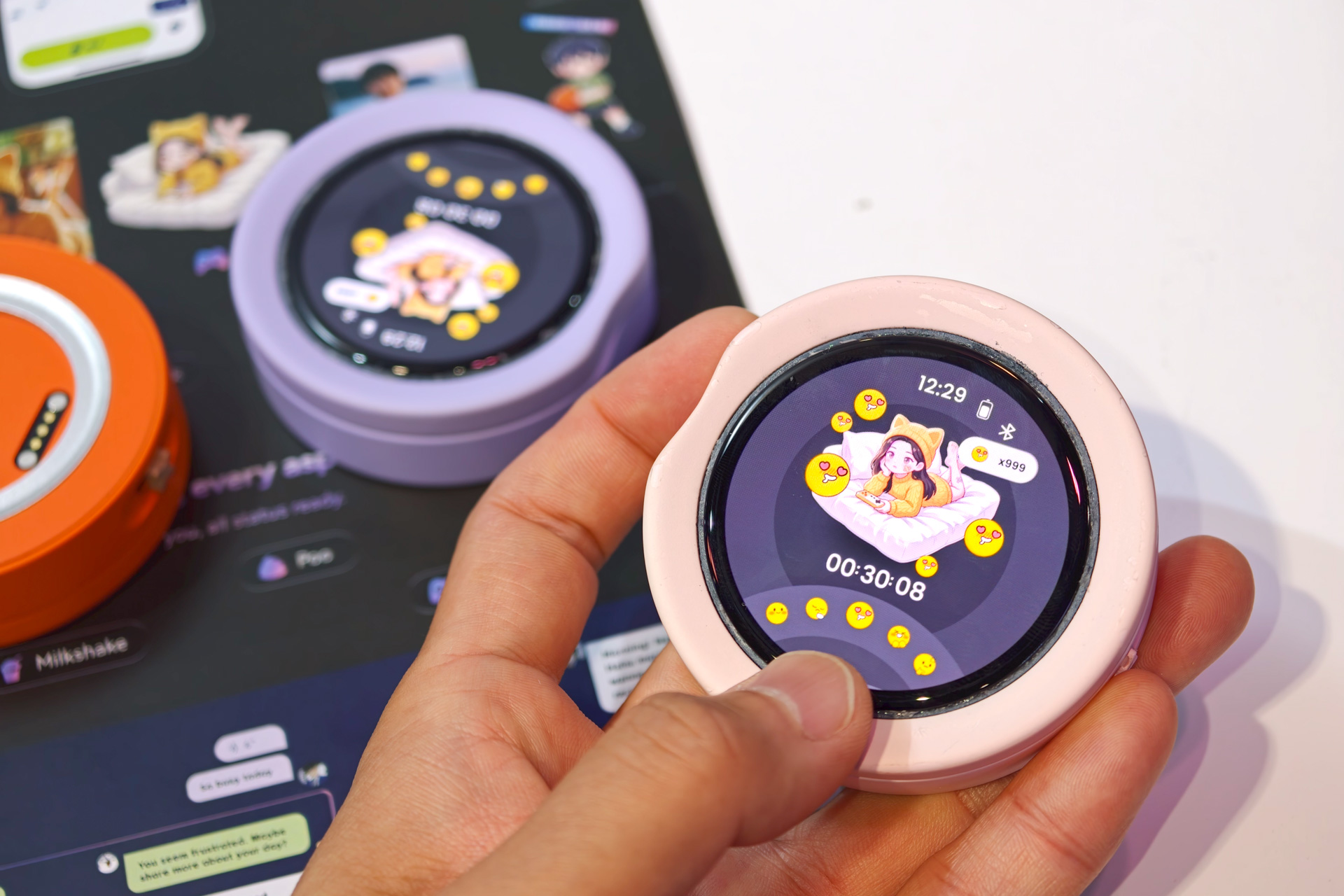
It can be hard to maintain the honeymoon period in a romantic relationship. Chongqing’s OmniDay knows this, and the company’s Cuddle device might be the most thoughtful tech attempt yet at closing that emotional gap. The gadget comes as a pair of circular, palm-sized screens—small enough to clip onto your bag using an optional carrying case, or stick magnetically to the back of your iPhone. Each screen displays an AI-generated cartoon avatar of its owner, built from a photo, and that avatar reacts to your emotional state through animations and haptic feedback.
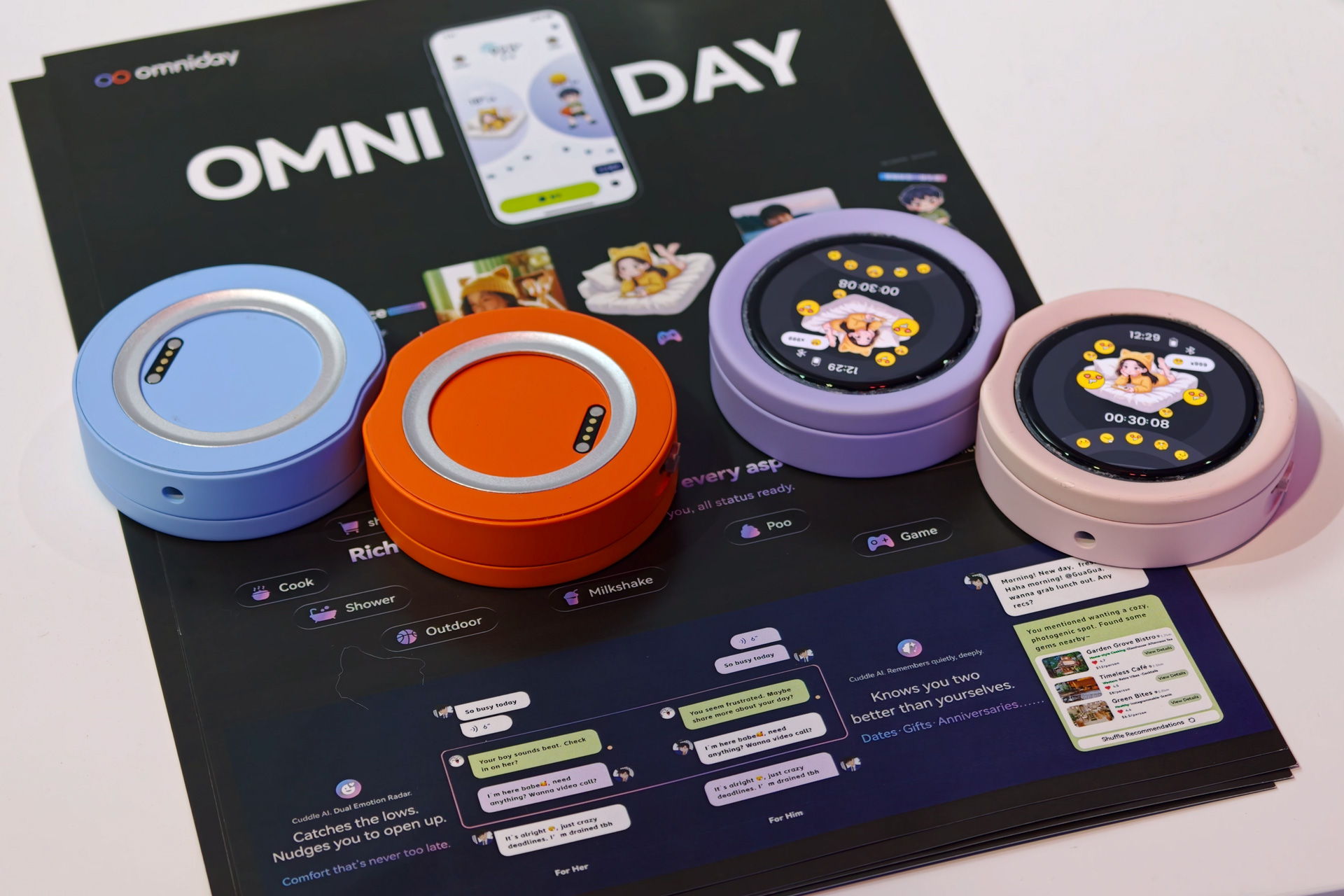
The interaction is refreshingly tactile: you share your current mood with your partner by rotating the ring bezel around the screen. It feels more intentional than firing off a thumbs-up emoji, and more intimate than a voice note. There’s a do-not-disturb toggle on the side for when you simply need space—which any healthy relationship should allow—and the companion app includes a private messaging environment for just the two of you. The standout feature, though, is the built-in AI wingman, which functions like an emotional translator. It flags when your messages lack context, nudges you to say a little more, or suggests something to do together—an afternoon tea spot, a dinner recommendation, a place nearby worth trying.
OmniDay ran an early bird pre-order of 400 units back in February starting at 1,480 RMB a pair, with seven different color options, with a full China launch planned for October.
RheoFit A1
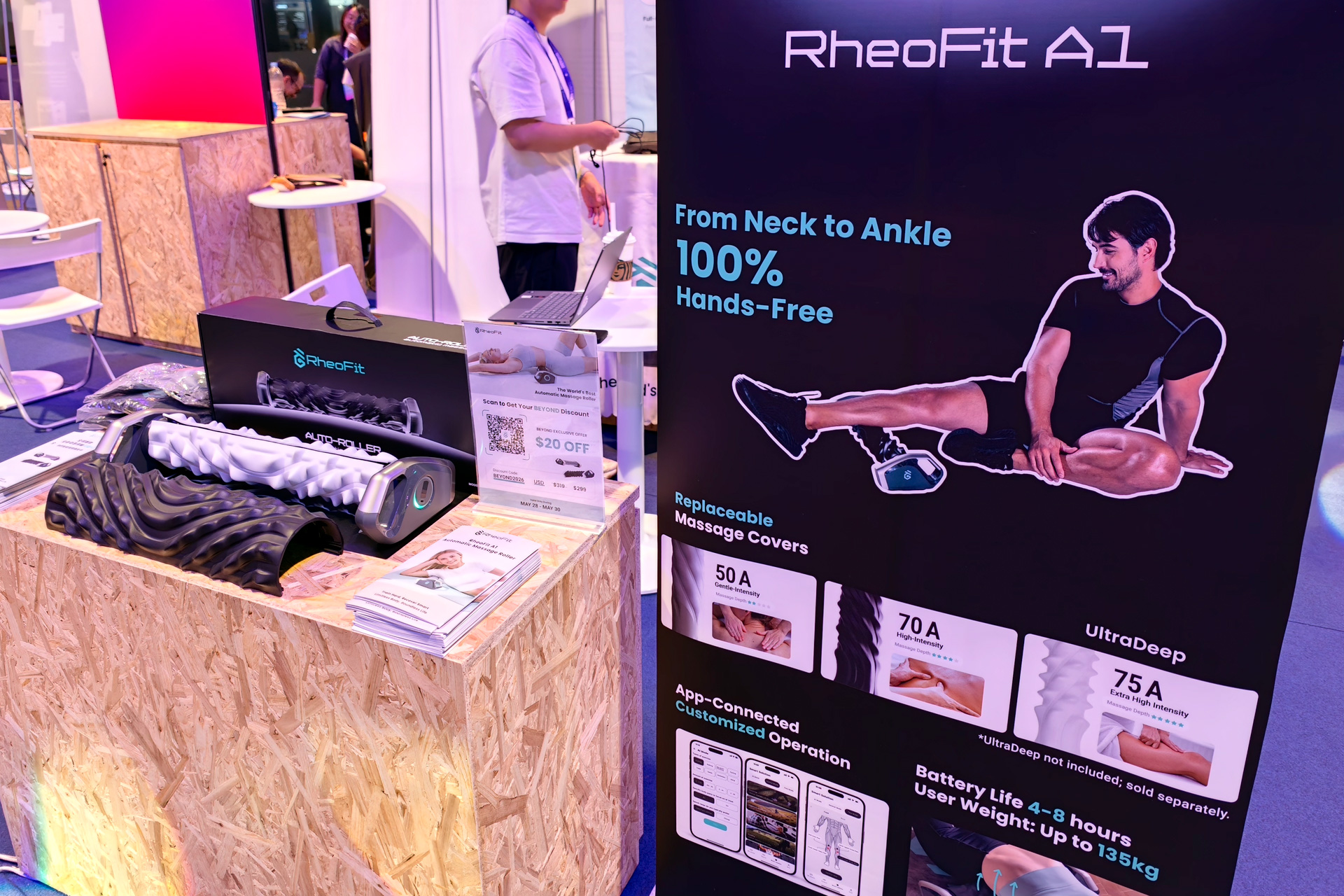
The RheoFit A1 bills itself as the world’s first automatic foam roller, and having tried it on the show floor, the claim holds up convincingly. Traditional foam rolling asks you to do all the work—a sweaty, ungainly wrestle with dense foam after an already exhausting workout. The A1 takes over completely, moving hands-free across your muscle groups via 84 massage nodes and a stall force of up to 300 pounds. Two interchangeable attachments let you dial in the intensity, while the companion app delivers over ten activity-specific recovery programs and an AI body scan that maps your stiffness in real time. Priced at 379 USD (approximately 2,564 RMB) with a one-year warranty, it’s positioned as a serious recovery tool rather than a novelty.
PlantSenso
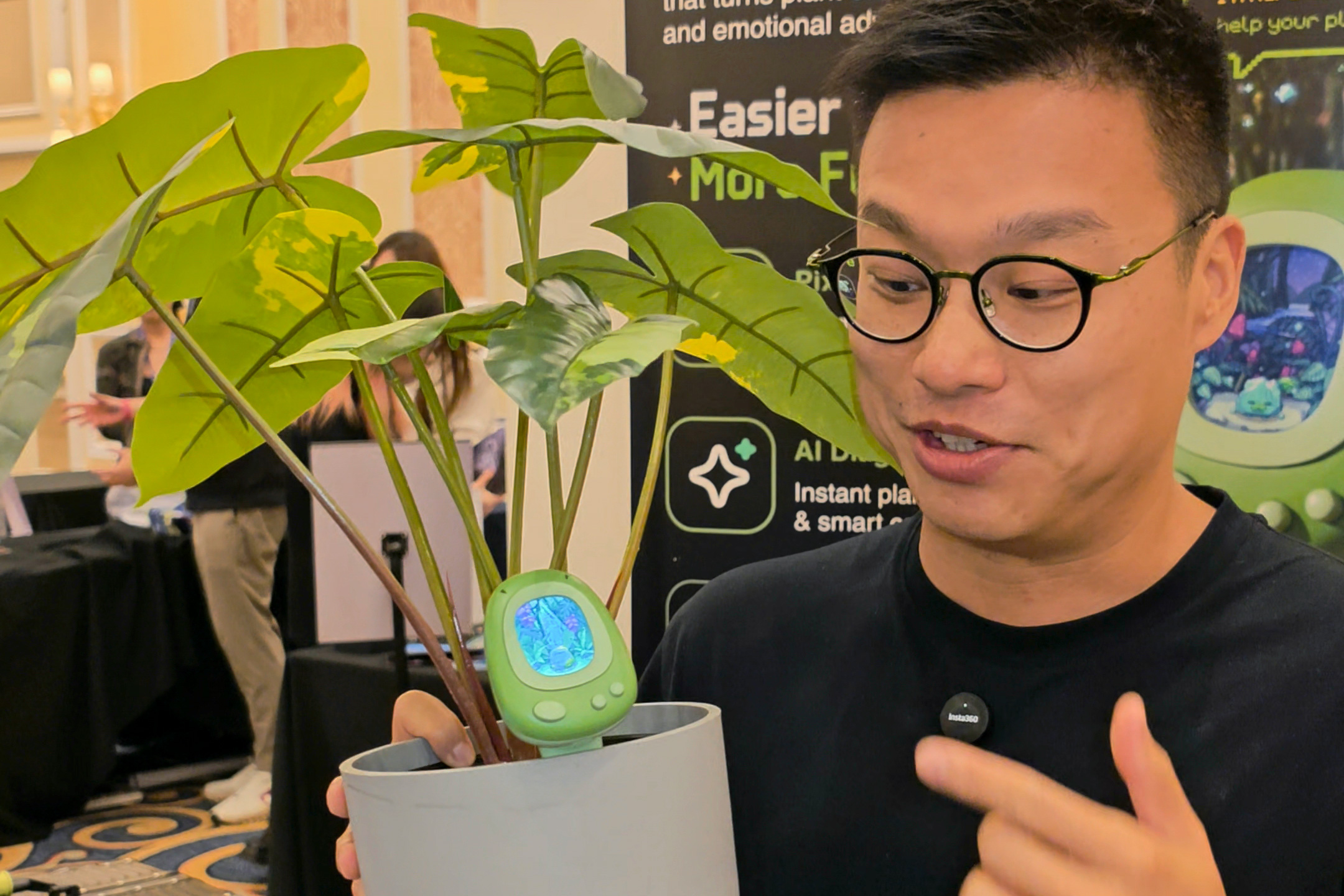
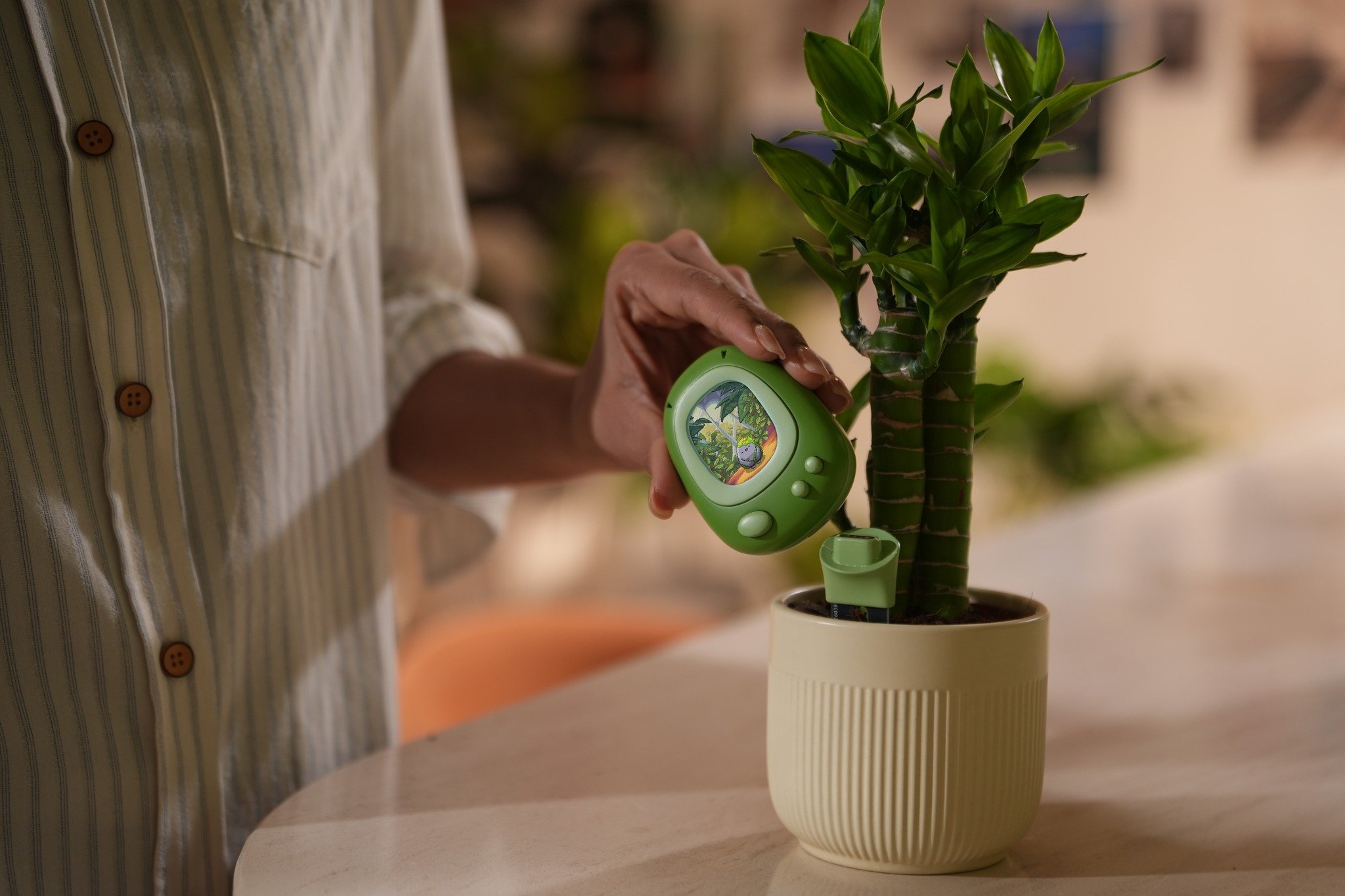
For the plant parents reading this—and there are increasingly many of you—SolidTech’s PlantSenso turns your real, living houseplant into a Tamagotchi-style companion, and it does so without a hint of irony. The device is a small probe you insert into the soil, topped with a tiny screen that hosts a pixel creature whose emotional state directly mirrors your plant’s health data. If your monstera is thirsty or getting blasted by too much afternoon light, the little character expresses it through animations, and you receive a nudge on your phone as well.
The gamification layer underneath is what makes it more than a novelty. PlantSenso dishes out “Green Quests”—daily and weekly tasks tied to your plant’s real-time needs—that earn in-app rewards and unlock new pixel characters as you hit care milestones. It claims to support over 12,000 plant species and integrates with smart home platforms including Home Assistant and IFTTT. It’s currently in pre-launch on Kickstarter, with a growing community of over 2,000 subscribers worldwide.
Kamingo E-Bike Converter
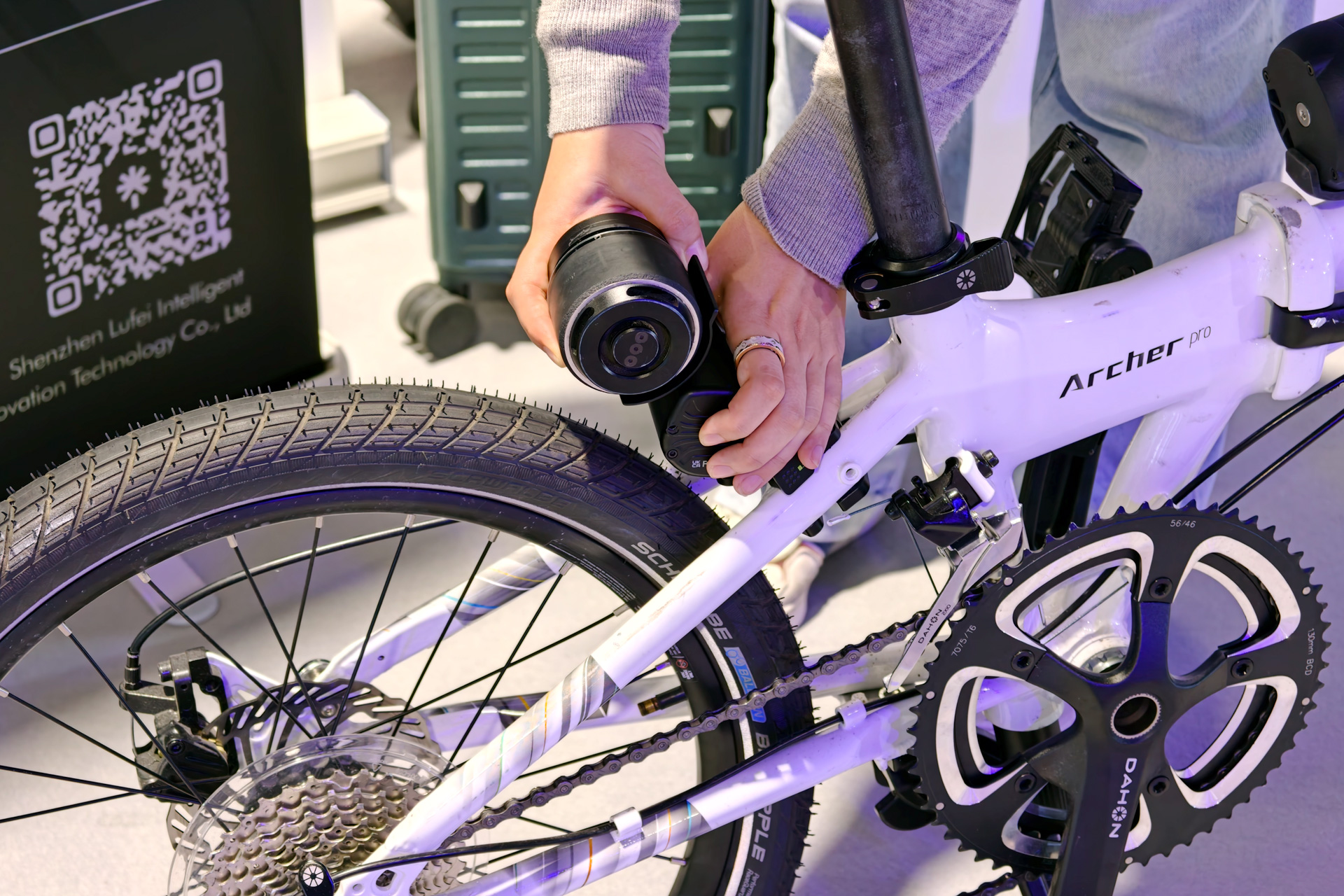
The Kamingo is a 750W snap-on system that transforms any regular bicycle into an e-bike in roughly ten seconds, once a one-time three-minute setup is out of the way. At just 2.3 kg, and with a battery cleverly shaped to resemble a standard water bottle, it folds neatly into your bike’s frame without looking like an obvious afterthought. Three modes handle the full range of riding scenarios: “Standby” for a completely natural ride, “Assist” for a pedal boost when you’re grinding up a hill or fighting headwinds, and “Cruise” for a fully electric experience on the days your legs simply aren’t interested. When done, the Kamingo fits in your backpack. This product will retail for 589 USD (approximately 3,984 RMB) soon.
HOVERAir AQUA
While not an obvious wellness gadget, the HOVERAir AQUA does promote watersports; it’s a drone that aquatic enthusiasts have been quietly waiting for. It’s IP67-rated, positively buoyant, and capable of taking off directly from the surface of water with no dry landing pad required. Weighing under 250 grams, it skirts registration requirements in most countries and shoots 4K footage at up to 100 frames per second. A small wearable device called the Lighthouse uses advanced positioning technology to keep the drone locked onto you with centimeter-level accuracy—even through waves and spray, and even when you briefly disappear from the camera’s view. With over ten flight modes including dedicated settings for paddleboarding, kayaking, and foiling, a “Turtle Flip” self-righting feature for when a wave gets the better of it, 128GB of built-in storage, and Level 7 wind resistance, the AQUA is one of the most complete packages on the market for anyone who spends serious time on the water. You can already grab one starting from 1,299 USD (approximately 8,788 RMB).
HealingSound EarNap
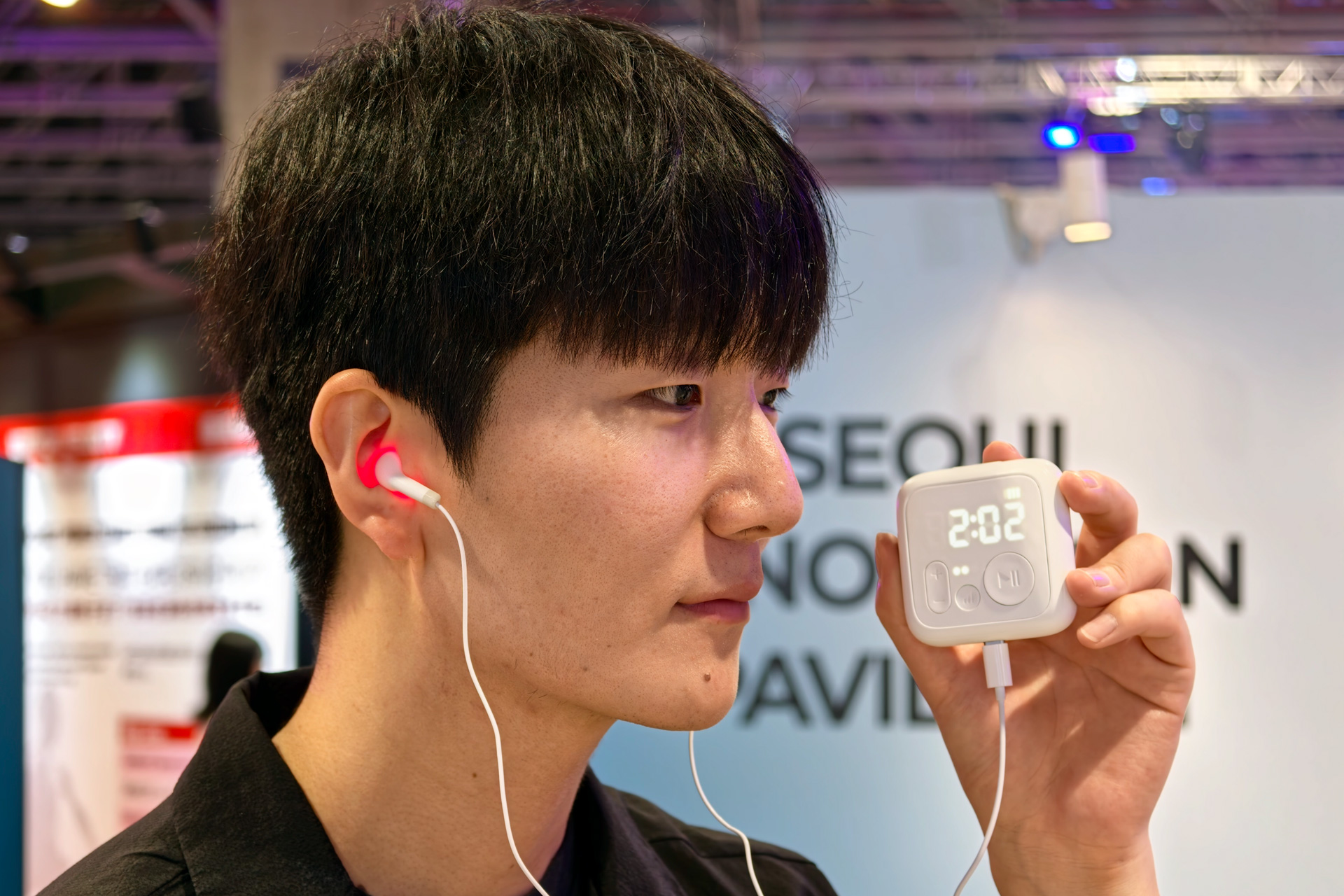
EarNap comes from Seoul-based startup HEALINGSOUND, founded in 2017 by specialists in medicine and IT. The 90 USD (approximately 609 RMB) device looks like a pair of wired earbuds, but rather than playing music, it emits red and deep near-infrared light at 660nm and 940nm wavelengths into the ear canal, promoting localized circulation and reducing inflammation. It’s designed to address otitis externa—the ear canal inflammation that disproportionately affects swimmers—and does so at temperatures kept safely below 39°C, compared to the 50–60°C output of comparable hospital-grade equipment. Fifteen minutes of daily use is the recommended protocol for prevention and treatment, and the device has developed a genuine following among competitive swimmers in South Korea.
HEALINGSOUND already supplies major medical institutions including Yonsei University Severance Hospital, and brought EarNap to CES 2025 to begin building its global presence. It’s a niche product solving a real, underserved problem—and that, historically, tends to be exactly where the most lasting innovations begin.
Cover image via SolidTech. All other Images via Richard Lai.