Feature image of China’s Aesthetic Crisis: What Happened to Chinese Art and Design?

China’s Aesthetic Crisis: What Happened to Chinese Art and Design?

6 mins read

6 mins read

Feature image of China’s Aesthetic Crisis: What Happened to Chinese Art and Design?
From assembly-line style art education to overwhelming commercial designs, RADII looks into how China’s aesthetic crisis reveals a growing tension between cultural heritage and modernity.

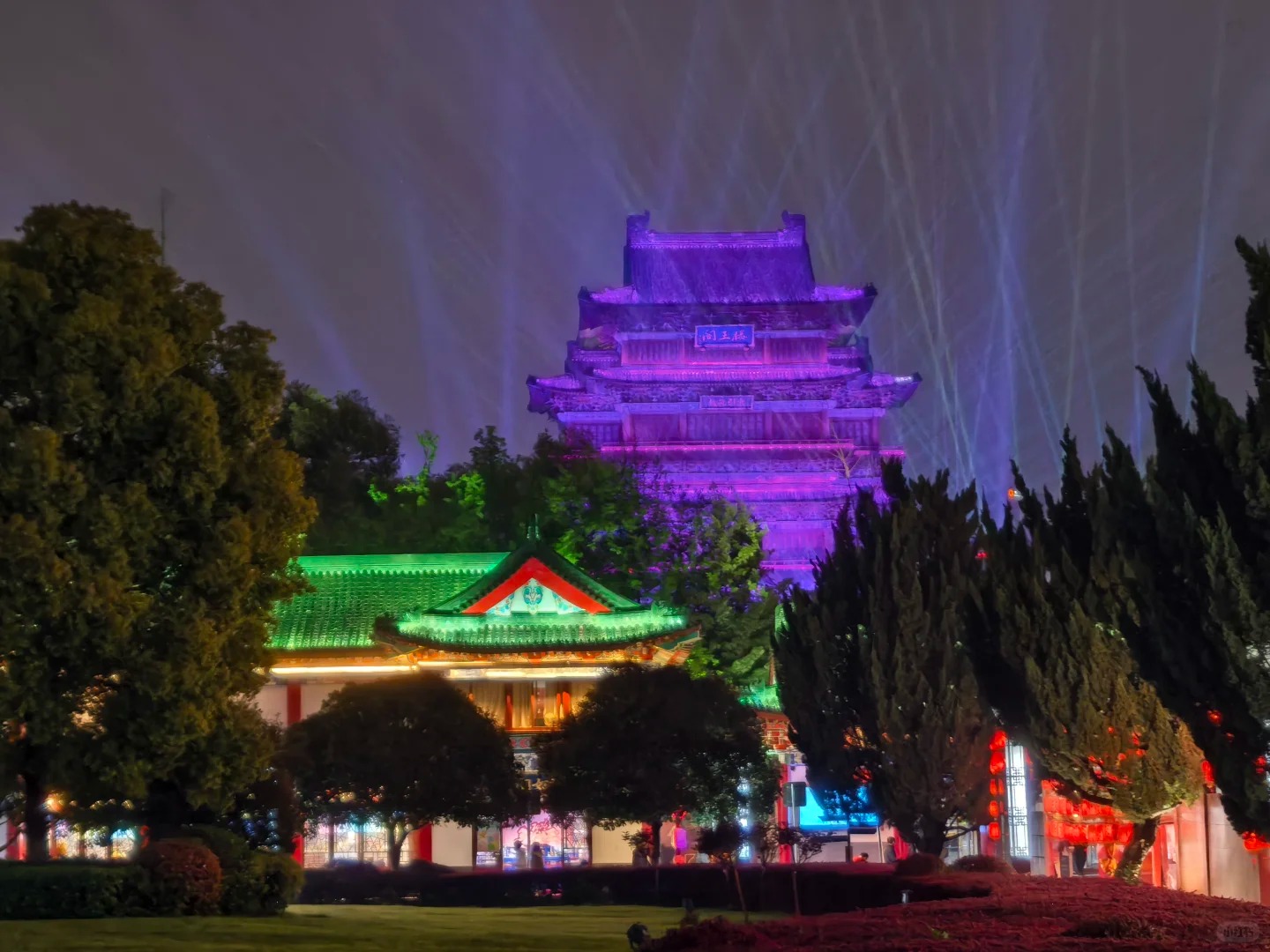
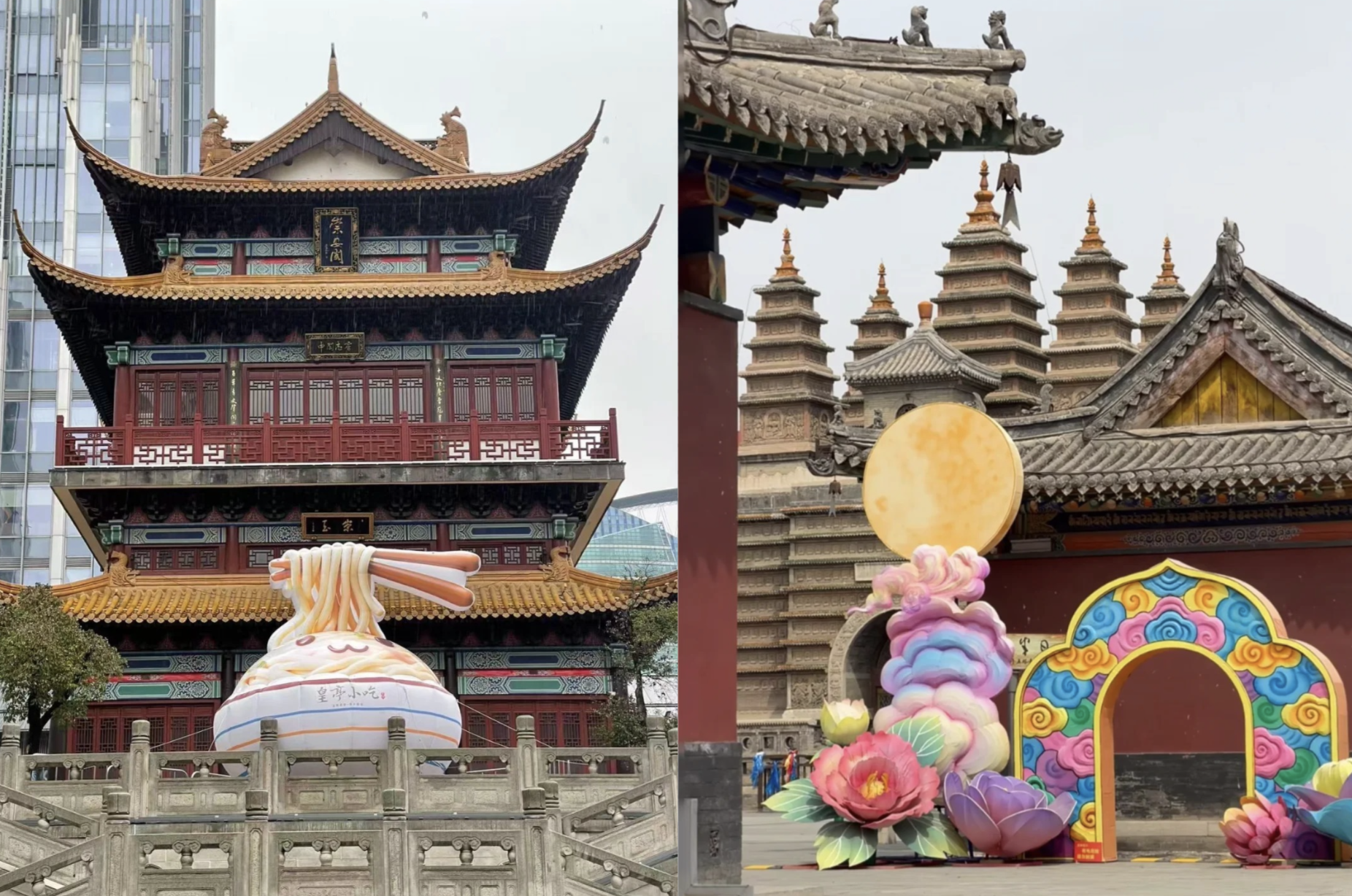
We’ve all seen them: tourist destinations in China packed with tacky signs and ill-placed cartoon sculptures. Ancient temples with LED lights lining their rooftops. Cave systems with rainbow light shows that feel more like a nightclub. And don’t forget the loudspeakers advertising the same viral foods, all masquerading as local specialties. The Chinese tourism sector continues to grow, yet Chinese tourists have long noticed these problems, and they haven’t been shy about complaining.

Search the term 审美 (shěn měi) on RedNote, and you’ll find not just casual complaints about bad tourist experiences, but entire video essays on the failure of arts education in China. The word translates to “aesthetics,” but its literal meaning is closer to “an examination of beauty.” In a sense, the state of aesthetics across China’s tourism and advertising sectors raises a question that goes beyond bad design: have we forgotten how to recognize beauty in the first place?
RADII explores the growing aesthetics crisis in China, characterized by loud and tacky commercial designs.
Yes, it’s real. It’s the Pavilion of Prince Teng, built in 653 AD, in nightclub style. Image via RedNote.

审 (Shěn): To Examine

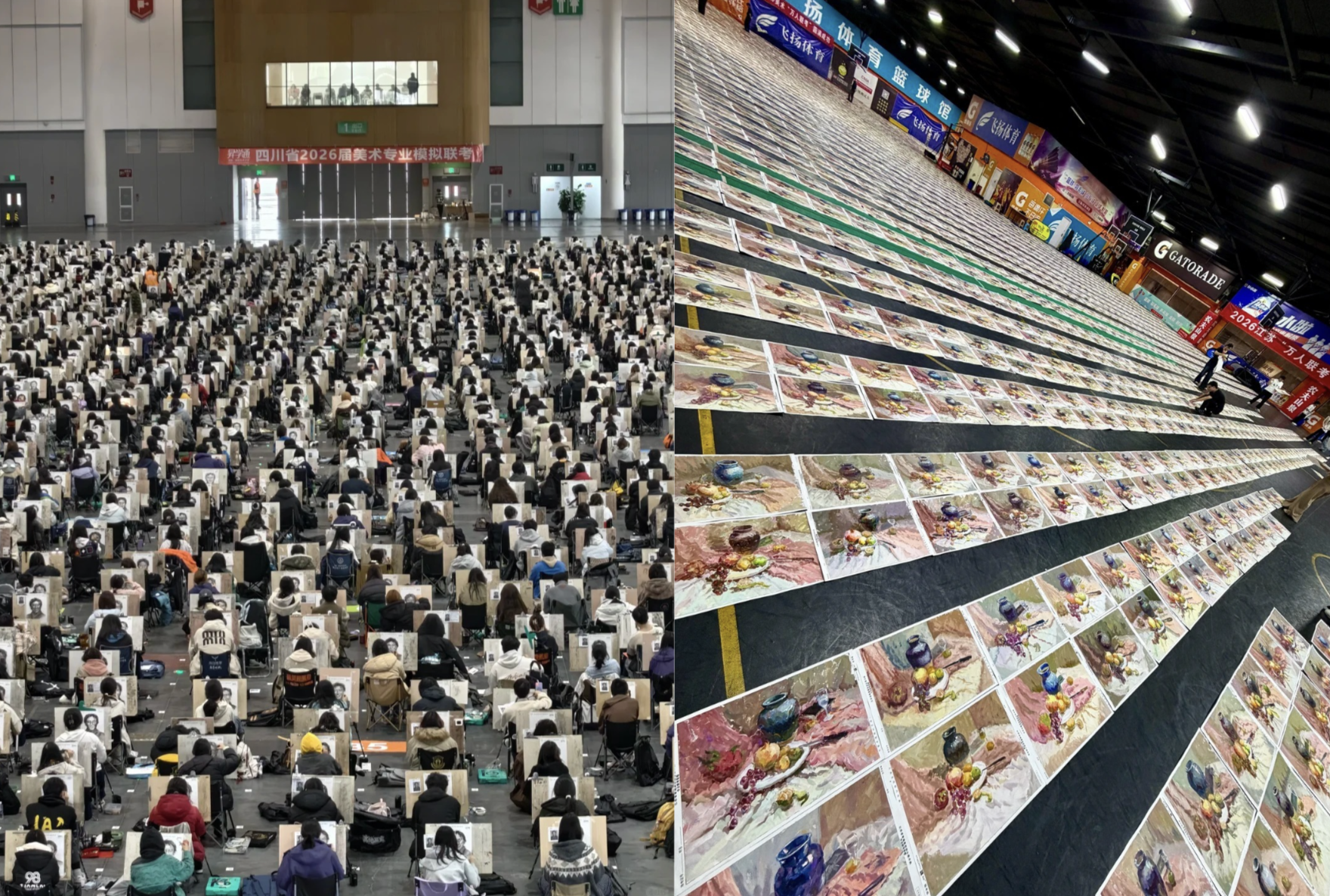
The gaokao, China’s national college entrance exam, is often described as the most important day of a child’s life. Some students begin preparing for it in the first grade, and even the smallest difference in score can determine the course of their lives. For students pursuing the arts track, an additional exam is tacked on top, and in 2026, roughly 400,000 students sat for it across China. That’s before they even face the entrance exam for individual art institutions, where the acceptance rates can be as low as 2%. It is brutally competitive.

Increasingly, studying art has also become an alternative to the traditional gaokao route, a way to escape the hypercompetitive race for a 985 or 211 university (China’s elite university tiers) while still earning comparable prestige through an arts school.
RADII explores the growing aesthetics crisis in China, characterized by loud and tacky commercial designs.
Province-wide art exam. Images via RedNote, left and right.

But look closer on exam day, and you’ll find everyone drawing the exact same thing, following the same formulas, trained at near-identical prep schools, and producing work that graders spend less than a second evaluating. Rather than honing imagination, students learn to produce what graders expect to see. Technical skill is valued over creativity, and the final product matters more than the process of getting there.

In a system fixated on exam scores, arts education gets little emphasis in the formative years, yet the ability to understand beauty begins precisely in childhood. It lies not just in drawing, but in exploring all kinds of creative mediums. When creativity is pushed through an assembly line, however, the result is an art education system that prizes uniformity at the expense of imagination. 

The design we see at China’s tourist destinations follows a similar logic. Aesthetics and harmony are pushed aside in favor of maximum visual impact, achieved by seeing who can be the boldest and loudest. We say beauty is in the eye of the beholder, but what happens when the beholder was never taught how to examine and understand beauty to begin with?
RADII explores the growing aesthetics crisis in China, characterized by loud and tacky commercial designs.
Cartoon sculptures at historical landmarks. Image via RedNote, left and right.

美 (Měi): Beauty

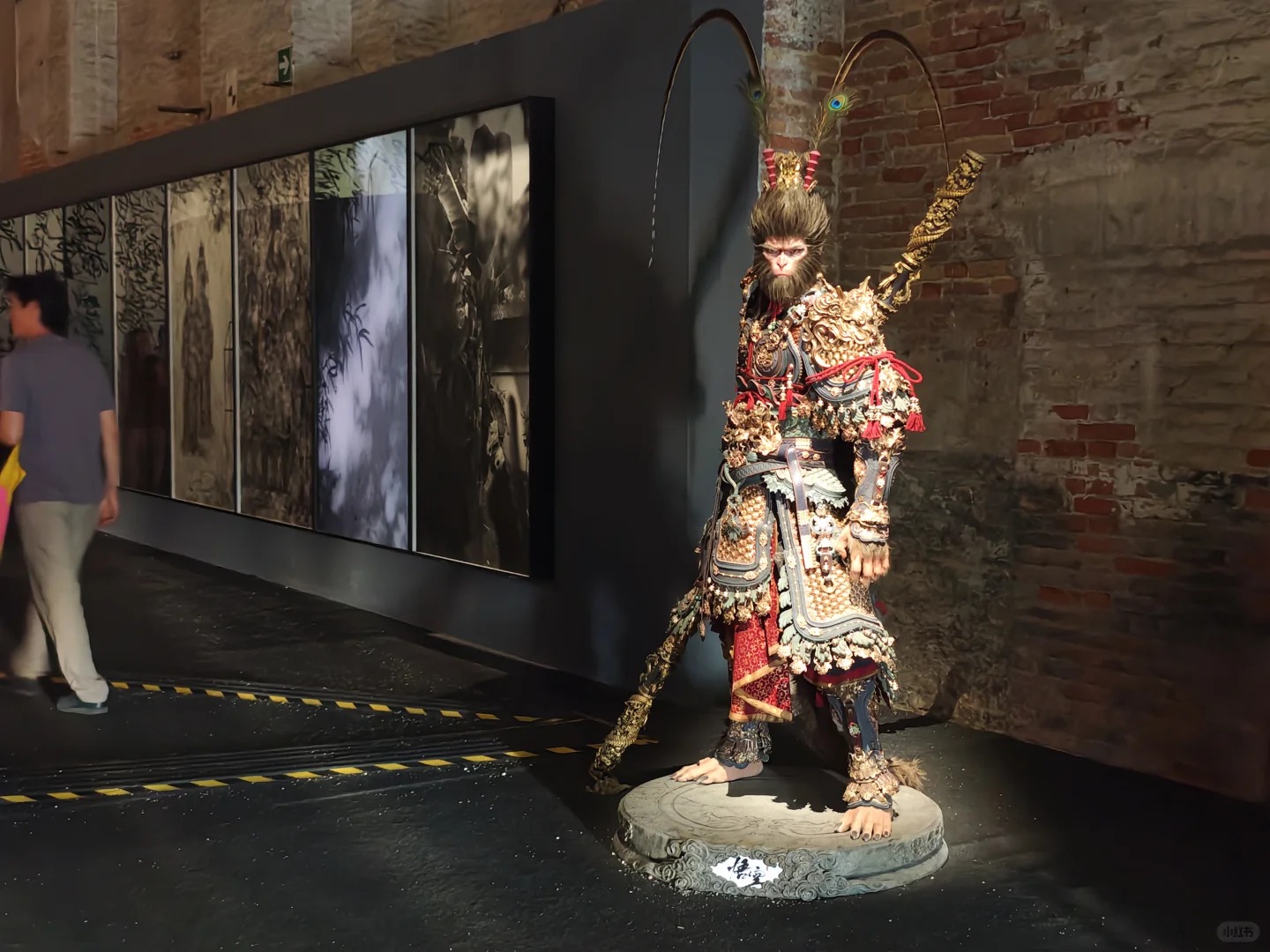
One of the most controversial moments in the Chinese art world lately came at the 2026 Venice Biennale, an international art exhibition featuring national pavilions from 99 countries. Netizens did not hesitate to voice their displeasure with the Chinese pavilion. While other countries explored feminism, spirituality, and ethnic traditions, visitors to the Chinese gallery were greeted by a replica of Wukong from the Black Myth video game.

Inside, the centerpiece was a robotic arm writing in the style of Wang Dongling, one of China’s greatest living calligraphers, after his work had been fed to AI. Many Chinese visitors left disappointed and embarrassed, taking to the internet to ask a simple question: with 5,000 years of culture and history to draw upon, was this all the curators could come up with?
RADII explores the growing aesthetics crisis in China, characterized by loud and tacky commercial designs.
At the Chinese pavilion’s entrance. Image via RedNote.

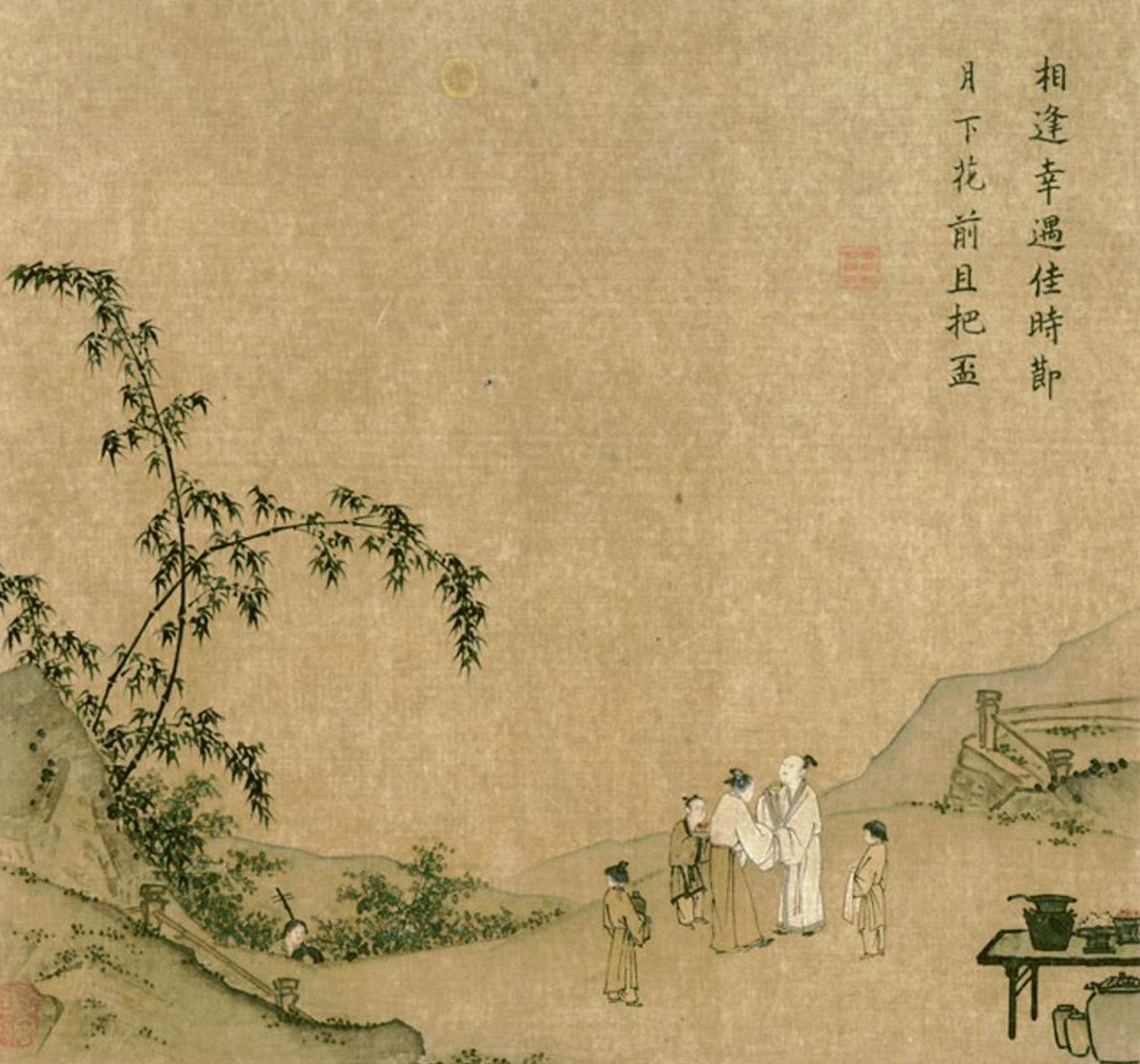
If we are asking what 5,000 years of culture have to offer, one possible answer is 留白 (liú bái), literally “leaving blank space.” It is a defining principle in many traditional Chinese art forms. Look at ancient Chinese scroll paintings, and you’ll find blank space taking up nearly half the page, giving the imagination room to wander. We see it not only in fine art, but also in ceramics, flower arrangement, architecture, everyday design, and even literature. Not to be confused with minimalism, liu bai is about leaving just enough space for introspection and harmony.

Take the works of Ma Yuan, for example, one of the most renowned artists of the Song Dynasty, an era when art in China flourished. In his paintings, mountains, trees, and figures cling to the corners, while the sky remains largely unpainted, accompanied by nothing more than a solitary moon. What the painter leaves out is as deliberate as what he puts in. The vastness of the sky, rivers, and mountains is what invites us to contemplate nature’s immensity.
RADII explores the growing aesthetics crisis in China, characterized by loud and tacky commercial designs.
月下把杯图 (A Cup in Hand under the Moon), by Ma Yuan

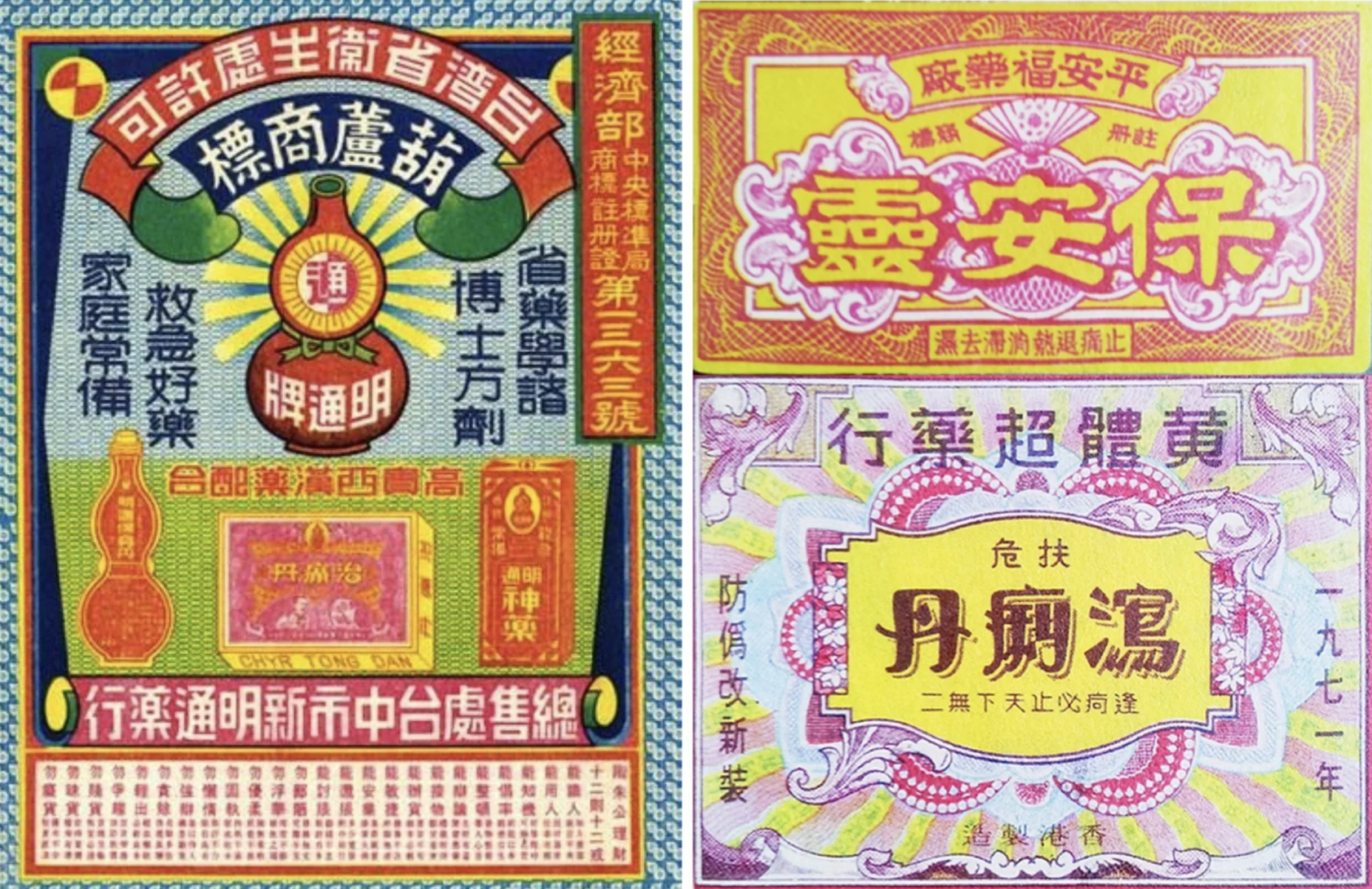
Though liu bai is a crucial aspect of Chinese art, it’s not what Chinese art is all about. When commercial design is done well, it is done exceedingly well. In the wake of the Cultural Revolution, the 1980s ushered in a remarkable renaissance in Chinese art and design. Its legacy can still be seen in the traditional medicine packaging that has recently gone viral, as well as in cigarette boxes and countless other examples of everyday graphic design. In contemporary China’s rush toward modernity and cultural influence, however, quality has often been sacrificed in the pursuit of speed and lower costs.
RADII explores the growing aesthetics crisis in China, characterized by loud and tacky commercial designs.
Traditional Chinese medicine box designs. Images via RedNote.

The Cost of Being Seen

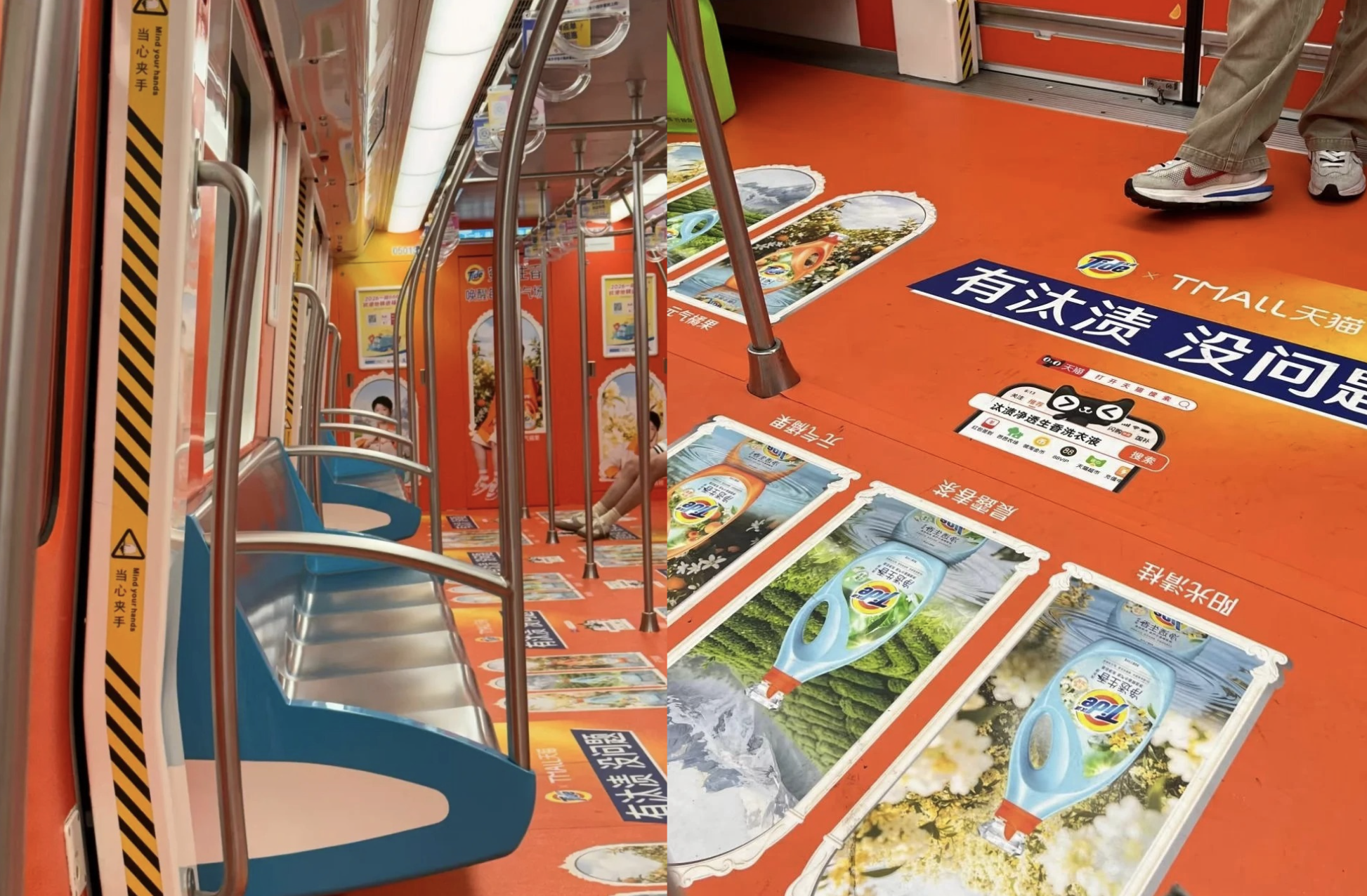
To understand the disparity, look at today’s urban centers. You are almost guaranteed to be met with advertising boards in highly saturated colors. Buildings, and sometimes even trees, are covered in LED lights. Even subway floors are wrapped in ads. Across Chinese cities, brands and commercial property owners are locked in a constant battle for attention. The result is a visual landscape where everything is shouting at you without respite.
RADII explores the growing aesthetics crisis in China, characterized by loud and tacky commercial designs.
Advertisement covering the entire subway car. Image via RedNote.

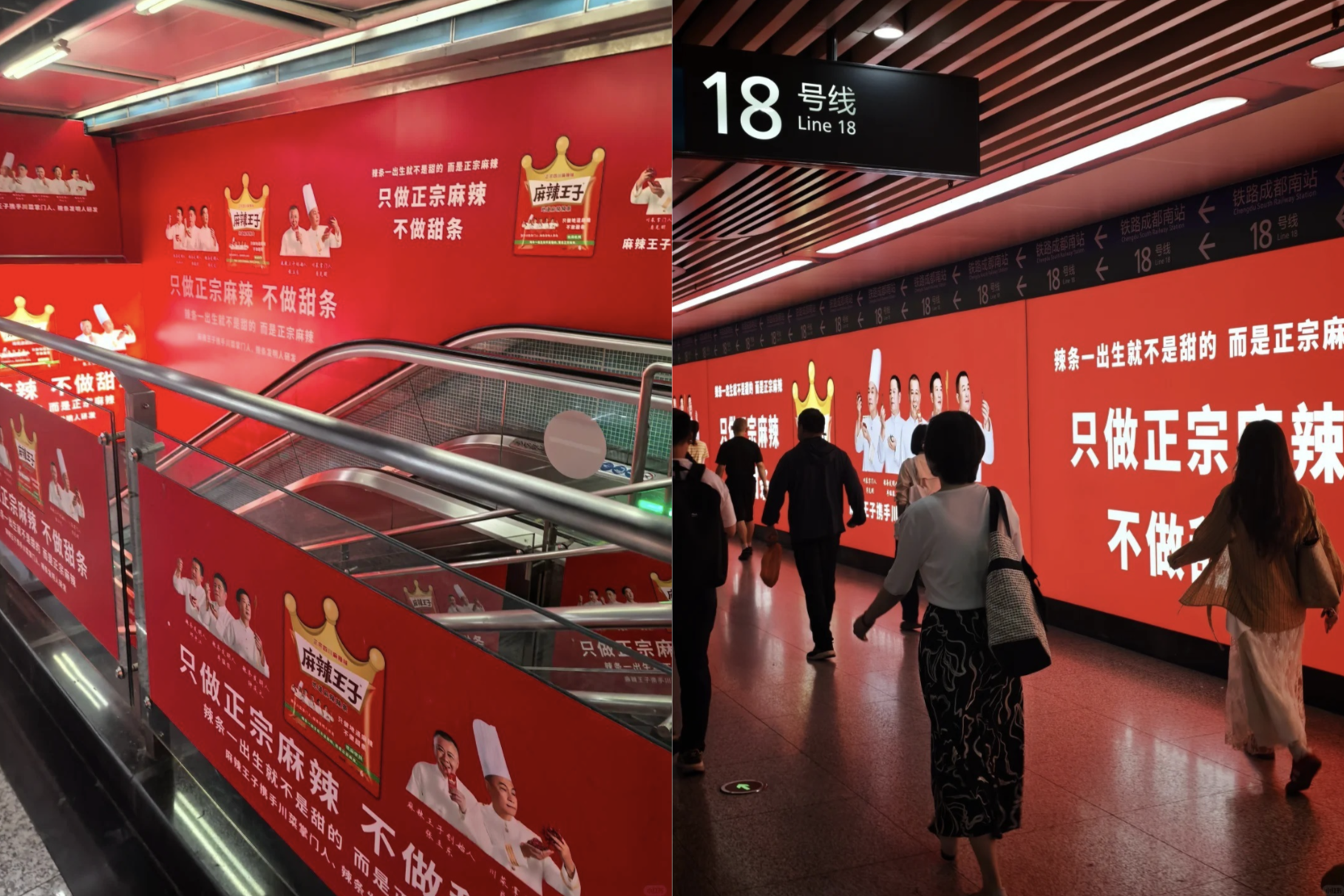
The most recent brand to receive backlash was the snack company 麻辣王子 (MaLa WangZi). Its ad design used bright red as the only background color. That might not sound bad, but imagine walking through a subway tunnel and seeing only that same red and nothing else. Netizens described it as an assault on the eyes.

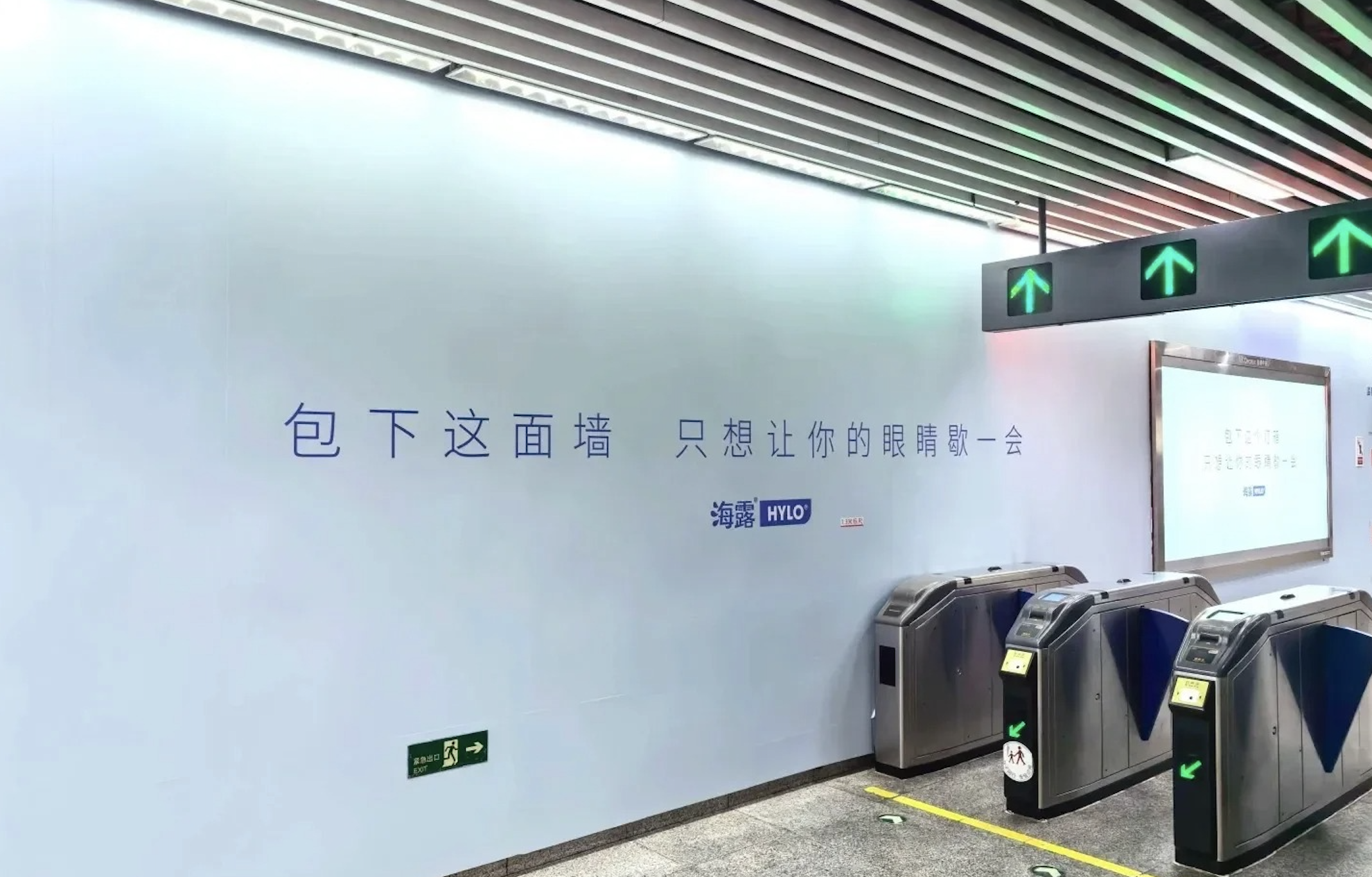
Overbearing designs have become so commonplace that the complaints are no longer limited to social media. Some brands have begun turning visual restraint into a marketing strategy. 海露 (HYLO), an eye drop maker, ran an ad spread entirely in pale sky blue with a single line: “We rented this wall to let your eyes rest.” In a sea of noise, silence became the selling point.
RADII explores the growing aesthetics crisis in China, characterized by loud and tacky commercial designs.
Advertisement from MaLa WangZi. Image via RedNote, left and right.
RADII explores the growing aesthetics crisis in China, characterized by loud and tacky commercial designs.
Advertisement from HYLO. Image via RedNote.

Still, ads like MaLa WangZi’s remain the majority, raising a broader question: do businesses have a responsibility to preserve a city’s visual harmony? And if one quiet wall can make a commuter pause, what might a quieter city do?

The gap between the art and design of contemporary China and that of centuries ago—or even just a few decades ago—is difficult to reconcile with a culture so rich in beauty. Beyond inequalities in education and the growing prevalence of AI-generated “art,” the problem also reflects the ideological constraints on how art is taught, evaluated, and understood in China. Instead of cultivating respect for nature and an appreciation of beauty, we are left with homogeneity and a failure to see art as a skill that requires both practice and imagination.

And yet, the appetite for beauty has not disappeared. It shows up in a pale blue wall rented for rest, in the flood of frustrated posts on social media, and in people asking, out loud, what it means to examine beauty at all. Perhaps the answer to China’s aesthetic crisis lies in what liu bai has been teaching us all along: sometimes, beauty just needs a little room to breathe.
RADII explores the growing aesthetics crisis in China, characterized by loud and tacky commercial designs.
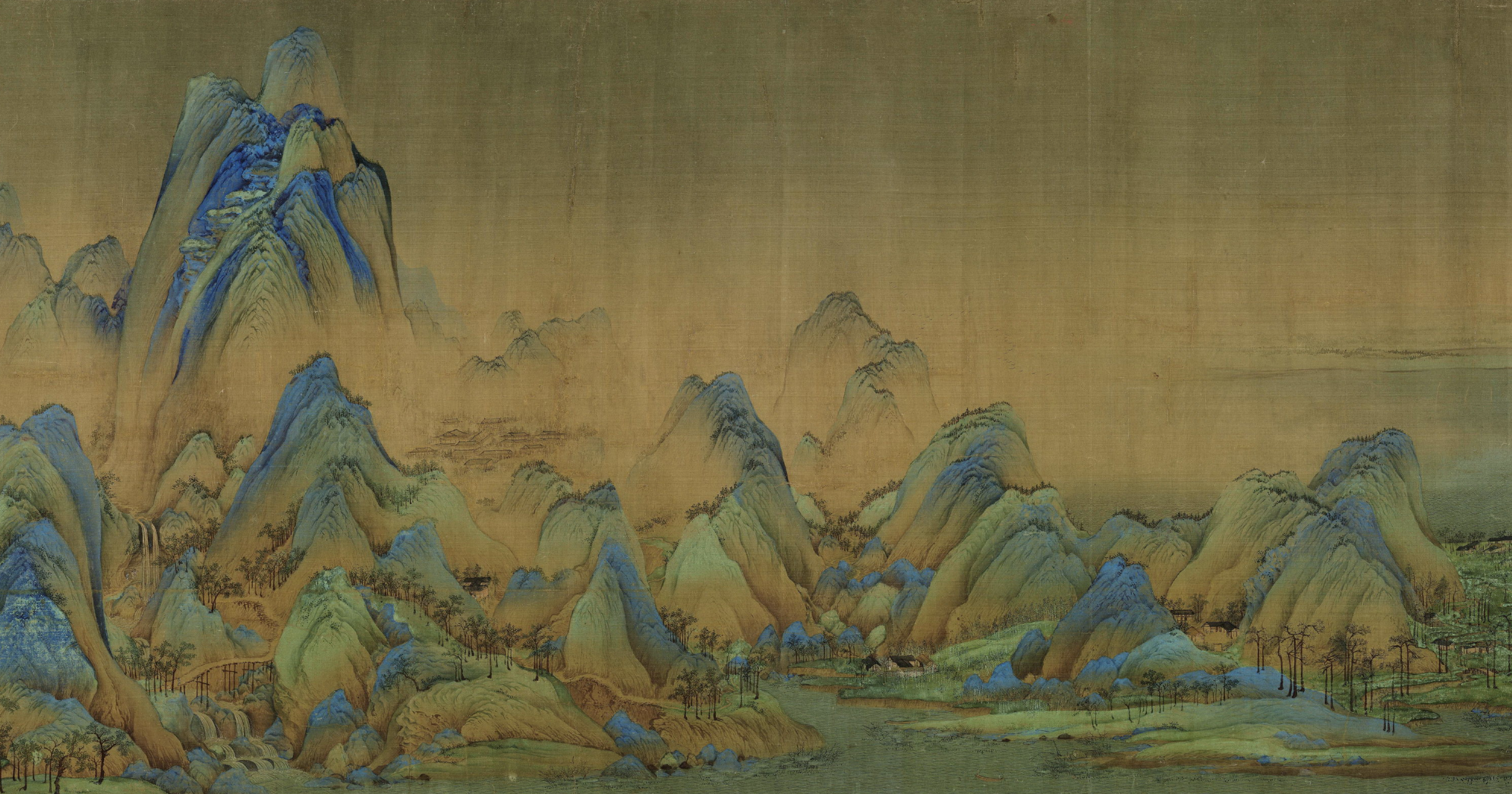
A section of 万里江山图 (A Thousand Li of Rivers and Mountains), by Wang Ximeng

Cover image via RedNote.
NEWSLETTER

Get weekly top picks and exclusive, newsletter only content delivered straight to you inbox.

NEWSLETTER

Get weekly top picks and exclusive, newsletter only content delivered straight to you inbox.

RADII NEWSLETTER

Get weekly top picks and exclusive, newsletter only content delivered straight to you inbox

Feature image of China’s Aesthetic Crisis: What Happened to Chinese Art and Design?

China’s Aesthetic Crisis: What Happened to Chinese Art and Design?

6 mins read

From assembly-line style art education to overwhelming commercial designs, RADII looks into how China’s aesthetic crisis reveals a growing tension between cultural heritage and modernity.

We’ve all seen them: tourist destinations in China packed with tacky signs and ill-placed cartoon sculptures. Ancient temples with LED lights lining their rooftops. Cave systems with rainbow light shows that feel more like a nightclub. And don’t forget the loudspeakers advertising the same viral foods, all masquerading as local specialties. The Chinese tourism sector continues to grow, yet Chinese tourists have long noticed these problems, and they haven’t been shy about complaining.

Search the term 审美 (shěn měi) on RedNote, and you’ll find not just casual complaints about bad tourist experiences, but entire video essays on the failure of arts education in China. The word translates to “aesthetics,” but its literal meaning is closer to “an examination of beauty.” In a sense, the state of aesthetics across China’s tourism and advertising sectors raises a question that goes beyond bad design: have we forgotten how to recognize beauty in the first place?

RADII explores the growing aesthetics crisis in China, characterized by loud and tacky commercial designs.
Yes, it’s real. It’s the Pavilion of Prince Teng, built in 653 AD, in nightclub style. Image via RedNote.

审 (Shěn): To Examine

The gaokao, China’s national college entrance exam, is often described as the most important day of a child’s life. Some students begin preparing for it in the first grade, and even the smallest difference in score can determine the course of their lives. For students pursuing the arts track, an additional exam is tacked on top, and in 2026, roughly 400,000 students sat for it across China. That’s before they even face the entrance exam for individual art institutions, where the acceptance rates can be as low as 2%. It is brutally competitive.

Increasingly, studying art has also become an alternative to the traditional gaokao route, a way to escape the hypercompetitive race for a 985 or 211 university (China’s elite university tiers) while still earning comparable prestige through an arts school.

RADII explores the growing aesthetics crisis in China, characterized by loud and tacky commercial designs.
Province-wide art exam. Images via RedNote, left and right.

But look closer on exam day, and you’ll find everyone drawing the exact same thing, following the same formulas, trained at near-identical prep schools, and producing work that graders spend less than a second evaluating. Rather than honing imagination, students learn to produce what graders expect to see. Technical skill is valued over creativity, and the final product matters more than the process of getting there.

In a system fixated on exam scores, arts education gets little emphasis in the formative years, yet the ability to understand beauty begins precisely in childhood. It lies not just in drawing, but in exploring all kinds of creative mediums. When creativity is pushed through an assembly line, however, the result is an art education system that prizes uniformity at the expense of imagination. 

The design we see at China’s tourist destinations follows a similar logic. Aesthetics and harmony are pushed aside in favor of maximum visual impact, achieved by seeing who can be the boldest and loudest. We say beauty is in the eye of the beholder, but what happens when the beholder was never taught how to examine and understand beauty to begin with?

RADII explores the growing aesthetics crisis in China, characterized by loud and tacky commercial designs.
Cartoon sculptures at historical landmarks. Image via RedNote, left and right.

美 (Měi): Beauty

One of the most controversial moments in the Chinese art world lately came at the 2026 Venice Biennale, an international art exhibition featuring national pavilions from 99 countries. Netizens did not hesitate to voice their displeasure with the Chinese pavilion. While other countries explored feminism, spirituality, and ethnic traditions, visitors to the Chinese gallery were greeted by a replica of Wukong from the Black Myth video game.

Inside, the centerpiece was a robotic arm writing in the style of Wang Dongling, one of China’s greatest living calligraphers, after his work had been fed to AI. Many Chinese visitors left disappointed and embarrassed, taking to the internet to ask a simple question: with 5,000 years of culture and history to draw upon, was this all the curators could come up with?

RADII explores the growing aesthetics crisis in China, characterized by loud and tacky commercial designs.
At the Chinese pavilion’s entrance. Image via RedNote.

If we are asking what 5,000 years of culture have to offer, one possible answer is 留白 (liú bái), literally “leaving blank space.” It is a defining principle in many traditional Chinese art forms. Look at ancient Chinese scroll paintings, and you’ll find blank space taking up nearly half the page, giving the imagination room to wander. We see it not only in fine art, but also in ceramics, flower arrangement, architecture, everyday design, and even literature. Not to be confused with minimalism, liu bai is about leaving just enough space for introspection and harmony.

Take the works of Ma Yuan, for example, one of the most renowned artists of the Song Dynasty, an era when art in China flourished. In his paintings, mountains, trees, and figures cling to the corners, while the sky remains largely unpainted, accompanied by nothing more than a solitary moon. What the painter leaves out is as deliberate as what he puts in. The vastness of the sky, rivers, and mountains is what invites us to contemplate nature’s immensity.

RADII explores the growing aesthetics crisis in China, characterized by loud and tacky commercial designs.
月下把杯图 (A Cup in Hand under the Moon), by Ma Yuan

Though liu bai is a crucial aspect of Chinese art, it’s not what Chinese art is all about. When commercial design is done well, it is done exceedingly well. In the wake of the Cultural Revolution, the 1980s ushered in a remarkable renaissance in Chinese art and design. Its legacy can still be seen in the traditional medicine packaging that has recently gone viral, as well as in cigarette boxes and countless other examples of everyday graphic design. In contemporary China’s rush toward modernity and cultural influence, however, quality has often been sacrificed in the pursuit of speed and lower costs.

RADII explores the growing aesthetics crisis in China, characterized by loud and tacky commercial designs.
Traditional Chinese medicine box designs. Images via RedNote.

The Cost of Being Seen

To understand the disparity, look at today’s urban centers. You are almost guaranteed to be met with advertising boards in highly saturated colors. Buildings, and sometimes even trees, are covered in LED lights. Even subway floors are wrapped in ads. Across Chinese cities, brands and commercial property owners are locked in a constant battle for attention. The result is a visual landscape where everything is shouting at you without respite.

RADII explores the growing aesthetics crisis in China, characterized by loud and tacky commercial designs.
Advertisement covering the entire subway car. Image via RedNote.

The most recent brand to receive backlash was the snack company 麻辣王子 (MaLa WangZi). Its ad design used bright red as the only background color. That might not sound bad, but imagine walking through a subway tunnel and seeing only that same red and nothing else. Netizens described it as an assault on the eyes.

Overbearing designs have become so commonplace that the complaints are no longer limited to social media. Some brands have begun turning visual restraint into a marketing strategy. 海露 (HYLO), an eye drop maker, ran an ad spread entirely in pale sky blue with a single line: “We rented this wall to let your eyes rest.” In a sea of noise, silence became the selling point.

RADII explores the growing aesthetics crisis in China, characterized by loud and tacky commercial designs.
Advertisement from MaLa WangZi. Image via RedNote, left and right.
RADII explores the growing aesthetics crisis in China, characterized by loud and tacky commercial designs.
Advertisement from HYLO. Image via RedNote.

Still, ads like MaLa WangZi’s remain the majority, raising a broader question: do businesses have a responsibility to preserve a city’s visual harmony? And if one quiet wall can make a commuter pause, what might a quieter city do?

The gap between the art and design of contemporary China and that of centuries ago—or even just a few decades ago—is difficult to reconcile with a culture so rich in beauty. Beyond inequalities in education and the growing prevalence of AI-generated “art,” the problem also reflects the ideological constraints on how art is taught, evaluated, and understood in China. Instead of cultivating respect for nature and an appreciation of beauty, we are left with homogeneity and a failure to see art as a skill that requires both practice and imagination.

And yet, the appetite for beauty has not disappeared. It shows up in a pale blue wall rented for rest, in the flood of frustrated posts on social media, and in people asking, out loud, what it means to examine beauty at all. Perhaps the answer to China’s aesthetic crisis lies in what liu bai has been teaching us all along: sometimes, beauty just needs a little room to breathe.

RADII explores the growing aesthetics crisis in China, characterized by loud and tacky commercial designs.
A section of 万里江山图 (A Thousand Li of Rivers and Mountains), by Wang Ximeng

Cover image via RedNote.
NEWSLETTER

Get weekly top picks and exclusive, newsletter only content delivered straight to you inbox.

RADII NEWSLETTER

Get weekly top picks and exclusive, newsletter only content delivered straight to you inbox

RELATED POSTS

Feature image of China’s Aesthetic Crisis: What Happened to Chinese Art and Design?

China’s Aesthetic Crisis: What Happened to Chinese Art and Design?

6 mins read

6 mins read

Feature image of China’s Aesthetic Crisis: What Happened to Chinese Art and Design?
From assembly-line style art education to overwhelming commercial designs, RADII looks into how China’s aesthetic crisis reveals a growing tension between cultural heritage and modernity.

We’ve all seen them: tourist destinations in China packed with tacky signs and ill-placed cartoon sculptures. Ancient temples with LED lights lining their rooftops. Cave systems with rainbow light shows that feel more like a nightclub. And don’t forget the loudspeakers advertising the same viral foods, all masquerading as local specialties. The Chinese tourism sector continues to grow, yet Chinese tourists have long noticed these problems, and they haven’t been shy about complaining.

Search the term 审美 (shěn měi) on RedNote, and you’ll find not just casual complaints about bad tourist experiences, but entire video essays on the failure of arts education in China. The word translates to “aesthetics,” but its literal meaning is closer to “an examination of beauty.” In a sense, the state of aesthetics across China’s tourism and advertising sectors raises a question that goes beyond bad design: have we forgotten how to recognize beauty in the first place?

RADII explores the growing aesthetics crisis in China, characterized by loud and tacky commercial designs.
Yes, it’s real. It’s the Pavilion of Prince Teng, built in 653 AD, in nightclub style. Image via RedNote.

审 (Shěn): To Examine

The gaokao, China’s national college entrance exam, is often described as the most important day of a child’s life. Some students begin preparing for it in the first grade, and even the smallest difference in score can determine the course of their lives. For students pursuing the arts track, an additional exam is tacked on top, and in 2026, roughly 400,000 students sat for it across China. That’s before they even face the entrance exam for individual art institutions, where the acceptance rates can be as low as 2%. It is brutally competitive.

Increasingly, studying art has also become an alternative to the traditional gaokao route, a way to escape the hypercompetitive race for a 985 or 211 university (China’s elite university tiers) while still earning comparable prestige through an arts school.

RADII explores the growing aesthetics crisis in China, characterized by loud and tacky commercial designs.
Province-wide art exam. Images via RedNote, left and right.

But look closer on exam day, and you’ll find everyone drawing the exact same thing, following the same formulas, trained at near-identical prep schools, and producing work that graders spend less than a second evaluating. Rather than honing imagination, students learn to produce what graders expect to see. Technical skill is valued over creativity, and the final product matters more than the process of getting there.

In a system fixated on exam scores, arts education gets little emphasis in the formative years, yet the ability to understand beauty begins precisely in childhood. It lies not just in drawing, but in exploring all kinds of creative mediums. When creativity is pushed through an assembly line, however, the result is an art education system that prizes uniformity at the expense of imagination. 

The design we see at China’s tourist destinations follows a similar logic. Aesthetics and harmony are pushed aside in favor of maximum visual impact, achieved by seeing who can be the boldest and loudest. We say beauty is in the eye of the beholder, but what happens when the beholder was never taught how to examine and understand beauty to begin with?

RADII explores the growing aesthetics crisis in China, characterized by loud and tacky commercial designs.
Cartoon sculptures at historical landmarks. Image via RedNote, left and right.

美 (Měi): Beauty

One of the most controversial moments in the Chinese art world lately came at the 2026 Venice Biennale, an international art exhibition featuring national pavilions from 99 countries. Netizens did not hesitate to voice their displeasure with the Chinese pavilion. While other countries explored feminism, spirituality, and ethnic traditions, visitors to the Chinese gallery were greeted by a replica of Wukong from the Black Myth video game.

Inside, the centerpiece was a robotic arm writing in the style of Wang Dongling, one of China’s greatest living calligraphers, after his work had been fed to AI. Many Chinese visitors left disappointed and embarrassed, taking to the internet to ask a simple question: with 5,000 years of culture and history to draw upon, was this all the curators could come up with?

RADII explores the growing aesthetics crisis in China, characterized by loud and tacky commercial designs.
At the Chinese pavilion’s entrance. Image via RedNote.

If we are asking what 5,000 years of culture have to offer, one possible answer is 留白 (liú bái), literally “leaving blank space.” It is a defining principle in many traditional Chinese art forms. Look at ancient Chinese scroll paintings, and you’ll find blank space taking up nearly half the page, giving the imagination room to wander. We see it not only in fine art, but also in ceramics, flower arrangement, architecture, everyday design, and even literature. Not to be confused with minimalism, liu bai is about leaving just enough space for introspection and harmony.

Take the works of Ma Yuan, for example, one of the most renowned artists of the Song Dynasty, an era when art in China flourished. In his paintings, mountains, trees, and figures cling to the corners, while the sky remains largely unpainted, accompanied by nothing more than a solitary moon. What the painter leaves out is as deliberate as what he puts in. The vastness of the sky, rivers, and mountains is what invites us to contemplate nature’s immensity.

RADII explores the growing aesthetics crisis in China, characterized by loud and tacky commercial designs.
月下把杯图 (A Cup in Hand under the Moon), by Ma Yuan

Though liu bai is a crucial aspect of Chinese art, it’s not what Chinese art is all about. When commercial design is done well, it is done exceedingly well. In the wake of the Cultural Revolution, the 1980s ushered in a remarkable renaissance in Chinese art and design. Its legacy can still be seen in the traditional medicine packaging that has recently gone viral, as well as in cigarette boxes and countless other examples of everyday graphic design. In contemporary China’s rush toward modernity and cultural influence, however, quality has often been sacrificed in the pursuit of speed and lower costs.

RADII explores the growing aesthetics crisis in China, characterized by loud and tacky commercial designs.
Traditional Chinese medicine box designs. Images via RedNote.

The Cost of Being Seen

To understand the disparity, look at today’s urban centers. You are almost guaranteed to be met with advertising boards in highly saturated colors. Buildings, and sometimes even trees, are covered in LED lights. Even subway floors are wrapped in ads. Across Chinese cities, brands and commercial property owners are locked in a constant battle for attention. The result is a visual landscape where everything is shouting at you without respite.

RADII explores the growing aesthetics crisis in China, characterized by loud and tacky commercial designs.
Advertisement covering the entire subway car. Image via RedNote.

The most recent brand to receive backlash was the snack company 麻辣王子 (MaLa WangZi). Its ad design used bright red as the only background color. That might not sound bad, but imagine walking through a subway tunnel and seeing only that same red and nothing else. Netizens described it as an assault on the eyes.

Overbearing designs have become so commonplace that the complaints are no longer limited to social media. Some brands have begun turning visual restraint into a marketing strategy. 海露 (HYLO), an eye drop maker, ran an ad spread entirely in pale sky blue with a single line: “We rented this wall to let your eyes rest.” In a sea of noise, silence became the selling point.

RADII explores the growing aesthetics crisis in China, characterized by loud and tacky commercial designs.
Advertisement from MaLa WangZi. Image via RedNote, left and right.
RADII explores the growing aesthetics crisis in China, characterized by loud and tacky commercial designs.
Advertisement from HYLO. Image via RedNote.

Still, ads like MaLa WangZi’s remain the majority, raising a broader question: do businesses have a responsibility to preserve a city’s visual harmony? And if one quiet wall can make a commuter pause, what might a quieter city do?

The gap between the art and design of contemporary China and that of centuries ago—or even just a few decades ago—is difficult to reconcile with a culture so rich in beauty. Beyond inequalities in education and the growing prevalence of AI-generated “art,” the problem also reflects the ideological constraints on how art is taught, evaluated, and understood in China. Instead of cultivating respect for nature and an appreciation of beauty, we are left with homogeneity and a failure to see art as a skill that requires both practice and imagination.

And yet, the appetite for beauty has not disappeared. It shows up in a pale blue wall rented for rest, in the flood of frustrated posts on social media, and in people asking, out loud, what it means to examine beauty at all. Perhaps the answer to China’s aesthetic crisis lies in what liu bai has been teaching us all along: sometimes, beauty just needs a little room to breathe.

RADII explores the growing aesthetics crisis in China, characterized by loud and tacky commercial designs.
A section of 万里江山图 (A Thousand Li of Rivers and Mountains), by Wang Ximeng

Cover image via RedNote.
NEWSLETTER

Get weekly top picks and exclusive, newsletter only content delivered straight to you inbox.

NEWSLETTER

Get weekly top picks and exclusive, newsletter only content delivered straight to you inbox.

RADII NEWSLETTER

Get weekly top picks and exclusive, newsletter only content delivered straight to you inbox

Feature image of China’s Aesthetic Crisis: What Happened to Chinese Art and Design?

China’s Aesthetic Crisis: What Happened to Chinese Art and Design?

6 mins read

From assembly-line style art education to overwhelming commercial designs, RADII looks into how China’s aesthetic crisis reveals a growing tension between cultural heritage and modernity.

We’ve all seen them: tourist destinations in China packed with tacky signs and ill-placed cartoon sculptures. Ancient temples with LED lights lining their rooftops. Cave systems with rainbow light shows that feel more like a nightclub. And don’t forget the loudspeakers advertising the same viral foods, all masquerading as local specialties. The Chinese tourism sector continues to grow, yet Chinese tourists have long noticed these problems, and they haven’t been shy about complaining.

Search the term 审美 (shěn měi) on RedNote, and you’ll find not just casual complaints about bad tourist experiences, but entire video essays on the failure of arts education in China. The word translates to “aesthetics,” but its literal meaning is closer to “an examination of beauty.” In a sense, the state of aesthetics across China’s tourism and advertising sectors raises a question that goes beyond bad design: have we forgotten how to recognize beauty in the first place?

RADII explores the growing aesthetics crisis in China, characterized by loud and tacky commercial designs.
Yes, it’s real. It’s the Pavilion of Prince Teng, built in 653 AD, in nightclub style. Image via RedNote.

审 (Shěn): To Examine

The gaokao, China’s national college entrance exam, is often described as the most important day of a child’s life. Some students begin preparing for it in the first grade, and even the smallest difference in score can determine the course of their lives. For students pursuing the arts track, an additional exam is tacked on top, and in 2026, roughly 400,000 students sat for it across China. That’s before they even face the entrance exam for individual art institutions, where the acceptance rates can be as low as 2%. It is brutally competitive.

Increasingly, studying art has also become an alternative to the traditional gaokao route, a way to escape the hypercompetitive race for a 985 or 211 university (China’s elite university tiers) while still earning comparable prestige through an arts school.

RADII explores the growing aesthetics crisis in China, characterized by loud and tacky commercial designs.
Province-wide art exam. Images via RedNote, left and right.

But look closer on exam day, and you’ll find everyone drawing the exact same thing, following the same formulas, trained at near-identical prep schools, and producing work that graders spend less than a second evaluating. Rather than honing imagination, students learn to produce what graders expect to see. Technical skill is valued over creativity, and the final product matters more than the process of getting there.

In a system fixated on exam scores, arts education gets little emphasis in the formative years, yet the ability to understand beauty begins precisely in childhood. It lies not just in drawing, but in exploring all kinds of creative mediums. When creativity is pushed through an assembly line, however, the result is an art education system that prizes uniformity at the expense of imagination. 

The design we see at China’s tourist destinations follows a similar logic. Aesthetics and harmony are pushed aside in favor of maximum visual impact, achieved by seeing who can be the boldest and loudest. We say beauty is in the eye of the beholder, but what happens when the beholder was never taught how to examine and understand beauty to begin with?

RADII explores the growing aesthetics crisis in China, characterized by loud and tacky commercial designs.
Cartoon sculptures at historical landmarks. Image via RedNote, left and right.

美 (Měi): Beauty

One of the most controversial moments in the Chinese art world lately came at the 2026 Venice Biennale, an international art exhibition featuring national pavilions from 99 countries. Netizens did not hesitate to voice their displeasure with the Chinese pavilion. While other countries explored feminism, spirituality, and ethnic traditions, visitors to the Chinese gallery were greeted by a replica of Wukong from the Black Myth video game.

Inside, the centerpiece was a robotic arm writing in the style of Wang Dongling, one of China’s greatest living calligraphers, after his work had been fed to AI. Many Chinese visitors left disappointed and embarrassed, taking to the internet to ask a simple question: with 5,000 years of culture and history to draw upon, was this all the curators could come up with?

RADII explores the growing aesthetics crisis in China, characterized by loud and tacky commercial designs.
At the Chinese pavilion’s entrance. Image via RedNote.

If we are asking what 5,000 years of culture have to offer, one possible answer is 留白 (liú bái), literally “leaving blank space.” It is a defining principle in many traditional Chinese art forms. Look at ancient Chinese scroll paintings, and you’ll find blank space taking up nearly half the page, giving the imagination room to wander. We see it not only in fine art, but also in ceramics, flower arrangement, architecture, everyday design, and even literature. Not to be confused with minimalism, liu bai is about leaving just enough space for introspection and harmony.

Take the works of Ma Yuan, for example, one of the most renowned artists of the Song Dynasty, an era when art in China flourished. In his paintings, mountains, trees, and figures cling to the corners, while the sky remains largely unpainted, accompanied by nothing more than a solitary moon. What the painter leaves out is as deliberate as what he puts in. The vastness of the sky, rivers, and mountains is what invites us to contemplate nature’s immensity.

RADII explores the growing aesthetics crisis in China, characterized by loud and tacky commercial designs.
月下把杯图 (A Cup in Hand under the Moon), by Ma Yuan

Though liu bai is a crucial aspect of Chinese art, it’s not what Chinese art is all about. When commercial design is done well, it is done exceedingly well. In the wake of the Cultural Revolution, the 1980s ushered in a remarkable renaissance in Chinese art and design. Its legacy can still be seen in the traditional medicine packaging that has recently gone viral, as well as in cigarette boxes and countless other examples of everyday graphic design. In contemporary China’s rush toward modernity and cultural influence, however, quality has often been sacrificed in the pursuit of speed and lower costs.

RADII explores the growing aesthetics crisis in China, characterized by loud and tacky commercial designs.
Traditional Chinese medicine box designs. Images via RedNote.

The Cost of Being Seen

To understand the disparity, look at today’s urban centers. You are almost guaranteed to be met with advertising boards in highly saturated colors. Buildings, and sometimes even trees, are covered in LED lights. Even subway floors are wrapped in ads. Across Chinese cities, brands and commercial property owners are locked in a constant battle for attention. The result is a visual landscape where everything is shouting at you without respite.

RADII explores the growing aesthetics crisis in China, characterized by loud and tacky commercial designs.
Advertisement covering the entire subway car. Image via RedNote.

The most recent brand to receive backlash was the snack company 麻辣王子 (MaLa WangZi). Its ad design used bright red as the only background color. That might not sound bad, but imagine walking through a subway tunnel and seeing only that same red and nothing else. Netizens described it as an assault on the eyes.

Overbearing designs have become so commonplace that the complaints are no longer limited to social media. Some brands have begun turning visual restraint into a marketing strategy. 海露 (HYLO), an eye drop maker, ran an ad spread entirely in pale sky blue with a single line: “We rented this wall to let your eyes rest.” In a sea of noise, silence became the selling point.

RADII explores the growing aesthetics crisis in China, characterized by loud and tacky commercial designs.
Advertisement from MaLa WangZi. Image via RedNote, left and right.
RADII explores the growing aesthetics crisis in China, characterized by loud and tacky commercial designs.
Advertisement from HYLO. Image via RedNote.

Still, ads like MaLa WangZi’s remain the majority, raising a broader question: do businesses have a responsibility to preserve a city’s visual harmony? And if one quiet wall can make a commuter pause, what might a quieter city do?

The gap between the art and design of contemporary China and that of centuries ago—or even just a few decades ago—is difficult to reconcile with a culture so rich in beauty. Beyond inequalities in education and the growing prevalence of AI-generated “art,” the problem also reflects the ideological constraints on how art is taught, evaluated, and understood in China. Instead of cultivating respect for nature and an appreciation of beauty, we are left with homogeneity and a failure to see art as a skill that requires both practice and imagination.

And yet, the appetite for beauty has not disappeared. It shows up in a pale blue wall rented for rest, in the flood of frustrated posts on social media, and in people asking, out loud, what it means to examine beauty at all. Perhaps the answer to China’s aesthetic crisis lies in what liu bai has been teaching us all along: sometimes, beauty just needs a little room to breathe.

RADII explores the growing aesthetics crisis in China, characterized by loud and tacky commercial designs.
A section of 万里江山图 (A Thousand Li of Rivers and Mountains), by Wang Ximeng

Cover image via RedNote.

NEWSLETTER

Get weekly top picks and exclusive, newsletter only content delivered straight to you inbox.

RADII NEWSLETTER

Get weekly top picks and exclusive, newsletter only content delivered straight to you inbox

RADII newsletter pop up visual

NEWSLETTER​

Get weekly top picks and exclusive, newsletter only content delivered straight to you inbox

RADII Newsletter Pop Up small banner

NEWSLETTER

Get weekly top picks and exclusive, newsletter only content delivered straight to you inbox.

Link Copied!

Share

Feature image of China’s Aesthetic Crisis: What Happened to Chinese Art and Design?

China’s Aesthetic Crisis: What Happened to Chinese Art and Design?

From assembly-line style art education to overwhelming commercial designs, RADII looks into how China’s aesthetic crisis reveals a growing tension between cultural heritage and modernity.

PULSE

Tap into the latest in music, fashion, art, design, entertainment, pop culture, celebrity news, and contemporary culture

DISCOVER

Embark on a journey through food, travel, wellness, heritage, traditional culture, and lifestyle

STYLE

An insider’s look at the intersection of fashion, art, and design

FEAST

Titillate your taste buds with coverage of the best food and drink trends from China and beyond.

FUTURE

Explore the cutting edge in tech, AI, gadgets, gaming, and innovative tech-related products

FEAST

Titillate your taste buds with coverage of the best food and drink trends from China and beyond

STYLE

An insider’s look at the intersection of fashion, art, and design

PULSE

Unpacking Chinese youth culture through coverage of nightlife, film, sports, celebrities, and the hottest new music