
Feature image of Back to Basics: When Pre-Meme Rage Comics Took Over China’s Internet

Back to Basics: When Pre-Meme Rage Comics Took Over China’s Internet

3 mins read

3 mins read

Feature image of Back to Basics: When Pre-Meme Rage Comics Took Over China’s Internet
Long before Douyin, crudely drawn cartoon faces — Yao Ming’s grin among them — shaped how a generation of Chinese youth joked online.

If you were already into Chinese internet culture in the early 2010s, you’ve definitely seen or used the sticker of basketball star Yao Ming’s laughing face. With squinted eyes and an exaggerated grin, the former NBA star became one of the most recognizable faces in internet meme culture, appearing in countless comics and reaction images. But how did a Chinese basketball player become the face of a global internet joke?
Yao Ming’s face in Rage Comics style. Image via sports cri.

The format originated with rage comics, a style of simple, crudely drawn cartoons that first appeared on the imageboard 4chan in 2008 and quickly spread across online forums. That same year, the format made its way to China, where it was adapted into what became known as Baozou Manhua (暴走漫画, roughly “berserk comics”). Chinese internet users began incorporating local celebrities, public figures, and everyday situations into the comics. Yao Ming’s now-famous expression — traced from a photo of him cracking up at a 2009 NBA postgame press conference and first popularized on Reddit in 2010 — became one of the format’s signature faces in China, too.
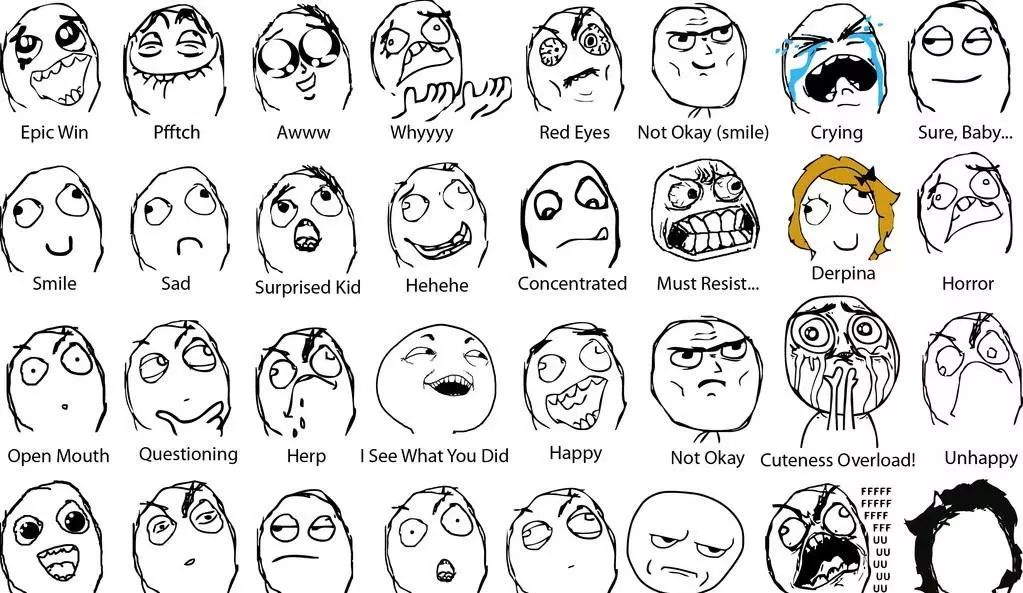
Original Troll Face design from Rage Comics. Image via Sohu.

Much of this culture flourished on Baidu Tieba, China’s sprawling network of interest-based online forums. Before video platforms and algorithm-driven feeds dominated social media, Tieba was a gathering place for young internet users to exchange jokes, remix images, and develop their own slang. The format’s low barrier to entry made participation easy: anyone could pick a face, add a caption, and share a joke.
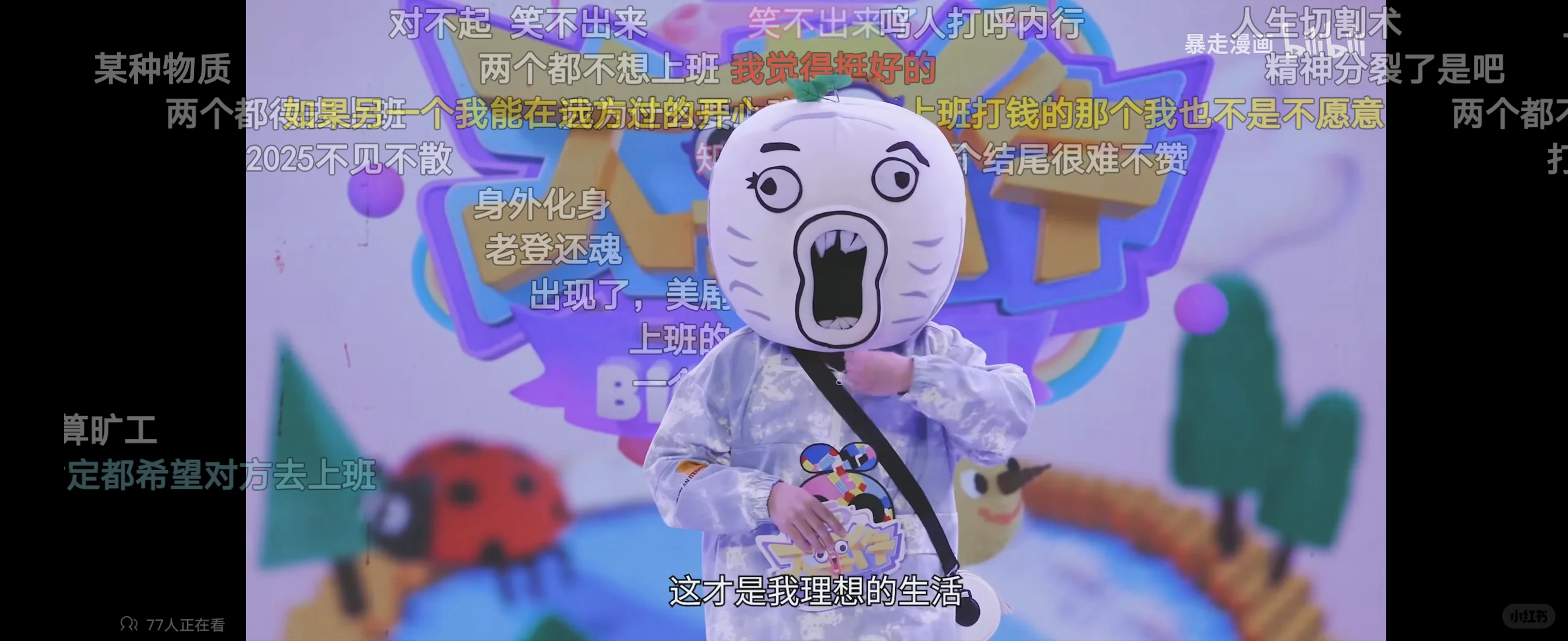
The Influencer Zhang Quandan always showed up in public with the Troll Face mask on, especially popular on Bilibili, the Chinese video platform which was famous for its bulletin feature. Screenshot via Xiaohongshu.

In 2013, Baozou Manhua took this humor beyond static images with the launch of Baozou Big Show (暴走大事件). Hosted by the mysterious Wang Nima, who always appeared in an oversized rage-face mask, the online news satire program combined current affairs, absurd comedy, and sharp social commentary. It soon became a hit among younger audiences, spawning spinoff programs and internet personalities such as Tang Maru and Zhang Quandan, who built their own followings through the show.

A satirical take on Foxconn’s factory workers and assembly-line culture in the early 2010s. Screenshot via momo.

At its peak, Baozou had grown from a grassroots comic community into a major digital entertainment brand, reportedly valued at close to 4 billion RMB (around 600 million USD) by 2017. Its momentum, however, came to an abrupt halt in 2018, when a video mocking “The Prisoner’s Song” (囚歌) — a poem by Ye Ting, a Communist military commander honored as a revolutionary martyr — triggered widespread backlash. Within days, Baozou’s accounts were pulled from major platforms including Toutiao, Weibo, and Bilibili, and a Xi’an court later ordered the company to apologize publicly and pay 100,000 RMB (around 14,600 USD) in damages to Ye Ting’s relatives. Although Baozou Big Show returned in early 2019, its influence never quite recovered.
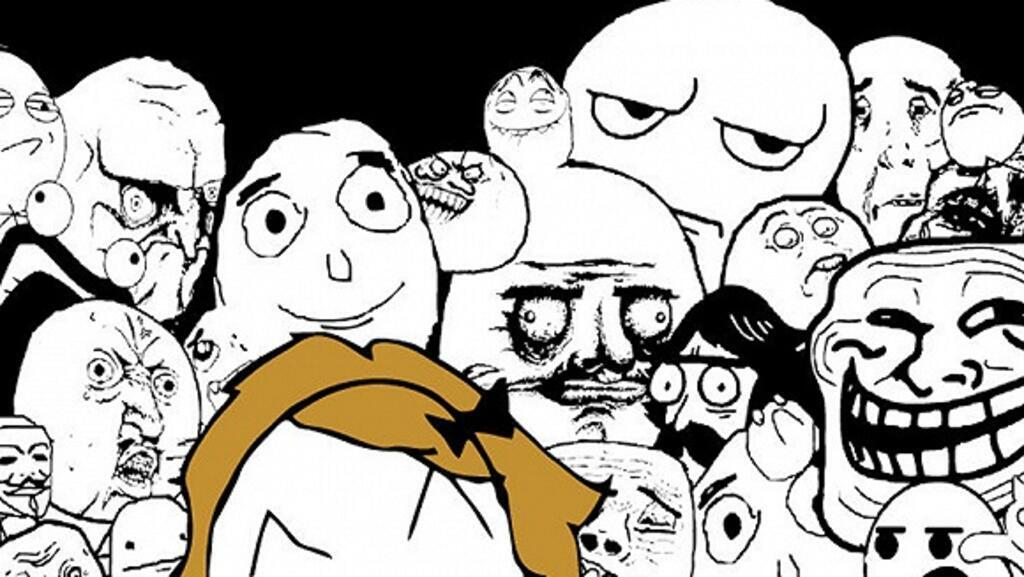
Troll face collection via RFI.

For those who grew up online in China during the 2010s, these memes were more than just internet jokes. They were shared in class group chats, passed around on Tieba, and used to make fun of just about everything in daily life. The websites and characters may have faded, but seeing one of those familiar faces today can still bring back a very particular feeling: being young, spending hours online, and laughing at something that probably wasn’t even that funny.

For more Chinese culture & history 101, check out our other Back to Basic explainers here.

Cover Image via Pinterest.
NEWSLETTER

Get weekly top picks and exclusive, newsletter only content delivered straight to you inbox.

NEWSLETTER

Get weekly top picks and exclusive, newsletter only content delivered straight to you inbox.

RADII NEWSLETTER

Get weekly top picks and exclusive, newsletter only content delivered straight to you inbox

Feature image of Back to Basics: When Pre-Meme Rage Comics Took Over China’s Internet

Back to Basics: When Pre-Meme Rage Comics Took Over China’s Internet

3 mins read

Long before Douyin, crudely drawn cartoon faces — Yao Ming’s grin among them — shaped how a generation of Chinese youth joked online.

If you were already into Chinese internet culture in the early 2010s, you’ve definitely seen or used the sticker of basketball star Yao Ming’s laughing face. With squinted eyes and an exaggerated grin, the former NBA star became one of the most recognizable faces in internet meme culture, appearing in countless comics and reaction images. But how did a Chinese basketball player become the face of a global internet joke?

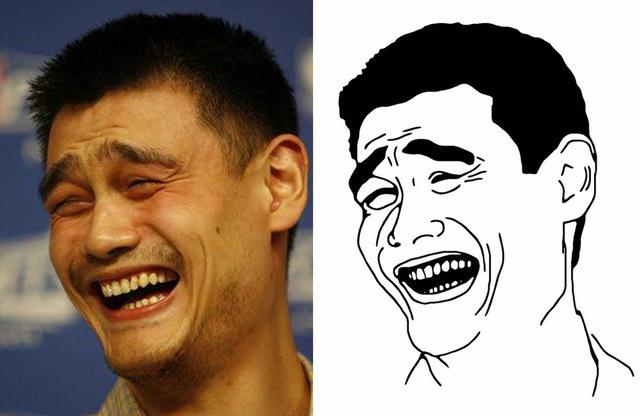
Yao Ming’s face in Rage Comics style. Image via sports cri.

The format originated with rage comics, a style of simple, crudely drawn cartoons that first appeared on the imageboard 4chan in 2008 and quickly spread across online forums. That same year, the format made its way to China, where it was adapted into what became known as Baozou Manhua (暴走漫画, roughly “berserk comics”). Chinese internet users began incorporating local celebrities, public figures, and everyday situations into the comics. Yao Ming’s now-famous expression — traced from a photo of him cracking up at a 2009 NBA postgame press conference and first popularized on Reddit in 2010 — became one of the format’s signature faces in China, too.

Original Troll Face design from Rage Comics. Image via Sohu.

Much of this culture flourished on Baidu Tieba, China’s sprawling network of interest-based online forums. Before video platforms and algorithm-driven feeds dominated social media, Tieba was a gathering place for young internet users to exchange jokes, remix images, and develop their own slang. The format’s low barrier to entry made participation easy: anyone could pick a face, add a caption, and share a joke.

The Influencer Zhang Quandan always showed up in public with the Troll Face mask on, especially popular on Bilibili, the Chinese video platform which was famous for its bulletin feature. Screenshot via Xiaohongshu.

In 2013, Baozou Manhua took this humor beyond static images with the launch of Baozou Big Show (暴走大事件). Hosted by the mysterious Wang Nima, who always appeared in an oversized rage-face mask, the online news satire program combined current affairs, absurd comedy, and sharp social commentary. It soon became a hit among younger audiences, spawning spinoff programs and internet personalities such as Tang Maru and Zhang Quandan, who built their own followings through the show.

A satirical take on Foxconn’s factory workers and assembly-line culture in the early 2010s. Screenshot via momo.

At its peak, Baozou had grown from a grassroots comic community into a major digital entertainment brand, reportedly valued at close to 4 billion RMB (around 600 million USD) by 2017. Its momentum, however, came to an abrupt halt in 2018, when a video mocking “The Prisoner’s Song” (囚歌) — a poem by Ye Ting, a Communist military commander honored as a revolutionary martyr — triggered widespread backlash. Within days, Baozou’s accounts were pulled from major platforms including Toutiao, Weibo, and Bilibili, and a Xi’an court later ordered the company to apologize publicly and pay 100,000 RMB (around 14,600 USD) in damages to Ye Ting’s relatives. Although Baozou Big Show returned in early 2019, its influence never quite recovered.

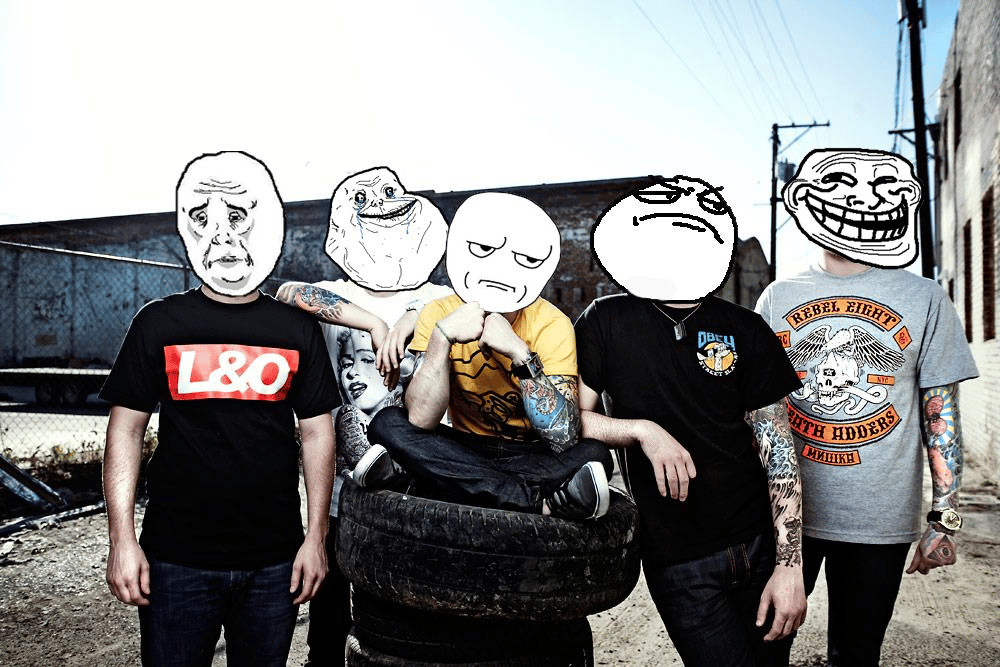
Troll face collection via RFI.

For those who grew up online in China during the 2010s, these memes were more than just internet jokes. They were shared in class group chats, passed around on Tieba, and used to make fun of just about everything in daily life. The websites and characters may have faded, but seeing one of those familiar faces today can still bring back a very particular feeling: being young, spending hours online, and laughing at something that probably wasn’t even that funny.

For more Chinese culture & history 101, check out our other Back to Basic explainers here.

Cover Image via Pinterest.

NEWSLETTER

Get weekly top picks and exclusive, newsletter only content delivered straight to you inbox.

RADII NEWSLETTER

Get weekly top picks and exclusive, newsletter only content delivered straight to you inbox

RELATED POSTS

Feature image of Back to Basics: When Pre-Meme Rage Comics Took Over China’s Internet

Back to Basics: When Pre-Meme Rage Comics Took Over China’s Internet

3 mins read

3 mins read

Feature image of Back to Basics: When Pre-Meme Rage Comics Took Over China’s Internet
Long before Douyin, crudely drawn cartoon faces — Yao Ming’s grin among them — shaped how a generation of Chinese youth joked online.

If you were already into Chinese internet culture in the early 2010s, you’ve definitely seen or used the sticker of basketball star Yao Ming’s laughing face. With squinted eyes and an exaggerated grin, the former NBA star became one of the most recognizable faces in internet meme culture, appearing in countless comics and reaction images. But how did a Chinese basketball player become the face of a global internet joke?

Yao Ming’s face in Rage Comics style. Image via sports cri.

The format originated with rage comics, a style of simple, crudely drawn cartoons that first appeared on the imageboard 4chan in 2008 and quickly spread across online forums. That same year, the format made its way to China, where it was adapted into what became known as Baozou Manhua (暴走漫画, roughly “berserk comics”). Chinese internet users began incorporating local celebrities, public figures, and everyday situations into the comics. Yao Ming’s now-famous expression — traced from a photo of him cracking up at a 2009 NBA postgame press conference and first popularized on Reddit in 2010 — became one of the format’s signature faces in China, too.

Original Troll Face design from Rage Comics. Image via Sohu.

Much of this culture flourished on Baidu Tieba, China’s sprawling network of interest-based online forums. Before video platforms and algorithm-driven feeds dominated social media, Tieba was a gathering place for young internet users to exchange jokes, remix images, and develop their own slang. The format’s low barrier to entry made participation easy: anyone could pick a face, add a caption, and share a joke.

The Influencer Zhang Quandan always showed up in public with the Troll Face mask on, especially popular on Bilibili, the Chinese video platform which was famous for its bulletin feature. Screenshot via Xiaohongshu.

In 2013, Baozou Manhua took this humor beyond static images with the launch of Baozou Big Show (暴走大事件). Hosted by the mysterious Wang Nima, who always appeared in an oversized rage-face mask, the online news satire program combined current affairs, absurd comedy, and sharp social commentary. It soon became a hit among younger audiences, spawning spinoff programs and internet personalities such as Tang Maru and Zhang Quandan, who built their own followings through the show.

A satirical take on Foxconn’s factory workers and assembly-line culture in the early 2010s. Screenshot via momo.

At its peak, Baozou had grown from a grassroots comic community into a major digital entertainment brand, reportedly valued at close to 4 billion RMB (around 600 million USD) by 2017. Its momentum, however, came to an abrupt halt in 2018, when a video mocking “The Prisoner’s Song” (囚歌) — a poem by Ye Ting, a Communist military commander honored as a revolutionary martyr — triggered widespread backlash. Within days, Baozou’s accounts were pulled from major platforms including Toutiao, Weibo, and Bilibili, and a Xi’an court later ordered the company to apologize publicly and pay 100,000 RMB (around 14,600 USD) in damages to Ye Ting’s relatives. Although Baozou Big Show returned in early 2019, its influence never quite recovered.

Troll face collection via RFI.

For those who grew up online in China during the 2010s, these memes were more than just internet jokes. They were shared in class group chats, passed around on Tieba, and used to make fun of just about everything in daily life. The websites and characters may have faded, but seeing one of those familiar faces today can still bring back a very particular feeling: being young, spending hours online, and laughing at something that probably wasn’t even that funny.

For more Chinese culture & history 101, check out our other Back to Basic explainers here.

Cover Image via Pinterest.
NEWSLETTER

Get weekly top picks and exclusive, newsletter only content delivered straight to you inbox.

NEWSLETTER

Get weekly top picks and exclusive, newsletter only content delivered straight to you inbox.

RADII NEWSLETTER

Get weekly top picks and exclusive, newsletter only content delivered straight to you inbox

Feature image of Back to Basics: When Pre-Meme Rage Comics Took Over China’s Internet

Back to Basics: When Pre-Meme Rage Comics Took Over China’s Internet

3 mins read

Long before Douyin, crudely drawn cartoon faces — Yao Ming’s grin among them — shaped how a generation of Chinese youth joked online.

If you were already into Chinese internet culture in the early 2010s, you’ve definitely seen or used the sticker of basketball star Yao Ming’s laughing face. With squinted eyes and an exaggerated grin, the former NBA star became one of the most recognizable faces in internet meme culture, appearing in countless comics and reaction images. But how did a Chinese basketball player become the face of a global internet joke?

Yao Ming’s face in Rage Comics style. Image via sports cri.

The format originated with rage comics, a style of simple, crudely drawn cartoons that first appeared on the imageboard 4chan in 2008 and quickly spread across online forums. That same year, the format made its way to China, where it was adapted into what became known as Baozou Manhua (暴走漫画, roughly “berserk comics”). Chinese internet users began incorporating local celebrities, public figures, and everyday situations into the comics. Yao Ming’s now-famous expression — traced from a photo of him cracking up at a 2009 NBA postgame press conference and first popularized on Reddit in 2010 — became one of the format’s signature faces in China, too.

Original Troll Face design from Rage Comics. Image via Sohu.

Much of this culture flourished on Baidu Tieba, China’s sprawling network of interest-based online forums. Before video platforms and algorithm-driven feeds dominated social media, Tieba was a gathering place for young internet users to exchange jokes, remix images, and develop their own slang. The format’s low barrier to entry made participation easy: anyone could pick a face, add a caption, and share a joke.

The Influencer Zhang Quandan always showed up in public with the Troll Face mask on, especially popular on Bilibili, the Chinese video platform which was famous for its bulletin feature. Screenshot via Xiaohongshu.

In 2013, Baozou Manhua took this humor beyond static images with the launch of Baozou Big Show (暴走大事件). Hosted by the mysterious Wang Nima, who always appeared in an oversized rage-face mask, the online news satire program combined current affairs, absurd comedy, and sharp social commentary. It soon became a hit among younger audiences, spawning spinoff programs and internet personalities such as Tang Maru and Zhang Quandan, who built their own followings through the show.

A satirical take on Foxconn’s factory workers and assembly-line culture in the early 2010s. Screenshot via momo.

At its peak, Baozou had grown from a grassroots comic community into a major digital entertainment brand, reportedly valued at close to 4 billion RMB (around 600 million USD) by 2017. Its momentum, however, came to an abrupt halt in 2018, when a video mocking “The Prisoner’s Song” (囚歌) — a poem by Ye Ting, a Communist military commander honored as a revolutionary martyr — triggered widespread backlash. Within days, Baozou’s accounts were pulled from major platforms including Toutiao, Weibo, and Bilibili, and a Xi’an court later ordered the company to apologize publicly and pay 100,000 RMB (around 14,600 USD) in damages to Ye Ting’s relatives. Although Baozou Big Show returned in early 2019, its influence never quite recovered.

Troll face collection via RFI.

For those who grew up online in China during the 2010s, these memes were more than just internet jokes. They were shared in class group chats, passed around on Tieba, and used to make fun of just about everything in daily life. The websites and characters may have faded, but seeing one of those familiar faces today can still bring back a very particular feeling: being young, spending hours online, and laughing at something that probably wasn’t even that funny.

For more Chinese culture & history 101, check out our other Back to Basic explainers here.

Cover Image via Pinterest.
NEWSLETTER

Get weekly top picks and exclusive, newsletter only content delivered straight to you inbox.

RADII NEWSLETTER

Get weekly top picks and exclusive, newsletter only content delivered straight to you inbox

RADII newsletter pop up visual

NEWSLETTER​

Get weekly top picks and exclusive, newsletter only content delivered straight to you inbox

RADII Newsletter Pop Up small banner

NEWSLETTER

Get weekly top picks and exclusive, newsletter only content delivered straight to you inbox.

Link Copied!

Share

Feature image of Back to Basics: When Pre-Meme Rage Comics Took Over China’s Internet

Back to Basics: When Pre-Meme Rage Comics Took Over China’s Internet

Long before Douyin, crudely drawn cartoon faces — Yao Ming’s grin among them — shaped how a generation of Chinese youth joked online.

PULSE

Tap into the latest in music, fashion, art, design, entertainment, pop culture, celebrity news, and contemporary culture

DISCOVER

Embark on a journey through food, travel, wellness, heritage, traditional culture, and lifestyle

STYLE

An insider’s look at the intersection of fashion, art, and design

FEAST

Titillate your taste buds with coverage of the best food and drink trends from China and beyond.

FUTURE

Explore the cutting edge in tech, AI, gadgets, gaming, and innovative tech-related products

FEAST

Titillate your taste buds with coverage of the best food and drink trends from China and beyond

STYLE

An insider’s look at the intersection of fashion, art, and design

PULSE

Unpacking Chinese youth culture through coverage of nightlife, film, sports, celebrities, and the hottest new music