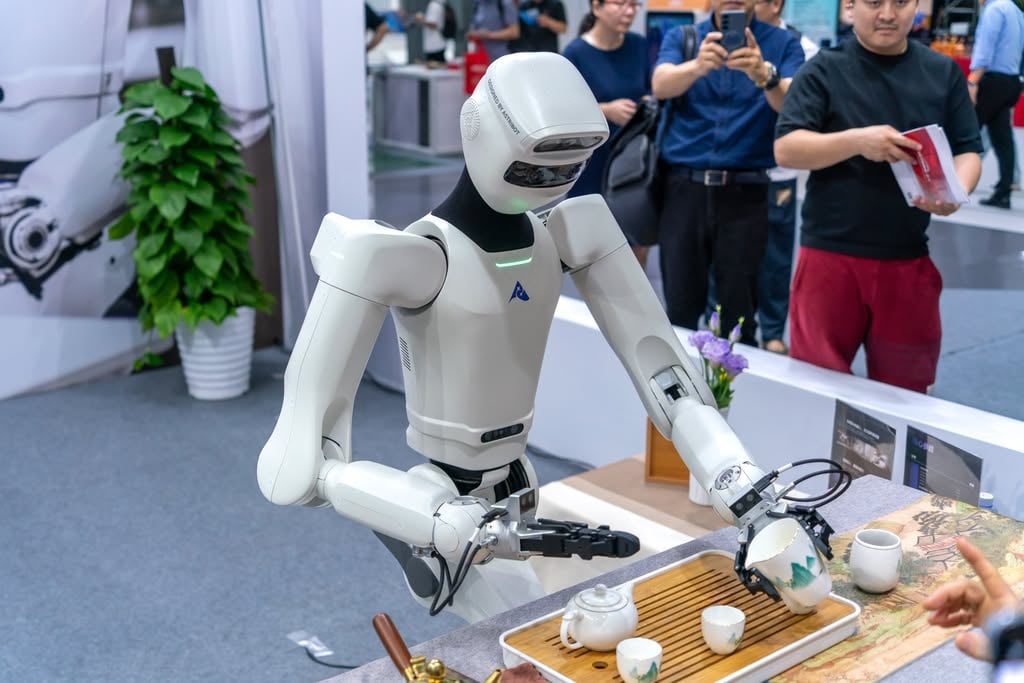

Feature image of Fancy a Cuppa Made By Robots?

Fancy a Cuppa Made By Robots?

3 mins read

3 mins read

Feature image of Fancy a Cuppa Made By Robots?
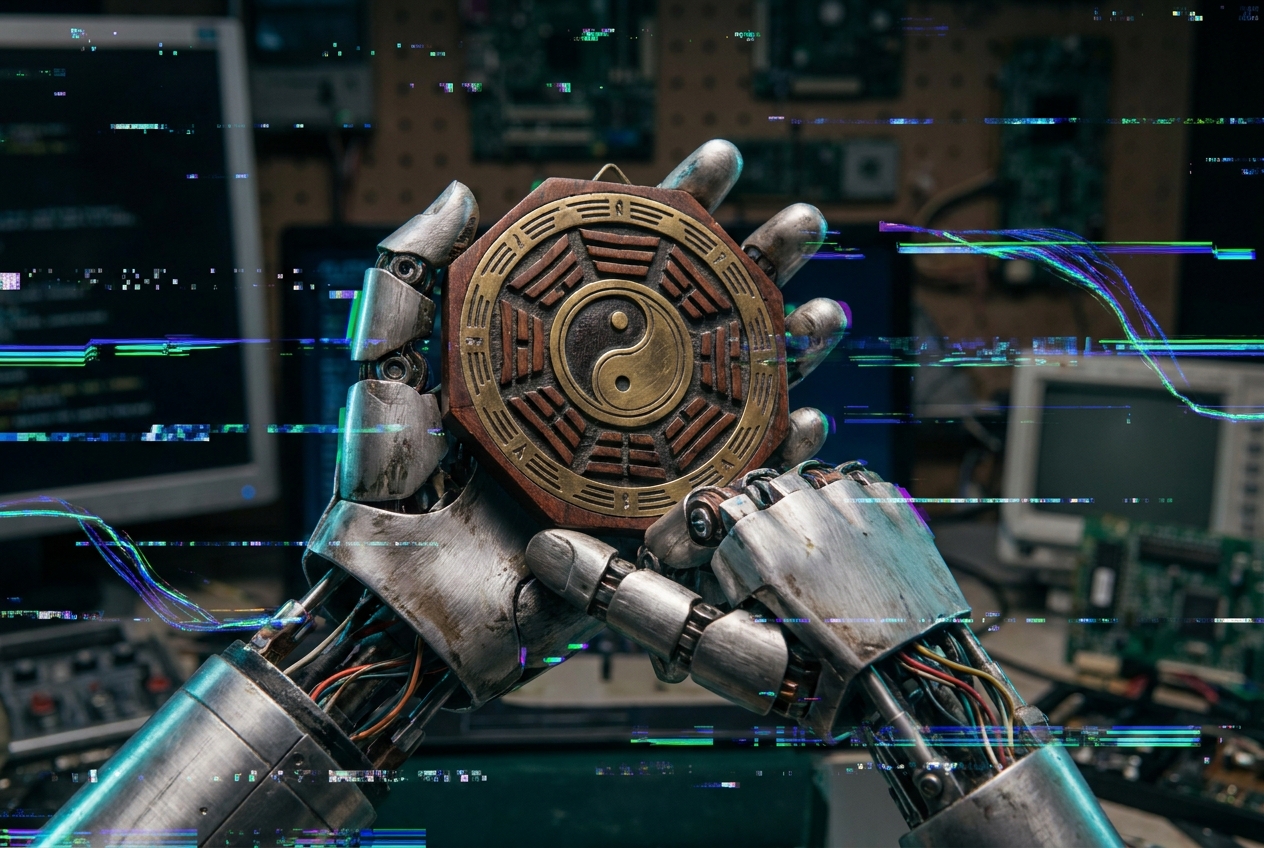
Tea, as a beverage, is as old as time, but the AI boom has changed the ways tea is being brewed — largely using robots. But is it any good?

China’s tea industry is turning to robots for help with tasks that have traditionally depended on human skill, from picking delicate leaves in the fields to recreating centuries-old preparation methods. In Hangzhou, home of the celebrated West Lake Longjing green tea, researchers and companies are developing machines that could change how tea is harvested, transported, and served.

The projects offer a glimpse into how China is applying modern technology to an industry deeply rooted in tradition. They also raise a question: how much of a cultural practice can a machine reproduce?

A Robot in the Tea Fields

Harvesting premium tea is tedious work. With West Lake Longjing, one of China’s best-known green teas, pickers must identify tender buds and leaves at the right stage of growth, removing them without bruising or damaging them. The leaves do not mature uniformly, making the task difficult to automate using machinery.
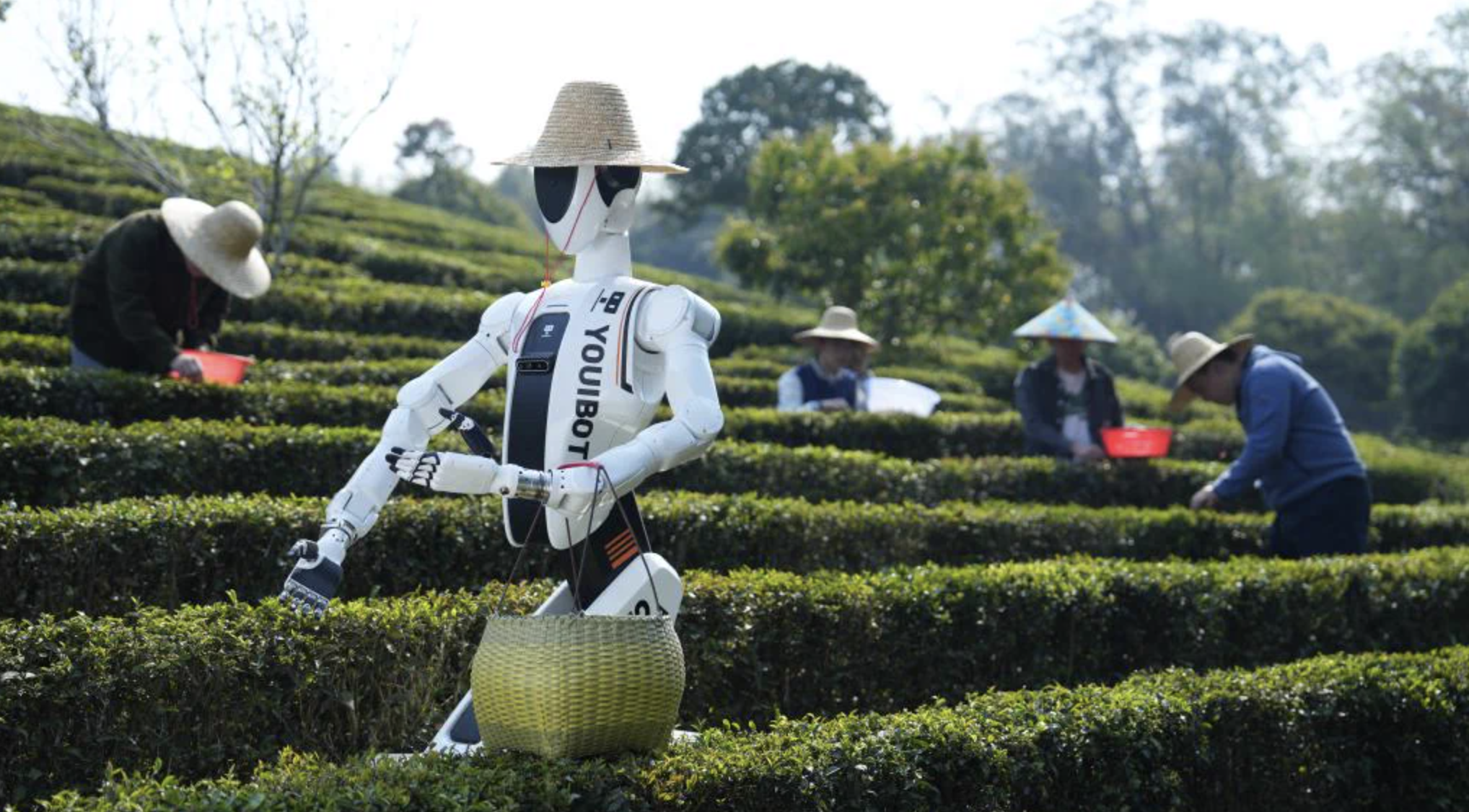
RADII talks about AI robotics being introduced to China's tea farms, and what that signals for the tea industry as a whole.
Image via China Daily.

Early last year, robots joined the Longjing harvest in Hangzhou. Researchers at Zhejiang Sci-Tech University developed the machines, which used AI to identify suitable buds and leaves from image data. According to the university’s agricultural machinery institute, the latest version could handle a workload equivalent to around 1.5 human workers. Beyond an AI showcase, it addresses a practical problem: the average age of tea pickers in Longjing’s premium production area has reportedly reached 65, while farms continue to face labor shortages.

On the efficiency level, they were attempting to reproduce some of the judgment involved in picking tea, distinguishing leaves ready for harvest from those that need more time to grow.
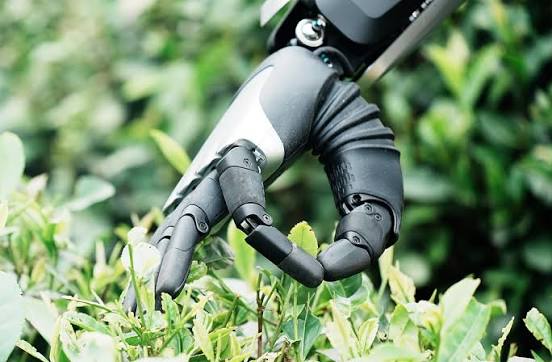
RADII talks about AI robotics being introduced to China's tea farms, and what that signals for the tea industry as a whole.
Image via China Daily.

Automation is also being tested after the leaves are harvested. In April 2026, quadruped and wheeled-legged robots were being used in the Longwu tea gardens to transport freshly picked leaves to processing facilities. Premium Longjing leaves need to reach processing workshops quickly to preserve their flavor, but narrow paths and steep slopes make transport challenging. The robots, deployed by Deep Robotics in collaboration with JD Logistics, are designed to carry the harvest across this difficult terrain.

Together, the projects show how robotics can support several stages of tea production, particularly where labor is demanding, and the terrain makes conventional machinery impractical.

Recreating a Song Dynasty Tea Ritual

The use of technology is not limited to the fields, however. In September 2025, a smart machine was designed to recreate dian cha, a traditional tea preparation method associated with China’s Song Dynasty.

Unlike the steeped-leaf tea familiar to many drinkers today, dian cha involves powdered tea whisked with water into a dense, frothy surface. The technique is part of a wider history of Chinese tea culture, and its preparation has attracted renewed interest among contemporary enthusiasts.
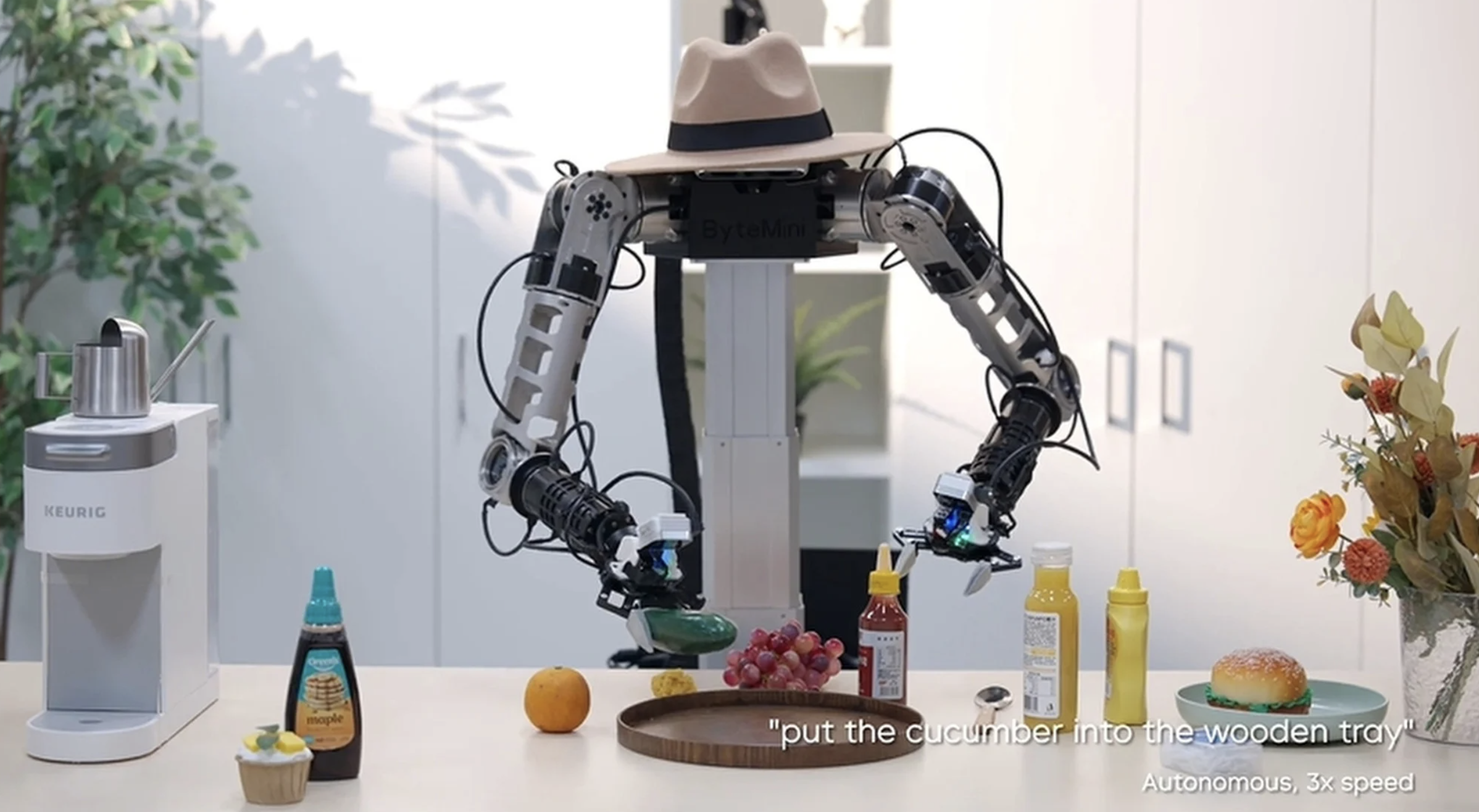
RADII talks about AI robotics being introduced to China's tea farms, and what that signals for the tea industry as a whole.
Image via South China Morning Post.

The smart machine, developed in Jingshan, automates elements of the preparation process, including water temperature and whisking intensity. Its creators have presented it as a way to make the technique more accessible, with plans to introduce the machine at cultural attractions and develop a version for home use.
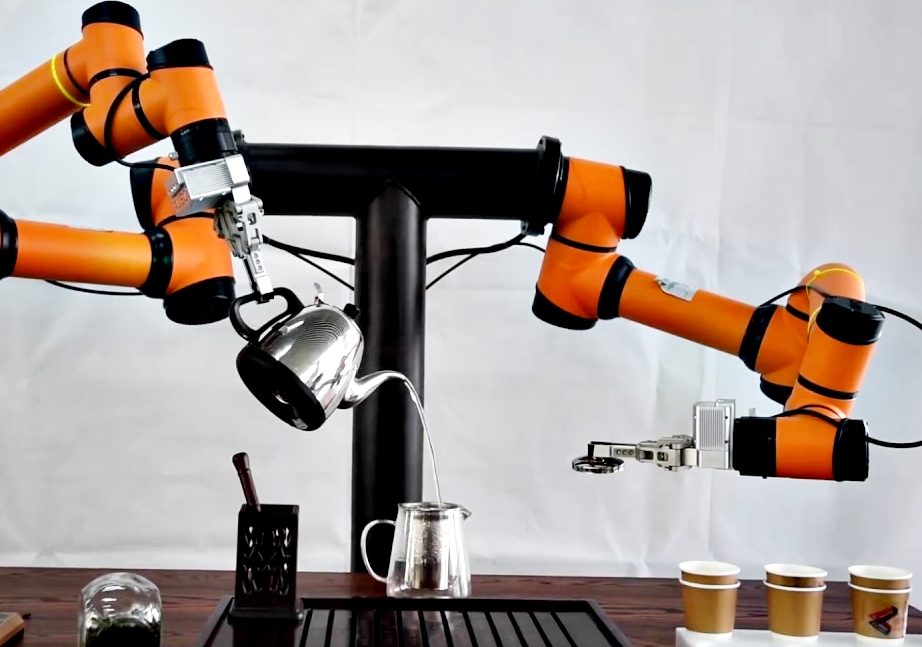
RADII talks about AI robotics being introduced to China's tea farms, and what that signals for the tea industry as a whole.
Image via GeneTech.

There is a distinction, though, between reproducing a technique and understanding its cultural significance. Like most traditions that AI is trying to expedite, a machine can be programmed to control temperature and whisking with faultless precision, but it doesn’t change the ethos behind the ritual. Automating the physical steps may make tea-drinking accessible to the masses, but it’s important to remember that automation can’t upend tradition.

Can Technology Preserve Tradition?

That being said, China’s experiments with tea robotics reflect a wider question about the relationship between technological progress and cultural heritage. At Beijing’s Longquan Monastery, for example, a robotic monk called Master Xian’er was developed to answer visitors’ questions about Buddhism. Need to know your fortune? You can also ask AI.

However, tea presents a different challenge. Its traditions are tied not only to historical knowledge, but also to growing conditions, sensory judgment, craftsmanship, and the social experience of preparing and sharing a drink.
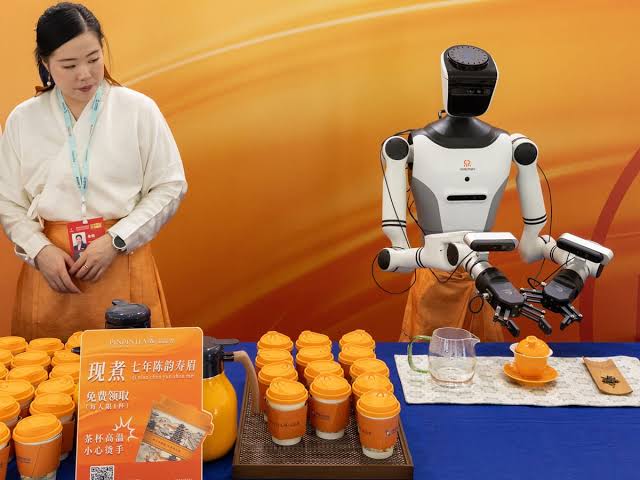
RADII talks about AI robotics being introduced to China's tea farms, and what that signals for the tea industry as a whole.
Image via The Guardian.

Robots may help tea producers cope with labor shortages and difficult terrain, while automated preparation could make historical techniques easier to demonstrate and learn. But their success should not be measured only by speed or efficiency. More importantly, it must also depend on whether these tools support the people who carry the traditions forward.

For now, China’s tea robots are best understood as assistants rather than replacements for that human knowledge. They can help pick leaves, move harvests, and reproduce specific movements. What they cannot automatically guarantee is that the traditions surrounding those tasks will survive with them.

Cover image via People’s Daily.

NEWSLETTER

Get weekly top picks and exclusive, newsletter only content delivered straight to you inbox.

NEWSLETTER

Get weekly top picks and exclusive, newsletter only content delivered straight to you inbox.

RADII NEWSLETTER

Get weekly top picks and exclusive, newsletter only content delivered straight to you inbox

Feature image of Fancy a Cuppa Made By Robots?

Fancy a Cuppa Made By Robots?

3 mins read

Tea, as a beverage, is as old as time, but the AI boom has changed the ways tea is being brewed — largely using robots. But is it any good?

China’s tea industry is turning to robots for help with tasks that have traditionally depended on human skill, from picking delicate leaves in the fields to recreating centuries-old preparation methods. In Hangzhou, home of the celebrated West Lake Longjing green tea, researchers and companies are developing machines that could change how tea is harvested, transported, and served.

The projects offer a glimpse into how China is applying modern technology to an industry deeply rooted in tradition. They also raise a question: how much of a cultural practice can a machine reproduce?

A Robot in the Tea Fields

Harvesting premium tea is tedious work. With West Lake Longjing, one of China’s best-known green teas, pickers must identify tender buds and leaves at the right stage of growth, removing them without bruising or damaging them. The leaves do not mature uniformly, making the task difficult to automate using machinery.

RADII talks about AI robotics being introduced to China's tea farms, and what that signals for the tea industry as a whole.
Image via China Daily.

Early last year, robots joined the Longjing harvest in Hangzhou. Researchers at Zhejiang Sci-Tech University developed the machines, which used AI to identify suitable buds and leaves from image data. According to the university’s agricultural machinery institute, the latest version could handle a workload equivalent to around 1.5 human workers. Beyond an AI showcase, it addresses a practical problem: the average age of tea pickers in Longjing’s premium production area has reportedly reached 65, while farms continue to face labor shortages.

On the efficiency level, they were attempting to reproduce some of the judgment involved in picking tea, distinguishing leaves ready for harvest from those that need more time to grow.

RADII talks about AI robotics being introduced to China's tea farms, and what that signals for the tea industry as a whole.
Image via China Daily.

Automation is also being tested after the leaves are harvested. In April 2026, quadruped and wheeled-legged robots were being used in the Longwu tea gardens to transport freshly picked leaves to processing facilities. Premium Longjing leaves need to reach processing workshops quickly to preserve their flavor, but narrow paths and steep slopes make transport challenging. The robots, deployed by Deep Robotics in collaboration with JD Logistics, are designed to carry the harvest across this difficult terrain.

Together, the projects show how robotics can support several stages of tea production, particularly where labor is demanding, and the terrain makes conventional machinery impractical.

Recreating a Song Dynasty Tea Ritual

The use of technology is not limited to the fields, however. In September 2025, a smart machine was designed to recreate dian cha, a traditional tea preparation method associated with China’s Song Dynasty.

Unlike the steeped-leaf tea familiar to many drinkers today, dian cha involves powdered tea whisked with water into a dense, frothy surface. The technique is part of a wider history of Chinese tea culture, and its preparation has attracted renewed interest among contemporary enthusiasts.

RADII talks about AI robotics being introduced to China's tea farms, and what that signals for the tea industry as a whole.
Image via South China Morning Post.

The smart machine, developed in Jingshan, automates elements of the preparation process, including water temperature and whisking intensity. Its creators have presented it as a way to make the technique more accessible, with plans to introduce the machine at cultural attractions and develop a version for home use.

RADII talks about AI robotics being introduced to China's tea farms, and what that signals for the tea industry as a whole.
Image via GeneTech.

There is a distinction, though, between reproducing a technique and understanding its cultural significance. Like most traditions that AI is trying to expedite, a machine can be programmed to control temperature and whisking with faultless precision, but it doesn’t change the ethos behind the ritual. Automating the physical steps may make tea-drinking accessible to the masses, but it’s important to remember that automation can’t upend tradition.

Can Technology Preserve Tradition?

That being said, China’s experiments with tea robotics reflect a wider question about the relationship between technological progress and cultural heritage. At Beijing’s Longquan Monastery, for example, a robotic monk called Master Xian’er was developed to answer visitors’ questions about Buddhism. Need to know your fortune? You can also ask AI.

However, tea presents a different challenge. Its traditions are tied not only to historical knowledge, but also to growing conditions, sensory judgment, craftsmanship, and the social experience of preparing and sharing a drink.

RADII talks about AI robotics being introduced to China's tea farms, and what that signals for the tea industry as a whole.
Image via The Guardian.

Robots may help tea producers cope with labor shortages and difficult terrain, while automated preparation could make historical techniques easier to demonstrate and learn. But their success should not be measured only by speed or efficiency. More importantly, it must also depend on whether these tools support the people who carry the traditions forward.

For now, China’s tea robots are best understood as assistants rather than replacements for that human knowledge. They can help pick leaves, move harvests, and reproduce specific movements. What they cannot automatically guarantee is that the traditions surrounding those tasks will survive with them.

Cover image via People’s Daily.
NEWSLETTER

Get weekly top picks and exclusive, newsletter only content delivered straight to you inbox.

RADII NEWSLETTER

Get weekly top picks and exclusive, newsletter only content delivered straight to you inbox

RELATED POSTS

Feature image of Fancy a Cuppa Made By Robots?

Fancy a Cuppa Made By Robots?

3 mins read

3 mins read

Feature image of Fancy a Cuppa Made By Robots?
Tea, as a beverage, is as old as time, but the AI boom has changed the ways tea is being brewed — largely using robots. But is it any good?

China’s tea industry is turning to robots for help with tasks that have traditionally depended on human skill, from picking delicate leaves in the fields to recreating centuries-old preparation methods. In Hangzhou, home of the celebrated West Lake Longjing green tea, researchers and companies are developing machines that could change how tea is harvested, transported, and served.

The projects offer a glimpse into how China is applying modern technology to an industry deeply rooted in tradition. They also raise a question: how much of a cultural practice can a machine reproduce?

A Robot in the Tea Fields

Harvesting premium tea is tedious work. With West Lake Longjing, one of China’s best-known green teas, pickers must identify tender buds and leaves at the right stage of growth, removing them without bruising or damaging them. The leaves do not mature uniformly, making the task difficult to automate using machinery.

RADII talks about AI robotics being introduced to China's tea farms, and what that signals for the tea industry as a whole.
Image via China Daily.

Early last year, robots joined the Longjing harvest in Hangzhou. Researchers at Zhejiang Sci-Tech University developed the machines, which used AI to identify suitable buds and leaves from image data. According to the university’s agricultural machinery institute, the latest version could handle a workload equivalent to around 1.5 human workers. Beyond an AI showcase, it addresses a practical problem: the average age of tea pickers in Longjing’s premium production area has reportedly reached 65, while farms continue to face labor shortages.

On the efficiency level, they were attempting to reproduce some of the judgment involved in picking tea, distinguishing leaves ready for harvest from those that need more time to grow.

RADII talks about AI robotics being introduced to China's tea farms, and what that signals for the tea industry as a whole.
Image via China Daily.

Automation is also being tested after the leaves are harvested. In April 2026, quadruped and wheeled-legged robots were being used in the Longwu tea gardens to transport freshly picked leaves to processing facilities. Premium Longjing leaves need to reach processing workshops quickly to preserve their flavor, but narrow paths and steep slopes make transport challenging. The robots, deployed by Deep Robotics in collaboration with JD Logistics, are designed to carry the harvest across this difficult terrain.

Together, the projects show how robotics can support several stages of tea production, particularly where labor is demanding, and the terrain makes conventional machinery impractical.

Recreating a Song Dynasty Tea Ritual

The use of technology is not limited to the fields, however. In September 2025, a smart machine was designed to recreate dian cha, a traditional tea preparation method associated with China’s Song Dynasty.

Unlike the steeped-leaf tea familiar to many drinkers today, dian cha involves powdered tea whisked with water into a dense, frothy surface. The technique is part of a wider history of Chinese tea culture, and its preparation has attracted renewed interest among contemporary enthusiasts.

RADII talks about AI robotics being introduced to China's tea farms, and what that signals for the tea industry as a whole.
Image via South China Morning Post.

The smart machine, developed in Jingshan, automates elements of the preparation process, including water temperature and whisking intensity. Its creators have presented it as a way to make the technique more accessible, with plans to introduce the machine at cultural attractions and develop a version for home use.

RADII talks about AI robotics being introduced to China's tea farms, and what that signals for the tea industry as a whole.
Image via GeneTech.

There is a distinction, though, between reproducing a technique and understanding its cultural significance. Like most traditions that AI is trying to expedite, a machine can be programmed to control temperature and whisking with faultless precision, but it doesn’t change the ethos behind the ritual. Automating the physical steps may make tea-drinking accessible to the masses, but it’s important to remember that automation can’t upend tradition.

Can Technology Preserve Tradition?

That being said, China’s experiments with tea robotics reflect a wider question about the relationship between technological progress and cultural heritage. At Beijing’s Longquan Monastery, for example, a robotic monk called Master Xian’er was developed to answer visitors’ questions about Buddhism. Need to know your fortune? You can also ask AI.

However, tea presents a different challenge. Its traditions are tied not only to historical knowledge, but also to growing conditions, sensory judgment, craftsmanship, and the social experience of preparing and sharing a drink.

RADII talks about AI robotics being introduced to China's tea farms, and what that signals for the tea industry as a whole.
Image via The Guardian.

Robots may help tea producers cope with labor shortages and difficult terrain, while automated preparation could make historical techniques easier to demonstrate and learn. But their success should not be measured only by speed or efficiency. More importantly, it must also depend on whether these tools support the people who carry the traditions forward.

For now, China’s tea robots are best understood as assistants rather than replacements for that human knowledge. They can help pick leaves, move harvests, and reproduce specific movements. What they cannot automatically guarantee is that the traditions surrounding those tasks will survive with them.

Cover image via People’s Daily.

NEWSLETTER

Get weekly top picks and exclusive, newsletter only content delivered straight to you inbox.

NEWSLETTER

Get weekly top picks and exclusive, newsletter only content delivered straight to you inbox.

RADII NEWSLETTER

Get weekly top picks and exclusive, newsletter only content delivered straight to you inbox

Feature image of Fancy a Cuppa Made By Robots?

Fancy a Cuppa Made By Robots?

3 mins read

Tea, as a beverage, is as old as time, but the AI boom has changed the ways tea is being brewed — largely using robots. But is it any good?

China’s tea industry is turning to robots for help with tasks that have traditionally depended on human skill, from picking delicate leaves in the fields to recreating centuries-old preparation methods. In Hangzhou, home of the celebrated West Lake Longjing green tea, researchers and companies are developing machines that could change how tea is harvested, transported, and served.

The projects offer a glimpse into how China is applying modern technology to an industry deeply rooted in tradition. They also raise a question: how much of a cultural practice can a machine reproduce?

A Robot in the Tea Fields

Harvesting premium tea is tedious work. With West Lake Longjing, one of China’s best-known green teas, pickers must identify tender buds and leaves at the right stage of growth, removing them without bruising or damaging them. The leaves do not mature uniformly, making the task difficult to automate using machinery.

RADII talks about AI robotics being introduced to China's tea farms, and what that signals for the tea industry as a whole.
Image via China Daily.

Early last year, robots joined the Longjing harvest in Hangzhou. Researchers at Zhejiang Sci-Tech University developed the machines, which used AI to identify suitable buds and leaves from image data. According to the university’s agricultural machinery institute, the latest version could handle a workload equivalent to around 1.5 human workers. Beyond an AI showcase, it addresses a practical problem: the average age of tea pickers in Longjing’s premium production area has reportedly reached 65, while farms continue to face labor shortages.

On the efficiency level, they were attempting to reproduce some of the judgment involved in picking tea, distinguishing leaves ready for harvest from those that need more time to grow.

RADII talks about AI robotics being introduced to China's tea farms, and what that signals for the tea industry as a whole.
Image via China Daily.

Automation is also being tested after the leaves are harvested. In April 2026, quadruped and wheeled-legged robots were being used in the Longwu tea gardens to transport freshly picked leaves to processing facilities. Premium Longjing leaves need to reach processing workshops quickly to preserve their flavor, but narrow paths and steep slopes make transport challenging. The robots, deployed by Deep Robotics in collaboration with JD Logistics, are designed to carry the harvest across this difficult terrain.

Together, the projects show how robotics can support several stages of tea production, particularly where labor is demanding, and the terrain makes conventional machinery impractical.

Recreating a Song Dynasty Tea Ritual

The use of technology is not limited to the fields, however. In September 2025, a smart machine was designed to recreate dian cha, a traditional tea preparation method associated with China’s Song Dynasty.

Unlike the steeped-leaf tea familiar to many drinkers today, dian cha involves powdered tea whisked with water into a dense, frothy surface. The technique is part of a wider history of Chinese tea culture, and its preparation has attracted renewed interest among contemporary enthusiasts.

RADII talks about AI robotics being introduced to China's tea farms, and what that signals for the tea industry as a whole.
Image via South China Morning Post.

The smart machine, developed in Jingshan, automates elements of the preparation process, including water temperature and whisking intensity. Its creators have presented it as a way to make the technique more accessible, with plans to introduce the machine at cultural attractions and develop a version for home use.

RADII talks about AI robotics being introduced to China's tea farms, and what that signals for the tea industry as a whole.
Image via GeneTech.

There is a distinction, though, between reproducing a technique and understanding its cultural significance. Like most traditions that AI is trying to expedite, a machine can be programmed to control temperature and whisking with faultless precision, but it doesn’t change the ethos behind the ritual. Automating the physical steps may make tea-drinking accessible to the masses, but it’s important to remember that automation can’t upend tradition.

Can Technology Preserve Tradition?

That being said, China’s experiments with tea robotics reflect a wider question about the relationship between technological progress and cultural heritage. At Beijing’s Longquan Monastery, for example, a robotic monk called Master Xian’er was developed to answer visitors’ questions about Buddhism. Need to know your fortune? You can also ask AI.

However, tea presents a different challenge. Its traditions are tied not only to historical knowledge, but also to growing conditions, sensory judgment, craftsmanship, and the social experience of preparing and sharing a drink.

RADII talks about AI robotics being introduced to China's tea farms, and what that signals for the tea industry as a whole.
Image via The Guardian.

Robots may help tea producers cope with labor shortages and difficult terrain, while automated preparation could make historical techniques easier to demonstrate and learn. But their success should not be measured only by speed or efficiency. More importantly, it must also depend on whether these tools support the people who carry the traditions forward.

For now, China’s tea robots are best understood as assistants rather than replacements for that human knowledge. They can help pick leaves, move harvests, and reproduce specific movements. What they cannot automatically guarantee is that the traditions surrounding those tasks will survive with them.

Cover image via People’s Daily.

NEWSLETTER

Get weekly top picks and exclusive, newsletter only content delivered straight to you inbox.

RADII NEWSLETTER

Get weekly top picks and exclusive, newsletter only content delivered straight to you inbox

RADII newsletter pop up visual

NEWSLETTER​

Get weekly top picks and exclusive, newsletter only content delivered straight to you inbox

RADII Newsletter Pop Up small banner

NEWSLETTER

Get weekly top picks and exclusive, newsletter only content delivered straight to you inbox.

Link Copied!

Share

Feature image of Fancy a Cuppa Made By Robots?

Fancy a Cuppa Made By Robots?

Tea, as a beverage, is as old as time, but the AI boom has changed the ways tea is being brewed — largely using robots. But is it any good?

PULSE

Tap into the latest in music, fashion, art, design, entertainment, pop culture, celebrity news, and contemporary culture

DISCOVER

Embark on a journey through food, travel, wellness, heritage, traditional culture, and lifestyle

STYLE

An insider’s look at the intersection of fashion, art, and design

FEAST

Titillate your taste buds with coverage of the best food and drink trends from China and beyond.

FUTURE

Explore the cutting edge in tech, AI, gadgets, gaming, and innovative tech-related products

FEAST

Titillate your taste buds with coverage of the best food and drink trends from China and beyond

STYLE

An insider’s look at the intersection of fashion, art, and design

PULSE

Unpacking Chinese youth culture through coverage of nightlife, film, sports, celebrities, and the hottest new music