
There is something very LEMAIRE about making a beautiful object that you can also put snacks on.
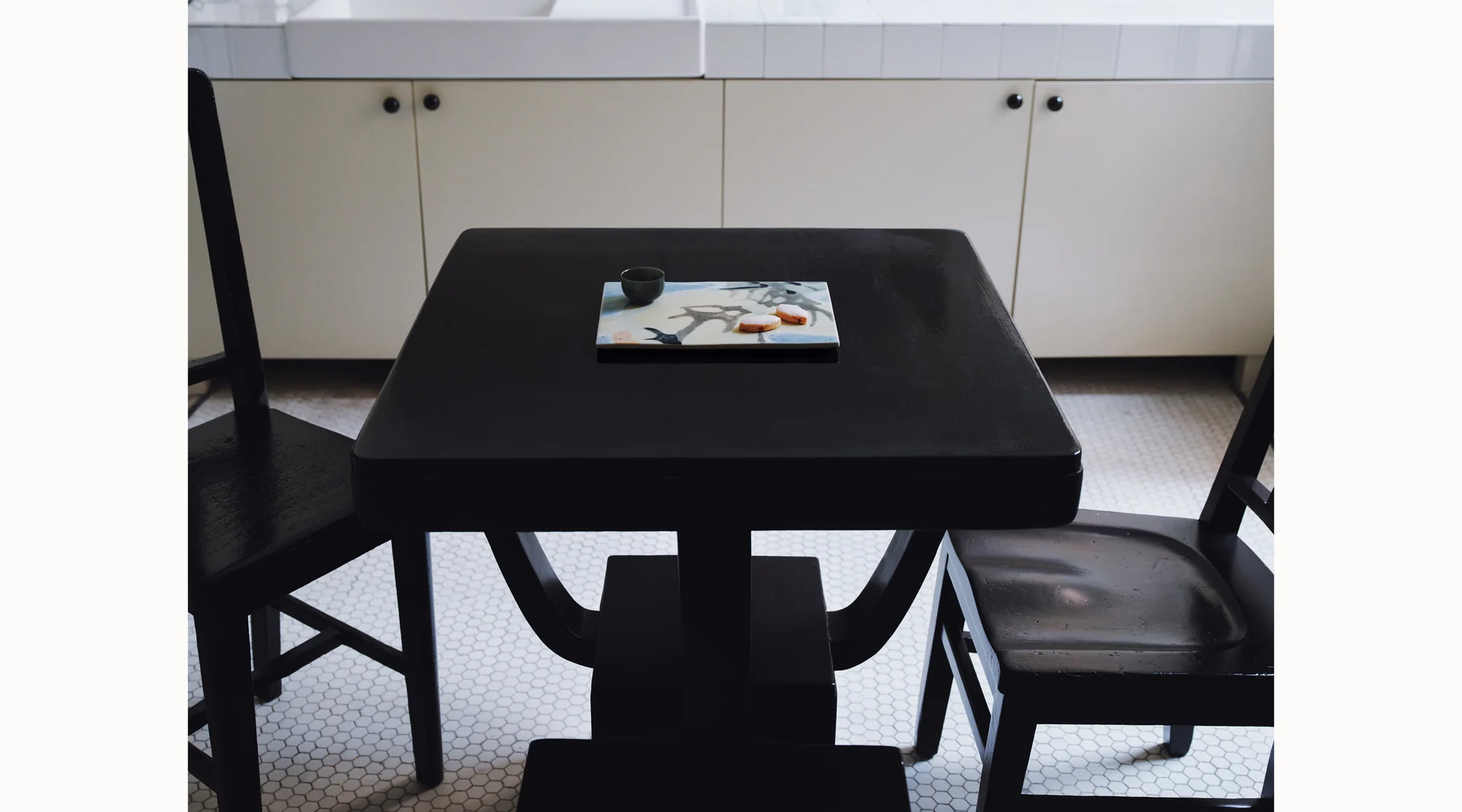
For Fall/Winter 2026, the Parisian fashion house known for its soft tailoring, muted palette, excellent bags, and general refusal to be too loud about anything is expanding its world beyond clothes. Its new series of artist collaborations focuses on objects for everyday life, with the first project, Gathering Plates, bringing together Chengdu-based photographer and painter AiHeMei (Xu Jing) and ceramic artist Li Qing.
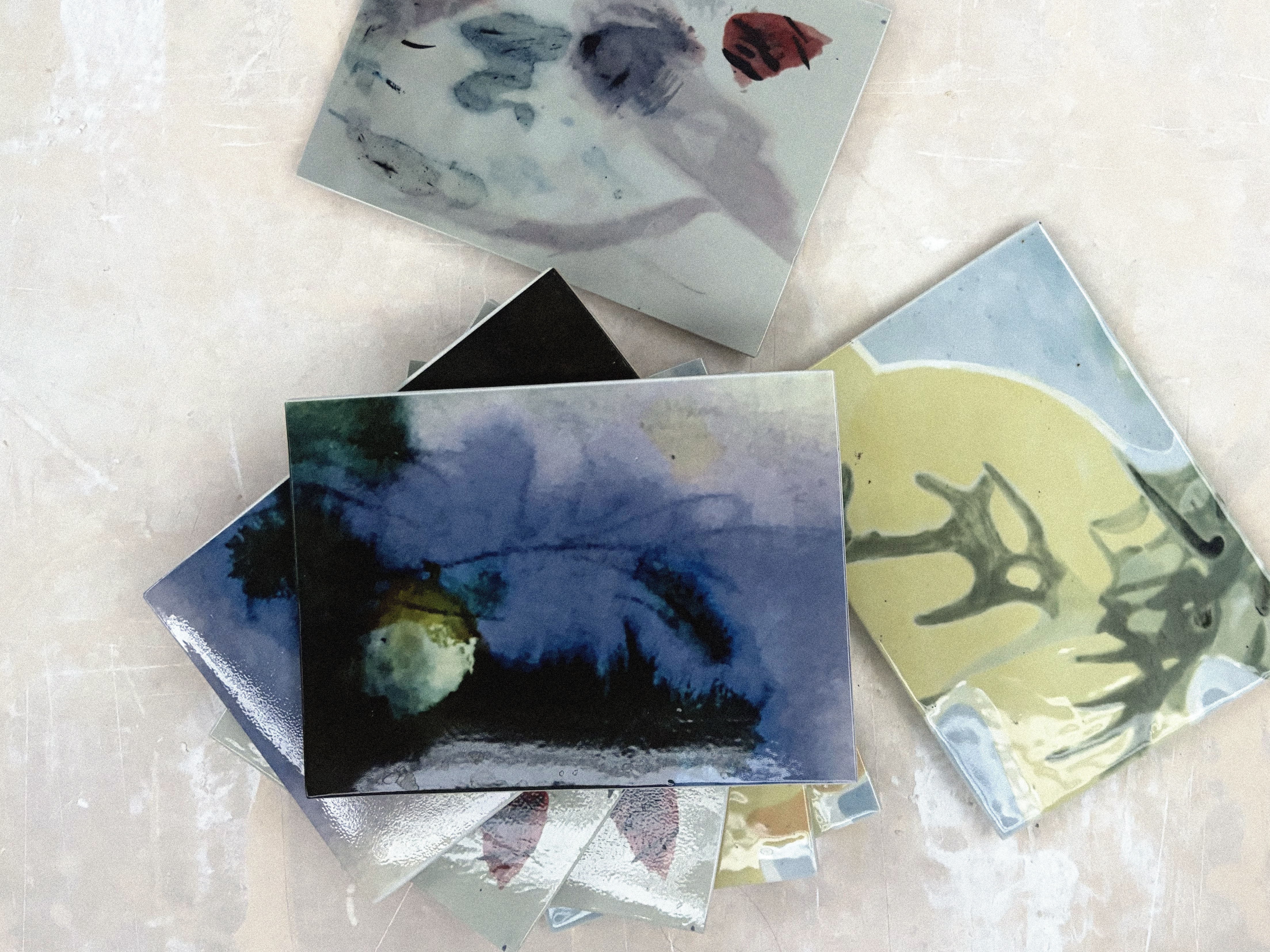
The result is three handmade jade porcelain trays—月华花 (yuèhuá huā, “Moonlight Flower”), 秋痕 (qiū hén, “Traces of Autumn”), and 月梢 (yuè shāo, “Moon Above the Treetops”). They are designed to sit somewhere between tableware and art objects: lay them flat and they work as serving trays; prop them upright and they become paintings you can hang. And for a personal touch, each is individually signed by the artists.
It is a neat little summary of what makes LEMAIRE interesting in the first place. Founded by Christophe Lemaire in 1991 and now led by Lemaire and Sarah-Linh Tran, the house has built its reputation around clothing that is understated without being boring—pieces designed to be worn, layered, lived in, and gradually made your own. Its interest in craftsmanship and everyday function makes a porcelain plate feel right at home—both at a LEMAIRE flagship boutique and in your own living room.
In China, that idea gets particularly interesting.
Welcome to the LEMAIRE House
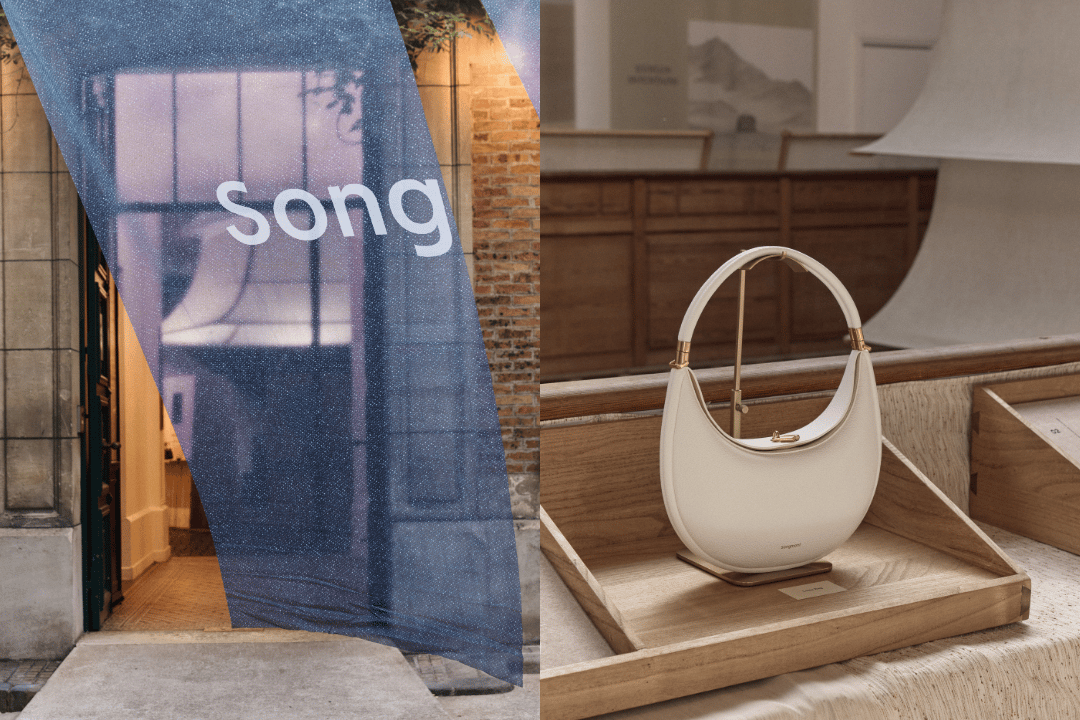
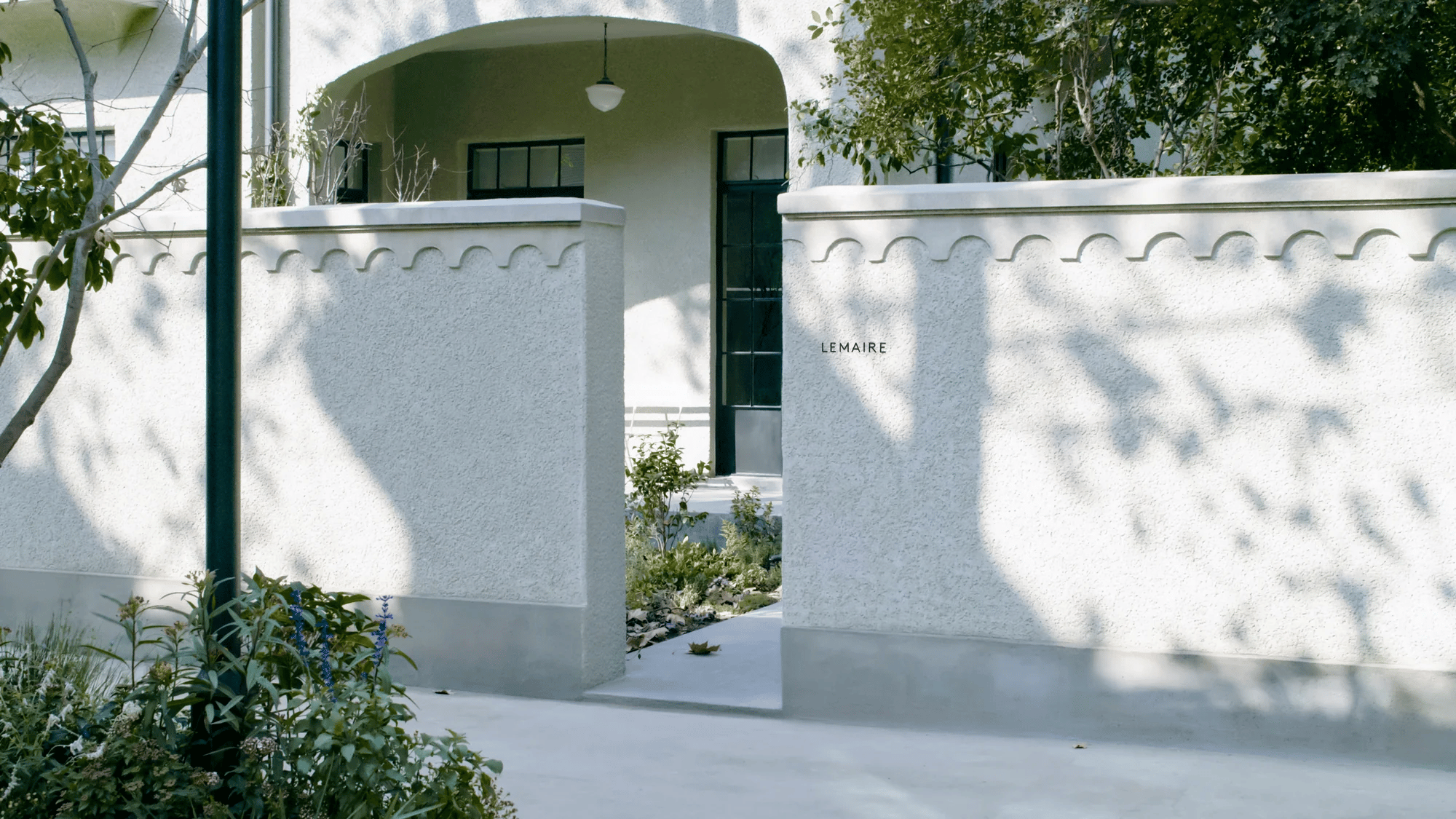
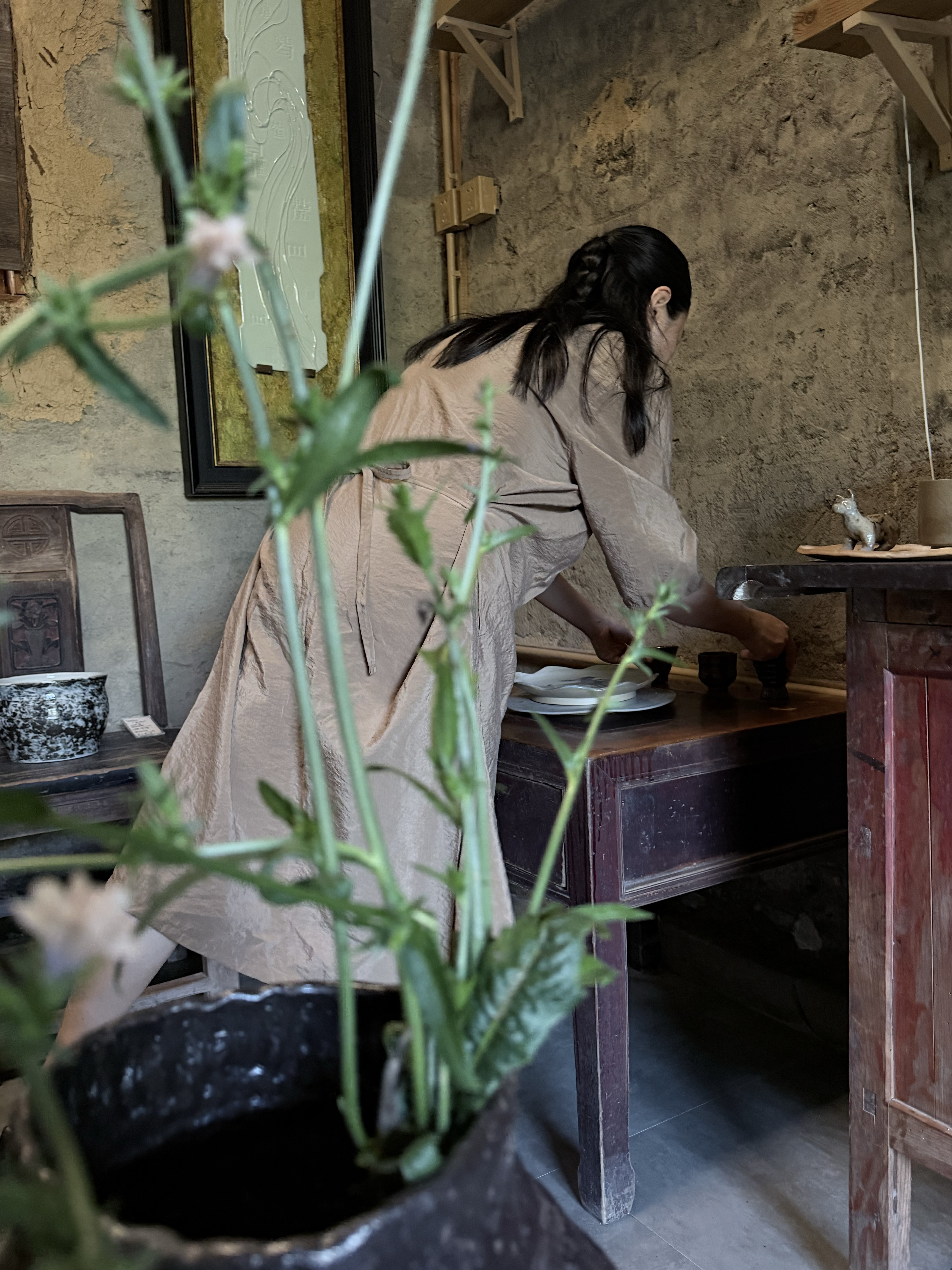
The Gathering Plates project has been chosen to be presented at LEMAIRE’s Wukang boutique in Shanghai, as well as its Beijing and Chengdu stores. The Shanghai space is a particularly fitting home for the project: rather than operating like a conventional luxury store, the Wukang boutique has been conceived as a lived-in environment where clothes share space with furniture, books, music, ceramics, and other objects.
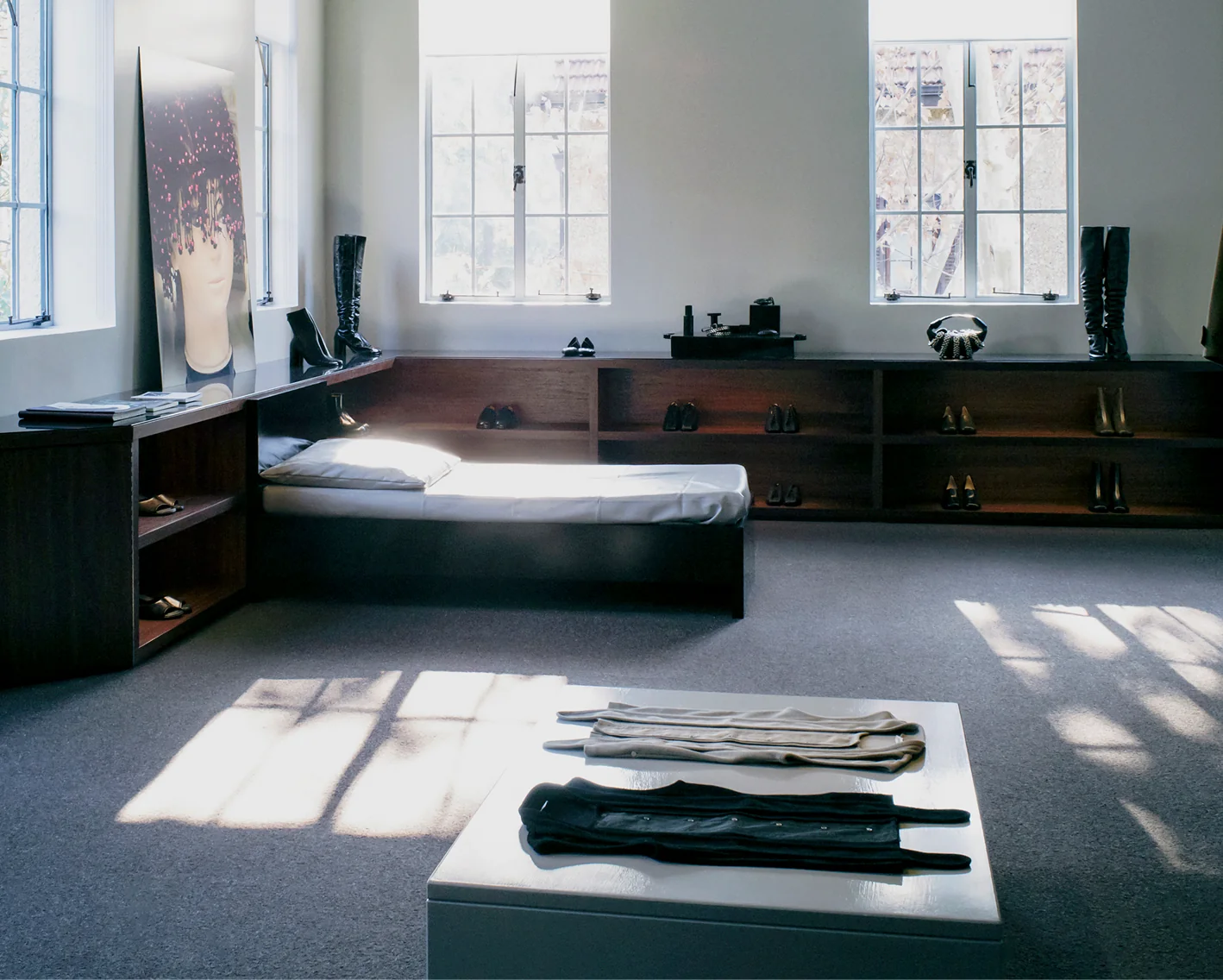
That domestic feeling is central to LEMAIRE’s approach. The brand has long treated the home as an extension of its creative universe—somewhere clothing, design, art, and the rituals of daily life can overlap.
The Wukang boutique pushes that idea into a distinctly Shanghai context. Located in a historic building on Wukang Road, the space mixes European design pieces with vintage objects sourced locally, creating something that feels closer to a stylish collector’s apartment than a traditional fashion retail environment.
That makes Gathering Plates feel less like an art collaboration dropped into a store and more like something the space was waiting for.
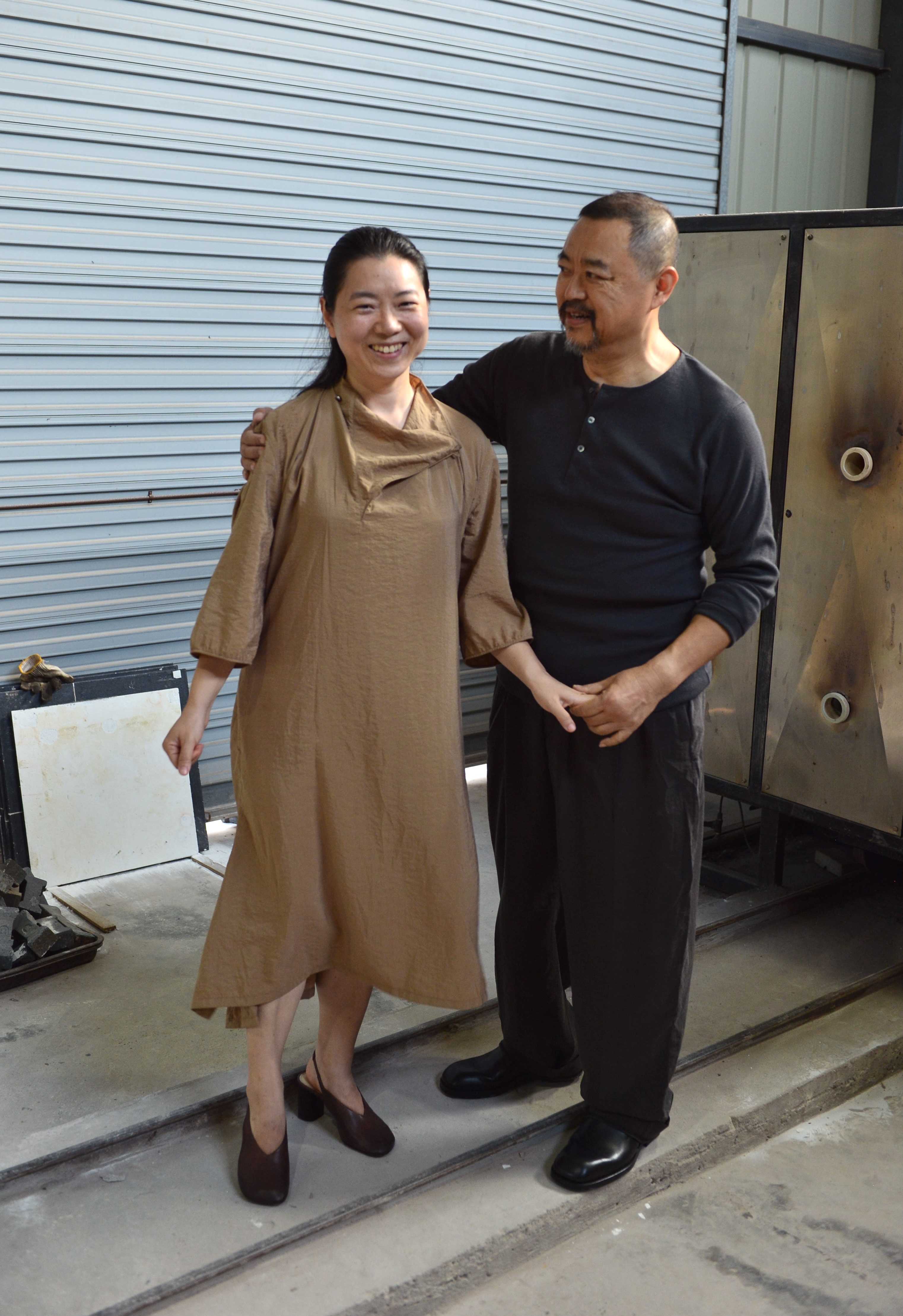
Li Qing has previously created ceramic pieces for LEMAIRE boutiques and offices around the world, while AiHeMei contributed to A Box of Impressions, a photography project presented for the opening of LEMAIRE’s Palais Royal space in Paris. The two artists therefore arrive at Gathering Plates with existing relationships to the house—but their collaboration here is firmly rooted in Chinese craft and contemporary artistic practice.
Two Artists, One Very Good Plate
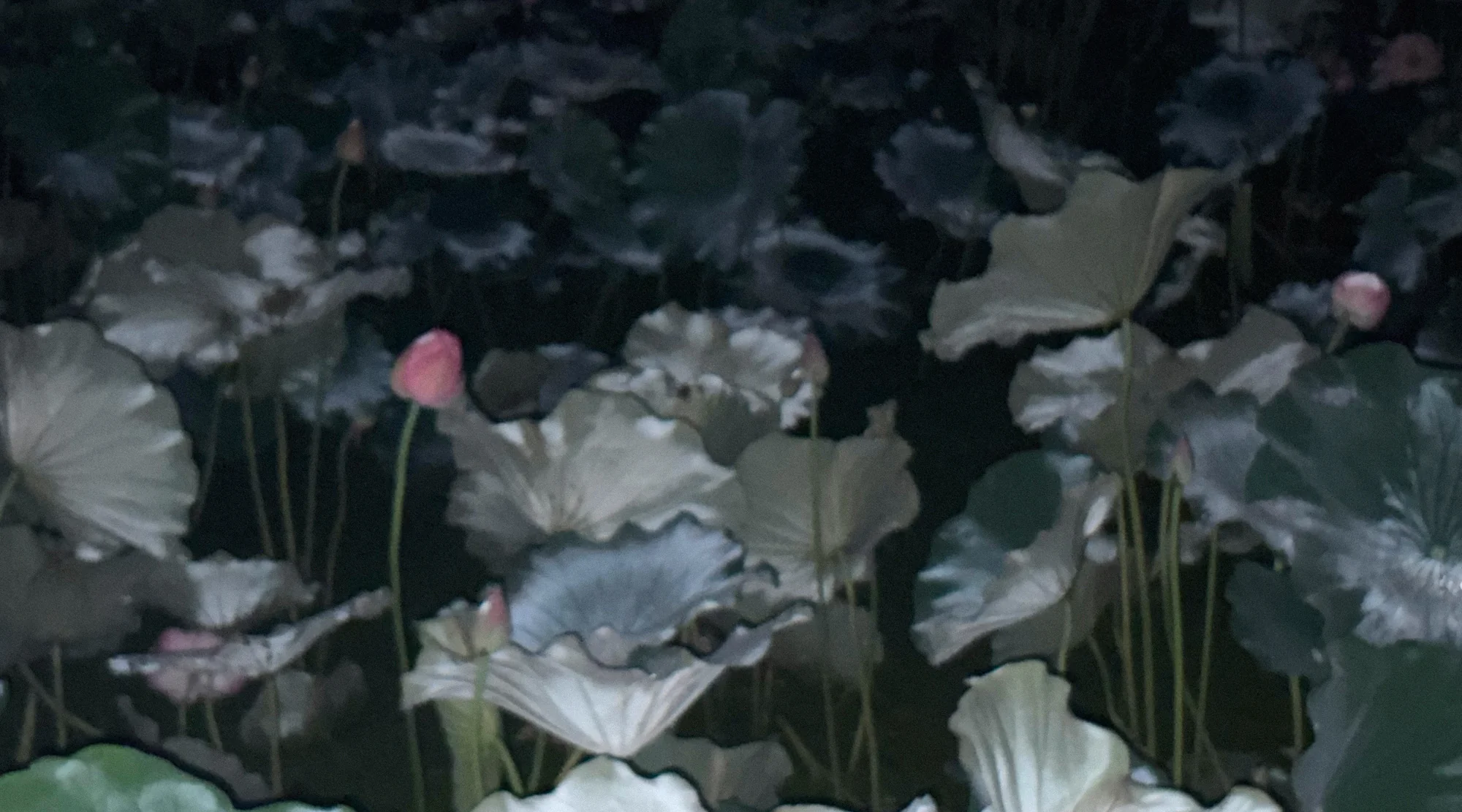
AiHeMei, also known as Xu Jing, is a Chengdu-based visual artist whose practice moves between traditional Chinese painting, oil painting, watercolor, and photography. Her background spans jurisprudence, art, and design, and that mix shows up in her interest in pictorial composition — essentially, how an image can be structured, balanced, and made to feel alive.

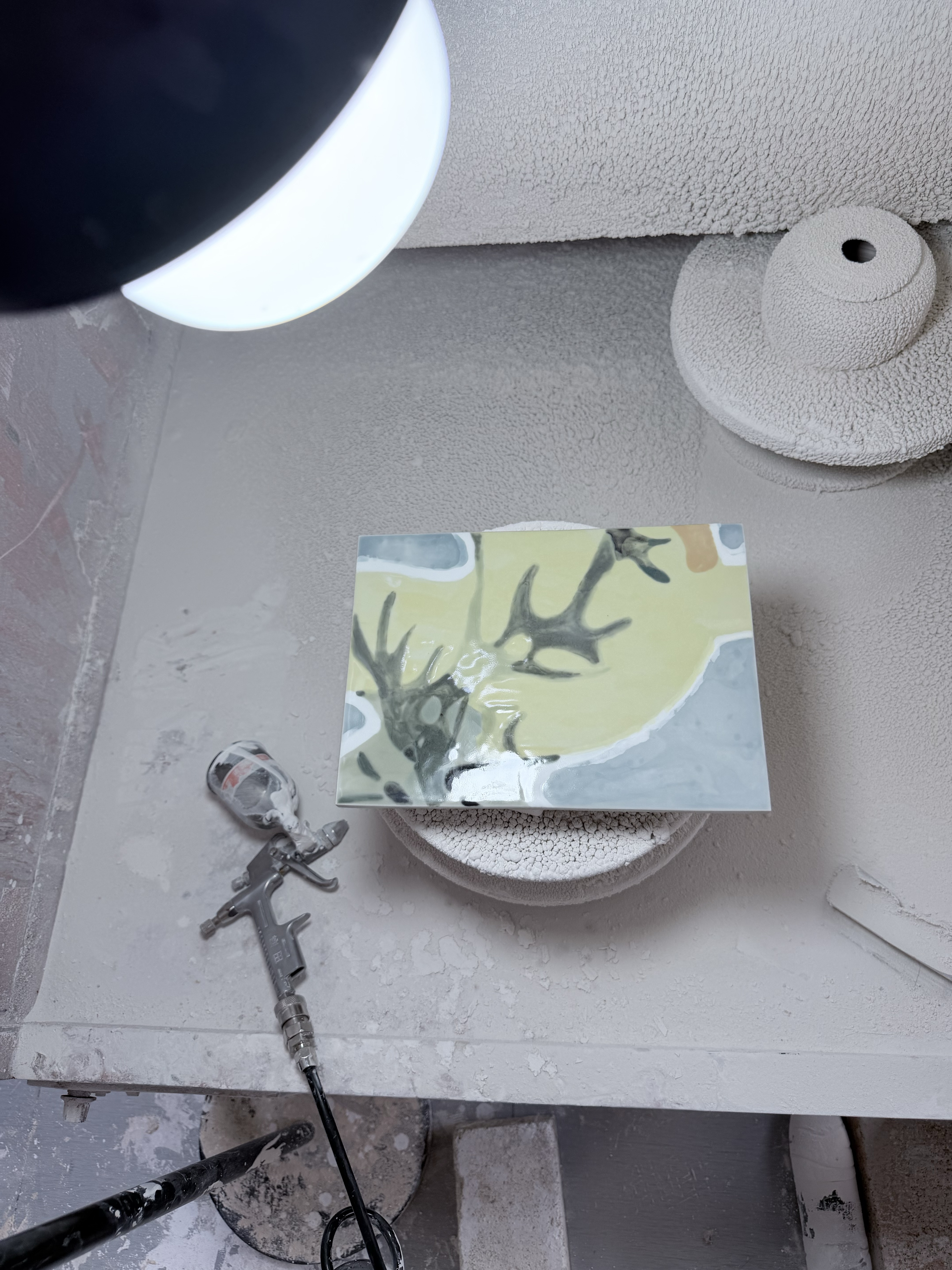
For Gathering Plates, she turns botanical forms into abstract compositions, using a delicate palette of colors across the porcelain surfaces. The result isn’t a literal painting of flowers or leaves. Instead, natural forms become shapes, gestures, and fragments.
Then the kiln gets involved.
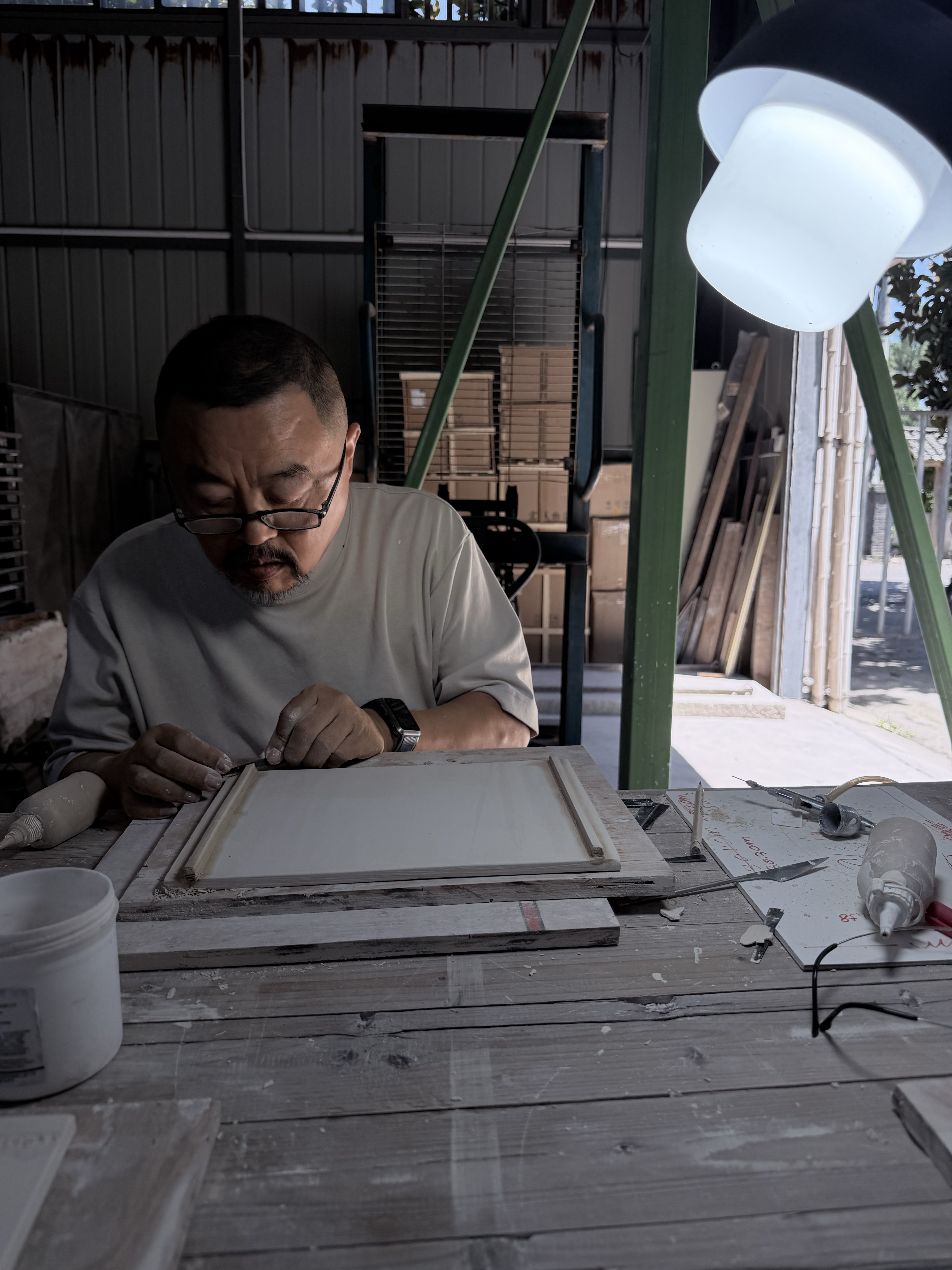
Li Qing, a Chengdu-based ceramic artist and director of the Shushan Kiln Ceramic Art Museum, brings a different kind of expertise. His practice connects traditional craftsmanship with contemporary design, working across porcelain painting, ceramic-making, and firing. A recurring concern in his work is the relationship between material, form, and function—which is pretty much the entire brief for a plate that wants to moonlight as a piece of art.
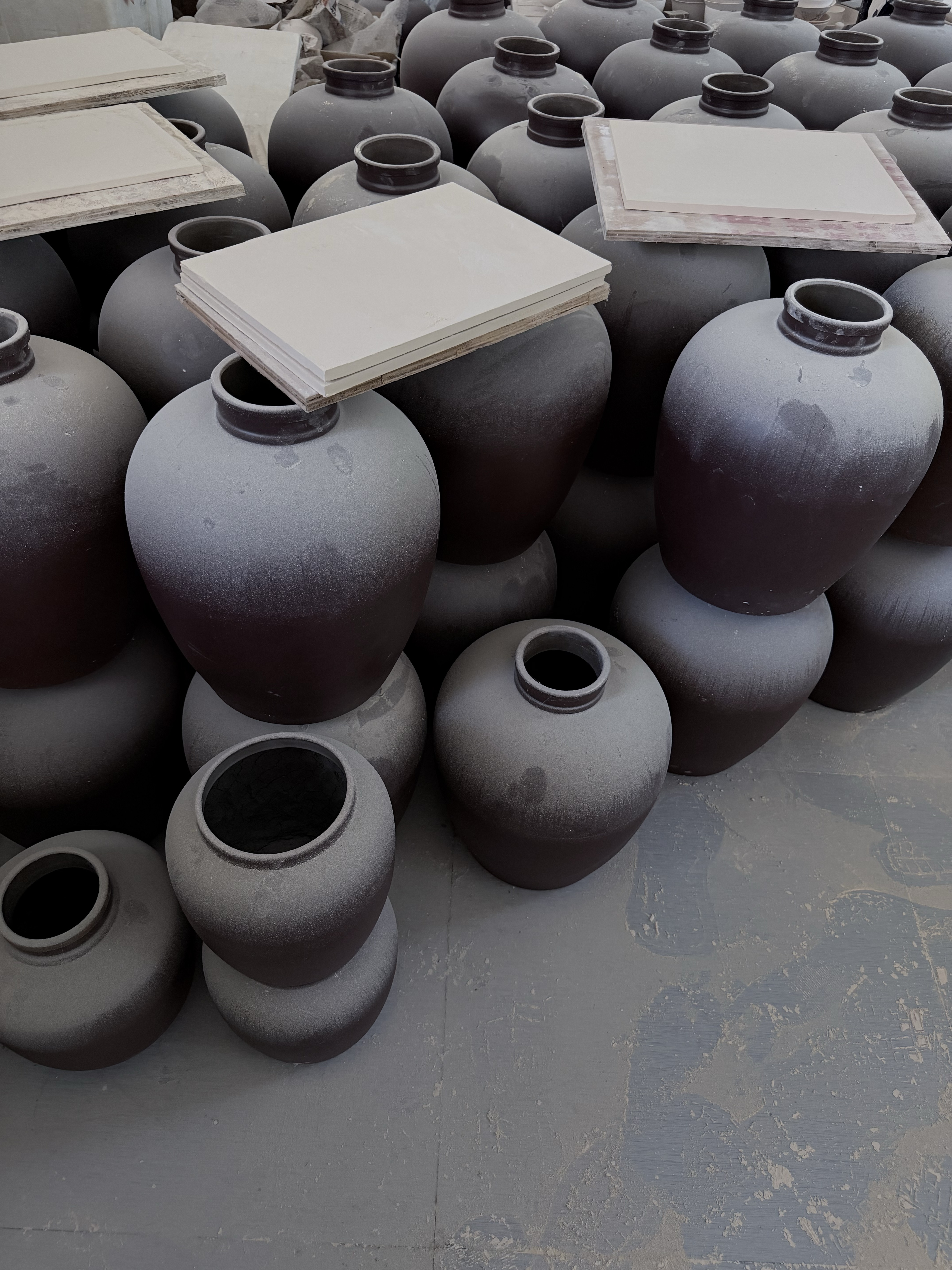
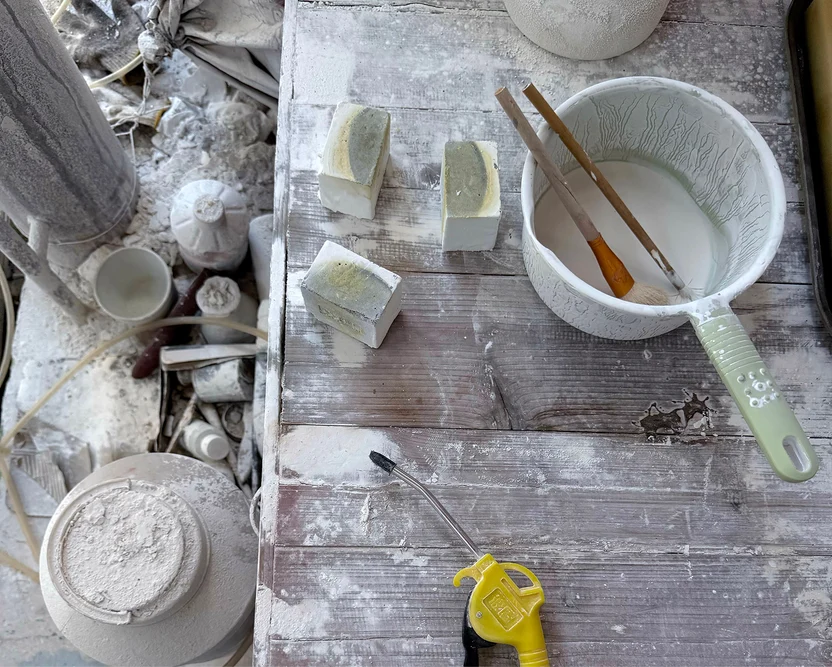
For these three works, Li handles the physical alchemy: modelling, drying, grinding, two-layer glazing, and double firing. AiHeMei’s paintings are applied to the porcelain, where the firing process subtly alters the color and texture of her compositions.
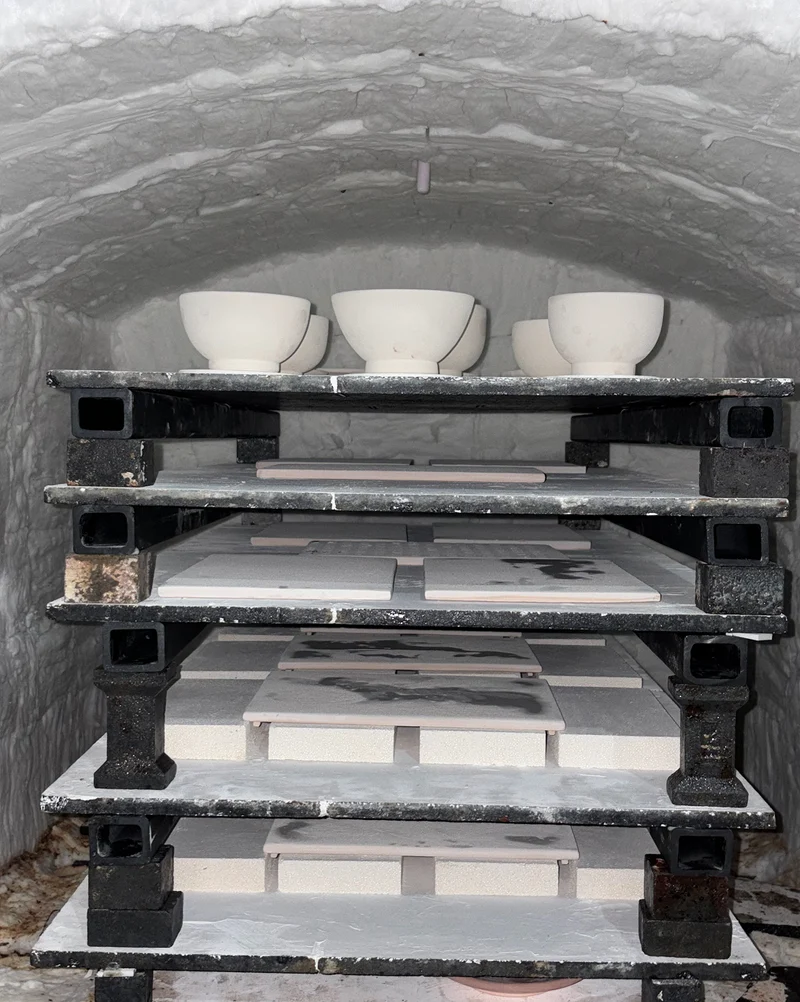
So what arrives at the end isn’t simply an image transferred onto a ceramic surface. The material has had its own say.
That is where the collaboration gets particularly satisfying. AiHeMei’s visual language and Li’s ceramic practice don’t just sit beside one another—they change one another. Painting becomes ceramic; ceramic becomes painting; an object intended for the dining table becomes something you might want to put on a wall.
A Quieter Kind of Cultural Exchange
There is a tendency for global fashion brands to approach Chinese culture with the subtlety of a neon sign. LEMAIRE’s approach here is considerably quieter.
Rather than simply borrowing a recognizable Chinese motif, Gathering Plates is interested in the people, materials, and techniques behind the object. Its Chinese-ness isn’t reduced to decoration. It comes through the artists’ practices, the use of porcelain, the relationship with botanical imagery, and the long, slightly obsessive process required to make each piece.
That feels particularly appropriate for a French house whose whole aesthetic is built around restraint.
LEMAIRE has increasingly developed relationships with Chinese artists and cultural traditions as its presence in the country has grown. Its Chengdu, Shanghai, and Beijing spaces have provided settings for collaborations and objects that connect the house’s global design language with local creative practices. The brand has also explored Chinese cultural moments such as Qixi and Lunar New Year through its collections and storytelling.
Gathering Plates takes that interest somewhere even more tactile. Instead of putting Chinese culture onto a runway and sending it back out into the world six months later, the project places it in the home, or, at least, in LEMAIRE’s very stylish approximation of one.
And perhaps that is the most appealing part.
Porcelain is meant to be touched. A tray can carry fruit, tea, flowers, snacks, keys, or whatever else ends up accumulating on a table. Art doesn’t necessarily have to sit behind glass to matter.
The three plates draw on botanical forms, the harvest, abundance, and the changing seasons. But you don’t need to know your qiū hén from your yuè shāo to get the point. These are objects about slowing down, noticing materials, and making the ordinary slightly more beautiful.
Which, honestly, sounds like a pretty good reason to put down the phone and set the table.
Gathering Plates is presented at LEMAIRE‘s Wukang, Beijing, and Chengdu boutiques until October 7.
Cover image via LEMAIRE.