
Feature image of AI Gone Wild: How Seedance 2.0 Turned Celebs Into Digital Puppets

AI Gone Wild: How Seedance 2.0 Turned Celebs Into Digital Puppets

5 mins read

5 mins read

Feature image of AI Gone Wild: How Seedance 2.0 Turned Celebs Into Digital Puppets
But Hollywood’s coming for blood.

The AI video game just hit god-mode. ByteDance, the company that brought us TikTok and CapCut, dropped Seedance 2.0 last week, and it’s straight-up chaos in the best way. This beast of a tool lets you mash text, pics, clips, and audio into hyper-real videos that look like they came from a Hollywood blockbuster. Natural moves, lip-sync that slaps, lighting on point—no more creepy Uncanny Valley vibes.
RADII covers the wave of AI-generated video created by ByteDance's Seedance 2.0.
Image via CapCut.

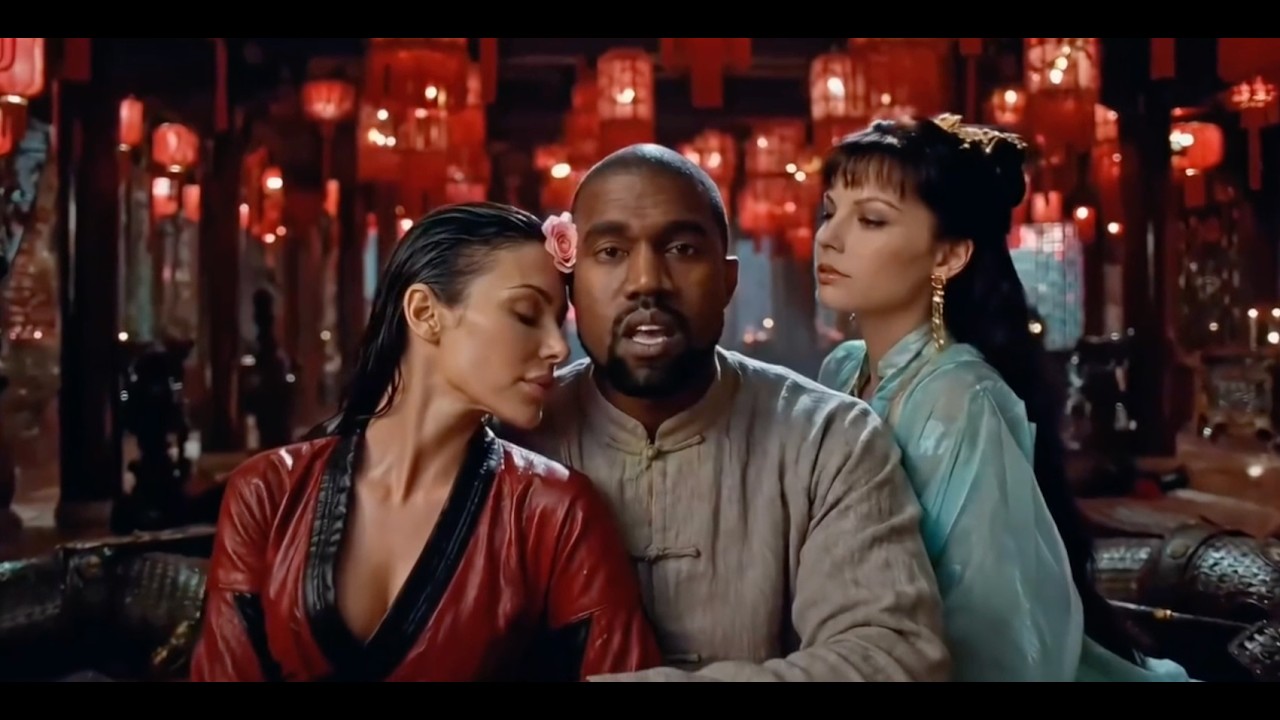
In just a few days, creators flooded the feeds with deepfake-style clips starring a range of celebrities. Think Kanye West crooning a classic Chinese song in an ancient palace (after storming into a room with ex-wife Kim Kardashian surrounded by clones of Travis Scott and iShowSpeed). Or Justin Bieber in front of the Hong Kong skyline, and then Jet Li versus Jackie Chan in an old movie setting. Or Stephen Chow goofing around with NBA star Kawhi Leonard in a scene from Fight Back to School 2. Other generated clips included Disney’s Spider-Man, Iron Man, and Grogu aka “Baby Yoda.”

Irish film-maker Ruairí Robinson, director of The Last Days on Mars, posted a 15-second clip featuring Brad Pitt and Tom Cruise throwing punches at each other in an intense rooftop scene. The fabric moves right. Their hair physics track naturally. Their facial expressions sync perfectly with the dialogue. The lighting matches the scene. It’s not deepfake jank anymore—it’s Hollywood-level output. All this with just “a 2 line prompt” and likely under 1 minute of rendering. Not to mention that Seedance 2.0 is currently free to try, and ByteDance’s full AI video suite is accessible starting from $18 per month. Rhett Reese, co-writer of Deadpool & Wolverine, shared Robinson’s clip on X and said, “I hate to say it. It’s likely over for us.”

It helps to understand how easy it is to operate Seedance 2.0. This tool is multimodal magic—just feed it up to 12 assets, which include up to 9 images, up to 3 short videos (no longer than 15 seconds), and up to 3 audio files (also under 15 seconds), plus text prompts to let the AI know how to use those assets as hard references. Want a vid of Drake performing in a neon dystopia? Upload his pic, a beat drop, and describe the vibe. Boom: physics-real motion, fabric that flows right, faces that emote perfectly. It syncs audio to visuals — lip-sync dialogue, sound effects that match the action, even choreographs to your uploaded track.

While we mere mortals will get a good laugh out of Seedance 2.0, pros will likely eat this up given the cost-savings for such quality, consistency and speed. TikTok-ready 9:16 or YouTube 16:9? Done. Extend scenes, swap characters, tweak frames—all post-gen. ByteDance calls it the “most comprehensive multimodal content reference” via their Seed site, topping benchmarks in text-to-video, image-to-video, and more.

Hollywood is, understandably, very concerned about this upgraded GenAI tool. Within days of Seedance 2.0’s launch, Disney and Paramount fired off cease-and-desist letters to ByteDance, alleging massive copyright and right-of-publicity infringement. In a statement, the Motion Picture Association (MPA) also accused ByteDance of “unauthorised use of US copyrighted works on a massive scale.”
RADII covers the wave of AI-generated video created by ByteDance's Seedance 2.0.
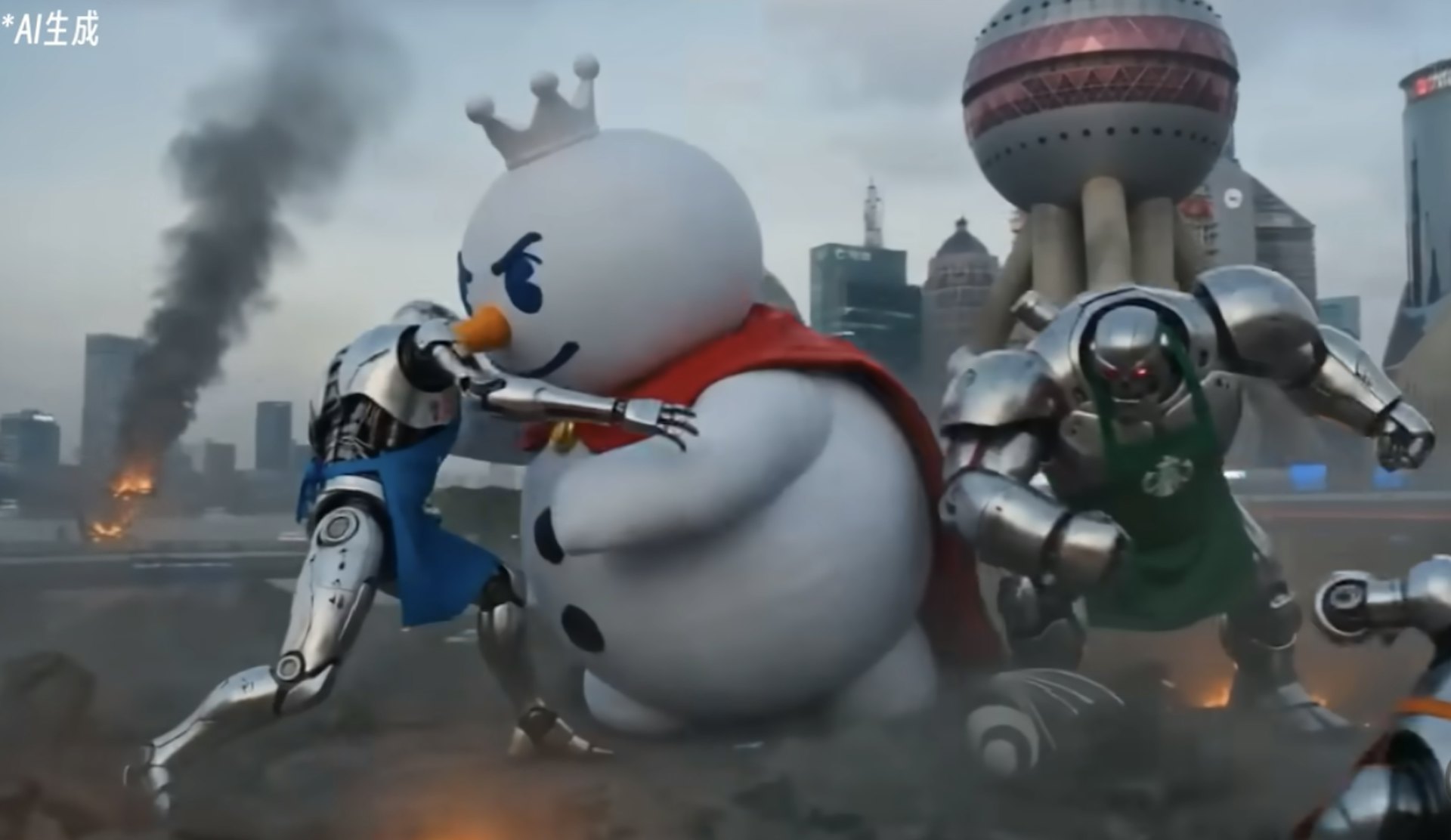
Yup, that’s Mixue’s Snowman King battling it out against Luckin Coffee and Starbucks robots. Image via hk01.

Their argument? These AI videos are training on protected content. Those Jet Li deepfakes? Probably trained on his actual filmography. The Jackie Chan vids? His movies, his likenesses, his signature moves. The Kanye West deepfakes? His image, his voice, his persona—all legally protected intellectual property. You can’t just run an AI on that content and then generate infinite variations without compensation.

But it gets messier. The deepfakes of Tom Cruise and Brad Pitt hit a different legal nerve because both actors have massive franchises attached to them. Cruise is literally Mission: Impossible, a crown jewel for Paramount. Pitt has a massive IP tied to his image through various studios. When you generate convincing videos of these guys doing things they never did, wearing things they never wore, and potentially saying things they never said, you’re messing with right of publicity—the legal right to control how your image and likeness are used for commercial purposes.

The wildcard? No one knows exactly what Seedance 2.0 was trained on. ByteDance hasn’t fully disclosed the training data. But given that it can replicate specific celebrity likenesses and mannerisms so perfectly, studios are assuming the model ingested massive amounts of footage, photoshoots, and audio recordings from their libraries and the broader internet.

Disney’s particularly pressed because they’ve got Marvel, Star Wars, and decades of legacy content. If Seedance 2.0 can generate convincing deepfakes of characters tied to that IP, it’s a threat to their entire business model. Having said that, back in December, OpenAI signed a deal that allows it to feature Disney characters on its Sora video generator, so it’s just a matter of money.

What’s undeniable is the fact that advancements like Seedance 2.0 democratize content creation in ways that scare massive corporations. Anyone with a laptop or even a phone can now generate Hollywood-quality videos. No crew. No budget. No gatekeeping. You get unlimited creative variations without reshoots. That’s genuinely world-changing for independent filmmakers, TikTok creators, small businesses, and literally anyone who wants to make video content without bleeding money.

But the flip side? Consent and ethics are getting obliterated. These celebrities never agreed to have their likenesses used this way. Kanye didn’t authorize his image to be used in deepfakes (well, probably—knowing Kanye, he might actually be here for the chaos, but that’s besides the point). The broader question is: should AI be allowed to replicate people’s identities without their permission?

Legally, studios are fighting for “no.” Creatively, the internet is fighting for “who cares, this is fire.” And technically, ByteDance isn’t stopping it. In fact, the tech isn’t going away. Other companies are building their own versions. The genie is out of the bottle, and you can’t shove it back.

The future is probably some hybrid: celebrity consent protocols where creators have to flag if they’re using a public figure, licensing agreements that compensate studios and talent, and clear legal frameworks for what constitutes fair use in AI generation.

For now? Enjoy the chaos. Download those Jet Li deepfakes. Duet the Kanye videos. Remix the Justin Bieber clips. Because this might be a very brief window where we can create anything before the lawyers permanently close the door.

Cover image via YouTube.
NEWSLETTER

Get weekly top picks and exclusive, newsletter only content delivered straight to you inbox.

NEWSLETTER

Get weekly top picks and exclusive, newsletter only content delivered straight to you inbox.

RADII NEWSLETTER

Get weekly top picks and exclusive, newsletter only content delivered straight to you inbox

Feature image of AI Gone Wild: How Seedance 2.0 Turned Celebs Into Digital Puppets

AI Gone Wild: How Seedance 2.0 Turned Celebs Into Digital Puppets

5 mins read

But Hollywood’s coming for blood.

The AI video game just hit god-mode. ByteDance, the company that brought us TikTok and CapCut, dropped Seedance 2.0 last week, and it’s straight-up chaos in the best way. This beast of a tool lets you mash text, pics, clips, and audio into hyper-real videos that look like they came from a Hollywood blockbuster. Natural moves, lip-sync that slaps, lighting on point—no more creepy Uncanny Valley vibes.

RADII covers the wave of AI-generated video created by ByteDance's Seedance 2.0.
Image via CapCut.

In just a few days, creators flooded the feeds with deepfake-style clips starring a range of celebrities. Think Kanye West crooning a classic Chinese song in an ancient palace (after storming into a room with ex-wife Kim Kardashian surrounded by clones of Travis Scott and iShowSpeed). Or Justin Bieber in front of the Hong Kong skyline, and then Jet Li versus Jackie Chan in an old movie setting. Or Stephen Chow goofing around with NBA star Kawhi Leonard in a scene from Fight Back to School 2. Other generated clips included Disney’s Spider-Man, Iron Man, and Grogu aka “Baby Yoda.”

Irish film-maker Ruairí Robinson, director of The Last Days on Mars, posted a 15-second clip featuring Brad Pitt and Tom Cruise throwing punches at each other in an intense rooftop scene. The fabric moves right. Their hair physics track naturally. Their facial expressions sync perfectly with the dialogue. The lighting matches the scene. It’s not deepfake jank anymore—it’s Hollywood-level output. All this with just “a 2 line prompt” and likely under 1 minute of rendering. Not to mention that Seedance 2.0 is currently free to try, and ByteDance’s full AI video suite is accessible starting from $18 per month. Rhett Reese, co-writer of Deadpool & Wolverine, shared Robinson’s clip on X and said, “I hate to say it. It’s likely over for us.”

It helps to understand how easy it is to operate Seedance 2.0. This tool is multimodal magic—just feed it up to 12 assets, which include up to 9 images, up to 3 short videos (no longer than 15 seconds), and up to 3 audio files (also under 15 seconds), plus text prompts to let the AI know how to use those assets as hard references. Want a vid of Drake performing in a neon dystopia? Upload his pic, a beat drop, and describe the vibe. Boom: physics-real motion, fabric that flows right, faces that emote perfectly. It syncs audio to visuals — lip-sync dialogue, sound effects that match the action, even choreographs to your uploaded track.

While we mere mortals will get a good laugh out of Seedance 2.0, pros will likely eat this up given the cost-savings for such quality, consistency and speed. TikTok-ready 9:16 or YouTube 16:9? Done. Extend scenes, swap characters, tweak frames—all post-gen. ByteDance calls it the “most comprehensive multimodal content reference” via their Seed site, topping benchmarks in text-to-video, image-to-video, and more.

Hollywood is, understandably, very concerned about this upgraded GenAI tool. Within days of Seedance 2.0’s launch, Disney and Paramount fired off cease-and-desist letters to ByteDance, alleging massive copyright and right-of-publicity infringement. In a statement, the Motion Picture Association (MPA) also accused ByteDance of “unauthorised use of US copyrighted works on a massive scale.”

RADII covers the wave of AI-generated video created by ByteDance's Seedance 2.0.
Yup, that’s Mixue’s Snowman King battling it out against Luckin Coffee and Starbucks robots. Image via hk01.

Their argument? These AI videos are training on protected content. Those Jet Li deepfakes? Probably trained on his actual filmography. The Jackie Chan vids? His movies, his likenesses, his signature moves. The Kanye West deepfakes? His image, his voice, his persona—all legally protected intellectual property. You can’t just run an AI on that content and then generate infinite variations without compensation.

But it gets messier. The deepfakes of Tom Cruise and Brad Pitt hit a different legal nerve because both actors have massive franchises attached to them. Cruise is literally Mission: Impossible, a crown jewel for Paramount. Pitt has a massive IP tied to his image through various studios. When you generate convincing videos of these guys doing things they never did, wearing things they never wore, and potentially saying things they never said, you’re messing with right of publicity—the legal right to control how your image and likeness are used for commercial purposes.

The wildcard? No one knows exactly what Seedance 2.0 was trained on. ByteDance hasn’t fully disclosed the training data. But given that it can replicate specific celebrity likenesses and mannerisms so perfectly, studios are assuming the model ingested massive amounts of footage, photoshoots, and audio recordings from their libraries and the broader internet.

Disney’s particularly pressed because they’ve got Marvel, Star Wars, and decades of legacy content. If Seedance 2.0 can generate convincing deepfakes of characters tied to that IP, it’s a threat to their entire business model. Having said that, back in December, OpenAI signed a deal that allows it to feature Disney characters on its Sora video generator, so it’s just a matter of money.

What’s undeniable is the fact that advancements like Seedance 2.0 democratize content creation in ways that scare massive corporations. Anyone with a laptop or even a phone can now generate Hollywood-quality videos. No crew. No budget. No gatekeeping. You get unlimited creative variations without reshoots. That’s genuinely world-changing for independent filmmakers, TikTok creators, small businesses, and literally anyone who wants to make video content without bleeding money.

But the flip side? Consent and ethics are getting obliterated. These celebrities never agreed to have their likenesses used this way. Kanye didn’t authorize his image to be used in deepfakes (well, probably—knowing Kanye, he might actually be here for the chaos, but that’s besides the point). The broader question is: should AI be allowed to replicate people’s identities without their permission?

Legally, studios are fighting for “no.” Creatively, the internet is fighting for “who cares, this is fire.” And technically, ByteDance isn’t stopping it. In fact, the tech isn’t going away. Other companies are building their own versions. The genie is out of the bottle, and you can’t shove it back.

The future is probably some hybrid: celebrity consent protocols where creators have to flag if they’re using a public figure, licensing agreements that compensate studios and talent, and clear legal frameworks for what constitutes fair use in AI generation.

For now? Enjoy the chaos. Download those Jet Li deepfakes. Duet the Kanye videos. Remix the Justin Bieber clips. Because this might be a very brief window where we can create anything before the lawyers permanently close the door.

Cover image via YouTube.
NEWSLETTER

Get weekly top picks and exclusive, newsletter only content delivered straight to you inbox.

RADII NEWSLETTER

Get weekly top picks and exclusive, newsletter only content delivered straight to you inbox

RELATED POSTS

Feature image of AI Gone Wild: How Seedance 2.0 Turned Celebs Into Digital Puppets

AI Gone Wild: How Seedance 2.0 Turned Celebs Into Digital Puppets

5 mins read

5 mins read

Feature image of AI Gone Wild: How Seedance 2.0 Turned Celebs Into Digital Puppets
But Hollywood’s coming for blood.

The AI video game just hit god-mode. ByteDance, the company that brought us TikTok and CapCut, dropped Seedance 2.0 last week, and it’s straight-up chaos in the best way. This beast of a tool lets you mash text, pics, clips, and audio into hyper-real videos that look like they came from a Hollywood blockbuster. Natural moves, lip-sync that slaps, lighting on point—no more creepy Uncanny Valley vibes.

RADII covers the wave of AI-generated video created by ByteDance's Seedance 2.0.
Image via CapCut.

In just a few days, creators flooded the feeds with deepfake-style clips starring a range of celebrities. Think Kanye West crooning a classic Chinese song in an ancient palace (after storming into a room with ex-wife Kim Kardashian surrounded by clones of Travis Scott and iShowSpeed). Or Justin Bieber in front of the Hong Kong skyline, and then Jet Li versus Jackie Chan in an old movie setting. Or Stephen Chow goofing around with NBA star Kawhi Leonard in a scene from Fight Back to School 2. Other generated clips included Disney’s Spider-Man, Iron Man, and Grogu aka “Baby Yoda.”

Irish film-maker Ruairí Robinson, director of The Last Days on Mars, posted a 15-second clip featuring Brad Pitt and Tom Cruise throwing punches at each other in an intense rooftop scene. The fabric moves right. Their hair physics track naturally. Their facial expressions sync perfectly with the dialogue. The lighting matches the scene. It’s not deepfake jank anymore—it’s Hollywood-level output. All this with just “a 2 line prompt” and likely under 1 minute of rendering. Not to mention that Seedance 2.0 is currently free to try, and ByteDance’s full AI video suite is accessible starting from $18 per month. Rhett Reese, co-writer of Deadpool & Wolverine, shared Robinson’s clip on X and said, “I hate to say it. It’s likely over for us.”

It helps to understand how easy it is to operate Seedance 2.0. This tool is multimodal magic—just feed it up to 12 assets, which include up to 9 images, up to 3 short videos (no longer than 15 seconds), and up to 3 audio files (also under 15 seconds), plus text prompts to let the AI know how to use those assets as hard references. Want a vid of Drake performing in a neon dystopia? Upload his pic, a beat drop, and describe the vibe. Boom: physics-real motion, fabric that flows right, faces that emote perfectly. It syncs audio to visuals — lip-sync dialogue, sound effects that match the action, even choreographs to your uploaded track.

While we mere mortals will get a good laugh out of Seedance 2.0, pros will likely eat this up given the cost-savings for such quality, consistency and speed. TikTok-ready 9:16 or YouTube 16:9? Done. Extend scenes, swap characters, tweak frames—all post-gen. ByteDance calls it the “most comprehensive multimodal content reference” via their Seed site, topping benchmarks in text-to-video, image-to-video, and more.

Hollywood is, understandably, very concerned about this upgraded GenAI tool. Within days of Seedance 2.0’s launch, Disney and Paramount fired off cease-and-desist letters to ByteDance, alleging massive copyright and right-of-publicity infringement. In a statement, the Motion Picture Association (MPA) also accused ByteDance of “unauthorised use of US copyrighted works on a massive scale.”

RADII covers the wave of AI-generated video created by ByteDance's Seedance 2.0.
Yup, that’s Mixue’s Snowman King battling it out against Luckin Coffee and Starbucks robots. Image via hk01.

Their argument? These AI videos are training on protected content. Those Jet Li deepfakes? Probably trained on his actual filmography. The Jackie Chan vids? His movies, his likenesses, his signature moves. The Kanye West deepfakes? His image, his voice, his persona—all legally protected intellectual property. You can’t just run an AI on that content and then generate infinite variations without compensation.

But it gets messier. The deepfakes of Tom Cruise and Brad Pitt hit a different legal nerve because both actors have massive franchises attached to them. Cruise is literally Mission: Impossible, a crown jewel for Paramount. Pitt has a massive IP tied to his image through various studios. When you generate convincing videos of these guys doing things they never did, wearing things they never wore, and potentially saying things they never said, you’re messing with right of publicity—the legal right to control how your image and likeness are used for commercial purposes.

The wildcard? No one knows exactly what Seedance 2.0 was trained on. ByteDance hasn’t fully disclosed the training data. But given that it can replicate specific celebrity likenesses and mannerisms so perfectly, studios are assuming the model ingested massive amounts of footage, photoshoots, and audio recordings from their libraries and the broader internet.

Disney’s particularly pressed because they’ve got Marvel, Star Wars, and decades of legacy content. If Seedance 2.0 can generate convincing deepfakes of characters tied to that IP, it’s a threat to their entire business model. Having said that, back in December, OpenAI signed a deal that allows it to feature Disney characters on its Sora video generator, so it’s just a matter of money.

What’s undeniable is the fact that advancements like Seedance 2.0 democratize content creation in ways that scare massive corporations. Anyone with a laptop or even a phone can now generate Hollywood-quality videos. No crew. No budget. No gatekeeping. You get unlimited creative variations without reshoots. That’s genuinely world-changing for independent filmmakers, TikTok creators, small businesses, and literally anyone who wants to make video content without bleeding money.

But the flip side? Consent and ethics are getting obliterated. These celebrities never agreed to have their likenesses used this way. Kanye didn’t authorize his image to be used in deepfakes (well, probably—knowing Kanye, he might actually be here for the chaos, but that’s besides the point). The broader question is: should AI be allowed to replicate people’s identities without their permission?

Legally, studios are fighting for “no.” Creatively, the internet is fighting for “who cares, this is fire.” And technically, ByteDance isn’t stopping it. In fact, the tech isn’t going away. Other companies are building their own versions. The genie is out of the bottle, and you can’t shove it back.

The future is probably some hybrid: celebrity consent protocols where creators have to flag if they’re using a public figure, licensing agreements that compensate studios and talent, and clear legal frameworks for what constitutes fair use in AI generation.

For now? Enjoy the chaos. Download those Jet Li deepfakes. Duet the Kanye videos. Remix the Justin Bieber clips. Because this might be a very brief window where we can create anything before the lawyers permanently close the door.

Cover image via YouTube.
NEWSLETTER

Get weekly top picks and exclusive, newsletter only content delivered straight to you inbox.

NEWSLETTER

Get weekly top picks and exclusive, newsletter only content delivered straight to you inbox.

RADII NEWSLETTER

Get weekly top picks and exclusive, newsletter only content delivered straight to you inbox

Feature image of AI Gone Wild: How Seedance 2.0 Turned Celebs Into Digital Puppets

AI Gone Wild: How Seedance 2.0 Turned Celebs Into Digital Puppets

5 mins read

But Hollywood’s coming for blood.

The AI video game just hit god-mode. ByteDance, the company that brought us TikTok and CapCut, dropped Seedance 2.0 last week, and it’s straight-up chaos in the best way. This beast of a tool lets you mash text, pics, clips, and audio into hyper-real videos that look like they came from a Hollywood blockbuster. Natural moves, lip-sync that slaps, lighting on point—no more creepy Uncanny Valley vibes.

RADII covers the wave of AI-generated video created by ByteDance's Seedance 2.0.
Image via CapCut.

In just a few days, creators flooded the feeds with deepfake-style clips starring a range of celebrities. Think Kanye West crooning a classic Chinese song in an ancient palace (after storming into a room with ex-wife Kim Kardashian surrounded by clones of Travis Scott and iShowSpeed). Or Justin Bieber in front of the Hong Kong skyline, and then Jet Li versus Jackie Chan in an old movie setting. Or Stephen Chow goofing around with NBA star Kawhi Leonard in a scene from Fight Back to School 2. Other generated clips included Disney’s Spider-Man, Iron Man, and Grogu aka “Baby Yoda.”

Irish film-maker Ruairí Robinson, director of The Last Days on Mars, posted a 15-second clip featuring Brad Pitt and Tom Cruise throwing punches at each other in an intense rooftop scene. The fabric moves right. Their hair physics track naturally. Their facial expressions sync perfectly with the dialogue. The lighting matches the scene. It’s not deepfake jank anymore—it’s Hollywood-level output. All this with just “a 2 line prompt” and likely under 1 minute of rendering. Not to mention that Seedance 2.0 is currently free to try, and ByteDance’s full AI video suite is accessible starting from $18 per month. Rhett Reese, co-writer of Deadpool & Wolverine, shared Robinson’s clip on X and said, “I hate to say it. It’s likely over for us.”

It helps to understand how easy it is to operate Seedance 2.0. This tool is multimodal magic—just feed it up to 12 assets, which include up to 9 images, up to 3 short videos (no longer than 15 seconds), and up to 3 audio files (also under 15 seconds), plus text prompts to let the AI know how to use those assets as hard references. Want a vid of Drake performing in a neon dystopia? Upload his pic, a beat drop, and describe the vibe. Boom: physics-real motion, fabric that flows right, faces that emote perfectly. It syncs audio to visuals — lip-sync dialogue, sound effects that match the action, even choreographs to your uploaded track.

While we mere mortals will get a good laugh out of Seedance 2.0, pros will likely eat this up given the cost-savings for such quality, consistency and speed. TikTok-ready 9:16 or YouTube 16:9? Done. Extend scenes, swap characters, tweak frames—all post-gen. ByteDance calls it the “most comprehensive multimodal content reference” via their Seed site, topping benchmarks in text-to-video, image-to-video, and more.

Hollywood is, understandably, very concerned about this upgraded GenAI tool. Within days of Seedance 2.0’s launch, Disney and Paramount fired off cease-and-desist letters to ByteDance, alleging massive copyright and right-of-publicity infringement. In a statement, the Motion Picture Association (MPA) also accused ByteDance of “unauthorised use of US copyrighted works on a massive scale.”

RADII covers the wave of AI-generated video created by ByteDance's Seedance 2.0.
Yup, that’s Mixue’s Snowman King battling it out against Luckin Coffee and Starbucks robots. Image via hk01.

Their argument? These AI videos are training on protected content. Those Jet Li deepfakes? Probably trained on his actual filmography. The Jackie Chan vids? His movies, his likenesses, his signature moves. The Kanye West deepfakes? His image, his voice, his persona—all legally protected intellectual property. You can’t just run an AI on that content and then generate infinite variations without compensation.

But it gets messier. The deepfakes of Tom Cruise and Brad Pitt hit a different legal nerve because both actors have massive franchises attached to them. Cruise is literally Mission: Impossible, a crown jewel for Paramount. Pitt has a massive IP tied to his image through various studios. When you generate convincing videos of these guys doing things they never did, wearing things they never wore, and potentially saying things they never said, you’re messing with right of publicity—the legal right to control how your image and likeness are used for commercial purposes.

The wildcard? No one knows exactly what Seedance 2.0 was trained on. ByteDance hasn’t fully disclosed the training data. But given that it can replicate specific celebrity likenesses and mannerisms so perfectly, studios are assuming the model ingested massive amounts of footage, photoshoots, and audio recordings from their libraries and the broader internet.

Disney’s particularly pressed because they’ve got Marvel, Star Wars, and decades of legacy content. If Seedance 2.0 can generate convincing deepfakes of characters tied to that IP, it’s a threat to their entire business model. Having said that, back in December, OpenAI signed a deal that allows it to feature Disney characters on its Sora video generator, so it’s just a matter of money.

What’s undeniable is the fact that advancements like Seedance 2.0 democratize content creation in ways that scare massive corporations. Anyone with a laptop or even a phone can now generate Hollywood-quality videos. No crew. No budget. No gatekeeping. You get unlimited creative variations without reshoots. That’s genuinely world-changing for independent filmmakers, TikTok creators, small businesses, and literally anyone who wants to make video content without bleeding money.

But the flip side? Consent and ethics are getting obliterated. These celebrities never agreed to have their likenesses used this way. Kanye didn’t authorize his image to be used in deepfakes (well, probably—knowing Kanye, he might actually be here for the chaos, but that’s besides the point). The broader question is: should AI be allowed to replicate people’s identities without their permission?

Legally, studios are fighting for “no.” Creatively, the internet is fighting for “who cares, this is fire.” And technically, ByteDance isn’t stopping it. In fact, the tech isn’t going away. Other companies are building their own versions. The genie is out of the bottle, and you can’t shove it back.

The future is probably some hybrid: celebrity consent protocols where creators have to flag if they’re using a public figure, licensing agreements that compensate studios and talent, and clear legal frameworks for what constitutes fair use in AI generation.

For now? Enjoy the chaos. Download those Jet Li deepfakes. Duet the Kanye videos. Remix the Justin Bieber clips. Because this might be a very brief window where we can create anything before the lawyers permanently close the door.

Cover image via YouTube.
NEWSLETTER

Get weekly top picks and exclusive, newsletter only content delivered straight to you inbox.

RADII NEWSLETTER

Get weekly top picks and exclusive, newsletter only content delivered straight to you inbox

NEWSLETTER​

Get weekly top picks and exclusive, newsletter only content delivered straight to you inbox

RADII Newsletter Pop Up small banner

NEWSLETTER

Get weekly top picks and exclusive, newsletter only content delivered straight to you inbox.

Link Copied!

Share

Feature image of AI Gone Wild: How Seedance 2.0 Turned Celebs Into Digital Puppets

AI Gone Wild: How Seedance 2.0 Turned Celebs Into Digital Puppets

But Hollywood’s coming for blood.

PULSE

Tap into the latest in music, fashion, art, design, entertainment, pop culture, celebrity news, and contemporary culture

DISCOVER

Embark on a journey through food, travel, wellness, heritage, traditional culture, and lifestyle

STYLE

An insider’s look at the intersection of fashion, art, and design

FEAST

Titillate your taste buds with coverage of the best food and drink trends from China and beyond.

FUTURE

Explore the cutting edge in tech, AI, gadgets, gaming, and innovative tech-related products

FEAST

Titillate your taste buds with coverage of the best food and drink trends from China and beyond

STYLE

An insider’s look at the intersection of fashion, art, and design

PULSE

Unpacking Chinese youth culture through coverage of nightlife, film, sports, celebrities, and the hottest new music