

Feature image of Back to Their Roots: Why Indonesian Chinese Students Are Choosing China

Back to Their Roots: Why Indonesian Chinese Students Are Choosing China

8 mins read

8 mins read

Feature image of Back to Their Roots: Why Indonesian Chinese Students Are Choosing China
For generations, Indonesian Chinese families stayed rooted far from China, their ancestors long gone. Now, a new wave of students is turning back, curious and driven.

If you grew up without a tiger mom breathing down your neck, piling on extracurriculars the second you walked through the door, and handing you a to-do list longer than your attention span, then you did not grow up in a stereotypical Asian household—including me.

Education ranks as a source of family pride: an A is the standard, good grades lead to top universities and fat paychecks, and studying abroad amplifies that success into something bolder.

Asian parents are often said to take pride in three career achievements: becoming a lawyer, doctor, or Big Four accountant. My parents saw the job market tighten, so they sent me abroad for experience and new languages. I chose elsewhere, but China now draws a flood of international students chasing the same edge.

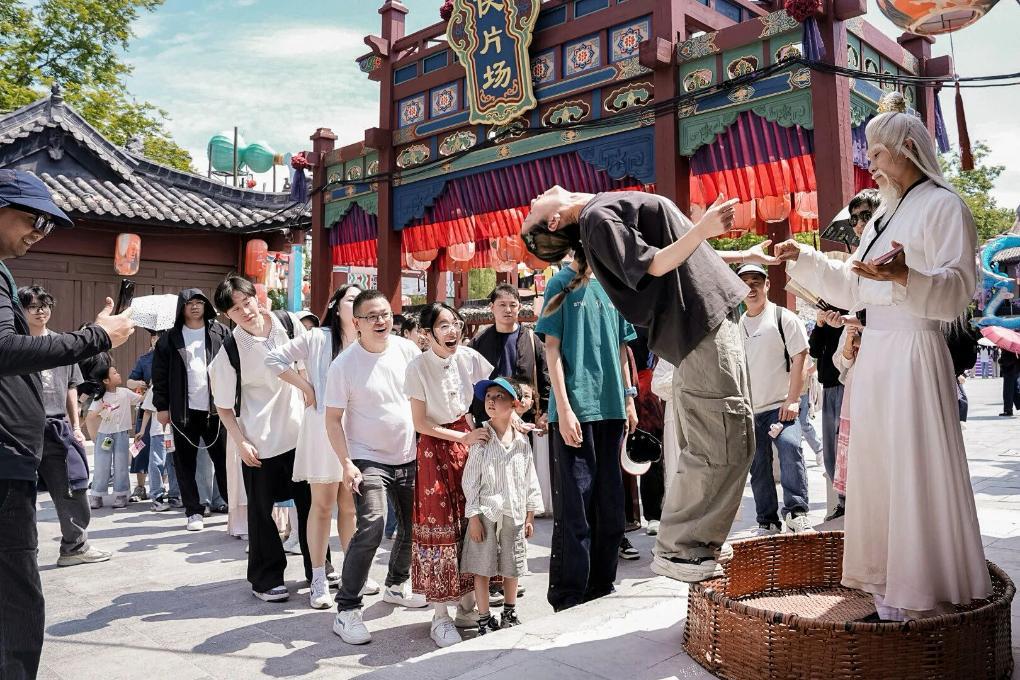
Image via Economic Daily.

China-based news sites recently reported that China has become the top draw for international students, with some 380,000 students from 191 countries enrolled during the 2024–2025 academic year, according to a senior education official. For Indonesians, the pull runs deeper than academics—it is a homecoming to roots their families walked away from generations ago and never revisited.

One thing about China, though, is that it has long had connections with many Chinese Indonesians in Indonesia. According to recent data, Indonesia ranks first globally, with an estimated 11.2 million people of Chinese descent—the largest Chinese population outside the Chinese mainland. For generations, this distinctive community has not only shaped the country’s economy and culture but also helped lay the foundation of its urban landscape.
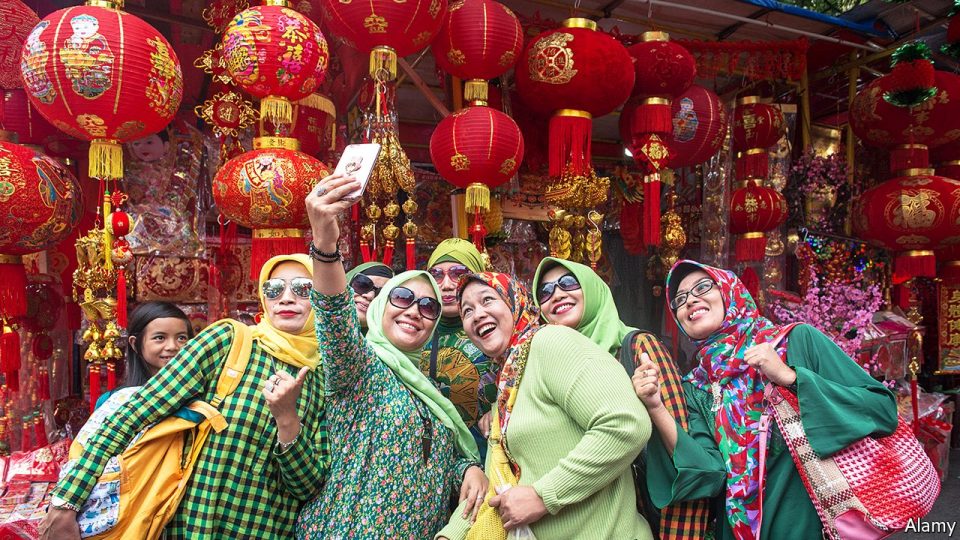
Image via Indonesia Expat.

Despite their numbers, few Chinese Indonesians can still speak Mandarin. The reason traces back to 32 years under former President Suharto’s New Order regime. From 1966 to 1998, the government banned Chinese-language instruction in schools and suppressed public displays of Chinese characters and cultural expressions, all in the name of national unity.

But as time passes and things change, many Chinese Indonesians are now looking to learn Mandarin, mainly because China is one of the world’s fastest-growing economies and knowing the language can open up opportunities. At least from my own experience, many businesspeople often go to China to look for machines or other products that are sold in Indonesia. And as far as I know, printing a book in China is so much cheaper than in Indonesia—another flex on how China can do pretty much everything.

One student who was curious about studying abroad is Tuty Julfa. At the age of 16, she decided to attend Xi’an Jiaotong-Liverpool University (XJTLU) for her higher education.

Tuty Julfa sitting in the back wearing a red shirt. Image via Tuty.

Growing up, Tuty’s parents often took her to Hong Kong to visit family. Those trips planted the seed, but it was one thing in particular that planted the roots: she watched everyone around her order food in fluent Chinese while she stood there in silence, unable to say a word or actually bond with her family.

“The waitress told me [that] my Mandarin was bad,” Julfa recalled. “Right then, I knew studying in China was the only option,” as she sought to reconnect with the culture she was born into.

As an only child, Julfa’s parents hesitated to let her travel too far, but China struck the right balance—close enough to ease their worries yet distant enough to offer a world apart from Indonesia. Now 34, she has no regrets about that choice.

“Studying there plugged me into a whole new world, from fellow international students to professors who came from everywhere. Being surrounded by Mandarin every day sharpened my ear and my speech faster than any classroom ever could. And it wasn’t just the language; the culture hit me in ways I didn’t expect, from everyday rituals to watching a traditional Chinese wedding unfold right in front of me. The city itself was a breeze to navigate: safe, walkable, and surprisingly freeing,” said Julfa, who now heads Musume Play, a local shoe brand she built from the ground up.

Work ethic—not just language or culture—left the deepest mark on Tuty. Coming from Asia, she knows that lesson carries weight. Suzhou’s food did not disappoint either, especially the squirrel-shaped Mandarin fish, served whole as a symbol of completeness and unity, and easily the city’s signature dish that’s not to be missed.

“Endurance and hustle, pushing through tough moments without complaining, and staying consistent no matter what,” the XJTLU graduate, who studied Information and Computing Sciences, said with a laugh.
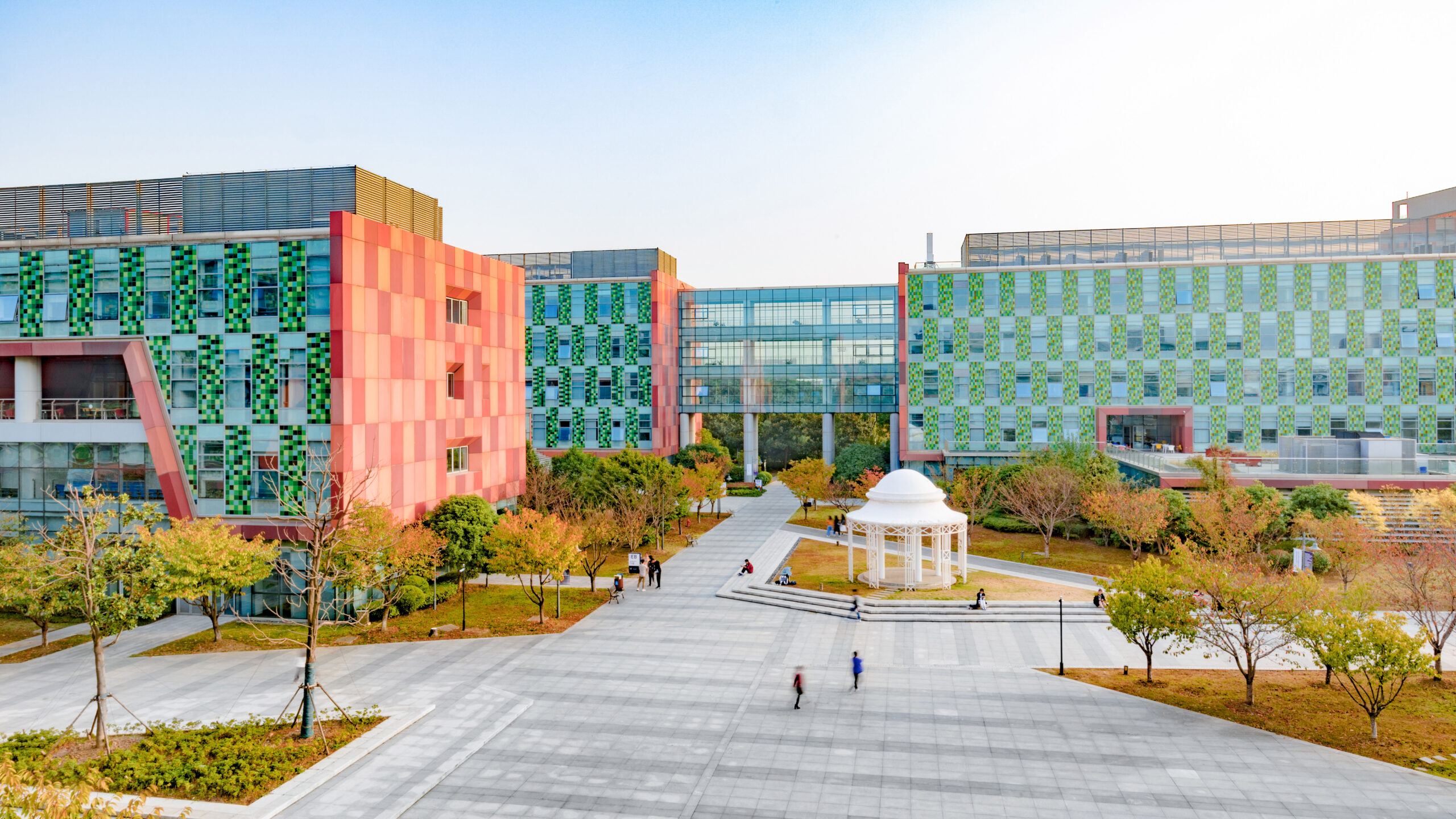
Xi’an Jiaotong-Liverpool University (XJTLU) enables students to experience different cultures, and many students from Indonesia also go to reconnect with their roots. Image via XJTLU.

Tuty added that even when her educational background does not perfectly align with her current work, she still sees every step as a learning experience.

Since then, she’s not been alone. More Indonesian students are heading to China, like Joel Amanta Wiraatmadja, who came not just to study but to reclaim a culture his family left behind.

As someone who went to China a couple of years ago, I found it fascinating to reconnect with my own ancestors’ land. Despite the language barrier my family had, it was definitely eye-opening to visit Shanghai, Suzhou, and Hangzhou. Our tour guides were also Indonesian students studying abroad. I have to say, it’s definitely a trend—there are more Indonesians there now, meaning it’s not too hard to be away from home.

“I chose China to get back to my roots. No one in my family speaks Mandarin, and my two older siblings went to the U.S., so I wanted a different path. China was also on the rise, so it felt like the right time to learn,” Wiraatmadja said with a laugh.

Joel Amanta Wiraatmadja. Image via Wiraatmadja.

Currently working as a brand manager in Guangzhou, Wiraatmadja also runs his own textile venture, Namaka Works, fulfilling his childhood dream of owning a business.

Wiraatmadja’s personal discovery sits within a much larger historical arc. Studies suggest that Chinese migration to the Indonesian Archipelago ranks among the earliest in human history. Research led by Hugh McColl and colleagues traces those movements back to the Neolithic transition, roughly 9,000 to 5,500 years Before Present, when rice and other cereals were first domesticated.

These Neolithic migrants split into two streams, one traveling by land and the other by sea. The study also found that they shared an ancestral lineage with populations in Peninsular Malaysia and played a key role in spreading Austroasiatic and Austronesian languages across the region.

“Funny enough, I still haven’t found my own family’s ancestral land, but I’ve been alongside three different friends when they found theirs, and each time it happened near the very end of our time in China,” he said. Still, not knowing his own roots has not dimmed his gratitude for the education, connections, and perspective China gave him.

“I’m hunting down every lead I can find so I can finally set foot on my ancestral land, and hopefully that day comes soon,” he said, his voice buzzing with anticipation.

The ancestral connection alone did not fuel Wiraatmadja’s curiosity about studying in China.

“Studying abroad opens your eyes to how the world actually works in different corners of the globe. You gain cultural awareness and a level of tolerance that simply does not come from staying put. For Indonesian students, that exposure is essential, especially when it comes from more developed countries, because they can bring those fresh insights and new values back home and make a tangible difference in Indonesia,” the 24-year-old said.

Youmin Xi, executive president of XJTLU, reflected during a June 24 press conference that studying in China gives students a window into Eastern philosophy, shaping a more holistic worldview.

“Our educational model is more holistic, weaving together English, Mandarin, and Chinese culture to give XJTLU students a real advantage as global citizens,” Xi added.
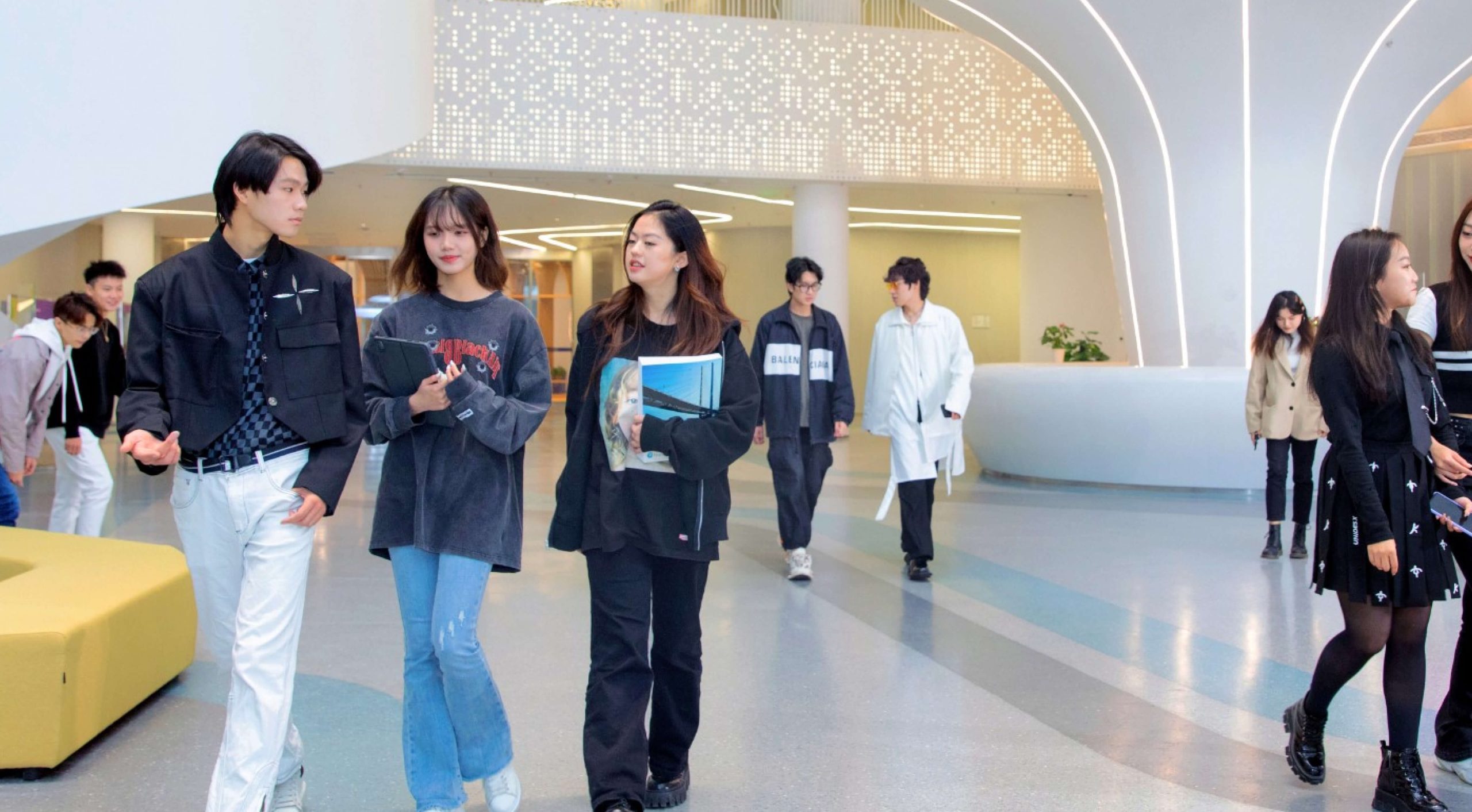
A lot of parents believe that studying abroad will help their children to actually be more competitive, as well as get added value for their skills. Image via XJTLU.

“Our graduates can work in China, Indonesia, or anywhere else, making our university stand out. The university provides instruction in English, enabling Indonesian students to adapt, while offering Mandarin courses that open doors across the globe. With both languages in the students’ toolkit, they are not just communicating; they are unlocking opportunities worldwide,” Xi stressed.

Filbert Juwono, an assistant professor at XJTLU, offered his own perspective on the surge. The draw, he argued, is less about personal roots and more about academic reputation. Indonesian parents are intensely competitive when it comes to education, and for many, an overseas degree is seen as a serious career advantage.
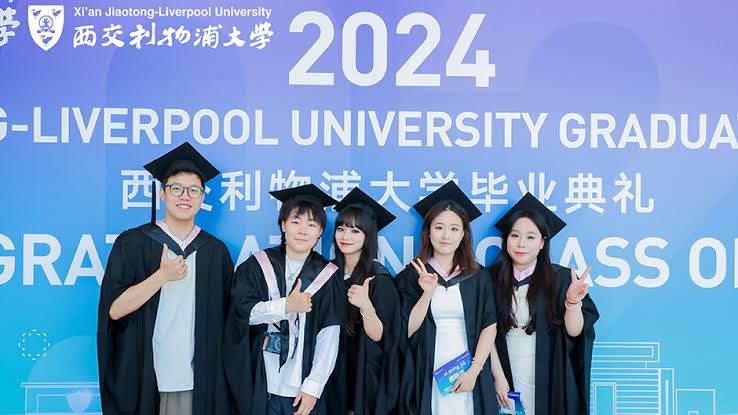
Image via XJTLU.

“As for the deeper reasons, I would not say ethnic heritage tops the list. From what I have seen, students are drawn to what China offers in practical terms: the international character of its universities, solid academics, a safe setting, and costs that are noticeably lower than private universities in Indonesia or schools in the UK and U.S. Many Chinese institutions also grant internationally recognized British or American degrees at a more accessible price point, and Mandarin skills are becoming harder to ignore for anyone eyeing a global career. I think these real-world considerations carry more weight than heritage alone in how students and their families decide,” Juwono reflected.

Jastip, the casual courier service popular in Indonesia, has found a new niche among students, he explained, as they ride the wave of Chinese pop culture products like Pop Mart merchandise and toys that have blown up online in recent years and created a steady demand for cross-border access.

“China is lowering the barriers to entry across the board, whether through scholarships, transit visas, or tourism incentives. The easier it gets to visit and stay, the more students and travelers take notice,” he added.

According to HSBC, China offers tuition at roughly USD 3,813, nearly eight times less than the U.S. at USD 29,254 and well below the UK at USD 20,542 and Australia at USD 23,575, giving parents an affordable, tech-driven option as job competition back home keeps heating up.

“Mandarin turned out to be more useful than I expected. You cannot really connect with locals without it, and now that I work full-time in China, I feel that [benefit] even more. It is not just about getting by day to day; it helps you grasp the bigger cultural picture,” Wiraatmadja said with excitement, despite having to learn one of the hardest languages in the world.

Wiraatmadja admitted he only started learning Mandarin seriously after graduation and wishes he had begun much earlier. He found it useful for travel, guiding family, doing business, and even translating for partners visiting China. Career-wise, he noted that Mandarin speakers have a clear edge, especially in China-related industries or when working with Chinese companies.
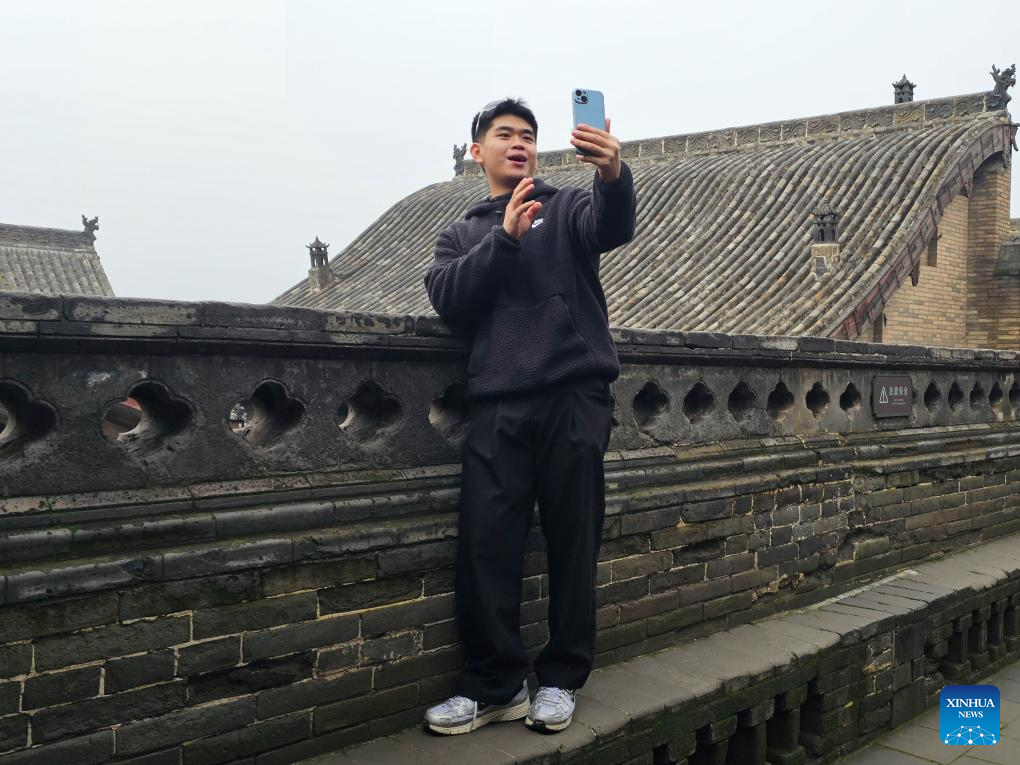
Indonesian Chinese student Veldesen Yaputra visiting Lingshi County in Shanxi Province. Image via Xinhua.

For many Chinese Indonesians, studying in China means more than earning a degree. It means reclaiming a heritage long felt but rarely touched, and bringing those lessons home to help shape Indonesia’s future.

Cover image via Pexel Rui Wang.

NEWSLETTER

Get weekly top picks and exclusive, newsletter only content delivered straight to you inbox.

NEWSLETTER

Get weekly top picks and exclusive, newsletter only content delivered straight to you inbox.

RADII NEWSLETTER

Get weekly top picks and exclusive, newsletter only content delivered straight to you inbox

Feature image of Back to Their Roots: Why Indonesian Chinese Students Are Choosing China

Back to Their Roots: Why Indonesian Chinese Students Are Choosing China

8 mins read

For generations, Indonesian Chinese families stayed rooted far from China, their ancestors long gone. Now, a new wave of students is turning back, curious and driven.

If you grew up without a tiger mom breathing down your neck, piling on extracurriculars the second you walked through the door, and handing you a to-do list longer than your attention span, then you did not grow up in a stereotypical Asian household—including me.

Education ranks as a source of family pride: an A is the standard, good grades lead to top universities and fat paychecks, and studying abroad amplifies that success into something bolder.

Asian parents are often said to take pride in three career achievements: becoming a lawyer, doctor, or Big Four accountant. My parents saw the job market tighten, so they sent me abroad for experience and new languages. I chose elsewhere, but China now draws a flood of international students chasing the same edge.

Image via Economic Daily.

China-based news sites recently reported that China has become the top draw for international students, with some 380,000 students from 191 countries enrolled during the 2024–2025 academic year, according to a senior education official. For Indonesians, the pull runs deeper than academics—it is a homecoming to roots their families walked away from generations ago and never revisited.

One thing about China, though, is that it has long had connections with many Chinese Indonesians in Indonesia. According to recent data, Indonesia ranks first globally, with an estimated 11.2 million people of Chinese descent—the largest Chinese population outside the Chinese mainland. For generations, this distinctive community has not only shaped the country’s economy and culture but also helped lay the foundation of its urban landscape.

Image via Indonesia Expat.

Despite their numbers, few Chinese Indonesians can still speak Mandarin. The reason traces back to 32 years under former President Suharto’s New Order regime. From 1966 to 1998, the government banned Chinese-language instruction in schools and suppressed public displays of Chinese characters and cultural expressions, all in the name of national unity.

But as time passes and things change, many Chinese Indonesians are now looking to learn Mandarin, mainly because China is one of the world’s fastest-growing economies and knowing the language can open up opportunities. At least from my own experience, many businesspeople often go to China to look for machines or other products that are sold in Indonesia. And as far as I know, printing a book in China is so much cheaper than in Indonesia—another flex on how China can do pretty much everything.

One student who was curious about studying abroad is Tuty Julfa. At the age of 16, she decided to attend Xi’an Jiaotong-Liverpool University (XJTLU) for her higher education.

Tuty Julfa sitting in the back wearing a red shirt. Image via Tuty.

Growing up, Tuty’s parents often took her to Hong Kong to visit family. Those trips planted the seed, but it was one thing in particular that planted the roots: she watched everyone around her order food in fluent Chinese while she stood there in silence, unable to say a word or actually bond with her family.

“The waitress told me [that] my Mandarin was bad,” Julfa recalled. “Right then, I knew studying in China was the only option,” as she sought to reconnect with the culture she was born into.

As an only child, Julfa’s parents hesitated to let her travel too far, but China struck the right balance—close enough to ease their worries yet distant enough to offer a world apart from Indonesia. Now 34, she has no regrets about that choice.

“Studying there plugged me into a whole new world, from fellow international students to professors who came from everywhere. Being surrounded by Mandarin every day sharpened my ear and my speech faster than any classroom ever could. And it wasn’t just the language; the culture hit me in ways I didn’t expect, from everyday rituals to watching a traditional Chinese wedding unfold right in front of me. The city itself was a breeze to navigate: safe, walkable, and surprisingly freeing,” said Julfa, who now heads Musume Play, a local shoe brand she built from the ground up.

Work ethic—not just language or culture—left the deepest mark on Tuty. Coming from Asia, she knows that lesson carries weight. Suzhou’s food did not disappoint either, especially the squirrel-shaped Mandarin fish, served whole as a symbol of completeness and unity, and easily the city’s signature dish that’s not to be missed.

“Endurance and hustle, pushing through tough moments without complaining, and staying consistent no matter what,” the XJTLU graduate, who studied Information and Computing Sciences, said with a laugh.

Xi’an Jiaotong-Liverpool University (XJTLU) enables students to experience different cultures, and many students from Indonesia also go to reconnect with their roots. Image via XJTLU.

Tuty added that even when her educational background does not perfectly align with her current work, she still sees every step as a learning experience.

Since then, she’s not been alone. More Indonesian students are heading to China, like Joel Amanta Wiraatmadja, who came not just to study but to reclaim a culture his family left behind.

As someone who went to China a couple of years ago, I found it fascinating to reconnect with my own ancestors’ land. Despite the language barrier my family had, it was definitely eye-opening to visit Shanghai, Suzhou, and Hangzhou. Our tour guides were also Indonesian students studying abroad. I have to say, it’s definitely a trend—there are more Indonesians there now, meaning it’s not too hard to be away from home.

“I chose China to get back to my roots. No one in my family speaks Mandarin, and my two older siblings went to the U.S., so I wanted a different path. China was also on the rise, so it felt like the right time to learn,” Wiraatmadja said with a laugh.

Joel Amanta Wiraatmadja. Image via Wiraatmadja.

Currently working as a brand manager in Guangzhou, Wiraatmadja also runs his own textile venture, Namaka Works, fulfilling his childhood dream of owning a business.

Wiraatmadja’s personal discovery sits within a much larger historical arc. Studies suggest that Chinese migration to the Indonesian Archipelago ranks among the earliest in human history. Research led by Hugh McColl and colleagues traces those movements back to the Neolithic transition, roughly 9,000 to 5,500 years Before Present, when rice and other cereals were first domesticated.

These Neolithic migrants split into two streams, one traveling by land and the other by sea. The study also found that they shared an ancestral lineage with populations in Peninsular Malaysia and played a key role in spreading Austroasiatic and Austronesian languages across the region.

“Funny enough, I still haven’t found my own family’s ancestral land, but I’ve been alongside three different friends when they found theirs, and each time it happened near the very end of our time in China,” he said. Still, not knowing his own roots has not dimmed his gratitude for the education, connections, and perspective China gave him.

“I’m hunting down every lead I can find so I can finally set foot on my ancestral land, and hopefully that day comes soon,” he said, his voice buzzing with anticipation.

The ancestral connection alone did not fuel Wiraatmadja’s curiosity about studying in China.

“Studying abroad opens your eyes to how the world actually works in different corners of the globe. You gain cultural awareness and a level of tolerance that simply does not come from staying put. For Indonesian students, that exposure is essential, especially when it comes from more developed countries, because they can bring those fresh insights and new values back home and make a tangible difference in Indonesia,” the 24-year-old said.

Youmin Xi, executive president of XJTLU, reflected during a June 24 press conference that studying in China gives students a window into Eastern philosophy, shaping a more holistic worldview.

“Our educational model is more holistic, weaving together English, Mandarin, and Chinese culture to give XJTLU students a real advantage as global citizens,” Xi added.

A lot of parents believe that studying abroad will help their children to actually be more competitive, as well as get added value for their skills. Image via XJTLU.

“Our graduates can work in China, Indonesia, or anywhere else, making our university stand out. The university provides instruction in English, enabling Indonesian students to adapt, while offering Mandarin courses that open doors across the globe. With both languages in the students’ toolkit, they are not just communicating; they are unlocking opportunities worldwide,” Xi stressed.

Filbert Juwono, an assistant professor at XJTLU, offered his own perspective on the surge. The draw, he argued, is less about personal roots and more about academic reputation. Indonesian parents are intensely competitive when it comes to education, and for many, an overseas degree is seen as a serious career advantage.

Image via XJTLU.

“As for the deeper reasons, I would not say ethnic heritage tops the list. From what I have seen, students are drawn to what China offers in practical terms: the international character of its universities, solid academics, a safe setting, and costs that are noticeably lower than private universities in Indonesia or schools in the UK and U.S. Many Chinese institutions also grant internationally recognized British or American degrees at a more accessible price point, and Mandarin skills are becoming harder to ignore for anyone eyeing a global career. I think these real-world considerations carry more weight than heritage alone in how students and their families decide,” Juwono reflected.

Jastip, the casual courier service popular in Indonesia, has found a new niche among students, he explained, as they ride the wave of Chinese pop culture products like Pop Mart merchandise and toys that have blown up online in recent years and created a steady demand for cross-border access.

“China is lowering the barriers to entry across the board, whether through scholarships, transit visas, or tourism incentives. The easier it gets to visit and stay, the more students and travelers take notice,” he added.

According to HSBC, China offers tuition at roughly USD 3,813, nearly eight times less than the U.S. at USD 29,254 and well below the UK at USD 20,542 and Australia at USD 23,575, giving parents an affordable, tech-driven option as job competition back home keeps heating up.

“Mandarin turned out to be more useful than I expected. You cannot really connect with locals without it, and now that I work full-time in China, I feel that [benefit] even more. It is not just about getting by day to day; it helps you grasp the bigger cultural picture,” Wiraatmadja said with excitement, despite having to learn one of the hardest languages in the world.

Wiraatmadja admitted he only started learning Mandarin seriously after graduation and wishes he had begun much earlier. He found it useful for travel, guiding family, doing business, and even translating for partners visiting China. Career-wise, he noted that Mandarin speakers have a clear edge, especially in China-related industries or when working with Chinese companies.

Indonesian Chinese student Veldesen Yaputra visiting Lingshi County in Shanxi Province. Image via Xinhua.

For many Chinese Indonesians, studying in China means more than earning a degree. It means reclaiming a heritage long felt but rarely touched, and bringing those lessons home to help shape Indonesia’s future.

Cover image via Pexel Rui Wang.

NEWSLETTER

Get weekly top picks and exclusive, newsletter only content delivered straight to you inbox.

RADII NEWSLETTER

Get weekly top picks and exclusive, newsletter only content delivered straight to you inbox

RELATED POSTS

Feature image of Back to Their Roots: Why Indonesian Chinese Students Are Choosing China

Back to Their Roots: Why Indonesian Chinese Students Are Choosing China

8 mins read

8 mins read

Feature image of Back to Their Roots: Why Indonesian Chinese Students Are Choosing China
For generations, Indonesian Chinese families stayed rooted far from China, their ancestors long gone. Now, a new wave of students is turning back, curious and driven.

If you grew up without a tiger mom breathing down your neck, piling on extracurriculars the second you walked through the door, and handing you a to-do list longer than your attention span, then you did not grow up in a stereotypical Asian household—including me.

Education ranks as a source of family pride: an A is the standard, good grades lead to top universities and fat paychecks, and studying abroad amplifies that success into something bolder.

Asian parents are often said to take pride in three career achievements: becoming a lawyer, doctor, or Big Four accountant. My parents saw the job market tighten, so they sent me abroad for experience and new languages. I chose elsewhere, but China now draws a flood of international students chasing the same edge.

Image via Economic Daily.

China-based news sites recently reported that China has become the top draw for international students, with some 380,000 students from 191 countries enrolled during the 2024–2025 academic year, according to a senior education official. For Indonesians, the pull runs deeper than academics—it is a homecoming to roots their families walked away from generations ago and never revisited.

One thing about China, though, is that it has long had connections with many Chinese Indonesians in Indonesia. According to recent data, Indonesia ranks first globally, with an estimated 11.2 million people of Chinese descent—the largest Chinese population outside the Chinese mainland. For generations, this distinctive community has not only shaped the country’s economy and culture but also helped lay the foundation of its urban landscape.

Image via Indonesia Expat.

Despite their numbers, few Chinese Indonesians can still speak Mandarin. The reason traces back to 32 years under former President Suharto’s New Order regime. From 1966 to 1998, the government banned Chinese-language instruction in schools and suppressed public displays of Chinese characters and cultural expressions, all in the name of national unity.

But as time passes and things change, many Chinese Indonesians are now looking to learn Mandarin, mainly because China is one of the world’s fastest-growing economies and knowing the language can open up opportunities. At least from my own experience, many businesspeople often go to China to look for machines or other products that are sold in Indonesia. And as far as I know, printing a book in China is so much cheaper than in Indonesia—another flex on how China can do pretty much everything.

One student who was curious about studying abroad is Tuty Julfa. At the age of 16, she decided to attend Xi’an Jiaotong-Liverpool University (XJTLU) for her higher education.

Tuty Julfa sitting in the back wearing a red shirt. Image via Tuty.

Growing up, Tuty’s parents often took her to Hong Kong to visit family. Those trips planted the seed, but it was one thing in particular that planted the roots: she watched everyone around her order food in fluent Chinese while she stood there in silence, unable to say a word or actually bond with her family.

“The waitress told me [that] my Mandarin was bad,” Julfa recalled. “Right then, I knew studying in China was the only option,” as she sought to reconnect with the culture she was born into.

As an only child, Julfa’s parents hesitated to let her travel too far, but China struck the right balance—close enough to ease their worries yet distant enough to offer a world apart from Indonesia. Now 34, she has no regrets about that choice.

“Studying there plugged me into a whole new world, from fellow international students to professors who came from everywhere. Being surrounded by Mandarin every day sharpened my ear and my speech faster than any classroom ever could. And it wasn’t just the language; the culture hit me in ways I didn’t expect, from everyday rituals to watching a traditional Chinese wedding unfold right in front of me. The city itself was a breeze to navigate: safe, walkable, and surprisingly freeing,” said Julfa, who now heads Musume Play, a local shoe brand she built from the ground up.

Work ethic—not just language or culture—left the deepest mark on Tuty. Coming from Asia, she knows that lesson carries weight. Suzhou’s food did not disappoint either, especially the squirrel-shaped Mandarin fish, served whole as a symbol of completeness and unity, and easily the city’s signature dish that’s not to be missed.

“Endurance and hustle, pushing through tough moments without complaining, and staying consistent no matter what,” the XJTLU graduate, who studied Information and Computing Sciences, said with a laugh.

Xi’an Jiaotong-Liverpool University (XJTLU) enables students to experience different cultures, and many students from Indonesia also go to reconnect with their roots. Image via XJTLU.

Tuty added that even when her educational background does not perfectly align with her current work, she still sees every step as a learning experience.

Since then, she’s not been alone. More Indonesian students are heading to China, like Joel Amanta Wiraatmadja, who came not just to study but to reclaim a culture his family left behind.

As someone who went to China a couple of years ago, I found it fascinating to reconnect with my own ancestors’ land. Despite the language barrier my family had, it was definitely eye-opening to visit Shanghai, Suzhou, and Hangzhou. Our tour guides were also Indonesian students studying abroad. I have to say, it’s definitely a trend—there are more Indonesians there now, meaning it’s not too hard to be away from home.

“I chose China to get back to my roots. No one in my family speaks Mandarin, and my two older siblings went to the U.S., so I wanted a different path. China was also on the rise, so it felt like the right time to learn,” Wiraatmadja said with a laugh.

Joel Amanta Wiraatmadja. Image via Wiraatmadja.

Currently working as a brand manager in Guangzhou, Wiraatmadja also runs his own textile venture, Namaka Works, fulfilling his childhood dream of owning a business.

Wiraatmadja’s personal discovery sits within a much larger historical arc. Studies suggest that Chinese migration to the Indonesian Archipelago ranks among the earliest in human history. Research led by Hugh McColl and colleagues traces those movements back to the Neolithic transition, roughly 9,000 to 5,500 years Before Present, when rice and other cereals were first domesticated.

These Neolithic migrants split into two streams, one traveling by land and the other by sea. The study also found that they shared an ancestral lineage with populations in Peninsular Malaysia and played a key role in spreading Austroasiatic and Austronesian languages across the region.

“Funny enough, I still haven’t found my own family’s ancestral land, but I’ve been alongside three different friends when they found theirs, and each time it happened near the very end of our time in China,” he said. Still, not knowing his own roots has not dimmed his gratitude for the education, connections, and perspective China gave him.

“I’m hunting down every lead I can find so I can finally set foot on my ancestral land, and hopefully that day comes soon,” he said, his voice buzzing with anticipation.

The ancestral connection alone did not fuel Wiraatmadja’s curiosity about studying in China.

“Studying abroad opens your eyes to how the world actually works in different corners of the globe. You gain cultural awareness and a level of tolerance that simply does not come from staying put. For Indonesian students, that exposure is essential, especially when it comes from more developed countries, because they can bring those fresh insights and new values back home and make a tangible difference in Indonesia,” the 24-year-old said.

Youmin Xi, executive president of XJTLU, reflected during a June 24 press conference that studying in China gives students a window into Eastern philosophy, shaping a more holistic worldview.

“Our educational model is more holistic, weaving together English, Mandarin, and Chinese culture to give XJTLU students a real advantage as global citizens,” Xi added.

A lot of parents believe that studying abroad will help their children to actually be more competitive, as well as get added value for their skills. Image via XJTLU.

“Our graduates can work in China, Indonesia, or anywhere else, making our university stand out. The university provides instruction in English, enabling Indonesian students to adapt, while offering Mandarin courses that open doors across the globe. With both languages in the students’ toolkit, they are not just communicating; they are unlocking opportunities worldwide,” Xi stressed.

Filbert Juwono, an assistant professor at XJTLU, offered his own perspective on the surge. The draw, he argued, is less about personal roots and more about academic reputation. Indonesian parents are intensely competitive when it comes to education, and for many, an overseas degree is seen as a serious career advantage.

Image via XJTLU.

“As for the deeper reasons, I would not say ethnic heritage tops the list. From what I have seen, students are drawn to what China offers in practical terms: the international character of its universities, solid academics, a safe setting, and costs that are noticeably lower than private universities in Indonesia or schools in the UK and U.S. Many Chinese institutions also grant internationally recognized British or American degrees at a more accessible price point, and Mandarin skills are becoming harder to ignore for anyone eyeing a global career. I think these real-world considerations carry more weight than heritage alone in how students and their families decide,” Juwono reflected.

Jastip, the casual courier service popular in Indonesia, has found a new niche among students, he explained, as they ride the wave of Chinese pop culture products like Pop Mart merchandise and toys that have blown up online in recent years and created a steady demand for cross-border access.

“China is lowering the barriers to entry across the board, whether through scholarships, transit visas, or tourism incentives. The easier it gets to visit and stay, the more students and travelers take notice,” he added.

According to HSBC, China offers tuition at roughly USD 3,813, nearly eight times less than the U.S. at USD 29,254 and well below the UK at USD 20,542 and Australia at USD 23,575, giving parents an affordable, tech-driven option as job competition back home keeps heating up.

“Mandarin turned out to be more useful than I expected. You cannot really connect with locals without it, and now that I work full-time in China, I feel that [benefit] even more. It is not just about getting by day to day; it helps you grasp the bigger cultural picture,” Wiraatmadja said with excitement, despite having to learn one of the hardest languages in the world.

Wiraatmadja admitted he only started learning Mandarin seriously after graduation and wishes he had begun much earlier. He found it useful for travel, guiding family, doing business, and even translating for partners visiting China. Career-wise, he noted that Mandarin speakers have a clear edge, especially in China-related industries or when working with Chinese companies.

Indonesian Chinese student Veldesen Yaputra visiting Lingshi County in Shanxi Province. Image via Xinhua.

For many Chinese Indonesians, studying in China means more than earning a degree. It means reclaiming a heritage long felt but rarely touched, and bringing those lessons home to help shape Indonesia’s future.

Cover image via Pexel Rui Wang.

NEWSLETTER

Get weekly top picks and exclusive, newsletter only content delivered straight to you inbox.

NEWSLETTER

Get weekly top picks and exclusive, newsletter only content delivered straight to you inbox.

RADII NEWSLETTER

Get weekly top picks and exclusive, newsletter only content delivered straight to you inbox

Feature image of Back to Their Roots: Why Indonesian Chinese Students Are Choosing China

Back to Their Roots: Why Indonesian Chinese Students Are Choosing China

8 mins read

For generations, Indonesian Chinese families stayed rooted far from China, their ancestors long gone. Now, a new wave of students is turning back, curious and driven.

If you grew up without a tiger mom breathing down your neck, piling on extracurriculars the second you walked through the door, and handing you a to-do list longer than your attention span, then you did not grow up in a stereotypical Asian household—including me.

Education ranks as a source of family pride: an A is the standard, good grades lead to top universities and fat paychecks, and studying abroad amplifies that success into something bolder.

Asian parents are often said to take pride in three career achievements: becoming a lawyer, doctor, or Big Four accountant. My parents saw the job market tighten, so they sent me abroad for experience and new languages. I chose elsewhere, but China now draws a flood of international students chasing the same edge.

Image via Economic Daily.

China-based news sites recently reported that China has become the top draw for international students, with some 380,000 students from 191 countries enrolled during the 2024–2025 academic year, according to a senior education official. For Indonesians, the pull runs deeper than academics—it is a homecoming to roots their families walked away from generations ago and never revisited.

One thing about China, though, is that it has long had connections with many Chinese Indonesians in Indonesia. According to recent data, Indonesia ranks first globally, with an estimated 11.2 million people of Chinese descent—the largest Chinese population outside the Chinese mainland. For generations, this distinctive community has not only shaped the country’s economy and culture but also helped lay the foundation of its urban landscape.

Image via Indonesia Expat.

Despite their numbers, few Chinese Indonesians can still speak Mandarin. The reason traces back to 32 years under former President Suharto’s New Order regime. From 1966 to 1998, the government banned Chinese-language instruction in schools and suppressed public displays of Chinese characters and cultural expressions, all in the name of national unity.

But as time passes and things change, many Chinese Indonesians are now looking to learn Mandarin, mainly because China is one of the world’s fastest-growing economies and knowing the language can open up opportunities. At least from my own experience, many businesspeople often go to China to look for machines or other products that are sold in Indonesia. And as far as I know, printing a book in China is so much cheaper than in Indonesia—another flex on how China can do pretty much everything.

One student who was curious about studying abroad is Tuty Julfa. At the age of 16, she decided to attend Xi’an Jiaotong-Liverpool University (XJTLU) for her higher education.

Tuty Julfa sitting in the back wearing a red shirt. Image via Tuty.

Growing up, Tuty’s parents often took her to Hong Kong to visit family. Those trips planted the seed, but it was one thing in particular that planted the roots: she watched everyone around her order food in fluent Chinese while she stood there in silence, unable to say a word or actually bond with her family.

“The waitress told me [that] my Mandarin was bad,” Julfa recalled. “Right then, I knew studying in China was the only option,” as she sought to reconnect with the culture she was born into.

As an only child, Julfa’s parents hesitated to let her travel too far, but China struck the right balance—close enough to ease their worries yet distant enough to offer a world apart from Indonesia. Now 34, she has no regrets about that choice.

“Studying there plugged me into a whole new world, from fellow international students to professors who came from everywhere. Being surrounded by Mandarin every day sharpened my ear and my speech faster than any classroom ever could. And it wasn’t just the language; the culture hit me in ways I didn’t expect, from everyday rituals to watching a traditional Chinese wedding unfold right in front of me. The city itself was a breeze to navigate: safe, walkable, and surprisingly freeing,” said Julfa, who now heads Musume Play, a local shoe brand she built from the ground up.

Work ethic—not just language or culture—left the deepest mark on Tuty. Coming from Asia, she knows that lesson carries weight. Suzhou’s food did not disappoint either, especially the squirrel-shaped Mandarin fish, served whole as a symbol of completeness and unity, and easily the city’s signature dish that’s not to be missed.

“Endurance and hustle, pushing through tough moments without complaining, and staying consistent no matter what,” the XJTLU graduate, who studied Information and Computing Sciences, said with a laugh.

Xi’an Jiaotong-Liverpool University (XJTLU) enables students to experience different cultures, and many students from Indonesia also go to reconnect with their roots. Image via XJTLU.

Tuty added that even when her educational background does not perfectly align with her current work, she still sees every step as a learning experience.

Since then, she’s not been alone. More Indonesian students are heading to China, like Joel Amanta Wiraatmadja, who came not just to study but to reclaim a culture his family left behind.

As someone who went to China a couple of years ago, I found it fascinating to reconnect with my own ancestors’ land. Despite the language barrier my family had, it was definitely eye-opening to visit Shanghai, Suzhou, and Hangzhou. Our tour guides were also Indonesian students studying abroad. I have to say, it’s definitely a trend—there are more Indonesians there now, meaning it’s not too hard to be away from home.

“I chose China to get back to my roots. No one in my family speaks Mandarin, and my two older siblings went to the U.S., so I wanted a different path. China was also on the rise, so it felt like the right time to learn,” Wiraatmadja said with a laugh.

Joel Amanta Wiraatmadja. Image via Wiraatmadja.

Currently working as a brand manager in Guangzhou, Wiraatmadja also runs his own textile venture, Namaka Works, fulfilling his childhood dream of owning a business.

Wiraatmadja’s personal discovery sits within a much larger historical arc. Studies suggest that Chinese migration to the Indonesian Archipelago ranks among the earliest in human history. Research led by Hugh McColl and colleagues traces those movements back to the Neolithic transition, roughly 9,000 to 5,500 years Before Present, when rice and other cereals were first domesticated.

These Neolithic migrants split into two streams, one traveling by land and the other by sea. The study also found that they shared an ancestral lineage with populations in Peninsular Malaysia and played a key role in spreading Austroasiatic and Austronesian languages across the region.

“Funny enough, I still haven’t found my own family’s ancestral land, but I’ve been alongside three different friends when they found theirs, and each time it happened near the very end of our time in China,” he said. Still, not knowing his own roots has not dimmed his gratitude for the education, connections, and perspective China gave him.

“I’m hunting down every lead I can find so I can finally set foot on my ancestral land, and hopefully that day comes soon,” he said, his voice buzzing with anticipation.

The ancestral connection alone did not fuel Wiraatmadja’s curiosity about studying in China.

“Studying abroad opens your eyes to how the world actually works in different corners of the globe. You gain cultural awareness and a level of tolerance that simply does not come from staying put. For Indonesian students, that exposure is essential, especially when it comes from more developed countries, because they can bring those fresh insights and new values back home and make a tangible difference in Indonesia,” the 24-year-old said.

Youmin Xi, executive president of XJTLU, reflected during a June 24 press conference that studying in China gives students a window into Eastern philosophy, shaping a more holistic worldview.

“Our educational model is more holistic, weaving together English, Mandarin, and Chinese culture to give XJTLU students a real advantage as global citizens,” Xi added.

A lot of parents believe that studying abroad will help their children to actually be more competitive, as well as get added value for their skills. Image via XJTLU.

“Our graduates can work in China, Indonesia, or anywhere else, making our university stand out. The university provides instruction in English, enabling Indonesian students to adapt, while offering Mandarin courses that open doors across the globe. With both languages in the students’ toolkit, they are not just communicating; they are unlocking opportunities worldwide,” Xi stressed.

Filbert Juwono, an assistant professor at XJTLU, offered his own perspective on the surge. The draw, he argued, is less about personal roots and more about academic reputation. Indonesian parents are intensely competitive when it comes to education, and for many, an overseas degree is seen as a serious career advantage.

Image via XJTLU.

“As for the deeper reasons, I would not say ethnic heritage tops the list. From what I have seen, students are drawn to what China offers in practical terms: the international character of its universities, solid academics, a safe setting, and costs that are noticeably lower than private universities in Indonesia or schools in the UK and U.S. Many Chinese institutions also grant internationally recognized British or American degrees at a more accessible price point, and Mandarin skills are becoming harder to ignore for anyone eyeing a global career. I think these real-world considerations carry more weight than heritage alone in how students and their families decide,” Juwono reflected.

Jastip, the casual courier service popular in Indonesia, has found a new niche among students, he explained, as they ride the wave of Chinese pop culture products like Pop Mart merchandise and toys that have blown up online in recent years and created a steady demand for cross-border access.

“China is lowering the barriers to entry across the board, whether through scholarships, transit visas, or tourism incentives. The easier it gets to visit and stay, the more students and travelers take notice,” he added.

According to HSBC, China offers tuition at roughly USD 3,813, nearly eight times less than the U.S. at USD 29,254 and well below the UK at USD 20,542 and Australia at USD 23,575, giving parents an affordable, tech-driven option as job competition back home keeps heating up.

“Mandarin turned out to be more useful than I expected. You cannot really connect with locals without it, and now that I work full-time in China, I feel that [benefit] even more. It is not just about getting by day to day; it helps you grasp the bigger cultural picture,” Wiraatmadja said with excitement, despite having to learn one of the hardest languages in the world.

Wiraatmadja admitted he only started learning Mandarin seriously after graduation and wishes he had begun much earlier. He found it useful for travel, guiding family, doing business, and even translating for partners visiting China. Career-wise, he noted that Mandarin speakers have a clear edge, especially in China-related industries or when working with Chinese companies.

Indonesian Chinese student Veldesen Yaputra visiting Lingshi County in Shanxi Province. Image via Xinhua.

For many Chinese Indonesians, studying in China means more than earning a degree. It means reclaiming a heritage long felt but rarely touched, and bringing those lessons home to help shape Indonesia’s future.

Cover image via Pexel Rui Wang.

NEWSLETTER

Get weekly top picks and exclusive, newsletter only content delivered straight to you inbox.

RADII NEWSLETTER

Get weekly top picks and exclusive, newsletter only content delivered straight to you inbox

RADII newsletter pop up visual

NEWSLETTER​

Get weekly top picks and exclusive, newsletter only content delivered straight to you inbox

RADII Newsletter Pop Up small banner

NEWSLETTER

Get weekly top picks and exclusive, newsletter only content delivered straight to you inbox.

Link Copied!

Share

Feature image of Back to Their Roots: Why Indonesian Chinese Students Are Choosing China

Back to Their Roots: Why Indonesian Chinese Students Are Choosing China

For generations, Indonesian Chinese families stayed rooted far from China, their ancestors long gone. Now, a new wave of students is turning back, curious and driven.

PULSE

Tap into the latest in music, fashion, art, design, entertainment, pop culture, celebrity news, and contemporary culture

DISCOVER

Embark on a journey through food, travel, wellness, heritage, traditional culture, and lifestyle

STYLE

An insider’s look at the intersection of fashion, art, and design

FEAST

Titillate your taste buds with coverage of the best food and drink trends from China and beyond.

FUTURE

Explore the cutting edge in tech, AI, gadgets, gaming, and innovative tech-related products

FEAST

Titillate your taste buds with coverage of the best food and drink trends from China and beyond

STYLE

An insider’s look at the intersection of fashion, art, and design

PULSE

Unpacking Chinese youth culture through coverage of nightlife, film, sports, celebrities, and the hottest new music