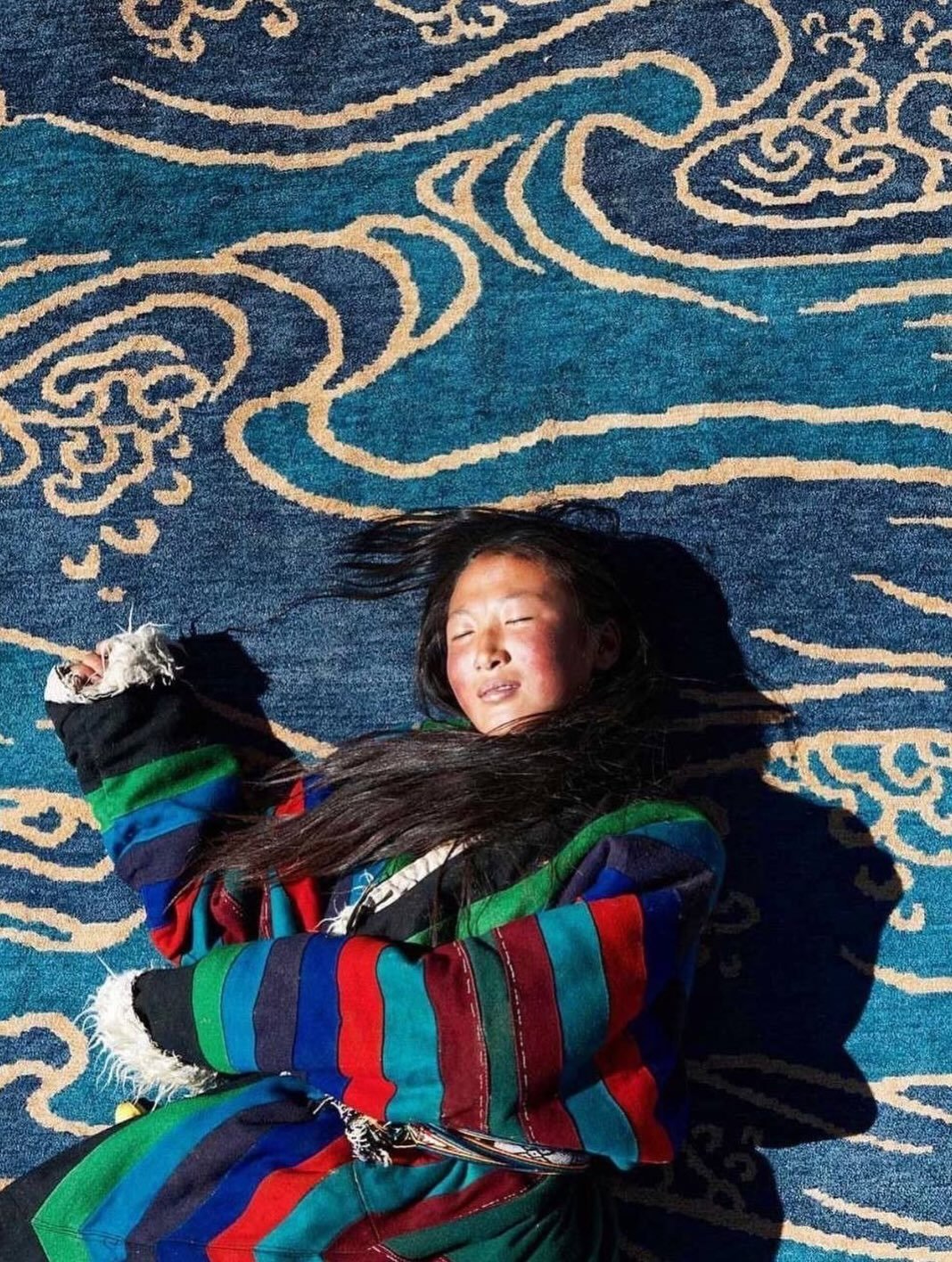

Feature image of Ancient Asian Carpet Making Is Finding New Life Through Modern Brands

Ancient Asian Carpet Making Is Finding New Life Through Modern Brands

3 mins read

3 mins read

Feature image of Ancient Asian Carpet Making Is Finding New Life Through Modern Brands
Tibetan, Ningxia, and Beijing carpets are returning to the mainstream as contemporary brands bring traditional carpet making to younger consumers.

In ancient China, carpets became prized objects among the wealthy, particularly during the Tang Dynasty. The craft of carpet making in China, however, dates back even earlier, with wool pile carpets already appearing in archaeological finds from the Han period. By the Tang Dynasty, carpet weaving in the Central Plains had become relatively mature.
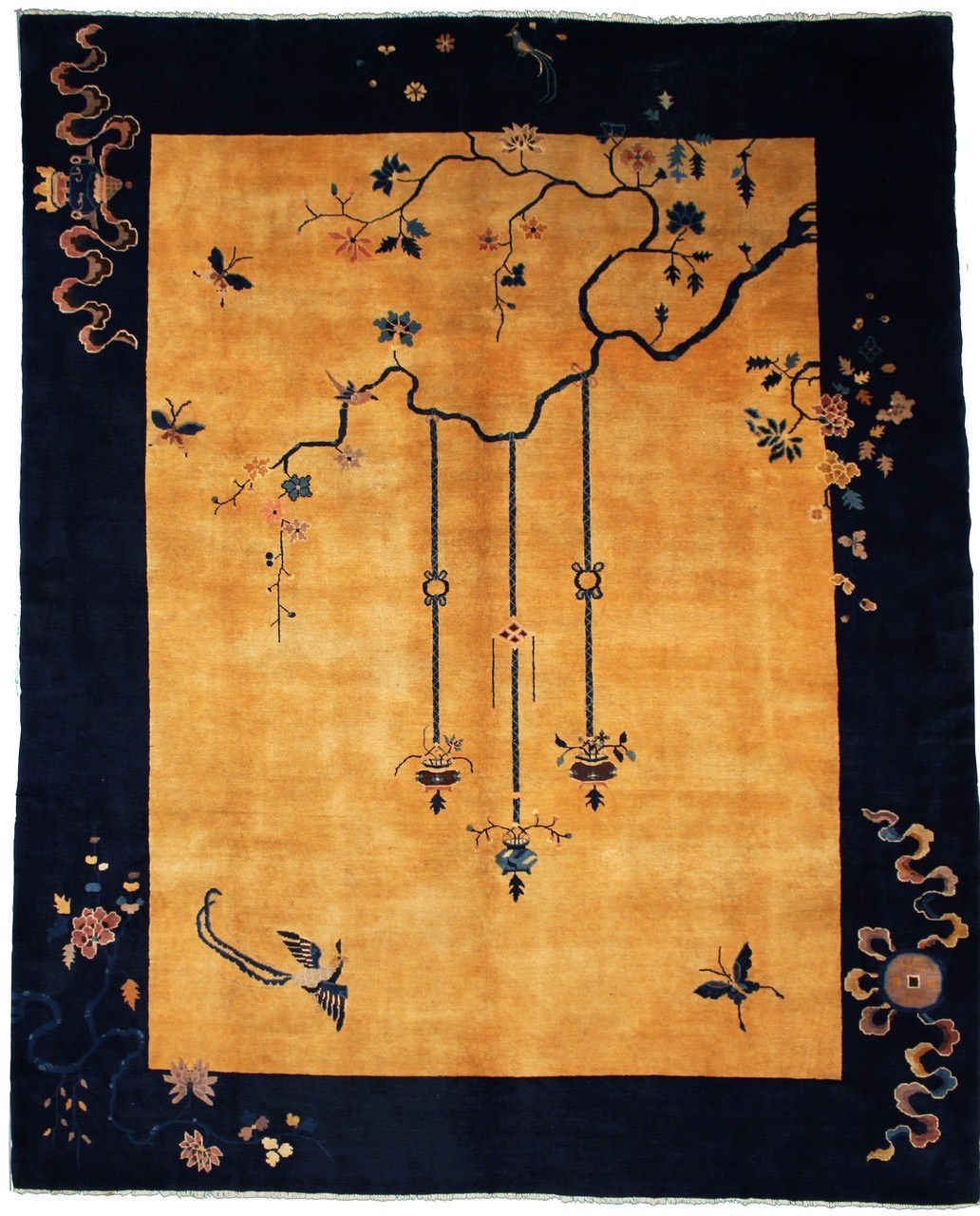
Chinese rug in ancient patterns. Image via Carpet Wiki.

Over time, carpet making developed into distinct regional traditions, including those of Beijing, the Central Plains, Ningxia, and Tibet. Each developed its own techniques, materials, colors, and visual language. Tibetan carpets, in particular, became closely associated with religious imagery and distinctive craftsmanship. Today, Tibetan carpets are still described as one of the “three great carpets,” alongside those from Turkey and Persia.

What makes these traditions particularly distinctive is not only their appearance but also the techniques used to make them. Traditional Beijing carpets, for example, developed a distinctive visual language shaped by Chinese decorative traditions. Beijing Palace carpets, also known as Gongtan (宫毯), became particularly associated with imperial and courtly settings. Their production involves detailed pattern design, careful material selection, and a series of highly skilled finishing processes.
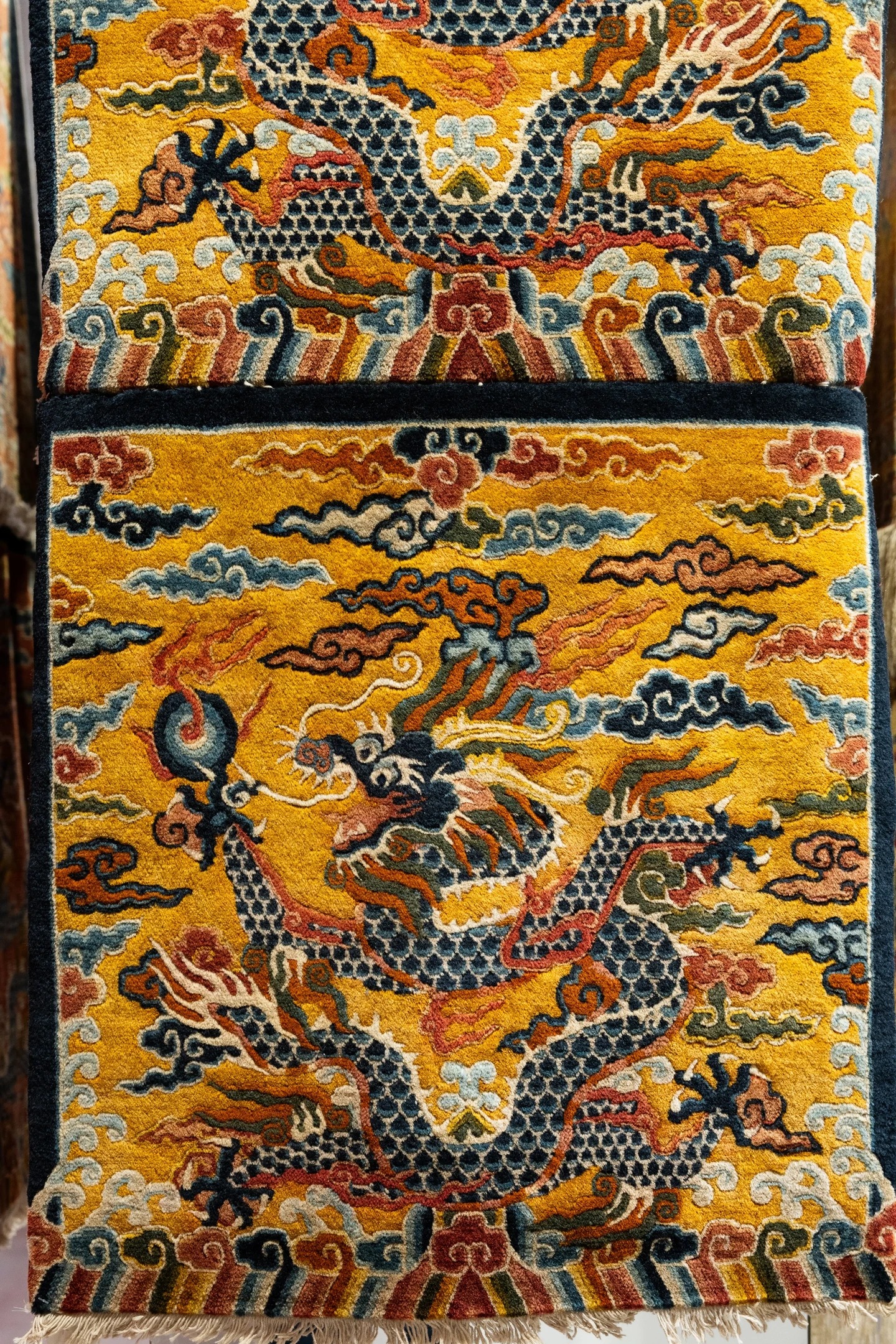
Beijing carpets were traditionally made for imperial use, requiring finer materials and more refined craftsmanship. Photo via Xiaohongshu.

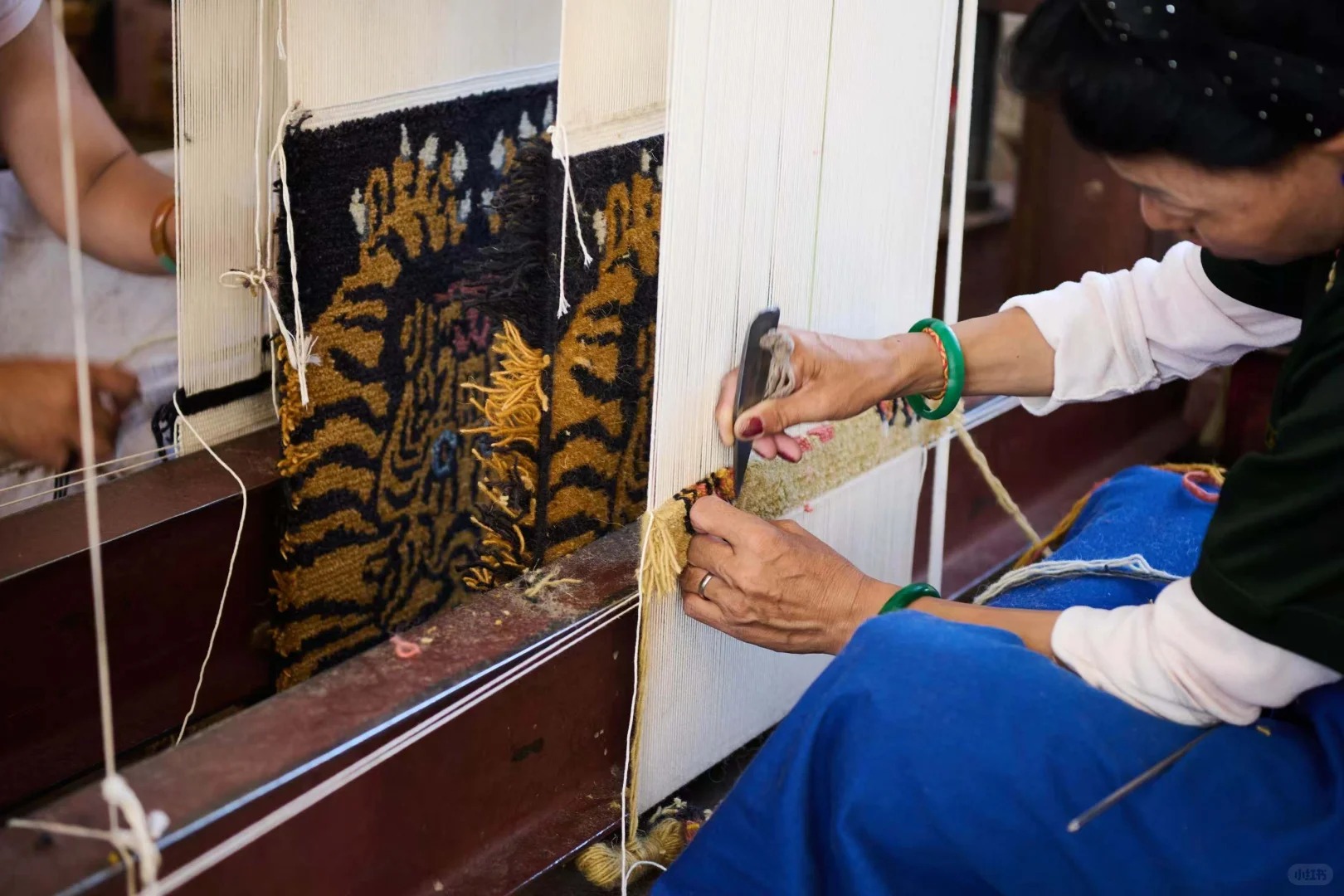
Tibetan carpet making uses a different approach. Rather than tying the yarn directly onto the warp, weavers traditionally loop the yarn around a horizontal rod. Once a row is completed, the rod is removed, and the loops are cut, creating the carpet’s pile. This rod-based technique gives Tibetan carpets a distinctive structure and texture, setting them apart from Persian and Turkish knotting traditions.
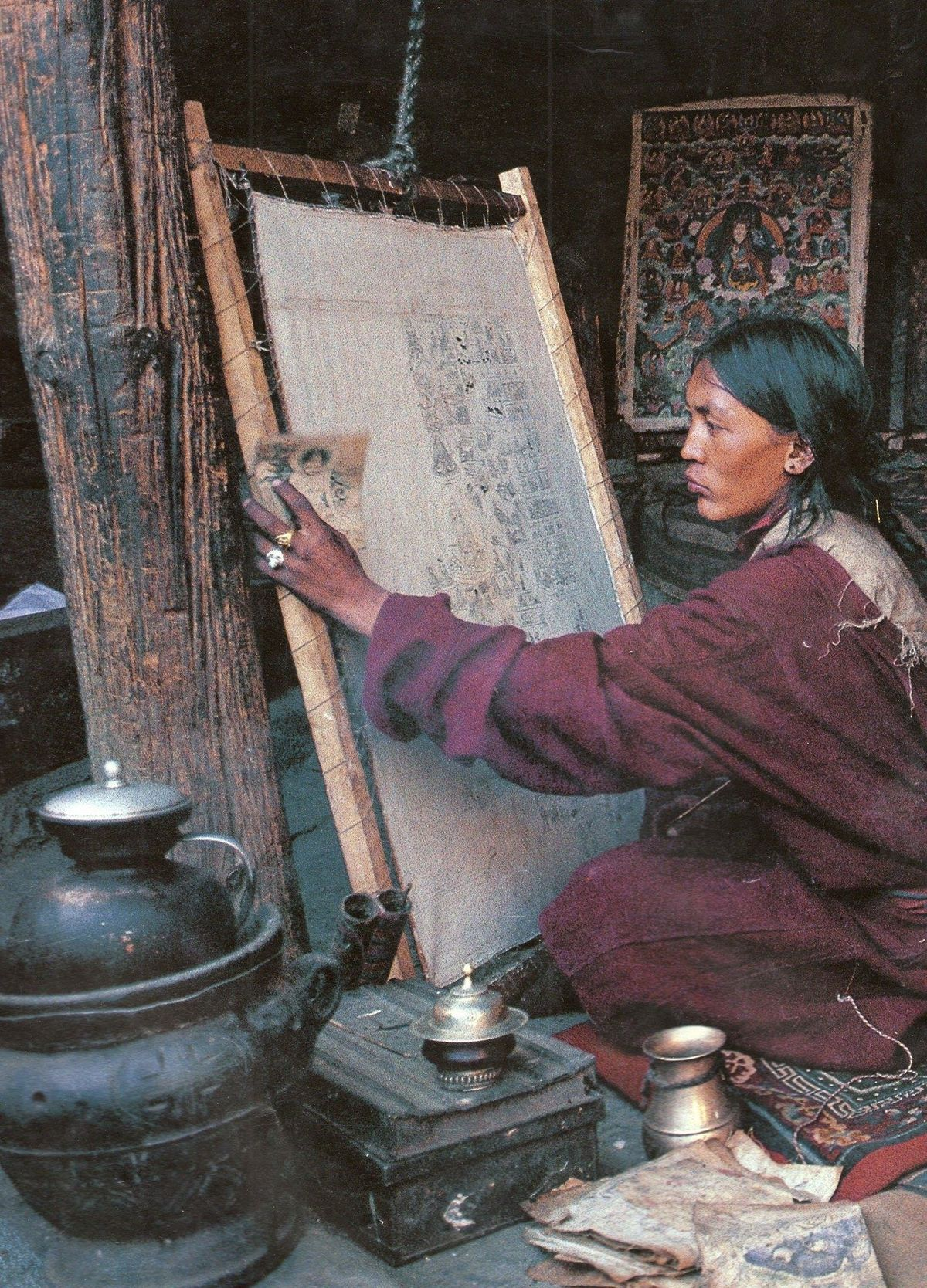
Tibetan women, respectfully known as “Aja,” weaving traditional Tibetan carpets. Picture via Pinterest.

Ningxia developed another important carpet tradition. Its carpets were historically used in Buddhist monasteries and were also associated with imperial production. Ningxia was an important source of pillar carpets for Tibetan and other Buddhist monasteries, showing how different regional carpet traditions were connected through trade, religion, and craft.
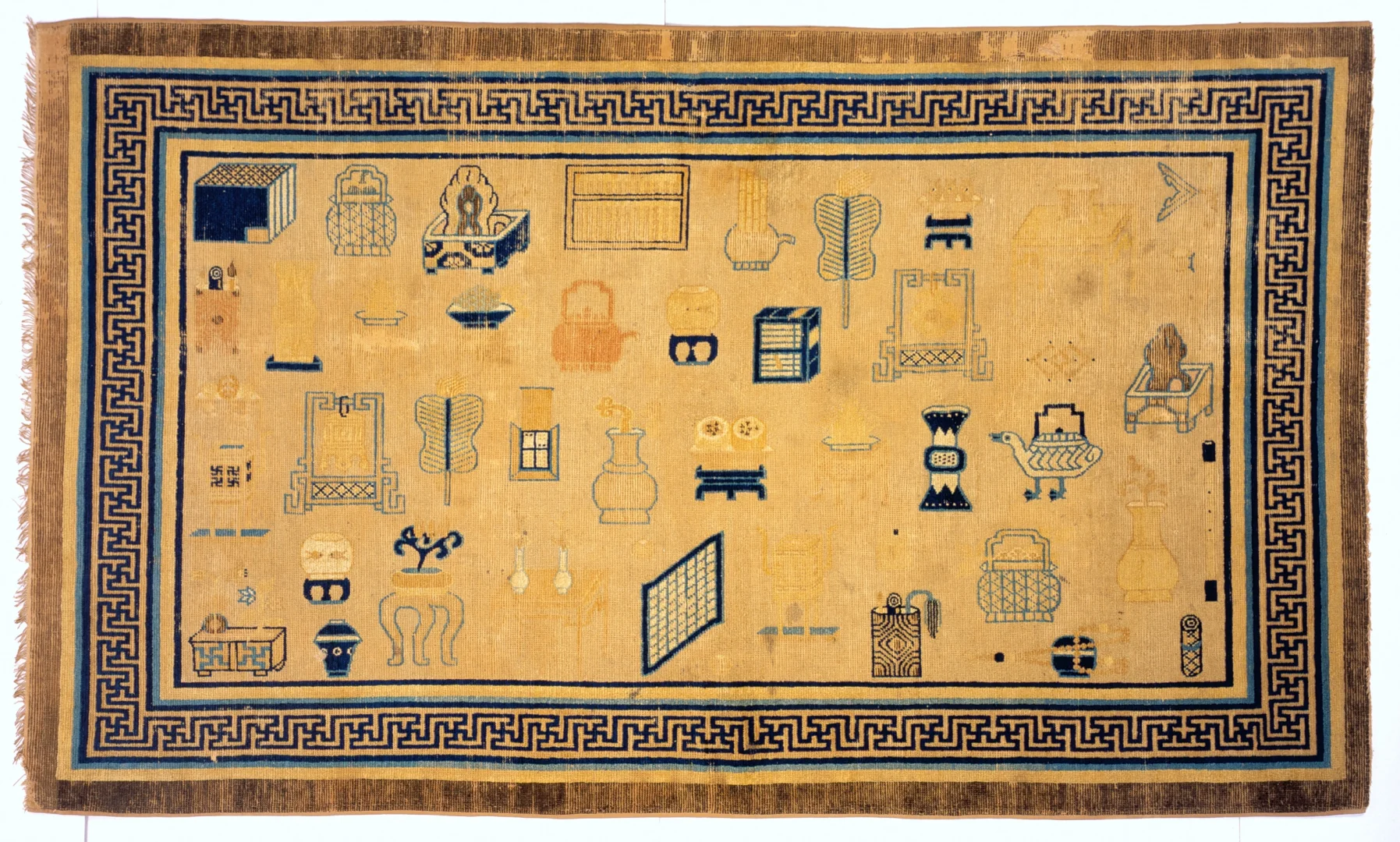
Qing Dynasty Ningxia carpet with a “pixel art” style antique motif. Photo via Xiaohongshu.

Despite their long histories, many traditional carpet-making practices have faced pressure from industrial production and changing consumer habits. Now, contemporary brands are helping bring these traditions back into the conversation. Rather than treating traditional carpets solely as historical objects, brands such as Khawachen and Sharda Sharda are introducing Tibetan carpet culture to a younger generation through contemporary products and design.
Khawachen owns a Tibetan rug factory and regularly shares the daily weaving process on social media, bringing traditional rug making to younger audiences around the world. Photo via Xiaohongshu.

For a new generation of consumers, the appeal of these carpets is no longer limited to their historical value. Their handmade construction, distinctive motifs, and regional identities offer another way to understand traditional craft through contemporary design. The revival of Chinese carpet making, therefore, is not simply about preserving an old craft. It is also about finding new contexts in which these regional traditions can remain relevant.
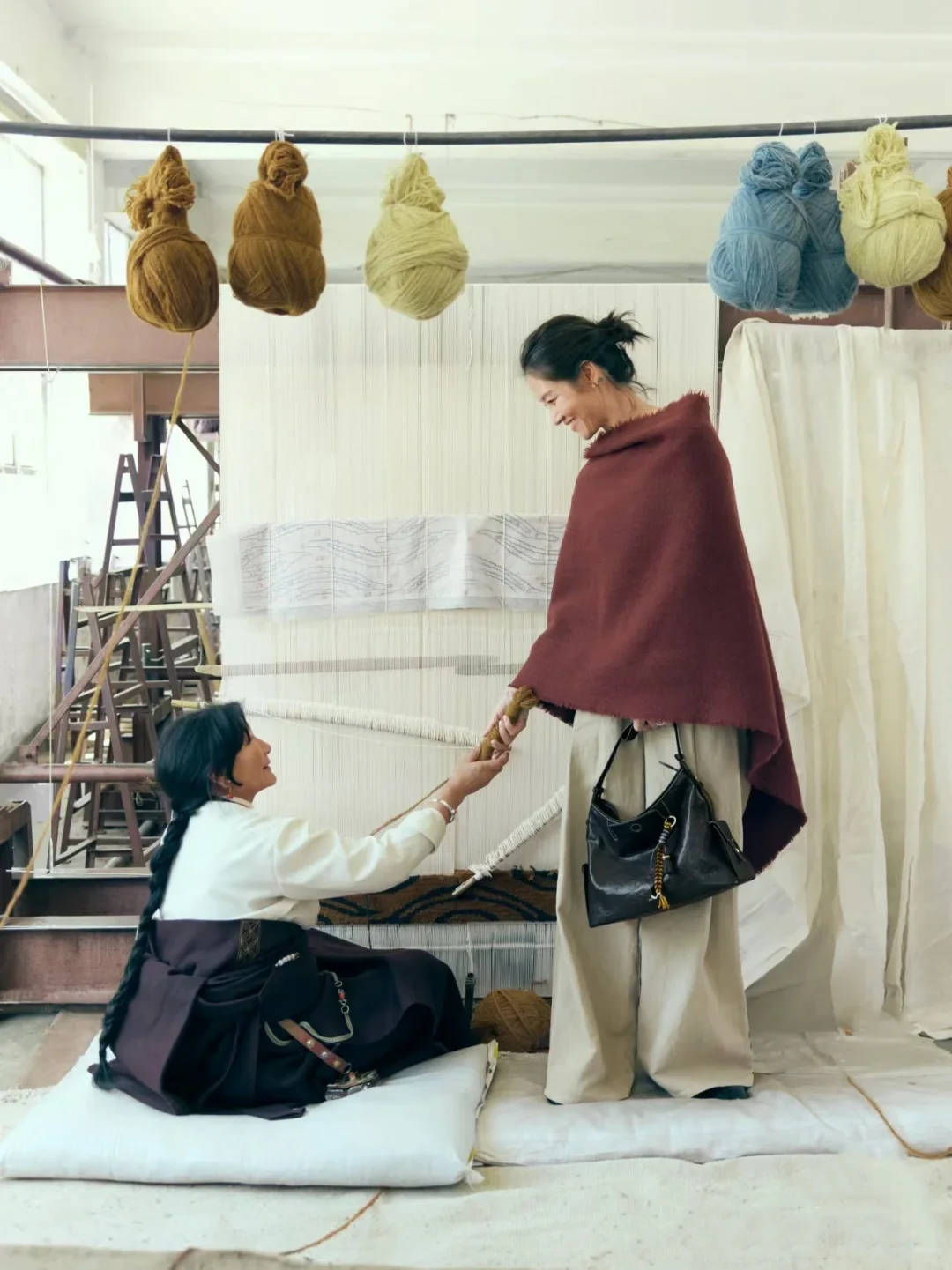
Chinese tennis star Li Na filming an advertisement at the Khawachen Tibetan carpet factory. Photo via Songmont.

Cover image via Instagram.

NEWSLETTER

Get weekly top picks and exclusive, newsletter only content delivered straight to you inbox.

NEWSLETTER

Get weekly top picks and exclusive, newsletter only content delivered straight to you inbox.

RADII NEWSLETTER

Get weekly top picks and exclusive, newsletter only content delivered straight to you inbox

Feature image of Ancient Asian Carpet Making Is Finding New Life Through Modern Brands

Ancient Asian Carpet Making Is Finding New Life Through Modern Brands

3 mins read

Tibetan, Ningxia, and Beijing carpets are returning to the mainstream as contemporary brands bring traditional carpet making to younger consumers.

In ancient China, carpets became prized objects among the wealthy, particularly during the Tang Dynasty. The craft of carpet making in China, however, dates back even earlier, with wool pile carpets already appearing in archaeological finds from the Han period. By the Tang Dynasty, carpet weaving in the Central Plains had become relatively mature.

Chinese rug in ancient patterns. Image via Carpet Wiki.

Over time, carpet making developed into distinct regional traditions, including those of Beijing, the Central Plains, Ningxia, and Tibet. Each developed its own techniques, materials, colors, and visual language. Tibetan carpets, in particular, became closely associated with religious imagery and distinctive craftsmanship. Today, Tibetan carpets are still described as one of the “three great carpets,” alongside those from Turkey and Persia.

What makes these traditions particularly distinctive is not only their appearance but also the techniques used to make them. Traditional Beijing carpets, for example, developed a distinctive visual language shaped by Chinese decorative traditions. Beijing Palace carpets, also known as Gongtan (宫毯), became particularly associated with imperial and courtly settings. Their production involves detailed pattern design, careful material selection, and a series of highly skilled finishing processes.

Beijing carpets were traditionally made for imperial use, requiring finer materials and more refined craftsmanship. Photo via Xiaohongshu.

Tibetan carpet making uses a different approach. Rather than tying the yarn directly onto the warp, weavers traditionally loop the yarn around a horizontal rod. Once a row is completed, the rod is removed, and the loops are cut, creating the carpet’s pile. This rod-based technique gives Tibetan carpets a distinctive structure and texture, setting them apart from Persian and Turkish knotting traditions.

Tibetan women, respectfully known as “Aja,” weaving traditional Tibetan carpets. Picture via Pinterest.

Ningxia developed another important carpet tradition. Its carpets were historically used in Buddhist monasteries and were also associated with imperial production. Ningxia was an important source of pillar carpets for Tibetan and other Buddhist monasteries, showing how different regional carpet traditions were connected through trade, religion, and craft.

Qing Dynasty Ningxia carpet with a “pixel art” style antique motif. Photo via Xiaohongshu.

Despite their long histories, many traditional carpet-making practices have faced pressure from industrial production and changing consumer habits. Now, contemporary brands are helping bring these traditions back into the conversation. Rather than treating traditional carpets solely as historical objects, brands such as Khawachen and Sharda Sharda are introducing Tibetan carpet culture to a younger generation through contemporary products and design.

Khawachen owns a Tibetan rug factory and regularly shares the daily weaving process on social media, bringing traditional rug making to younger audiences around the world. Photo via Xiaohongshu.

For a new generation of consumers, the appeal of these carpets is no longer limited to their historical value. Their handmade construction, distinctive motifs, and regional identities offer another way to understand traditional craft through contemporary design. The revival of Chinese carpet making, therefore, is not simply about preserving an old craft. It is also about finding new contexts in which these regional traditions can remain relevant.

Chinese tennis star Li Na filming an advertisement at the Khawachen Tibetan carpet factory. Photo via Songmont.

Cover image via Instagram.

NEWSLETTER

Get weekly top picks and exclusive, newsletter only content delivered straight to you inbox.

RADII NEWSLETTER

Get weekly top picks and exclusive, newsletter only content delivered straight to you inbox

RELATED POSTS

Feature image of Ancient Asian Carpet Making Is Finding New Life Through Modern Brands

Ancient Asian Carpet Making Is Finding New Life Through Modern Brands

3 mins read

3 mins read

Feature image of Ancient Asian Carpet Making Is Finding New Life Through Modern Brands
Tibetan, Ningxia, and Beijing carpets are returning to the mainstream as contemporary brands bring traditional carpet making to younger consumers.

In ancient China, carpets became prized objects among the wealthy, particularly during the Tang Dynasty. The craft of carpet making in China, however, dates back even earlier, with wool pile carpets already appearing in archaeological finds from the Han period. By the Tang Dynasty, carpet weaving in the Central Plains had become relatively mature.

Chinese rug in ancient patterns. Image via Carpet Wiki.

Over time, carpet making developed into distinct regional traditions, including those of Beijing, the Central Plains, Ningxia, and Tibet. Each developed its own techniques, materials, colors, and visual language. Tibetan carpets, in particular, became closely associated with religious imagery and distinctive craftsmanship. Today, Tibetan carpets are still described as one of the “three great carpets,” alongside those from Turkey and Persia.

What makes these traditions particularly distinctive is not only their appearance but also the techniques used to make them. Traditional Beijing carpets, for example, developed a distinctive visual language shaped by Chinese decorative traditions. Beijing Palace carpets, also known as Gongtan (宫毯), became particularly associated with imperial and courtly settings. Their production involves detailed pattern design, careful material selection, and a series of highly skilled finishing processes.

Beijing carpets were traditionally made for imperial use, requiring finer materials and more refined craftsmanship. Photo via Xiaohongshu.

Tibetan carpet making uses a different approach. Rather than tying the yarn directly onto the warp, weavers traditionally loop the yarn around a horizontal rod. Once a row is completed, the rod is removed, and the loops are cut, creating the carpet’s pile. This rod-based technique gives Tibetan carpets a distinctive structure and texture, setting them apart from Persian and Turkish knotting traditions.

Tibetan women, respectfully known as “Aja,” weaving traditional Tibetan carpets. Picture via Pinterest.

Ningxia developed another important carpet tradition. Its carpets were historically used in Buddhist monasteries and were also associated with imperial production. Ningxia was an important source of pillar carpets for Tibetan and other Buddhist monasteries, showing how different regional carpet traditions were connected through trade, religion, and craft.

Qing Dynasty Ningxia carpet with a “pixel art” style antique motif. Photo via Xiaohongshu.

Despite their long histories, many traditional carpet-making practices have faced pressure from industrial production and changing consumer habits. Now, contemporary brands are helping bring these traditions back into the conversation. Rather than treating traditional carpets solely as historical objects, brands such as Khawachen and Sharda Sharda are introducing Tibetan carpet culture to a younger generation through contemporary products and design.

Khawachen owns a Tibetan rug factory and regularly shares the daily weaving process on social media, bringing traditional rug making to younger audiences around the world. Photo via Xiaohongshu.

For a new generation of consumers, the appeal of these carpets is no longer limited to their historical value. Their handmade construction, distinctive motifs, and regional identities offer another way to understand traditional craft through contemporary design. The revival of Chinese carpet making, therefore, is not simply about preserving an old craft. It is also about finding new contexts in which these regional traditions can remain relevant.

Chinese tennis star Li Na filming an advertisement at the Khawachen Tibetan carpet factory. Photo via Songmont.

Cover image via Instagram.

NEWSLETTER

Get weekly top picks and exclusive, newsletter only content delivered straight to you inbox.

NEWSLETTER

Get weekly top picks and exclusive, newsletter only content delivered straight to you inbox.

RADII NEWSLETTER

Get weekly top picks and exclusive, newsletter only content delivered straight to you inbox

Feature image of Ancient Asian Carpet Making Is Finding New Life Through Modern Brands

Ancient Asian Carpet Making Is Finding New Life Through Modern Brands

3 mins read

Tibetan, Ningxia, and Beijing carpets are returning to the mainstream as contemporary brands bring traditional carpet making to younger consumers.

In ancient China, carpets became prized objects among the wealthy, particularly during the Tang Dynasty. The craft of carpet making in China, however, dates back even earlier, with wool pile carpets already appearing in archaeological finds from the Han period. By the Tang Dynasty, carpet weaving in the Central Plains had become relatively mature.

Chinese rug in ancient patterns. Image via Carpet Wiki.

Over time, carpet making developed into distinct regional traditions, including those of Beijing, the Central Plains, Ningxia, and Tibet. Each developed its own techniques, materials, colors, and visual language. Tibetan carpets, in particular, became closely associated with religious imagery and distinctive craftsmanship. Today, Tibetan carpets are still described as one of the “three great carpets,” alongside those from Turkey and Persia.

What makes these traditions particularly distinctive is not only their appearance but also the techniques used to make them. Traditional Beijing carpets, for example, developed a distinctive visual language shaped by Chinese decorative traditions. Beijing Palace carpets, also known as Gongtan (宫毯), became particularly associated with imperial and courtly settings. Their production involves detailed pattern design, careful material selection, and a series of highly skilled finishing processes.

Beijing carpets were traditionally made for imperial use, requiring finer materials and more refined craftsmanship. Photo via Xiaohongshu.

Tibetan carpet making uses a different approach. Rather than tying the yarn directly onto the warp, weavers traditionally loop the yarn around a horizontal rod. Once a row is completed, the rod is removed, and the loops are cut, creating the carpet’s pile. This rod-based technique gives Tibetan carpets a distinctive structure and texture, setting them apart from Persian and Turkish knotting traditions.

Tibetan women, respectfully known as “Aja,” weaving traditional Tibetan carpets. Picture via Pinterest.

Ningxia developed another important carpet tradition. Its carpets were historically used in Buddhist monasteries and were also associated with imperial production. Ningxia was an important source of pillar carpets for Tibetan and other Buddhist monasteries, showing how different regional carpet traditions were connected through trade, religion, and craft.

Qing Dynasty Ningxia carpet with a “pixel art” style antique motif. Photo via Xiaohongshu.

Despite their long histories, many traditional carpet-making practices have faced pressure from industrial production and changing consumer habits. Now, contemporary brands are helping bring these traditions back into the conversation. Rather than treating traditional carpets solely as historical objects, brands such as Khawachen and Sharda Sharda are introducing Tibetan carpet culture to a younger generation through contemporary products and design.

Khawachen owns a Tibetan rug factory and regularly shares the daily weaving process on social media, bringing traditional rug making to younger audiences around the world. Photo via Xiaohongshu.

For a new generation of consumers, the appeal of these carpets is no longer limited to their historical value. Their handmade construction, distinctive motifs, and regional identities offer another way to understand traditional craft through contemporary design. The revival of Chinese carpet making, therefore, is not simply about preserving an old craft. It is also about finding new contexts in which these regional traditions can remain relevant.

Chinese tennis star Li Na filming an advertisement at the Khawachen Tibetan carpet factory. Photo via Songmont.

Cover image via Instagram.
NEWSLETTER

Get weekly top picks and exclusive, newsletter only content delivered straight to you inbox.

RADII NEWSLETTER

Get weekly top picks and exclusive, newsletter only content delivered straight to you inbox

RADII newsletter pop up visual

NEWSLETTER​

Get weekly top picks and exclusive, newsletter only content delivered straight to you inbox

RADII Newsletter Pop Up small banner

NEWSLETTER

Get weekly top picks and exclusive, newsletter only content delivered straight to you inbox.

Link Copied!

Share

Feature image of Ancient Asian Carpet Making Is Finding New Life Through Modern Brands

Ancient Asian Carpet Making Is Finding New Life Through Modern Brands

Tibetan, Ningxia, and Beijing carpets are returning to the mainstream as contemporary brands bring traditional carpet making to younger consumers.

PULSE

Tap into the latest in music, fashion, art, design, entertainment, pop culture, celebrity news, and contemporary culture

DISCOVER

Embark on a journey through food, travel, wellness, heritage, traditional culture, and lifestyle

STYLE

An insider’s look at the intersection of fashion, art, and design

FEAST

Titillate your taste buds with coverage of the best food and drink trends from China and beyond.

FUTURE

Explore the cutting edge in tech, AI, gadgets, gaming, and innovative tech-related products

FEAST

Titillate your taste buds with coverage of the best food and drink trends from China and beyond

STYLE

An insider’s look at the intersection of fashion, art, and design

PULSE

Unpacking Chinese youth culture through coverage of nightlife, film, sports, celebrities, and the hottest new music