
Feature image of 9 Priceless Chinese Artifacts Still Held Overseas

9 Priceless Chinese Artifacts Still Held Overseas

3 mins read

3 mins read

Feature image of 9 Priceless Chinese Artifacts Still Held Overseas
As France debates the return of cultural treasures, these iconic Chinese artifacts remain scattered across some of the world's most prestigious museums.

Recently, the French National Assembly announced that France will begin returning artifacts taken from other countries over the past several centuries. While questions remain about how far this policy can actually be implemented, it is still worth turning our attention to Chinese artifacts that remain overseas. During the colonial era and the early 20th century, millions of Chinese artifacts were taken abroad and are now scattered across the British Museum, the Louvre, The Met, and other world-famous institutions. Below are nine of the most famous Chinese artifacts still overseas.
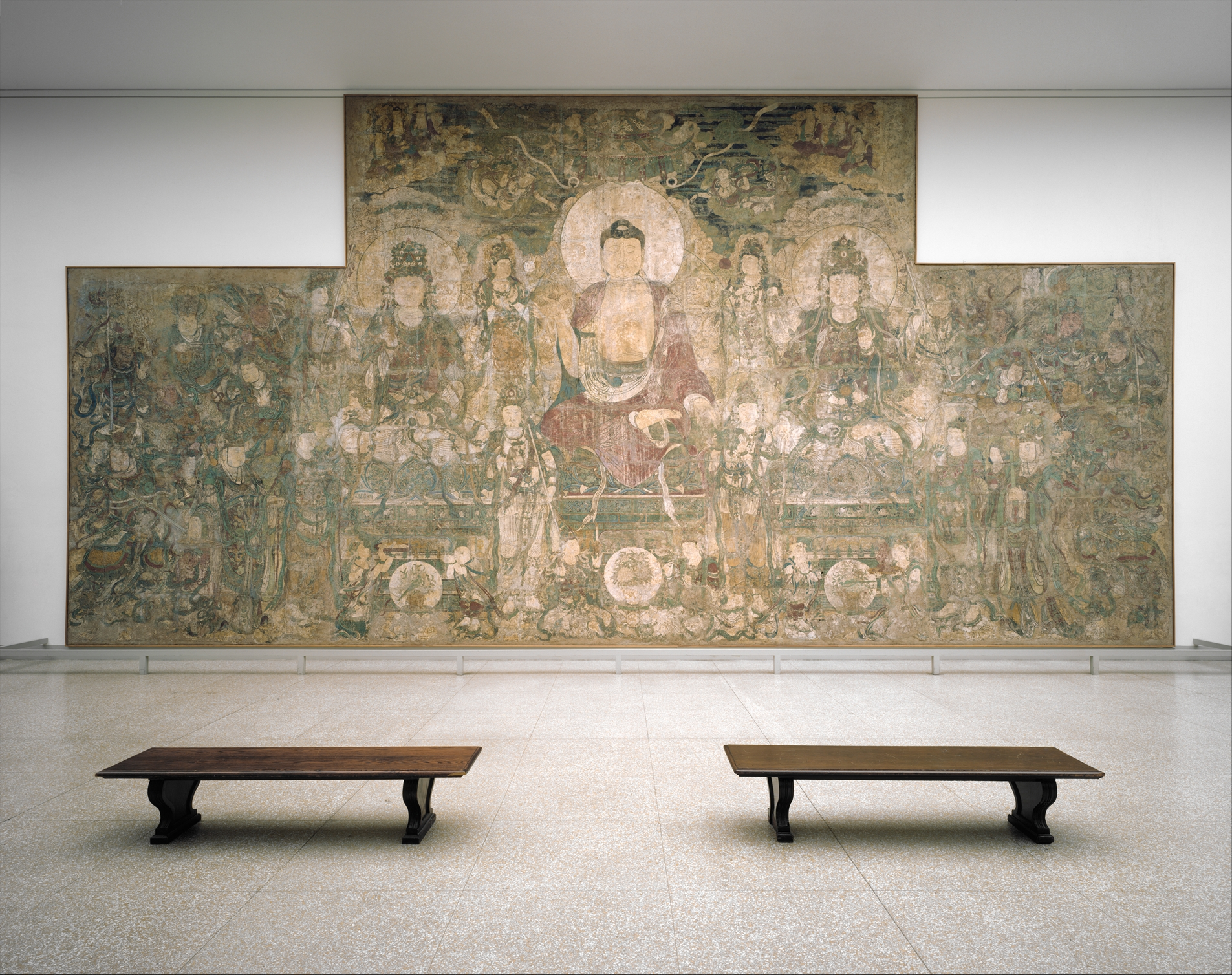

Photo via MET.
  1. Buddha of Medicine Bhaishajyaguru (Yaoshi Fo, 药师佛) Mural, The Met, United States.

The mural, also known as the “Bhaisajyaguru Paradise” mural (药师经变图), dates back to the Yuan Dynasty and originally came from Guangsheng Temple in Shanxi Province. It is considered one of the finest surviving examples of large-scale Chinese Buddhist wall painting. The artwork depicts the Medicine Buddha surrounded by bodhisattvas and heavenly figures, showcasing highly detailed religious imagery and vibrant colors.
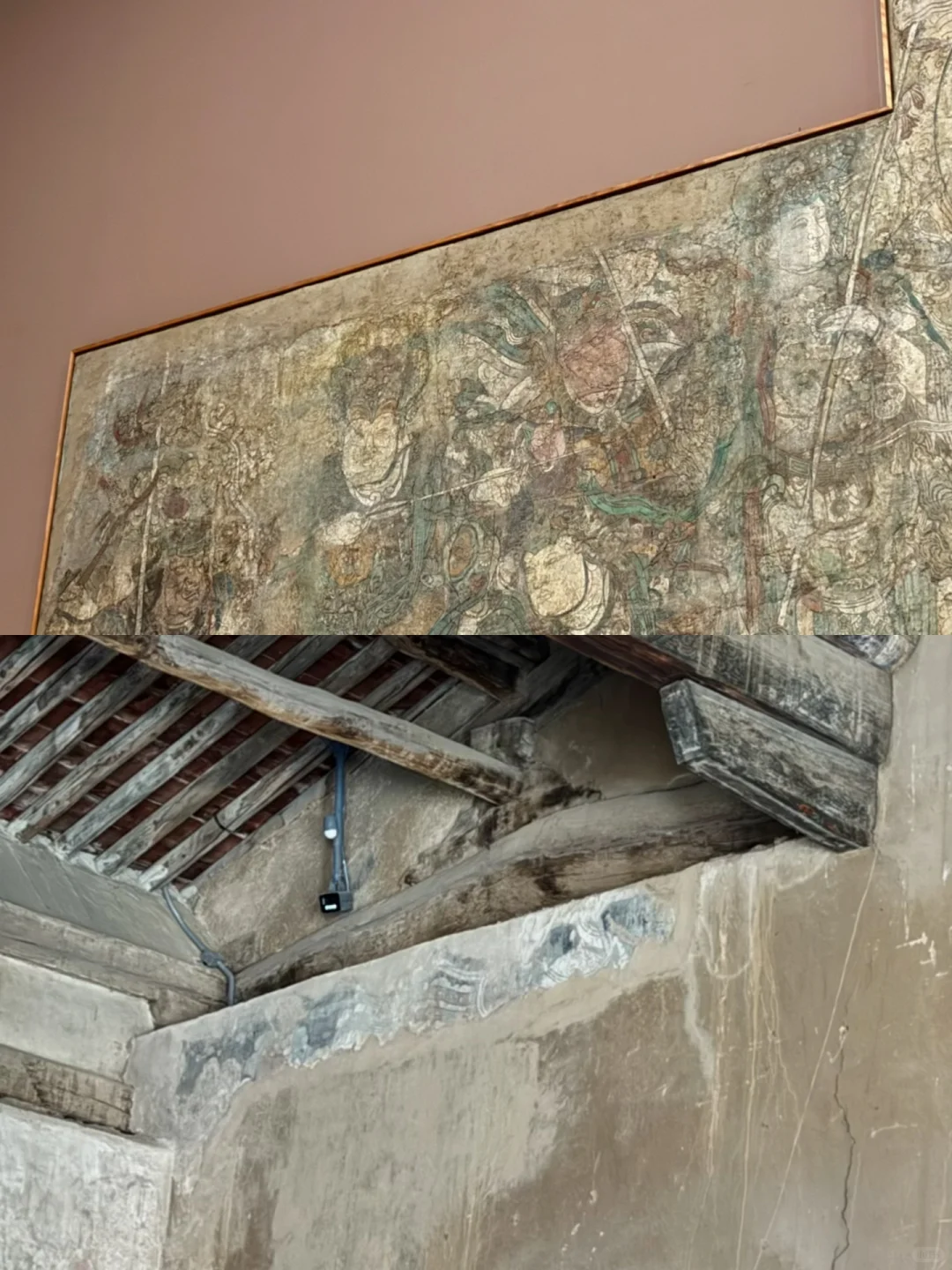
The remaining section of the mural on the wall in Guangsheng Temple. Photo via Xiaohongshu.

Fun fact: not all of the mural was removed. A section still remains at Guangsheng Temple in Shanxi.
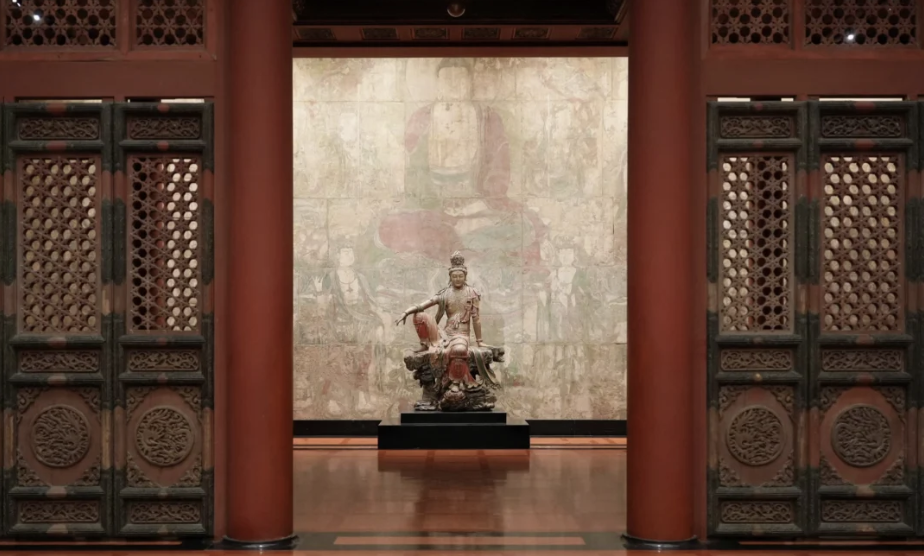

Photo via Xiaohongshu.
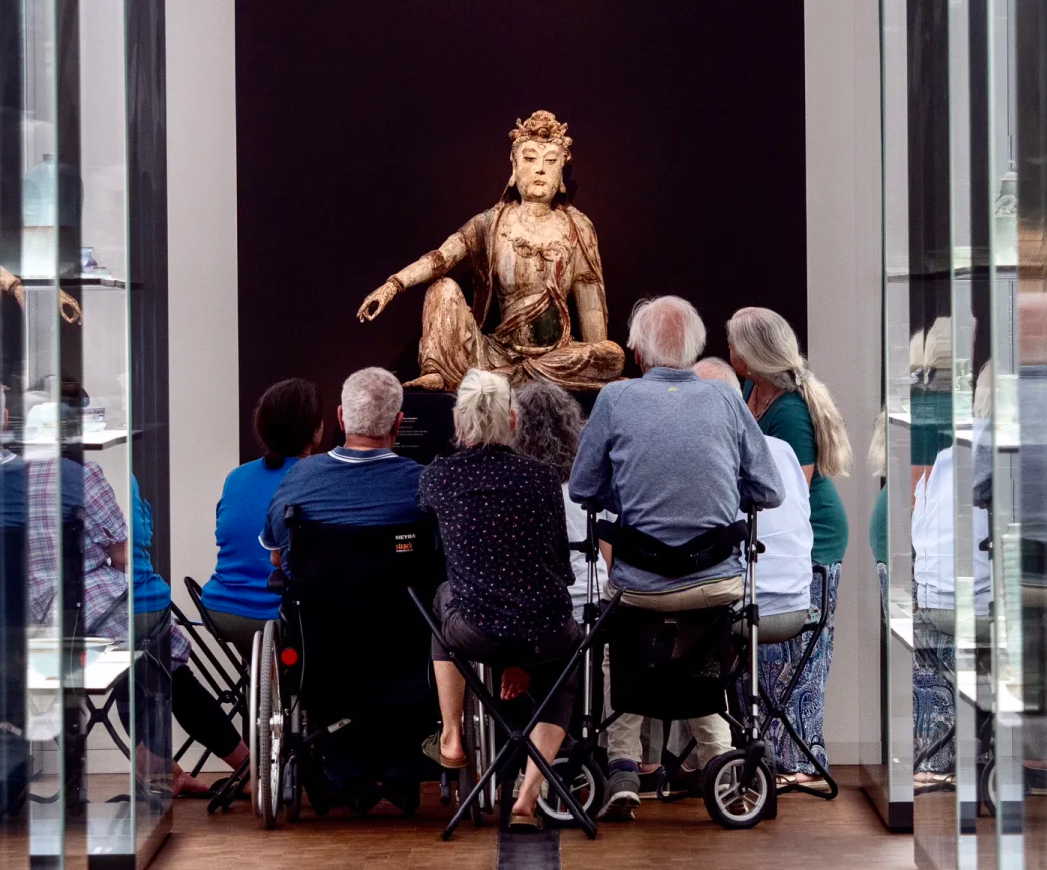
  1. Water-Moon Guanyin (辽金水月观音), Nelson-Atkins Museum of Art, United States

This famous Liao or Jin Dynasty sculpture depicts Guanyin in the elegant “Water-Moon” pose, a classic form in Chinese Buddhist art. The figure is admired for its calm facial expression, natural posture, and lifelike drapery. At the museum, visitors can also see a Buddhist mural displayed behind the sculpture, creating an immersive religious atmosphere.
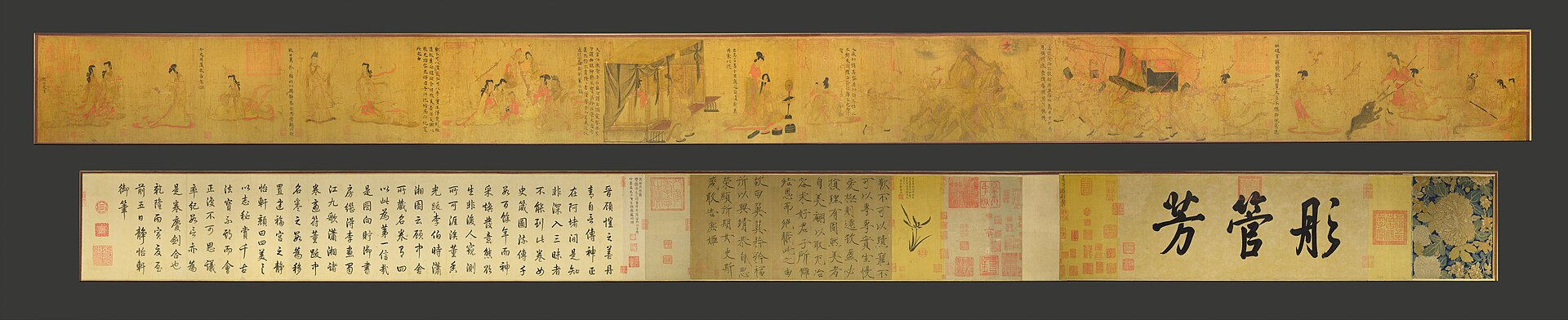

Photo via Wiki.
  1. Admonitions Scroll (女史箴图), The British Museum, United Kingdom

Traditionally attributed to the Eastern Jin painter Gu Kaizhi, the Admonitions Scroll is one of the most important surviving works in the history of Chinese paintings. The handscroll illustrates moral lessons for court ladies and is celebrated for its refined brushwork and narrative composition. Although the surviving version is believed to be a later Tang Dynasty copy, it remains a masterpiece of classical Chinese art.
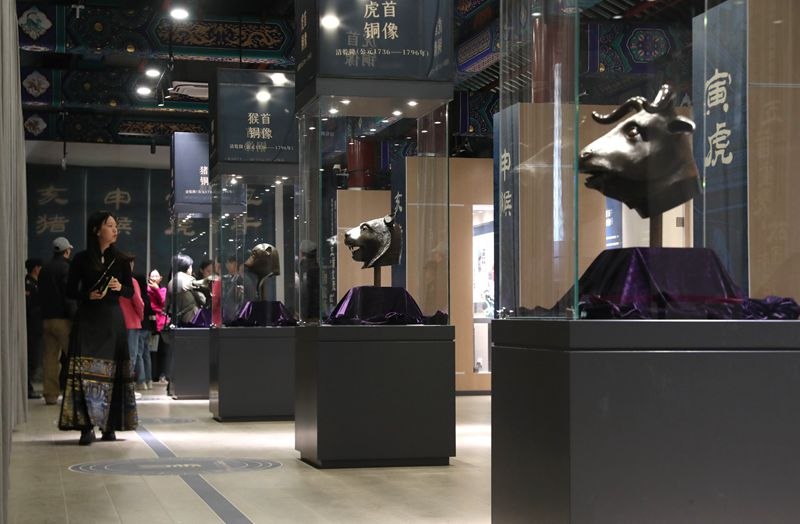

Photo via China Daily.
  1. Yuanmingyuan Zodiac Heads (圆明园兽首)

These bronze zodiac heads from the Old Summer Palace are among the most famous Chinese artifacts still overseas. The sculptures were originally part of a fountain clock designed during the Qing Dynasty. They were looted after Anglo-French troops burned Yuanmingyuan in 1860 during the Second Opium War. Some heads have since returned to China through donations or auctions, while others remain abroad. The story has become so iconic that it has inspired films and major public campaigns in China.
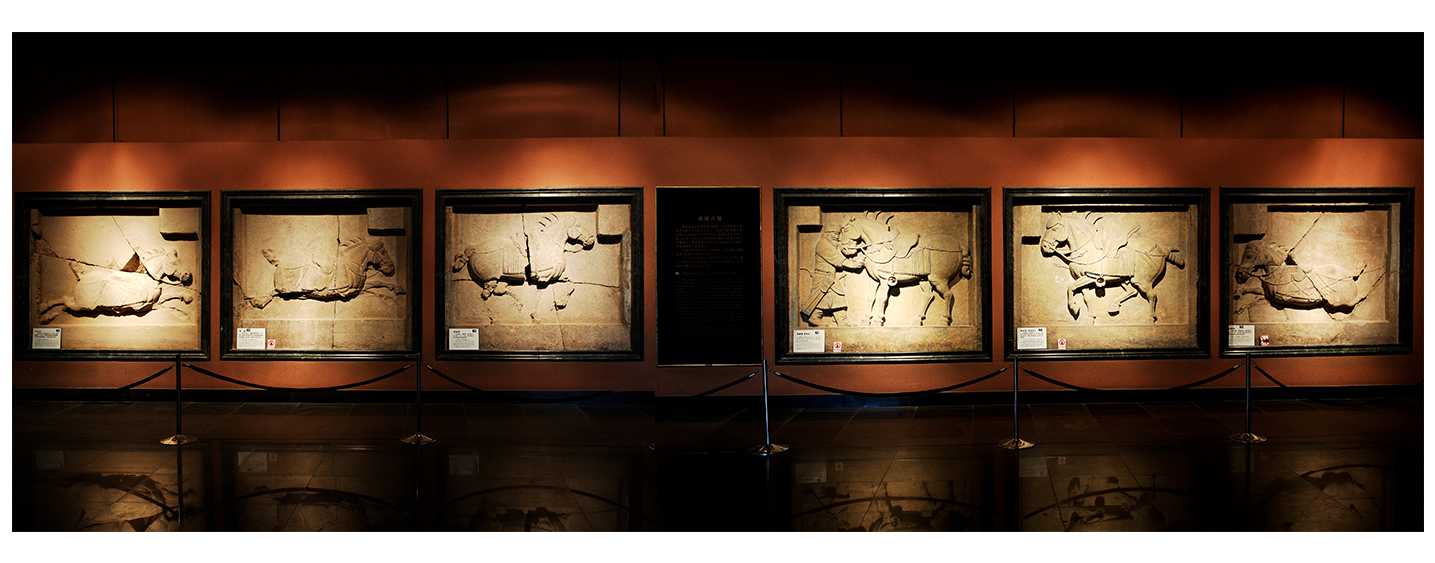

Photo via Beilin Museum.
  1. Six Steeds of Zhao Mausoleum (昭陵六骏), University of Pennsylvania Museum in the United States

The Six Steeds were stone reliefs located at the mausoleum of Emperor Taizong of Tang. Two were taken overseas and are now housed at the University of Pennsylvania Museum in the United States, while the remaining four remain in China. Today, the six horses can only “see” one another from thousands of miles away.
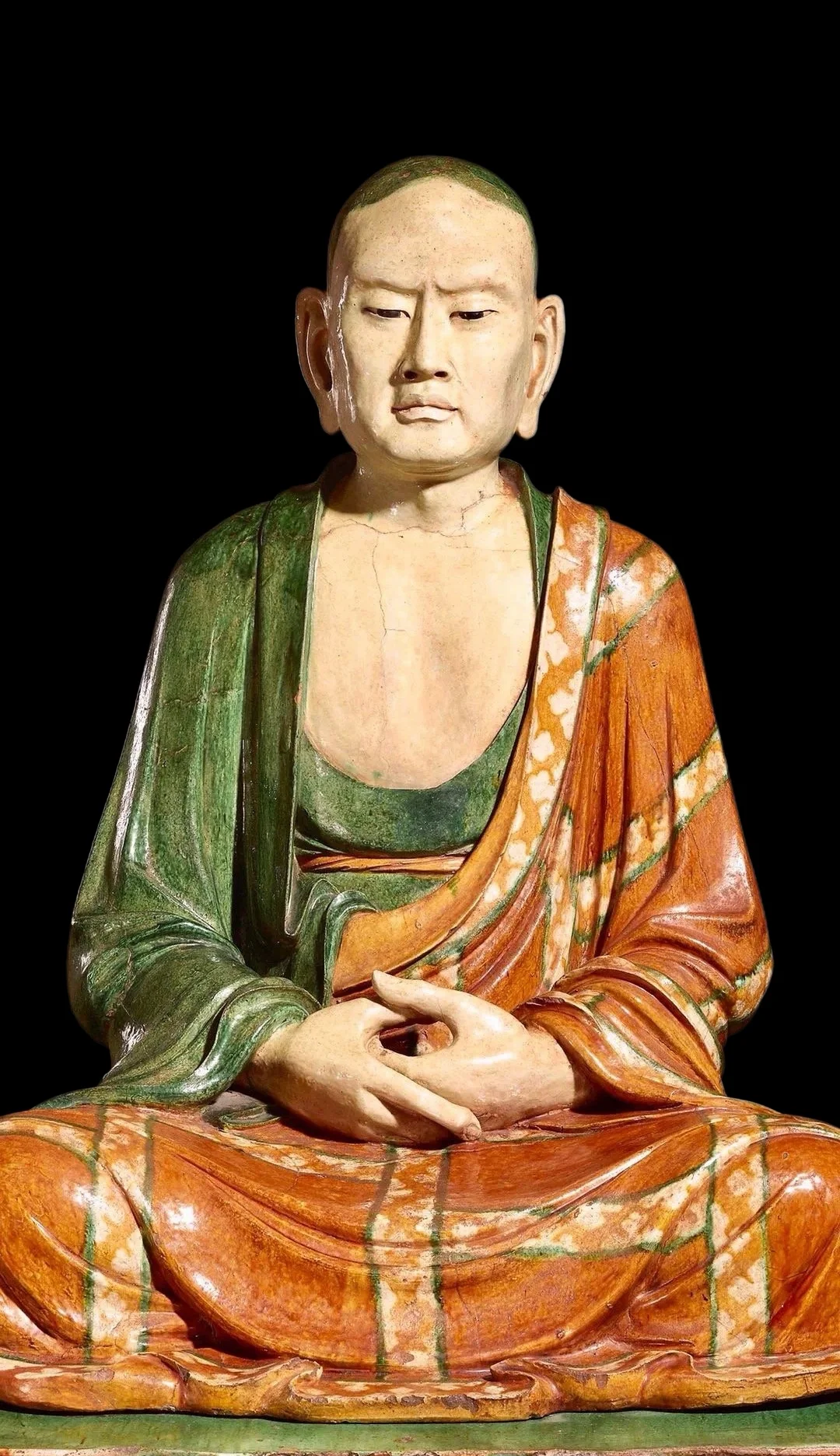

Photo via Xiaohongshu.
  1. Yixian Glazed Pottery Luohans (易县三彩罗汉像)

These glazed ceramic luohan sculptures from the Liao Dynasty are famous for their vivid facial expressions and lifelike craftsmanship. Several sculptures are now scattered among museums and private collections overseas, including institutions in North America and Europe.
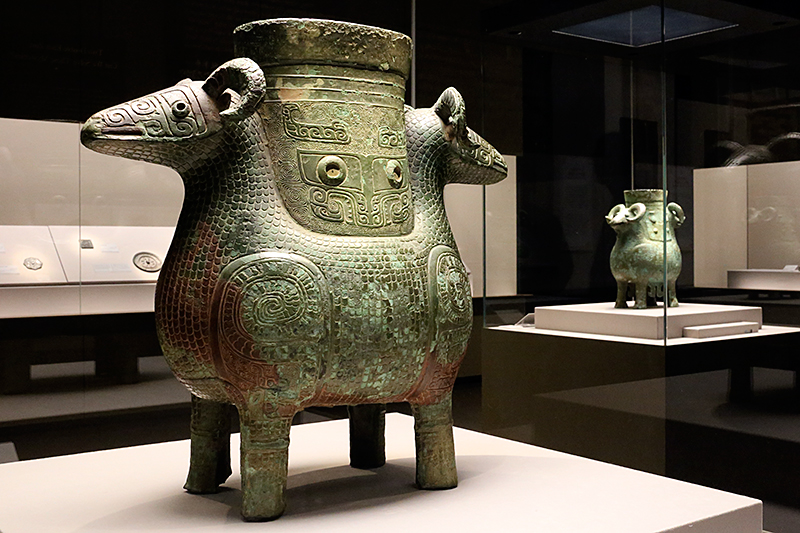

Photo via Museum OR.
  1. Double-Ram Zun (双羊尊)

The Double-Ram Zun is a Shang Dynasty bronze wine vessel now housed in the British Museum. Designed in the shape of two rams, the vessel is known for its elegant lines and sophisticated casting techniques, making it one of the masterpieces of Shang Dynasty bronze art.
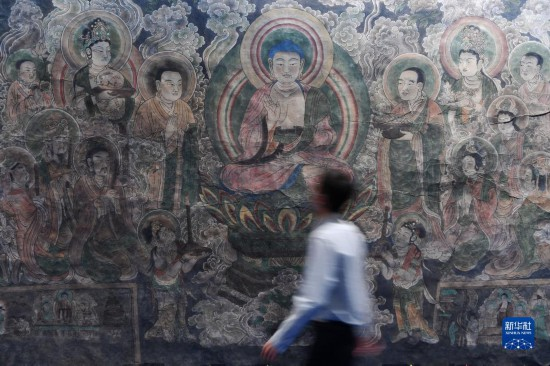

Photo via Xinhua Net.
  1. Dunhuang Murals and Manuscripts (敦煌壁画与经卷)

Large numbers of Dunhuang cave murals, manuscripts, and documents from the Mogao Caves were taken overseas in the early 20th century by explorers such as Aurel Stein and Paul Pelliot. Today, these materials are primarily housed in institutions including the British Museum and the Bibliothèque nationale de France.
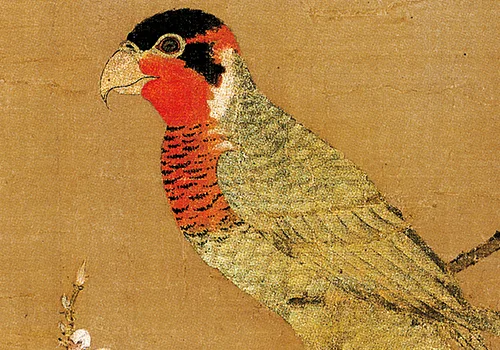

Photo via Mo Yun Shu Xiang.
  1. Five-Colored Parakeet (五色鹦鹉图)

This painting by Song Emperor Huizong, Zhao Ji, is now housed at the Museum of Fine Arts, Boston. The artwork is regarded as a representative example of Song Dynasty court bird-and-flower painting, featuring brilliant colors and highly detailed brushwork that reflect the elegance of imperial aesthetics.


Whether these artifacts will eventually return remains uncertain. Some museums argue that they have preserved these objects better than their countries of origin could have at the time, while others believe cultural heritage should never have been removed in the first place. As debates over restitution continue across Europe, these Chinese artifacts remain suspended between histories, borders, and identities—admired by millions of visitors overseas, yet still deeply connected to the places they once called home.

Cover image via Museum Rietberg.

NEWSLETTER

Get weekly top picks and exclusive, newsletter only content delivered straight to you inbox.

NEWSLETTER

Get weekly top picks and exclusive, newsletter only content delivered straight to you inbox.

RADII NEWSLETTER

Get weekly top picks and exclusive, newsletter only content delivered straight to you inbox

Feature image of 9 Priceless Chinese Artifacts Still Held Overseas

9 Priceless Chinese Artifacts Still Held Overseas

3 mins read

As France debates the return of cultural treasures, these iconic Chinese artifacts remain scattered across some of the world's most prestigious museums.

Recently, the French National Assembly announced that France will begin returning artifacts taken from other countries over the past several centuries. While questions remain about how far this policy can actually be implemented, it is still worth turning our attention to Chinese artifacts that remain overseas. During the colonial era and the early 20th century, millions of Chinese artifacts were taken abroad and are now scattered across the British Museum, the Louvre, The Met, and other world-famous institutions. Below are nine of the most famous Chinese artifacts still overseas.


Photo via MET.
  1. Buddha of Medicine Bhaishajyaguru (Yaoshi Fo, 药师佛) Mural, The Met, United States.

The mural, also known as the “Bhaisajyaguru Paradise” mural (药师经变图), dates back to the Yuan Dynasty and originally came from Guangsheng Temple in Shanxi Province. It is considered one of the finest surviving examples of large-scale Chinese Buddhist wall painting. The artwork depicts the Medicine Buddha surrounded by bodhisattvas and heavenly figures, showcasing highly detailed religious imagery and vibrant colors.

The remaining section of the mural on the wall in Guangsheng Temple. Photo via Xiaohongshu.

Fun fact: not all of the mural was removed. A section still remains at Guangsheng Temple in Shanxi.


Photo via Xiaohongshu.
  1. Water-Moon Guanyin (辽金水月观音), Nelson-Atkins Museum of Art, United States

This famous Liao or Jin Dynasty sculpture depicts Guanyin in the elegant “Water-Moon” pose, a classic form in Chinese Buddhist art. The figure is admired for its calm facial expression, natural posture, and lifelike drapery. At the museum, visitors can also see a Buddhist mural displayed behind the sculpture, creating an immersive religious atmosphere.


Photo via Wiki.
  1. Admonitions Scroll (女史箴图), The British Museum, United Kingdom

Traditionally attributed to the Eastern Jin painter Gu Kaizhi, the Admonitions Scroll is one of the most important surviving works in the history of Chinese paintings. The handscroll illustrates moral lessons for court ladies and is celebrated for its refined brushwork and narrative composition. Although the surviving version is believed to be a later Tang Dynasty copy, it remains a masterpiece of classical Chinese art.


Photo via China Daily.
  1. Yuanmingyuan Zodiac Heads (圆明园兽首)

These bronze zodiac heads from the Old Summer Palace are among the most famous Chinese artifacts still overseas. The sculptures were originally part of a fountain clock designed during the Qing Dynasty. They were looted after Anglo-French troops burned Yuanmingyuan in 1860 during the Second Opium War. Some heads have since returned to China through donations or auctions, while others remain abroad. The story has become so iconic that it has inspired films and major public campaigns in China.


Photo via Beilin Museum.
  1. Six Steeds of Zhao Mausoleum (昭陵六骏), University of Pennsylvania Museum in the United States

The Six Steeds were stone reliefs located at the mausoleum of Emperor Taizong of Tang. Two were taken overseas and are now housed at the University of Pennsylvania Museum in the United States, while the remaining four remain in China. Today, the six horses can only “see” one another from thousands of miles away.


Photo via Xiaohongshu.
  1. Yixian Glazed Pottery Luohans (易县三彩罗汉像)

These glazed ceramic luohan sculptures from the Liao Dynasty are famous for their vivid facial expressions and lifelike craftsmanship. Several sculptures are now scattered among museums and private collections overseas, including institutions in North America and Europe.


Photo via Museum OR.
  1. Double-Ram Zun (双羊尊)

The Double-Ram Zun is a Shang Dynasty bronze wine vessel now housed in the British Museum. Designed in the shape of two rams, the vessel is known for its elegant lines and sophisticated casting techniques, making it one of the masterpieces of Shang Dynasty bronze art.


Photo via Xinhua Net.
  1. Dunhuang Murals and Manuscripts (敦煌壁画与经卷)

Large numbers of Dunhuang cave murals, manuscripts, and documents from the Mogao Caves were taken overseas in the early 20th century by explorers such as Aurel Stein and Paul Pelliot. Today, these materials are primarily housed in institutions including the British Museum and the Bibliothèque nationale de France.


Photo via Mo Yun Shu Xiang.
  1. Five-Colored Parakeet (五色鹦鹉图)

This painting by Song Emperor Huizong, Zhao Ji, is now housed at the Museum of Fine Arts, Boston. The artwork is regarded as a representative example of Song Dynasty court bird-and-flower painting, featuring brilliant colors and highly detailed brushwork that reflect the elegance of imperial aesthetics.


Whether these artifacts will eventually return remains uncertain. Some museums argue that they have preserved these objects better than their countries of origin could have at the time, while others believe cultural heritage should never have been removed in the first place. As debates over restitution continue across Europe, these Chinese artifacts remain suspended between histories, borders, and identities—admired by millions of visitors overseas, yet still deeply connected to the places they once called home.

Cover image via Museum Rietberg.
NEWSLETTER

Get weekly top picks and exclusive, newsletter only content delivered straight to you inbox.

RADII NEWSLETTER

Get weekly top picks and exclusive, newsletter only content delivered straight to you inbox

RELATED POSTS

Feature image of 9 Priceless Chinese Artifacts Still Held Overseas

9 Priceless Chinese Artifacts Still Held Overseas

3 mins read

3 mins read

Feature image of 9 Priceless Chinese Artifacts Still Held Overseas
As France debates the return of cultural treasures, these iconic Chinese artifacts remain scattered across some of the world's most prestigious museums.

Recently, the French National Assembly announced that France will begin returning artifacts taken from other countries over the past several centuries. While questions remain about how far this policy can actually be implemented, it is still worth turning our attention to Chinese artifacts that remain overseas. During the colonial era and the early 20th century, millions of Chinese artifacts were taken abroad and are now scattered across the British Museum, the Louvre, The Met, and other world-famous institutions. Below are nine of the most famous Chinese artifacts still overseas.


Photo via MET.
  1. Buddha of Medicine Bhaishajyaguru (Yaoshi Fo, 药师佛) Mural, The Met, United States.

The mural, also known as the “Bhaisajyaguru Paradise” mural (药师经变图), dates back to the Yuan Dynasty and originally came from Guangsheng Temple in Shanxi Province. It is considered one of the finest surviving examples of large-scale Chinese Buddhist wall painting. The artwork depicts the Medicine Buddha surrounded by bodhisattvas and heavenly figures, showcasing highly detailed religious imagery and vibrant colors.

The remaining section of the mural on the wall in Guangsheng Temple. Photo via Xiaohongshu.

Fun fact: not all of the mural was removed. A section still remains at Guangsheng Temple in Shanxi.


Photo via Xiaohongshu.
  1. Water-Moon Guanyin (辽金水月观音), Nelson-Atkins Museum of Art, United States

This famous Liao or Jin Dynasty sculpture depicts Guanyin in the elegant “Water-Moon” pose, a classic form in Chinese Buddhist art. The figure is admired for its calm facial expression, natural posture, and lifelike drapery. At the museum, visitors can also see a Buddhist mural displayed behind the sculpture, creating an immersive religious atmosphere.


Photo via Wiki.
  1. Admonitions Scroll (女史箴图), The British Museum, United Kingdom

Traditionally attributed to the Eastern Jin painter Gu Kaizhi, the Admonitions Scroll is one of the most important surviving works in the history of Chinese paintings. The handscroll illustrates moral lessons for court ladies and is celebrated for its refined brushwork and narrative composition. Although the surviving version is believed to be a later Tang Dynasty copy, it remains a masterpiece of classical Chinese art.


Photo via China Daily.
  1. Yuanmingyuan Zodiac Heads (圆明园兽首)

These bronze zodiac heads from the Old Summer Palace are among the most famous Chinese artifacts still overseas. The sculptures were originally part of a fountain clock designed during the Qing Dynasty. They were looted after Anglo-French troops burned Yuanmingyuan in 1860 during the Second Opium War. Some heads have since returned to China through donations or auctions, while others remain abroad. The story has become so iconic that it has inspired films and major public campaigns in China.


Photo via Beilin Museum.
  1. Six Steeds of Zhao Mausoleum (昭陵六骏), University of Pennsylvania Museum in the United States

The Six Steeds were stone reliefs located at the mausoleum of Emperor Taizong of Tang. Two were taken overseas and are now housed at the University of Pennsylvania Museum in the United States, while the remaining four remain in China. Today, the six horses can only “see” one another from thousands of miles away.


Photo via Xiaohongshu.
  1. Yixian Glazed Pottery Luohans (易县三彩罗汉像)

These glazed ceramic luohan sculptures from the Liao Dynasty are famous for their vivid facial expressions and lifelike craftsmanship. Several sculptures are now scattered among museums and private collections overseas, including institutions in North America and Europe.


Photo via Museum OR.
  1. Double-Ram Zun (双羊尊)

The Double-Ram Zun is a Shang Dynasty bronze wine vessel now housed in the British Museum. Designed in the shape of two rams, the vessel is known for its elegant lines and sophisticated casting techniques, making it one of the masterpieces of Shang Dynasty bronze art.


Photo via Xinhua Net.
  1. Dunhuang Murals and Manuscripts (敦煌壁画与经卷)

Large numbers of Dunhuang cave murals, manuscripts, and documents from the Mogao Caves were taken overseas in the early 20th century by explorers such as Aurel Stein and Paul Pelliot. Today, these materials are primarily housed in institutions including the British Museum and the Bibliothèque nationale de France.


Photo via Mo Yun Shu Xiang.
  1. Five-Colored Parakeet (五色鹦鹉图)

This painting by Song Emperor Huizong, Zhao Ji, is now housed at the Museum of Fine Arts, Boston. The artwork is regarded as a representative example of Song Dynasty court bird-and-flower painting, featuring brilliant colors and highly detailed brushwork that reflect the elegance of imperial aesthetics.


Whether these artifacts will eventually return remains uncertain. Some museums argue that they have preserved these objects better than their countries of origin could have at the time, while others believe cultural heritage should never have been removed in the first place. As debates over restitution continue across Europe, these Chinese artifacts remain suspended between histories, borders, and identities—admired by millions of visitors overseas, yet still deeply connected to the places they once called home.

Cover image via Museum Rietberg.
NEWSLETTER

Get weekly top picks and exclusive, newsletter only content delivered straight to you inbox.

NEWSLETTER

Get weekly top picks and exclusive, newsletter only content delivered straight to you inbox.

RADII NEWSLETTER

Get weekly top picks and exclusive, newsletter only content delivered straight to you inbox

Feature image of 9 Priceless Chinese Artifacts Still Held Overseas

9 Priceless Chinese Artifacts Still Held Overseas

3 mins read

As France debates the return of cultural treasures, these iconic Chinese artifacts remain scattered across some of the world's most prestigious museums.

Recently, the French National Assembly announced that France will begin returning artifacts taken from other countries over the past several centuries. While questions remain about how far this policy can actually be implemented, it is still worth turning our attention to Chinese artifacts that remain overseas. During the colonial era and the early 20th century, millions of Chinese artifacts were taken abroad and are now scattered across the British Museum, the Louvre, The Met, and other world-famous institutions. Below are nine of the most famous Chinese artifacts still overseas.


Photo via MET.
  1. Buddha of Medicine Bhaishajyaguru (Yaoshi Fo, 药师佛) Mural, The Met, United States.

The mural, also known as the “Bhaisajyaguru Paradise” mural (药师经变图), dates back to the Yuan Dynasty and originally came from Guangsheng Temple in Shanxi Province. It is considered one of the finest surviving examples of large-scale Chinese Buddhist wall painting. The artwork depicts the Medicine Buddha surrounded by bodhisattvas and heavenly figures, showcasing highly detailed religious imagery and vibrant colors.

The remaining section of the mural on the wall in Guangsheng Temple. Photo via Xiaohongshu.

Fun fact: not all of the mural was removed. A section still remains at Guangsheng Temple in Shanxi.


Photo via Xiaohongshu.
  1. Water-Moon Guanyin (辽金水月观音), Nelson-Atkins Museum of Art, United States

This famous Liao or Jin Dynasty sculpture depicts Guanyin in the elegant “Water-Moon” pose, a classic form in Chinese Buddhist art. The figure is admired for its calm facial expression, natural posture, and lifelike drapery. At the museum, visitors can also see a Buddhist mural displayed behind the sculpture, creating an immersive religious atmosphere.


Photo via Wiki.
  1. Admonitions Scroll (女史箴图), The British Museum, United Kingdom

Traditionally attributed to the Eastern Jin painter Gu Kaizhi, the Admonitions Scroll is one of the most important surviving works in the history of Chinese paintings. The handscroll illustrates moral lessons for court ladies and is celebrated for its refined brushwork and narrative composition. Although the surviving version is believed to be a later Tang Dynasty copy, it remains a masterpiece of classical Chinese art.


Photo via China Daily.
  1. Yuanmingyuan Zodiac Heads (圆明园兽首)

These bronze zodiac heads from the Old Summer Palace are among the most famous Chinese artifacts still overseas. The sculptures were originally part of a fountain clock designed during the Qing Dynasty. They were looted after Anglo-French troops burned Yuanmingyuan in 1860 during the Second Opium War. Some heads have since returned to China through donations or auctions, while others remain abroad. The story has become so iconic that it has inspired films and major public campaigns in China.


Photo via Beilin Museum.
  1. Six Steeds of Zhao Mausoleum (昭陵六骏), University of Pennsylvania Museum in the United States

The Six Steeds were stone reliefs located at the mausoleum of Emperor Taizong of Tang. Two were taken overseas and are now housed at the University of Pennsylvania Museum in the United States, while the remaining four remain in China. Today, the six horses can only “see” one another from thousands of miles away.


Photo via Xiaohongshu.
  1. Yixian Glazed Pottery Luohans (易县三彩罗汉像)

These glazed ceramic luohan sculptures from the Liao Dynasty are famous for their vivid facial expressions and lifelike craftsmanship. Several sculptures are now scattered among museums and private collections overseas, including institutions in North America and Europe.


Photo via Museum OR.
  1. Double-Ram Zun (双羊尊)

The Double-Ram Zun is a Shang Dynasty bronze wine vessel now housed in the British Museum. Designed in the shape of two rams, the vessel is known for its elegant lines and sophisticated casting techniques, making it one of the masterpieces of Shang Dynasty bronze art.


Photo via Xinhua Net.
  1. Dunhuang Murals and Manuscripts (敦煌壁画与经卷)

Large numbers of Dunhuang cave murals, manuscripts, and documents from the Mogao Caves were taken overseas in the early 20th century by explorers such as Aurel Stein and Paul Pelliot. Today, these materials are primarily housed in institutions including the British Museum and the Bibliothèque nationale de France.


Photo via Mo Yun Shu Xiang.
  1. Five-Colored Parakeet (五色鹦鹉图)

This painting by Song Emperor Huizong, Zhao Ji, is now housed at the Museum of Fine Arts, Boston. The artwork is regarded as a representative example of Song Dynasty court bird-and-flower painting, featuring brilliant colors and highly detailed brushwork that reflect the elegance of imperial aesthetics.


Whether these artifacts will eventually return remains uncertain. Some museums argue that they have preserved these objects better than their countries of origin could have at the time, while others believe cultural heritage should never have been removed in the first place. As debates over restitution continue across Europe, these Chinese artifacts remain suspended between histories, borders, and identities—admired by millions of visitors overseas, yet still deeply connected to the places they once called home.

Cover image via Museum Rietberg.
NEWSLETTER

Get weekly top picks and exclusive, newsletter only content delivered straight to you inbox.

RADII NEWSLETTER

Get weekly top picks and exclusive, newsletter only content delivered straight to you inbox

RADII newsletter pop up visual

NEWSLETTER​

Get weekly top picks and exclusive, newsletter only content delivered straight to you inbox

RADII Newsletter Pop Up small banner

NEWSLETTER

Get weekly top picks and exclusive, newsletter only content delivered straight to you inbox.

Link Copied!

Share

Feature image of 9 Priceless Chinese Artifacts Still Held Overseas

9 Priceless Chinese Artifacts Still Held Overseas

As France debates the return of cultural treasures, these iconic Chinese artifacts remain scattered across some of the world's most prestigious museums.

PULSE

Tap into the latest in music, fashion, art, design, entertainment, pop culture, celebrity news, and contemporary culture

DISCOVER

Embark on a journey through food, travel, wellness, heritage, traditional culture, and lifestyle

STYLE

An insider’s look at the intersection of fashion, art, and design

FEAST

Titillate your taste buds with coverage of the best food and drink trends from China and beyond.

FUTURE

Explore the cutting edge in tech, AI, gadgets, gaming, and innovative tech-related products

FEAST

Titillate your taste buds with coverage of the best food and drink trends from China and beyond

STYLE

An insider’s look at the intersection of fashion, art, and design

PULSE

Unpacking Chinese youth culture through coverage of nightlife, film, sports, celebrities, and the hottest new music