
Feature image of All Aboard the Love Train at China’s Metro Station Marriage Markets

All Aboard the Love Train at China’s Metro Station Marriage Markets

2 mins read

2 mins read

Feature image of All Aboard the Love Train at China’s Metro Station Marriage Markets
China’s metro stations are emerging as unlikely hubs for romance, where busy young commuters search for love between train transfers.

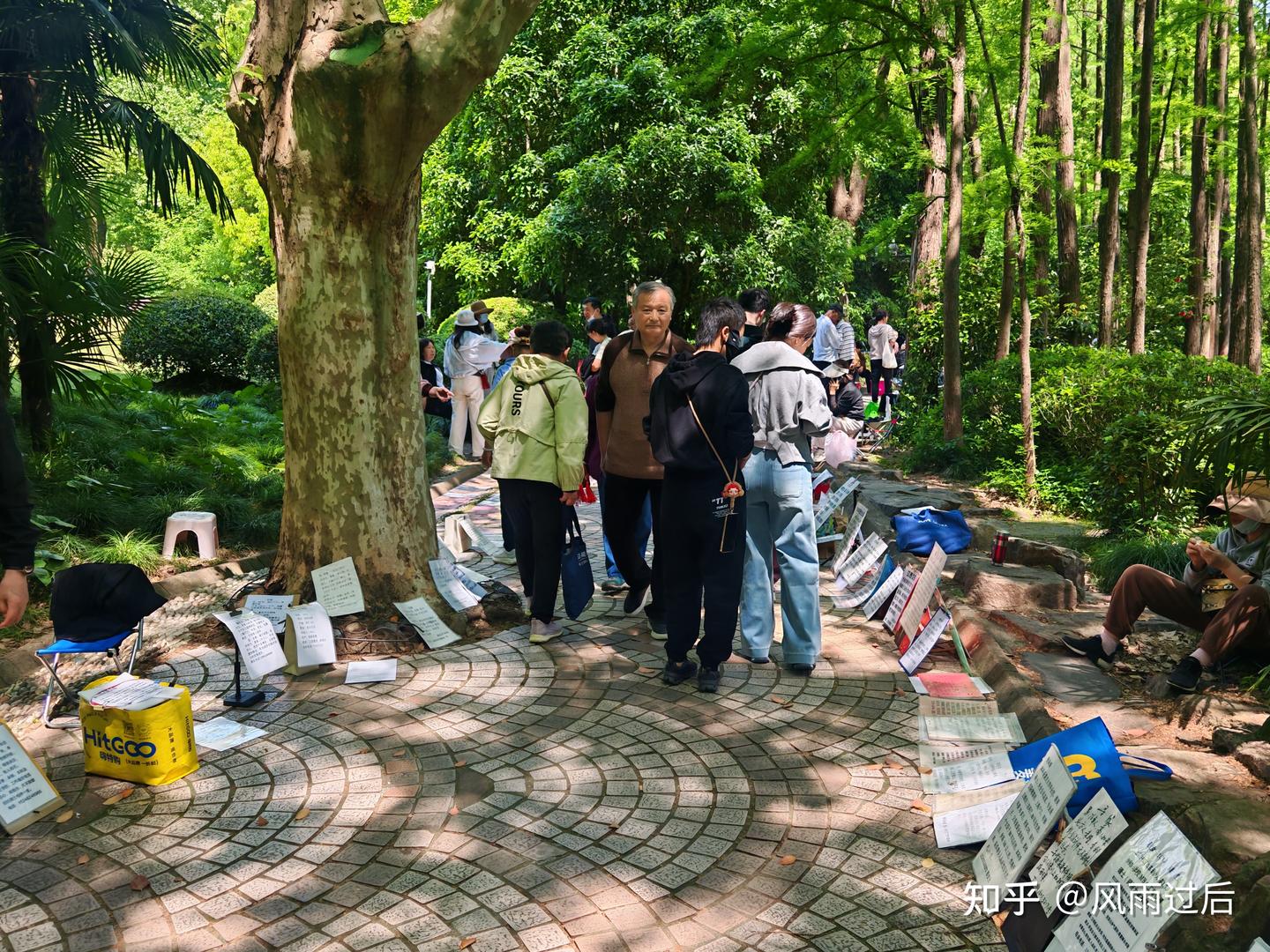
China’s marriage markets (also known as “matchmaking corners” or 相亲角/Xiāngqīn Jiǎo) have become something of a cultural fascination among visitors to Shanghai and Chengdu’s famous People’s Parks. At the center of these urban parks’ vibrant community life lie rows upon rows of laminated sheets listing the age, height, education level, occupation, and more of prospective spouses. Often, the candidates are the adult children and grandchildren of the enthusiastic retirees who run the market.
RADII talks about the new China metro station culture trend of marriage markets.
The marriage market at Shanghai’s People’s Park. Image via Zhihu/风雨过后.

While cultural and familial pressure surrounding marriage persists in contemporary China, younger generations are increasingly marrying later in life due to reasons including economic stress and changing social values. But this doesn’t mean that young people are entirely opting out of dating; rather, many singles face numerous circumstantial obstacles to finding a partner that matches their expectations. One of these is—especially among busy young professionals in urban areas—a lack of time and energy that can be devoted to seeking out a suitable partner.

However, rather than outsourcing their efforts to the likes of traditional marriage markets, young professionals have been drawn to the recent phenomenon of metro station matchmaking corners. In several cities around China, finding a potential partner may now be as efficient as transferring metro lines during one’s work commute.

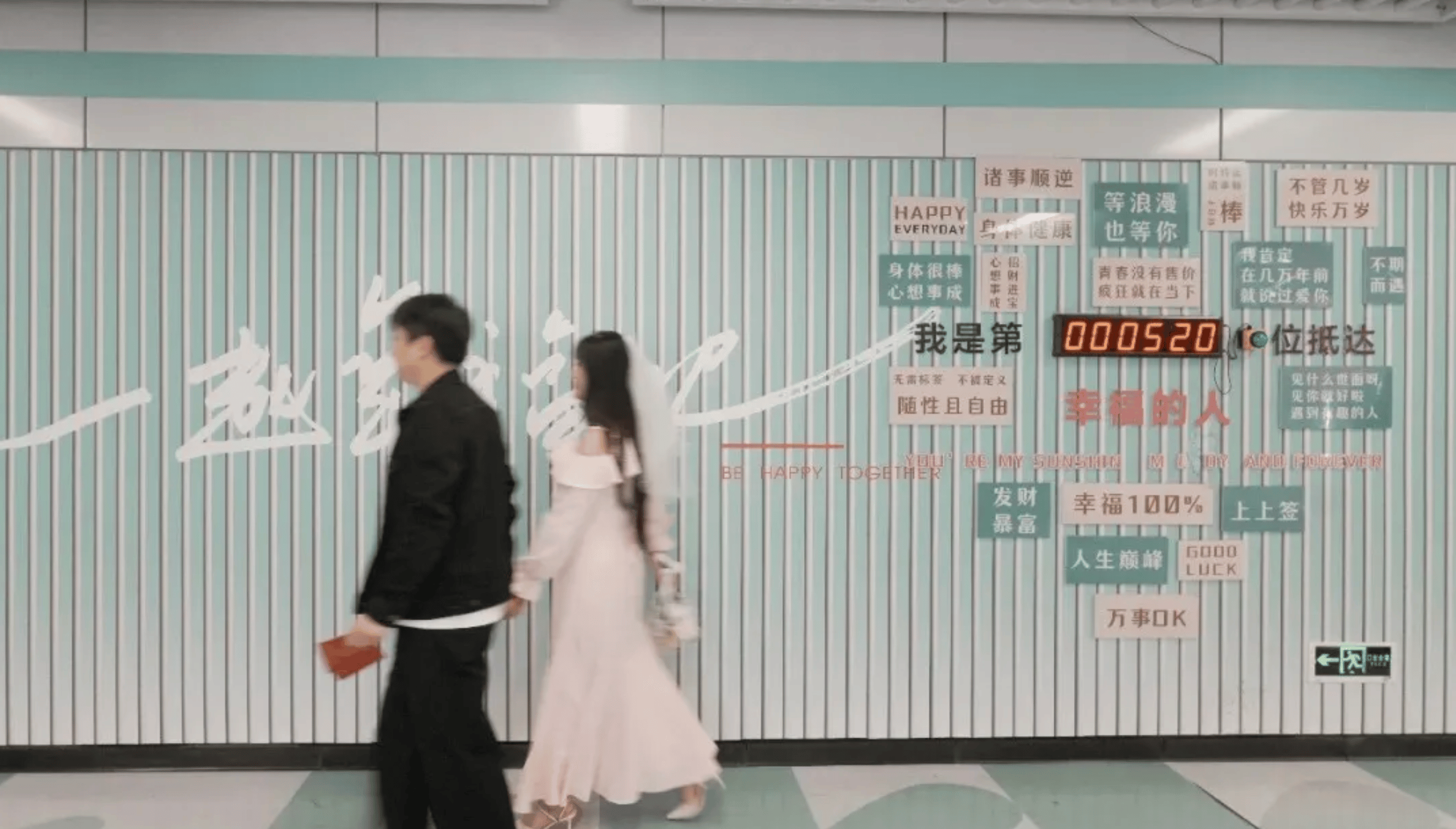
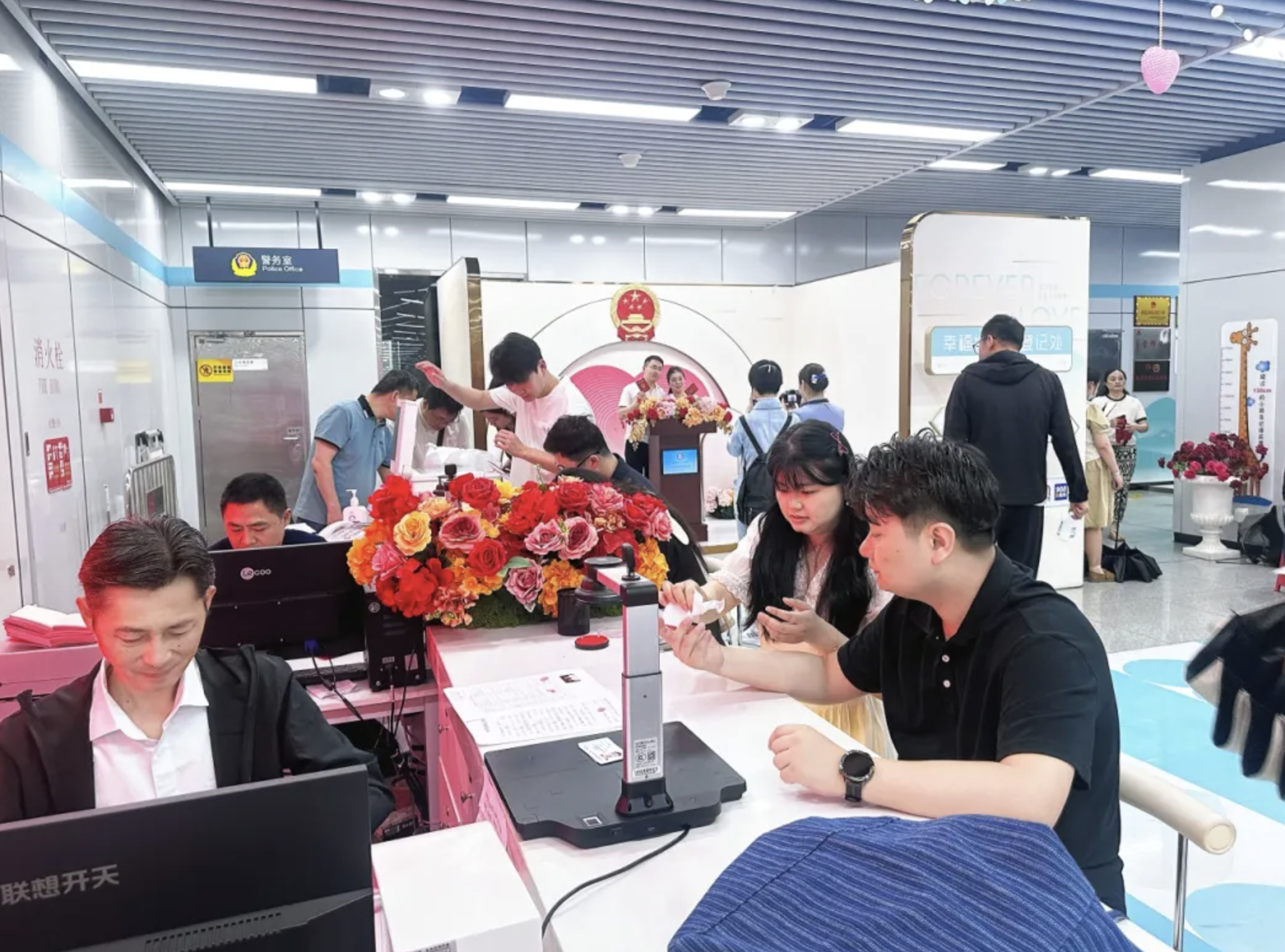
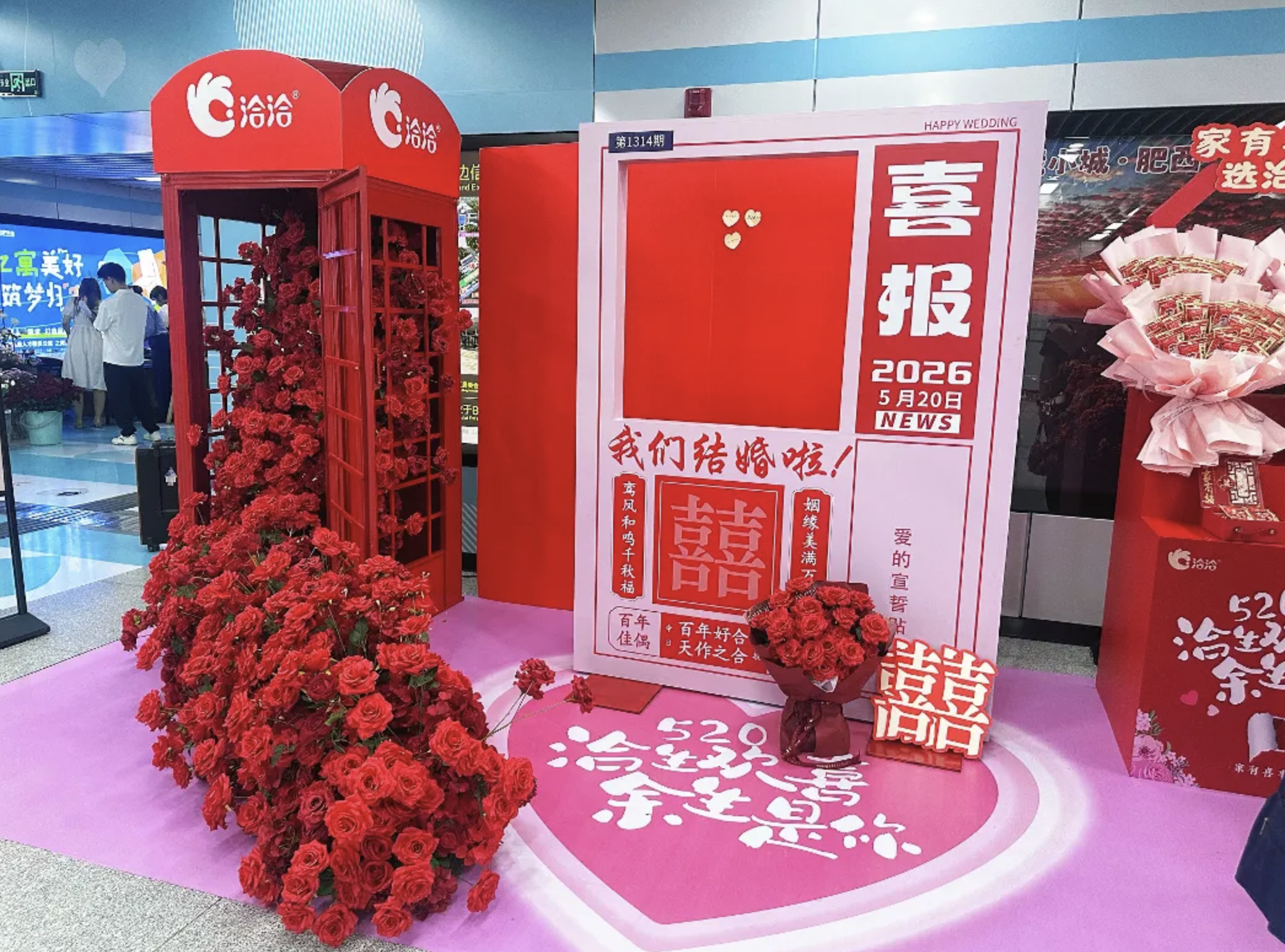
In Hefei, Anhui Province, a matchmaking corner opened up at Xinghua Park Station, allowing participants to register via QR code. During its operation, over 4,000 sign-ups were recorded. Taking things to the next level, Hefei’s Xingfuba Station even contains a marriage registration office, which has helped register 5,600 couples since it opened in 2024. On May 20 this year (China’s unofficial Valentine’s Day due to the homophonic resemblance of “520” and “I love you” in Mandarin), the office held a special event during which 200 couples were married.
RADII talks about the new China metro station culture trend of marriage markets.
Xingfuba Metro Station on May 20, 2026. Images via Wechat/Feixi Release.

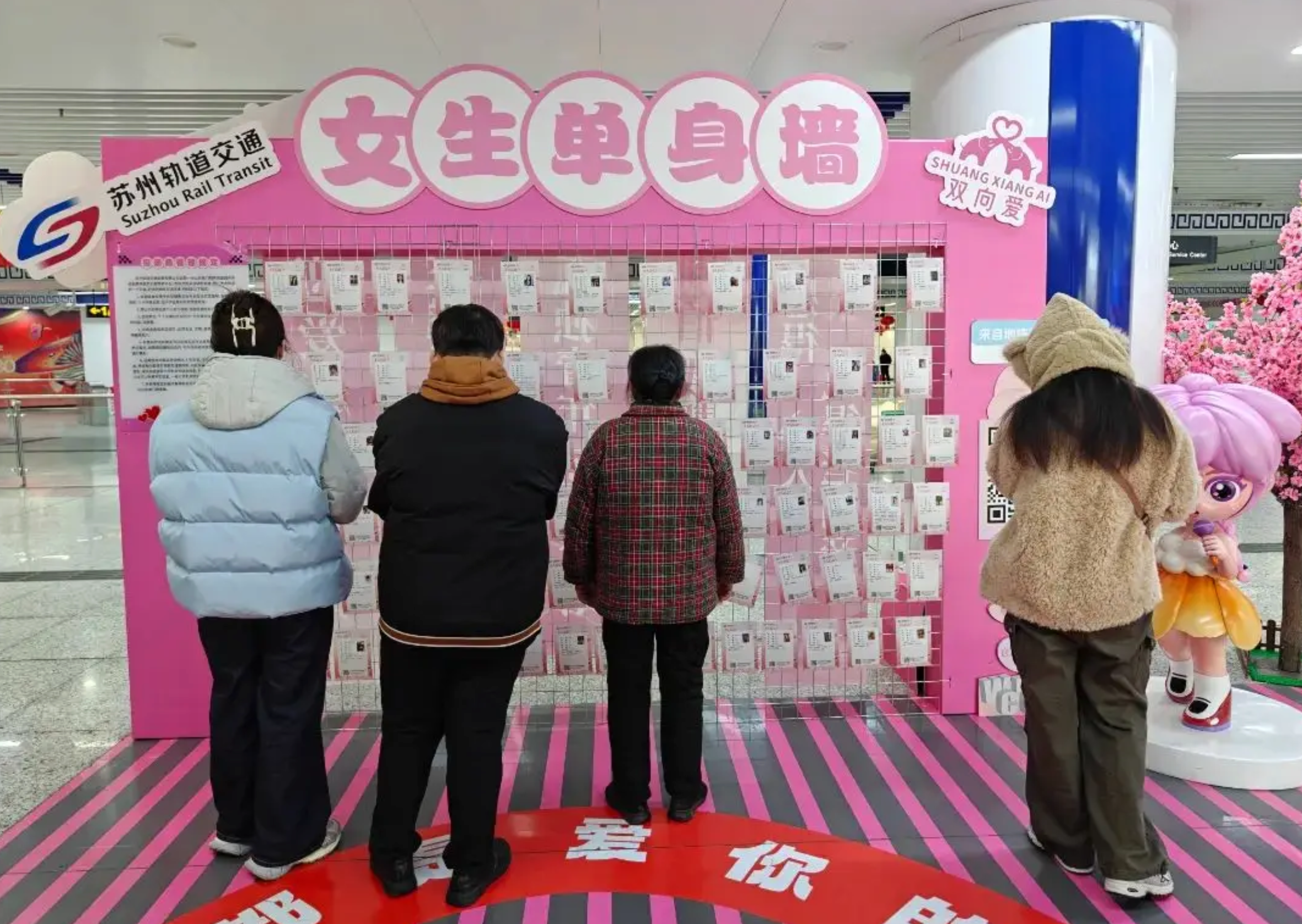
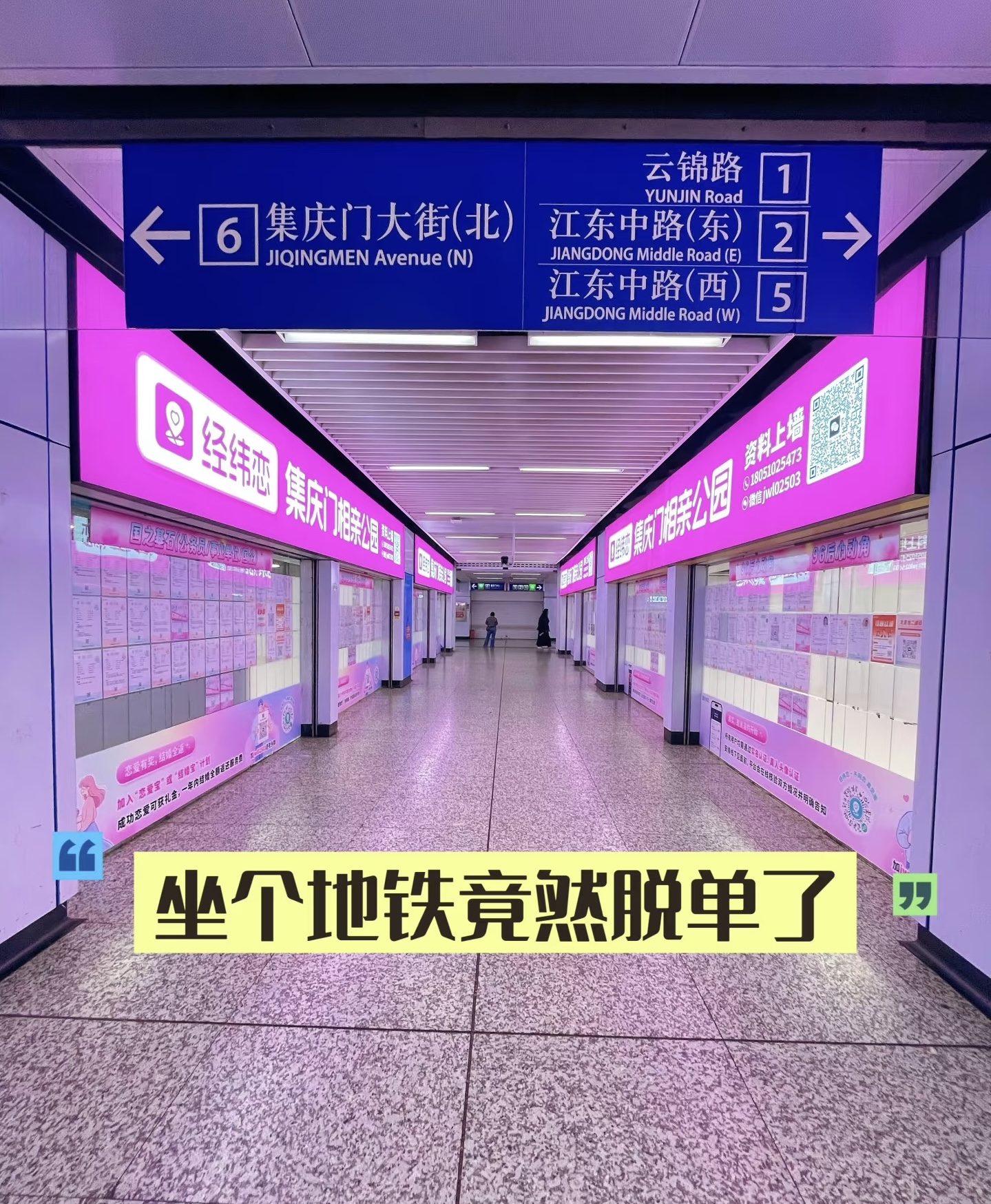
Similar corners have popped up in metro stations in Guiyang, Nanjing, and Suzhou, aiming to catch the attention of young professionals during their daily commutes. Away from the pressure of anxious family members, participants are able to more freely represent themselves by advertising their hobbies, interests, and personality traits.
RADII talks about the new China metro station culture trend of marriage markets.
Image via WeChat/Suzhou Metro.
RADII talks about the new China metro station culture trend of marriage markets.
“Took the metro and finally found a partner.” Image via Xiaohongshu.

While open to participants of all ages, young people have particularly resonated with these matchmaking corners’ seemingly more authentic nature. However, only time will tell whether the romantic connections formed here will run as smoothly as the metro itself.

Cover image via Anhui Traffic Radio.

NEWSLETTER

Get weekly top picks and exclusive, newsletter only content delivered straight to you inbox.

NEWSLETTER

Get weekly top picks and exclusive, newsletter only content delivered straight to you inbox.

RADII NEWSLETTER

Get weekly top picks and exclusive, newsletter only content delivered straight to you inbox

Feature image of All Aboard the Love Train at China’s Metro Station Marriage Markets

All Aboard the Love Train at China’s Metro Station Marriage Markets

2 mins read

China’s metro stations are emerging as unlikely hubs for romance, where busy young commuters search for love between train transfers.

China’s marriage markets (also known as “matchmaking corners” or 相亲角/Xiāngqīn Jiǎo) have become something of a cultural fascination among visitors to Shanghai and Chengdu’s famous People’s Parks. At the center of these urban parks’ vibrant community life lie rows upon rows of laminated sheets listing the age, height, education level, occupation, and more of prospective spouses. Often, the candidates are the adult children and grandchildren of the enthusiastic retirees who run the market.

RADII talks about the new China metro station culture trend of marriage markets.
The marriage market at Shanghai’s People’s Park. Image via Zhihu/风雨过后.

While cultural and familial pressure surrounding marriage persists in contemporary China, younger generations are increasingly marrying later in life due to reasons including economic stress and changing social values. But this doesn’t mean that young people are entirely opting out of dating; rather, many singles face numerous circumstantial obstacles to finding a partner that matches their expectations. One of these is—especially among busy young professionals in urban areas—a lack of time and energy that can be devoted to seeking out a suitable partner.

However, rather than outsourcing their efforts to the likes of traditional marriage markets, young professionals have been drawn to the recent phenomenon of metro station matchmaking corners. In several cities around China, finding a potential partner may now be as efficient as transferring metro lines during one’s work commute.

In Hefei, Anhui Province, a matchmaking corner opened up at Xinghua Park Station, allowing participants to register via QR code. During its operation, over 4,000 sign-ups were recorded. Taking things to the next level, Hefei’s Xingfuba Station even contains a marriage registration office, which has helped register 5,600 couples since it opened in 2024. On May 20 this year (China’s unofficial Valentine’s Day due to the homophonic resemblance of “520” and “I love you” in Mandarin), the office held a special event during which 200 couples were married.

RADII talks about the new China metro station culture trend of marriage markets.
Xingfuba Metro Station on May 20, 2026. Images via Wechat/Feixi Release.

Similar corners have popped up in metro stations in Guiyang, Nanjing, and Suzhou, aiming to catch the attention of young professionals during their daily commutes. Away from the pressure of anxious family members, participants are able to more freely represent themselves by advertising their hobbies, interests, and personality traits.

RADII talks about the new China metro station culture trend of marriage markets.
Image via WeChat/Suzhou Metro.
RADII talks about the new China metro station culture trend of marriage markets.
“Took the metro and finally found a partner.” Image via Xiaohongshu.

While open to participants of all ages, young people have particularly resonated with these matchmaking corners’ seemingly more authentic nature. However, only time will tell whether the romantic connections formed here will run as smoothly as the metro itself.

Cover image via Anhui Traffic Radio.
NEWSLETTER

Get weekly top picks and exclusive, newsletter only content delivered straight to you inbox.

RADII NEWSLETTER

Get weekly top picks and exclusive, newsletter only content delivered straight to you inbox

RELATED POSTS

Feature image of All Aboard the Love Train at China’s Metro Station Marriage Markets

All Aboard the Love Train at China’s Metro Station Marriage Markets

2 mins read

2 mins read

Feature image of All Aboard the Love Train at China’s Metro Station Marriage Markets
China’s metro stations are emerging as unlikely hubs for romance, where busy young commuters search for love between train transfers.

China’s marriage markets (also known as “matchmaking corners” or 相亲角/Xiāngqīn Jiǎo) have become something of a cultural fascination among visitors to Shanghai and Chengdu’s famous People’s Parks. At the center of these urban parks’ vibrant community life lie rows upon rows of laminated sheets listing the age, height, education level, occupation, and more of prospective spouses. Often, the candidates are the adult children and grandchildren of the enthusiastic retirees who run the market.

RADII talks about the new China metro station culture trend of marriage markets.
The marriage market at Shanghai’s People’s Park. Image via Zhihu/风雨过后.

While cultural and familial pressure surrounding marriage persists in contemporary China, younger generations are increasingly marrying later in life due to reasons including economic stress and changing social values. But this doesn’t mean that young people are entirely opting out of dating; rather, many singles face numerous circumstantial obstacles to finding a partner that matches their expectations. One of these is—especially among busy young professionals in urban areas—a lack of time and energy that can be devoted to seeking out a suitable partner.

However, rather than outsourcing their efforts to the likes of traditional marriage markets, young professionals have been drawn to the recent phenomenon of metro station matchmaking corners. In several cities around China, finding a potential partner may now be as efficient as transferring metro lines during one’s work commute.

In Hefei, Anhui Province, a matchmaking corner opened up at Xinghua Park Station, allowing participants to register via QR code. During its operation, over 4,000 sign-ups were recorded. Taking things to the next level, Hefei’s Xingfuba Station even contains a marriage registration office, which has helped register 5,600 couples since it opened in 2024. On May 20 this year (China’s unofficial Valentine’s Day due to the homophonic resemblance of “520” and “I love you” in Mandarin), the office held a special event during which 200 couples were married.

RADII talks about the new China metro station culture trend of marriage markets.
Xingfuba Metro Station on May 20, 2026. Images via Wechat/Feixi Release.

Similar corners have popped up in metro stations in Guiyang, Nanjing, and Suzhou, aiming to catch the attention of young professionals during their daily commutes. Away from the pressure of anxious family members, participants are able to more freely represent themselves by advertising their hobbies, interests, and personality traits.

RADII talks about the new China metro station culture trend of marriage markets.
Image via WeChat/Suzhou Metro.
RADII talks about the new China metro station culture trend of marriage markets.
“Took the metro and finally found a partner.” Image via Xiaohongshu.

While open to participants of all ages, young people have particularly resonated with these matchmaking corners’ seemingly more authentic nature. However, only time will tell whether the romantic connections formed here will run as smoothly as the metro itself.

Cover image via Anhui Traffic Radio.

NEWSLETTER

Get weekly top picks and exclusive, newsletter only content delivered straight to you inbox.

NEWSLETTER

Get weekly top picks and exclusive, newsletter only content delivered straight to you inbox.

RADII NEWSLETTER

Get weekly top picks and exclusive, newsletter only content delivered straight to you inbox

Feature image of All Aboard the Love Train at China’s Metro Station Marriage Markets

All Aboard the Love Train at China’s Metro Station Marriage Markets

2 mins read

China’s metro stations are emerging as unlikely hubs for romance, where busy young commuters search for love between train transfers.

China’s marriage markets (also known as “matchmaking corners” or 相亲角/Xiāngqīn Jiǎo) have become something of a cultural fascination among visitors to Shanghai and Chengdu’s famous People’s Parks. At the center of these urban parks’ vibrant community life lie rows upon rows of laminated sheets listing the age, height, education level, occupation, and more of prospective spouses. Often, the candidates are the adult children and grandchildren of the enthusiastic retirees who run the market.

RADII talks about the new China metro station culture trend of marriage markets.
The marriage market at Shanghai’s People’s Park. Image via Zhihu/风雨过后.

While cultural and familial pressure surrounding marriage persists in contemporary China, younger generations are increasingly marrying later in life due to reasons including economic stress and changing social values. But this doesn’t mean that young people are entirely opting out of dating; rather, many singles face numerous circumstantial obstacles to finding a partner that matches their expectations. One of these is—especially among busy young professionals in urban areas—a lack of time and energy that can be devoted to seeking out a suitable partner.

However, rather than outsourcing their efforts to the likes of traditional marriage markets, young professionals have been drawn to the recent phenomenon of metro station matchmaking corners. In several cities around China, finding a potential partner may now be as efficient as transferring metro lines during one’s work commute.

In Hefei, Anhui Province, a matchmaking corner opened up at Xinghua Park Station, allowing participants to register via QR code. During its operation, over 4,000 sign-ups were recorded. Taking things to the next level, Hefei’s Xingfuba Station even contains a marriage registration office, which has helped register 5,600 couples since it opened in 2024. On May 20 this year (China’s unofficial Valentine’s Day due to the homophonic resemblance of “520” and “I love you” in Mandarin), the office held a special event during which 200 couples were married.

RADII talks about the new China metro station culture trend of marriage markets.
Xingfuba Metro Station on May 20, 2026. Images via Wechat/Feixi Release.

Similar corners have popped up in metro stations in Guiyang, Nanjing, and Suzhou, aiming to catch the attention of young professionals during their daily commutes. Away from the pressure of anxious family members, participants are able to more freely represent themselves by advertising their hobbies, interests, and personality traits.

RADII talks about the new China metro station culture trend of marriage markets.
Image via WeChat/Suzhou Metro.
RADII talks about the new China metro station culture trend of marriage markets.
“Took the metro and finally found a partner.” Image via Xiaohongshu.

While open to participants of all ages, young people have particularly resonated with these matchmaking corners’ seemingly more authentic nature. However, only time will tell whether the romantic connections formed here will run as smoothly as the metro itself.

Cover image via Anhui Traffic Radio.
NEWSLETTER

Get weekly top picks and exclusive, newsletter only content delivered straight to you inbox.

RADII NEWSLETTER

Get weekly top picks and exclusive, newsletter only content delivered straight to you inbox

RADII newsletter pop up visual

NEWSLETTER​

Get weekly top picks and exclusive, newsletter only content delivered straight to you inbox

RADII Newsletter Pop Up small banner

NEWSLETTER

Get weekly top picks and exclusive, newsletter only content delivered straight to you inbox.

Link Copied!

Share

Feature image of All Aboard the Love Train at China’s Metro Station Marriage Markets

All Aboard the Love Train at China’s Metro Station Marriage Markets

China’s metro stations are emerging as unlikely hubs for romance, where busy young commuters search for love between train transfers.

PULSE

Tap into the latest in music, fashion, art, design, entertainment, pop culture, celebrity news, and contemporary culture

DISCOVER

Embark on a journey through food, travel, wellness, heritage, traditional culture, and lifestyle

STYLE

An insider’s look at the intersection of fashion, art, and design

FEAST

Titillate your taste buds with coverage of the best food and drink trends from China and beyond.

FUTURE

Explore the cutting edge in tech, AI, gadgets, gaming, and innovative tech-related products

FEAST

Titillate your taste buds with coverage of the best food and drink trends from China and beyond

STYLE

An insider’s look at the intersection of fashion, art, and design

PULSE

Unpacking Chinese youth culture through coverage of nightlife, film, sports, celebrities, and the hottest new music