
Feature image of China is Actually in FIFA 2026, Just Off the Pitch and All Over the Stadium

China is Actually in FIFA 2026, Just Off the Pitch and All Over the Stadium

5 mins read

5 mins read

Feature image of China is Actually in FIFA 2026, Just Off the Pitch and All Over the Stadium
The FIFA tournament officially started last Thursday. Out of 48 teams, China has not made it in again. Yet from high-tech sponsorships to Mexico City’s transportation system, China has become the “invisible” home team of the 2026 FIFA World Cup.

On June 11, a Douyin clip went viral as a Chinese soccer fan got emotional at the opening ceremony. Filming himself from the stands alongside other international fans, he shouted with tears and despair:

“When will our national flag fly in the World Cup stadium?…”

His grief echoes what many other fans feel watching yet another World Cup without their own team. What his phone doesn’t show is the irony of the moment: the replay he is watching runs through Chinese servers and screens, the official ball the players’ feet carries Chinese sensors and supply chains, and many of the fans packed around him arrive on Chinese electric buses.

Further down on the pitch, two life-sized Labubu figures appear in customized World Cup jerseys. In early 2022, Labubu was arguably the trendiest blind box character from POP MART in China and Southeast Asia. Now it has stepped out of shopping malls and into football’s biggest show. It shares screen time with national flags, official mascots, and star performers, turning a once-local subculture into part of the global football spectacle.

China Buses in Mexico City?
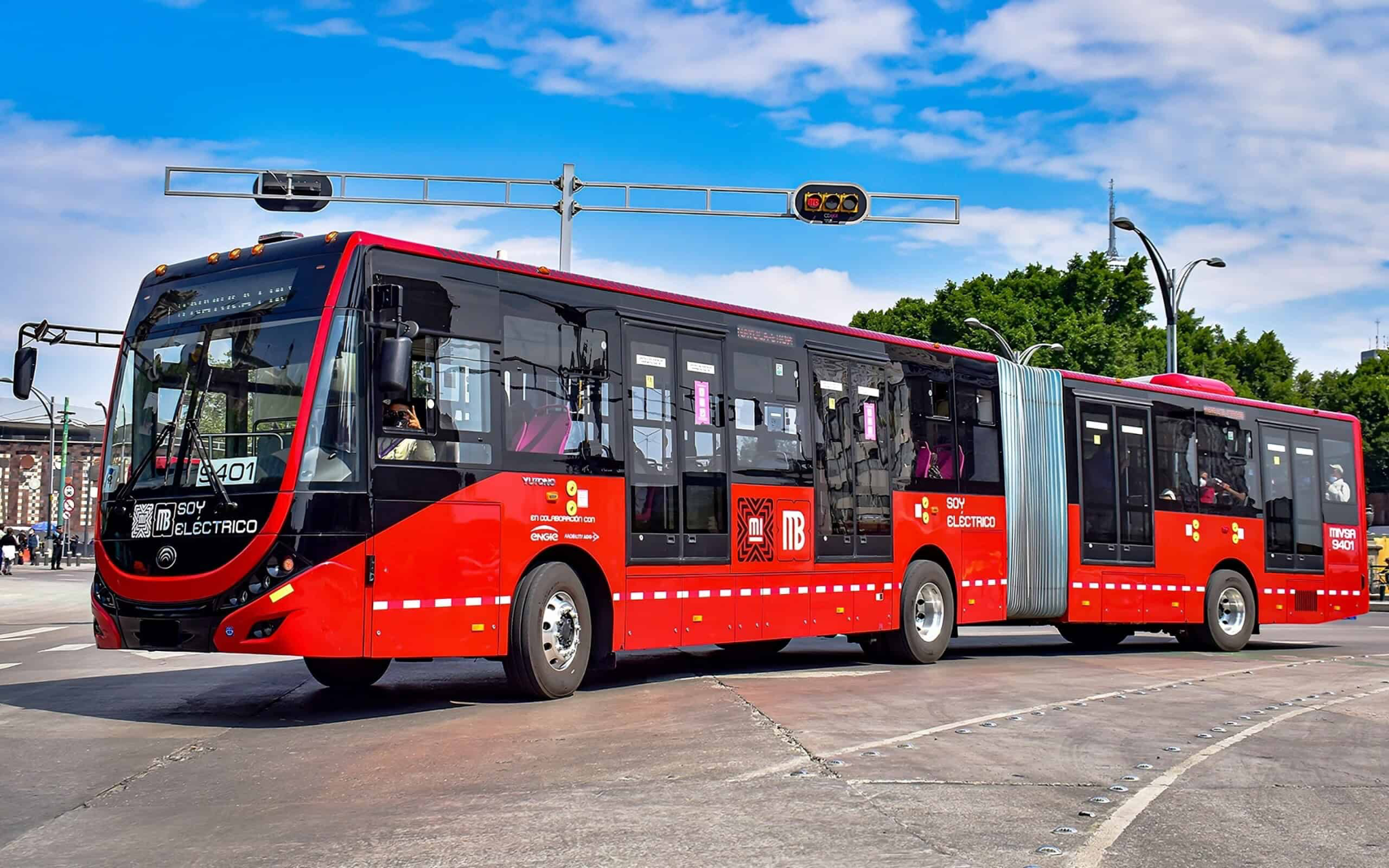
Photo of Bus E18 by Yutong China, an 8-metre high-floor full-electric bus, in Mexico City, Mexico. Image via Facebook.

Outside the stadiums, Mexican cities have rushed to upgrade their public transport for the World Cup, and a big share of that hardware is Chinese. Local authorities have assembled more than 800 new-energy buses and supplied 115 light-rail trains designed for the tournament. Yutong alone accounts for more than 80% of the new fleet, including 26-meter “land train” models that can carry roughly 270 passengers at a time. The buses are built for the city’s steep gradients, heavy congestion, and sudden floods, with reinforced waterproofing and corrosion protection, aiming to ensure smooth transit for the world’s fans.

The “Star Representative” at This World Cup

While China has disappeared from the team sheet, Ma Ning has become the country’s star representative at this World Cup. The 47-year-old AFC referee is making his second appearance on football’s biggest stage, after serving as a fourth official in multiple matches at the 2022 tournament in Qatar. This year, FIFA has promoted him to central referee, making Ma the first Chinese referee to work at two men’s World Cups. At home, he is known as the “card master” (发牌大师), a reputation that Chinese and international media have picked up for his strict and stern style of ruling the game.
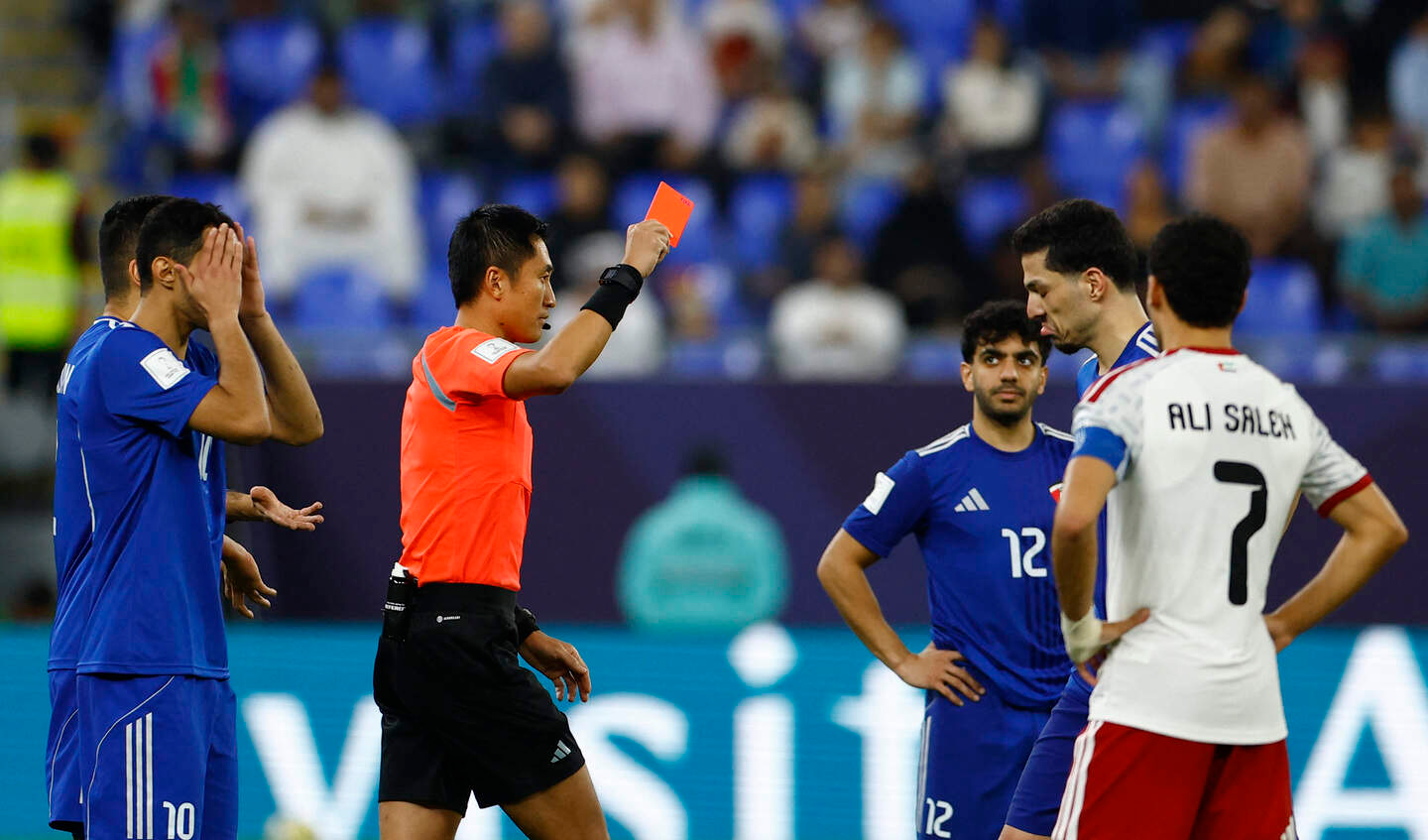
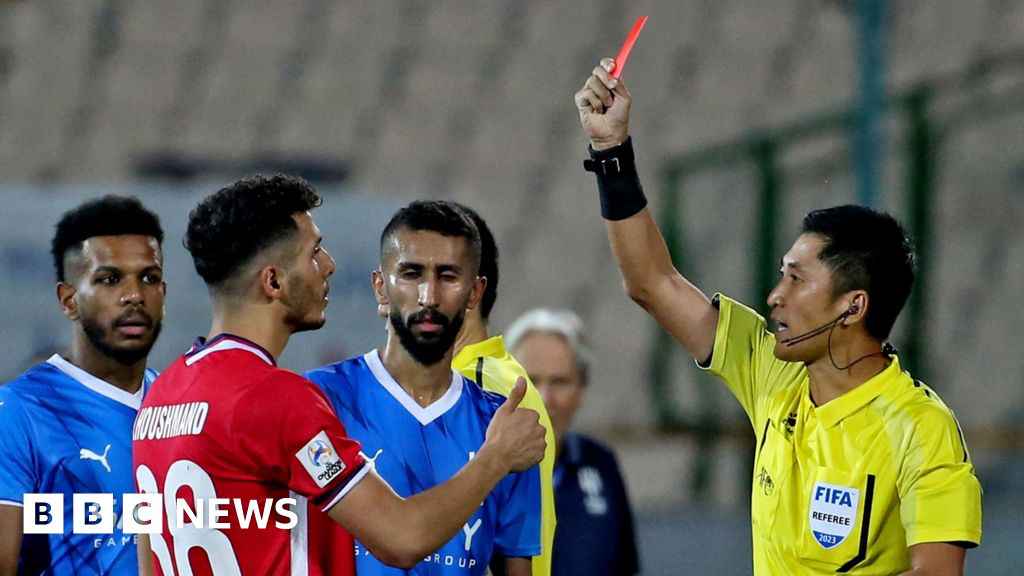
Images via REUTERS.

Ma is not traveling alone. For 2026, FIFA selected a full trio of Chinese officials: Ma as referee, Zhou Fei as assistant referee on the touchline, and Fu Ming in the video operations room as a VAR specialist. It is the first time China has covered all three of those roles in a men’s World Cup, and local outlets describe it as a “historic” moment for Chinese officiating.
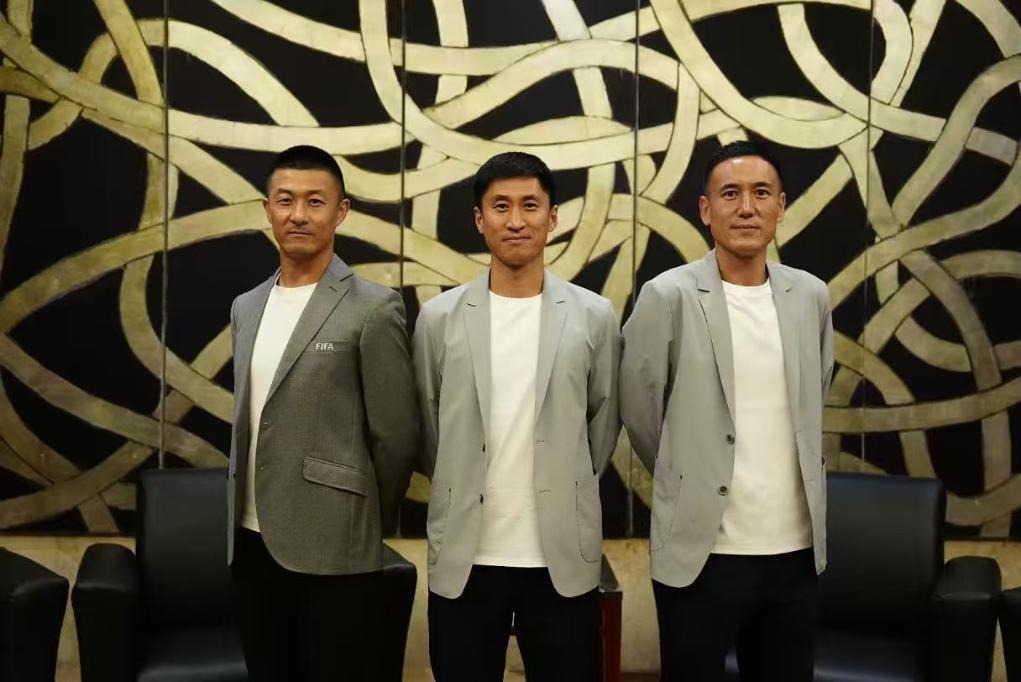
Left to Right: Fu Ming, Ma Ning, Zhou Fei. Image via HKTKWW.

The Tech Stack Nobody Sees

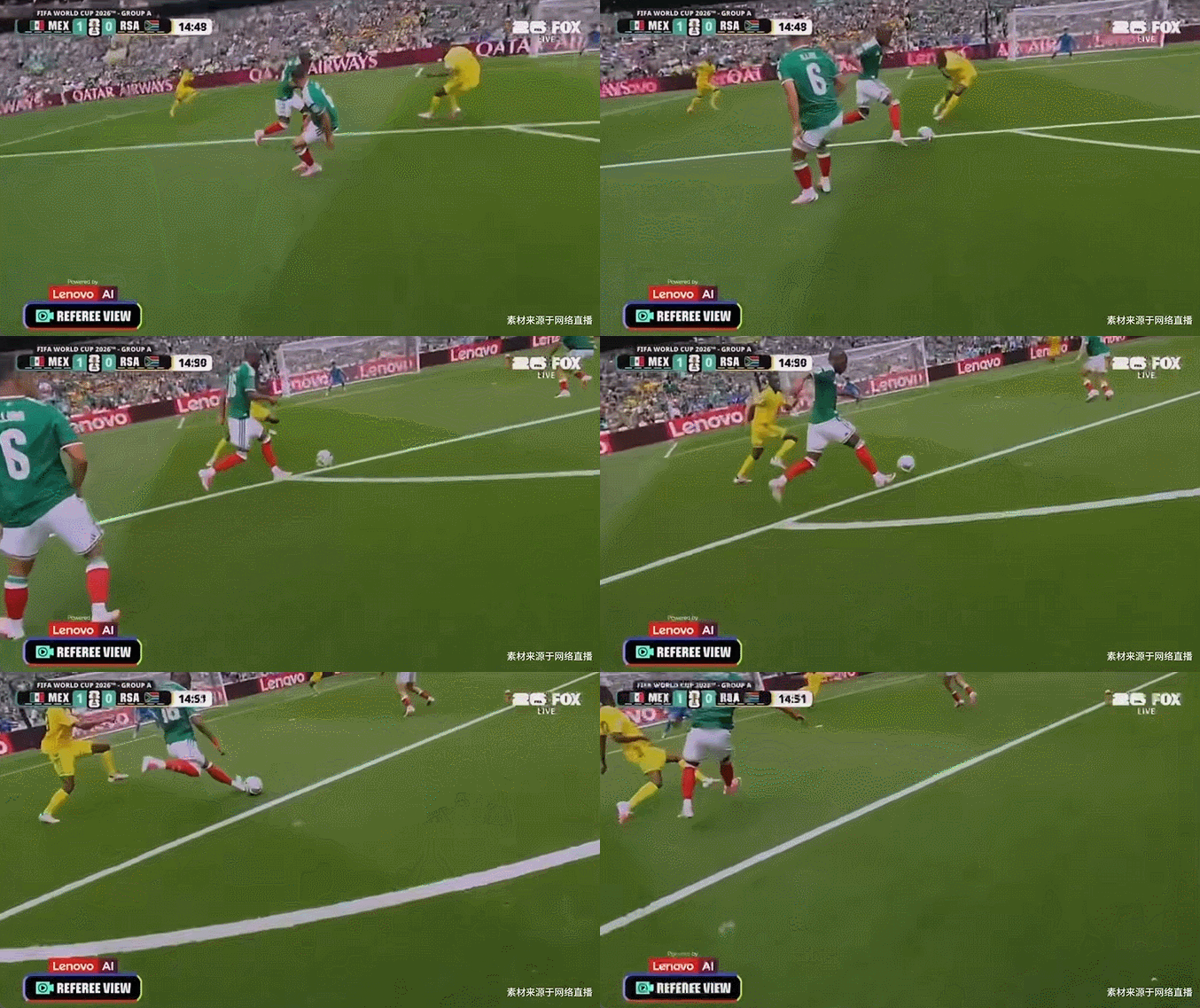
Away from the opening show, a different kind of Chinese presence runs quietly under the surface. This is the most digitally advanced World Cup yet, and much of the unseen infrastructure behind it is powered by Chinese hardware. Lenovo, FIFA’s one and only technology partner, provides the laptops, servers, and AI tools in team analysis rooms, media centers, and operations hubs. Its systems handle match data in near real time and feed it back to coaches and organizers, shaping tactical graphics, performance visualizations, and official highlight clips.
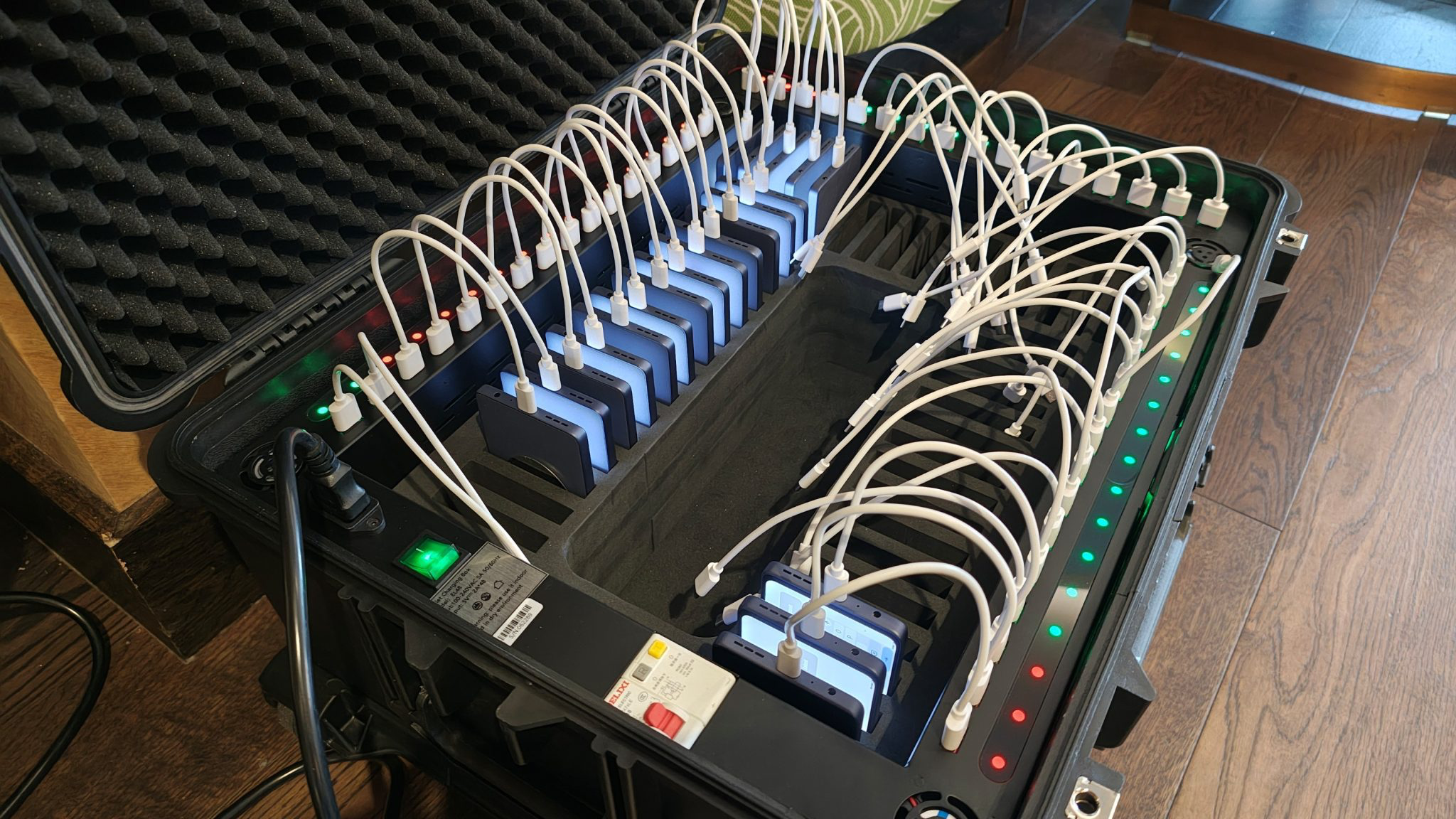
Mobile charging kit for match operations. Image via Lenovo StoryHub.

Hisense plays a similar role on the officiating side. After starting on pitch-side LED boards in 2018, the brand now supplies the RGB MiniLED screens in video operations rooms, the monitors referees stare at when they check penalties, red cards, or tight offside calls.

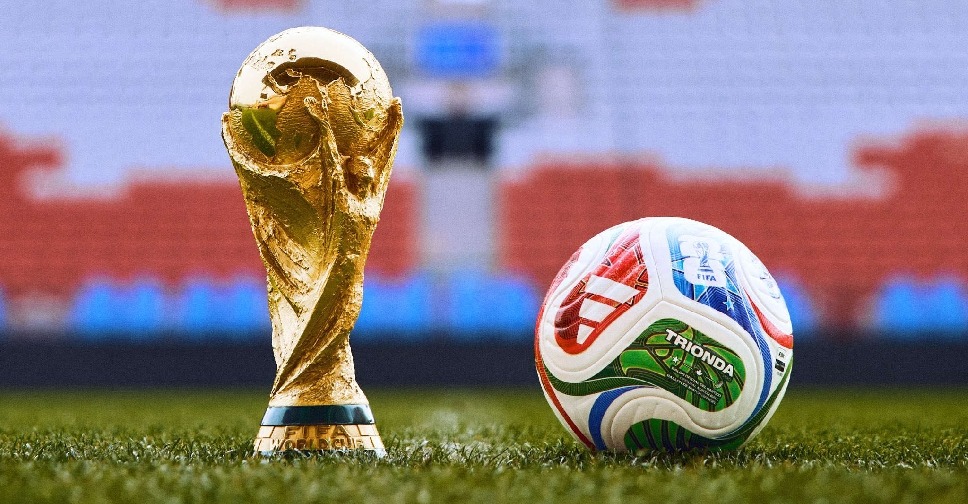
Then there is the football itself, Trionda. According to FIFA officials, the name combines “tri,” meaning three, and “onda,” the Spanish word for waves, a nod to the three hosts: Canada, Mexico, and the United States. At first glance, it looks like another World Cup design tweak, but it is more than a regular soccer ball. Before kick-off, staff plug it in so the chip inside can “wake up.” Once the whistle blows, a 500-hertz motion sensor quietly records almost every touch and pass, feeding data into VAR. This newly designed chip is made by a manufacturer in Huai’an, Jiangsu (顶碁运动用品(淮安)有限公司). Together with the cameras and Hisense screens, that chip helps decide whether a striker’s boot was a few centimeters offside or whether the ball really crossed the line.
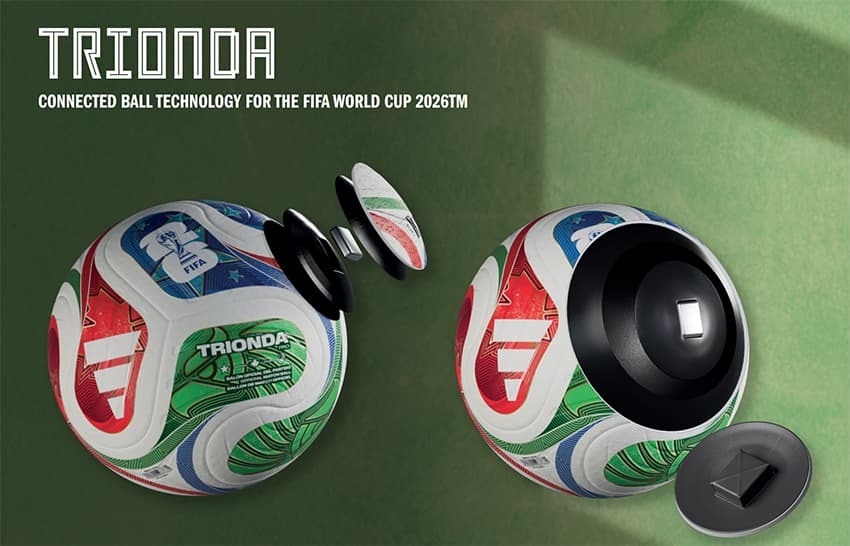
Image via World Soccer Shop.

Trionda is an adidas product built on a global supply chain: designed in Europe, manufactured across Asia, and upgraded into a connected piece of hardware. According to official reports, Trionda is assembled at an adidas contractor in the Greater Bay Area. Public data still shows Sialkot, Pakistan, producing a large share of the world’s footballs, and local firms there have supplied match balls for previous World Cups. The supply chain for 2026 looks less like a single origin story and more like a distributed network stretching from design offices in Europe to factories in China and Pakistan.

Flags and the Souvenir Shops

China also shows up in the smaller objects that fill every frame. In Qingdao’s Jimo district, Wandelong Textile Technology is acting as a flag “super factory,” turning out more than 30 million national and event flags for stadiums and fan zones. It is the company’s eighth straight World Cup, and for 2026 it has developed UV-resistant, cold-proof fabrics to handle everything from Canadian rain to North American summer heat. In Jiangsu, a licensed producer is casting a 26-centimeter replica of the World Cup trophy in copper with gold plating. Only 2,026 numbered pieces are being sold worldwide, making the “Made in China” trophy one of the tournament’s most exclusive souvenirs.
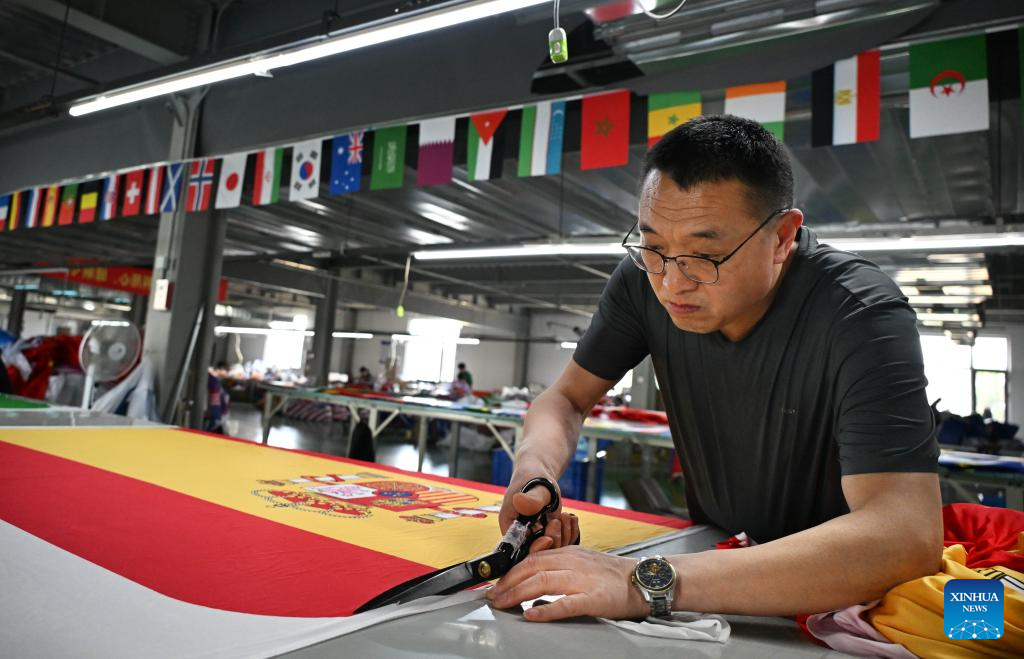
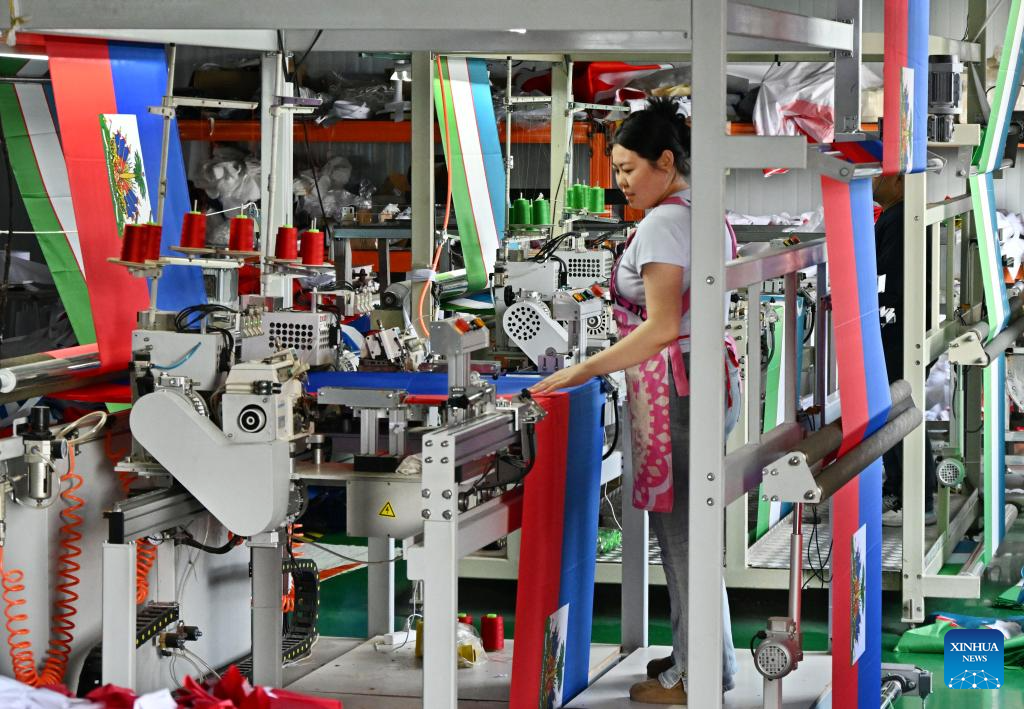
Alongside these objects are the familiar big sponsors. Dairy giant Mengniu, which first appeared on World Cup boards in 2018 and 2022, has extended its deal with FIFA through to 2030, including the 2027 Women’s World Cup. Its logo now sits comfortably alongside the traditional European and American sponsors, another sign that Chinese consumer brands see the World Cup as their global billboard.
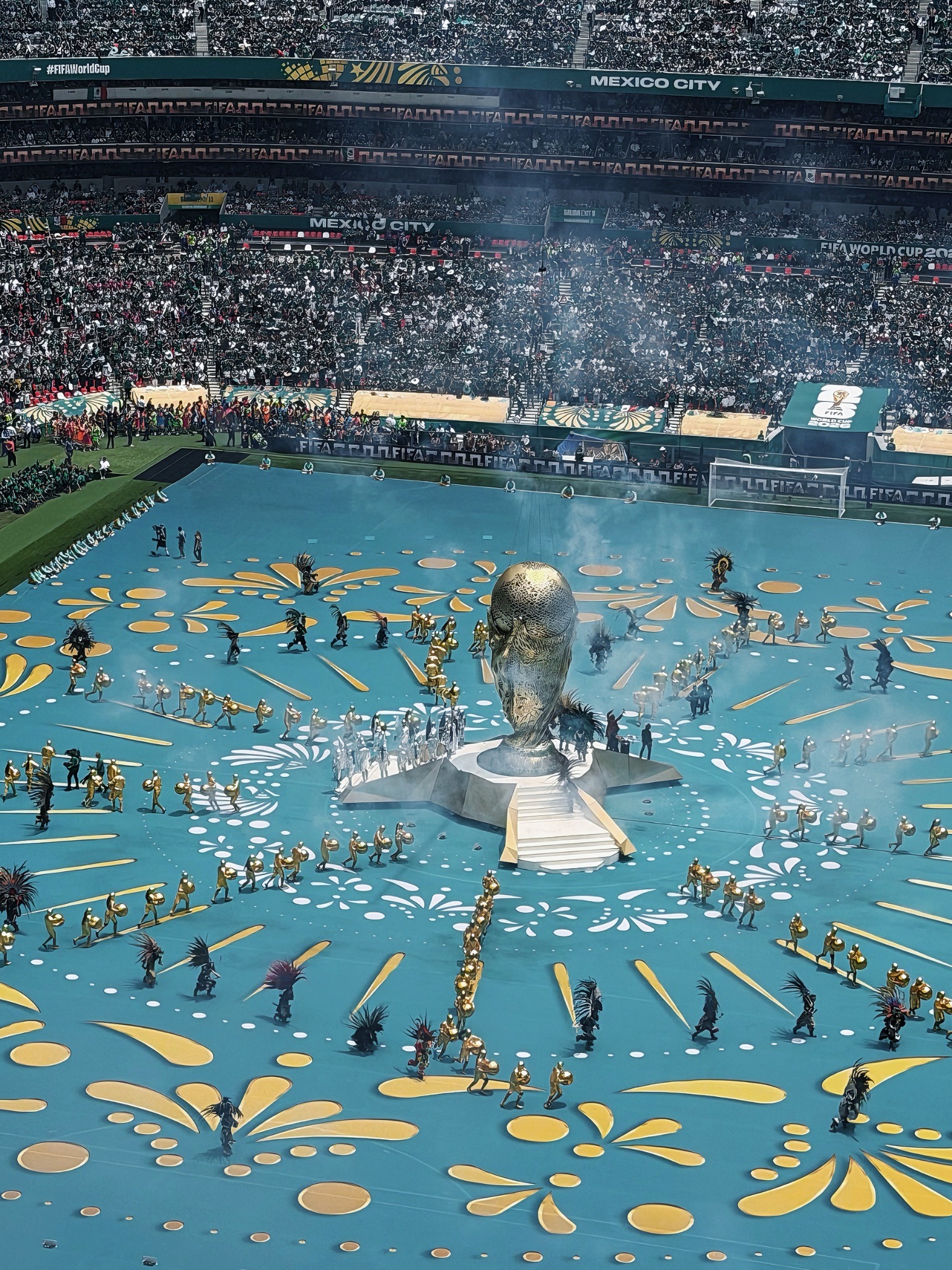
Opening Ceremony, Mexico City, Mexico. Image via Gerald Gao.

Just thinking back to that YouTube clip from Estadio Azteca is still the most honest image of this World Cup from China’s point of view. But at the same time, the tournament around him has turned into a showcase of “China elsewhere” that can be seen in the AI systems and VAR screens, in the match ball’s sensor and the buses outside, and in the three officials in black shirts who step in when the game loses control.

Cover image via adidas Football.

NEWSLETTER

Get weekly top picks and exclusive, newsletter only content delivered straight to you inbox.

NEWSLETTER

Get weekly top picks and exclusive, newsletter only content delivered straight to you inbox.

RADII NEWSLETTER

Get weekly top picks and exclusive, newsletter only content delivered straight to you inbox

Feature image of China is Actually in FIFA 2026, Just Off the Pitch and All Over the Stadium

China is Actually in FIFA 2026, Just Off the Pitch and All Over the Stadium

5 mins read

The FIFA tournament officially started last Thursday. Out of 48 teams, China has not made it in again. Yet from high-tech sponsorships to Mexico City’s transportation system, China has become the “invisible” home team of the 2026 FIFA World Cup.

On June 11, a Douyin clip went viral as a Chinese soccer fan got emotional at the opening ceremony. Filming himself from the stands alongside other international fans, he shouted with tears and despair:

“When will our national flag fly in the World Cup stadium?…”

His grief echoes what many other fans feel watching yet another World Cup without their own team. What his phone doesn’t show is the irony of the moment: the replay he is watching runs through Chinese servers and screens, the official ball the players’ feet carries Chinese sensors and supply chains, and many of the fans packed around him arrive on Chinese electric buses.

Further down on the pitch, two life-sized Labubu figures appear in customized World Cup jerseys. In early 2022, Labubu was arguably the trendiest blind box character from POP MART in China and Southeast Asia. Now it has stepped out of shopping malls and into football’s biggest show. It shares screen time with national flags, official mascots, and star performers, turning a once-local subculture into part of the global football spectacle.

China Buses in Mexico City?

Photo of Bus E18 by Yutong China, an 8-metre high-floor full-electric bus, in Mexico City, Mexico. Image via Facebook.

Outside the stadiums, Mexican cities have rushed to upgrade their public transport for the World Cup, and a big share of that hardware is Chinese. Local authorities have assembled more than 800 new-energy buses and supplied 115 light-rail trains designed for the tournament. Yutong alone accounts for more than 80% of the new fleet, including 26-meter “land train” models that can carry roughly 270 passengers at a time. The buses are built for the city’s steep gradients, heavy congestion, and sudden floods, with reinforced waterproofing and corrosion protection, aiming to ensure smooth transit for the world’s fans.

The “Star Representative” at This World Cup

While China has disappeared from the team sheet, Ma Ning has become the country’s star representative at this World Cup. The 47-year-old AFC referee is making his second appearance on football’s biggest stage, after serving as a fourth official in multiple matches at the 2022 tournament in Qatar. This year, FIFA has promoted him to central referee, making Ma the first Chinese referee to work at two men’s World Cups. At home, he is known as the “card master” (发牌大师), a reputation that Chinese and international media have picked up for his strict and stern style of ruling the game.

Images via REUTERS.

Ma is not traveling alone. For 2026, FIFA selected a full trio of Chinese officials: Ma as referee, Zhou Fei as assistant referee on the touchline, and Fu Ming in the video operations room as a VAR specialist. It is the first time China has covered all three of those roles in a men’s World Cup, and local outlets describe it as a “historic” moment for Chinese officiating.

Left to Right: Fu Ming, Ma Ning, Zhou Fei. Image via HKTKWW.

The Tech Stack Nobody Sees

Away from the opening show, a different kind of Chinese presence runs quietly under the surface. This is the most digitally advanced World Cup yet, and much of the unseen infrastructure behind it is powered by Chinese hardware. Lenovo, FIFA’s one and only technology partner, provides the laptops, servers, and AI tools in team analysis rooms, media centers, and operations hubs. Its systems handle match data in near real time and feed it back to coaches and organizers, shaping tactical graphics, performance visualizations, and official highlight clips.

Mobile charging kit for match operations. Image via Lenovo StoryHub.

Hisense plays a similar role on the officiating side. After starting on pitch-side LED boards in 2018, the brand now supplies the RGB MiniLED screens in video operations rooms, the monitors referees stare at when they check penalties, red cards, or tight offside calls.

Then there is the football itself, Trionda. According to FIFA officials, the name combines “tri,” meaning three, and “onda,” the Spanish word for waves, a nod to the three hosts: Canada, Mexico, and the United States. At first glance, it looks like another World Cup design tweak, but it is more than a regular soccer ball. Before kick-off, staff plug it in so the chip inside can “wake up.” Once the whistle blows, a 500-hertz motion sensor quietly records almost every touch and pass, feeding data into VAR. This newly designed chip is made by a manufacturer in Huai’an, Jiangsu (顶碁运动用品(淮安)有限公司). Together with the cameras and Hisense screens, that chip helps decide whether a striker’s boot was a few centimeters offside or whether the ball really crossed the line.

Image via World Soccer Shop.

Trionda is an adidas product built on a global supply chain: designed in Europe, manufactured across Asia, and upgraded into a connected piece of hardware. According to official reports, Trionda is assembled at an adidas contractor in the Greater Bay Area. Public data still shows Sialkot, Pakistan, producing a large share of the world’s footballs, and local firms there have supplied match balls for previous World Cups. The supply chain for 2026 looks less like a single origin story and more like a distributed network stretching from design offices in Europe to factories in China and Pakistan.

Flags and the Souvenir Shops

China also shows up in the smaller objects that fill every frame. In Qingdao’s Jimo district, Wandelong Textile Technology is acting as a flag “super factory,” turning out more than 30 million national and event flags for stadiums and fan zones. It is the company’s eighth straight World Cup, and for 2026 it has developed UV-resistant, cold-proof fabrics to handle everything from Canadian rain to North American summer heat. In Jiangsu, a licensed producer is casting a 26-centimeter replica of the World Cup trophy in copper with gold plating. Only 2,026 numbered pieces are being sold worldwide, making the “Made in China” trophy one of the tournament’s most exclusive souvenirs.

Alongside these objects are the familiar big sponsors. Dairy giant Mengniu, which first appeared on World Cup boards in 2018 and 2022, has extended its deal with FIFA through to 2030, including the 2027 Women’s World Cup. Its logo now sits comfortably alongside the traditional European and American sponsors, another sign that Chinese consumer brands see the World Cup as their global billboard.

Opening Ceremony, Mexico City, Mexico. Image via Gerald Gao.

Just thinking back to that YouTube clip from Estadio Azteca is still the most honest image of this World Cup from China’s point of view. But at the same time, the tournament around him has turned into a showcase of “China elsewhere” that can be seen in the AI systems and VAR screens, in the match ball’s sensor and the buses outside, and in the three officials in black shirts who step in when the game loses control.

Cover image via adidas Football.
NEWSLETTER

Get weekly top picks and exclusive, newsletter only content delivered straight to you inbox.

RADII NEWSLETTER

Get weekly top picks and exclusive, newsletter only content delivered straight to you inbox

RELATED POSTS

Feature image of China is Actually in FIFA 2026, Just Off the Pitch and All Over the Stadium

China is Actually in FIFA 2026, Just Off the Pitch and All Over the Stadium

5 mins read

5 mins read

Feature image of China is Actually in FIFA 2026, Just Off the Pitch and All Over the Stadium
The FIFA tournament officially started last Thursday. Out of 48 teams, China has not made it in again. Yet from high-tech sponsorships to Mexico City’s transportation system, China has become the “invisible” home team of the 2026 FIFA World Cup.

On June 11, a Douyin clip went viral as a Chinese soccer fan got emotional at the opening ceremony. Filming himself from the stands alongside other international fans, he shouted with tears and despair:

“When will our national flag fly in the World Cup stadium?…”

His grief echoes what many other fans feel watching yet another World Cup without their own team. What his phone doesn’t show is the irony of the moment: the replay he is watching runs through Chinese servers and screens, the official ball the players’ feet carries Chinese sensors and supply chains, and many of the fans packed around him arrive on Chinese electric buses.

Further down on the pitch, two life-sized Labubu figures appear in customized World Cup jerseys. In early 2022, Labubu was arguably the trendiest blind box character from POP MART in China and Southeast Asia. Now it has stepped out of shopping malls and into football’s biggest show. It shares screen time with national flags, official mascots, and star performers, turning a once-local subculture into part of the global football spectacle.

China Buses in Mexico City?

Photo of Bus E18 by Yutong China, an 8-metre high-floor full-electric bus, in Mexico City, Mexico. Image via Facebook.

Outside the stadiums, Mexican cities have rushed to upgrade their public transport for the World Cup, and a big share of that hardware is Chinese. Local authorities have assembled more than 800 new-energy buses and supplied 115 light-rail trains designed for the tournament. Yutong alone accounts for more than 80% of the new fleet, including 26-meter “land train” models that can carry roughly 270 passengers at a time. The buses are built for the city’s steep gradients, heavy congestion, and sudden floods, with reinforced waterproofing and corrosion protection, aiming to ensure smooth transit for the world’s fans.

The “Star Representative” at This World Cup

While China has disappeared from the team sheet, Ma Ning has become the country’s star representative at this World Cup. The 47-year-old AFC referee is making his second appearance on football’s biggest stage, after serving as a fourth official in multiple matches at the 2022 tournament in Qatar. This year, FIFA has promoted him to central referee, making Ma the first Chinese referee to work at two men’s World Cups. At home, he is known as the “card master” (发牌大师), a reputation that Chinese and international media have picked up for his strict and stern style of ruling the game.

Images via REUTERS.

Ma is not traveling alone. For 2026, FIFA selected a full trio of Chinese officials: Ma as referee, Zhou Fei as assistant referee on the touchline, and Fu Ming in the video operations room as a VAR specialist. It is the first time China has covered all three of those roles in a men’s World Cup, and local outlets describe it as a “historic” moment for Chinese officiating.

Left to Right: Fu Ming, Ma Ning, Zhou Fei. Image via HKTKWW.

The Tech Stack Nobody Sees

Away from the opening show, a different kind of Chinese presence runs quietly under the surface. This is the most digitally advanced World Cup yet, and much of the unseen infrastructure behind it is powered by Chinese hardware. Lenovo, FIFA’s one and only technology partner, provides the laptops, servers, and AI tools in team analysis rooms, media centers, and operations hubs. Its systems handle match data in near real time and feed it back to coaches and organizers, shaping tactical graphics, performance visualizations, and official highlight clips.

Mobile charging kit for match operations. Image via Lenovo StoryHub.

Hisense plays a similar role on the officiating side. After starting on pitch-side LED boards in 2018, the brand now supplies the RGB MiniLED screens in video operations rooms, the monitors referees stare at when they check penalties, red cards, or tight offside calls.

Then there is the football itself, Trionda. According to FIFA officials, the name combines “tri,” meaning three, and “onda,” the Spanish word for waves, a nod to the three hosts: Canada, Mexico, and the United States. At first glance, it looks like another World Cup design tweak, but it is more than a regular soccer ball. Before kick-off, staff plug it in so the chip inside can “wake up.” Once the whistle blows, a 500-hertz motion sensor quietly records almost every touch and pass, feeding data into VAR. This newly designed chip is made by a manufacturer in Huai’an, Jiangsu (顶碁运动用品(淮安)有限公司). Together with the cameras and Hisense screens, that chip helps decide whether a striker’s boot was a few centimeters offside or whether the ball really crossed the line.

Image via World Soccer Shop.

Trionda is an adidas product built on a global supply chain: designed in Europe, manufactured across Asia, and upgraded into a connected piece of hardware. According to official reports, Trionda is assembled at an adidas contractor in the Greater Bay Area. Public data still shows Sialkot, Pakistan, producing a large share of the world’s footballs, and local firms there have supplied match balls for previous World Cups. The supply chain for 2026 looks less like a single origin story and more like a distributed network stretching from design offices in Europe to factories in China and Pakistan.

Flags and the Souvenir Shops

China also shows up in the smaller objects that fill every frame. In Qingdao’s Jimo district, Wandelong Textile Technology is acting as a flag “super factory,” turning out more than 30 million national and event flags for stadiums and fan zones. It is the company’s eighth straight World Cup, and for 2026 it has developed UV-resistant, cold-proof fabrics to handle everything from Canadian rain to North American summer heat. In Jiangsu, a licensed producer is casting a 26-centimeter replica of the World Cup trophy in copper with gold plating. Only 2,026 numbered pieces are being sold worldwide, making the “Made in China” trophy one of the tournament’s most exclusive souvenirs.

Alongside these objects are the familiar big sponsors. Dairy giant Mengniu, which first appeared on World Cup boards in 2018 and 2022, has extended its deal with FIFA through to 2030, including the 2027 Women’s World Cup. Its logo now sits comfortably alongside the traditional European and American sponsors, another sign that Chinese consumer brands see the World Cup as their global billboard.

Opening Ceremony, Mexico City, Mexico. Image via Gerald Gao.

Just thinking back to that YouTube clip from Estadio Azteca is still the most honest image of this World Cup from China’s point of view. But at the same time, the tournament around him has turned into a showcase of “China elsewhere” that can be seen in the AI systems and VAR screens, in the match ball’s sensor and the buses outside, and in the three officials in black shirts who step in when the game loses control.

Cover image via adidas Football.
NEWSLETTER

Get weekly top picks and exclusive, newsletter only content delivered straight to you inbox.

NEWSLETTER

Get weekly top picks and exclusive, newsletter only content delivered straight to you inbox.

RADII NEWSLETTER

Get weekly top picks and exclusive, newsletter only content delivered straight to you inbox

Feature image of China is Actually in FIFA 2026, Just Off the Pitch and All Over the Stadium

China is Actually in FIFA 2026, Just Off the Pitch and All Over the Stadium

5 mins read

The FIFA tournament officially started last Thursday. Out of 48 teams, China has not made it in again. Yet from high-tech sponsorships to Mexico City’s transportation system, China has become the “invisible” home team of the 2026 FIFA World Cup.

On June 11, a Douyin clip went viral as a Chinese soccer fan got emotional at the opening ceremony. Filming himself from the stands alongside other international fans, he shouted with tears and despair:

“When will our national flag fly in the World Cup stadium?…”

His grief echoes what many other fans feel watching yet another World Cup without their own team. What his phone doesn’t show is the irony of the moment: the replay he is watching runs through Chinese servers and screens, the official ball the players’ feet carries Chinese sensors and supply chains, and many of the fans packed around him arrive on Chinese electric buses.

Further down on the pitch, two life-sized Labubu figures appear in customized World Cup jerseys. In early 2022, Labubu was arguably the trendiest blind box character from POP MART in China and Southeast Asia. Now it has stepped out of shopping malls and into football’s biggest show. It shares screen time with national flags, official mascots, and star performers, turning a once-local subculture into part of the global football spectacle.

China Buses in Mexico City?

Photo of Bus E18 by Yutong China, an 8-metre high-floor full-electric bus, in Mexico City, Mexico. Image via Facebook.

Outside the stadiums, Mexican cities have rushed to upgrade their public transport for the World Cup, and a big share of that hardware is Chinese. Local authorities have assembled more than 800 new-energy buses and supplied 115 light-rail trains designed for the tournament. Yutong alone accounts for more than 80% of the new fleet, including 26-meter “land train” models that can carry roughly 270 passengers at a time. The buses are built for the city’s steep gradients, heavy congestion, and sudden floods, with reinforced waterproofing and corrosion protection, aiming to ensure smooth transit for the world’s fans.

The “Star Representative” at This World Cup

While China has disappeared from the team sheet, Ma Ning has become the country’s star representative at this World Cup. The 47-year-old AFC referee is making his second appearance on football’s biggest stage, after serving as a fourth official in multiple matches at the 2022 tournament in Qatar. This year, FIFA has promoted him to central referee, making Ma the first Chinese referee to work at two men’s World Cups. At home, he is known as the “card master” (发牌大师), a reputation that Chinese and international media have picked up for his strict and stern style of ruling the game.

Images via REUTERS.

Ma is not traveling alone. For 2026, FIFA selected a full trio of Chinese officials: Ma as referee, Zhou Fei as assistant referee on the touchline, and Fu Ming in the video operations room as a VAR specialist. It is the first time China has covered all three of those roles in a men’s World Cup, and local outlets describe it as a “historic” moment for Chinese officiating.

Left to Right: Fu Ming, Ma Ning, Zhou Fei. Image via HKTKWW.

The Tech Stack Nobody Sees

Away from the opening show, a different kind of Chinese presence runs quietly under the surface. This is the most digitally advanced World Cup yet, and much of the unseen infrastructure behind it is powered by Chinese hardware. Lenovo, FIFA’s one and only technology partner, provides the laptops, servers, and AI tools in team analysis rooms, media centers, and operations hubs. Its systems handle match data in near real time and feed it back to coaches and organizers, shaping tactical graphics, performance visualizations, and official highlight clips.

Mobile charging kit for match operations. Image via Lenovo StoryHub.

Hisense plays a similar role on the officiating side. After starting on pitch-side LED boards in 2018, the brand now supplies the RGB MiniLED screens in video operations rooms, the monitors referees stare at when they check penalties, red cards, or tight offside calls.

Then there is the football itself, Trionda. According to FIFA officials, the name combines “tri,” meaning three, and “onda,” the Spanish word for waves, a nod to the three hosts: Canada, Mexico, and the United States. At first glance, it looks like another World Cup design tweak, but it is more than a regular soccer ball. Before kick-off, staff plug it in so the chip inside can “wake up.” Once the whistle blows, a 500-hertz motion sensor quietly records almost every touch and pass, feeding data into VAR. This newly designed chip is made by a manufacturer in Huai’an, Jiangsu (顶碁运动用品(淮安)有限公司). Together with the cameras and Hisense screens, that chip helps decide whether a striker’s boot was a few centimeters offside or whether the ball really crossed the line.

Image via World Soccer Shop.

Trionda is an adidas product built on a global supply chain: designed in Europe, manufactured across Asia, and upgraded into a connected piece of hardware. According to official reports, Trionda is assembled at an adidas contractor in the Greater Bay Area. Public data still shows Sialkot, Pakistan, producing a large share of the world’s footballs, and local firms there have supplied match balls for previous World Cups. The supply chain for 2026 looks less like a single origin story and more like a distributed network stretching from design offices in Europe to factories in China and Pakistan.

Flags and the Souvenir Shops

China also shows up in the smaller objects that fill every frame. In Qingdao’s Jimo district, Wandelong Textile Technology is acting as a flag “super factory,” turning out more than 30 million national and event flags for stadiums and fan zones. It is the company’s eighth straight World Cup, and for 2026 it has developed UV-resistant, cold-proof fabrics to handle everything from Canadian rain to North American summer heat. In Jiangsu, a licensed producer is casting a 26-centimeter replica of the World Cup trophy in copper with gold plating. Only 2,026 numbered pieces are being sold worldwide, making the “Made in China” trophy one of the tournament’s most exclusive souvenirs.

Alongside these objects are the familiar big sponsors. Dairy giant Mengniu, which first appeared on World Cup boards in 2018 and 2022, has extended its deal with FIFA through to 2030, including the 2027 Women’s World Cup. Its logo now sits comfortably alongside the traditional European and American sponsors, another sign that Chinese consumer brands see the World Cup as their global billboard.

Opening Ceremony, Mexico City, Mexico. Image via Gerald Gao.

Just thinking back to that YouTube clip from Estadio Azteca is still the most honest image of this World Cup from China’s point of view. But at the same time, the tournament around him has turned into a showcase of “China elsewhere” that can be seen in the AI systems and VAR screens, in the match ball’s sensor and the buses outside, and in the three officials in black shirts who step in when the game loses control.

Cover image via adidas Football.

NEWSLETTER

Get weekly top picks and exclusive, newsletter only content delivered straight to you inbox.

RADII NEWSLETTER

Get weekly top picks and exclusive, newsletter only content delivered straight to you inbox

RADII newsletter pop up visual

NEWSLETTER​

Get weekly top picks and exclusive, newsletter only content delivered straight to you inbox

RADII Newsletter Pop Up small banner

NEWSLETTER

Get weekly top picks and exclusive, newsletter only content delivered straight to you inbox.

Link Copied!

Share

Feature image of China is Actually in FIFA 2026, Just Off the Pitch and All Over the Stadium

China is Actually in FIFA 2026, Just Off the Pitch and All Over the Stadium

The FIFA tournament officially started last Thursday. Out of 48 teams, China has not made it in again. Yet from high-tech sponsorships to Mexico City’s transportation system, China has become the “invisible” home team of the 2026 FIFA World Cup.

PULSE

Tap into the latest in music, fashion, art, design, entertainment, pop culture, celebrity news, and contemporary culture

DISCOVER

Embark on a journey through food, travel, wellness, heritage, traditional culture, and lifestyle

STYLE

An insider’s look at the intersection of fashion, art, and design

FEAST

Titillate your taste buds with coverage of the best food and drink trends from China and beyond.

FUTURE

Explore the cutting edge in tech, AI, gadgets, gaming, and innovative tech-related products

FEAST

Titillate your taste buds with coverage of the best food and drink trends from China and beyond

STYLE

An insider’s look at the intersection of fashion, art, and design

PULSE

Unpacking Chinese youth culture through coverage of nightlife, film, sports, celebrities, and the hottest new music