

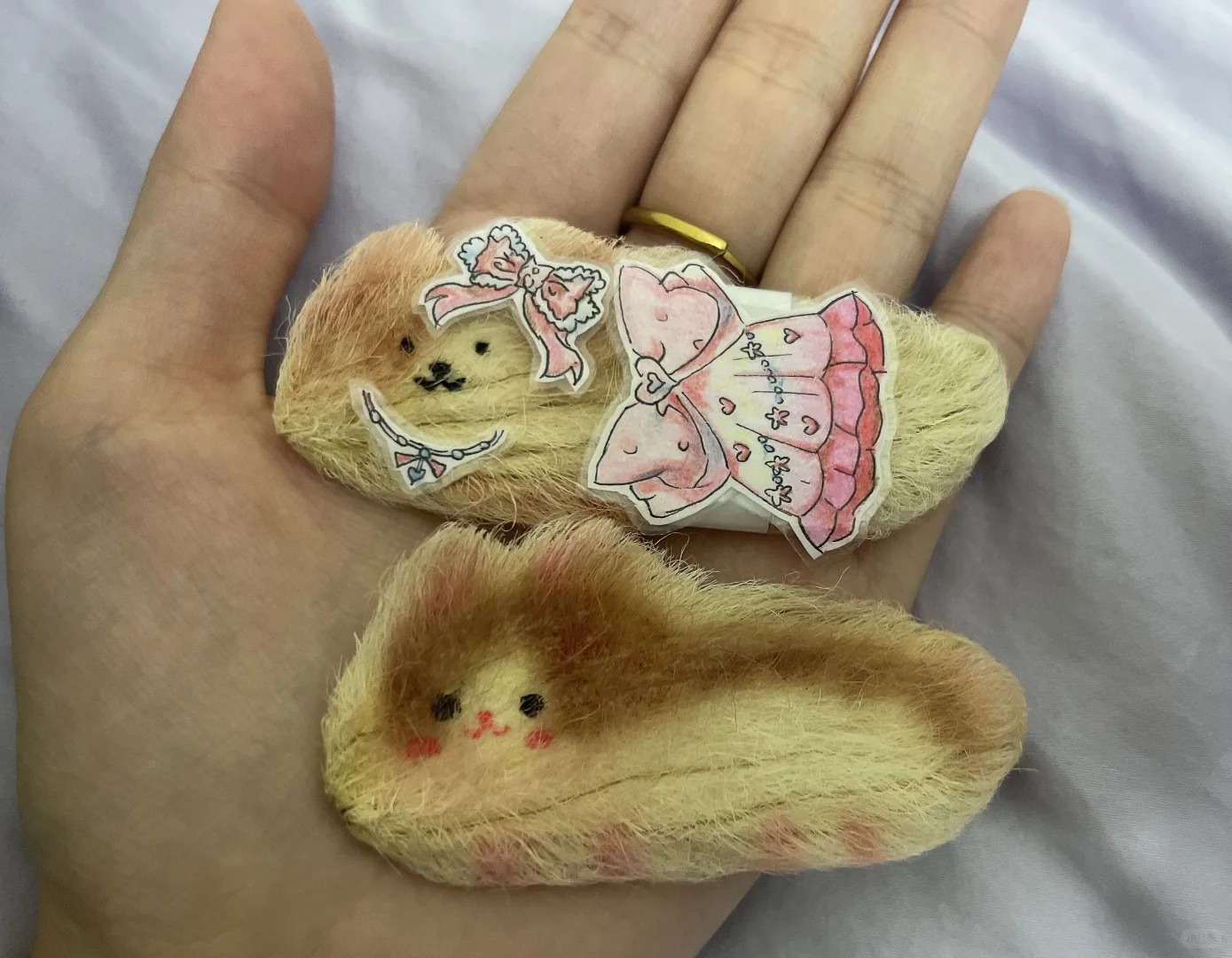
Recently, a growing community of “pet” owners has begun sharing tips and experiences online. Interestingly, their pets all seem to belong to the same “species.” Look a little closer, however, and it becomes clear that these are not real animals at all—they are mango pits.


The idea of keeping a mango as a pet may sound absurd at first. But many skeptics change their minds after seeing these furry “芒狗” (“mango dogs”).

The trick begins before you discard the fruit’s remains after eating its delicious meat. The method: gently suck the flesh from the pit rather than biting into it, allowing the fibers to remain intact so that the “fur” can grow more freely. Then, soak the pit in water. Some people even use conditioner before leaving it to dry in the sun for that smoother afterglow, and then combing it until they are satisfied with its appearance.

Another tip is choosing the right variety of mango. According to online enthusiasts, African mangoes produce better “fur” because their pits are larger. This claim reflects online community wisdom rather than verified fact. Unfortunately, raising pet mangoes is not recommended in Guangdong and Guangxi—so they say—because the climate is too wet and mold develops too easily.

Owners have been decorating their new little friends, giving them new lives. A mango can become a golden retriever, but it can also resemble a cat, a bird, or almost any other animal. Above all, it becomes a companion shaped by its owner’s imagination, remaining by their side for as long as it doesn’t start to grow mold (which, in itself, is a totally different kind of pet). And so we ask: Is it time to raise a pet mango of your own?
Cover Image via Xiaohongshu.