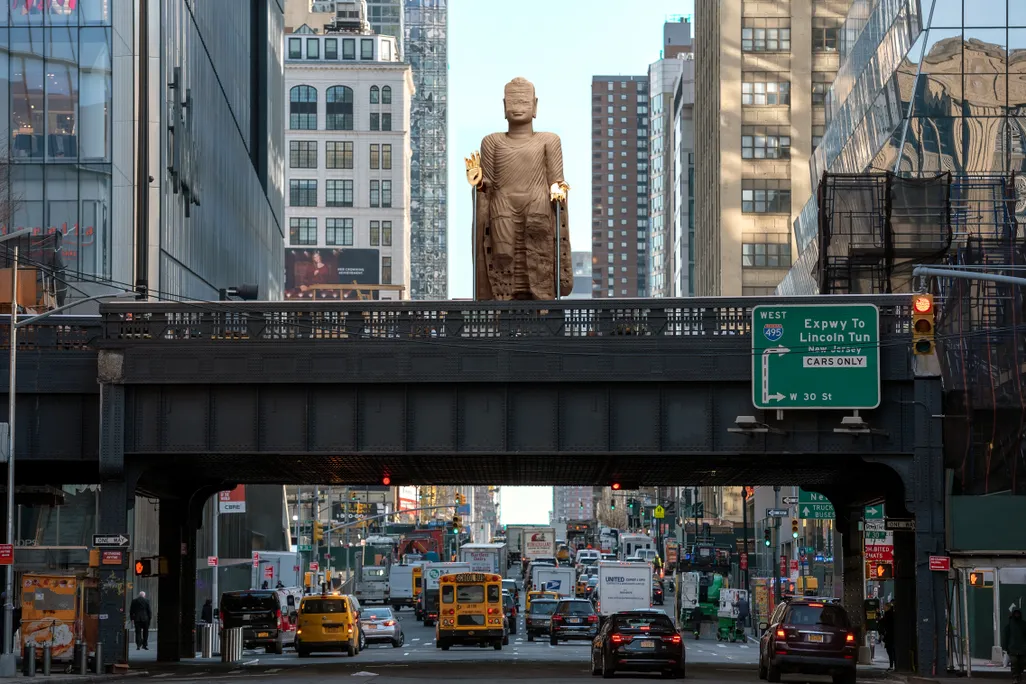

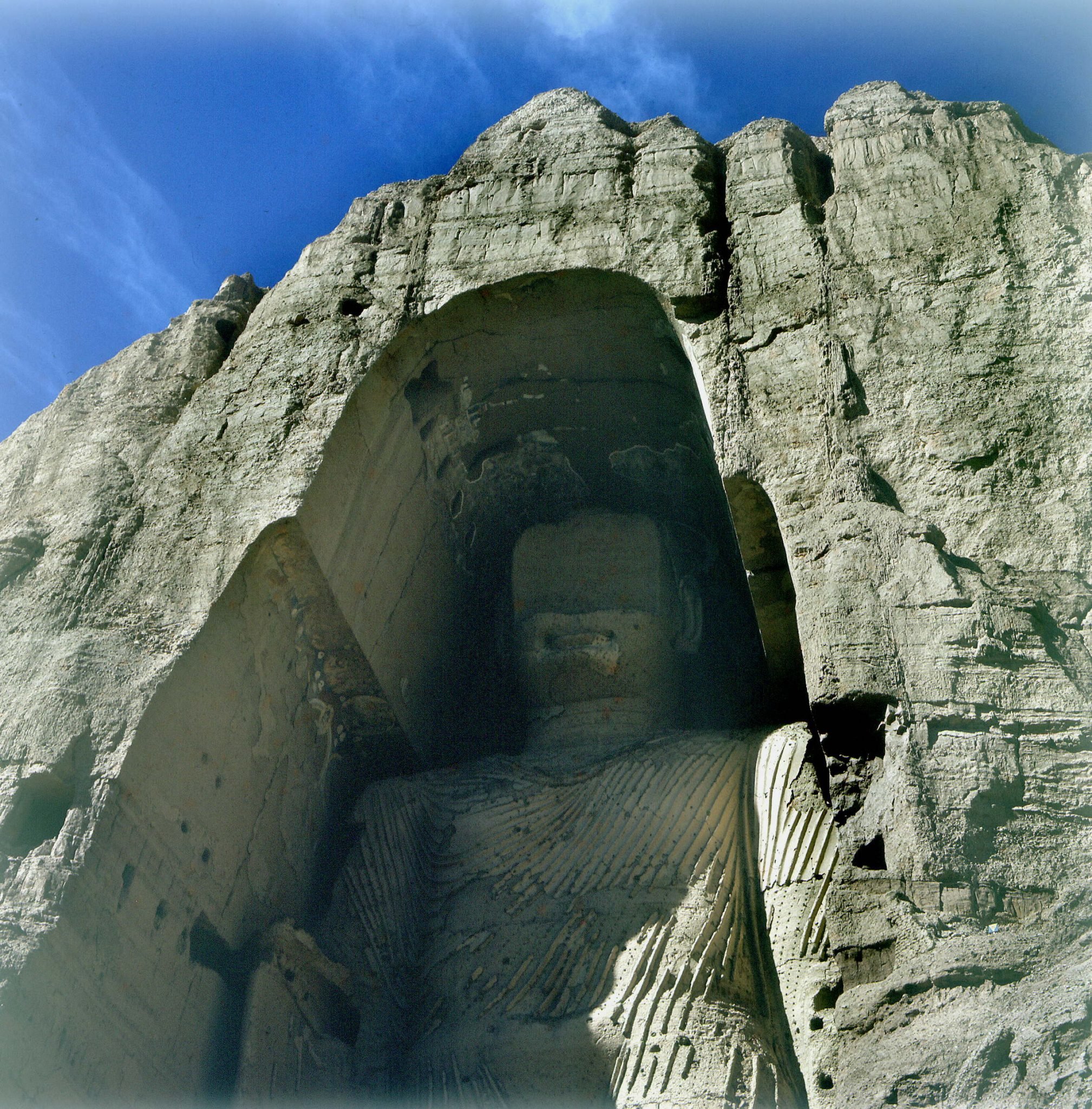
New York City’s High Line, a vibrant artery of urban art and greenery, is set to host a powerful new resident: Tuan Andrew Nguyen’s “The Headless Buddha.” More than just a “new art sculpture,” Nguyen’s piece will serve as a profound artistic response to cultural destruction, resurrecting the memory of a sixth-century Buddha statue from Afghanistan, tragically destroyed by the Taliban in 2001.
Nguyen’s monumental artwork, carved from sandstone, will stand 27 feet tall this spring on NYC‘s High Line Plinth, offering a silent yet resonant dialogue with passersby. It embodies a narrative of resilience and the enduring spirit of heritage in the face of loss. The artist intentionally leaves the figure headless, acknowledging the irreparable damage while inviting contemplation on what remains and what can be rebuilt, both physically and symbolically. This deliberate absence speaks volumes about historical trauma and the continuous journey of healing and remembrance.
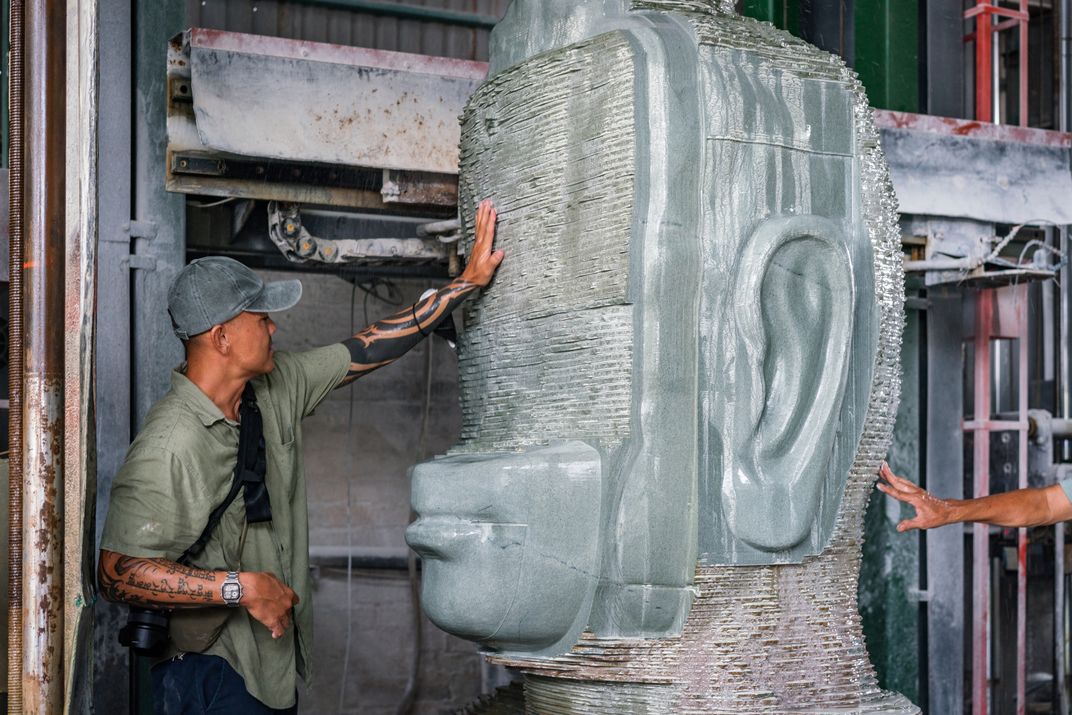
The “Headless Buddha” transforms a relic of the past into a beacon for contemporary reflection, prompting onlookers to consider themes of cultural preservation, conflict, and the universal quest for meaning. It also offers a unique lens through which to engage with complex geopolitical histories and the timeless power of art to provoke thought and inspire connection within our ever-evolving urban landscapes.
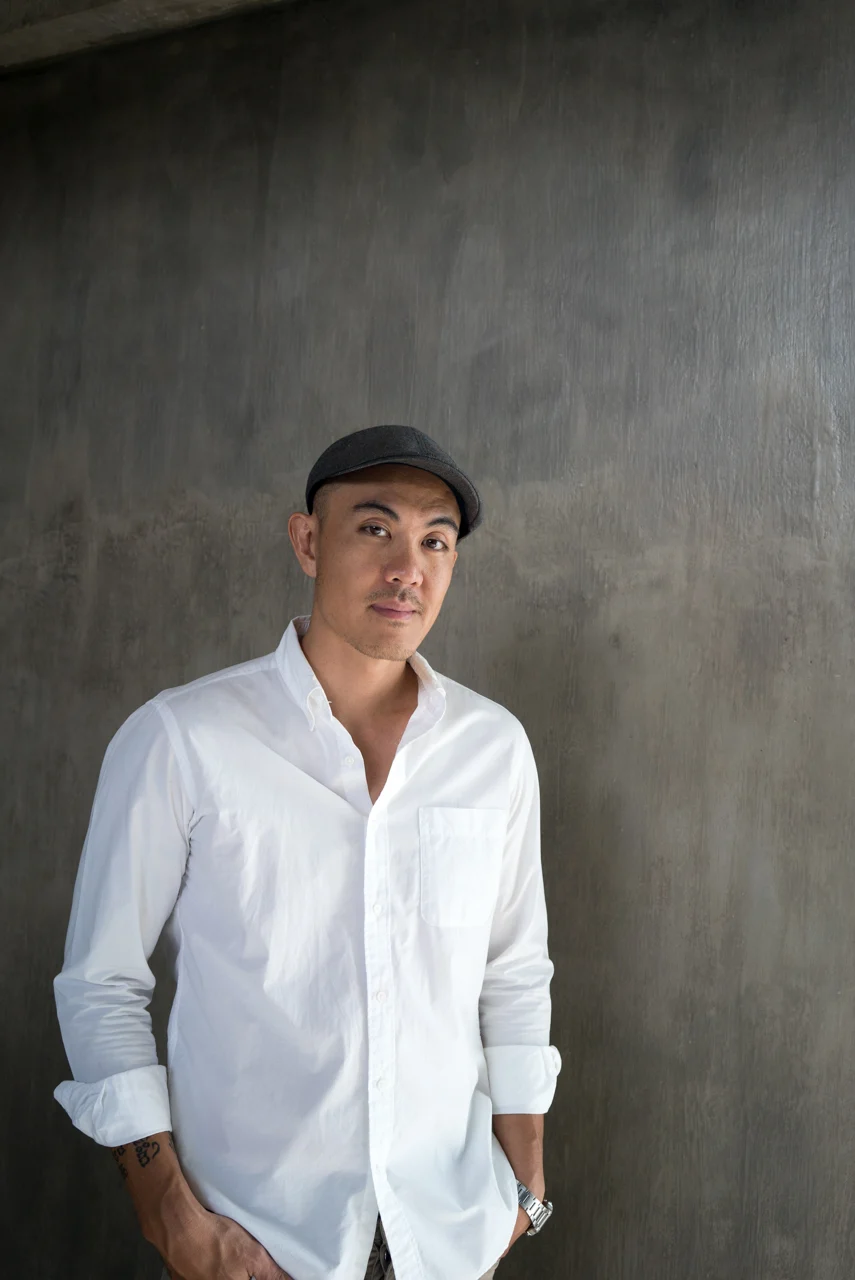
Cover image via Smithsonian Magazine.