

Feature image of Faster Than Usain Bolt? Why China’s Running Robots Mean Plan B is Canceled

Faster Than Usain Bolt? Why China’s Running Robots Mean Plan B is Canceled

1 min read

1 min read

Feature image of Faster Than Usain Bolt? Why China’s Running Robots Mean Plan B is Canceled
A humanoid robot in Beijing just clocked a 100m equivalent of 9.32 seconds. As AI engines upgrade and mechanical bounds shatter, are we ready for another evolution of robotics?

Usain Bolt’s legendary 9.58-second 100-meter dash has long been the pinnacle of human biological potential. But apparently, our gold standards are just warm-up stretches for tomorrow’s machines.

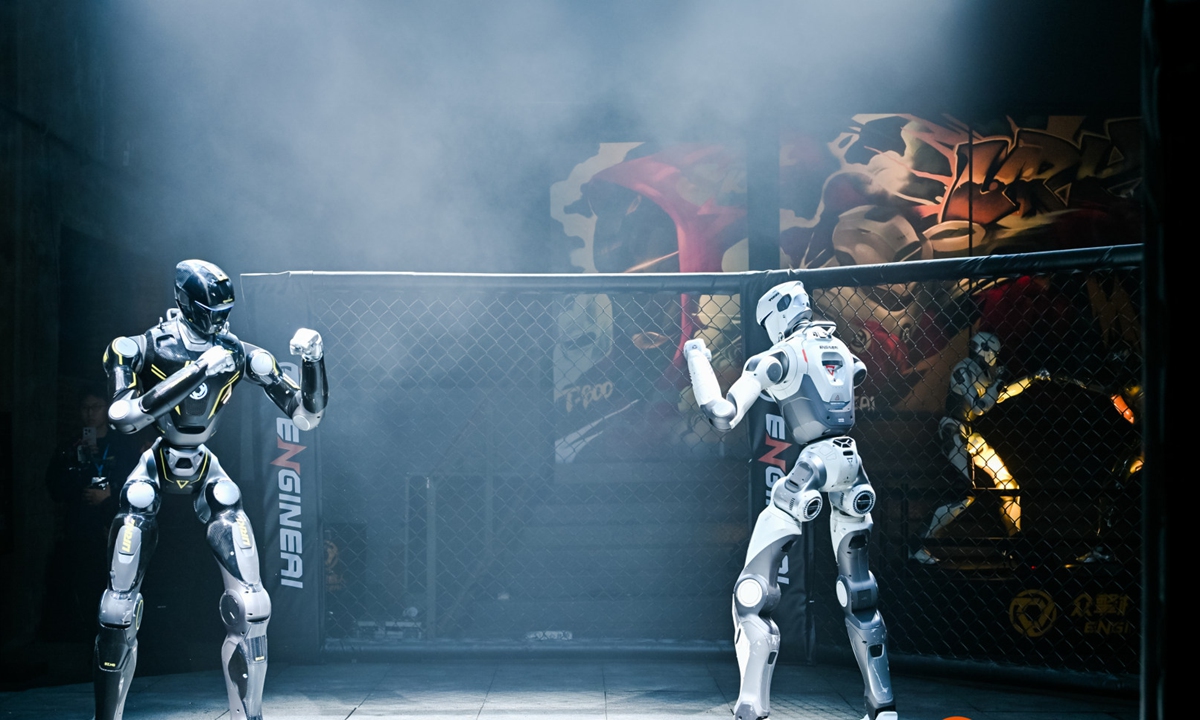
At the recent World Humanoid Robot Games in Beijing, a Chinese humanoid robot reportedly cleared the equivalent of a 100-meter sprint in a jaw-dropping 9.32 seconds. Let that sink in. Running away from our mechanical counterparts is officially no longer a viable Plan B.
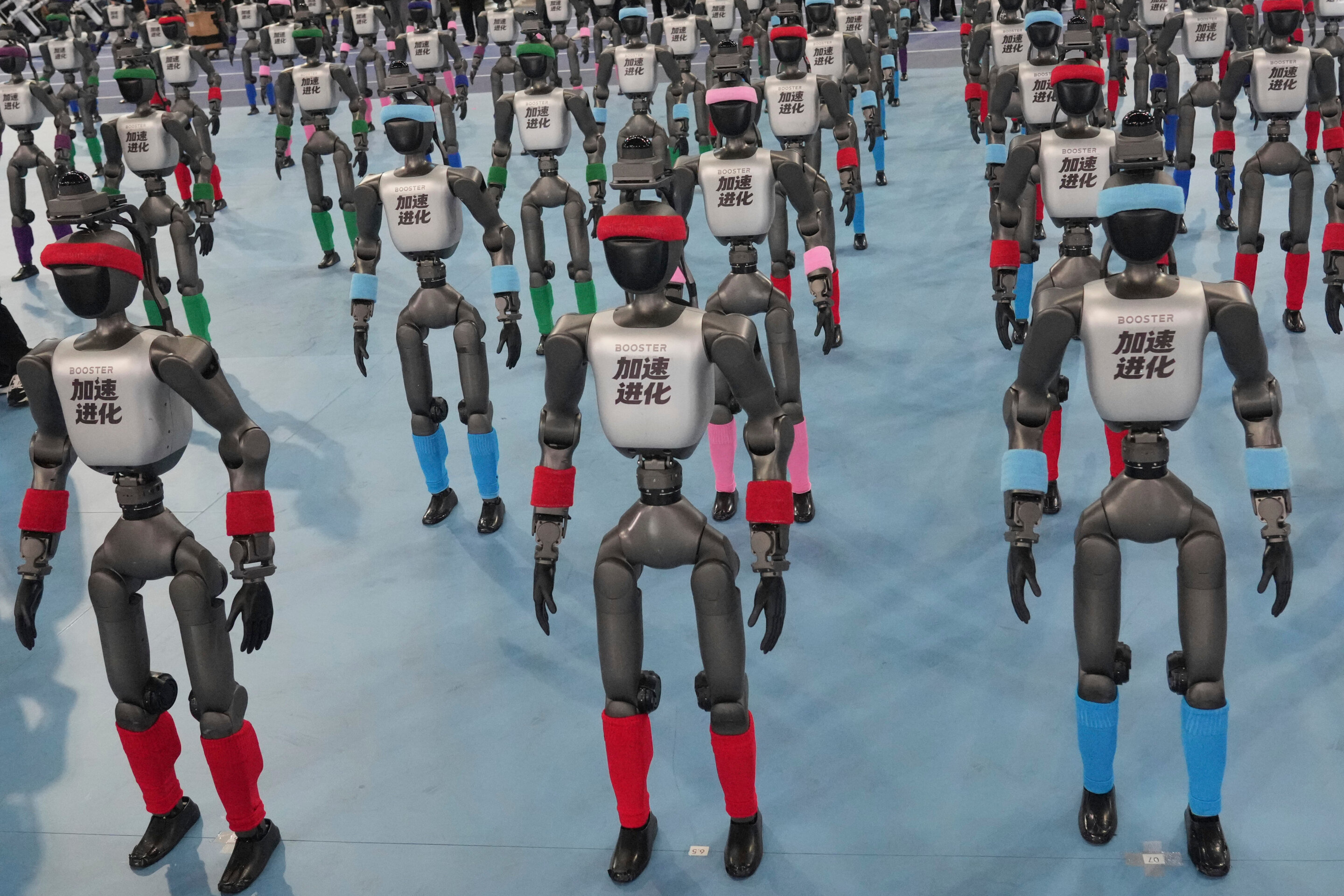
RADII highlights the World Humanoid Robot Games in Beijing 2026 100-Meter Dash.
Image via Tech Xplore.

The Games, which pit cutting-edge mechs against grueling physical challenges, highlight a reality far more intimidating than a single race record. It’s not about who won. It’s also about the staggering velocity of technological evolution. While humans are bound by muscle fibers and biological limits, robots face no such constraints. Every generation gets outfitted with stronger motors, carbon-fiber joints, higher-density batteries, and self-learning AI balance software.
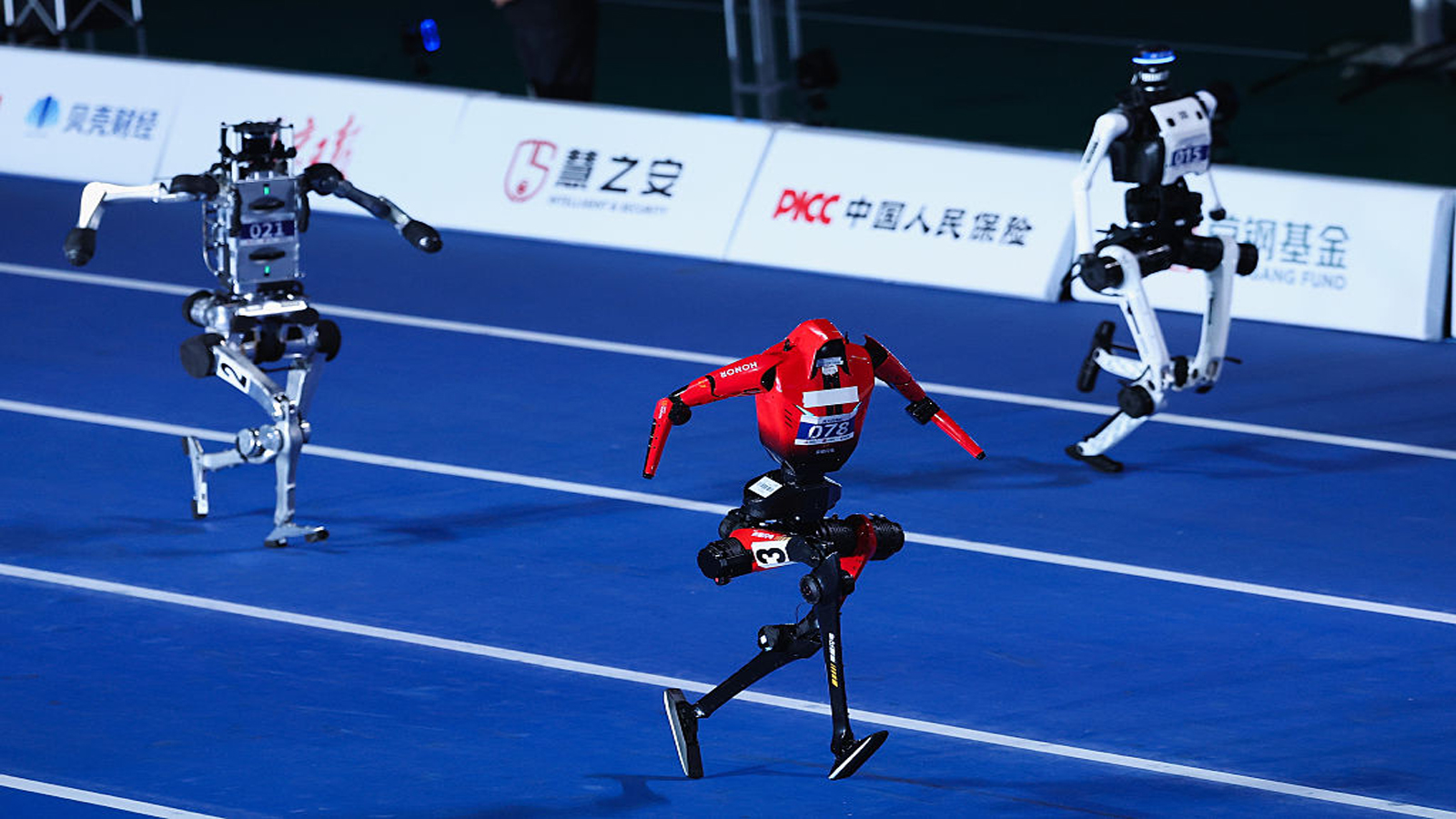
RADII highlights the World Humanoid Robot Games in Beijing 2026 100-Meter Dash.
Image via DD India.

Unlike humans who start from scratch every generation, these robots inherit the software upgrades of their predecessors. Today, they are breaking records on the track against our historical bests. The mildly uncomfortable question for young tech enthusiasts—and the world at large—is just what these machines will be capable of in the next five years. Welcome to the future of athletics, where the finish line is entirely redefined. Catch BBC’s coverage of the dash below:

Cover image via Bloomberg.

NEWSLETTER

Get weekly top picks and exclusive, newsletter only content delivered straight to you inbox.

NEWSLETTER

Get weekly top picks and exclusive, newsletter only content delivered straight to you inbox.

RADII NEWSLETTER

Get weekly top picks and exclusive, newsletter only content delivered straight to you inbox

Feature image of Faster Than Usain Bolt? Why China’s Running Robots Mean Plan B is Canceled

Faster Than Usain Bolt? Why China’s Running Robots Mean Plan B is Canceled

1 min read

A humanoid robot in Beijing just clocked a 100m equivalent of 9.32 seconds. As AI engines upgrade and mechanical bounds shatter, are we ready for another evolution of robotics?

Usain Bolt’s legendary 9.58-second 100-meter dash has long been the pinnacle of human biological potential. But apparently, our gold standards are just warm-up stretches for tomorrow’s machines.

At the recent World Humanoid Robot Games in Beijing, a Chinese humanoid robot reportedly cleared the equivalent of a 100-meter sprint in a jaw-dropping 9.32 seconds. Let that sink in. Running away from our mechanical counterparts is officially no longer a viable Plan B.

RADII highlights the World Humanoid Robot Games in Beijing 2026 100-Meter Dash.
Image via Tech Xplore.

The Games, which pit cutting-edge mechs against grueling physical challenges, highlight a reality far more intimidating than a single race record. It’s not about who won. It’s also about the staggering velocity of technological evolution. While humans are bound by muscle fibers and biological limits, robots face no such constraints. Every generation gets outfitted with stronger motors, carbon-fiber joints, higher-density batteries, and self-learning AI balance software.

RADII highlights the World Humanoid Robot Games in Beijing 2026 100-Meter Dash.
Image via DD India.

Unlike humans who start from scratch every generation, these robots inherit the software upgrades of their predecessors. Today, they are breaking records on the track against our historical bests. The mildly uncomfortable question for young tech enthusiasts—and the world at large—is just what these machines will be capable of in the next five years. Welcome to the future of athletics, where the finish line is entirely redefined. Catch BBC’s coverage of the dash below:

Cover image via Bloomberg.
NEWSLETTER

Get weekly top picks and exclusive, newsletter only content delivered straight to you inbox.

RADII NEWSLETTER

Get weekly top picks and exclusive, newsletter only content delivered straight to you inbox

RELATED POSTS

Feature image of Faster Than Usain Bolt? Why China’s Running Robots Mean Plan B is Canceled

Faster Than Usain Bolt? Why China’s Running Robots Mean Plan B is Canceled

1 min read

1 min read

Feature image of Faster Than Usain Bolt? Why China’s Running Robots Mean Plan B is Canceled
A humanoid robot in Beijing just clocked a 100m equivalent of 9.32 seconds. As AI engines upgrade and mechanical bounds shatter, are we ready for another evolution of robotics?

Usain Bolt’s legendary 9.58-second 100-meter dash has long been the pinnacle of human biological potential. But apparently, our gold standards are just warm-up stretches for tomorrow’s machines.

At the recent World Humanoid Robot Games in Beijing, a Chinese humanoid robot reportedly cleared the equivalent of a 100-meter sprint in a jaw-dropping 9.32 seconds. Let that sink in. Running away from our mechanical counterparts is officially no longer a viable Plan B.

RADII highlights the World Humanoid Robot Games in Beijing 2026 100-Meter Dash.
Image via Tech Xplore.

The Games, which pit cutting-edge mechs against grueling physical challenges, highlight a reality far more intimidating than a single race record. It’s not about who won. It’s also about the staggering velocity of technological evolution. While humans are bound by muscle fibers and biological limits, robots face no such constraints. Every generation gets outfitted with stronger motors, carbon-fiber joints, higher-density batteries, and self-learning AI balance software.

RADII highlights the World Humanoid Robot Games in Beijing 2026 100-Meter Dash.
Image via DD India.

Unlike humans who start from scratch every generation, these robots inherit the software upgrades of their predecessors. Today, they are breaking records on the track against our historical bests. The mildly uncomfortable question for young tech enthusiasts—and the world at large—is just what these machines will be capable of in the next five years. Welcome to the future of athletics, where the finish line is entirely redefined. Catch BBC’s coverage of the dash below:

Cover image via Bloomberg.

NEWSLETTER

Get weekly top picks and exclusive, newsletter only content delivered straight to you inbox.

NEWSLETTER

Get weekly top picks and exclusive, newsletter only content delivered straight to you inbox.

RADII NEWSLETTER

Get weekly top picks and exclusive, newsletter only content delivered straight to you inbox

Feature image of Faster Than Usain Bolt? Why China’s Running Robots Mean Plan B is Canceled

Faster Than Usain Bolt? Why China’s Running Robots Mean Plan B is Canceled

1 min read

A humanoid robot in Beijing just clocked a 100m equivalent of 9.32 seconds. As AI engines upgrade and mechanical bounds shatter, are we ready for another evolution of robotics?

Usain Bolt’s legendary 9.58-second 100-meter dash has long been the pinnacle of human biological potential. But apparently, our gold standards are just warm-up stretches for tomorrow’s machines.

At the recent World Humanoid Robot Games in Beijing, a Chinese humanoid robot reportedly cleared the equivalent of a 100-meter sprint in a jaw-dropping 9.32 seconds. Let that sink in. Running away from our mechanical counterparts is officially no longer a viable Plan B.

RADII highlights the World Humanoid Robot Games in Beijing 2026 100-Meter Dash.
Image via Tech Xplore.

The Games, which pit cutting-edge mechs against grueling physical challenges, highlight a reality far more intimidating than a single race record. It’s not about who won. It’s also about the staggering velocity of technological evolution. While humans are bound by muscle fibers and biological limits, robots face no such constraints. Every generation gets outfitted with stronger motors, carbon-fiber joints, higher-density batteries, and self-learning AI balance software.

RADII highlights the World Humanoid Robot Games in Beijing 2026 100-Meter Dash.
Image via DD India.

Unlike humans who start from scratch every generation, these robots inherit the software upgrades of their predecessors. Today, they are breaking records on the track against our historical bests. The mildly uncomfortable question for young tech enthusiasts—and the world at large—is just what these machines will be capable of in the next five years. Welcome to the future of athletics, where the finish line is entirely redefined. Catch BBC’s coverage of the dash below:

Cover image via Bloomberg.

NEWSLETTER

Get weekly top picks and exclusive, newsletter only content delivered straight to you inbox.

RADII NEWSLETTER

Get weekly top picks and exclusive, newsletter only content delivered straight to you inbox

RADII newsletter pop up visual

NEWSLETTER​

Get weekly top picks and exclusive, newsletter only content delivered straight to you inbox

RADII Newsletter Pop Up small banner

NEWSLETTER

Get weekly top picks and exclusive, newsletter only content delivered straight to you inbox.

Link Copied!

Share

Feature image of Faster Than Usain Bolt? Why China’s Running Robots Mean Plan B is Canceled

Faster Than Usain Bolt? Why China’s Running Robots Mean Plan B is Canceled

A humanoid robot in Beijing just clocked a 100m equivalent of 9.32 seconds. As AI engines upgrade and mechanical bounds shatter, are we ready for another evolution of robotics?

PULSE

Tap into the latest in music, fashion, art, design, entertainment, pop culture, celebrity news, and contemporary culture

DISCOVER

Embark on a journey through food, travel, wellness, heritage, traditional culture, and lifestyle

STYLE

An insider’s look at the intersection of fashion, art, and design

FEAST

Titillate your taste buds with coverage of the best food and drink trends from China and beyond.

FUTURE

Explore the cutting edge in tech, AI, gadgets, gaming, and innovative tech-related products

FEAST

Titillate your taste buds with coverage of the best food and drink trends from China and beyond

STYLE

An insider’s look at the intersection of fashion, art, and design

PULSE

Unpacking Chinese youth culture through coverage of nightlife, film, sports, celebrities, and the hottest new music