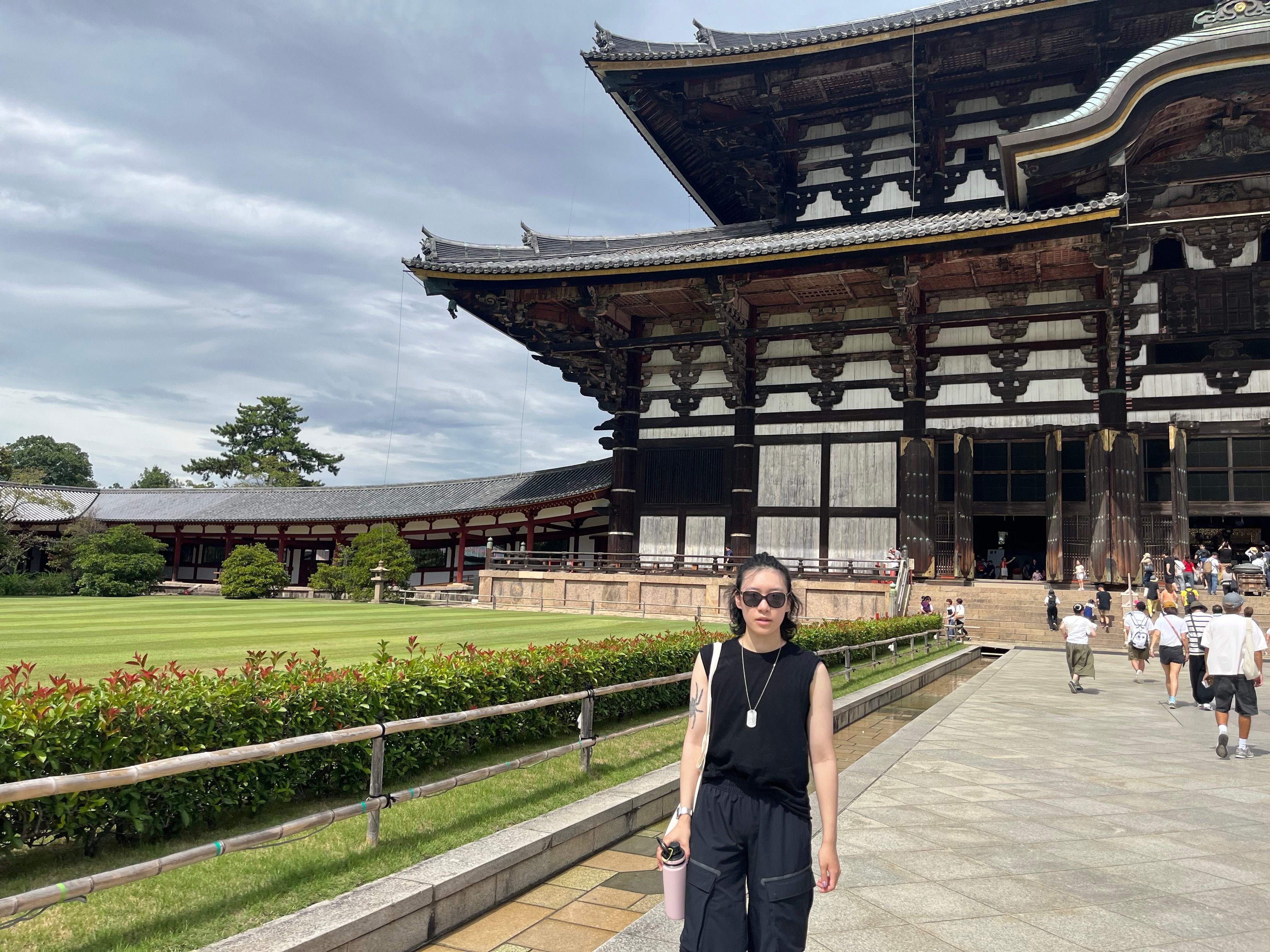
In 1927, Fritz Lang released what remains one of cinema’s most enduring sci-fi landmarks: Metropolis. However, it’s not the plot of the cinematic classic that continues to shape the genre, but rather its worldbuilding. Nearly a century on, its towering and crisscrossing skylines still captivate the collective imagination. In Lang’s prototype of the sci-fi future, gothic skyscrapers cast an overwhelming shadow over the dense city.
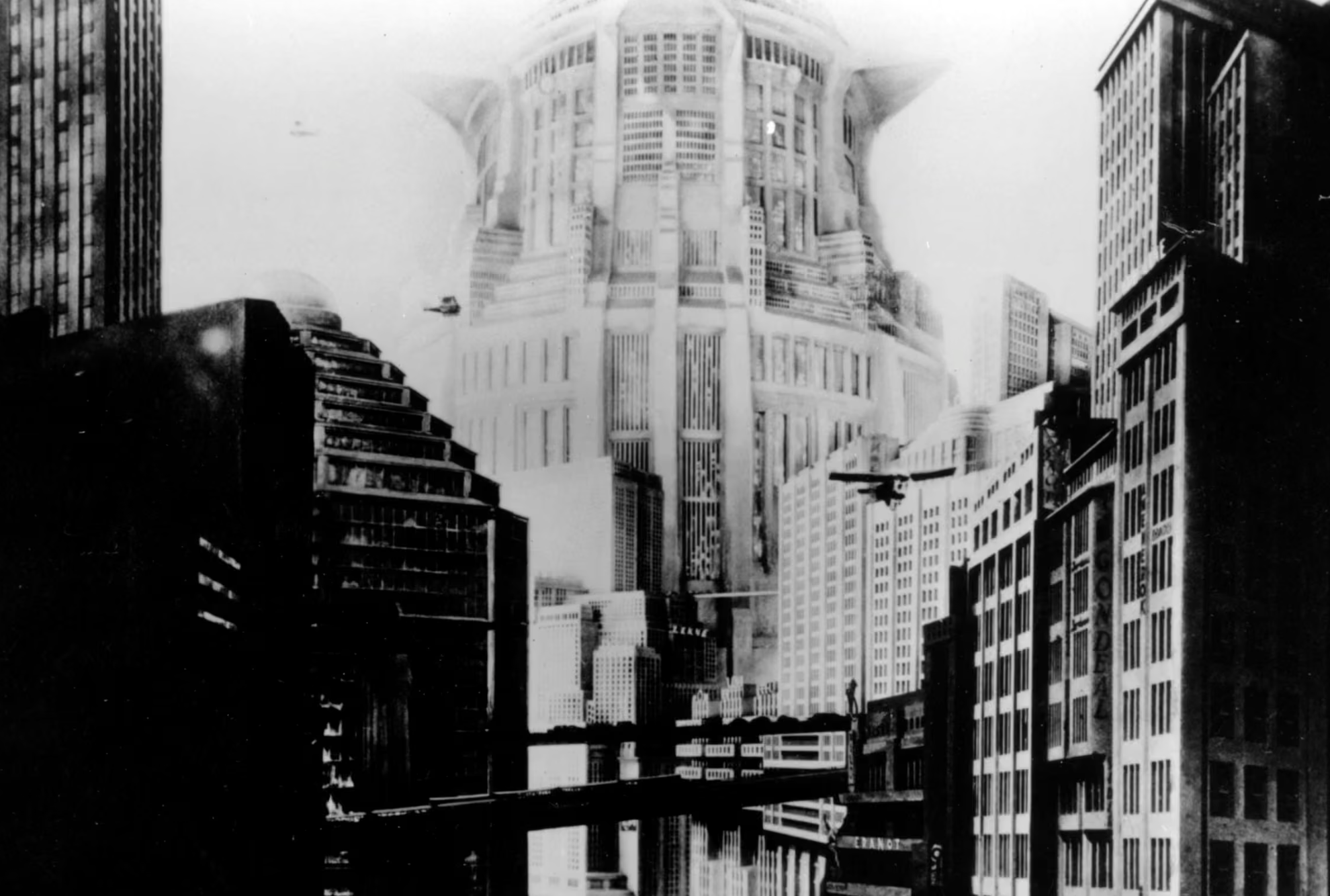
Through history, visionaries have continuously reshaped how we imagine the future. Artists like Hugh Ferris and Étienne-Louis Boullée envisioned monolithic structures that were equal parts majestic and menacing. Meanwhile, sci-fi touchstones like Blade Runner and Star Wars seem to suggest a similar theme; dystopia and optimism both convey the same, strange allure: we are drawn to futures that dwarf us.
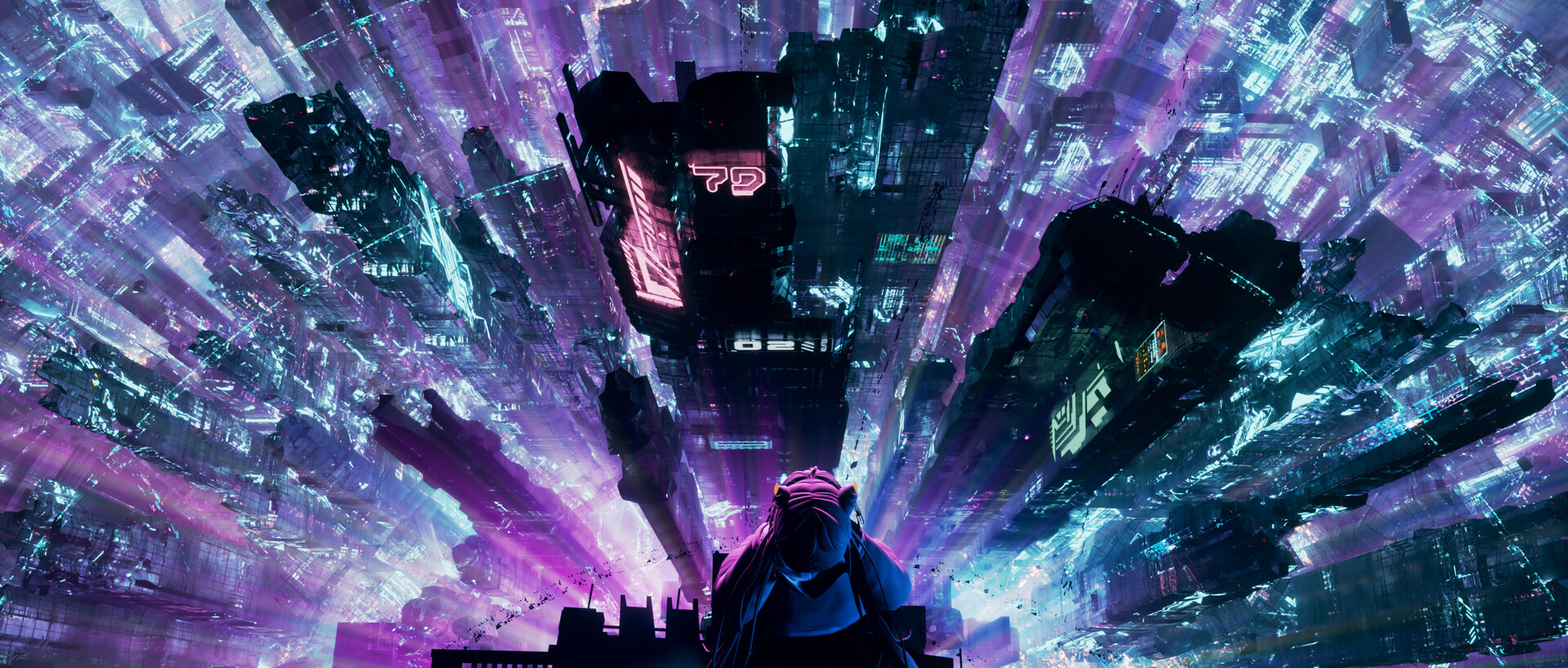
Enter Rui Huang, an artist who extends this lineage into the digital age by architecting worlds of dense and imposing megastructures. Self-taught in Blender, Huang presents futures that have outgrown their creators, eclipsing humanity itself.
The effect is as expected: otherworldly.
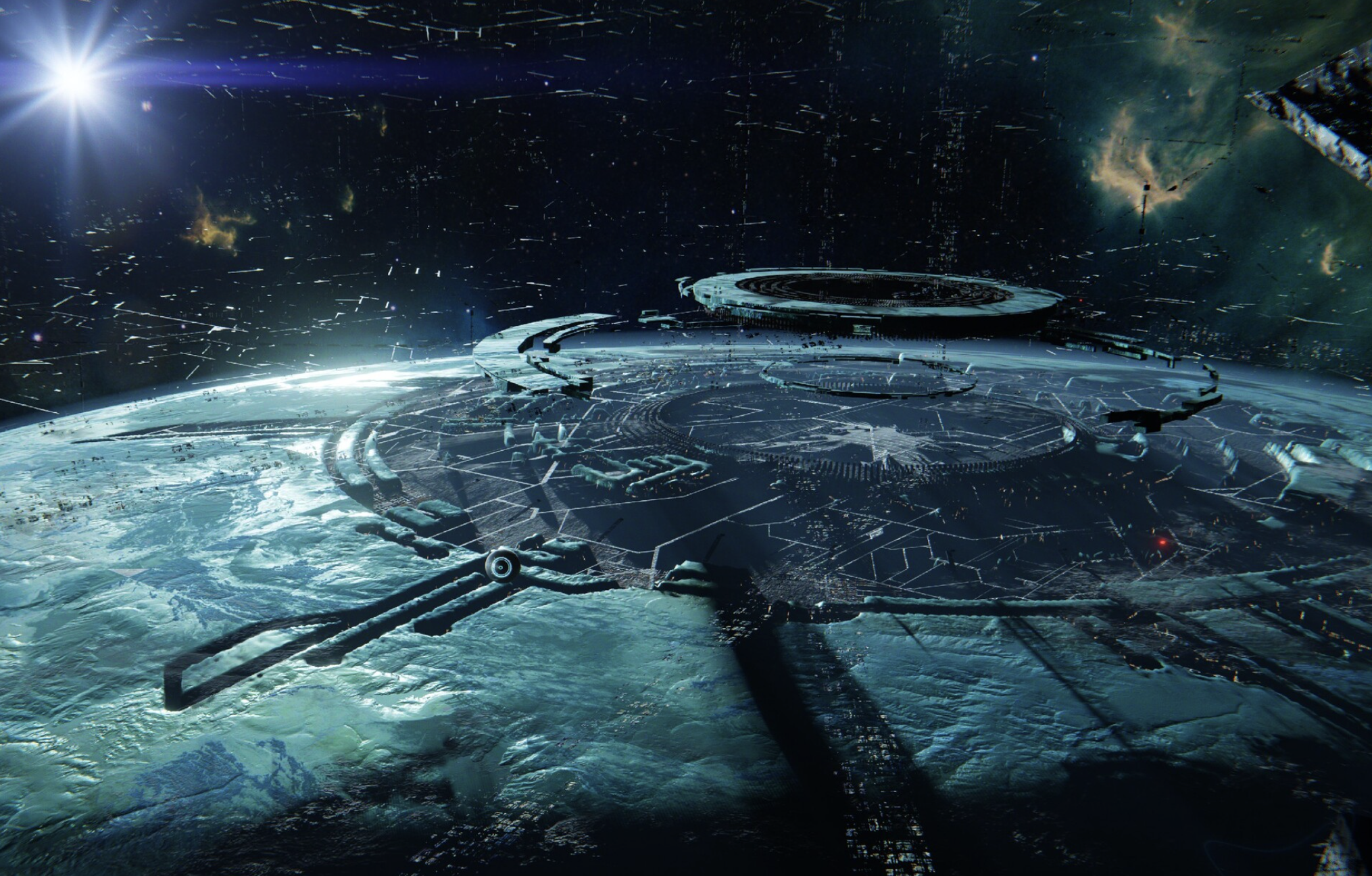
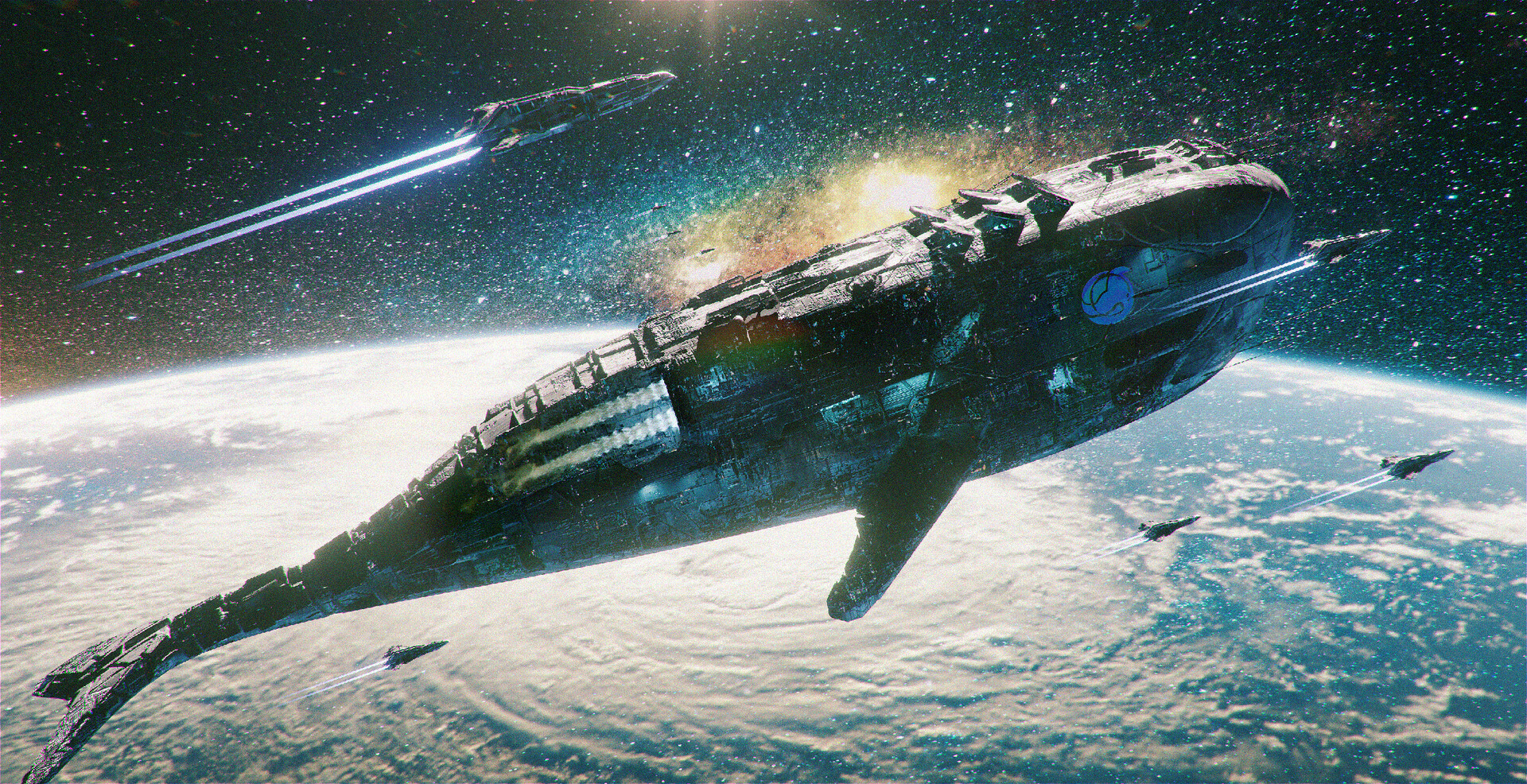
“Our universe could be just a dust floating in the sewer of other worlds” – @RuiHuang_art, Twitter
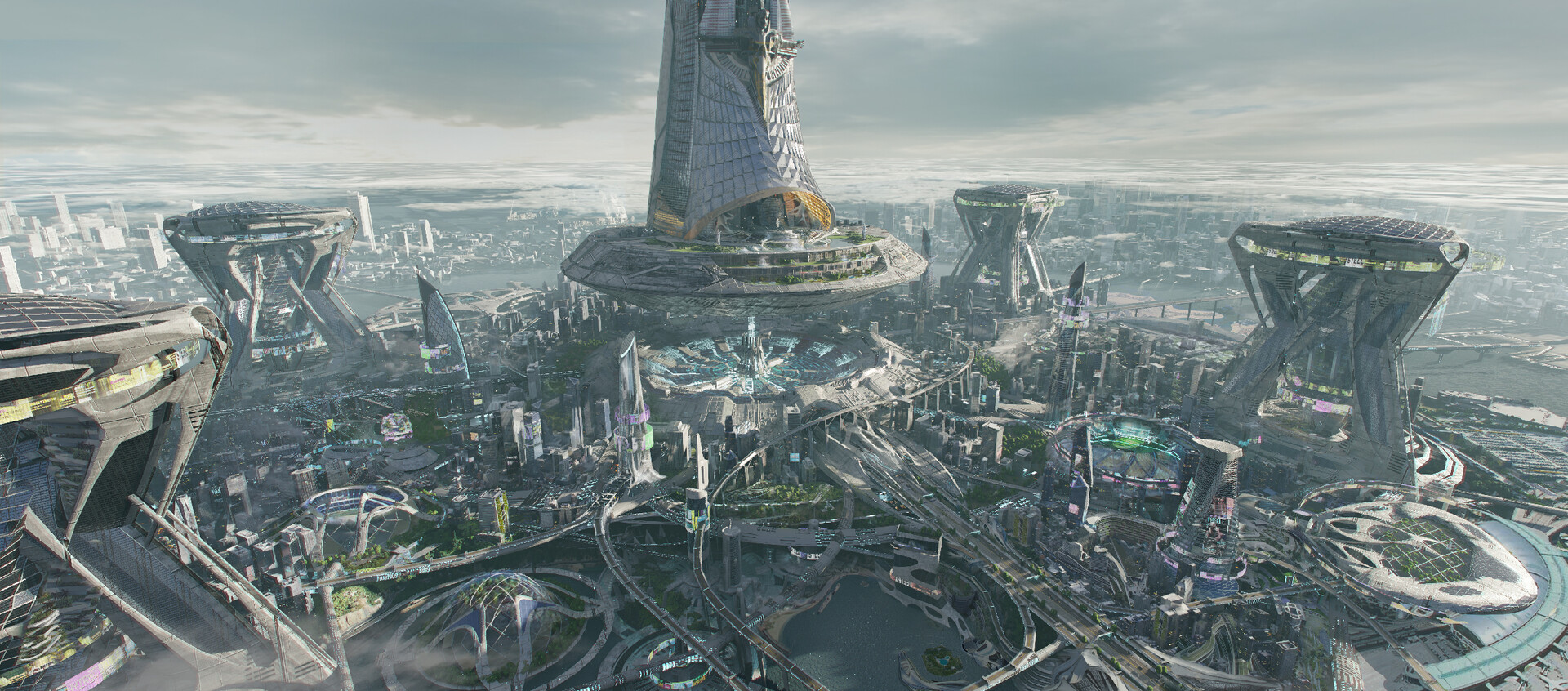
In his earlier works, Huang often approached urban environments from an aerial, close-range perspective. In concept 2020 (2020), he maps out a fully functioning city, complete with stadiums, highways, and greenery, rendered alien by the sheer scale.
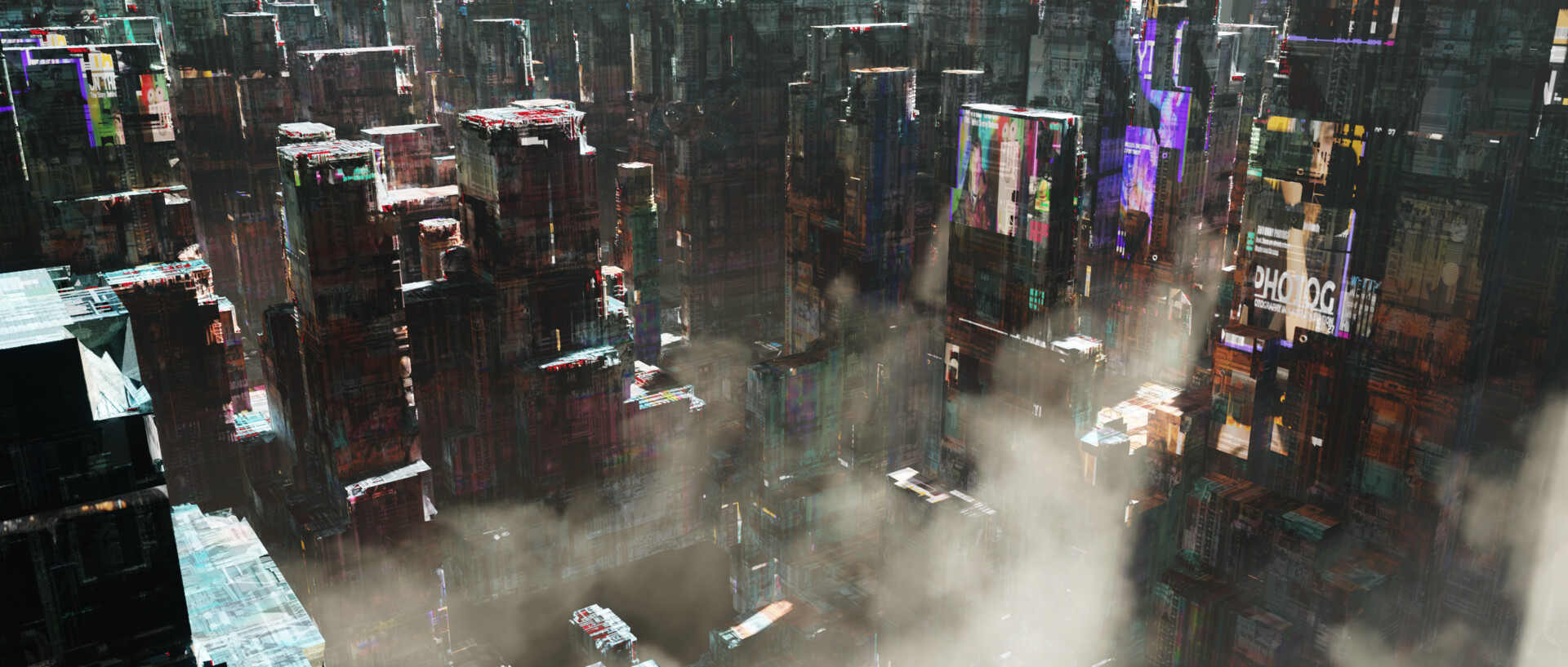
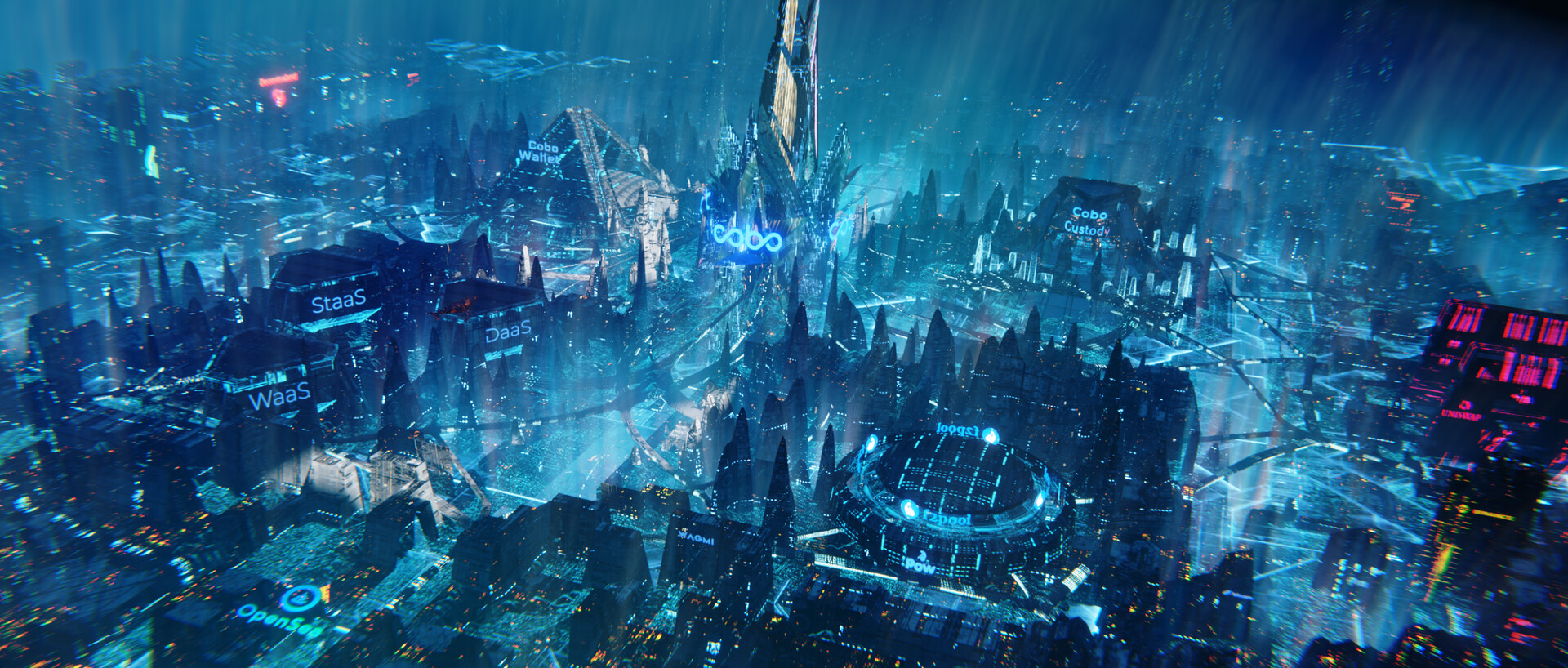
In Metropolis (2021), skyscrapers cluster tightly together, much like the ridiculously tall trash towers in Pixar’s WALL-E. In Metatopia (2022), Huang constructs a city glowing in electric blues, with flightways threading through the darkened crevices. Like Baroque painters before him, Huang builds tension and drama through the lights and shadows.
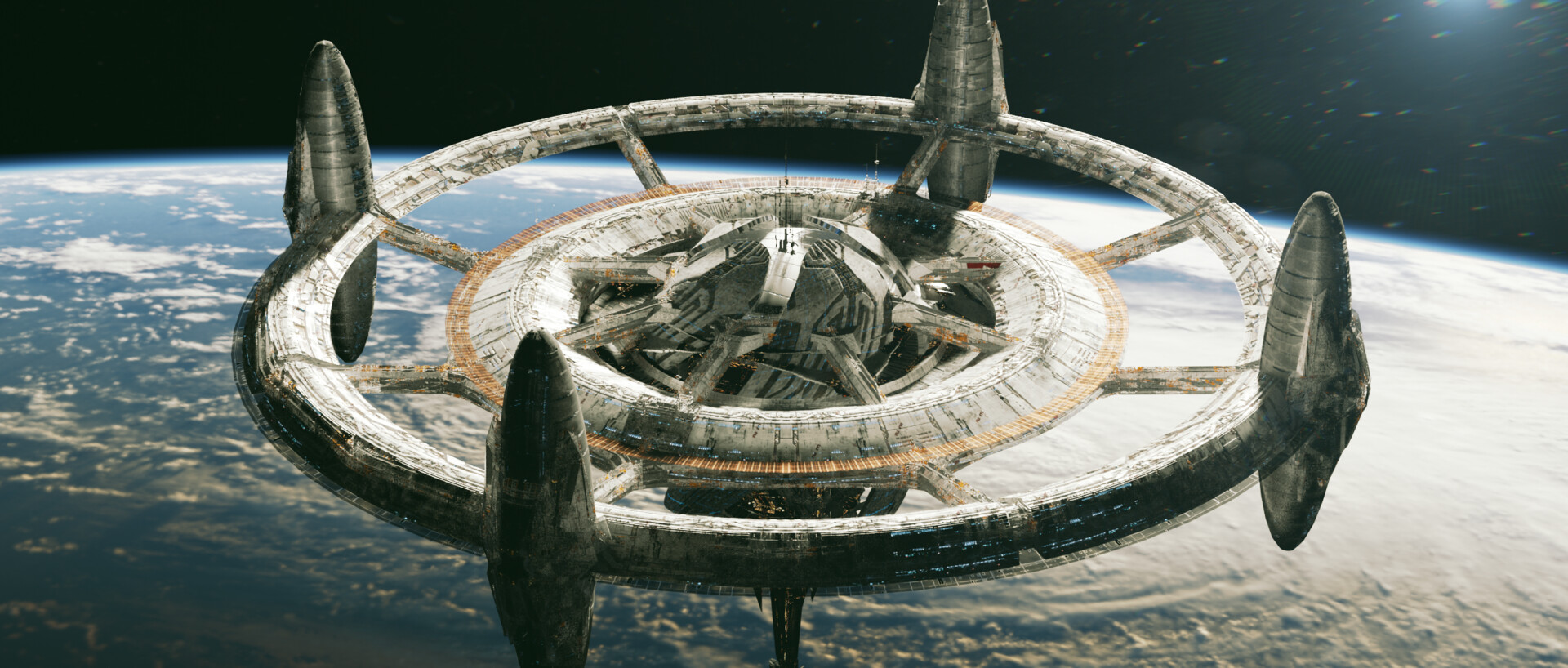
The viewer is rarely grounded in Huang’s vision of the future. Instead, we detach from the urban intricacies and hover above, at an omniscient vantage point. From here, his worlds evolve from megacities into megasystems spanning the universe. In a subtle inversion, the world no longer feels imposing because it towers over us; instead, we step back and look on imposingly as the creator.
The Kardashev scale, proposed by astrophysicist Nikolai Kardashev, classifies civilizations by their ability to harness energy.
Humanity has yet to reach a Type I civilization, which entails controlling all energy available on Earth. And the final tier, Type IV, remains largely theoretical. But Huang pushes a step forward in one of his most thrilling pieces yet, Type V Civilization (2025). In Huang’s imagination, reality has become so advanced and multi-dimensional that it borders on abstraction; recognizable architectural elements have boiled down to geometric fragments of shifting cubes and spheres. Compared to Huang’s earlier works, civilization here becomes merely a suggestion; it’s the cosmic infrastructure that takes center stage.
It’s impossible to discuss futurism today without acknowledging AI. Generative tools have enabled a wave of sci-fi enthusiasts to “create” their visions of the future with unprecedented ease. But much of this imagery is trained on artists like Huang, often without credit. In a grim acceptance of the current digital climate, Huang quipped in an Instagram comment, “I don’t fix render issues anymore since people will call it AI.” Ironically, it has also become common to see people dishing out “this looks like AI,” intended to compliment an artist.
Praise or skepticism, one thing is clear here: it is AI art that looks like Rui Huang, not the other way around. Classically trained in oil painting, Huang’s layered painterly quality shines through even in digital media. It is the consistency of discipline and technique found in human-made art that AI can’t yet replicate.
Across the internet, Huang has amassed more than three million followers and contributed behind the scenes to major productions. Now, audiences can experience his visions of the future beyond the screen. Huang’s latest solo exhibition, “Rui Huang: The Scale of Civilization,” has opened at X Museum in Beijing. Featuring 40 recent artworks, the show transforms the gallery into an exploration of civilization’s evolution.
The exhibition runs through May 5. It’s a chance to encounter the work of not just a sci-fi artist, but a true futurist.
Cover image via Rui Huang.