
Feature image of Flesh and Bones: The Exhibition Turning the Art of Anatomy Into a Cultural Conversation

Flesh and Bones: The Exhibition Turning the Art of Anatomy Into a Cultural Conversation

5 mins read

5 mins read

Feature image of Flesh and Bones: The Exhibition Turning the Art of Anatomy Into a Cultural Conversation
From Renaissance dissections to Chinese jingluo (经络) systems, “Flesh and Bones” traces how different cultures mapped the unseen of the human body. RADII peels back the layers on why this is important for a growingly curious generation.

At Singapore’s ArtScience Museum, the exhibition Flesh and Bones: The Art of Anatomy dissects the idea that the human body has ever been understood in a single, universal way. Instead, it reveals anatomy as something far more slippery: a cultural construct, shaped as much by belief, aesthetics, and philosophy as by scalpels and science.

That’s where the dialogue Flesh and Bones offers through its exhibition gets interesting. It suggests that the divide between art and science isn’t as clear-cut as we like to think. Both are, at their core, attempts to make sense of the invisible, whether that’s the structure beneath the skin—the “Scientific” approach—or the energy that supposedly flows through it—the “spiritual” approach.
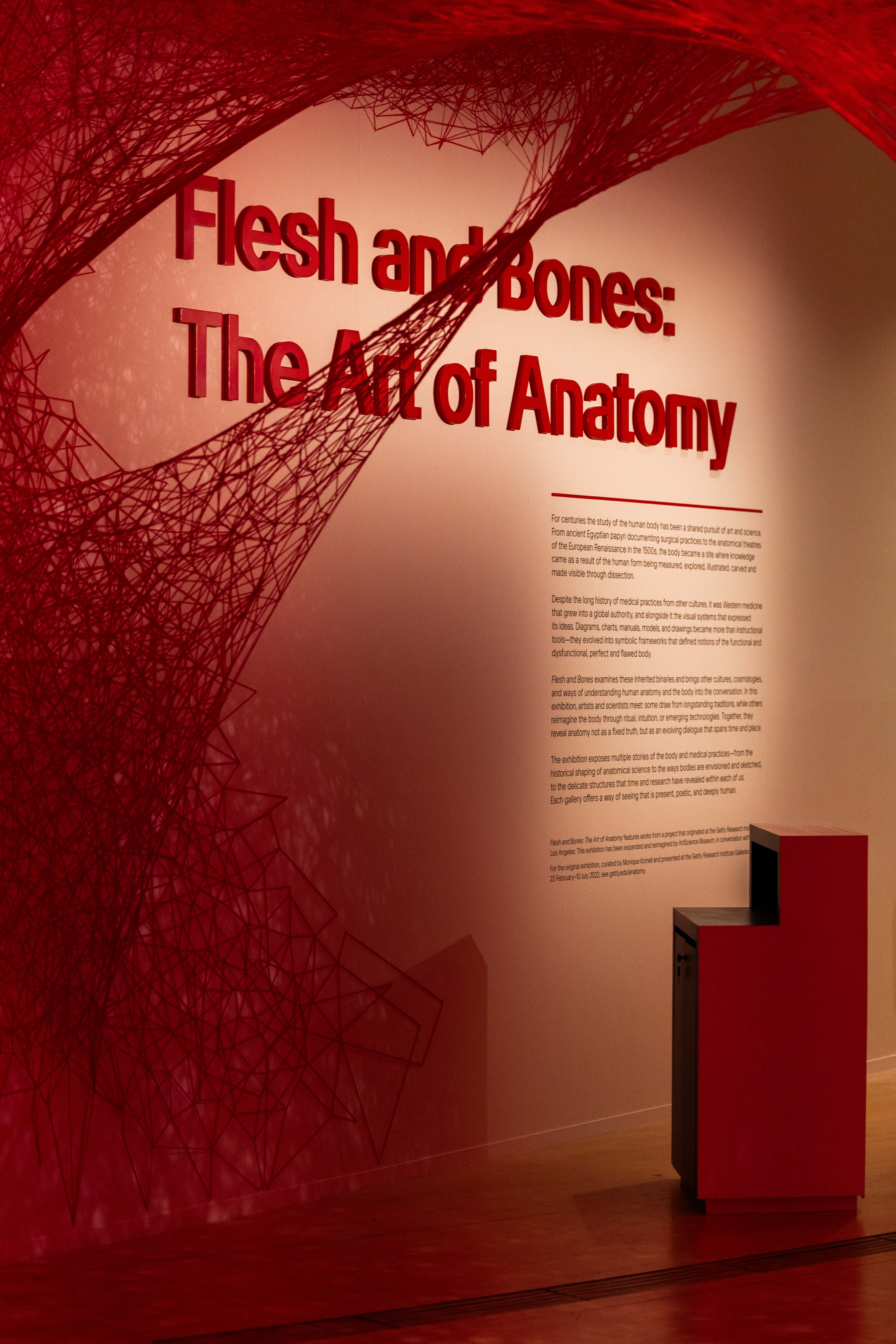
For the curious, this resonates on another level. Across Asia and its diasporas, there’s a growing appetite for reclaiming heritage—but not in a static, museum-piece way. Instead, it’s about reinterpretation. It’s about remixing tradition through a contemporary lens.

This exhibition mirrors that impulse. It doesn’t present Chinese medical traditions as relics of the past, nor does it frame Western anatomy as the endpoint of progress. Instead, it creates a dialogue, one that feels unfinished, open-ended, and very much alive.
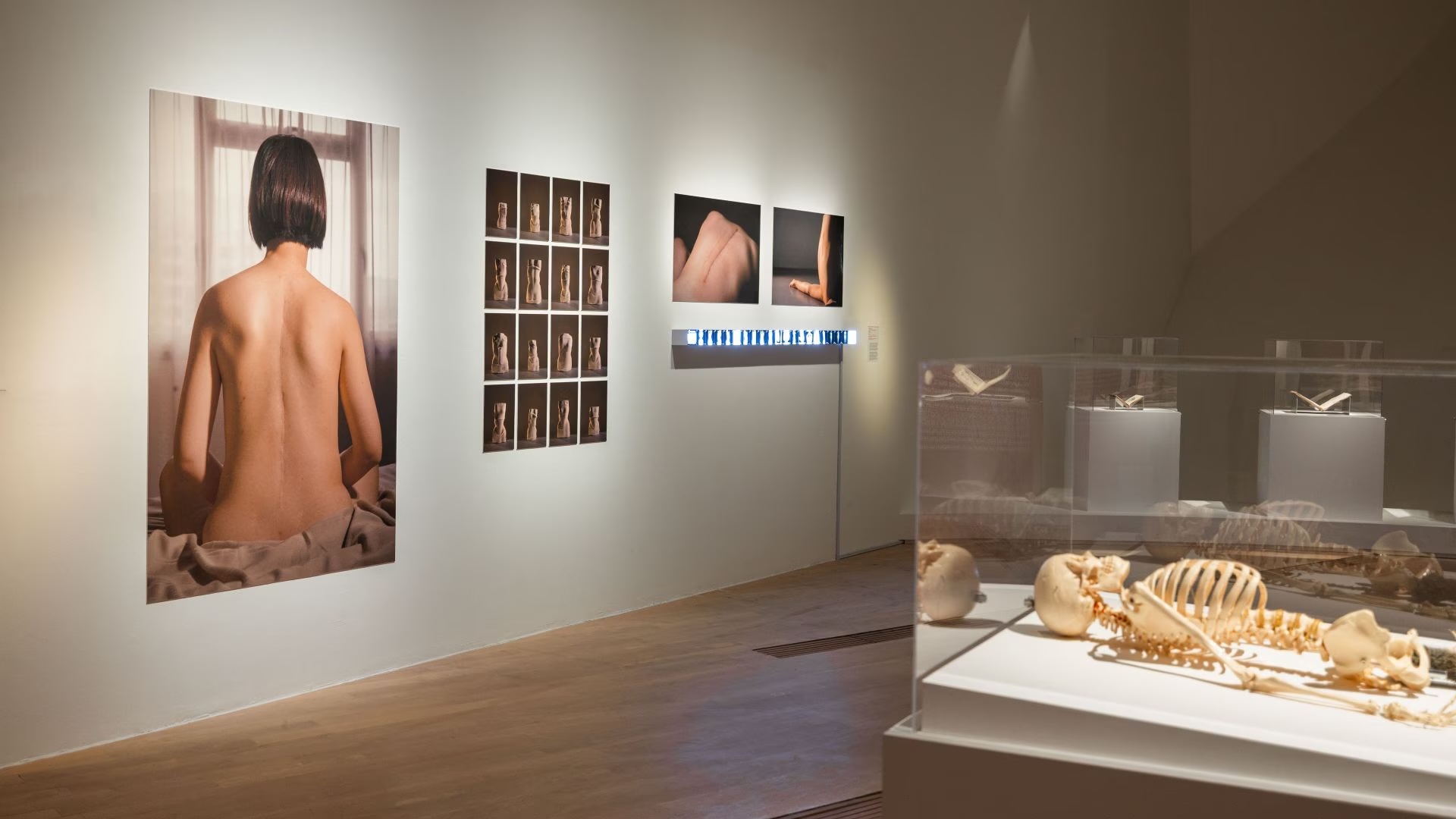
For a generation raised on wellness apps, gua sha tutorials, and TikToks explaining qi (气) flow, this approach hits differently. As you’ve seen through myriad posts on RADII, the youth of today aren’t just rediscovering heritage and ancient belief systems; they’re going beyond just learning about it. In fact, they’re actively remixing it, questioning it, and, crucially, reframing it. Flesh and Boneslands right in that intersection, offering a visual language that connects Renaissance dissection rooms with ancient meridian maps—two radically different ways of asking the same question: what are we made of?

The Body as Blueprint vs. The Body as Cosmos
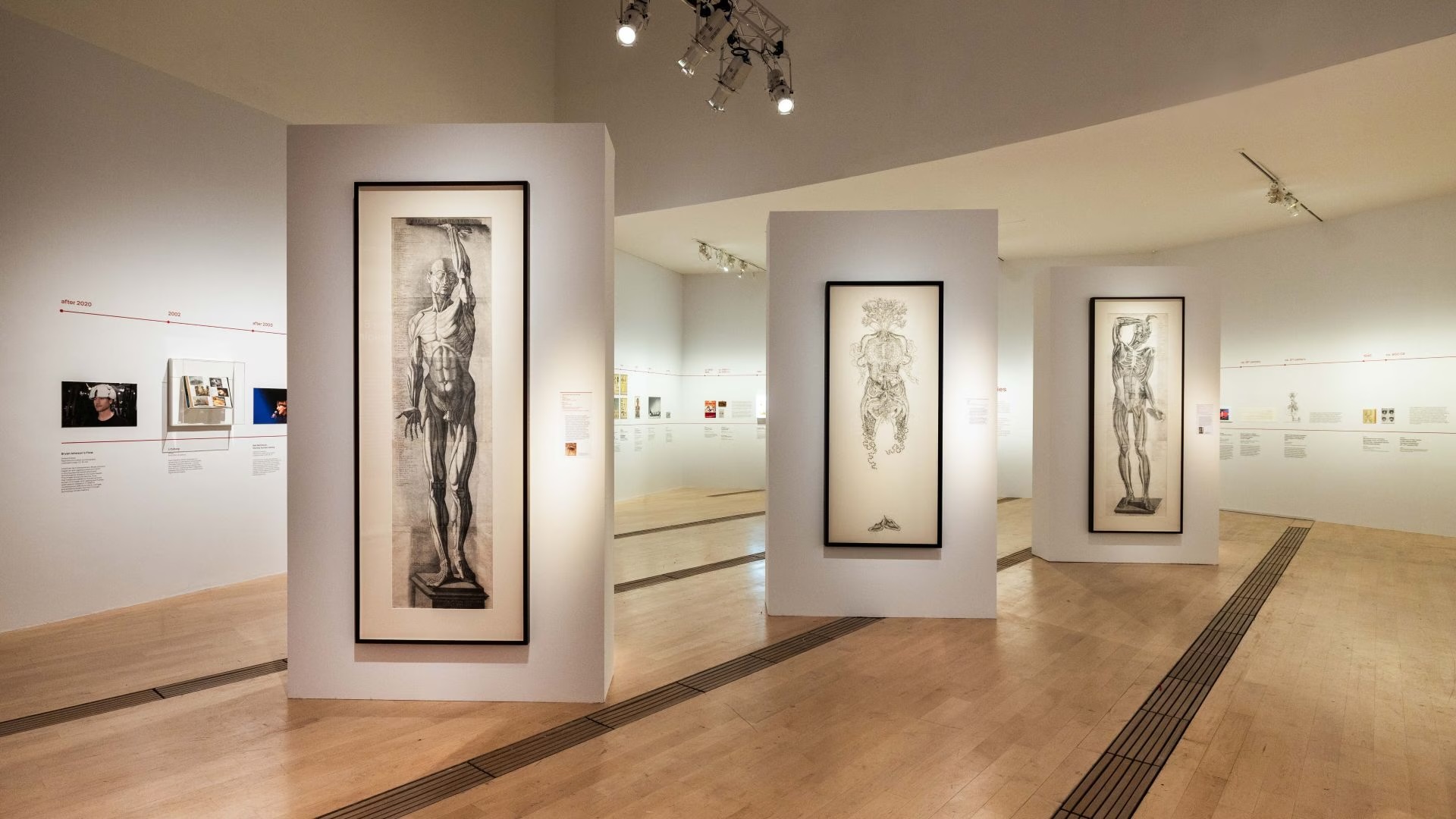
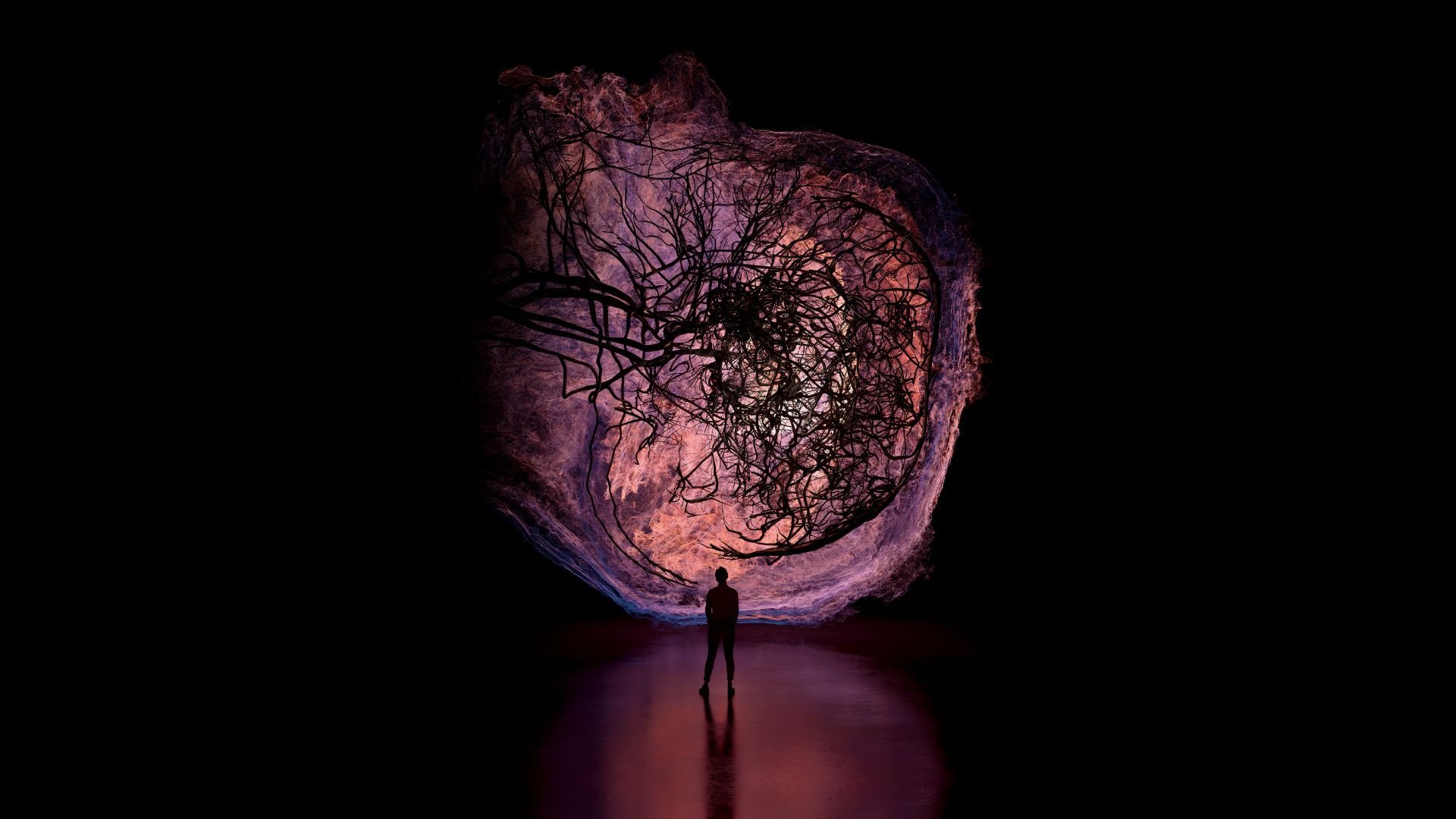
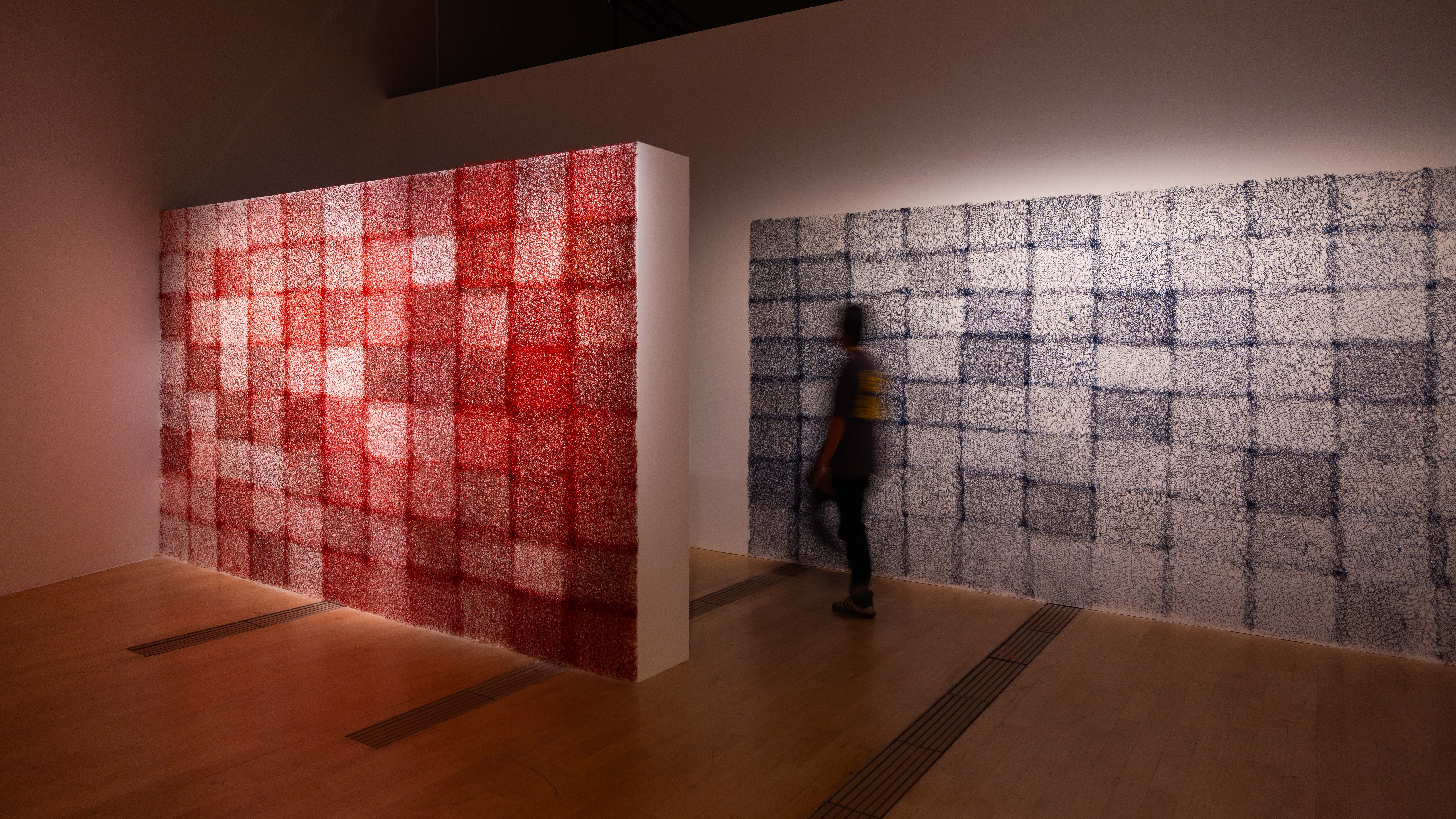
Walk through the exhibition, and you’ll be confronted with the legacy of anatomical study—think flayed figures, precise musculature, and the kind of clinical obsession that defined Renaissance Europe. In fact, the first thing you’ll come across is pieces from artist Chiharu Shiota, who often explores fundamental human concerns such as life, death, and relationships. 
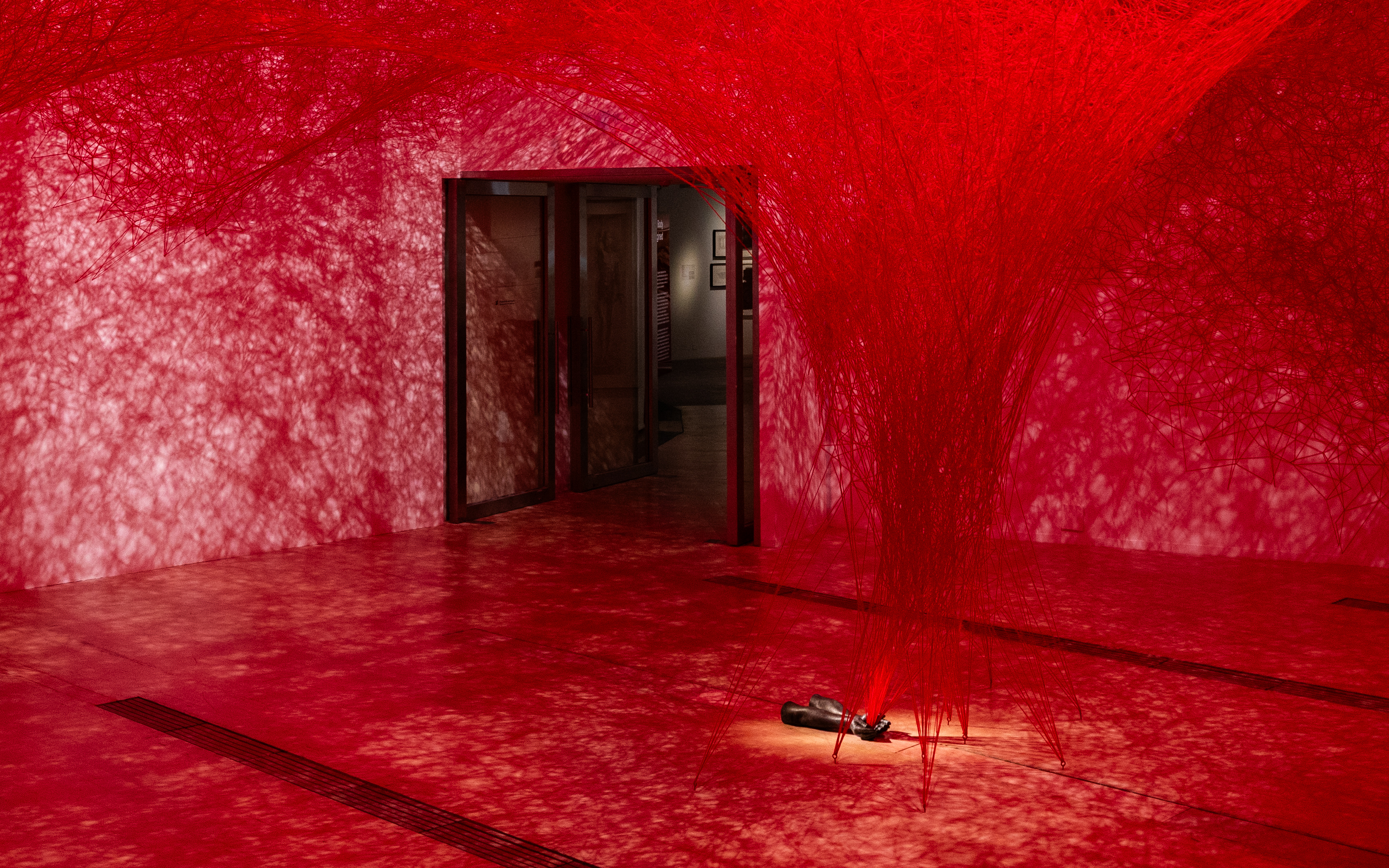
Chiharu Shiota’s installation for Flesh & Bones: The Art of Anatomy.

Weave your way in further, and you’ll see a mix of global historical influences. Looking at the exhibition’s highlight of Western perspectives in anatomy, it’s the anatomical atlases from that era that we’re familiar with (think school science books). But their purpose goes beyond just documenting the body; they aestheticized it. Artists collaborated with anatomists to turn corpses into compositions, transforming scientific inquiry into visual spectacles.
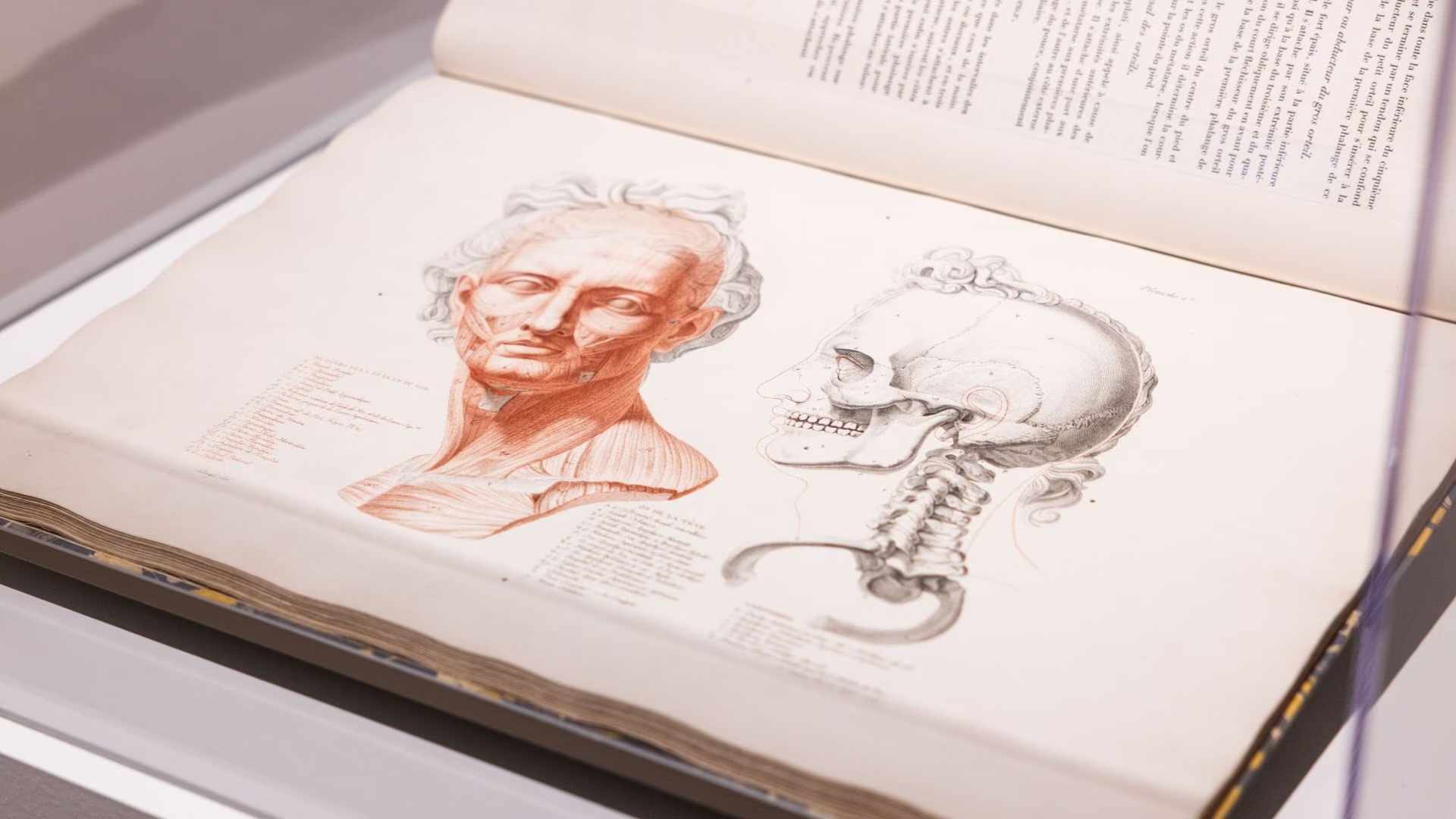
This is the lineage that leads to modern medicine, in which the body is approached more practically. Something tangible that’s dissectible, measurable, and ultimately fixable. While arguably the more globally dominant understanding of the human body, Flesh and Bones opens up our perspective by showing a far more diverse range of perspectives and approaches to anatomy—all artfully presented, of course. It places these works in conversation with systems from all over the world, including Chinese traditions that map the body not through muscle and bone, but through energy pathways known as jingluo (经络), or meridians.

Here, the body isn’t just physical. It’s a network of the tangible and intangible. A flow. A microcosm of the universe itself.
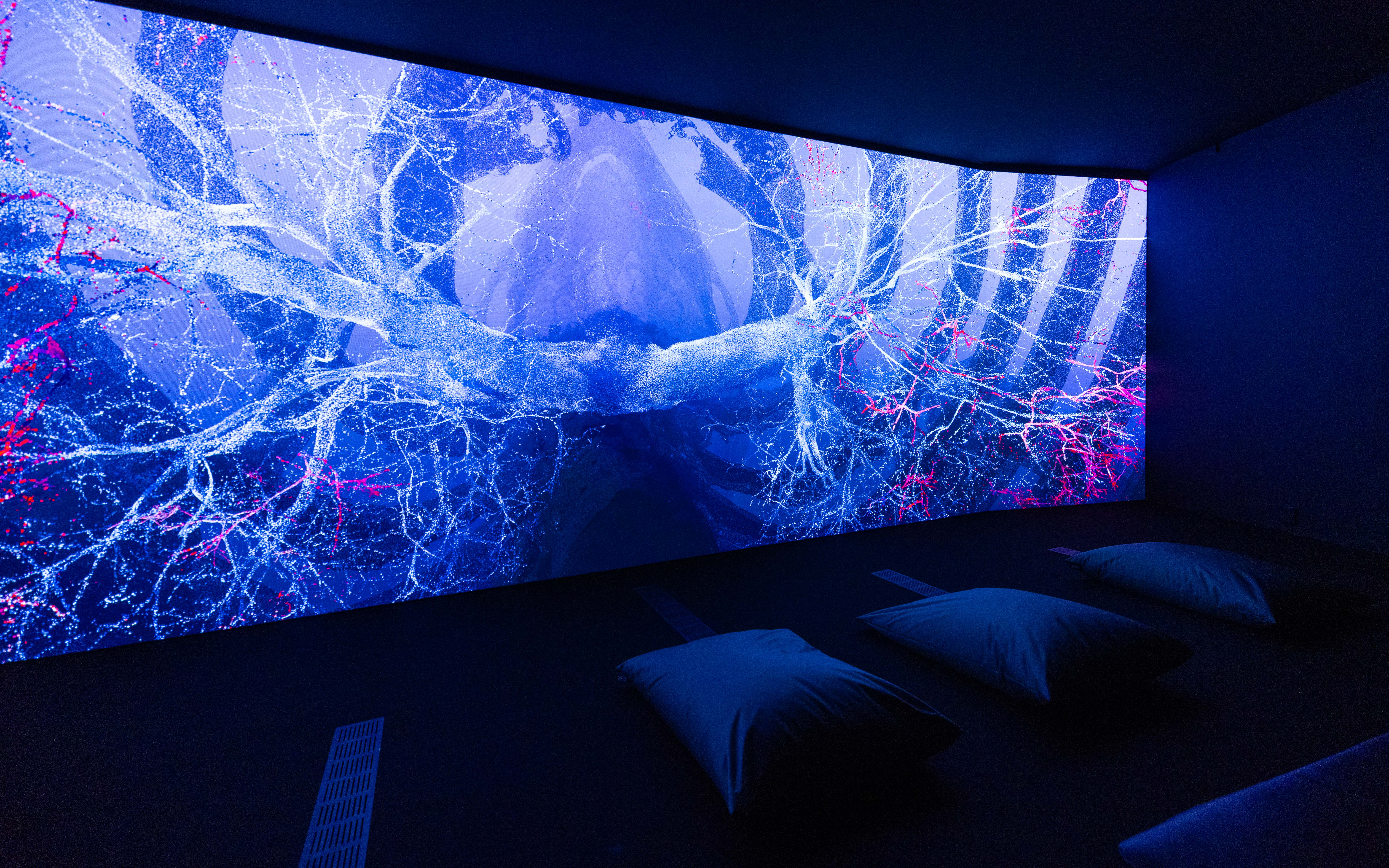
And that shift is more than philosophical—it’s visual. Where Western anatomy prizes precision and realism, meridian diagrams lean toward abstraction. Lines trace invisible currents rather than visible tissues. Organs are less about physical form and more about function within a larger energetic ecosystem. In other words: one tradition asks, “What does the body look like?” The other asks, “How does the body move?”
Why This Matters Now

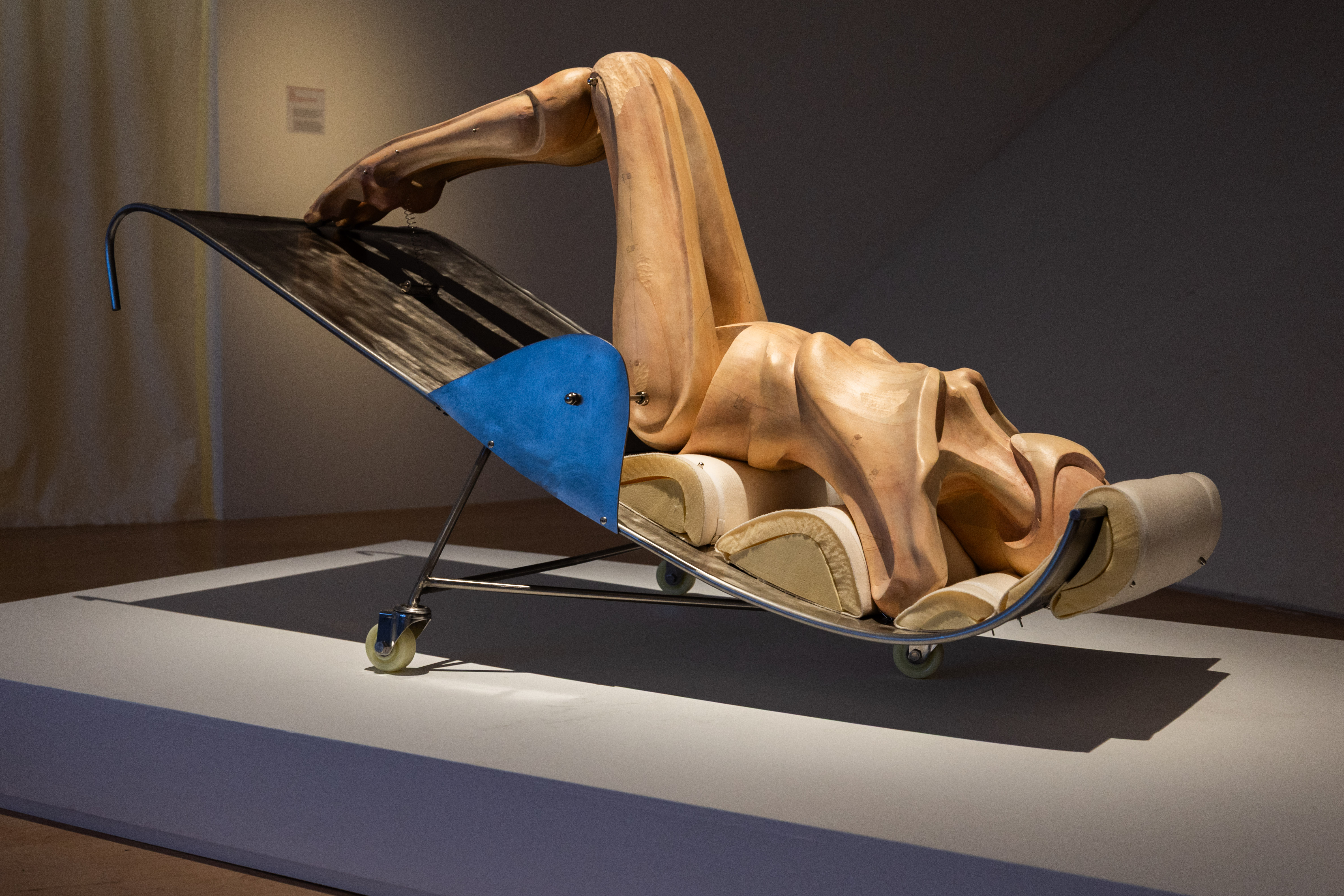
For many of today’s youth, these systems coexist. You might go to a Western doctor for antibiotics and then book an acupuncture session the same week. You might track your steps on an Apple Watch while also worrying about “internal heat” (上火). Not to mention the myriad other cultural approaches to the human body, which you’ll also find throughout the exhibition’s halls.
What this exhibition does is historicize that hybridity. It shows that these understandings of the body didn’t stem separately—they evolved alongside each other, each shaped by its own cultural logic.

And crucially, neither is presented as more “correct” than the other.

For us at RADII, this feels especially relevant in a moment when traditional Chinese medicine is undergoing a kind of global rebrand. No longer dismissed as purely “alternative,” it’s being absorbed into mainstream wellness culture (hello Chinamaxxing), sometimes stripped of context, sometimes celebrated—often misunderstood.
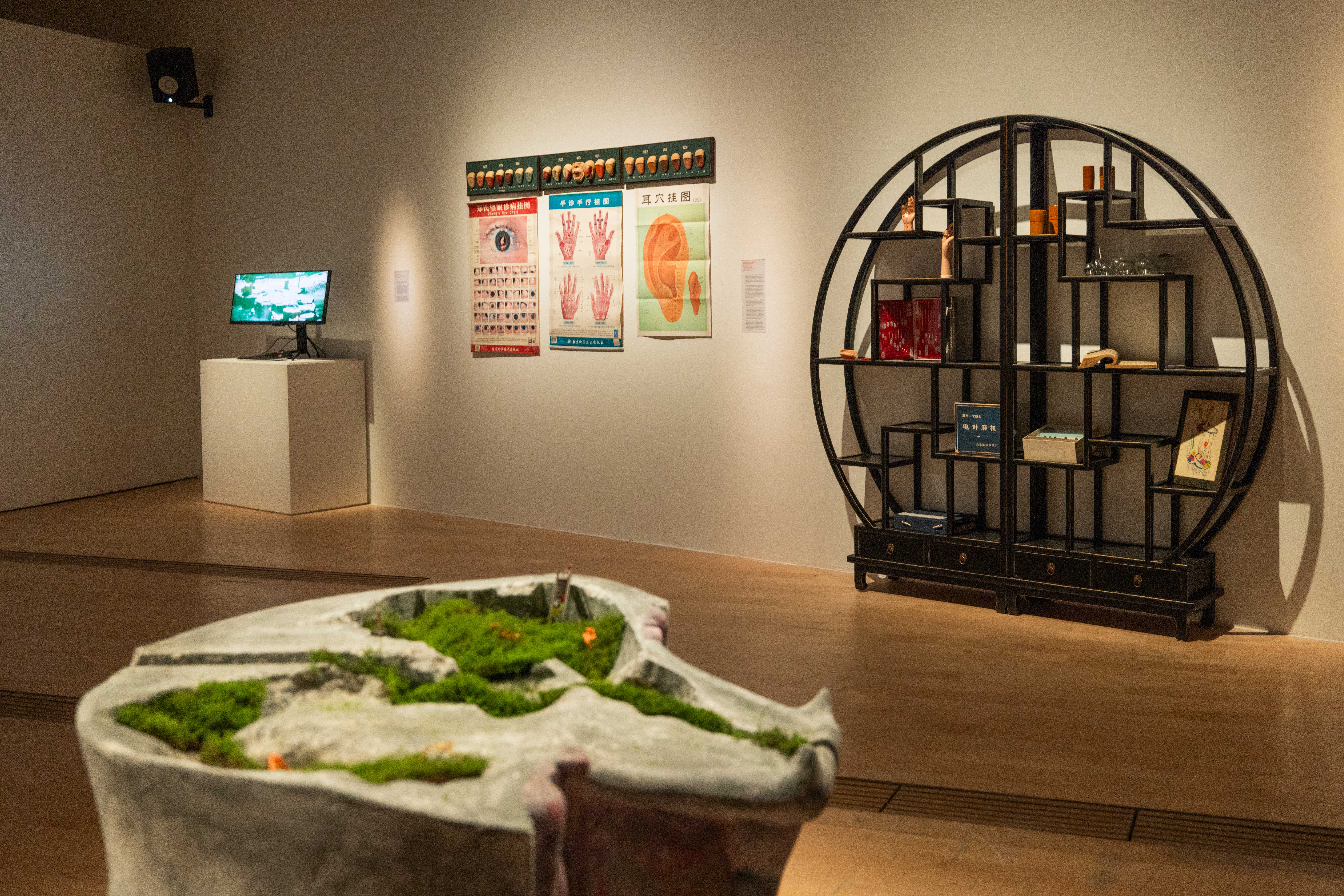
By placing a diverse mix of outlooks on the anatomy, the exhibition pushes back against that flattening. It reminds us that TCM, for example, is more than just a set of practices; it’s a worldview. One that sees the body as inseparable from environment, emotion, and even ancestry.

Art as the Bridge

What ties all of this together is art. Not as decoration, but as a tool for understanding.

Throughout history, anatomy has always needed artists. Before MRI scans and digital imaging, visualization was everything. The way you drew the body shaped how people understood it.
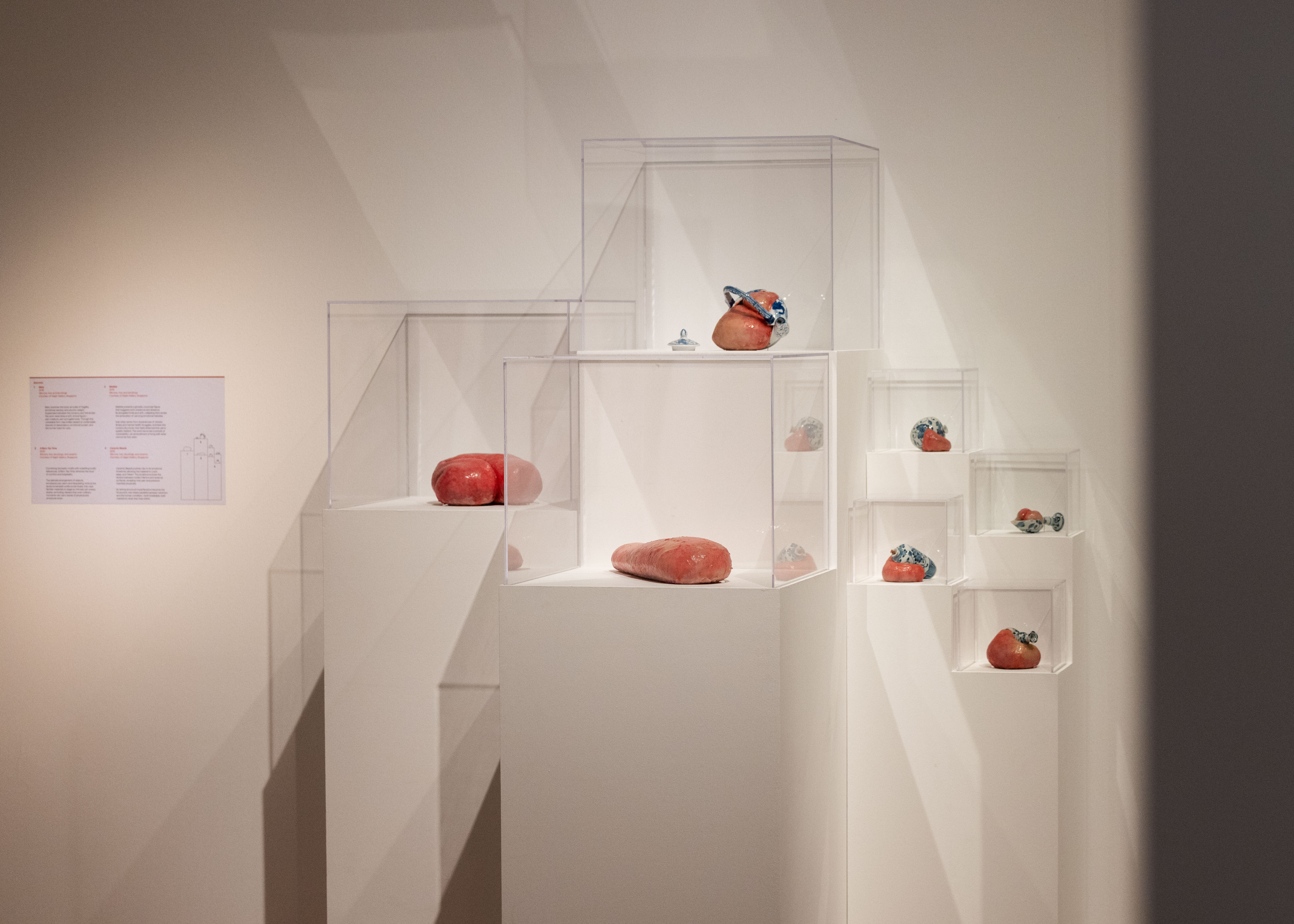
In Renaissance Europe, that meant striving for realism, a belief that truth could be found in accurate representation. In Chinese traditions, it meant something else entirely: capturing systems that couldn’t be seen with the naked eye.

All approaches required imagination.

The Body as Identity

Ultimately, Flesh and Bones: The Art of Anatomy is less about anatomy and more about identity.

How do we understand our bodies, and how does it shape our understanding of ourselves? Are we biological machines, or energetic beings, or something in between?
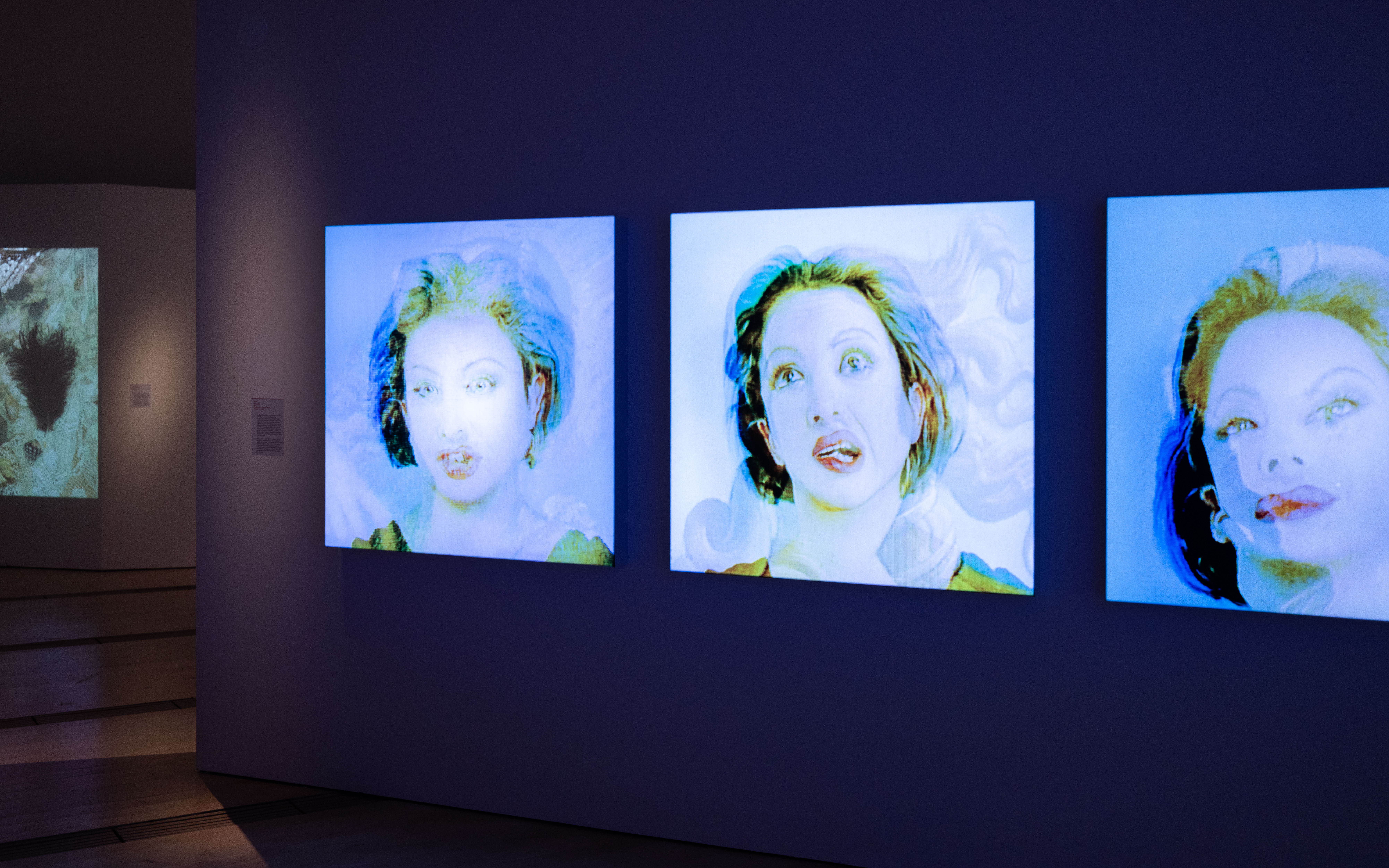
For a generation navigating hybrid identities, cross-cultural influences, and a constant stream of information, the answer is rarely singular.

And maybe that’s the point.

By placing different anatomical traditions side by side, the exhibition doesn’t force a conclusion. Instead, it invites visitors to sit with the tension; to appreciate the precision of Western science while also recognizing the holistic philosophy of Eastern practices.

In doing so, it offers something more valuable than answers: perspective.
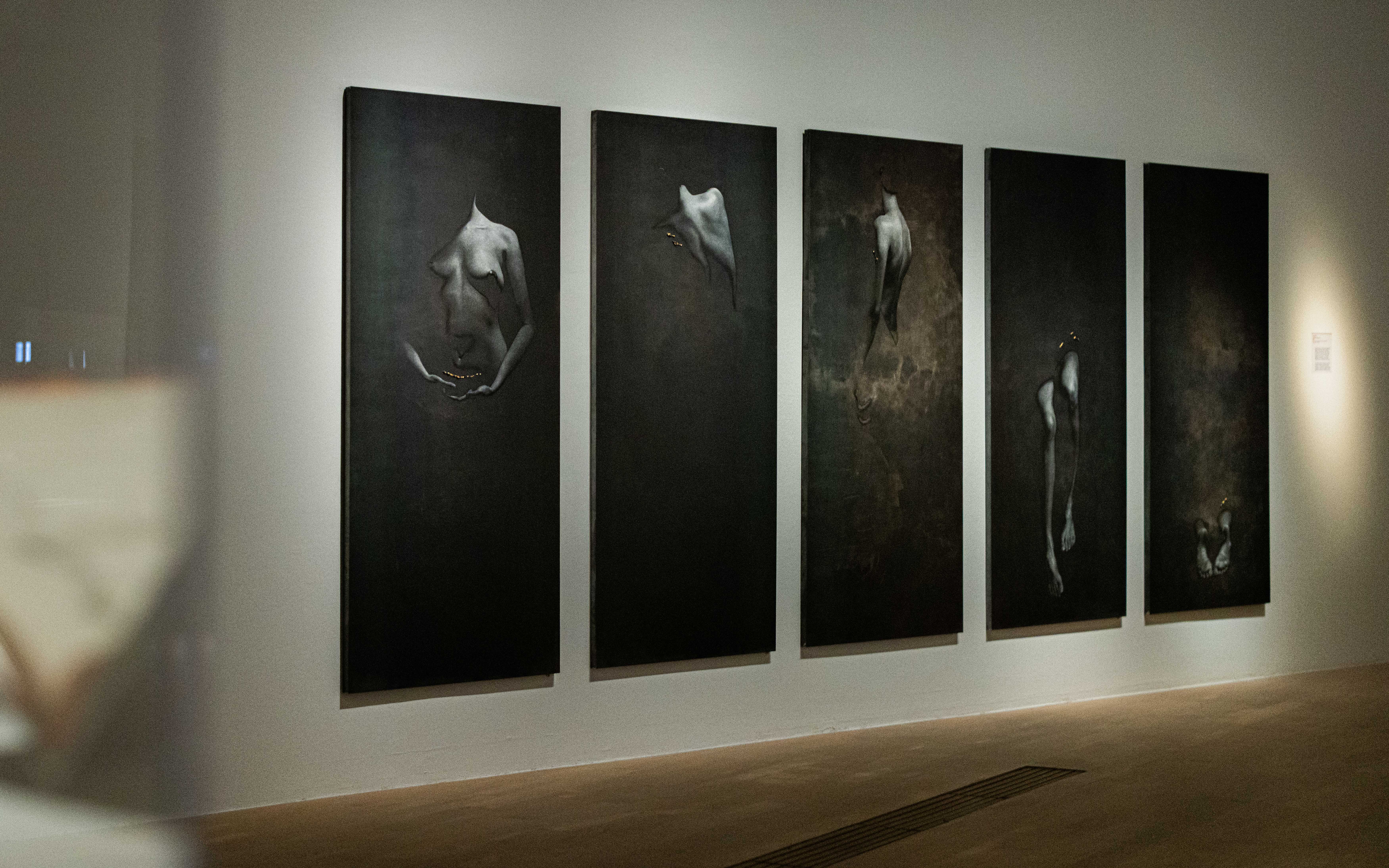
Because in a world obsessed with optimization—biohacking, longevity, peak performance—Flesh and Bones quietly suggests another approach. One that sees the body not just as something to fix or improve, but as something to understand.

It’s not just flesh, not just bones, but a story told differently, depending on where you stand.

If you’re in Singapore, be sure to stop by Marina Bay Sands’ ArtScience Museum to check out Flesh & Bones: The Art of Anatomy for yourself before the show ends on August 16.

All images via Marina Bay Sands, Singapore.
NEWSLETTER

Get weekly top picks and exclusive, newsletter only content delivered straight to you inbox.

NEWSLETTER

Get weekly top picks and exclusive, newsletter only content delivered straight to you inbox.

RADII NEWSLETTER

Get weekly top picks and exclusive, newsletter only content delivered straight to you inbox

Feature image of Flesh and Bones: The Exhibition Turning the Art of Anatomy Into a Cultural Conversation

Flesh and Bones: The Exhibition Turning the Art of Anatomy Into a Cultural Conversation

5 mins read

From Renaissance dissections to Chinese jingluo (经络) systems, “Flesh and Bones” traces how different cultures mapped the unseen of the human body. RADII peels back the layers on why this is important for a growingly curious generation.

At Singapore’s ArtScience Museum, the exhibition Flesh and Bones: The Art of Anatomy dissects the idea that the human body has ever been understood in a single, universal way. Instead, it reveals anatomy as something far more slippery: a cultural construct, shaped as much by belief, aesthetics, and philosophy as by scalpels and science.

That’s where the dialogue Flesh and Bones offers through its exhibition gets interesting. It suggests that the divide between art and science isn’t as clear-cut as we like to think. Both are, at their core, attempts to make sense of the invisible, whether that’s the structure beneath the skin—the “Scientific” approach—or the energy that supposedly flows through it—the “spiritual” approach.

For the curious, this resonates on another level. Across Asia and its diasporas, there’s a growing appetite for reclaiming heritage—but not in a static, museum-piece way. Instead, it’s about reinterpretation. It’s about remixing tradition through a contemporary lens.

This exhibition mirrors that impulse. It doesn’t present Chinese medical traditions as relics of the past, nor does it frame Western anatomy as the endpoint of progress. Instead, it creates a dialogue, one that feels unfinished, open-ended, and very much alive.

For a generation raised on wellness apps, gua sha tutorials, and TikToks explaining qi (气) flow, this approach hits differently. As you’ve seen through myriad posts on RADII, the youth of today aren’t just rediscovering heritage and ancient belief systems; they’re going beyond just learning about it. In fact, they’re actively remixing it, questioning it, and, crucially, reframing it. Flesh and Boneslands right in that intersection, offering a visual language that connects Renaissance dissection rooms with ancient meridian maps—two radically different ways of asking the same question: what are we made of?

The Body as Blueprint vs. The Body as Cosmos

Walk through the exhibition, and you’ll be confronted with the legacy of anatomical study—think flayed figures, precise musculature, and the kind of clinical obsession that defined Renaissance Europe. In fact, the first thing you’ll come across is pieces from artist Chiharu Shiota, who often explores fundamental human concerns such as life, death, and relationships. 

Chiharu Shiota’s installation for Flesh & Bones: The Art of Anatomy.

Weave your way in further, and you’ll see a mix of global historical influences. Looking at the exhibition’s highlight of Western perspectives in anatomy, it’s the anatomical atlases from that era that we’re familiar with (think school science books). But their purpose goes beyond just documenting the body; they aestheticized it. Artists collaborated with anatomists to turn corpses into compositions, transforming scientific inquiry into visual spectacles.

This is the lineage that leads to modern medicine, in which the body is approached more practically. Something tangible that’s dissectible, measurable, and ultimately fixable. While arguably the more globally dominant understanding of the human body, Flesh and Bones opens up our perspective by showing a far more diverse range of perspectives and approaches to anatomy—all artfully presented, of course. It places these works in conversation with systems from all over the world, including Chinese traditions that map the body not through muscle and bone, but through energy pathways known as jingluo (经络), or meridians.

Here, the body isn’t just physical. It’s a network of the tangible and intangible. A flow. A microcosm of the universe itself.

And that shift is more than philosophical—it’s visual. Where Western anatomy prizes precision and realism, meridian diagrams lean toward abstraction. Lines trace invisible currents rather than visible tissues. Organs are less about physical form and more about function within a larger energetic ecosystem. In other words: one tradition asks, “What does the body look like?” The other asks, “How does the body move?”

Why This Matters Now

For many of today’s youth, these systems coexist. You might go to a Western doctor for antibiotics and then book an acupuncture session the same week. You might track your steps on an Apple Watch while also worrying about “internal heat” (上火). Not to mention the myriad other cultural approaches to the human body, which you’ll also find throughout the exhibition’s halls.

What this exhibition does is historicize that hybridity. It shows that these understandings of the body didn’t stem separately—they evolved alongside each other, each shaped by its own cultural logic.

And crucially, neither is presented as more “correct” than the other.

For us at RADII, this feels especially relevant in a moment when traditional Chinese medicine is undergoing a kind of global rebrand. No longer dismissed as purely “alternative,” it’s being absorbed into mainstream wellness culture (hello Chinamaxxing), sometimes stripped of context, sometimes celebrated—often misunderstood.

By placing a diverse mix of outlooks on the anatomy, the exhibition pushes back against that flattening. It reminds us that TCM, for example, is more than just a set of practices; it’s a worldview. One that sees the body as inseparable from environment, emotion, and even ancestry.

Art as the Bridge

What ties all of this together is art. Not as decoration, but as a tool for understanding.

Throughout history, anatomy has always needed artists. Before MRI scans and digital imaging, visualization was everything. The way you drew the body shaped how people understood it.

In Renaissance Europe, that meant striving for realism, a belief that truth could be found in accurate representation. In Chinese traditions, it meant something else entirely: capturing systems that couldn’t be seen with the naked eye.

All approaches required imagination.

The Body as Identity

Ultimately, Flesh and Bones: The Art of Anatomy is less about anatomy and more about identity.

How do we understand our bodies, and how does it shape our understanding of ourselves? Are we biological machines, or energetic beings, or something in between?

For a generation navigating hybrid identities, cross-cultural influences, and a constant stream of information, the answer is rarely singular.

And maybe that’s the point.

By placing different anatomical traditions side by side, the exhibition doesn’t force a conclusion. Instead, it invites visitors to sit with the tension; to appreciate the precision of Western science while also recognizing the holistic philosophy of Eastern practices.

In doing so, it offers something more valuable than answers: perspective.

Because in a world obsessed with optimization—biohacking, longevity, peak performance—Flesh and Bones quietly suggests another approach. One that sees the body not just as something to fix or improve, but as something to understand.

It’s not just flesh, not just bones, but a story told differently, depending on where you stand.

If you’re in Singapore, be sure to stop by Marina Bay Sands’ ArtScience Museum to check out Flesh & Bones: The Art of Anatomy for yourself before the show ends on August 16.

All images via Marina Bay Sands, Singapore.
NEWSLETTER

Get weekly top picks and exclusive, newsletter only content delivered straight to you inbox.

RADII NEWSLETTER

Get weekly top picks and exclusive, newsletter only content delivered straight to you inbox

RELATED POSTS

Feature image of Flesh and Bones: The Exhibition Turning the Art of Anatomy Into a Cultural Conversation

Flesh and Bones: The Exhibition Turning the Art of Anatomy Into a Cultural Conversation

5 mins read

5 mins read

Feature image of Flesh and Bones: The Exhibition Turning the Art of Anatomy Into a Cultural Conversation
From Renaissance dissections to Chinese jingluo (经络) systems, “Flesh and Bones” traces how different cultures mapped the unseen of the human body. RADII peels back the layers on why this is important for a growingly curious generation.

At Singapore’s ArtScience Museum, the exhibition Flesh and Bones: The Art of Anatomy dissects the idea that the human body has ever been understood in a single, universal way. Instead, it reveals anatomy as something far more slippery: a cultural construct, shaped as much by belief, aesthetics, and philosophy as by scalpels and science.

That’s where the dialogue Flesh and Bones offers through its exhibition gets interesting. It suggests that the divide between art and science isn’t as clear-cut as we like to think. Both are, at their core, attempts to make sense of the invisible, whether that’s the structure beneath the skin—the “Scientific” approach—or the energy that supposedly flows through it—the “spiritual” approach.

For the curious, this resonates on another level. Across Asia and its diasporas, there’s a growing appetite for reclaiming heritage—but not in a static, museum-piece way. Instead, it’s about reinterpretation. It’s about remixing tradition through a contemporary lens.

This exhibition mirrors that impulse. It doesn’t present Chinese medical traditions as relics of the past, nor does it frame Western anatomy as the endpoint of progress. Instead, it creates a dialogue, one that feels unfinished, open-ended, and very much alive.

For a generation raised on wellness apps, gua sha tutorials, and TikToks explaining qi (气) flow, this approach hits differently. As you’ve seen through myriad posts on RADII, the youth of today aren’t just rediscovering heritage and ancient belief systems; they’re going beyond just learning about it. In fact, they’re actively remixing it, questioning it, and, crucially, reframing it. Flesh and Boneslands right in that intersection, offering a visual language that connects Renaissance dissection rooms with ancient meridian maps—two radically different ways of asking the same question: what are we made of?

The Body as Blueprint vs. The Body as Cosmos

Walk through the exhibition, and you’ll be confronted with the legacy of anatomical study—think flayed figures, precise musculature, and the kind of clinical obsession that defined Renaissance Europe. In fact, the first thing you’ll come across is pieces from artist Chiharu Shiota, who often explores fundamental human concerns such as life, death, and relationships. 

Chiharu Shiota’s installation for Flesh & Bones: The Art of Anatomy.

Weave your way in further, and you’ll see a mix of global historical influences. Looking at the exhibition’s highlight of Western perspectives in anatomy, it’s the anatomical atlases from that era that we’re familiar with (think school science books). But their purpose goes beyond just documenting the body; they aestheticized it. Artists collaborated with anatomists to turn corpses into compositions, transforming scientific inquiry into visual spectacles.

This is the lineage that leads to modern medicine, in which the body is approached more practically. Something tangible that’s dissectible, measurable, and ultimately fixable. While arguably the more globally dominant understanding of the human body, Flesh and Bones opens up our perspective by showing a far more diverse range of perspectives and approaches to anatomy—all artfully presented, of course. It places these works in conversation with systems from all over the world, including Chinese traditions that map the body not through muscle and bone, but through energy pathways known as jingluo (经络), or meridians.

Here, the body isn’t just physical. It’s a network of the tangible and intangible. A flow. A microcosm of the universe itself.

And that shift is more than philosophical—it’s visual. Where Western anatomy prizes precision and realism, meridian diagrams lean toward abstraction. Lines trace invisible currents rather than visible tissues. Organs are less about physical form and more about function within a larger energetic ecosystem. In other words: one tradition asks, “What does the body look like?” The other asks, “How does the body move?”

Why This Matters Now

For many of today’s youth, these systems coexist. You might go to a Western doctor for antibiotics and then book an acupuncture session the same week. You might track your steps on an Apple Watch while also worrying about “internal heat” (上火). Not to mention the myriad other cultural approaches to the human body, which you’ll also find throughout the exhibition’s halls.

What this exhibition does is historicize that hybridity. It shows that these understandings of the body didn’t stem separately—they evolved alongside each other, each shaped by its own cultural logic.

And crucially, neither is presented as more “correct” than the other.

For us at RADII, this feels especially relevant in a moment when traditional Chinese medicine is undergoing a kind of global rebrand. No longer dismissed as purely “alternative,” it’s being absorbed into mainstream wellness culture (hello Chinamaxxing), sometimes stripped of context, sometimes celebrated—often misunderstood.

By placing a diverse mix of outlooks on the anatomy, the exhibition pushes back against that flattening. It reminds us that TCM, for example, is more than just a set of practices; it’s a worldview. One that sees the body as inseparable from environment, emotion, and even ancestry.

Art as the Bridge

What ties all of this together is art. Not as decoration, but as a tool for understanding.

Throughout history, anatomy has always needed artists. Before MRI scans and digital imaging, visualization was everything. The way you drew the body shaped how people understood it.

In Renaissance Europe, that meant striving for realism, a belief that truth could be found in accurate representation. In Chinese traditions, it meant something else entirely: capturing systems that couldn’t be seen with the naked eye.

All approaches required imagination.

The Body as Identity

Ultimately, Flesh and Bones: The Art of Anatomy is less about anatomy and more about identity.

How do we understand our bodies, and how does it shape our understanding of ourselves? Are we biological machines, or energetic beings, or something in between?

For a generation navigating hybrid identities, cross-cultural influences, and a constant stream of information, the answer is rarely singular.

And maybe that’s the point.

By placing different anatomical traditions side by side, the exhibition doesn’t force a conclusion. Instead, it invites visitors to sit with the tension; to appreciate the precision of Western science while also recognizing the holistic philosophy of Eastern practices.

In doing so, it offers something more valuable than answers: perspective.

Because in a world obsessed with optimization—biohacking, longevity, peak performance—Flesh and Bones quietly suggests another approach. One that sees the body not just as something to fix or improve, but as something to understand.

It’s not just flesh, not just bones, but a story told differently, depending on where you stand.

If you’re in Singapore, be sure to stop by Marina Bay Sands’ ArtScience Museum to check out Flesh & Bones: The Art of Anatomy for yourself before the show ends on August 16.

All images via Marina Bay Sands, Singapore.
NEWSLETTER

Get weekly top picks and exclusive, newsletter only content delivered straight to you inbox.

NEWSLETTER

Get weekly top picks and exclusive, newsletter only content delivered straight to you inbox.

RADII NEWSLETTER

Get weekly top picks and exclusive, newsletter only content delivered straight to you inbox

Feature image of Flesh and Bones: The Exhibition Turning the Art of Anatomy Into a Cultural Conversation

Flesh and Bones: The Exhibition Turning the Art of Anatomy Into a Cultural Conversation

5 mins read

From Renaissance dissections to Chinese jingluo (经络) systems, “Flesh and Bones” traces how different cultures mapped the unseen of the human body. RADII peels back the layers on why this is important for a growingly curious generation.

At Singapore’s ArtScience Museum, the exhibition Flesh and Bones: The Art of Anatomy dissects the idea that the human body has ever been understood in a single, universal way. Instead, it reveals anatomy as something far more slippery: a cultural construct, shaped as much by belief, aesthetics, and philosophy as by scalpels and science.

That’s where the dialogue Flesh and Bones offers through its exhibition gets interesting. It suggests that the divide between art and science isn’t as clear-cut as we like to think. Both are, at their core, attempts to make sense of the invisible, whether that’s the structure beneath the skin—the “Scientific” approach—or the energy that supposedly flows through it—the “spiritual” approach.

For the curious, this resonates on another level. Across Asia and its diasporas, there’s a growing appetite for reclaiming heritage—but not in a static, museum-piece way. Instead, it’s about reinterpretation. It’s about remixing tradition through a contemporary lens.

This exhibition mirrors that impulse. It doesn’t present Chinese medical traditions as relics of the past, nor does it frame Western anatomy as the endpoint of progress. Instead, it creates a dialogue, one that feels unfinished, open-ended, and very much alive.

For a generation raised on wellness apps, gua sha tutorials, and TikToks explaining qi (气) flow, this approach hits differently. As you’ve seen through myriad posts on RADII, the youth of today aren’t just rediscovering heritage and ancient belief systems; they’re going beyond just learning about it. In fact, they’re actively remixing it, questioning it, and, crucially, reframing it. Flesh and Boneslands right in that intersection, offering a visual language that connects Renaissance dissection rooms with ancient meridian maps—two radically different ways of asking the same question: what are we made of?

The Body as Blueprint vs. The Body as Cosmos

Walk through the exhibition, and you’ll be confronted with the legacy of anatomical study—think flayed figures, precise musculature, and the kind of clinical obsession that defined Renaissance Europe. In fact, the first thing you’ll come across is pieces from artist Chiharu Shiota, who often explores fundamental human concerns such as life, death, and relationships. 

Chiharu Shiota’s installation for Flesh & Bones: The Art of Anatomy.

Weave your way in further, and you’ll see a mix of global historical influences. Looking at the exhibition’s highlight of Western perspectives in anatomy, it’s the anatomical atlases from that era that we’re familiar with (think school science books). But their purpose goes beyond just documenting the body; they aestheticized it. Artists collaborated with anatomists to turn corpses into compositions, transforming scientific inquiry into visual spectacles.

This is the lineage that leads to modern medicine, in which the body is approached more practically. Something tangible that’s dissectible, measurable, and ultimately fixable. While arguably the more globally dominant understanding of the human body, Flesh and Bones opens up our perspective by showing a far more diverse range of perspectives and approaches to anatomy—all artfully presented, of course. It places these works in conversation with systems from all over the world, including Chinese traditions that map the body not through muscle and bone, but through energy pathways known as jingluo (经络), or meridians.

Here, the body isn’t just physical. It’s a network of the tangible and intangible. A flow. A microcosm of the universe itself.

And that shift is more than philosophical—it’s visual. Where Western anatomy prizes precision and realism, meridian diagrams lean toward abstraction. Lines trace invisible currents rather than visible tissues. Organs are less about physical form and more about function within a larger energetic ecosystem. In other words: one tradition asks, “What does the body look like?” The other asks, “How does the body move?”

Why This Matters Now

For many of today’s youth, these systems coexist. You might go to a Western doctor for antibiotics and then book an acupuncture session the same week. You might track your steps on an Apple Watch while also worrying about “internal heat” (上火). Not to mention the myriad other cultural approaches to the human body, which you’ll also find throughout the exhibition’s halls.

What this exhibition does is historicize that hybridity. It shows that these understandings of the body didn’t stem separately—they evolved alongside each other, each shaped by its own cultural logic.

And crucially, neither is presented as more “correct” than the other.

For us at RADII, this feels especially relevant in a moment when traditional Chinese medicine is undergoing a kind of global rebrand. No longer dismissed as purely “alternative,” it’s being absorbed into mainstream wellness culture (hello Chinamaxxing), sometimes stripped of context, sometimes celebrated—often misunderstood.

By placing a diverse mix of outlooks on the anatomy, the exhibition pushes back against that flattening. It reminds us that TCM, for example, is more than just a set of practices; it’s a worldview. One that sees the body as inseparable from environment, emotion, and even ancestry.

Art as the Bridge

What ties all of this together is art. Not as decoration, but as a tool for understanding.

Throughout history, anatomy has always needed artists. Before MRI scans and digital imaging, visualization was everything. The way you drew the body shaped how people understood it.

In Renaissance Europe, that meant striving for realism, a belief that truth could be found in accurate representation. In Chinese traditions, it meant something else entirely: capturing systems that couldn’t be seen with the naked eye.

All approaches required imagination.

The Body as Identity

Ultimately, Flesh and Bones: The Art of Anatomy is less about anatomy and more about identity.

How do we understand our bodies, and how does it shape our understanding of ourselves? Are we biological machines, or energetic beings, or something in between?

For a generation navigating hybrid identities, cross-cultural influences, and a constant stream of information, the answer is rarely singular.

And maybe that’s the point.

By placing different anatomical traditions side by side, the exhibition doesn’t force a conclusion. Instead, it invites visitors to sit with the tension; to appreciate the precision of Western science while also recognizing the holistic philosophy of Eastern practices.

In doing so, it offers something more valuable than answers: perspective.

Because in a world obsessed with optimization—biohacking, longevity, peak performance—Flesh and Bones quietly suggests another approach. One that sees the body not just as something to fix or improve, but as something to understand.

It’s not just flesh, not just bones, but a story told differently, depending on where you stand.

If you’re in Singapore, be sure to stop by Marina Bay Sands’ ArtScience Museum to check out Flesh & Bones: The Art of Anatomy for yourself before the show ends on August 16.

All images via Marina Bay Sands, Singapore.

NEWSLETTER

Get weekly top picks and exclusive, newsletter only content delivered straight to you inbox.

RADII NEWSLETTER

Get weekly top picks and exclusive, newsletter only content delivered straight to you inbox

RADII newsletter pop up visual

NEWSLETTER​

Get weekly top picks and exclusive, newsletter only content delivered straight to you inbox

RADII Newsletter Pop Up small banner

NEWSLETTER

Get weekly top picks and exclusive, newsletter only content delivered straight to you inbox.

Link Copied!

Share

Feature image of Flesh and Bones: The Exhibition Turning the Art of Anatomy Into a Cultural Conversation

Flesh and Bones: The Exhibition Turning the Art of Anatomy Into a Cultural Conversation

From Renaissance dissections to Chinese jingluo (经络) systems, “Flesh and Bones” traces how different cultures mapped the unseen of the human body. RADII peels back the layers on why this is important for a growingly curious generation.

PULSE

Tap into the latest in music, fashion, art, design, entertainment, pop culture, celebrity news, and contemporary culture

DISCOVER

Embark on a journey through food, travel, wellness, heritage, traditional culture, and lifestyle

STYLE

An insider’s look at the intersection of fashion, art, and design

FEAST

Titillate your taste buds with coverage of the best food and drink trends from China and beyond.

FUTURE

Explore the cutting edge in tech, AI, gadgets, gaming, and innovative tech-related products

FEAST

Titillate your taste buds with coverage of the best food and drink trends from China and beyond

STYLE

An insider’s look at the intersection of fashion, art, and design

PULSE

Unpacking Chinese youth culture through coverage of nightlife, film, sports, celebrities, and the hottest new music