
For much of modern history, the central dilemma faced by consumers was simple: to buy, or not to buy. But Chinese youth have moved past this age-old dilemma. Purchasing to fulfill material needs is a relic of an older generation—China’s Gen Z is all about purchasing feelings. Or sometimes, a release from them.
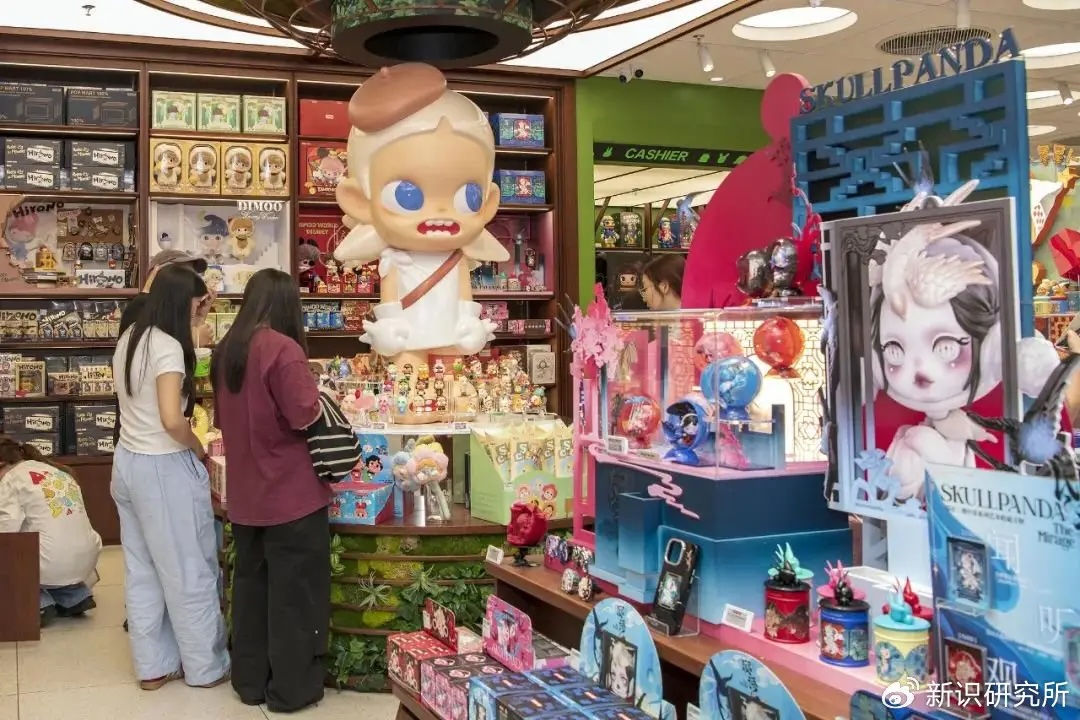
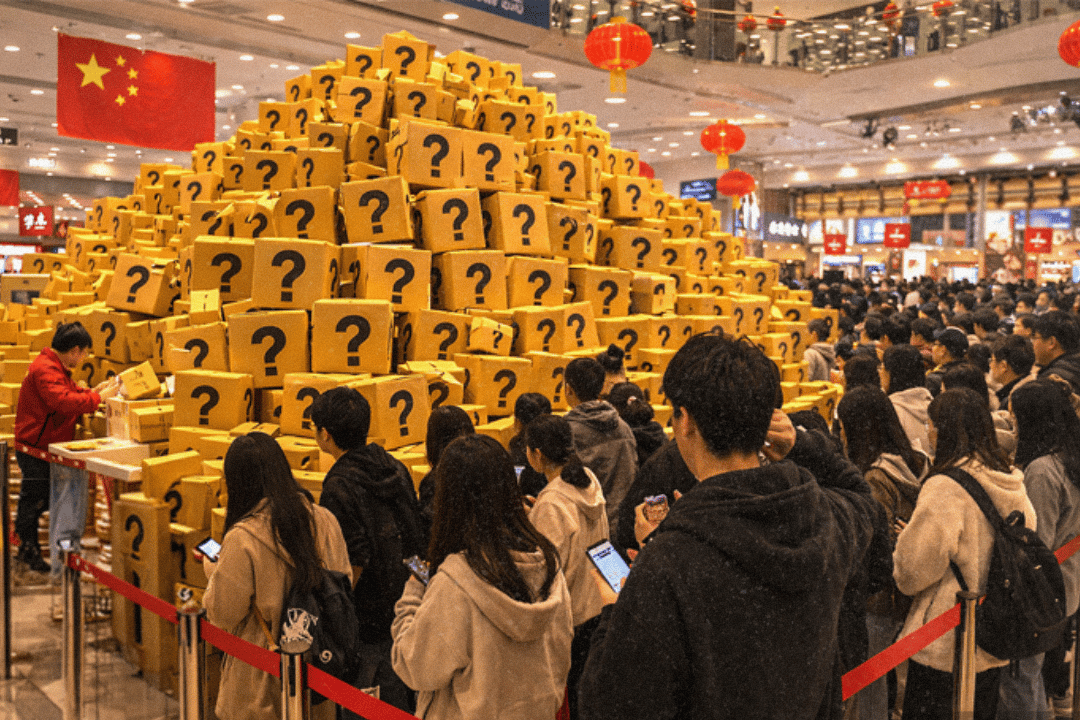
No trend embodies Gen Z consumer culture more completely than the blind box phenomenon. The hashtag “#我的盲盒分享,” or “my blind box sharing,” has amassed 26.2 million videos and over 4.7 billion views. But look past the satisfying strips of cardboard or the ASMR plastic crinkles, and you’ll find a deep compulsion to escape the pressure and anxiety that pervades daily life.
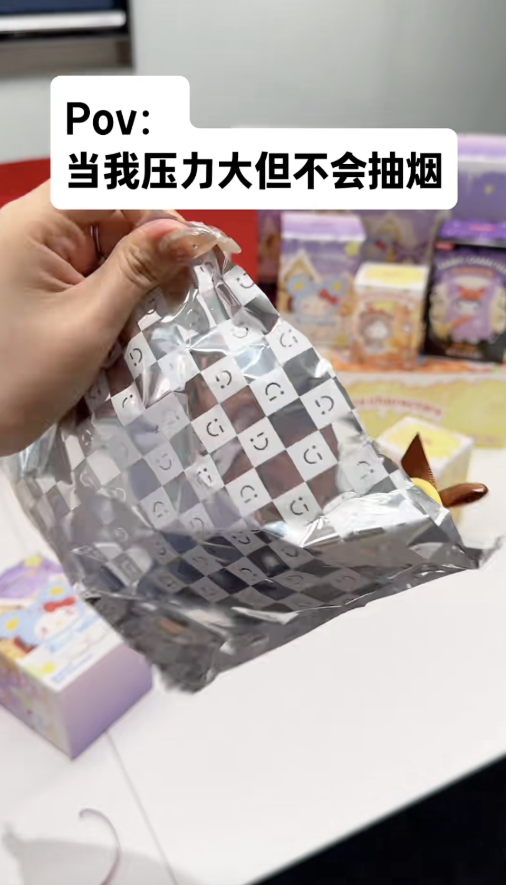
One recent RedNote trend features users frantically tearing open blind boxes paired with the caption “当你心里压力大但不抽烟,” or “when you’re under a lot of stress but don’t smoke.” In a generation defined by digital anxiety and mental pressure, the brief dopamine hit that comes with the completion of a transaction becomes invaluable.
While this behavior can easily be anecdotal, it’s also reflected in data on the emotional spending of young consumers. Recent studies reveal that 56.3% of Gen Z identify “purchasing for happiness” as a primary spending driver—a 16.2% jump from the previous year. Chinese youth are consuming with the mindset that a purchase equals pleasure.
And not only are consumers chasing the high of relief, but they are also chasing the ever-shrinking commodity of community.
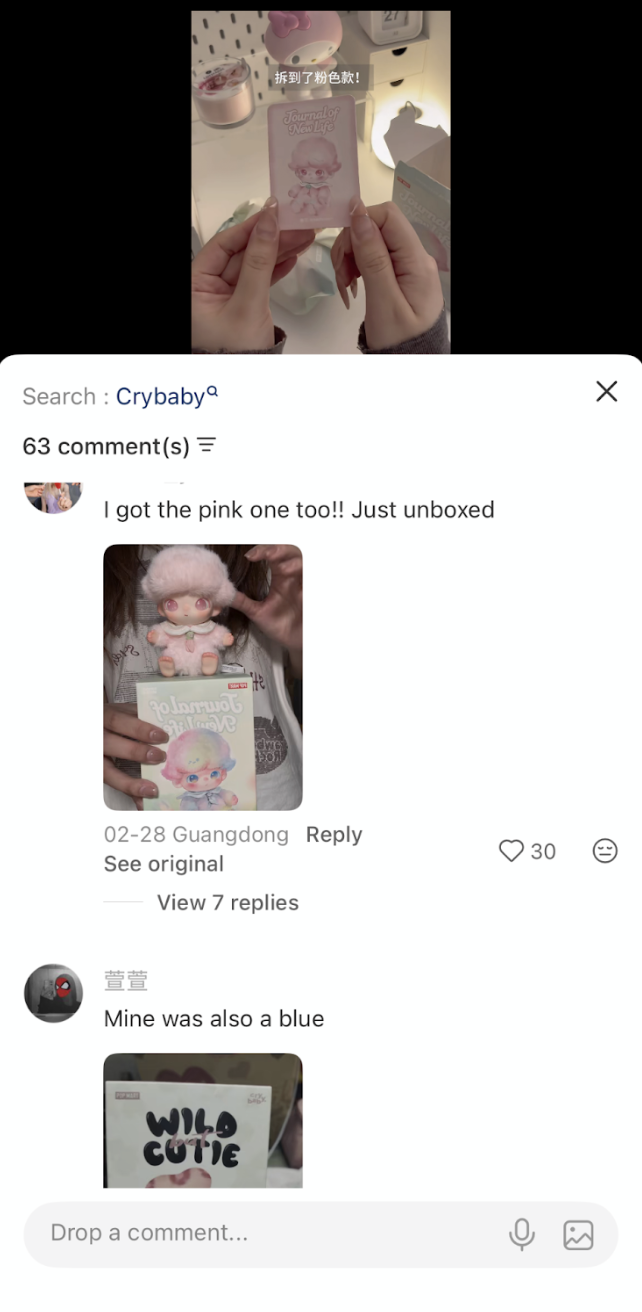
When purchasing a blind box, one not only acquires the object within but also a community invested in the ritual of opening it. Comment sections are filled with users sharing their own results and experiences, lamenting a redundant pull or gloating over rare special editions. Thus, consumption transforms from a solitary endeavor into a communal gathering.
Take even a cursory glance at hashtags such as “#大人也要玩玩具” (“adults also need to play with toys”) or the aforementioned “when you’re under a lot of stress but don’t smoke,” and you’ll feel that for Gen Z, the question of “to buy, or not to buy” is one of the past. The only question that remains is how a purchase makes them feel.
Cover image via Asiea.