

Imagine this: A Gen Z office worker shuts their laptop at 9 PM, then opens their feed to “躺平” (tǎng píng, or “lying flat”) posts. Their calendar is full, their inbox is fuller, but the posts that resonate most are about doing less; letting go of impossible goals, sleeping in, and stepping out of the race.

However, on paper, this race seems to be going well. On June 18, 2026, the IMD World Competitiveness Ranking placed China 12th out of 70 global economies—that’s up four places from 2025. The ranking metrics are based on business efficiency and labor market performance, which represent a country’s economic machine. It’s the kind of data point that fits neatly into a growth narrative: a nation climbing the league tables, edging closer to the world’s top performers.
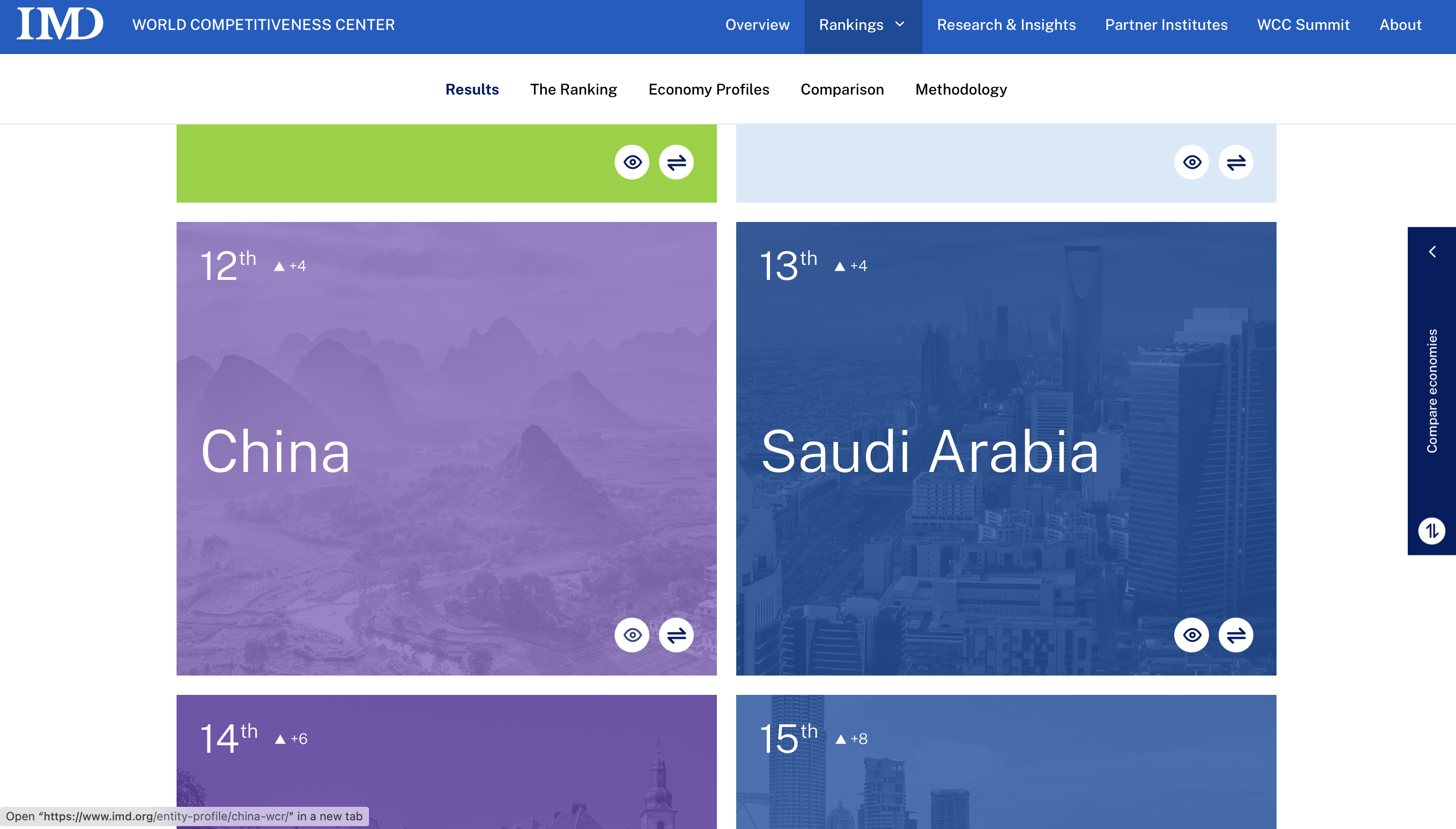
Now, set these two images side by side: the tired youth doom-scrolling “躺平” (“lying flat”) memes and the upbeat rankings graphic. Here, a central question emerges: If the country is getting more competitive, why does “lying flat” still feel so right to so many young people?
Tǎng píng is a relatively new phrase, but the sentiment behind it has been building for years. The term exploded into public discourse in 2021, when online posts and essays began using “lying flat” to describe a quiet refusal of hyper-competitive life paths: relentless overtime, marriage and children on a strict schedule, and homeownership at punishing prices. It quickly became shorthand for a broader Gen Z mood, especially among educated urban youth who feel trapped between expectations and reality. As anthropology scholar Prof. Zhang from CUHK (The Chinese University of Hong Kong) pointed out, this dispirited tone didn’t come out of nowhere. In 2016, a still of actor Ge You from the classic 1993 sitcom I Love My Family (“我愛我家”) suddenly resurfaced as a meme. The way he lay on the sofa, appearing almost boneless, became an emblem of “丧文化” — a culture of demotivation and a kind of performative burnout. The joke was that his posture matched how many people felt inside.

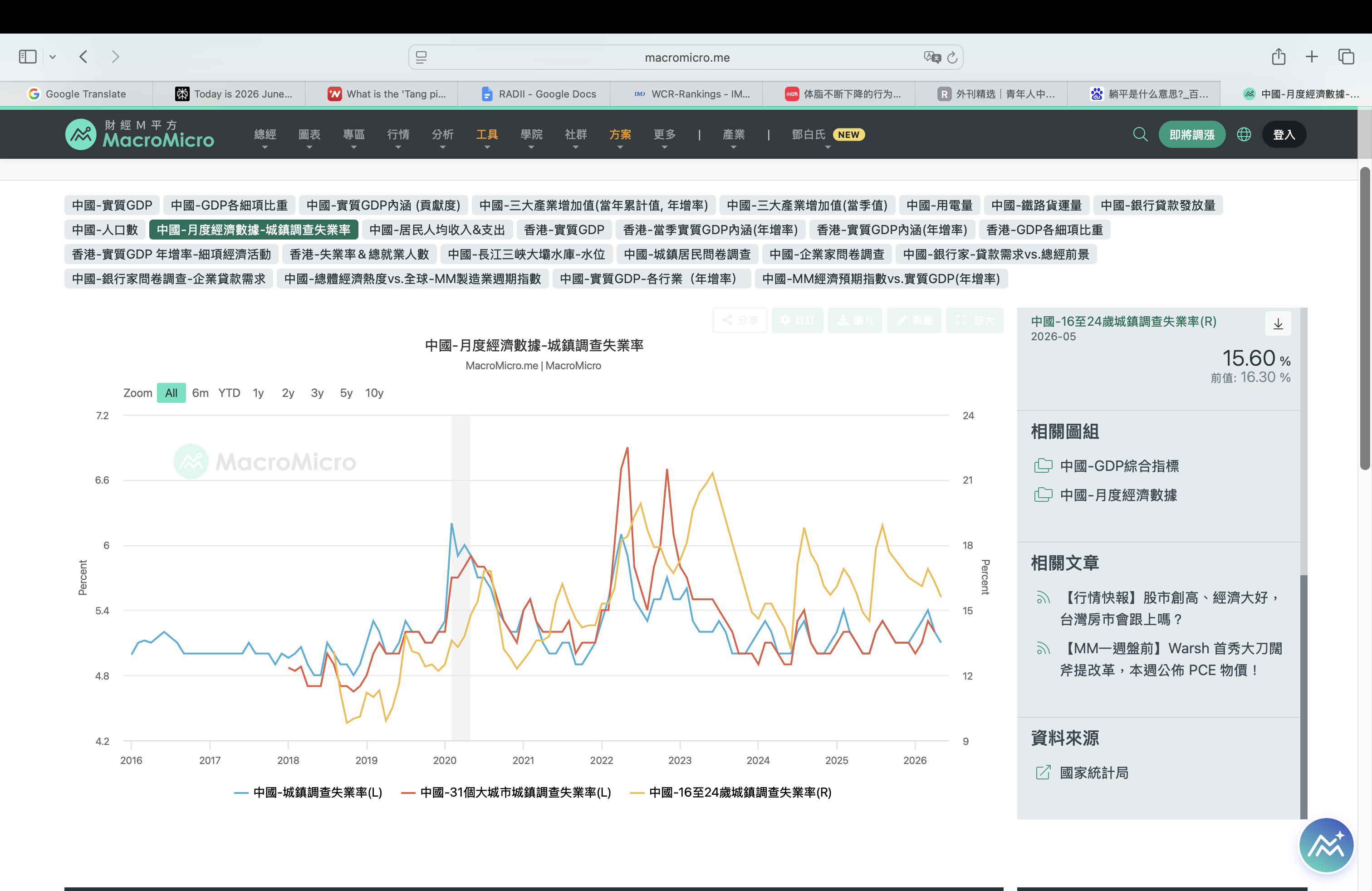
Young people use this phrase to describe their desire to break free from seemingly unfeasible, routine lifestyles. This includes attending a prestigious university, finding an ideal job, affording their dream home, and even finding their ideal partner. In online comments and articles, it became clear that, with a massive population and an expanding but still uneven economy, the job market remained brutally competitive. This desire to “escape” isn’t merely emotional; it’s reflected in the data. In May 2026, according to monthly data collected by MacroMicro from the National Bureau of Statistics, the urban unemployment rate for those aged 16 to 24 was 15.6%, while the overall urban unemployment rate was approximately 5%. The chart shows that the youth unemployment rate curve is significantly higher than those of other age groups, soaring after 2020 and remaining persistently high, while the overall unemployment rate has remained relatively stable.
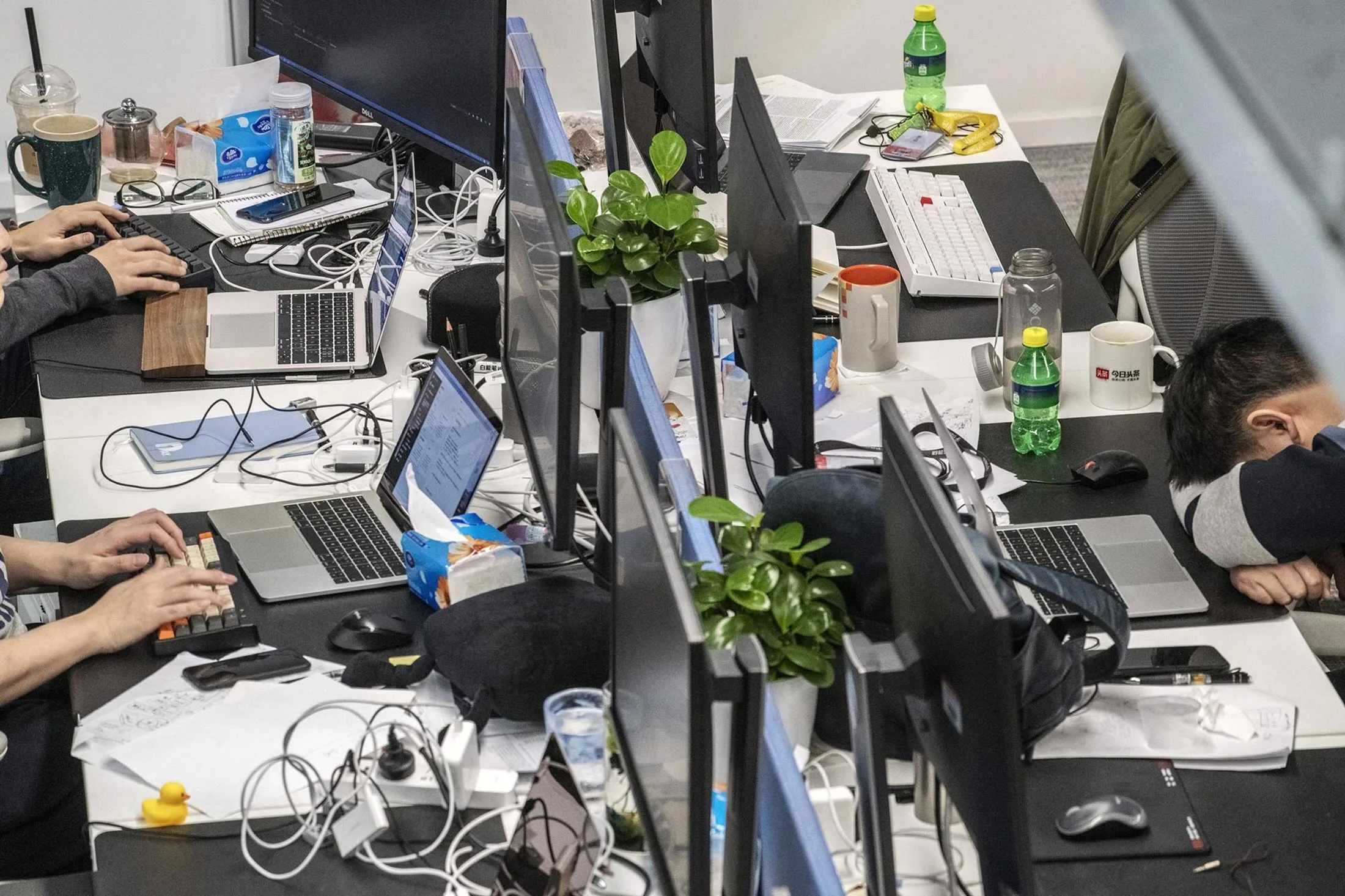
This concept has spread both inside and outside China, linking “躺平” directly to the culture of overwork. A New York Times piece described lying flat as a natural consequence of China’s hypercompetitive middle-class world, where 996 schedules—working from 9 AM to 9 PM, six days a week—became the norm in STEM and other white-collar industries. When the reward for playing by those rules starts to look uncertain, the idea of simply doing less gains appeal. “躺平” does not necessarily mean literal idleness; it marks a decision to lower one’s expectations, stop chasing every promotion or milestone, and accept a simpler life.
Clare Yang, a third-year student at Shanghai Jiao Tong University, describes the movement as half-serious, half-coping mechanism. “All my classmates joke about being ‘躺平’,” she says, “but they still send dozens of applications a week for internships and full-time jobs.”
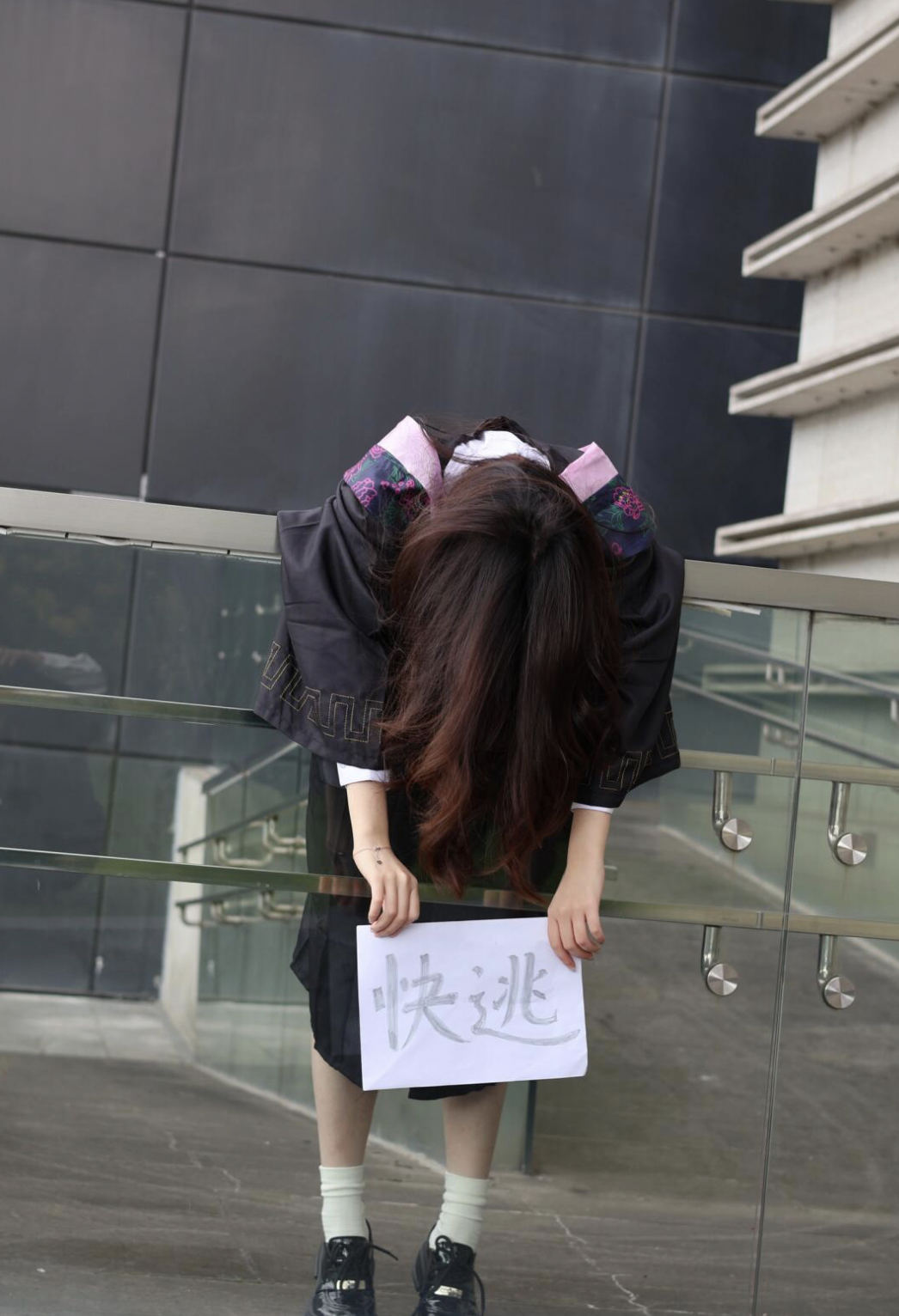
In other words, lying flat is perhaps a mode that Gen Z fantasizes about without fully acting on it. They might skip an unpaid overtime shift, but they are not withdrawing entirely from the economy. This is where the idea of “内卷” (Nèi juǎn, or “involution”) enters the picture. Over the past few years, “内卷” has been used to describe the feeling that everyone is competing harder for diminishing returns: more degrees for the same jobs, more overtime for the same promotions, and more extracurriculars for the same school places. In this atmosphere, lying flat and involution somehow became a juxtaposition. People talk about lying flat while still hustling in the background, secretly studying for exams, networking for positions, or building portfolios.
In fact, every concept has two sides. Instead of reading it purely as defeat, it could be seen as a starting point for new values: slower living, more time with friends and family, and renewed attention to creativity or care work that doesn’t show up directly in GDP. This brings us back to competitiveness. IMD stresses that countries at the top of its ranking tend to have strong institutions and resilient labor markets, not just high output. Resilience, at the human level, depends on people who are not permanently burned out. If a rising share of young workers are telling themselves—and each other—that they need to lie flat, whether jokingly or seriously, they are, in effect, stress-testing how humane that competitiveness really is. The ranking suggests that China is advancing in terms of productivity, efficiency, and overall economic capacity. The “躺平” discourse suggests that, perhaps for many in Gen Z, that advance has not yet translated into a livable, predictable path.
Cover image via Xiaohongshu.