

Feature image of Mobile World Congress 2026: The Wildest Tech Moments That Had Us Hyped

Mobile World Congress 2026: The Wildest Tech Moments That Had Us Hyped

5 mins read

5 mins read

Feature image of Mobile World Congress 2026: The Wildest Tech Moments That Had Us Hyped
In the battle of tech innovation, it was modular phones, robots, and hypercars that stole the show.

Mobile World Congress 2026 delivered the kind of hands-on revelations that reshape how we think about gadgets. Barcelona this year felt less like a trade show and more like a glimpse into competing visions of the future—some wild, some refined, all of them pushing against the static hardware model we’ve accepted for too long. RADII spent the week diving deep into the most exciting reveals, from modular phones that shouldn’t work but do, to robots that move like actual living things. Here’s what genuinely moved the needle.


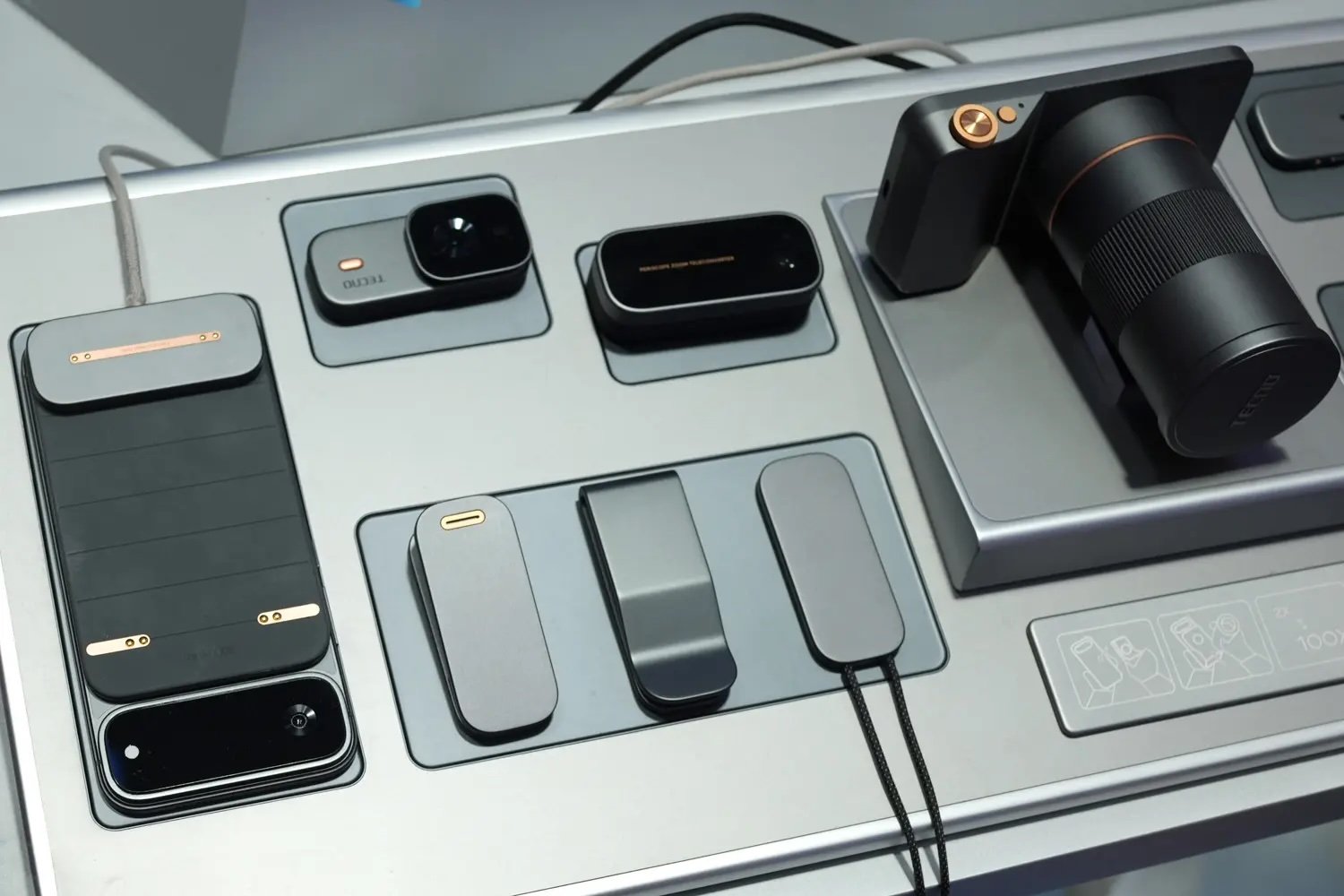
Tecno’s magnetic modular concept phone emerged as the show’s unexpected phenomenon, and I still can’t fully explain why it captured hearts so completely—especially given that the company insists it will probably never ship, unlike Motorola’s “MotoMod” offerings from 10 years ago. Simply dubbed “Modular Phone,” Tecno’s design is a radical act of subtraction: a core phone body just 4.9mm thick with a matte glass back and a rectangular “Modular Magnetic Interconnection Technology” array etched into the rear.

Not much battery to speak of here—just a 3,000mAh base unit designed to be augmented. The genius lies in what you bolt onto it. Attendees enjoyed stacking battery packs—adding 4.5mm of thickness and 3,000mAh of juice per piece—onto this Android phone, and each pogo-pin connection delivered a satisfying mechanical thunk as neodymium magnets locked everything flush against the chassis.

The modules themselves span a jaw-dropping range. Tecno showed an interchangeable lens attachment—complete with its own large sensor, millimeter-wave radio, physical camera buttons, and a 230mm telephoto lens by default—that works seamlessly once magnetically attached to the phone, transforming the ultraslim body into a capable imaging device. There’s also an audio module with spatial speakers, a standalone microphone, an action camera, plus a few more options. What blew my mind was that everything actually worked; these weren’t dummy units. Yet Tecno’s refreshingly honest admission that this probably won’t see retail shelves somehow made it more charming.
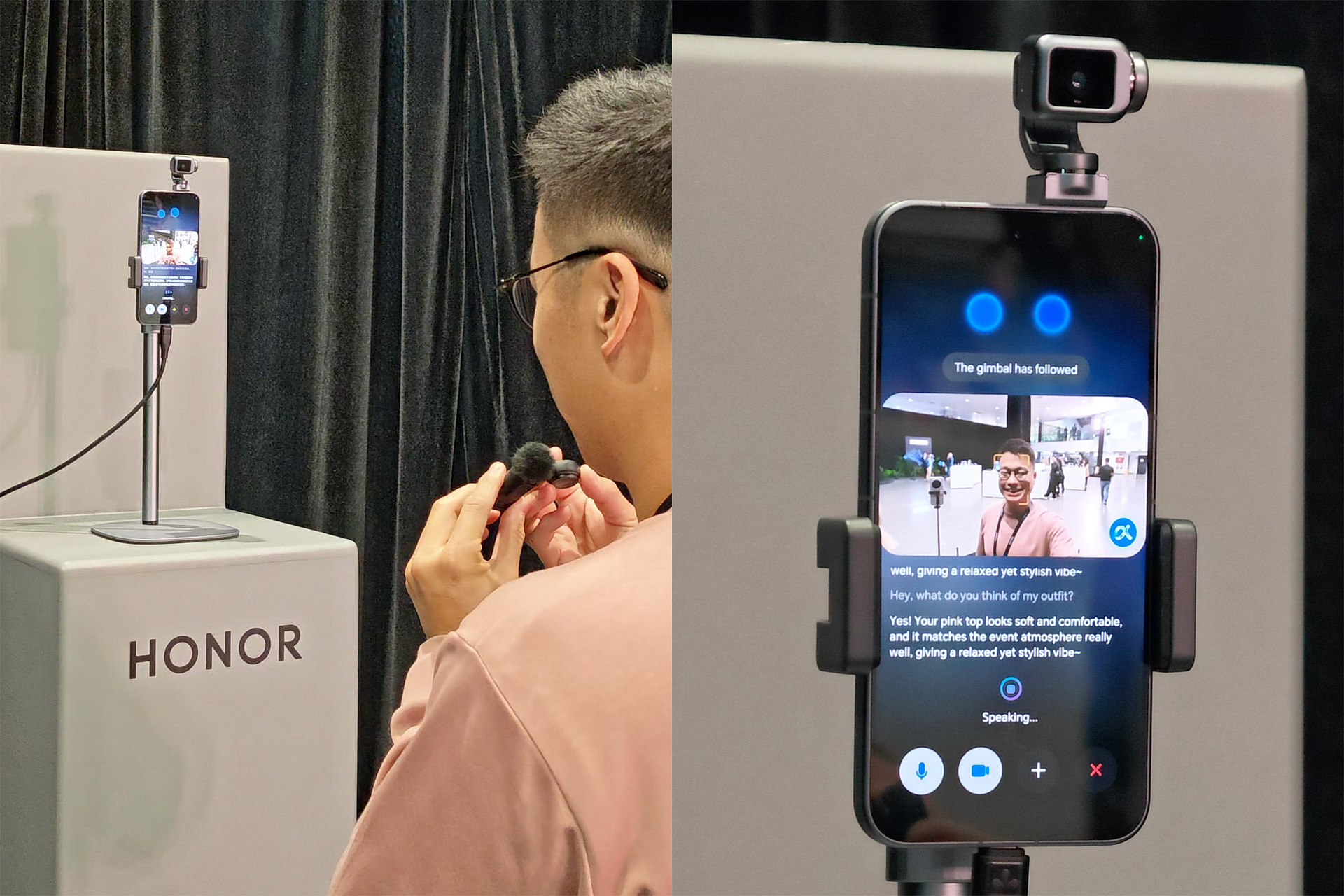
Honor’s Robot Phone, by contrast, felt like science fiction snapping into reality. I secured exclusive interaction time in a demo zone (way before it got too noisy for any feasible interaction), and what struck me immediately was the device’s lighthearted personality enabled by its industrial precision. The phone looks familiar at first—flat glass, punch-hole selfie camera, minimalist aluminum frame—until you flip it over and witness Honor’s breakthrough: a motorized gimbal arm hosting a 200MP camera that extends, retracts, swivels, tilts, and rotates a full 360 degrees.

The phone also does gesture recognition: it tracks your palm, spins to follow you, nods to affirm selections, or shakes in denial. Tilting it further unlocks “AI SpinShot” for cinematic camera pans or “Super Steady Video” mode, where three-axis stabilization keeps footage buttery smooth, even one-handed. You can read more about this upcoming product in its standalone article.

Honor also became the first mobile brand to launch a humanoid robot, and that delivered quite the theatrical payoff. Matte black with a minimalist light-bar “face,” the machine wowed the crowd by dancing and even moonwalking among human performers, followed by a flawless backflip next to the CEO. This was a good showcase for the articulated limbs with precise joint control, balance systems sophisticated enough to land complex gymnastics, and grip strength calibrated for natural handshakes on the show floor. Sure, all this choreography and interaction were manipulated by some engineer nearby (I spotted one doing so with a PlayStation controller), but that’s still an impressive feat nonetheless. There’s no word on when, if ever, Honor will bring this robot to market, though.
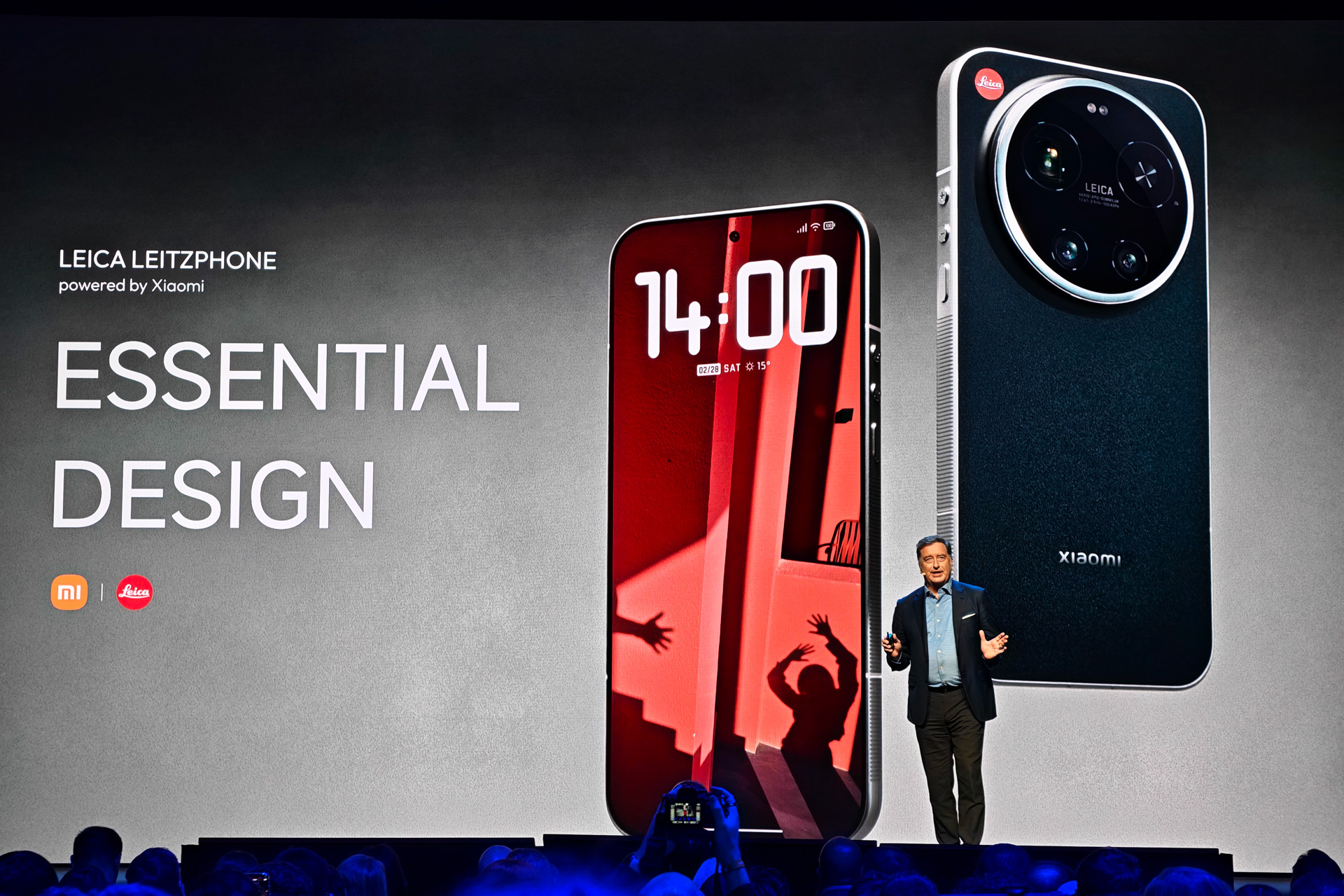
Xiaomi’s Leica Leitzphone, unveiled alongside its cheaper 17 Ultra variant at MWC, radiated understated luxury. The extended collaboration with Leica brought rangefinder heritage etched into the phone’s body, and a quad-camera cluster arranged in a hexagonal formation that screams precision optics. But it’s not just about exclusive Leica filter effects. In addition to a mechanical rotating camera ring (for zoom or aperture), the Leitzphone also carries a large 1-inch-type main camera sensor with LOFIC technology, which offers a notable boost in dynamic range. Priced at around $2,300, this makes it the most expensive phone ever shipped by Xiaomi.

The Chinese brand pulled a “one more thing” after its usual phones and tablets. The Xiaomi Vision GT concept hypercar is the result of an extended collaboration with the famed Gran Turismo driving simulator series, following the SU7 Ultra’s virtualization in the game. While the Vision GT won’t be commercialized, Xiaomi built a full-scale model for MWC to show off its carbon fiber body with aerodynamic qualities all over. Scissor doors slice upward like a fighter jet canopy, the cockpit wraps in breathable 3D-knitted natural fabrics, and the halo-shaped taillight doubles as a massive air outlet structure with micro-perforations to actively guide airflow. The result is slick eye candy with low drag and high downforce.

Shenzhen’s Memomind One smart glasses nailed the wearable elegance I’ve been waiting for. At just 38 grams, these titanium frames—available in three shapes—feel premium without the bulk, with hypoallergenic pads and swept temples contoured for all-day comfort. The real innovation is the expanded micro-LED waveguide display beaming a 120-inch-equivalent virtual canvas in monochrome green, beating the experience I’ve had with similar devices from Rokid and others. The Memomind One will be priced at $599, with pre-orders starting in April.
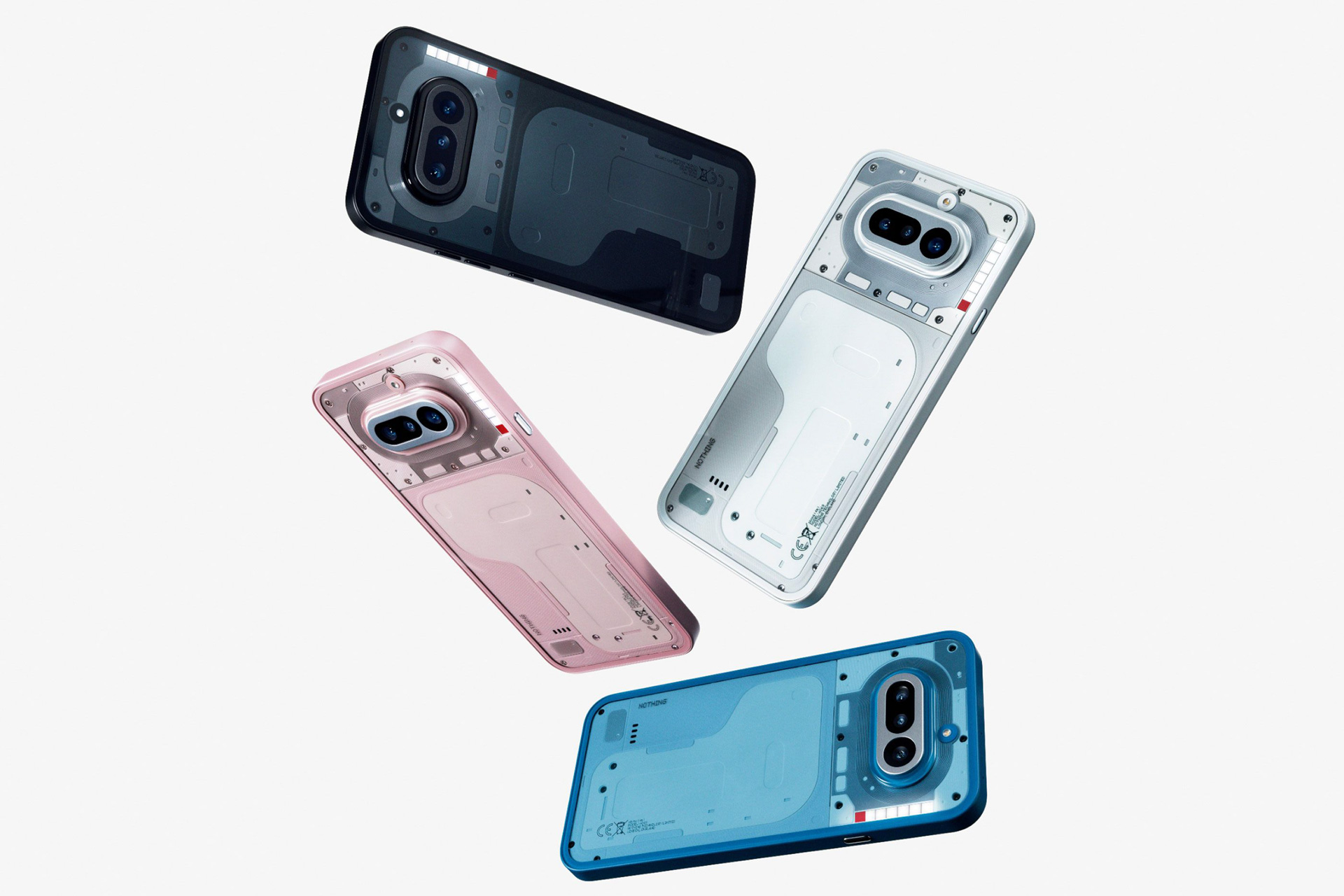
Nothing, a relatively young brand known for its unconventional designs, showed off its Phone (4a) mid-range device via an outdoor booth—one that transformed from a gray container while a crowd eagerly watched. The Phone 4(a) is all about its new 6-segment, 63-LED “Glyph Bar” on the back, which serves as a unique visual notification that can be customized according to contacts or apps. Like before, this goes along with an edge-to-edge transparent rear panel exposing coiled internals, and this time with four color options: black, white, blue, and pink. Not bad for a phone starting from $349.

Samsung‘s Galaxy S26 Ultra privacy screen hit different seeing it in person. Launched pre-MWC at its very own event, the privacy display uses a micro-louver optical film layered over the 6.9-inch Dynamic AMOLED, darkening oblique viewing angles up to 45 degrees while sacrificing just some brightness head-on. Since this feature works on the pixel level, it can also mask just the notifications, and when you tap on those, the whole screen can then be masked automatically to stop nosy neighbors from peeking at your full messages. This is obviously more convenient and versatile than sticking a static privacy filter on the screen, and chances are other brands may eventually be able to integrate this feature.

Another notable mention from MWC includes Lenovo‘s Legion Pro rollable concept gaming laptop. A motorized flexible display unfurls from 16 to a sprawling 24 inches horizontally, offering extra versatility to fully utilize the machine’s beastly specs. Apparently, that extended screen will come in handy for a classic game like Dota 2, giving you a tactical advantage in terms of visibility and inventory management. If you want one, you may want to petition the company to turn this concept into an actual product.

MWC 2026 definitely didn’t disappoint. From Tecno’s modular revolution to Honor’s animate robotics, the week delivered devices that didn’t just improve on predecessors, they challenged fundamental assumptions about what phones, wearables, and companions should be.

Cover image via Stuff.

NEWSLETTER

Get weekly top picks and exclusive, newsletter only content delivered straight to you inbox.

NEWSLETTER

Get weekly top picks and exclusive, newsletter only content delivered straight to you inbox.

RADII NEWSLETTER

Get weekly top picks and exclusive, newsletter only content delivered straight to you inbox

Feature image of Mobile World Congress 2026: The Wildest Tech Moments That Had Us Hyped

Mobile World Congress 2026: The Wildest Tech Moments That Had Us Hyped

5 mins read

In the battle of tech innovation, it was modular phones, robots, and hypercars that stole the show.

Mobile World Congress 2026 delivered the kind of hands-on revelations that reshape how we think about gadgets. Barcelona this year felt less like a trade show and more like a glimpse into competing visions of the future—some wild, some refined, all of them pushing against the static hardware model we’ve accepted for too long. RADII spent the week diving deep into the most exciting reveals, from modular phones that shouldn’t work but do, to robots that move like actual living things. Here’s what genuinely moved the needle.


Tecno’s magnetic modular concept phone emerged as the show’s unexpected phenomenon, and I still can’t fully explain why it captured hearts so completely—especially given that the company insists it will probably never ship, unlike Motorola’s “MotoMod” offerings from 10 years ago. Simply dubbed “Modular Phone,” Tecno’s design is a radical act of subtraction: a core phone body just 4.9mm thick with a matte glass back and a rectangular “Modular Magnetic Interconnection Technology” array etched into the rear.

Not much battery to speak of here—just a 3,000mAh base unit designed to be augmented. The genius lies in what you bolt onto it. Attendees enjoyed stacking battery packs—adding 4.5mm of thickness and 3,000mAh of juice per piece—onto this Android phone, and each pogo-pin connection delivered a satisfying mechanical thunk as neodymium magnets locked everything flush against the chassis.

The modules themselves span a jaw-dropping range. Tecno showed an interchangeable lens attachment—complete with its own large sensor, millimeter-wave radio, physical camera buttons, and a 230mm telephoto lens by default—that works seamlessly once magnetically attached to the phone, transforming the ultraslim body into a capable imaging device. There’s also an audio module with spatial speakers, a standalone microphone, an action camera, plus a few more options. What blew my mind was that everything actually worked; these weren’t dummy units. Yet Tecno’s refreshingly honest admission that this probably won’t see retail shelves somehow made it more charming.

Honor’s Robot Phone, by contrast, felt like science fiction snapping into reality. I secured exclusive interaction time in a demo zone (way before it got too noisy for any feasible interaction), and what struck me immediately was the device’s lighthearted personality enabled by its industrial precision. The phone looks familiar at first—flat glass, punch-hole selfie camera, minimalist aluminum frame—until you flip it over and witness Honor’s breakthrough: a motorized gimbal arm hosting a 200MP camera that extends, retracts, swivels, tilts, and rotates a full 360 degrees.

The phone also does gesture recognition: it tracks your palm, spins to follow you, nods to affirm selections, or shakes in denial. Tilting it further unlocks “AI SpinShot” for cinematic camera pans or “Super Steady Video” mode, where three-axis stabilization keeps footage buttery smooth, even one-handed. You can read more about this upcoming product in its standalone article.

Honor also became the first mobile brand to launch a humanoid robot, and that delivered quite the theatrical payoff. Matte black with a minimalist light-bar “face,” the machine wowed the crowd by dancing and even moonwalking among human performers, followed by a flawless backflip next to the CEO. This was a good showcase for the articulated limbs with precise joint control, balance systems sophisticated enough to land complex gymnastics, and grip strength calibrated for natural handshakes on the show floor. Sure, all this choreography and interaction were manipulated by some engineer nearby (I spotted one doing so with a PlayStation controller), but that’s still an impressive feat nonetheless. There’s no word on when, if ever, Honor will bring this robot to market, though.

Xiaomi’s Leica Leitzphone, unveiled alongside its cheaper 17 Ultra variant at MWC, radiated understated luxury. The extended collaboration with Leica brought rangefinder heritage etched into the phone’s body, and a quad-camera cluster arranged in a hexagonal formation that screams precision optics. But it’s not just about exclusive Leica filter effects. In addition to a mechanical rotating camera ring (for zoom or aperture), the Leitzphone also carries a large 1-inch-type main camera sensor with LOFIC technology, which offers a notable boost in dynamic range. Priced at around $2,300, this makes it the most expensive phone ever shipped by Xiaomi.

The Chinese brand pulled a “one more thing” after its usual phones and tablets. The Xiaomi Vision GT concept hypercar is the result of an extended collaboration with the famed Gran Turismo driving simulator series, following the SU7 Ultra’s virtualization in the game. While the Vision GT won’t be commercialized, Xiaomi built a full-scale model for MWC to show off its carbon fiber body with aerodynamic qualities all over. Scissor doors slice upward like a fighter jet canopy, the cockpit wraps in breathable 3D-knitted natural fabrics, and the halo-shaped taillight doubles as a massive air outlet structure with micro-perforations to actively guide airflow. The result is slick eye candy with low drag and high downforce.

Shenzhen’s Memomind One smart glasses nailed the wearable elegance I’ve been waiting for. At just 38 grams, these titanium frames—available in three shapes—feel premium without the bulk, with hypoallergenic pads and swept temples contoured for all-day comfort. The real innovation is the expanded micro-LED waveguide display beaming a 120-inch-equivalent virtual canvas in monochrome green, beating the experience I’ve had with similar devices from Rokid and others. The Memomind One will be priced at $599, with pre-orders starting in April.

Nothing, a relatively young brand known for its unconventional designs, showed off its Phone (4a) mid-range device via an outdoor booth—one that transformed from a gray container while a crowd eagerly watched. The Phone 4(a) is all about its new 6-segment, 63-LED “Glyph Bar” on the back, which serves as a unique visual notification that can be customized according to contacts or apps. Like before, this goes along with an edge-to-edge transparent rear panel exposing coiled internals, and this time with four color options: black, white, blue, and pink. Not bad for a phone starting from $349.

Samsung‘s Galaxy S26 Ultra privacy screen hit different seeing it in person. Launched pre-MWC at its very own event, the privacy display uses a micro-louver optical film layered over the 6.9-inch Dynamic AMOLED, darkening oblique viewing angles up to 45 degrees while sacrificing just some brightness head-on. Since this feature works on the pixel level, it can also mask just the notifications, and when you tap on those, the whole screen can then be masked automatically to stop nosy neighbors from peeking at your full messages. This is obviously more convenient and versatile than sticking a static privacy filter on the screen, and chances are other brands may eventually be able to integrate this feature.

Another notable mention from MWC includes Lenovo‘s Legion Pro rollable concept gaming laptop. A motorized flexible display unfurls from 16 to a sprawling 24 inches horizontally, offering extra versatility to fully utilize the machine’s beastly specs. Apparently, that extended screen will come in handy for a classic game like Dota 2, giving you a tactical advantage in terms of visibility and inventory management. If you want one, you may want to petition the company to turn this concept into an actual product.

MWC 2026 definitely didn’t disappoint. From Tecno’s modular revolution to Honor’s animate robotics, the week delivered devices that didn’t just improve on predecessors, they challenged fundamental assumptions about what phones, wearables, and companions should be.

Cover image via Stuff.

NEWSLETTER

Get weekly top picks and exclusive, newsletter only content delivered straight to you inbox.

RADII NEWSLETTER

Get weekly top picks and exclusive, newsletter only content delivered straight to you inbox

RELATED POSTS

Feature image of Mobile World Congress 2026: The Wildest Tech Moments That Had Us Hyped

Mobile World Congress 2026: The Wildest Tech Moments That Had Us Hyped

5 mins read

5 mins read

Feature image of Mobile World Congress 2026: The Wildest Tech Moments That Had Us Hyped
In the battle of tech innovation, it was modular phones, robots, and hypercars that stole the show.

Mobile World Congress 2026 delivered the kind of hands-on revelations that reshape how we think about gadgets. Barcelona this year felt less like a trade show and more like a glimpse into competing visions of the future—some wild, some refined, all of them pushing against the static hardware model we’ve accepted for too long. RADII spent the week diving deep into the most exciting reveals, from modular phones that shouldn’t work but do, to robots that move like actual living things. Here’s what genuinely moved the needle.


Tecno’s magnetic modular concept phone emerged as the show’s unexpected phenomenon, and I still can’t fully explain why it captured hearts so completely—especially given that the company insists it will probably never ship, unlike Motorola’s “MotoMod” offerings from 10 years ago. Simply dubbed “Modular Phone,” Tecno’s design is a radical act of subtraction: a core phone body just 4.9mm thick with a matte glass back and a rectangular “Modular Magnetic Interconnection Technology” array etched into the rear.

Not much battery to speak of here—just a 3,000mAh base unit designed to be augmented. The genius lies in what you bolt onto it. Attendees enjoyed stacking battery packs—adding 4.5mm of thickness and 3,000mAh of juice per piece—onto this Android phone, and each pogo-pin connection delivered a satisfying mechanical thunk as neodymium magnets locked everything flush against the chassis.

The modules themselves span a jaw-dropping range. Tecno showed an interchangeable lens attachment—complete with its own large sensor, millimeter-wave radio, physical camera buttons, and a 230mm telephoto lens by default—that works seamlessly once magnetically attached to the phone, transforming the ultraslim body into a capable imaging device. There’s also an audio module with spatial speakers, a standalone microphone, an action camera, plus a few more options. What blew my mind was that everything actually worked; these weren’t dummy units. Yet Tecno’s refreshingly honest admission that this probably won’t see retail shelves somehow made it more charming.

Honor’s Robot Phone, by contrast, felt like science fiction snapping into reality. I secured exclusive interaction time in a demo zone (way before it got too noisy for any feasible interaction), and what struck me immediately was the device’s lighthearted personality enabled by its industrial precision. The phone looks familiar at first—flat glass, punch-hole selfie camera, minimalist aluminum frame—until you flip it over and witness Honor’s breakthrough: a motorized gimbal arm hosting a 200MP camera that extends, retracts, swivels, tilts, and rotates a full 360 degrees.

The phone also does gesture recognition: it tracks your palm, spins to follow you, nods to affirm selections, or shakes in denial. Tilting it further unlocks “AI SpinShot” for cinematic camera pans or “Super Steady Video” mode, where three-axis stabilization keeps footage buttery smooth, even one-handed. You can read more about this upcoming product in its standalone article.

Honor also became the first mobile brand to launch a humanoid robot, and that delivered quite the theatrical payoff. Matte black with a minimalist light-bar “face,” the machine wowed the crowd by dancing and even moonwalking among human performers, followed by a flawless backflip next to the CEO. This was a good showcase for the articulated limbs with precise joint control, balance systems sophisticated enough to land complex gymnastics, and grip strength calibrated for natural handshakes on the show floor. Sure, all this choreography and interaction were manipulated by some engineer nearby (I spotted one doing so with a PlayStation controller), but that’s still an impressive feat nonetheless. There’s no word on when, if ever, Honor will bring this robot to market, though.

Xiaomi’s Leica Leitzphone, unveiled alongside its cheaper 17 Ultra variant at MWC, radiated understated luxury. The extended collaboration with Leica brought rangefinder heritage etched into the phone’s body, and a quad-camera cluster arranged in a hexagonal formation that screams precision optics. But it’s not just about exclusive Leica filter effects. In addition to a mechanical rotating camera ring (for zoom or aperture), the Leitzphone also carries a large 1-inch-type main camera sensor with LOFIC technology, which offers a notable boost in dynamic range. Priced at around $2,300, this makes it the most expensive phone ever shipped by Xiaomi.

The Chinese brand pulled a “one more thing” after its usual phones and tablets. The Xiaomi Vision GT concept hypercar is the result of an extended collaboration with the famed Gran Turismo driving simulator series, following the SU7 Ultra’s virtualization in the game. While the Vision GT won’t be commercialized, Xiaomi built a full-scale model for MWC to show off its carbon fiber body with aerodynamic qualities all over. Scissor doors slice upward like a fighter jet canopy, the cockpit wraps in breathable 3D-knitted natural fabrics, and the halo-shaped taillight doubles as a massive air outlet structure with micro-perforations to actively guide airflow. The result is slick eye candy with low drag and high downforce.

Shenzhen’s Memomind One smart glasses nailed the wearable elegance I’ve been waiting for. At just 38 grams, these titanium frames—available in three shapes—feel premium without the bulk, with hypoallergenic pads and swept temples contoured for all-day comfort. The real innovation is the expanded micro-LED waveguide display beaming a 120-inch-equivalent virtual canvas in monochrome green, beating the experience I’ve had with similar devices from Rokid and others. The Memomind One will be priced at $599, with pre-orders starting in April.

Nothing, a relatively young brand known for its unconventional designs, showed off its Phone (4a) mid-range device via an outdoor booth—one that transformed from a gray container while a crowd eagerly watched. The Phone 4(a) is all about its new 6-segment, 63-LED “Glyph Bar” on the back, which serves as a unique visual notification that can be customized according to contacts or apps. Like before, this goes along with an edge-to-edge transparent rear panel exposing coiled internals, and this time with four color options: black, white, blue, and pink. Not bad for a phone starting from $349.

Samsung‘s Galaxy S26 Ultra privacy screen hit different seeing it in person. Launched pre-MWC at its very own event, the privacy display uses a micro-louver optical film layered over the 6.9-inch Dynamic AMOLED, darkening oblique viewing angles up to 45 degrees while sacrificing just some brightness head-on. Since this feature works on the pixel level, it can also mask just the notifications, and when you tap on those, the whole screen can then be masked automatically to stop nosy neighbors from peeking at your full messages. This is obviously more convenient and versatile than sticking a static privacy filter on the screen, and chances are other brands may eventually be able to integrate this feature.

Another notable mention from MWC includes Lenovo‘s Legion Pro rollable concept gaming laptop. A motorized flexible display unfurls from 16 to a sprawling 24 inches horizontally, offering extra versatility to fully utilize the machine’s beastly specs. Apparently, that extended screen will come in handy for a classic game like Dota 2, giving you a tactical advantage in terms of visibility and inventory management. If you want one, you may want to petition the company to turn this concept into an actual product.

MWC 2026 definitely didn’t disappoint. From Tecno’s modular revolution to Honor’s animate robotics, the week delivered devices that didn’t just improve on predecessors, they challenged fundamental assumptions about what phones, wearables, and companions should be.

Cover image via Stuff.

NEWSLETTER

Get weekly top picks and exclusive, newsletter only content delivered straight to you inbox.

NEWSLETTER

Get weekly top picks and exclusive, newsletter only content delivered straight to you inbox.

RADII NEWSLETTER

Get weekly top picks and exclusive, newsletter only content delivered straight to you inbox

Feature image of Mobile World Congress 2026: The Wildest Tech Moments That Had Us Hyped

Mobile World Congress 2026: The Wildest Tech Moments That Had Us Hyped

5 mins read

In the battle of tech innovation, it was modular phones, robots, and hypercars that stole the show.

Mobile World Congress 2026 delivered the kind of hands-on revelations that reshape how we think about gadgets. Barcelona this year felt less like a trade show and more like a glimpse into competing visions of the future—some wild, some refined, all of them pushing against the static hardware model we’ve accepted for too long. RADII spent the week diving deep into the most exciting reveals, from modular phones that shouldn’t work but do, to robots that move like actual living things. Here’s what genuinely moved the needle.


Tecno’s magnetic modular concept phone emerged as the show’s unexpected phenomenon, and I still can’t fully explain why it captured hearts so completely—especially given that the company insists it will probably never ship, unlike Motorola’s “MotoMod” offerings from 10 years ago. Simply dubbed “Modular Phone,” Tecno’s design is a radical act of subtraction: a core phone body just 4.9mm thick with a matte glass back and a rectangular “Modular Magnetic Interconnection Technology” array etched into the rear.

Not much battery to speak of here—just a 3,000mAh base unit designed to be augmented. The genius lies in what you bolt onto it. Attendees enjoyed stacking battery packs—adding 4.5mm of thickness and 3,000mAh of juice per piece—onto this Android phone, and each pogo-pin connection delivered a satisfying mechanical thunk as neodymium magnets locked everything flush against the chassis.

The modules themselves span a jaw-dropping range. Tecno showed an interchangeable lens attachment—complete with its own large sensor, millimeter-wave radio, physical camera buttons, and a 230mm telephoto lens by default—that works seamlessly once magnetically attached to the phone, transforming the ultraslim body into a capable imaging device. There’s also an audio module with spatial speakers, a standalone microphone, an action camera, plus a few more options. What blew my mind was that everything actually worked; these weren’t dummy units. Yet Tecno’s refreshingly honest admission that this probably won’t see retail shelves somehow made it more charming.

Honor’s Robot Phone, by contrast, felt like science fiction snapping into reality. I secured exclusive interaction time in a demo zone (way before it got too noisy for any feasible interaction), and what struck me immediately was the device’s lighthearted personality enabled by its industrial precision. The phone looks familiar at first—flat glass, punch-hole selfie camera, minimalist aluminum frame—until you flip it over and witness Honor’s breakthrough: a motorized gimbal arm hosting a 200MP camera that extends, retracts, swivels, tilts, and rotates a full 360 degrees.

The phone also does gesture recognition: it tracks your palm, spins to follow you, nods to affirm selections, or shakes in denial. Tilting it further unlocks “AI SpinShot” for cinematic camera pans or “Super Steady Video” mode, where three-axis stabilization keeps footage buttery smooth, even one-handed. You can read more about this upcoming product in its standalone article.

Honor also became the first mobile brand to launch a humanoid robot, and that delivered quite the theatrical payoff. Matte black with a minimalist light-bar “face,” the machine wowed the crowd by dancing and even moonwalking among human performers, followed by a flawless backflip next to the CEO. This was a good showcase for the articulated limbs with precise joint control, balance systems sophisticated enough to land complex gymnastics, and grip strength calibrated for natural handshakes on the show floor. Sure, all this choreography and interaction were manipulated by some engineer nearby (I spotted one doing so with a PlayStation controller), but that’s still an impressive feat nonetheless. There’s no word on when, if ever, Honor will bring this robot to market, though.

Xiaomi’s Leica Leitzphone, unveiled alongside its cheaper 17 Ultra variant at MWC, radiated understated luxury. The extended collaboration with Leica brought rangefinder heritage etched into the phone’s body, and a quad-camera cluster arranged in a hexagonal formation that screams precision optics. But it’s not just about exclusive Leica filter effects. In addition to a mechanical rotating camera ring (for zoom or aperture), the Leitzphone also carries a large 1-inch-type main camera sensor with LOFIC technology, which offers a notable boost in dynamic range. Priced at around $2,300, this makes it the most expensive phone ever shipped by Xiaomi.

The Chinese brand pulled a “one more thing” after its usual phones and tablets. The Xiaomi Vision GT concept hypercar is the result of an extended collaboration with the famed Gran Turismo driving simulator series, following the SU7 Ultra’s virtualization in the game. While the Vision GT won’t be commercialized, Xiaomi built a full-scale model for MWC to show off its carbon fiber body with aerodynamic qualities all over. Scissor doors slice upward like a fighter jet canopy, the cockpit wraps in breathable 3D-knitted natural fabrics, and the halo-shaped taillight doubles as a massive air outlet structure with micro-perforations to actively guide airflow. The result is slick eye candy with low drag and high downforce.

Shenzhen’s Memomind One smart glasses nailed the wearable elegance I’ve been waiting for. At just 38 grams, these titanium frames—available in three shapes—feel premium without the bulk, with hypoallergenic pads and swept temples contoured for all-day comfort. The real innovation is the expanded micro-LED waveguide display beaming a 120-inch-equivalent virtual canvas in monochrome green, beating the experience I’ve had with similar devices from Rokid and others. The Memomind One will be priced at $599, with pre-orders starting in April.

Nothing, a relatively young brand known for its unconventional designs, showed off its Phone (4a) mid-range device via an outdoor booth—one that transformed from a gray container while a crowd eagerly watched. The Phone 4(a) is all about its new 6-segment, 63-LED “Glyph Bar” on the back, which serves as a unique visual notification that can be customized according to contacts or apps. Like before, this goes along with an edge-to-edge transparent rear panel exposing coiled internals, and this time with four color options: black, white, blue, and pink. Not bad for a phone starting from $349.

Samsung‘s Galaxy S26 Ultra privacy screen hit different seeing it in person. Launched pre-MWC at its very own event, the privacy display uses a micro-louver optical film layered over the 6.9-inch Dynamic AMOLED, darkening oblique viewing angles up to 45 degrees while sacrificing just some brightness head-on. Since this feature works on the pixel level, it can also mask just the notifications, and when you tap on those, the whole screen can then be masked automatically to stop nosy neighbors from peeking at your full messages. This is obviously more convenient and versatile than sticking a static privacy filter on the screen, and chances are other brands may eventually be able to integrate this feature.

Another notable mention from MWC includes Lenovo‘s Legion Pro rollable concept gaming laptop. A motorized flexible display unfurls from 16 to a sprawling 24 inches horizontally, offering extra versatility to fully utilize the machine’s beastly specs. Apparently, that extended screen will come in handy for a classic game like Dota 2, giving you a tactical advantage in terms of visibility and inventory management. If you want one, you may want to petition the company to turn this concept into an actual product.

MWC 2026 definitely didn’t disappoint. From Tecno’s modular revolution to Honor’s animate robotics, the week delivered devices that didn’t just improve on predecessors, they challenged fundamental assumptions about what phones, wearables, and companions should be.

Cover image via Stuff.

NEWSLETTER

Get weekly top picks and exclusive, newsletter only content delivered straight to you inbox.

RADII NEWSLETTER

Get weekly top picks and exclusive, newsletter only content delivered straight to you inbox

NEWSLETTER​

Get weekly top picks and exclusive, newsletter only content delivered straight to you inbox

RADII Newsletter Pop Up small banner

NEWSLETTER

Get weekly top picks and exclusive, newsletter only content delivered straight to you inbox.

Link Copied!

Share

Feature image of Mobile World Congress 2026: The Wildest Tech Moments That Had Us Hyped

Mobile World Congress 2026: The Wildest Tech Moments That Had Us Hyped

In the battle of tech innovation, it was modular phones, robots, and hypercars that stole the show.

PULSE

Tap into the latest in music, fashion, art, design, entertainment, pop culture, celebrity news, and contemporary culture

DISCOVER

Embark on a journey through food, travel, wellness, heritage, traditional culture, and lifestyle

STYLE

An insider’s look at the intersection of fashion, art, and design

FEAST

Titillate your taste buds with coverage of the best food and drink trends from China and beyond.

FUTURE

Explore the cutting edge in tech, AI, gadgets, gaming, and innovative tech-related products

FEAST

Titillate your taste buds with coverage of the best food and drink trends from China and beyond

STYLE

An insider’s look at the intersection of fashion, art, and design

PULSE

Unpacking Chinese youth culture through coverage of nightlife, film, sports, celebrities, and the hottest new music