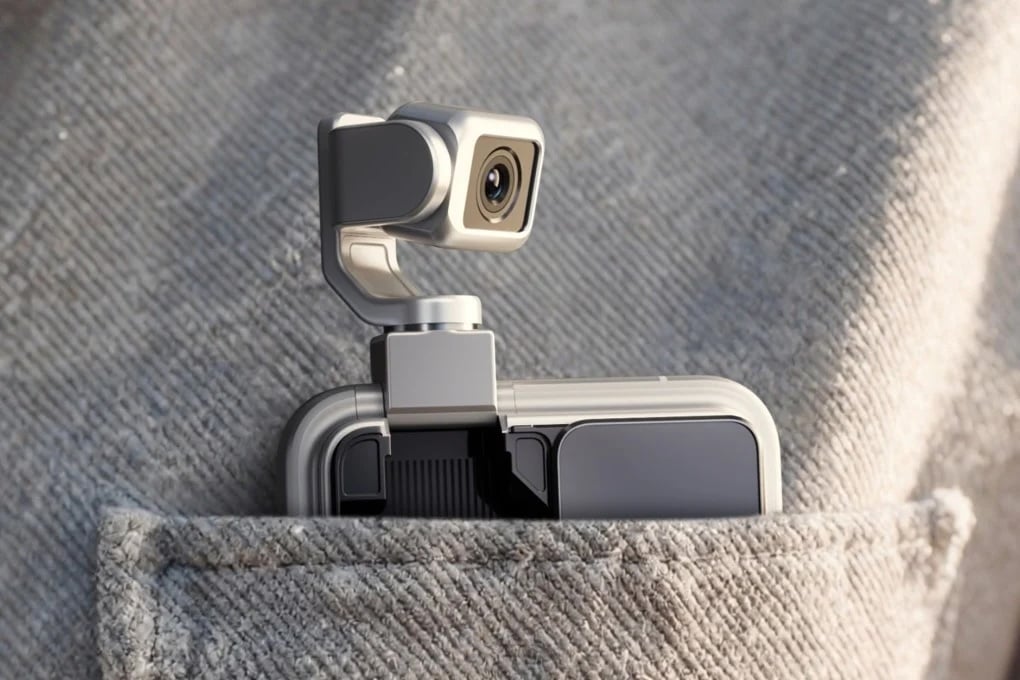

Some say smartphones have become boring. Unless you’re willing to pay a premium for a foldable phone (especially one of those exotic “tri-fold” devices), we’re only getting a flat slab with incremental upgrades—processor, storage, cameras, and battery life. Even the screen size options have barely changed in recent years, and the recent AI focus has left the form factor largely untouched. This is why HONOR got my attention when it first announced the “Robot Phone” back in October, and more recently, I was one of the very few people who got to finally interact with it in private at Mobile World Congress Barcelona.
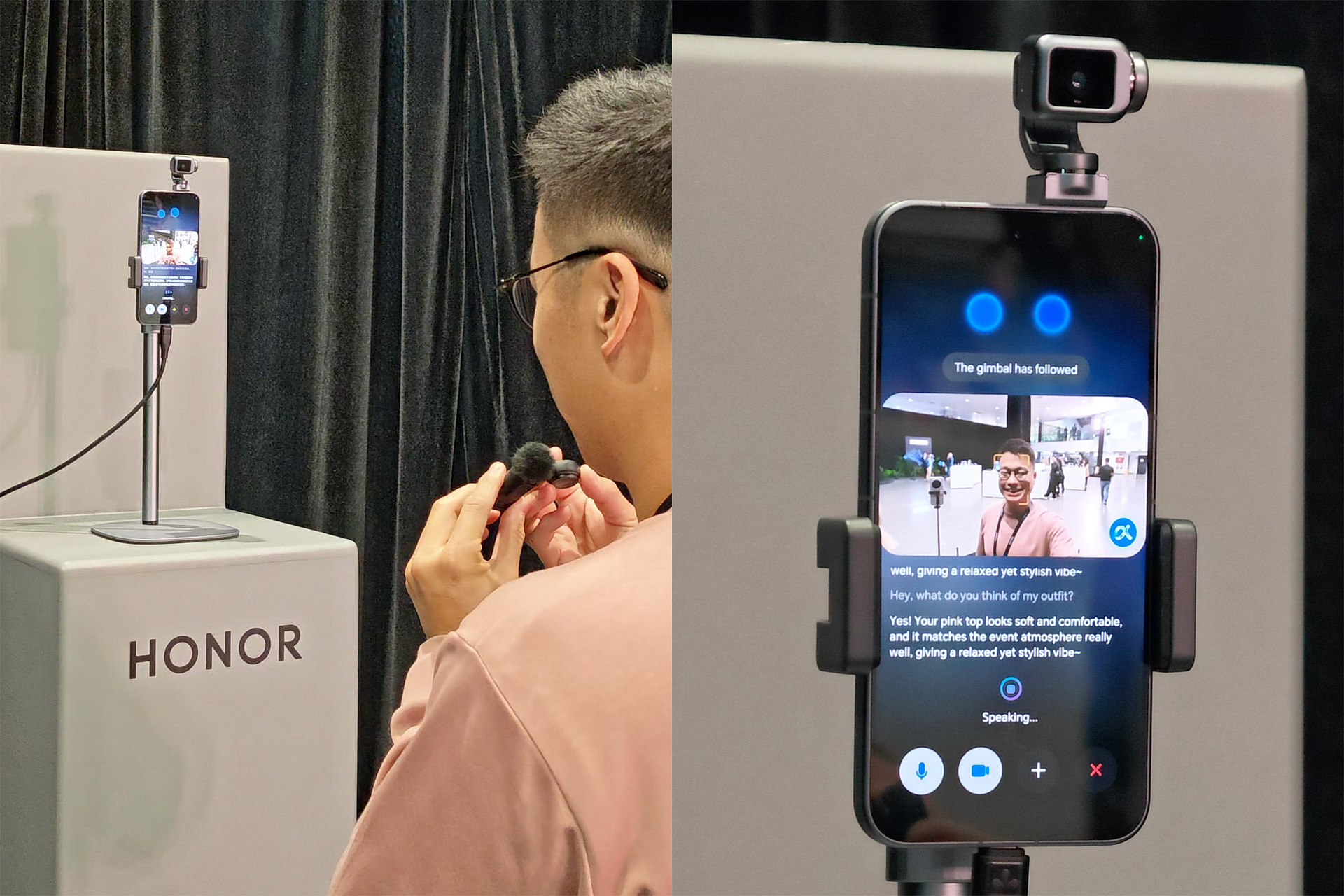
In a nutshell, the HONOR Robot Phone is a device with a built-in robotic gimbal camera that doubles as a digital companion—an AI buddy that can see you, follow you, and respond with body language. For creators, that means fewer accessories and more time actually making things. For everyone else, it’s the closest a phone has come to acting like a companion instead of a tool.
At the back of the Robot Phone, the main camera hides under a slide-open cover. At the touch of a button or with a simple hand gesture, the camera pops out on a motorized, three-axis gimbal arm when it’s time to shoot or interact. The arm can pan, tilt, and rotate with four degrees of freedom, powered by micro motors that HONOR says are about 70 percent smaller than the ones in traditional gimbals. That shrinkage is what lets a full-blown robotic mechanism live inside something that still passes as a phone.
HONOR is leaning hard into the idea of embodied AI. The gimbal is able to react to music, nod in agreement, shake its “head” no, and even bounce to the beat, giving the device something close to body language. The company is framing that as a new interaction layer: instead of only tapping screens or talking to a voice assistant, you have a phone that responds with motion. When the AI buddy approves of something you said (or, in my case, what I wore), the camera might tilt forward in a nod; when it disagrees (like when I questioned whether it would ever get tired), it can turn away or give a subtle shake. It’s a small thing, but in person, it makes the device feel oddly present.
During a video chat, the phone can reposition its camera to make sure everyone is framed, rotating to follow whoever is speaking. When music is playing in the background, the AI can start subtly dancing along, nodding or tilting in time with the beat. When you ask it a question about what’s in front of you—a landmark, a street, or a piece of art—it can rotate to survey the environment, then answer with on-screen info like a mini tour guide. HONOR even demoed future scenarios where the phone acts as a travel partner, explaining what you’re seeing while you walk, keeping up a running conversation rather than waiting for commands.
When it comes to video capture with the Robot Phone, content creators will be pleased to know that not only does the main sensor come in at 200MP, but it’s also paired with ARRI image science—the same brand whose Alexa cinema cameras have shot blockbusters like Skyfall, Argo, and The Avengers. HONOR is using ARRI’s image know-how to push more natural color, smoother highlight roll-off, and a sense of depth that leans closer to cinema than to typical phone HDR.
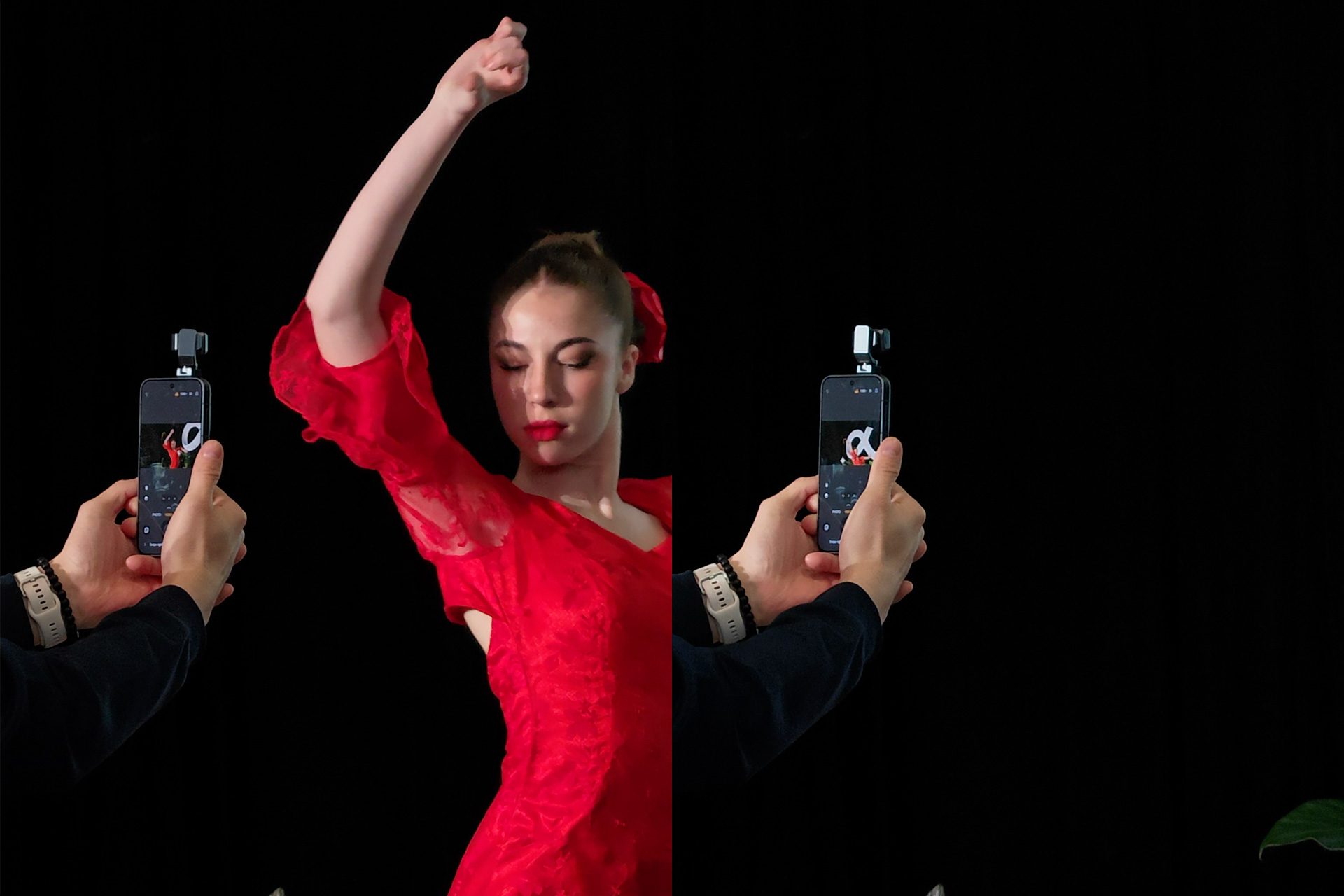
On top of that sensor, HONOR layers AI object tracking and AI SpinShot. The tracking system identifies subjects and follows them in real time, whether that’s you walking around the camera (even if you duck behind someone for a moment), a friend skating past, or a pet running into frame. In the MWC demos, the camera followed the model smoothly as she waltzed across the stage and turned, with the bonus being the handheld stabilization. The demonstrator then toggled AI SpinShot, in which the camera performed 90- and 180-degree pans and tilts, letting him pull off sweeping room reveals, whip-pans from face to skyline, and dramatic pivot shots on the dancer. It’s essentially prepackaged camera moves for everyday users who aren’t experienced with gimbal choreography.
The company is also promising an AI shooting assistant and an AI video editor baked into the phone. The idea is simple: instead of dumping clips into a laptop later, the Robot Phone can suggest angles while you record, then organize and cut footage on-device into something ready for TikTok, Reels, or YouTube. It can automatically choose the cleanest takes, sync to music, and apply color and stabilization tuned for the gimbal footage. You still get control—this isn’t auto-edit or anything—but for late-night uploads from a hotel room or on the way home from class, the time saved is obvious.
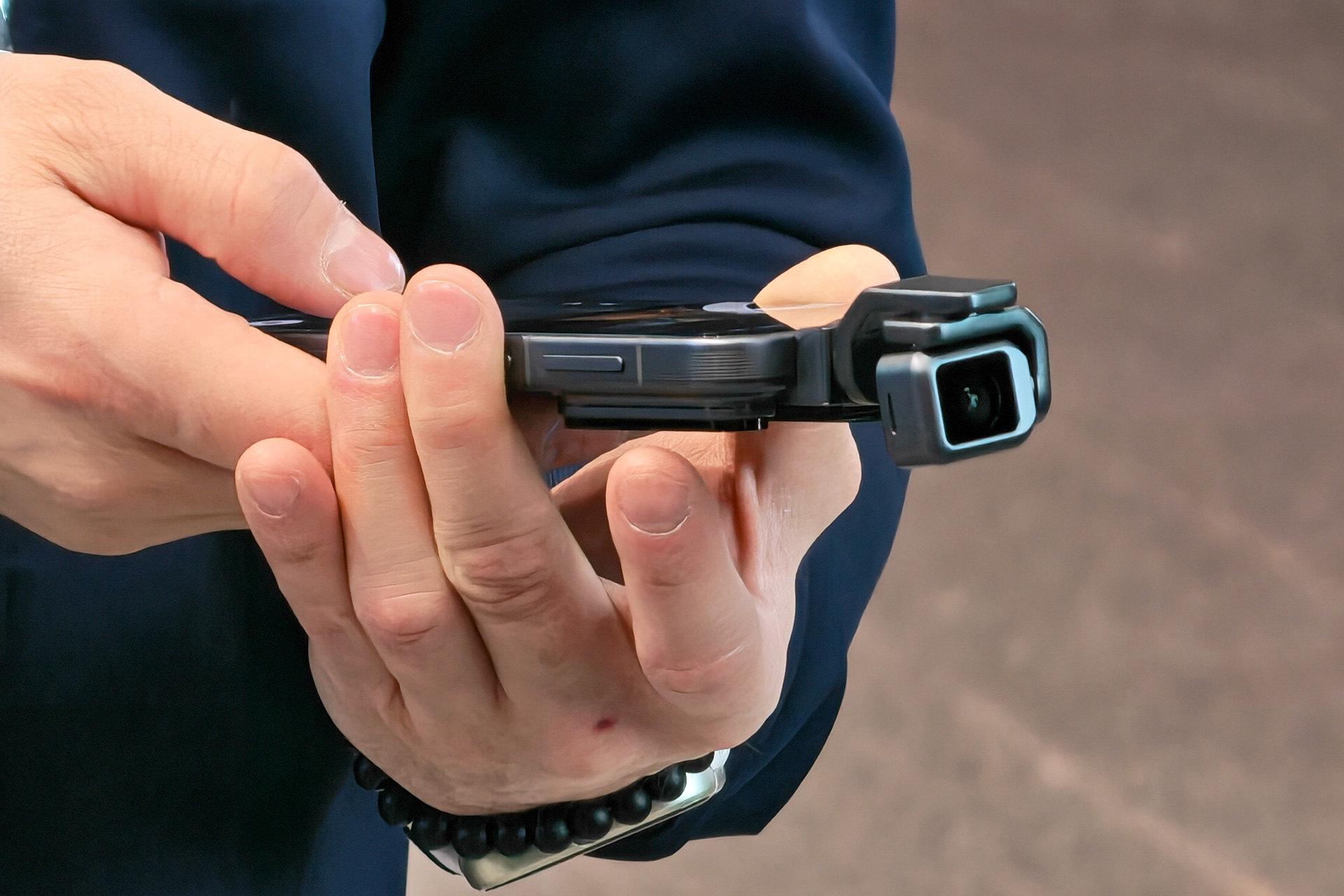
There are limits and trade-offs. The camera block is noticeably thicker than a traditional module; this is the cost of packing a true gimbal into a phone. HONOR is still finalizing features like long-exposure astrophotography that would take advantage of the ultra-stable movement, and it’s clear this is a first-generation product. The company says it plans to launch in the second half of 2026, and from what I heard, the Robot Phone won’t be officially sold outside of China—at least not initially. For many, that means importing or waiting to see if the concept spreads to other brands.
But as a statement at Mobile World Conference—that we recently covered—it lands. The HONOR Robot Phone shows what happens when a manufacturer doesn’t treat AI as a wallpaper generator or a smarter search bar, but as something that can inhabit hardware. In a world where technology often feels impersonal, the Robot Phone brings a touch of humanity back to our devices; it’s a glimpse into the future of mobile technology. It’s a creator’s dream come true and an AI companion that moves with you, understands you, and enhances your world in ways that are as exciting as they are innovative.
Images via Richard Lai.