Feature image of Dissecting Systems, Symbols, and the Space Between With Artist Brandon Tay

Dissecting Systems, Symbols, and the Space Between With Artist Brandon Tay

6 mins read

6 mins read

Feature image of Dissecting Systems, Symbols, and the Space Between With Artist Brandon Tay
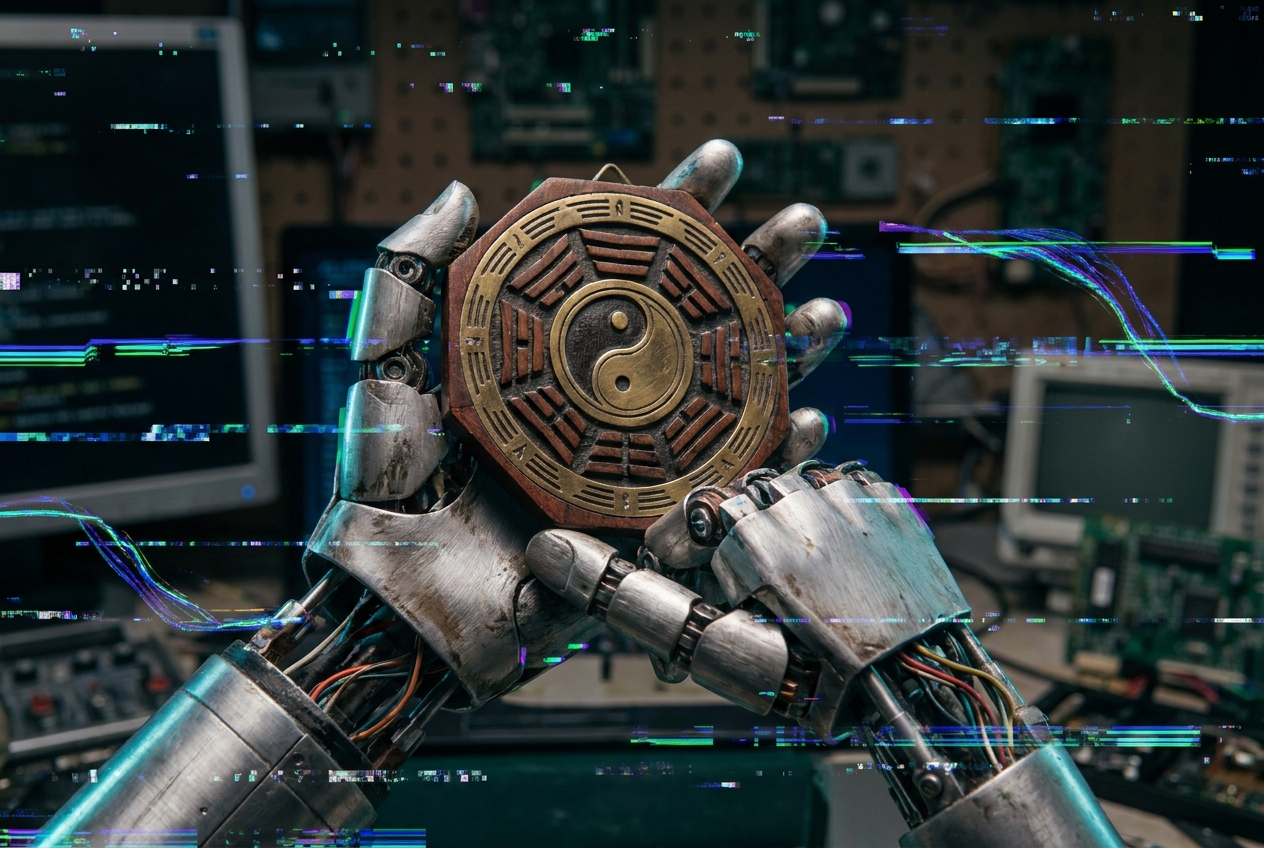
From Marvel comics to benzene rings, RADII chats with Shanghai-based artist Brandon Tay, who breaks down why art isn’t about answers — it’s about building systems you can get lost in.

Art is subjective. Art is complicated. It’s also very basic. It’s actually anything and everything. It can be a pretty picture; it can represent the meaning of life—and everything in between. It transcends time, space, systems, and symbols. It’s also a career path for some, simply because they “could actually be good at this.”

Singapore-born, Shanghai-based artist Brandon Tay is, indeed, good at it. Working predominantly within the mediums of digital 3D and physical sculptures, Tay imbues his visual creations with a complex matrix of themes and thoughts that build into a narrative meant for more questions than answers. If that all sounds confusing, maybe it’s supposed to be.
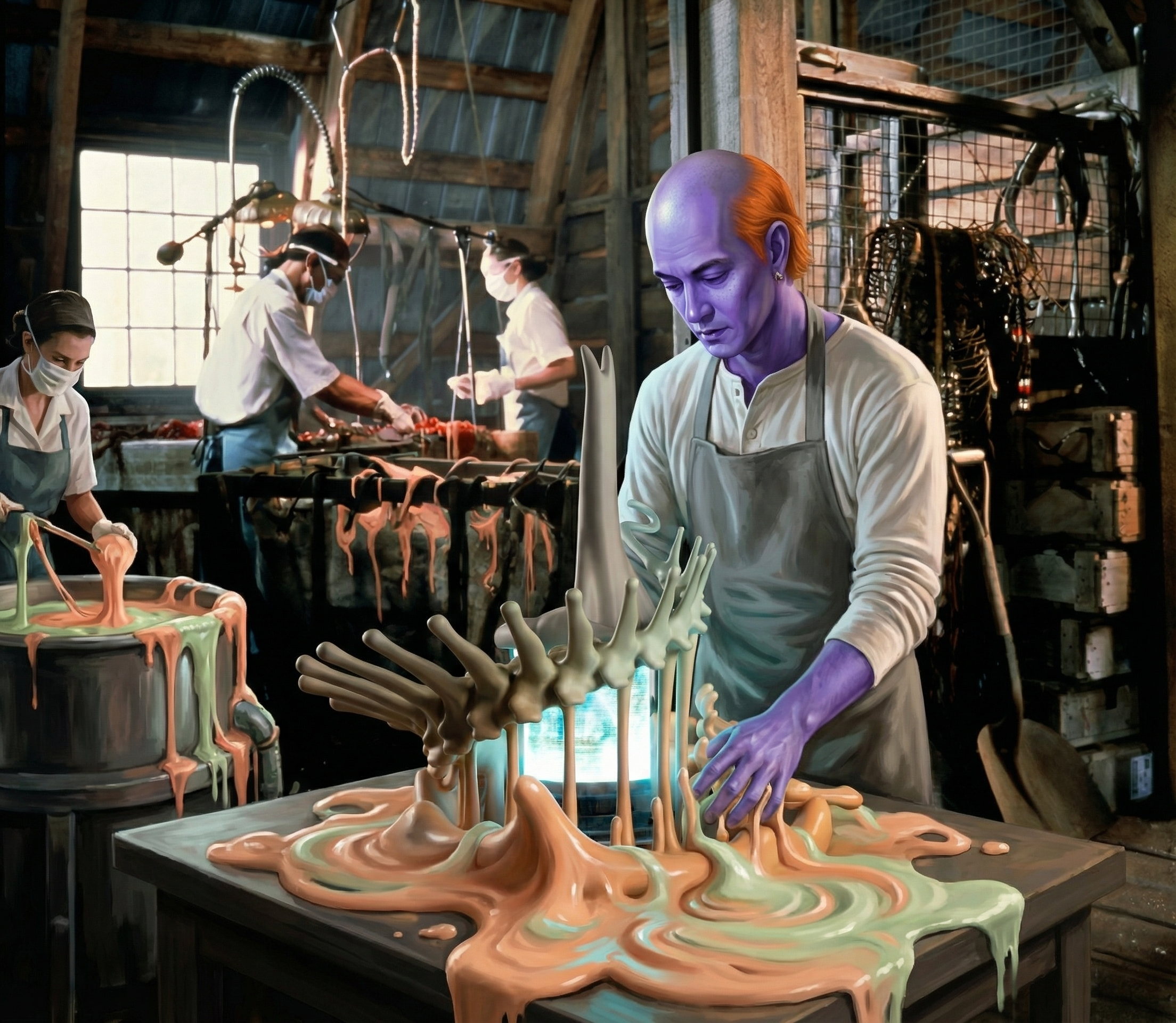
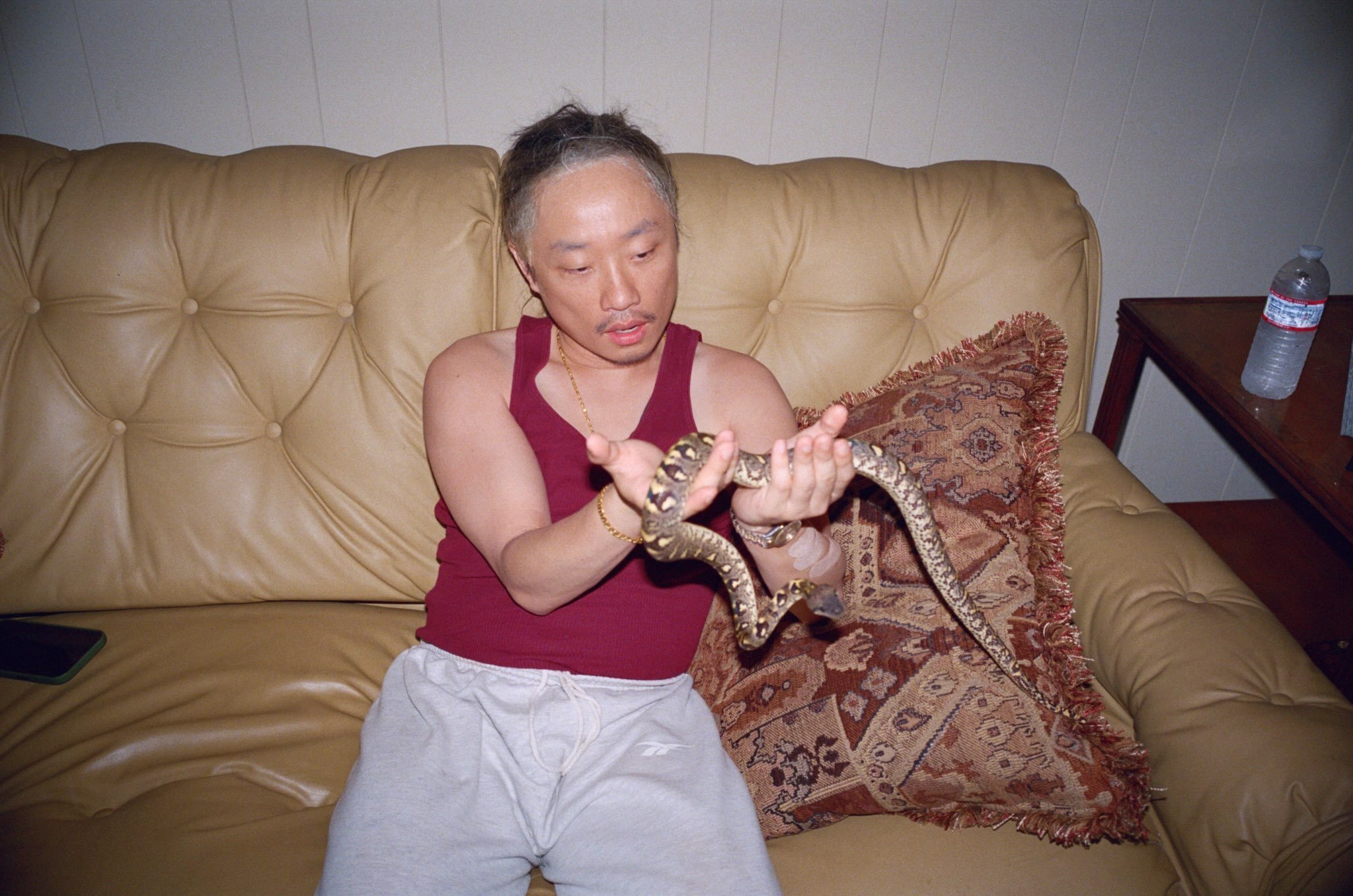
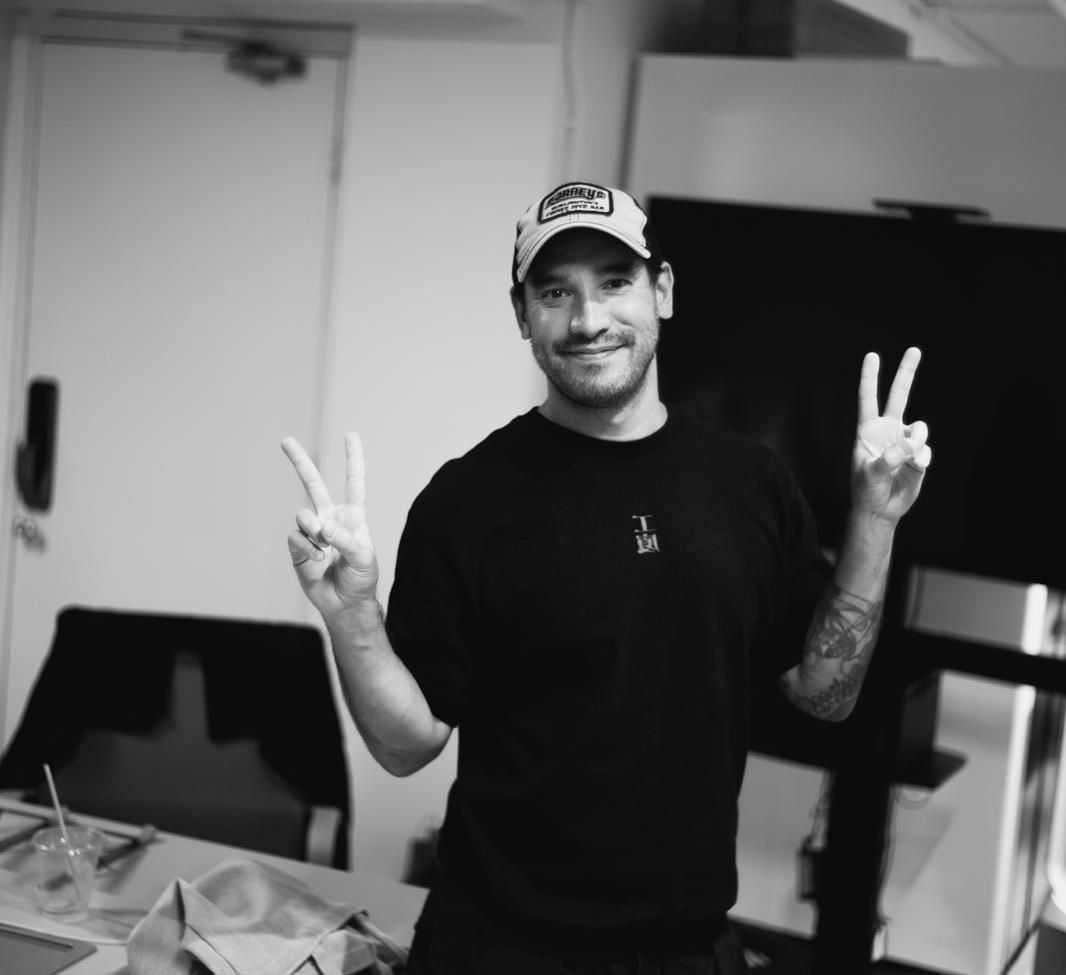
When you ask an artist like Brandon Tay for a profile pic, this is what you get. Image via Brandon Tay.

Starting off drawing muscles on comic book heroes as a kid—when he discovered his love for art—Brandon began to develop a curiosity for how and why things work. And if visual art was something he was already good at, why not use that as his vessel? So he did, and has since developed a body of work that explores novel and typically unexplored subjects.

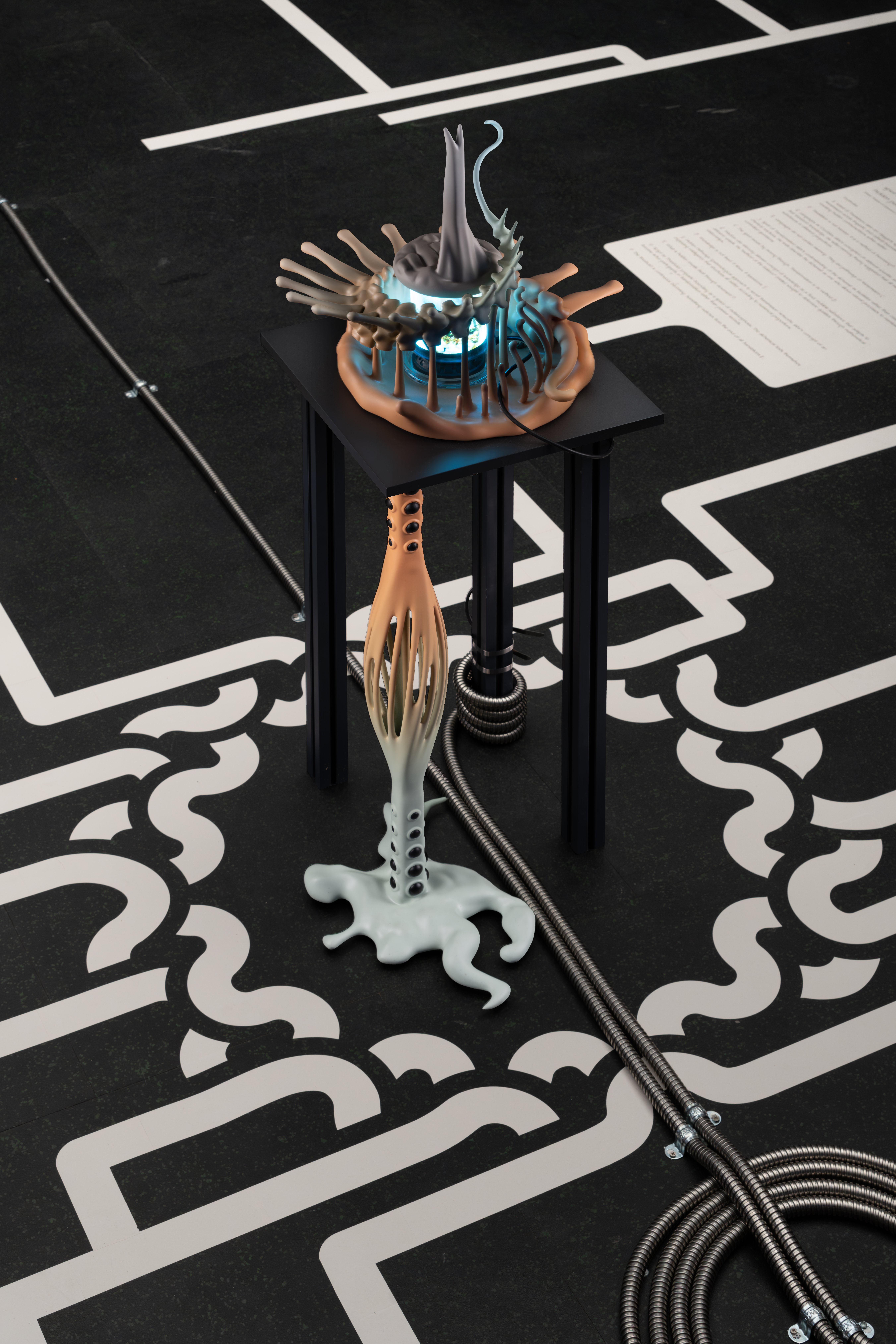
In being fluid—much like the textures represented in his artwork—Brandon is able to not be restricted by any particular influence. He doesn’t focus on history, nor on what’s contemporary. It’s not about only doing “futuristic” stuff or only representing the past. Instead, he takes all facets of how we navigate life and presents them in an almost “cyber-sage” way. His works can be interactive, like his most recent exhibition HEX STATE SERVER, highly collaborative, or just for shits and giggles on IG, like his Magic: The Gathering card remakes.
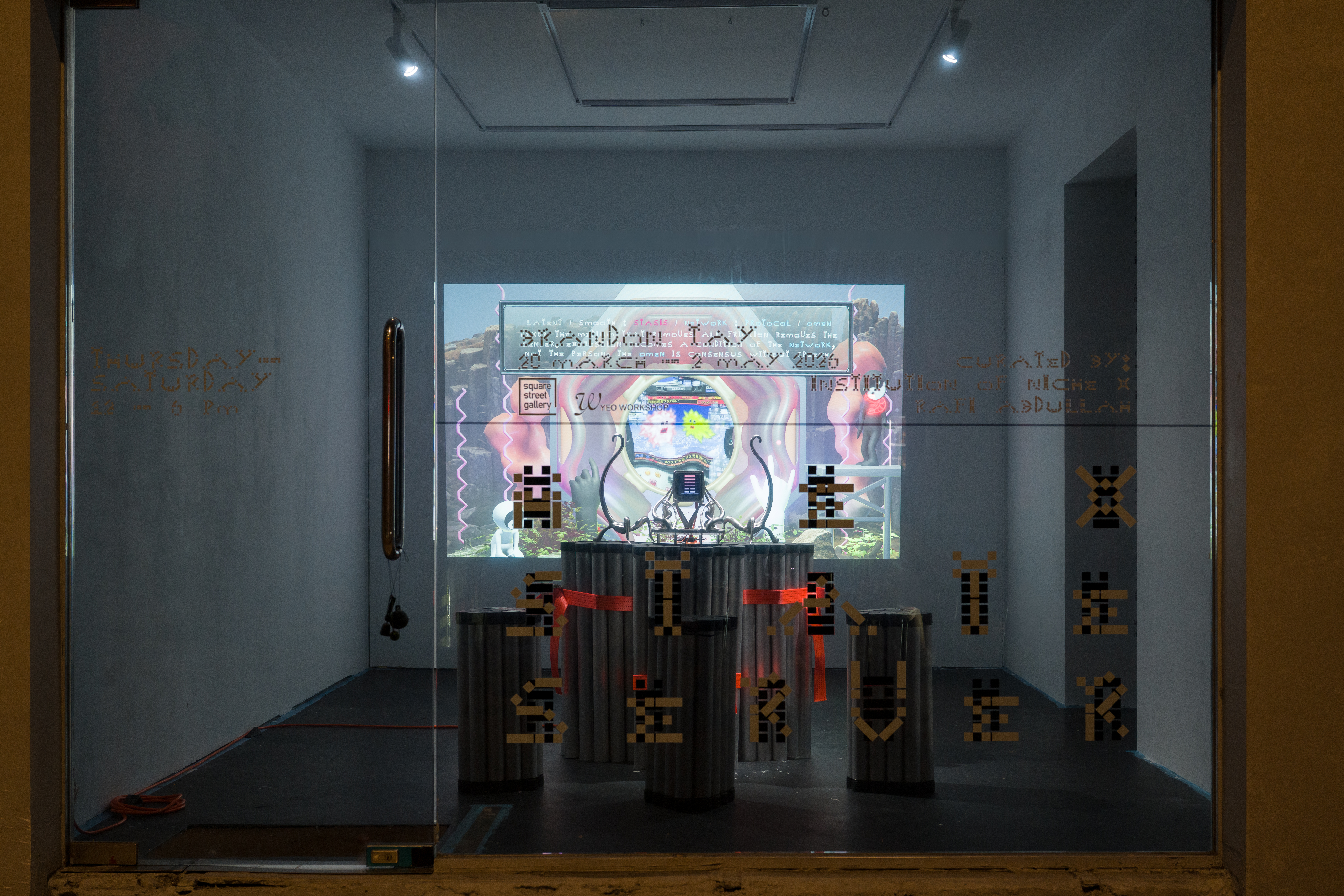
Brandon’s HEX STATE SERVER exhibition at Square Street Gallery, Hong Kong. Image via Felix Wong.

Overall, from my understanding, Brandon Tay is a curious fellow who uses his innate skill at creating art as a means to question everything and anything. That is exactly why we at RADII had to catch him during his solo HEX STATE SERVER in Hong Kong to dissect how and why he works.


RADII: Let’s start at the beginning. How did you get into art?

Brandon Tay: Like most people, I think I got into art as a kid. Everyone engages with it at some point—drawing, making things, imagining worlds. But I remember very clearly this book, How to Draw Comics the Marvel Way. That was a big moment for me. It made art feel structured, like something you could learn and master.

I used to draw a lot of Marvel characters—Ghost Rider was probably my favorite. That was the first time I thought, “Okay, I could actually be good at this.”

But professionally, it really started later. I was assisting other artists, learning how things worked behind the scenes. That’s when I realized this could actually be a life path, not just something I enjoyed, but something sustainable.
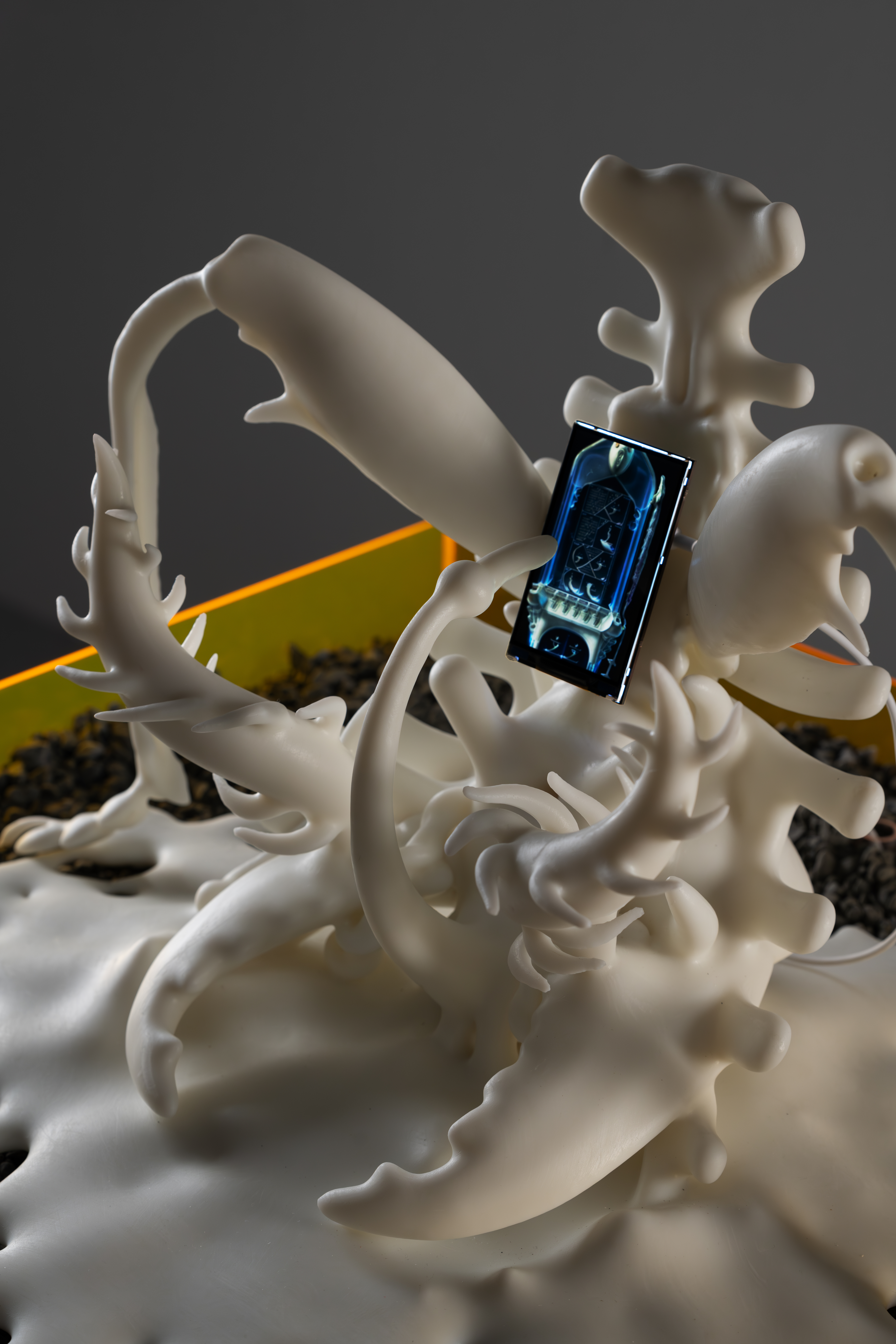
Your work isn’t just visual—it feels conceptual, almost philosophical. When did that shift happen?

I don’t think I ever separated those things. If I could express ideas better through writing, film, or even just talking, I would. But visual art happens to be the medium I’m most effective in.

What I’m trying to do is describe ideas that haven’t really been articulated in a particular way before. And for that, I need flexibility—different mediums, different forms. It’s less about making “art objects” and more about finding the right language for an idea.

Have you ever had an idea you thought was original, only to find someone else had already explored it?

Yeah, that happens. For my last project, I was working with the symbol of Ouroboros and its connection to the chemical structure of benzene, which, interestingly, was discovered through a dream.

Right around the time I was about to release the work, another artist dropped something exploring the exact same concept.

But I don’t see that as a problem. Ideas kind of exist outside of us. We just tap into them in different ways. The expression is what makes it unique.

Your work often blends scientific structures with cultural or historical symbolism. Why that mix?
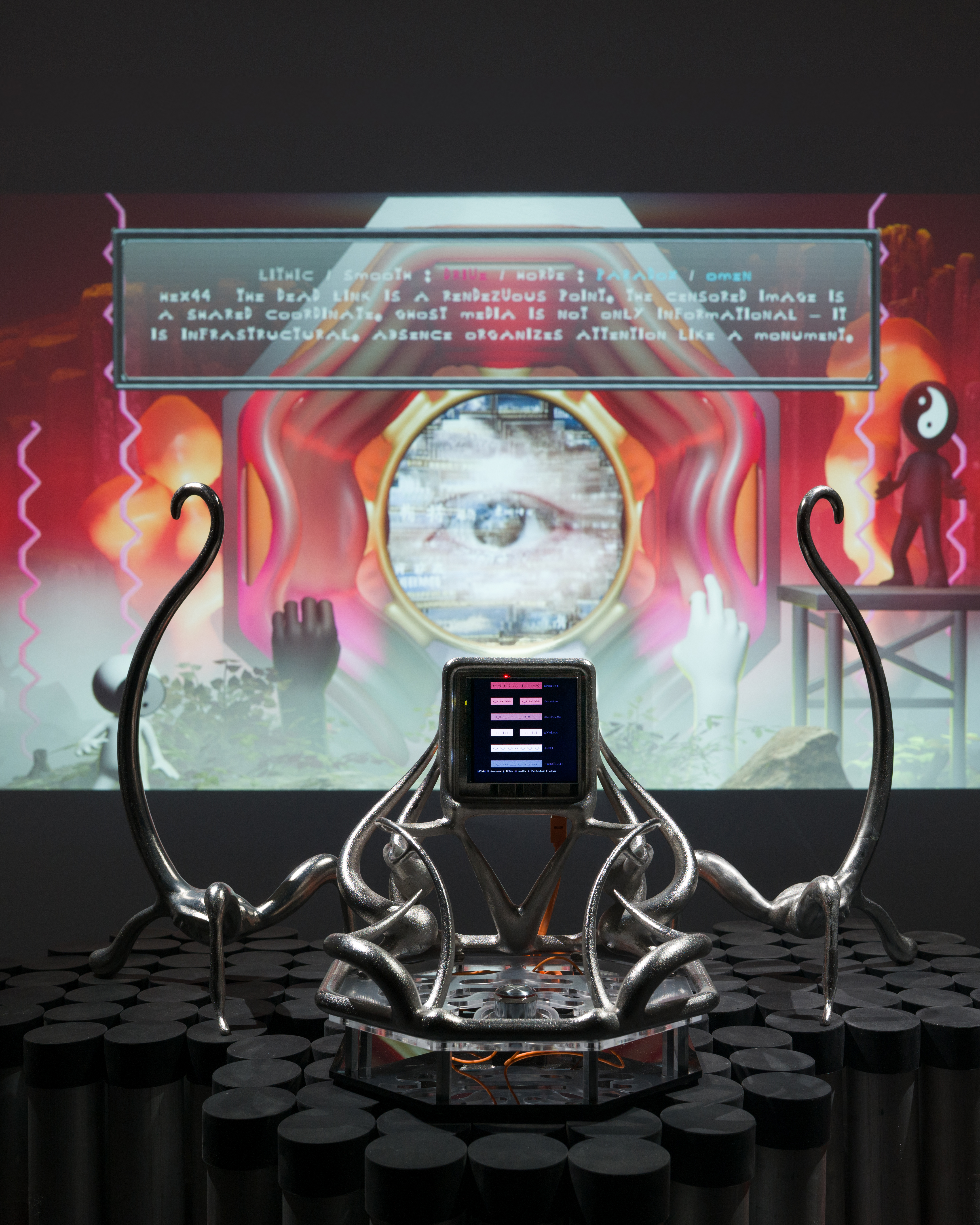
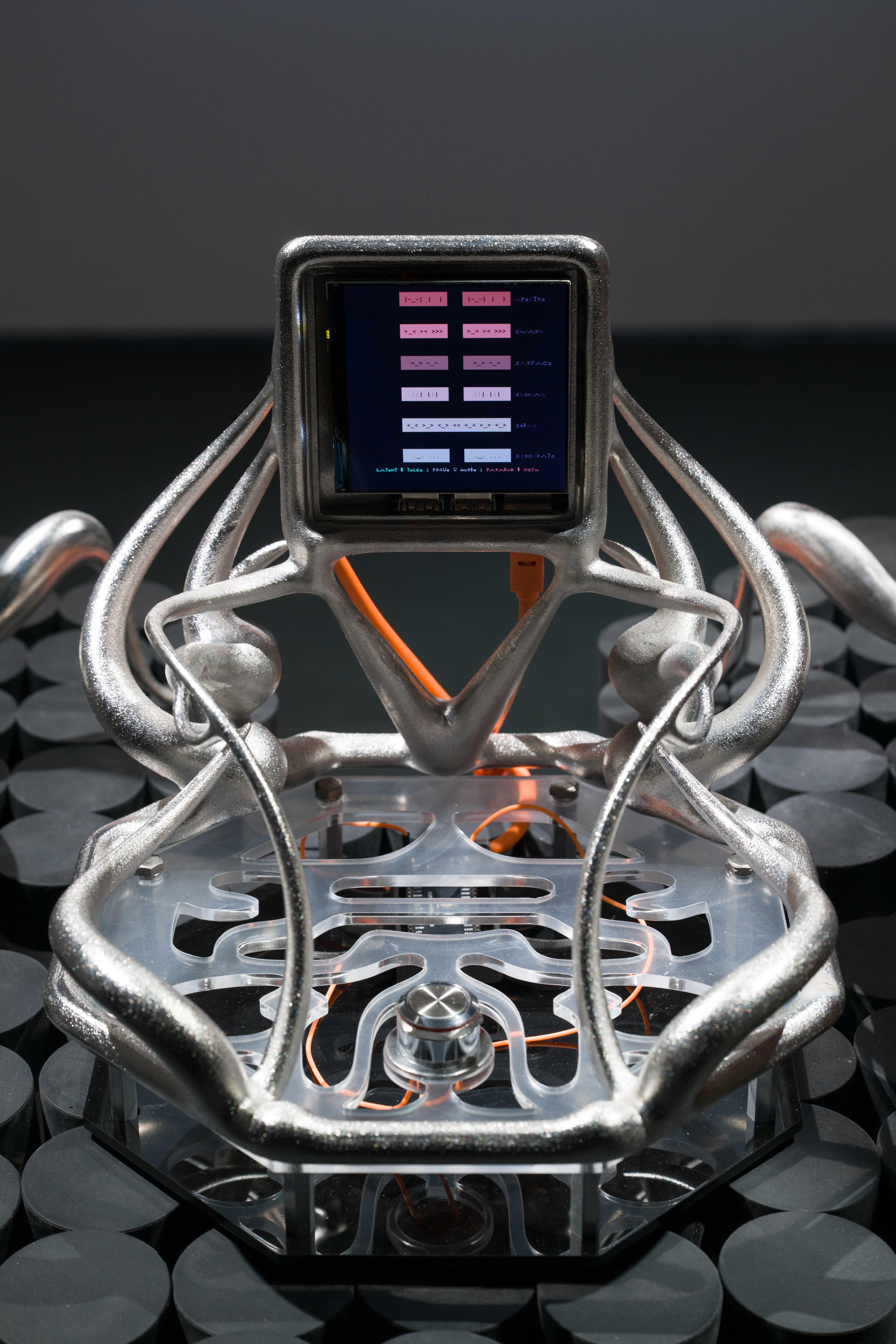
I’m interested in creating experiences that exist across multiple contexts—conceptual and spatial.

Science, mythology, history—these aren’t separate domains to me. They’re all systems of understanding the world. By combining them, I can create a space where viewers can explore ideas from different entry points.

I want people to feel comfortable navigating that complexity, even if they don’t fully “get it.”

Speaking of that, do you care if people understand your work?

Not really. Misinterpretation is fine.

The work operates on multiple levels. It can be purely visual or aesthetic for some people, and more conceptual for others. It’s just an entry point into a broader conversation.

I’m not trying to control how people interpret it.

Would you say your role is to comment on history or culture, almost like an archaeologist of ideas?

I don’t think about it in those terms. It’s more practical than that.

If I could do something else, I probably would. But this is what I’m good at, and what I’m interested in. So I do it.

It’s not about some grand purpose—it’s just the path that makes sense given my abilities and interests.
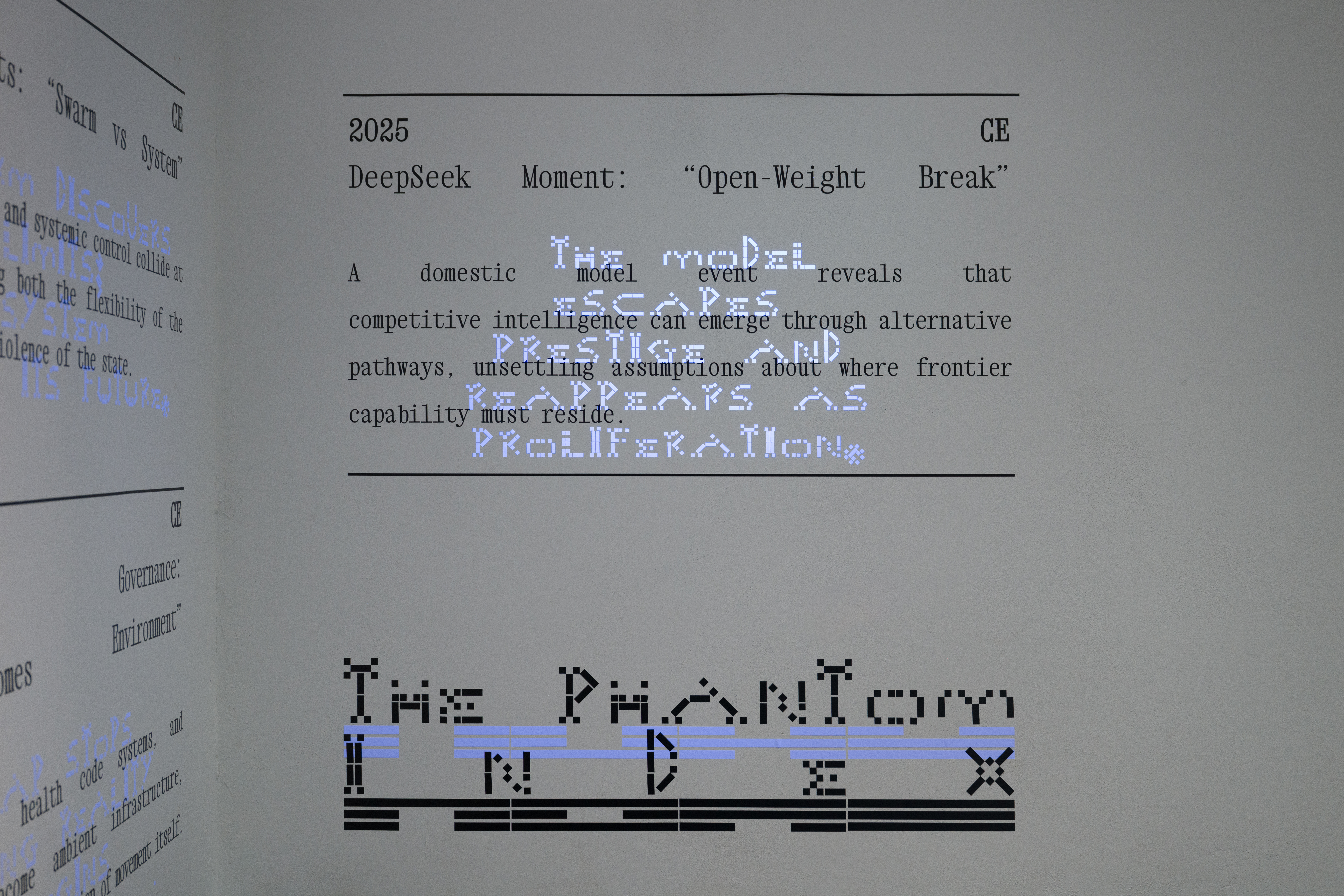
“The Phantom Index,” one part of Brandon’s HEX STATE SERVER, that displays what the process from the exhibition’s real-time game simulation receives. Image via Felix Wong.

How would you describe your career trajectory so far?

It’s hard to define because it’s constantly shifting.

At one point, I was focused on more collaborative projects with musicians for live audiovisual performances. I also worked on large-scale projection projects as public art.

Right now, I’m concentrating on my own practice. It’s not linear. It’s more like moving through different phases depending on what I’m interested in at the time.

Does your background in Singapore influence your work?

Yeah, but maybe not in an obvious way.

Singapore is a highly calibrated system—technologically, socially, psychologically. It’s very efficient at shaping behavior.

That definitely influenced how I think about systems in general. How they operate, how they control, how they produce certain outcomes.

So even if it’s not directly referenced, it’s embedded in how I approach ideas.
Is there any intention to represent Asia to a global audience through your work?

Not explicitly. But I am interested in redefining what “technology” means outside of a Western framework.

A lot of what we consider technology is rooted in Western philosophy. I’m more interested in alternative perspectives, which often come from Southeast Asia, China, or other non-Western contexts.

It’s about finding parallel ways of thinking.

In today’s fast-paced, attention-deficit culture, do you think there’s still space for conceptual art?

I think attention spans are definitely shrinking. Things are becoming more surface-level.

But that’s exactly why I’m interested in making work that resists that. My work isn’t immediate. It requires time.

There’s value in slowing people down—even if it’s uncomfortable.

Nomad Lexis, Form & Agency, presented at Yeo Workshop (2023). Image via Jonathan Tan.

Finally, what advice would you give to young artists who want to build a career around ideas and concepts?

I don’t think there’s a clear formula.

You can’t really force people to understand your work, and trying to simplify everything for accessibility can sometimes dilute it.

If anything, focus on what feels internally coherent to you. The external validation or understanding comes later—or it doesn’t. And that’s fine.


If you’re in Hong Kong, be sure to stop by Branon’s HEX STATE SERVER exhibition at Square Street Gallery before it ends on May 2.

Cover image via Brandon Tay/Photographer – Felix Wong.

NEWSLETTER

Get weekly top picks and exclusive, newsletter only content delivered straight to you inbox.

NEWSLETTER

Get weekly top picks and exclusive, newsletter only content delivered straight to you inbox.

RADII NEWSLETTER

Get weekly top picks and exclusive, newsletter only content delivered straight to you inbox

Feature image of Dissecting Systems, Symbols, and the Space Between With Artist Brandon Tay

Dissecting Systems, Symbols, and the Space Between With Artist Brandon Tay

6 mins read

From Marvel comics to benzene rings, RADII chats with Shanghai-based artist Brandon Tay, who breaks down why art isn’t about answers — it’s about building systems you can get lost in.

Art is subjective. Art is complicated. It’s also very basic. It’s actually anything and everything. It can be a pretty picture; it can represent the meaning of life—and everything in between. It transcends time, space, systems, and symbols. It’s also a career path for some, simply because they “could actually be good at this.”

Singapore-born, Shanghai-based artist Brandon Tay is, indeed, good at it. Working predominantly within the mediums of digital 3D and physical sculptures, Tay imbues his visual creations with a complex matrix of themes and thoughts that build into a narrative meant for more questions than answers. If that all sounds confusing, maybe it’s supposed to be.

When you ask an artist like Brandon Tay for a profile pic, this is what you get. Image via Brandon Tay.

Starting off drawing muscles on comic book heroes as a kid—when he discovered his love for art—Brandon began to develop a curiosity for how and why things work. And if visual art was something he was already good at, why not use that as his vessel? So he did, and has since developed a body of work that explores novel and typically unexplored subjects.

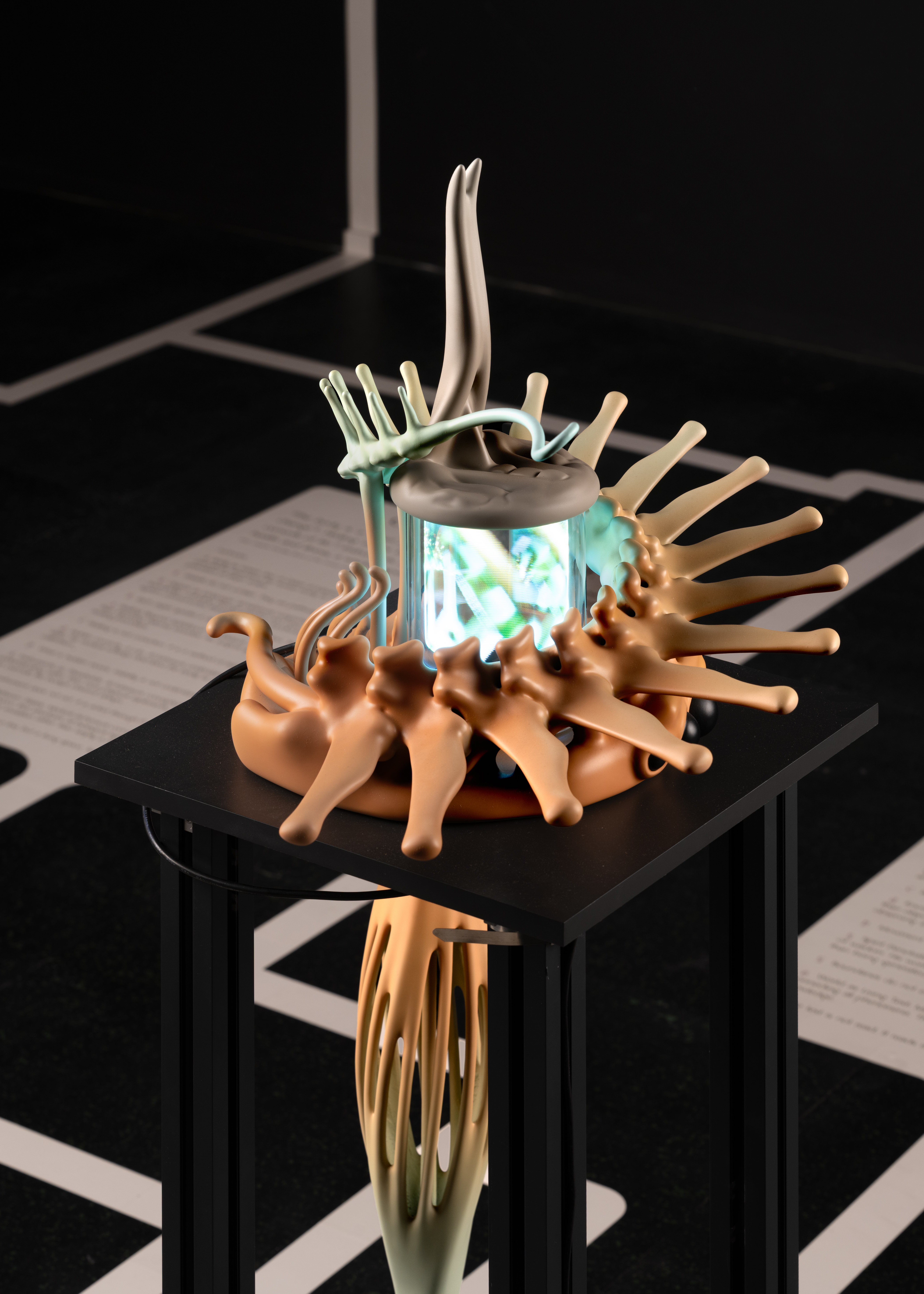
In being fluid—much like the textures represented in his artwork—Brandon is able to not be restricted by any particular influence. He doesn’t focus on history, nor on what’s contemporary. It’s not about only doing “futuristic” stuff or only representing the past. Instead, he takes all facets of how we navigate life and presents them in an almost “cyber-sage” way. His works can be interactive, like his most recent exhibition HEX STATE SERVER, highly collaborative, or just for shits and giggles on IG, like his Magic: The Gathering card remakes.

Brandon’s HEX STATE SERVER exhibition at Square Street Gallery, Hong Kong. Image via Felix Wong.

Overall, from my understanding, Brandon Tay is a curious fellow who uses his innate skill at creating art as a means to question everything and anything. That is exactly why we at RADII had to catch him during his solo HEX STATE SERVER in Hong Kong to dissect how and why he works.


RADII: Let’s start at the beginning. How did you get into art?

Brandon Tay: Like most people, I think I got into art as a kid. Everyone engages with it at some point—drawing, making things, imagining worlds. But I remember very clearly this book, How to Draw Comics the Marvel Way. That was a big moment for me. It made art feel structured, like something you could learn and master.

I used to draw a lot of Marvel characters—Ghost Rider was probably my favorite. That was the first time I thought, “Okay, I could actually be good at this.”

But professionally, it really started later. I was assisting other artists, learning how things worked behind the scenes. That’s when I realized this could actually be a life path, not just something I enjoyed, but something sustainable.

Your work isn’t just visual—it feels conceptual, almost philosophical. When did that shift happen?

I don’t think I ever separated those things. If I could express ideas better through writing, film, or even just talking, I would. But visual art happens to be the medium I’m most effective in.

What I’m trying to do is describe ideas that haven’t really been articulated in a particular way before. And for that, I need flexibility—different mediums, different forms. It’s less about making “art objects” and more about finding the right language for an idea.

Have you ever had an idea you thought was original, only to find someone else had already explored it?

Yeah, that happens. For my last project, I was working with the symbol of Ouroboros and its connection to the chemical structure of benzene, which, interestingly, was discovered through a dream.

Right around the time I was about to release the work, another artist dropped something exploring the exact same concept.

But I don’t see that as a problem. Ideas kind of exist outside of us. We just tap into them in different ways. The expression is what makes it unique.

Your work often blends scientific structures with cultural or historical symbolism. Why that mix?

I’m interested in creating experiences that exist across multiple contexts—conceptual and spatial.

Science, mythology, history—these aren’t separate domains to me. They’re all systems of understanding the world. By combining them, I can create a space where viewers can explore ideas from different entry points.

I want people to feel comfortable navigating that complexity, even if they don’t fully “get it.”

Speaking of that, do you care if people understand your work?

Not really. Misinterpretation is fine.

The work operates on multiple levels. It can be purely visual or aesthetic for some people, and more conceptual for others. It’s just an entry point into a broader conversation.

I’m not trying to control how people interpret it.

Would you say your role is to comment on history or culture, almost like an archaeologist of ideas?

I don’t think about it in those terms. It’s more practical than that.

If I could do something else, I probably would. But this is what I’m good at, and what I’m interested in. So I do it.

It’s not about some grand purpose—it’s just the path that makes sense given my abilities and interests.

“The Phantom Index,” one part of Brandon’s HEX STATE SERVER, that displays what the process from the exhibition’s real-time game simulation receives. Image via Felix Wong.

How would you describe your career trajectory so far?

It’s hard to define because it’s constantly shifting.

At one point, I was focused on more collaborative projects with musicians for live audiovisual performances. I also worked on large-scale projection projects as public art.

Right now, I’m concentrating on my own practice. It’s not linear. It’s more like moving through different phases depending on what I’m interested in at the time.

Does your background in Singapore influence your work?

Yeah, but maybe not in an obvious way.

Singapore is a highly calibrated system—technologically, socially, psychologically. It’s very efficient at shaping behavior.

That definitely influenced how I think about systems in general. How they operate, how they control, how they produce certain outcomes.

So even if it’s not directly referenced, it’s embedded in how I approach ideas.
Is there any intention to represent Asia to a global audience through your work?

Not explicitly. But I am interested in redefining what “technology” means outside of a Western framework.

A lot of what we consider technology is rooted in Western philosophy. I’m more interested in alternative perspectives, which often come from Southeast Asia, China, or other non-Western contexts.

It’s about finding parallel ways of thinking.

In today’s fast-paced, attention-deficit culture, do you think there’s still space for conceptual art?

I think attention spans are definitely shrinking. Things are becoming more surface-level.

But that’s exactly why I’m interested in making work that resists that. My work isn’t immediate. It requires time.

There’s value in slowing people down—even if it’s uncomfortable.

Nomad Lexis, Form & Agency, presented at Yeo Workshop (2023). Image via Jonathan Tan.

Finally, what advice would you give to young artists who want to build a career around ideas and concepts?

I don’t think there’s a clear formula.

You can’t really force people to understand your work, and trying to simplify everything for accessibility can sometimes dilute it.

If anything, focus on what feels internally coherent to you. The external validation or understanding comes later—or it doesn’t. And that’s fine.


If you’re in Hong Kong, be sure to stop by Branon’s HEX STATE SERVER exhibition at Square Street Gallery before it ends on May 2.

Cover image via Brandon Tay/Photographer – Felix Wong.

NEWSLETTER

Get weekly top picks and exclusive, newsletter only content delivered straight to you inbox.

RADII NEWSLETTER

Get weekly top picks and exclusive, newsletter only content delivered straight to you inbox

RELATED POSTS

Feature image of Dissecting Systems, Symbols, and the Space Between With Artist Brandon Tay

Dissecting Systems, Symbols, and the Space Between With Artist Brandon Tay

6 mins read

6 mins read

Feature image of Dissecting Systems, Symbols, and the Space Between With Artist Brandon Tay
From Marvel comics to benzene rings, RADII chats with Shanghai-based artist Brandon Tay, who breaks down why art isn’t about answers — it’s about building systems you can get lost in.

Art is subjective. Art is complicated. It’s also very basic. It’s actually anything and everything. It can be a pretty picture; it can represent the meaning of life—and everything in between. It transcends time, space, systems, and symbols. It’s also a career path for some, simply because they “could actually be good at this.”

Singapore-born, Shanghai-based artist Brandon Tay is, indeed, good at it. Working predominantly within the mediums of digital 3D and physical sculptures, Tay imbues his visual creations with a complex matrix of themes and thoughts that build into a narrative meant for more questions than answers. If that all sounds confusing, maybe it’s supposed to be.

When you ask an artist like Brandon Tay for a profile pic, this is what you get. Image via Brandon Tay.

Starting off drawing muscles on comic book heroes as a kid—when he discovered his love for art—Brandon began to develop a curiosity for how and why things work. And if visual art was something he was already good at, why not use that as his vessel? So he did, and has since developed a body of work that explores novel and typically unexplored subjects.

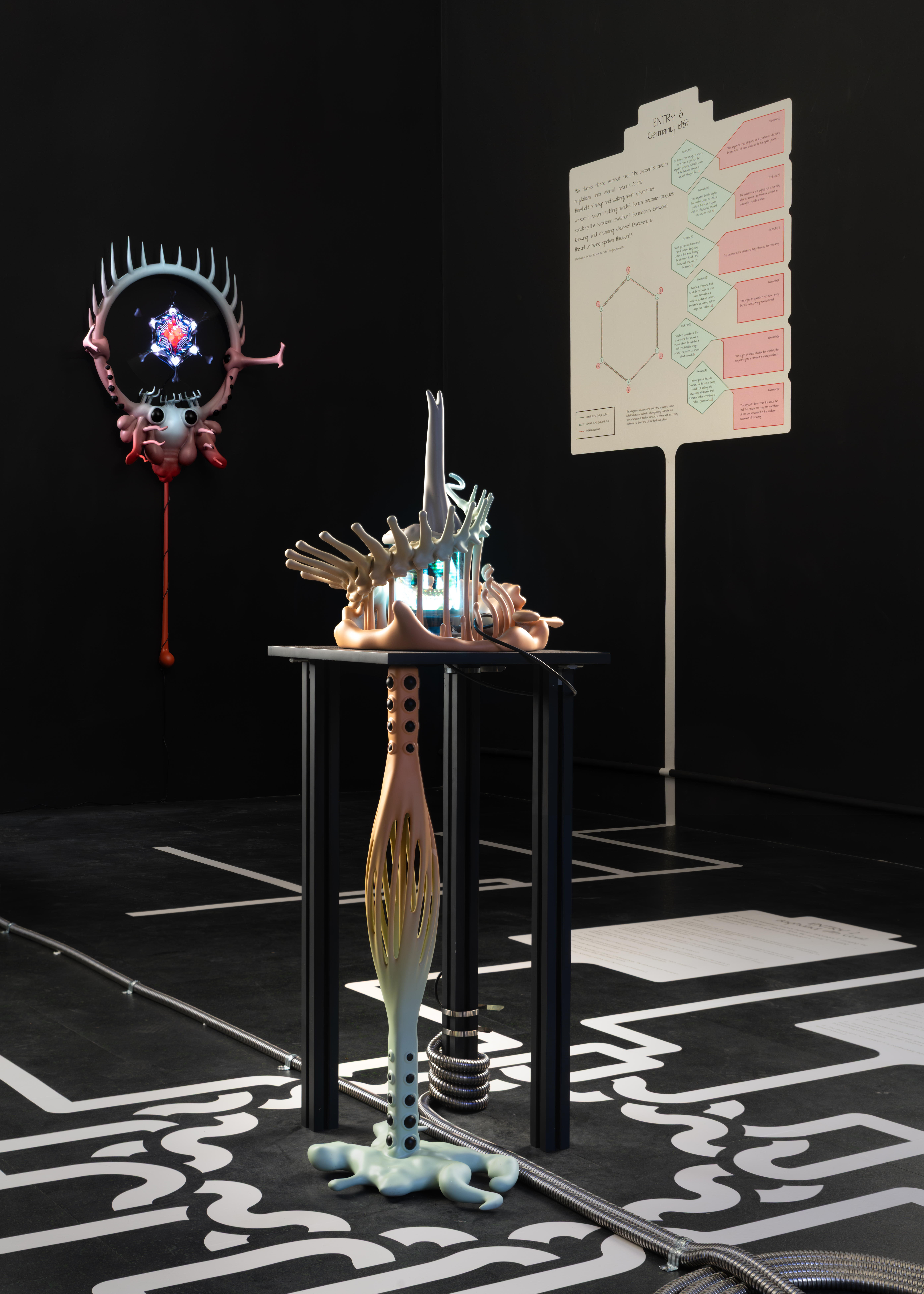
In being fluid—much like the textures represented in his artwork—Brandon is able to not be restricted by any particular influence. He doesn’t focus on history, nor on what’s contemporary. It’s not about only doing “futuristic” stuff or only representing the past. Instead, he takes all facets of how we navigate life and presents them in an almost “cyber-sage” way. His works can be interactive, like his most recent exhibition HEX STATE SERVER, highly collaborative, or just for shits and giggles on IG, like his Magic: The Gathering card remakes.

Brandon’s HEX STATE SERVER exhibition at Square Street Gallery, Hong Kong. Image via Felix Wong.

Overall, from my understanding, Brandon Tay is a curious fellow who uses his innate skill at creating art as a means to question everything and anything. That is exactly why we at RADII had to catch him during his solo HEX STATE SERVER in Hong Kong to dissect how and why he works.


RADII: Let’s start at the beginning. How did you get into art?

Brandon Tay: Like most people, I think I got into art as a kid. Everyone engages with it at some point—drawing, making things, imagining worlds. But I remember very clearly this book, How to Draw Comics the Marvel Way. That was a big moment for me. It made art feel structured, like something you could learn and master.

I used to draw a lot of Marvel characters—Ghost Rider was probably my favorite. That was the first time I thought, “Okay, I could actually be good at this.”

But professionally, it really started later. I was assisting other artists, learning how things worked behind the scenes. That’s when I realized this could actually be a life path, not just something I enjoyed, but something sustainable.

Your work isn’t just visual—it feels conceptual, almost philosophical. When did that shift happen?

I don’t think I ever separated those things. If I could express ideas better through writing, film, or even just talking, I would. But visual art happens to be the medium I’m most effective in.

What I’m trying to do is describe ideas that haven’t really been articulated in a particular way before. And for that, I need flexibility—different mediums, different forms. It’s less about making “art objects” and more about finding the right language for an idea.

Have you ever had an idea you thought was original, only to find someone else had already explored it?

Yeah, that happens. For my last project, I was working with the symbol of Ouroboros and its connection to the chemical structure of benzene, which, interestingly, was discovered through a dream.

Right around the time I was about to release the work, another artist dropped something exploring the exact same concept.

But I don’t see that as a problem. Ideas kind of exist outside of us. We just tap into them in different ways. The expression is what makes it unique.

Your work often blends scientific structures with cultural or historical symbolism. Why that mix?

I’m interested in creating experiences that exist across multiple contexts—conceptual and spatial.

Science, mythology, history—these aren’t separate domains to me. They’re all systems of understanding the world. By combining them, I can create a space where viewers can explore ideas from different entry points.

I want people to feel comfortable navigating that complexity, even if they don’t fully “get it.”

Speaking of that, do you care if people understand your work?

Not really. Misinterpretation is fine.

The work operates on multiple levels. It can be purely visual or aesthetic for some people, and more conceptual for others. It’s just an entry point into a broader conversation.

I’m not trying to control how people interpret it.

Would you say your role is to comment on history or culture, almost like an archaeologist of ideas?

I don’t think about it in those terms. It’s more practical than that.

If I could do something else, I probably would. But this is what I’m good at, and what I’m interested in. So I do it.

It’s not about some grand purpose—it’s just the path that makes sense given my abilities and interests.

“The Phantom Index,” one part of Brandon’s HEX STATE SERVER, that displays what the process from the exhibition’s real-time game simulation receives. Image via Felix Wong.

How would you describe your career trajectory so far?

It’s hard to define because it’s constantly shifting.

At one point, I was focused on more collaborative projects with musicians for live audiovisual performances. I also worked on large-scale projection projects as public art.

Right now, I’m concentrating on my own practice. It’s not linear. It’s more like moving through different phases depending on what I’m interested in at the time.

Does your background in Singapore influence your work?

Yeah, but maybe not in an obvious way.

Singapore is a highly calibrated system—technologically, socially, psychologically. It’s very efficient at shaping behavior.

That definitely influenced how I think about systems in general. How they operate, how they control, how they produce certain outcomes.

So even if it’s not directly referenced, it’s embedded in how I approach ideas.
Is there any intention to represent Asia to a global audience through your work?

Not explicitly. But I am interested in redefining what “technology” means outside of a Western framework.

A lot of what we consider technology is rooted in Western philosophy. I’m more interested in alternative perspectives, which often come from Southeast Asia, China, or other non-Western contexts.

It’s about finding parallel ways of thinking.

In today’s fast-paced, attention-deficit culture, do you think there’s still space for conceptual art?

I think attention spans are definitely shrinking. Things are becoming more surface-level.

But that’s exactly why I’m interested in making work that resists that. My work isn’t immediate. It requires time.

There’s value in slowing people down—even if it’s uncomfortable.

Nomad Lexis, Form & Agency, presented at Yeo Workshop (2023). Image via Jonathan Tan.

Finally, what advice would you give to young artists who want to build a career around ideas and concepts?

I don’t think there’s a clear formula.

You can’t really force people to understand your work, and trying to simplify everything for accessibility can sometimes dilute it.

If anything, focus on what feels internally coherent to you. The external validation or understanding comes later—or it doesn’t. And that’s fine.


If you’re in Hong Kong, be sure to stop by Branon’s HEX STATE SERVER exhibition at Square Street Gallery before it ends on May 2.

Cover image via Brandon Tay/Photographer – Felix Wong.

NEWSLETTER

Get weekly top picks and exclusive, newsletter only content delivered straight to you inbox.

NEWSLETTER

Get weekly top picks and exclusive, newsletter only content delivered straight to you inbox.

RADII NEWSLETTER

Get weekly top picks and exclusive, newsletter only content delivered straight to you inbox

Feature image of Dissecting Systems, Symbols, and the Space Between With Artist Brandon Tay

Dissecting Systems, Symbols, and the Space Between With Artist Brandon Tay

6 mins read

From Marvel comics to benzene rings, RADII chats with Shanghai-based artist Brandon Tay, who breaks down why art isn’t about answers — it’s about building systems you can get lost in.

Art is subjective. Art is complicated. It’s also very basic. It’s actually anything and everything. It can be a pretty picture; it can represent the meaning of life—and everything in between. It transcends time, space, systems, and symbols. It’s also a career path for some, simply because they “could actually be good at this.”

Singapore-born, Shanghai-based artist Brandon Tay is, indeed, good at it. Working predominantly within the mediums of digital 3D and physical sculptures, Tay imbues his visual creations with a complex matrix of themes and thoughts that build into a narrative meant for more questions than answers. If that all sounds confusing, maybe it’s supposed to be.

When you ask an artist like Brandon Tay for a profile pic, this is what you get. Image via Brandon Tay.

Starting off drawing muscles on comic book heroes as a kid—when he discovered his love for art—Brandon began to develop a curiosity for how and why things work. And if visual art was something he was already good at, why not use that as his vessel? So he did, and has since developed a body of work that explores novel and typically unexplored subjects.

In being fluid—much like the textures represented in his artwork—Brandon is able to not be restricted by any particular influence. He doesn’t focus on history, nor on what’s contemporary. It’s not about only doing “futuristic” stuff or only representing the past. Instead, he takes all facets of how we navigate life and presents them in an almost “cyber-sage” way. His works can be interactive, like his most recent exhibition HEX STATE SERVER, highly collaborative, or just for shits and giggles on IG, like his Magic: The Gathering card remakes.

Brandon’s HEX STATE SERVER exhibition at Square Street Gallery, Hong Kong. Image via Felix Wong.

Overall, from my understanding, Brandon Tay is a curious fellow who uses his innate skill at creating art as a means to question everything and anything. That is exactly why we at RADII had to catch him during his solo HEX STATE SERVER in Hong Kong to dissect how and why he works.


RADII: Let’s start at the beginning. How did you get into art?

Brandon Tay: Like most people, I think I got into art as a kid. Everyone engages with it at some point—drawing, making things, imagining worlds. But I remember very clearly this book, How to Draw Comics the Marvel Way. That was a big moment for me. It made art feel structured, like something you could learn and master.

I used to draw a lot of Marvel characters—Ghost Rider was probably my favorite. That was the first time I thought, “Okay, I could actually be good at this.”

But professionally, it really started later. I was assisting other artists, learning how things worked behind the scenes. That’s when I realized this could actually be a life path, not just something I enjoyed, but something sustainable.

Your work isn’t just visual—it feels conceptual, almost philosophical. When did that shift happen?

I don’t think I ever separated those things. If I could express ideas better through writing, film, or even just talking, I would. But visual art happens to be the medium I’m most effective in.

What I’m trying to do is describe ideas that haven’t really been articulated in a particular way before. And for that, I need flexibility—different mediums, different forms. It’s less about making “art objects” and more about finding the right language for an idea.

Have you ever had an idea you thought was original, only to find someone else had already explored it?

Yeah, that happens. For my last project, I was working with the symbol of Ouroboros and its connection to the chemical structure of benzene, which, interestingly, was discovered through a dream.

Right around the time I was about to release the work, another artist dropped something exploring the exact same concept.

But I don’t see that as a problem. Ideas kind of exist outside of us. We just tap into them in different ways. The expression is what makes it unique.

Your work often blends scientific structures with cultural or historical symbolism. Why that mix?

I’m interested in creating experiences that exist across multiple contexts—conceptual and spatial.

Science, mythology, history—these aren’t separate domains to me. They’re all systems of understanding the world. By combining them, I can create a space where viewers can explore ideas from different entry points.

I want people to feel comfortable navigating that complexity, even if they don’t fully “get it.”

Speaking of that, do you care if people understand your work?

Not really. Misinterpretation is fine.

The work operates on multiple levels. It can be purely visual or aesthetic for some people, and more conceptual for others. It’s just an entry point into a broader conversation.

I’m not trying to control how people interpret it.

Would you say your role is to comment on history or culture, almost like an archaeologist of ideas?

I don’t think about it in those terms. It’s more practical than that.

If I could do something else, I probably would. But this is what I’m good at, and what I’m interested in. So I do it.

It’s not about some grand purpose—it’s just the path that makes sense given my abilities and interests.

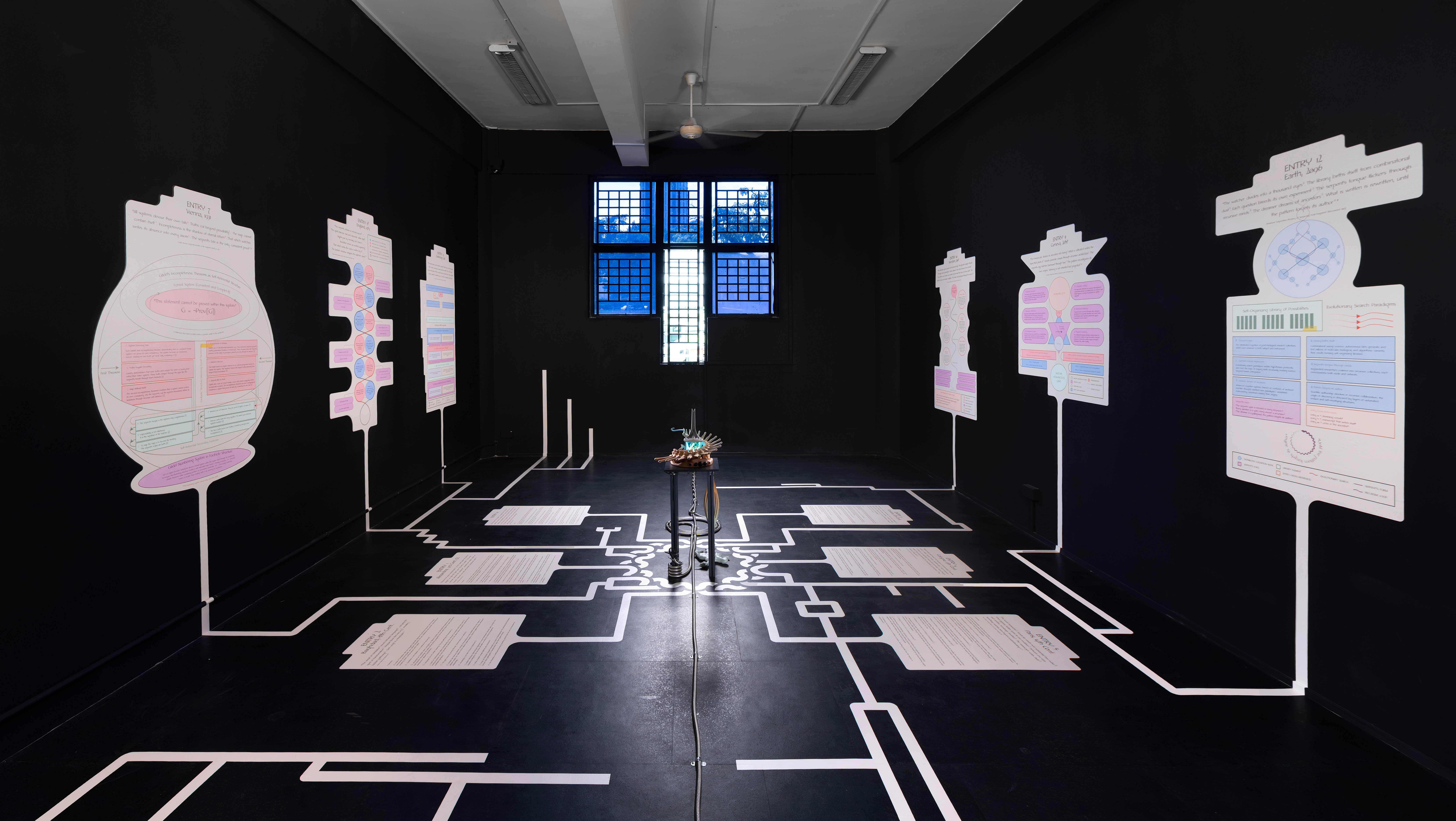
“The Phantom Index,” one part of Brandon’s HEX STATE SERVER, that displays what the process from the exhibition’s real-time game simulation receives. Image via Felix Wong.

How would you describe your career trajectory so far?

It’s hard to define because it’s constantly shifting.

At one point, I was focused on more collaborative projects with musicians for live audiovisual performances. I also worked on large-scale projection projects as public art.

Right now, I’m concentrating on my own practice. It’s not linear. It’s more like moving through different phases depending on what I’m interested in at the time.

Does your background in Singapore influence your work?

Yeah, but maybe not in an obvious way.

Singapore is a highly calibrated system—technologically, socially, psychologically. It’s very efficient at shaping behavior.

That definitely influenced how I think about systems in general. How they operate, how they control, how they produce certain outcomes.

So even if it’s not directly referenced, it’s embedded in how I approach ideas.

Is there any intention to represent Asia to a global audience through your work?

Not explicitly. But I am interested in redefining what “technology” means outside of a Western framework.

A lot of what we consider technology is rooted in Western philosophy. I’m more interested in alternative perspectives, which often come from Southeast Asia, China, or other non-Western contexts.

It’s about finding parallel ways of thinking.

In today’s fast-paced, attention-deficit culture, do you think there’s still space for conceptual art?

I think attention spans are definitely shrinking. Things are becoming more surface-level.

But that’s exactly why I’m interested in making work that resists that. My work isn’t immediate. It requires time.

There’s value in slowing people down—even if it’s uncomfortable.

Nomad Lexis, Form & Agency, presented at Yeo Workshop (2023). Image via Jonathan Tan.

Finally, what advice would you give to young artists who want to build a career around ideas and concepts?

I don’t think there’s a clear formula.

You can’t really force people to understand your work, and trying to simplify everything for accessibility can sometimes dilute it.

If anything, focus on what feels internally coherent to you. The external validation or understanding comes later—or it doesn’t. And that’s fine.


If you’re in Hong Kong, be sure to stop by Branon’s HEX STATE SERVER exhibition at Square Street Gallery before it ends on May 2.

Cover image via Brandon Tay/Photographer – Felix Wong.

NEWSLETTER

Get weekly top picks and exclusive, newsletter only content delivered straight to you inbox.

RADII NEWSLETTER

Get weekly top picks and exclusive, newsletter only content delivered straight to you inbox

NEWSLETTER​

Get weekly top picks and exclusive, newsletter only content delivered straight to you inbox

RADII Newsletter Pop Up small banner

NEWSLETTER

Get weekly top picks and exclusive, newsletter only content delivered straight to you inbox.

Link Copied!

Share

Feature image of Dissecting Systems, Symbols, and the Space Between With Artist Brandon Tay

Dissecting Systems, Symbols, and the Space Between With Artist Brandon Tay

From Marvel comics to benzene rings, RADII chats with Shanghai-based artist Brandon Tay, who breaks down why art isn’t about answers — it’s about building systems you can get lost in.

PULSE

Tap into the latest in music, fashion, art, design, entertainment, pop culture, celebrity news, and contemporary culture

DISCOVER

Embark on a journey through food, travel, wellness, heritage, traditional culture, and lifestyle

STYLE

An insider’s look at the intersection of fashion, art, and design

FEAST

Titillate your taste buds with coverage of the best food and drink trends from China and beyond.

FUTURE

Explore the cutting edge in tech, AI, gadgets, gaming, and innovative tech-related products

FEAST

Titillate your taste buds with coverage of the best food and drink trends from China and beyond

STYLE

An insider’s look at the intersection of fashion, art, and design

PULSE

Unpacking Chinese youth culture through coverage of nightlife, film, sports, celebrities, and the hottest new music